In one line: Kim Il Sung died of a reported heart attack in 1994, and the state turned his death into a permanent institution: a mausoleum, a funeral led by his son, and a constitution that names him president for all time.
The final days
The death came at a diplomatic turning point. The Associated Press reported that in June 1994 Kim had met former US President Jimmy Carter and pledged to freeze the North's nuclear programme pending talks, that North and South Korea had agreed to a first meeting of their presidents on 25 to 27 July, and that high-level talks with the United States had opened in Geneva within hours of the announcement. The AP described him as the ruler of a "Stalinist-style dictatorship" for four decades and as the only leader the state had known since 1948, with his eldest son Kim Jong Il as heir apparent. UPI quoted Carter after the June visit describing Kim as "vigorous, intelligent and completely in charge of government," and as saying that Kim "told me he hoped to stay active for another 10 years."
The death
The official account is a North Korean medical report carried by KCNA and quoted by UPI. It said Kim had been treated for heart disease and had a heart attack "owing to heavy mental strains on July 7, 1994, which was followed by a heart shock," and that "the heart shock took a turn for the worse and he passed away at 2 a.m. on July 8, 1994." UPI, citing a special midday broadcast of Radio Pyongyang monitored in Tokyo, reported that he had suffered a heart attack on Thursday night and died at 2 am Friday. The AP said the broadcast spoke of "problems in the heart arteries." The sources used for this page include no independent medical examination and no statement of where Kim was when he died, so the cause, time and place rest on the state's report alone. Accounts of the final hours that name a residence or describe who was summoned are not in the contemporary statements and are left out here.
What happened to the body
UPI reported that a KCNA statement said the body would lie in state at the Kumsusan Assembly Hall, that mourning would run from 8 to 17 July, and that a funeral service on 17 July would be hosted by Kim Jong Il, with foreign guests not invited. Reports of the time describe the burial rites as taking place later: the Washington Post story of 19 July was headed "Millions weep as N. Korean leader's funeral begins" and described a long cortege carrying the body past mourners. The sources used here do not give a reason for the difference between the date first announced and the date of the procession.
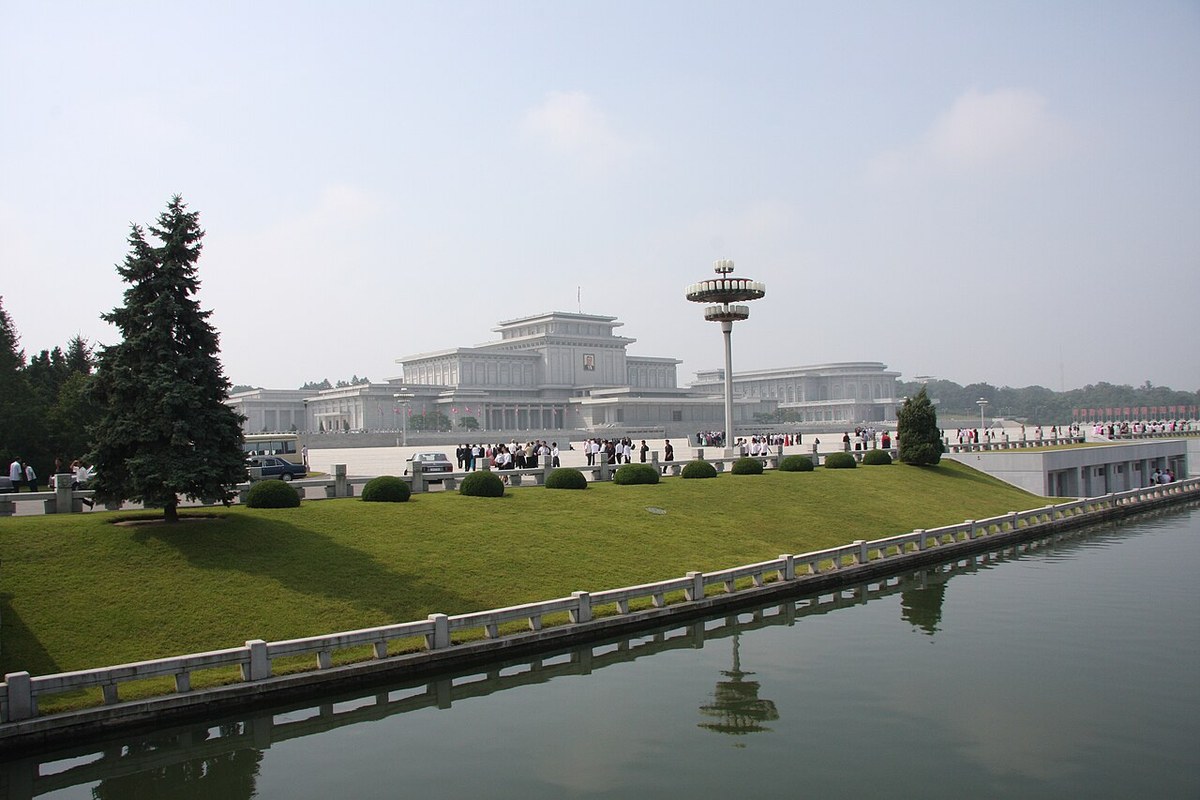

By 2012 the body was, in Al Jazeera's words, "already on view to favoured visitors" at the building, which had become the Kumsusan Memorial Palace. Al Jazeera reported in December 2011 that Kim Il-sung "has been on display since his death in 1994," and RIA Novosti that he lay "in a glass case." According to a January 2012 Al Jazeera report with AFP, "Kim Il-sung's corpse was embalmed with the help of a Russian team which continues to visit North Korea to renew the embalming, a process that takes about a month." UPI reported on 13 June 1995, from a North Korean radio announcement, that the body would be kept "in the form of eternal life" in a glass coffin at the Kumsusan Assembly Hall, to be renamed the Kumsusan Memorial Palace. The sources used here give no opening date and no cost for the mausoleum.
How the death was announced and used
The state did not report the death for more than 34 hours, AP said. AP said South Korean television carried the news first, then played a tape of the northern broadcast, delivered in "an almost sobbing voice": "Our great leader has died of a sudden disease!" About an hour after the initial announcement KCNA confirmed it: "Our respected fatherly leader ... departed from us, to our greatest sorrow." UPI quoted a message on the official radio calling it "the biggest loss of our party and revolution and the deepest grief of the whole nation," and reported that flags were at half-mast along the Demilitarized Zone and that the KCNA statement said foreign guests would not be invited to the funeral.
.jpg)
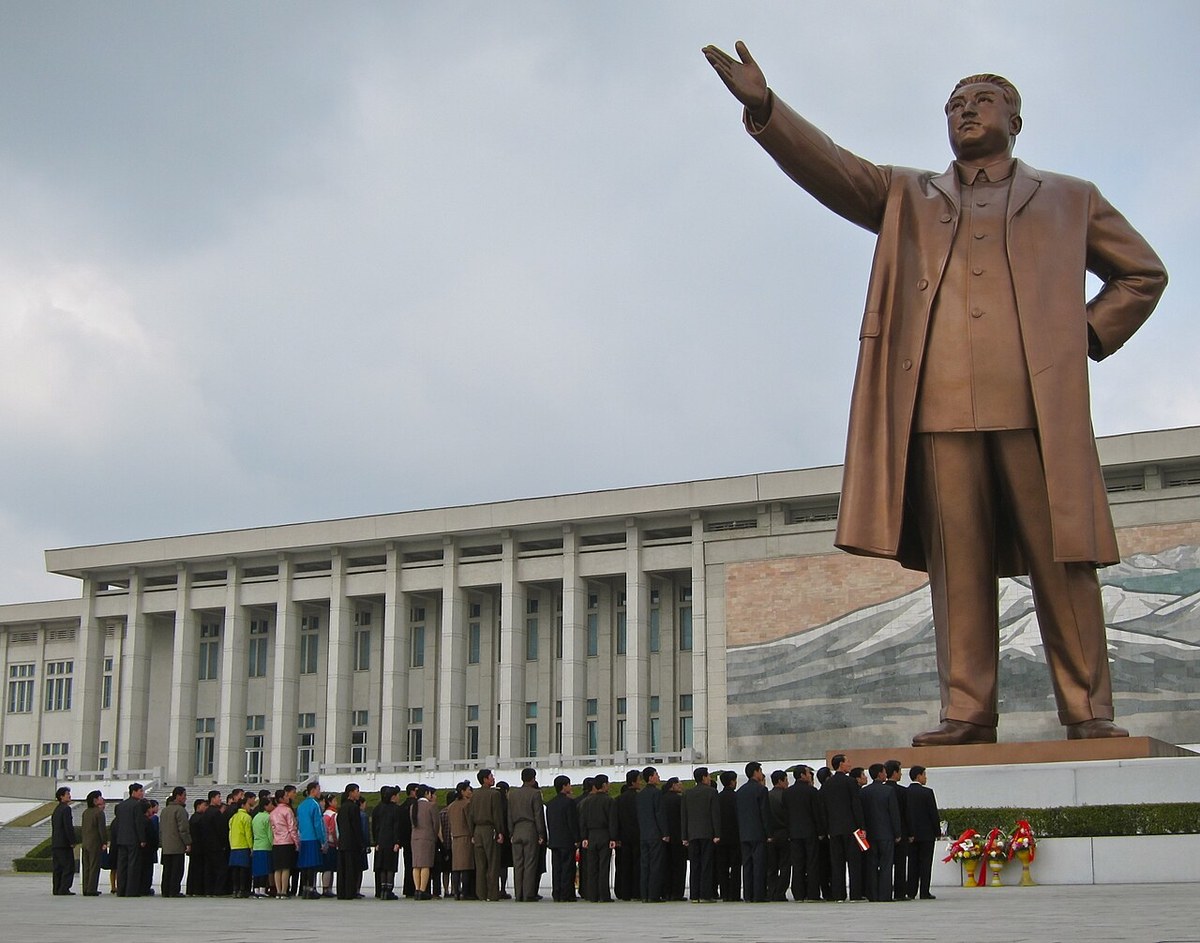

Outside the country the news was handled as a security matter. South Korea put its armed forces on alert and President Kim Young-sam told his defence minister to "prepare for all contingencies" (AP). President Clinton said: "We appreciate his leadership in resuming the talks between our governments. We hope they will continue as appropriate." The Los Angeles Times reported on 10 July 1994 that "Neither the North nor the South canceled plans for the summit, but staging it appears highly unlikely." UPI reported that the status of the Geneva talks and of the planned summit of 25 to 27 July was unclear after the announcement; the sources used here do not say when either resumed.
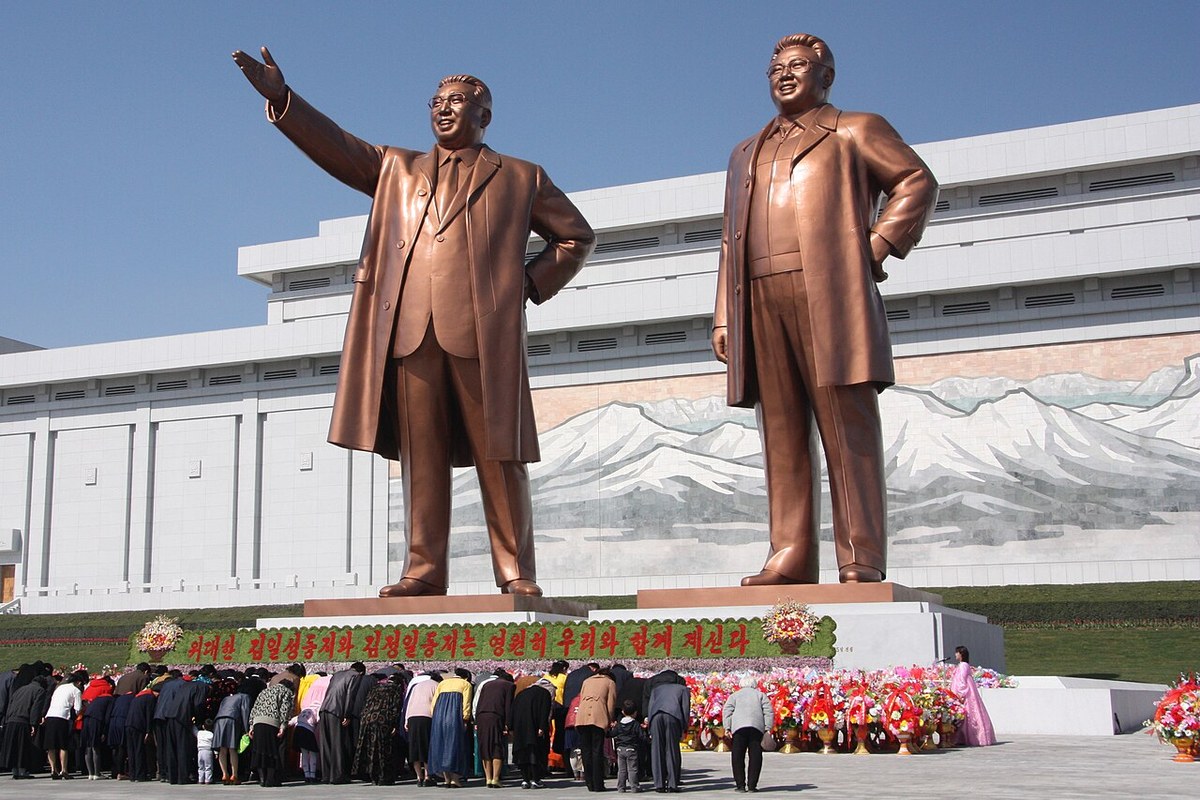
Inside the country the use was constitutional. The 1998 text of the constitution, as amended on 5 September 1998 and reproduced in English on Wikisource, says in its preamble: "The Democratic People's Republic of Korea and the Korean people, under the leadership of the Workers' Party of Korea, will uphold the great leader Comrade Kim Il Sung as the eternal President of the Republic." It also states: "The Socialist Constitution of the Democratic People's Republic of Korea is the Kim Il Sung Constitution." In the same text Article 102 says the Chairman of the National Defence Commission "commands and directs all the armed forces," and Article 111 says the President of the Presidium of the Supreme People's Assembly "represents the State." Al Jazeera, in 2012, described him as "North Korea's founding president Kim Il-sung who was declared the country's eternal president after his death in 1994."
Timeline
- June 1994: Meeting with Jimmy Carter; nuclear freeze pledge (AP).
- 7 July 1994: Heart attack, according to the official medical report.
- 8 July 1994: Death at 2 am, officially.
- 9 July 1994: Death announced by Radio Pyongyang and KCNA, about 34 hours later; funeral set for 17 July (AP, UPI).
- 19 July 1994: Funeral cortege reported in Pyongyang (Washington Post).
- 5 September 1998: Constitution amended to name him "eternal President of the Republic."
Same-standard note
This page applies the same questions as every ending page: what the state said, what independent reporters could check, and how the death was used. The cause and the circumstances rest on state media, as they do on the page of Kim Jong Il. The reader is told which statements are official and which are outside reporting. The page does not guess what the official account leaves out; it marks what is unverified.
Sources
Official: KCNA statements and the medical report of 9 July 1994, as quoted by UPI and AP below; Socialist Constitution of the DPRK as amended 5 September 1998, English text on Wikisource (https://en.wikisource.org/wiki/Socialist_Constitution_of_the_Democratic_People%27s_Republic_of_Korea_(1998)), a transcription whose own page does not identify the source document.
Independent: Associated Press, 9 July 1994 (https://www.spokesman.com/stories/1994/jul/09/n-korean-ruler-kim-dies-at-82-south-goes-on-alert/); UPI, 9 July 1994 (https://www.upi.com/Archives/1994/07/09/N-Koreas-Kim-Il-sung-82-dies/9216773726400/); Washington Post, 19 July 1994, "Millions weep as N. Korean leader's funeral begins" (https://www.washingtonpost.com/archive/politics/1994/07/19/millions-weep-as-n-korean-leaders-funeral-begins/4157a972-5042-40ed-ae75-9b16e6a11c6b/), headline and opening paragraphs only, as the full text could not be retrieved; Al Jazeera, 20 December 2011 (https://www.aljazeera.com/news/2011/12/20/kim-jong-un-leads-mass-mourning-for-father); RIA Novosti, 19 December 2011 (https://www.globalsecurity.org/wmd/library/news/dprk/2011/dprk-111219-rianovosti03.htm); Los Angeles Times, 10 July 1994 (https://www.latimes.com/archives/la-xpm-1994-07-10-mn-14107-story.html); UPI, 13 June 1995 (https://www.upi.com/Archives/1995/06/13/North-Korea-to-preserve-Kims-body/6313803016000/); Al Jazeera and AFP, 12 January 2012 (https://www.aljazeera.com/amp/news/2012/1/12/north-korea-to-embalm-kim-jong-ils-body).