In one line: Kim Jong Il died of a reported heart attack on a train, the state announced it two days later in the same broadcast that named his son as successor, and the state organised national mourning.
The final days
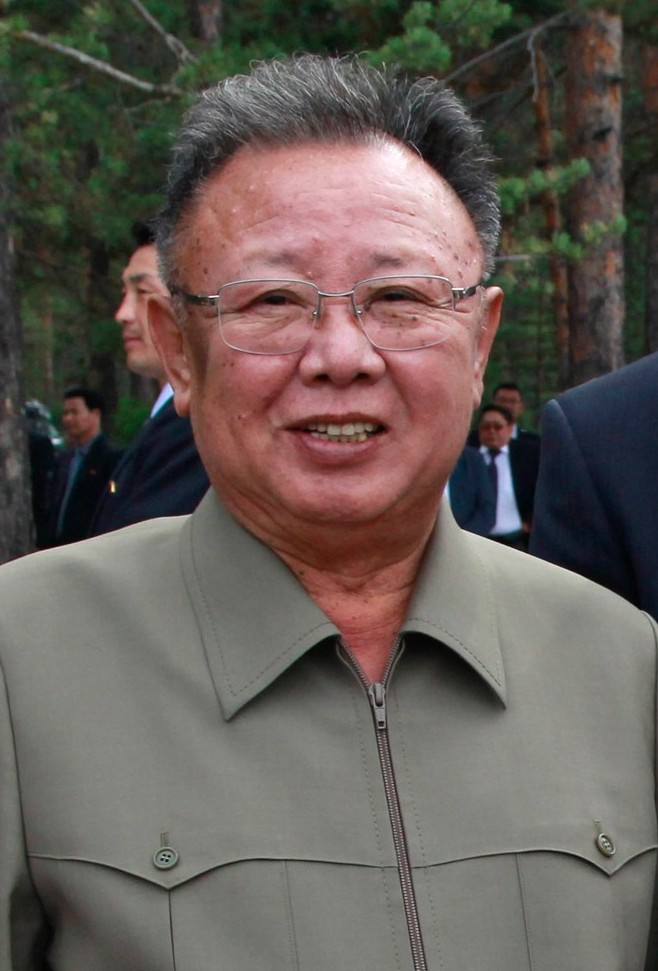
In the months before his death Kim made trips abroad that outside observers read as a sign of recovery. RFE/RL reported in December 2011 that he was thought to have had a stroke in 2008 and that analysts said his recent trips to China and Russia suggested his health had improved. The Kremlin photographed him during talks in Russia on 24 August 2011, and published the pictures under an open licence. The sources used here give no other account of his health in the final weeks.

The death
The first dispatch from the Korean Central News Agency (KCNA), dated 19 December 2011, reads: "Kim Jong Il, general secretary of the Workers' Party of Korea, chairman of the DPRK National Defence Commission and supreme commander of the Korean People's Army, passed away from a great mental and physical strain at 08:30 December 17, 2011, on train during a field guidance tour." The medical report issued by the state, as reproduced by Bloomberg, said he "suffered an advanced acute myocardial infarction, complicated with a serious heart shock, on train" and that "an autopsy on December 18 fully confirmed the diagnosis of his diseases." RIA Novosti summarised the cause as a heart attack due to "physical and mental over-work."
The sources used here include no independent examination, no location for the train and no confirmation of the time. The autopsy is reported only in the state's own medical report. They contain no claim that he died of any other cause, and this page does not suggest one.
What happened to the body
Al Jazeera reported on 20 December that Kim's body was laid in a glass coffin at the Kumsusan Memorial Palace, where his father Kim Il Sung had been on display since 1994, and that Kim Jong Un had visited it, in KCNA's words, "with party, government and military officials and expressed condolences with the deepest sorrow."
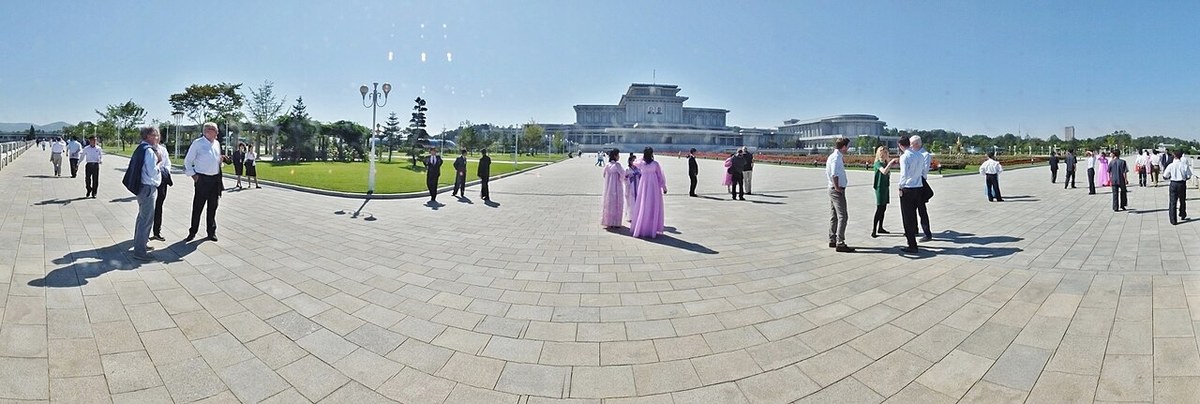

The farewell ceremony took place on 28 December. ABC News reported that tens of thousands of Pyongyang residents lined snow-covered streets while a black hearse carrying a flower-decorated coffin made its entrance at 10 am. Kim Jong Un walked beside it with his left hand on the car's side mirror, with the military chief Ri Yong Ho on his left and his uncle Jang Song-thaek just behind him. Rifles were fired 21 times when the three-hour procession ended back at the palace. A soldier told state television: "Even the people, mountains, rivers and the sky are crying for our dear leader." ABC reported that the country would observe three minutes of silence at noon on 29 December, with trains, ships and cars required to sound whistles and sirens.
On 12 January 2012 KCNA announced that the body would be preserved. In its words: "Great leader Kim Jong-il will be preserved to look the same as when he was alive, at Kumsusan Memorial Palace," as Al Jazeera and AFP reported. The same decision, quoting the ruling party, said a bronze statue would be erected, smiling portraits "and towers to his immortality" would be built nationwide, and his birthday, 16 February, would be named the Day of the Shining Star. The BBC reported on 16 February 2012 that the palace, where his body lies in state, had been renamed the Kumsusan Palace of the Sun "in honour of both Mr Kim and his father, the country's founding leader, Kim Il-sung."
How the death was announced and used
Counting from the time KCNA gave for the death, 08:30 on 17 December, to the announcement on 19 December, about two days passed before the public was told. A tearful newsreader dressed in black read the notice on state television. In the words reported by RFE/RL: "I'm announcing in the most woeful mind that our great leader Kim Jong Il passed away due to sudden illness on his way to a field guidance on December 17, 2011." She also said, as RIA Novosti reported: "It is our people and nation's biggest sadness."
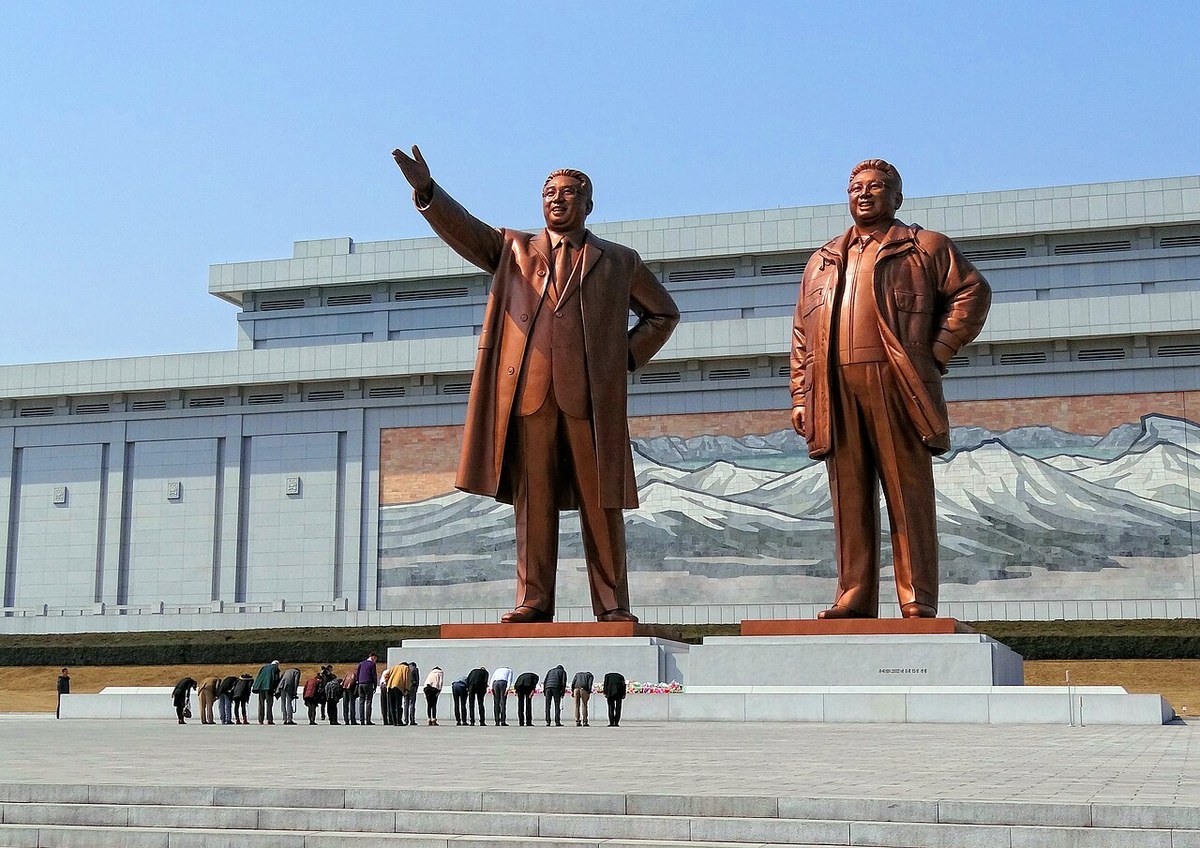

The succession was announced in the same bulletin. KCNA called Kim Jong Un the "great successor to the revolutionary cause of Juche and outstanding leader of our party, army and people" (RIA Novosti). Al Jazeera reported that on 20 December KCNA described him as "a great person born of heaven," a term it said only his father and his grandfather had enjoyed, and that the party newspaper Rodong Sinmun called him "the spiritual pillar and the lighthouse of hope" for the military and the people.
RIA Novosti, citing KCNA, reported that the funeral would be held in Pyongyang on 28 December, that mourning would last until 29 December, and that no foreign delegations would be allowed to attend. Al Jazeera reported flags at half-staff, shops closed and streams of mourners laying flowers at memorials.
State television showed residents pounding the ground. Don Kirk, South Korea correspondent of the Christian Science Monitor, told Al Jazeera: "If you're living in Pyongyang, you're going to weep and wail. Whether or not you're shedding genuine tears is another matter," and said of the announcer: "wept and wailed through the whole programme but nobody saw tears trickling down her cheeks." That is one observer's reading, and the sources used here do not establish how many mourners were sincere.
Abroad, South Korea put its military on alert and raised surveillance along the border, while President Lee Myung-bak asked residents to carry on with daily life (Al Jazeera). Al Jazeera reported that the South Korean government sent condolences to the North Korean people through Unification Minister Yu Woo-ik. China said it was "distressed" (RFE/RL) and sent "deep condolences" (Al Jazeera). The White House spokesman said Washington remained "committed to stability on the Korean peninsula" (RIA Novosti), and Secretary of State Clinton said the United States remained "deeply concerned" about the well-being of the North Korean people (Al Jazeera).
Timeline
- 24 August 2011: Talks in Russia, photographed by the Kremlin.
- 17 December 2011: Death at 8:30 am, per state media.
- 18 December 2011: Autopsy, per the state's medical report.
- 19 December 2011: Announcement and succession named.
- 20 December 2011: Kim Jong Un visits the body (KCNA, via Al Jazeera).
- 28 December 2011: Funeral procession in Pyongyang.
- 29 December 2011: End of the mourning period; three minutes of silence.
- 12 January 2012: Preservation of the body announced.
Same-standard note
This page uses the same sequence of questions as the page for Kim Il Sung and for every other leader: what the state said, what could be checked, how the death was used. In both cases the death was announced after a delay and the cause rests on state reports. It differs from the 1994 case in that the successor was named in the announcement itself; the sources used for 1994 describe Kim Jong Il as heir apparent and host of the funeral. That is a difference of circumstance, and it does not suggest the two cases were identical or that the official account is false.
Sources
Official: KCNA, 19 December 2011, as carried at GlobalSecurity (https://www.globalsecurity.org/wmd/library/news/dprk/2011/dprk-111219-kcna01.htm); the KCNA medical report of 19 December 2011, as reproduced in the Bloomberg report "North Korea's Kim Had 'Serious Heart Shock,' KCNA Says: Text" (https://www.bloomberg.com/news/articles/2011-12-19/north-korea-s-kim-had-serious-heart-shock-following-long-illness-text), quoted from the search excerpt because the page itself could not be retrieved.
Independent: RFE/RL, 19 December 2011 (https://www.rferl.org/a/north_korean_leader_dies/24426152.html); RIA Novosti, 19 December 2011 (https://www.globalsecurity.org/wmd/library/news/dprk/2011/dprk-111219-rianovosti03.htm); Al Jazeera, 20 December 2011 (https://www.aljazeera.com/news/2011/12/20/kim-jong-un-leads-mass-mourning-for-father); ABC News, 28 December 2011 (https://abcnews.com/International/kim-jong-il-funeral-thousands-mourn-north-korea/story?id=15244457); Al Jazeera and AFP, 12 January 2012 (https://www.aljazeera.com/amp/news/2012/1/12/north-korea-to-embalm-kim-jong-ils-body); BBC News, 16 February 2012 (https://www.bbc.co.uk/news/world-asia-17053986).