Mao Zedong
Illustration, not an archive object
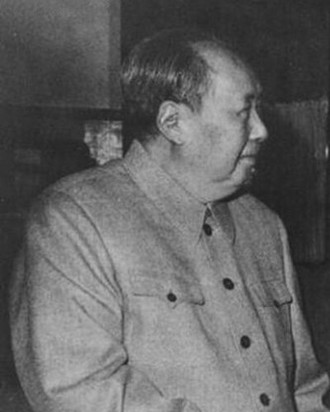

Chairman of the CCP Central Committee · China
On the regime page: People's Republic of China under Mao Zedong
22 quotes, oldest first. Filter with other speakers.
“Secondly, a revolution is not a dinner party, or writing an essay, or painting a picture, or doing embroidery; it cannot be so refined, so leisurely and gentle, so temperate, kind, courteous, restrained and magnanimous. A revolution is an insurrection, an act of violence by which one class overthrows another.”
Original (Chinese)
第二,革命不是请客吃饭,不是做文章,不是绘画绣花,不能那样雅致,那样从容不迫,文质彬彬,那样温良恭俭让。革命是暴动,是一个阶级推翻一个阶级的暴烈的行动。
English: Foreign Languages Press, Peking, official English translation (Selected Works of Mao Tse-tung, vol. 1)
Written after a 32-day investigation (4 January to 5 February 1927) of five counties in Hunan, in answer to criticism that the peasant movement was going 'too far'.
Report on an Investigation of the Peasant Movement in Hunan, March 1927, in Selected Works of Mao Tse-tung, vol. 1 (Peking: Foreign Languages Press, 1965) Source
Content note: Advocates terror against landlords and counter-revolutionaries. The words are shown as they were said or written. Why
“To put it bluntly, it is necessary to create terror for a while in every rural area, or otherwise it would be impossible to suppress the activities of the counter-revolutionaries in the countryside or overthrow the authority of the gentry. Proper limits have to be exceeded in order to right a wrong, or else the wrong cannot be righted.”
Original (Chinese)
质言之,每个农村都必须造成一个短时期的恐怖现象,非如此决不能镇压农村反革命派的活动,决不能打倒绅权。矫枉必须过正,不过正不能矫枉
English: Foreign Languages Press, Peking, official English translation (Selected Works of Mao Tse-tung, vol. 1)
From the section answering the objection that peasant associations were 'going too far' by punishing landlords and 'evil gentry'. The report was written as the Kuomintang-Communist alliance was breaking down.
Report on an Investigation of the Peasant Movement in Hunan, March 1927, in Selected Works of Mao Tse-tung, vol. 1 (Peking: Foreign Languages Press, 1965) Source
“Every Communist must grasp the truth, "Political power grows out of the barrel of a gun." Our principle is that the Party commands the gun, and the gun must never be allowed to command the Party.”
Original (Chinese)
每个共产党员都应懂得这个真理:“枪杆子里面出政权”。我们的原则是党指挥枪,而决不容许枪指挥党。
English: Foreign Languages Press, Peking, official English translation (Selected Works of Mao Tse-tung, vol. 2)
Part of Mao's concluding speech at the Sixth Plenary Session of the Sixth Central Committee during the war against Japan, on the role of armed force in the Party's work.
Problems of War and Strategy, 6 November 1938 (part of the concluding speech at the Sixth Plenary Session of the Sixth Central Committee), in Selected Works of Mao Tse-tung, vol. 2 (Peking: Foreign Languages Press, 1965) Source
“The purpose of our meeting today is precisely to ensure that literature and art fit well into the whole revolutionary machine as a component part, that they operate as powerful weapons for uniting and educating the people and for attacking and destroying the enemy, and that they help the people fight the enemy with one heart and one mind.”
Original (Chinese)
我们今天开会,就是要使文艺很好地成为整个革命机器的一个组成部分,作为团结人民、教育人民、打击敌人、消灭敌人的有力的武器,帮助人民同心同德地和敌人作斗争。
English: Foreign Languages Press, Peking, official English translation (Selected Works of Mao Tse-tung, vol. 3)
Opening remarks at a forum of writers and artists in the Communist base area at Yenan, held during the Rectification Movement. The talks became the Party's basic statement on the function of literature and art.
Talks at the Yenan Forum on Literature and Art, introduction of 2 May 1942, in Selected Works of Mao Tse-tung, vol. 3 (Peking: Foreign Languages Press, 1965) Source
“The atom bomb is a paper tiger which the U.S. reactionaries use to scare people. It looks terrible, but in fact it isn't. Of course, the atom bomb is a weapon of mass slaughter, but the outcome of a war is decided by the people, not by one or two new types of weapon.”
Original (Chinese)
原子弹是美国反动派用来吓人的一只纸老虎,看样子可怕,实际上并不可怕。当然,原子弹是一种大规模屠杀的武器,但是决定战争胜败的是人民,而不是一两件新式武器。
English: Foreign Languages Press, Peking, official English translation (Selected Works of Mao Tse-tung, vol. 4)
Reply to a question from the American writer Anna Louise Strong about what would follow if the United States used the atom bomb against the Soviet Union, during the Chinese civil war.
Talk with the American correspondent Anna Louise Strong, August 1946, in Selected Works of Mao Tse-tung, vol. 4 (Peking: Foreign Languages Press, 1961) Source
Content note: States that opponents will be deprived of the right to speak. The words are shown as they were said or written. Why
“"You are dictatorial." My dear sirs, you are right, that is just what we are. All the experience the Chinese people have accumulated through several decades teaches us to enforce the people's democratic dictatorship, that is, to deprive the reactionaries of the right to speak and let the people alone have that right.”
Original (Chinese)
“你们独裁。”可爱的先生们,你们讲对了,我们正是这样。中国人民在几十年中积累起来的一切经验,都叫我们实行人民民主专政,或曰人民民主独裁,总之是一样,就是剥夺反动派的发言权,只让人民有发言权。
English: Foreign Languages Press, Peking, official English translation (Selected Works of Mao Tse-tung, vol. 4)
Published three months before the founding of the People's Republic, in answer to criticism from domestic and foreign opponents of the coming state. It set out which classes would count as 'the people' and which would be subject to dictatorship.
On the People's Democratic Dictatorship, 30 June 1949 (28th anniversary of the Communist Party), in Selected Works of Mao Tse-tung, vol. 4 (Peking: Foreign Languages Press, 1961) Source
Content note: Declares no leniency towards designated 'reactionary classes'. The words are shown as they were said or written. Why
“"You are not benevolent!" Quite so. We definitely do not apply a policy of benevolence to the reactionaries and towards the reactionary activities of the reactionary classes.”
Original (Chinese)
“你们不仁。”正是这样。我们对于反动派和反动阶级的反动行为,决不施仁政。我们仅仅施仁政于人民内部,而不施于人民外部的反动派和反动阶级的反动行为。
English: Foreign Languages Press, Peking, official English translation (Selected Works of Mao Tse-tung, vol. 4)
From the same essay, answering the charge that the future state would not be benevolent towards its opponents.
On the People's Democratic Dictatorship, 30 June 1949, in Selected Works of Mao Tse-tung, vol. 4 (Peking: Foreign Languages Press, 1961) Source
“When classes disappear, all instruments of class struggle -- parties and the state machinery -- will lose their function, cease to be necessary, therefore gradually wither away and end their historical mission; and human society will move to a higher stage.”
Original (Chinese)
阶级消灭了,作为阶级斗争的工具的一切东西,政党和国家机器,将因其丧失作用,没有需要,逐步地衰亡下去,完结自己的历史使命,而走到更高级的人类社会。
English: Foreign Languages Press, Peking, official English translation (Selected Works of Mao Tse-tung, vol. 4)
Essay written to mark the 28th anniversary of the Communist Party of China, three months before the People's Republic was proclaimed. In the opening passage he says parties and the state machinery will cease to be necessary once classes disappear.
On the People's Democratic Dictatorship, 30 June 1949, in Selected Works of Mao Tse-tung, vol. 4 (Peking: Foreign Languages Press, 1961) Source
“We, on the contrary, declare openly that we are striving hard to create the very conditions which will bring about their extinction. The leadership of the Communist Party and the state power of the people's dictatorship are such conditions. Anyone who does not recognize this truth is no communist.”
Original (Chinese)
我们则公开声明,恰是为着促使这些东西的消灭而创设条件,而努力奋斗。共产党的领导和人民专政的国家权力,就是这样的条件。不承认这一条真理,就不是共产主义者。
English: Foreign Languages Press, Peking, official English translation (Selected Works of Mao Tse-tung, vol. 4)
Same essay, immediately after the passage on the withering away of parties and the state. He says the Party's leadership and the state power of the people's dictatorship are the conditions for that extinction, and makes recognising this a test of being a communist.
On the People's Democratic Dictatorship, 30 June 1949, in Selected Works of Mao Tse-tung, vol. 4 (Peking: Foreign Languages Press, 1961) Source
“Ours will no longer be a nation subject to insult and humiliation. We have stood up.”
Original (Chinese)
我们的民族将再也不是一个被人侮辱的民族了,我们已经站起来了。
English: Foreign Languages Press, Peking, official English translation (Selected Works of Mao Tse-tung, vol. 5)
Opening address to the conference that preceded the proclamation of the People's Republic on 1 October 1949, delivered before some 600 delegates.
Opening address at the First Plenary Session of the Chinese People's Political Consultative Conference, 21 September 1949, in Selected Works of Mao Tse-tung, vol. 5 (Peking: Foreign Languages Press, 1977) Source
Content note: Directive to execute counter-revolutionaries. The words are shown as they were said or written. Why
“To strike surely means to pay attention to tactics. To strike accurately means to avoid wrong executions. To strike relentlessly means resolutely to kill all such reactionary elements as deserve the death penalty (of course, those who don't will not be executed). So long as we avoid wrong executions, we don't have to worry even if the bourgeoisie raises an outcry.”
Original (Chinese)
所谓打得稳,就是要注意策略。打得准,就是不要杀错。打得狠,就是要坚决地杀掉一切应杀的反动分子(不应杀者,当然不杀)。只要我们不杀错,资产阶级虽有叫唤,也就不怕他们叫唤。
English: Foreign Languages Press, Peking, official English translation (Selected Works of Mao Tse-tung, vol. 5)
Internal directive drafted for the Central Committee during the Campaign to Suppress Counter-Revolutionaries, after reports of executions in western Hunan. The same group of directives also urges care to avoid wrong executions.
Strike Surely, Accurately and Relentlessly in Suppressing Counter-Revolutionaries, directive dated 17 January 1951 (item 2 of a group of directives of December 1950-September 1951), in Selected Works of Mao Tse-tung, vol. 5 (Peking: Foreign Languages Press, 1977) Source
“Letting a hundred flowers blossom and a hundred schools of thought contend is the policy for promoting progress in the arts and sciences and a flourishing socialist culture in our land. Different forms and styles in art should develop freely and different schools in science should contend freely. We think that it is harmful to the growth of art and science if administrative measures are used to impose one particular style of art or school of thought and to ban another.”
Original (Chinese)
百花齐放、百家争鸣的方针,是促进艺术发展和科学进步的方针,是促进我国的社会主义文化繁荣的方针。艺术上不同的形式和风格可以自由发展,科学上不同的学派可以自由争论。利用行政力量,强制推行一种风格,一种学派,禁止另一种风格,另一种学派,我们认为会有害于艺术和科学的发展。
English: Foreign Languages Press, Peking, official English translation (Selected Works of Mao Tse-tung, vol. 5)
Speech at the Eleventh Session (Enlarged) of the Supreme State Conference, setting out the 'Hundred Flowers' policy. Mao went over the verbatim record and made additions before it was published in the People's Daily on 19 June 1957.
On the Correct Handling of Contradictions Among the People, speech of 27 February 1957 as revised by Mao for publication in the People's Daily, 19 June 1957, in Selected Works of Mao Tse-tung, vol. 5 (Peking: Foreign Languages Press, 1977) Source
“All erroneous ideas, all poisonous weeds, all ghosts and monsters, must be subjected to criticism; in no circumstances should they be allowed to spread freely. However, the criticism should be fully reasoned, analytical and convincing, and neither rough and bureaucratic, nor metaphysical and dogmatic.”
Original (Chinese)
凡是错误的思想,凡是毒草,凡是牛鬼蛇神,都应该进行批判,决不能让他们自由泛滥。但是,这种批判,应该是充分说理的、有分析的、有说服力的,而不应该是粗暴的、官僚主义的,或者是形而上学的、教条主义的。
English: Foreign Languages Press, Peking, official English translation (Selected Works of Mao Tse-tung, vol. 5)
Speech to Party propaganda officials during the Hundred Flowers period, on how to treat criticism of Marxism and ideas the Party considered wrong.
Speech at the Chinese Communist Party's National Conference on Propaganda Work, 12 March 1957, in Selected Works of Mao Tse-tung, vol. 5 (Peking: Foreign Languages Press, 1977) Source
“The current criticism and rectification movement has been launched by the Communist Party. As we expected and hoped, poisonous weeds have been growing side by side with fragrant flowers and ghosts and monsters appearing together with the unicorn and phoenix. Anyway, good things outnumber bad. Some say we are trying to catch big fish, and we say we are digging up poisonous weeds, which are only different ways of saying the same thing.”
Original (Chinese)
这一次批评运动和整风运动是共产党发动的。毒草共香花同生,牛鬼蛇神与麟凤龟龙并长,这是我们所料到的,也是我们所希望的。毕竟好的是多数,坏的是少数。人们说钓大鱼,我们说锄毒草,事情一样,说法不同。
English: Foreign Languages Press, Peking, official English translation (Selected Works of Mao Tse-tung, vol. 5)
Article written by Mao and circulated among Party cadres (per the Selected Works headnote) about three weeks before the Anti-Rightist Campaign began, while the Party's rectification movement and public criticism were under way.
Things Are Beginning to Change, article of 15 May 1957 circulated among Party cadres, in Selected Works of Mao Tse-tung, vol. 5 (Peking: Foreign Languages Press, 1977) Source
“Better let the reactionary professors, lecturers, assistants and students spew out their venom and speak without any inhibitions. They are the best teachers.”
Original (Chinese)
最好让反动的教授、讲师、助教及学生大吐毒素,畅所欲言。他们是最好的教员。
English: Foreign Languages Press, Peking, official English translation (Selected Works of Mao Tse-tung, vol. 5)
Inner-Party directive drafted for the Central Committee as the Party moved from the Hundred Flowers criticism to the Anti-Rightist Campaign. It instructs Party organisations on how to handle open criticism at universities and in the press.
Muster Our Forces to Repulse the Rightists' Wild Attacks, inner-Party directive of 8 June 1957 drafted for the Central Committee, in Selected Works of Mao Tse-tung, vol. 5 (Peking: Foreign Languages Press, 1977) Source
Content note: Describes critics as 'ghosts and monsters' and 'poisonous weeds' to be uprooted. The words are shown as they were said or written. Why
“Let ghosts and monsters come out and make an exhibition of themselves, and afterwards the people will say these ghosts and monsters are no good and must be eliminated. Let poisonous weeds sprout, then uproot them and plough them under for manure.”
Original (Chinese)
牛鬼蛇神让它出来,然后展览,展览之后,大家说牛鬼蛇神不好,要打倒。毒草让它出来,然后锄掉,锄倒可以作肥料。
English: Foreign Languages Press, Peking, official English translation (Selected Works of Mao Tse-tung, vol. 5)
Speech to Party cadres in Shanghai a month into the Anti-Rightist Campaign, about people who had criticised the Party during the Hundred Flowers period.
Beat Back the Attacks of the Bourgeois Rightists, speech of 9 July 1957 at a conference of cadres in Shanghai, in Selected Works of Mao Tse-tung, vol. 5 (Peking: Foreign Languages Press, 1977) Source
Content note: Boasts of killing many more intellectuals than a historical tyrant. The words are shown as they were said or written. Why
“What did he amount to? He only buried alive 460 scholars, while we buried 46,000. In our suppression of the counter-revolutionaries, did we not kill some counter-revolutionary intellectuals? I once debated with the democratic people: You accuse us of acting like Ch’in-shih-huang, but you are wrong; we surpass him 100 times. You berate us for imitating Ch’in-shih-huang in enforcing dictatorship. We admit them all. What is regrettable is that you did not say enough. We have had to say it for you.”
English: Maoist Documentation Project / marxists.org from the Red Guard publication 'Long Live Mao Zedong Thought' (1969), as given in Selected Works vol. 8. Original-language text not found.
Remarks at the Congress in a passage about attitudes to ancient and modern learning, after Lin Biao interjected that the first emperor Qin Shi Huang had 'burned the books and buried the scholars alive'. The traditional account is that 460 scholars were buried.
Speech of 8 May 1958 at the Second Session of the Eighth Party Congress, English translation of the Red Guard publication 'Long Live Mao Zedong Thought' (1969), as given in Selected Works of Mao Tse-tung, vol. 8 (marxists.org Maoist Documentation Project compilation) Source
“Any mistakes that the Centre has made ought to be my direct responsibilty, and I also have an indirect share in the blame because I am the Chairman of the Central Committee. I don’t want other people to shirk their responsibility.”
English: Peking Review, no. 27 (7 July 1978), as reproduced by marxists.org. Original-language text not found.
Speech to a conference of about 7,000 Party cadres held after the failure of the Great Leap Forward and the famine of 1959-61, mainly on democratic centralism. Mao had made similar remarks in June 1961 to a smaller meeting, as he says here.
Talk at an enlarged working conference convened by the Central Committee of the CCP ('7,000 cadres conference'), 30 January 1962, English translation published in Peking Review, no. 27, 7 July 1978 Source
“Adopting the reactionary stand of the bourgeoisie, they have enforced a bourgeois dictatorship and struck down the surging movement of the great cultural revolution of the proletariat. They have stood facts on their head and juggled black and white, encircled and suppressed revolutionaries, stifled opinions differing from their own, imposed a white terror, and felt very pleased with themselves.”
English: Peking Review, no. 33 (3 November 1967), as reproduced by marxists.org. Original-language text not found.
Short note dated 5 August 1966, during the Eleventh Plenum of the Eighth Central Committee, criticising the handling of the early Cultural Revolution by 'some leading comrades from the central down to the local levels'.
Bombard the Headquarters - My First Big-Character Poster, 5 August 1966, English translation in Peking Review, no. 33 (3 November 1967) Source
“The main question is what policy to adopt towards the so-called chaos at various places. In my opinion, we should let the chaos go on for a few months and just firmly believe that the majority is good and only the minority bad.”
English: Maoist Documentation Project / marxists.org from the Red Guard publication 'Long Live Mao Tse-tung Thought'. Original-language text not found.
Remarks at a central work conference during the first months of the Cultural Revolution, about how Party committees should respond to student Red Guard activity and disorder in the provinces.
Talk at the Work Conference of the Centre, 23 August 1966, English translation of the Red Guard publication 'Long Live Mao Tse-tung Thought', as given on marxists.org Source
“I like rightists. People say you are rightists, that the Republican Party is to the right, that Prime Minister Heath is also to the right. [...] I am comparatively happy when these people on the right come into power.”
Original (Chinese)
我是喜欢右派。人家说你们是右派,说你们共和党是右派。 [...] 说英国的希思首相是右派。 [...] 我是喜欢右派,比较高兴这些右派当政。
English: US interpreter's record (Tang Wen-sheng), as printed in FRUS 1969-1976, vol. XVII, doc. 194
First meeting between Mao and Nixon, during the President's visit to China. Mao had just said he voted for Nixon in the election and Nixon had replied that it was 'the lesser of two evils'. The omitted lines are Nixon's interjection ('And General De Gaulle') and Mao's remarks on De Gaulle and the West German Christian Democrats.
Memorandum of conversation between Chairman Mao Tse-tung and President Nixon, Beijing, 21 February 1972, 2:50-3:55 p.m., in Foreign Relations of the United States, 1969-1976, vol. XVII, China, 1969-1972, doc. 194, p. 680 Source
Content note: Offers women as an export commodity in a joke to a foreign official. The words are shown as they were said or written. Why
“You know China is a very poor country. We don’t have much. What we have in excess is women. [...] So if you want them we can give a few of those to you, some tens of thousands. [...] Let them go to your place. They will create disasters. That way you can lessen our burdens.”
English: US interpreter's record, as printed in FRUS 1969-1976, vol. XVIII, doc. 12. Original-language text not found.
Late-night conversation with Kissinger during discussion of Sino-American trade, with Zhou Enlai present. The omitted lines are Kissinger's reply ('There are no quotas for those or tariffs') and Zhou's ('Of course, on a voluntary basis'), both recorded in the memorandum with laughter.
Memorandum of conversation between Chairman Mao Tsetung and Dr Kissinger, Beijing, 17-18 February 1973, 11:30 p.m.-1:20 a.m., in Foreign Relations of the United States, 1969-1976, vol. XVIII, China, 1973-1976, doc. 12, pp. 130-131 Source
Often attributed, not verified
These words circulate under Mao Zedong’s name but could not be traced to a source. They are listed so readers can check them, not as Mao Zedong’s words.
“The commonly circulated nuclear-war remark: that if half of mankind died in a nuclear war the other half would remain and 'imperialism would be razed to the ground' (variously worded).”
The remark is widely reported and the speech (an edited text and an unedited translation) is held in the Wilson Center Digital Archive, but that host could not be reached from the research environment and the wordings in secondary accounts differ (e.g. an Origins article gives 'if half of mankind dies, the other half would remain while imperialism would be destroyed'). The Chinese minutes in the marxists.org Chinese archive for 18 November 1957 contain only other passages. No wording was published here because none could be checked against a primary text.
“It is better to let half the people die so that the other half can eat their fill.”
Not found in the 1959 talks reproduced in Selected Works vol. 8 on marxists.org (21 February 1959 talk, the Lushan talks, etc.). It is reported in secondary accounts of the 1959 Shanghai meeting, which this check could not match to a primary text.
“Women hold up half the sky.”
Not found in Selected Works vols. 1-5, the 1966 Quotations from Chairman Mao (Red Book, all 33 chapters) or the Mao volumes 6-9 pages read. It circulated as a Party propaganda slogan and is attributed to Mao in secondary sources; no primary text checked.