In one line: Franklin D. Roosevelt, president of the United States from 1933, died of a cerebral haemorrhage at his cottage at Warm Springs, Georgia, at 15:35 on 12 April 1945, less than three months into his fourth term, after a decline in health that his physicians had recorded and the public had not been told about.
The final days
Roosevelt had been paralysed by illness in 1921, a condition that was public knowledge; it is a separate matter from the heart condition described next, and the archive does not rely here on any account of how the press handled it.

The heart condition is a separate matter. Roosevelt's blood pressure was recorded as raised from the mid-1930s. On 27 March 1944, after a period of tiredness, he was examined at Bethesda Naval Hospital by the cardiologist Howard Bruenn, whose own account, published in the Annals of Internal Medicine in 1970, records congestive heart failure, hypertensive heart disease and a blood pressure of 186/108 (as quoted in Hektoen International's summary and in the National Park Service's account). Bruenn continued to attend him until his death. The Navy's surgeon general, Vice Admiral Ross McIntire, was the president's official physician, and his public statements in 1944 described the president's health as good. Bruenn's findings were not published until 1970, and voters in November 1944 were not told of them. Roosevelt won a fourth term on 7 November 1944. A further claim, made by Steven Lomazow and Eric Fettmann in FDR's Deadly Secret (2009), that a melanoma was present and undisclosed, is contested and cannot be tested without an autopsy.
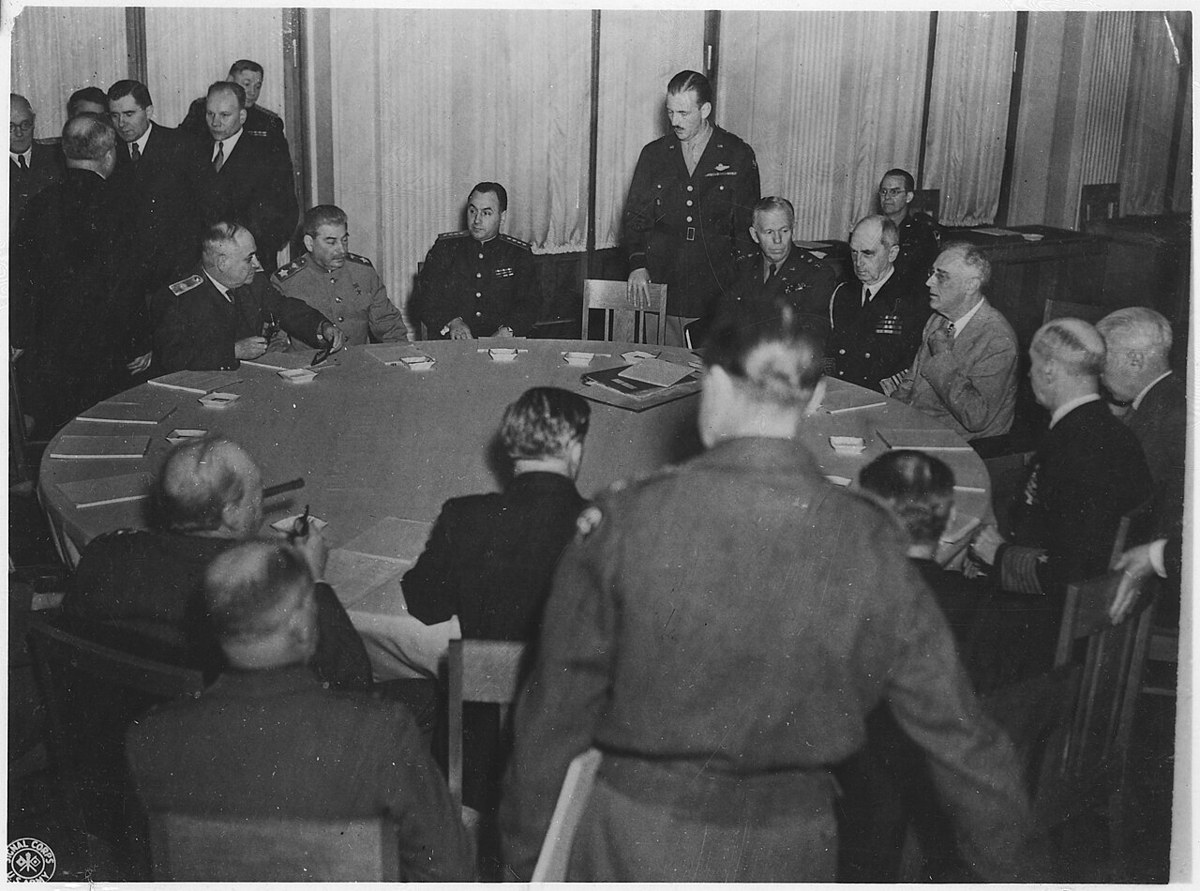
The fourth inauguration, on 20 January 1945, was held on the South Portico of the White House with a short address. Roosevelt then travelled to the Yalta conference with Churchill and Stalin (4 to 11 February 1945); photographs taken there show him visibly thinner. On 1 March 1945 he reported on Yalta to Congress while seated. On 30 March he went to Warm Springs, where he had gone since the 1920s for the warm pool and for rest.
The death
On 12 April 1945 Roosevelt sat in the living room of the Little White House for a portrait by the painter Elizabeth Shoumatoff. Also at the cottage were his cousins Margaret Suckley and Laura Delano and Lucy Mercer Rutherfurd, who had arrived on 9 April (National Park Service, Home of Franklin D. Roosevelt National Historic Site). At about 13:00 he complained of a sudden pain in the back of his head, and at about 13:15 he lost consciousness and did not recover it (United Press, 12 April 1945).
According to the same United Press report, only three medical men were with him when he died: Commander Bruenn, Lieutenant Commander George Fox and the Atlanta physician James Paullin; Suckley, Delano, his secretary Grace Tully and White House secretary William Hassett were in the house. Bruenn recorded a blood pressure above 300/190 that morning, and his notes give 15:35 as the time of death, with a diagnosis of cerebral haemorrhage (Hektoen International summary of the 1970 paper; the Roosevelt Library and the Miller Center also give 15:35 and cerebral haemorrhage). There was no autopsy. Eleanor Roosevelt, who was in Washington, flew to Warm Springs and accompanied the body on the journey north (United Press; National Archives).
The disputed or unsettled points are these.
- The extent of what was known. McIntire's public statements in 1944 described the president's health as good, and Bruenn's findings were not published until 1970. Historians differ over how far the president himself and his wife understood his prognosis.
- The records. Bruenn's clinical notes were not published until 1970; the archive's sources do not establish the fate of any particular record, and none is asserted here.
- The cause. Bruenn's account is that of a cerebral haemorrhage from long-standing hypertension. Lomazow's neurological hypothesis rests on photographs and later review, not on tissue.
What happened to the body
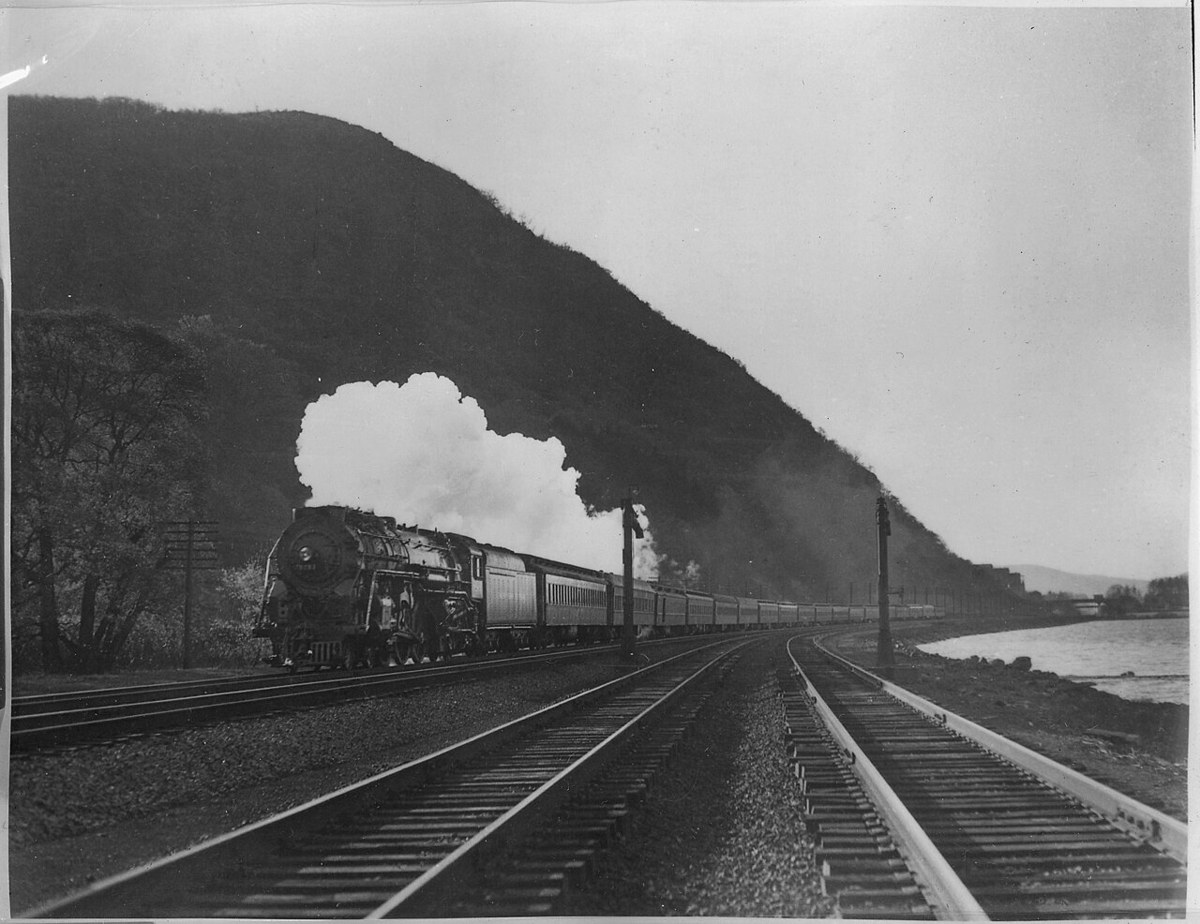
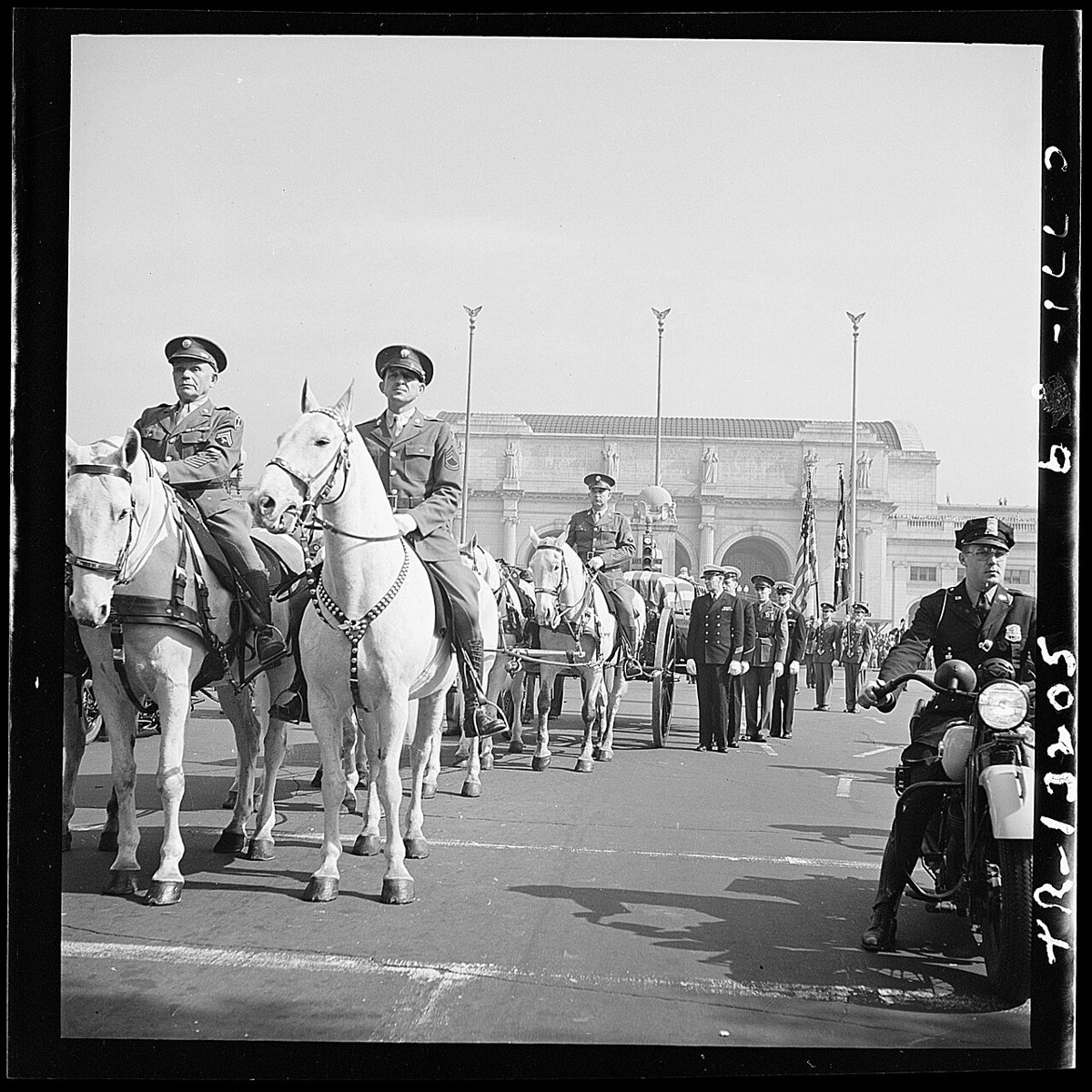
On 13 April 1945 the funeral train left Warm Springs for Washington, and hundreds of thousands of people lined the route through to Hyde Park (Miller Center). On 14 April the casket was transferred at Union Station to a military caisson and taken in procession along Constitution Avenue, where about 500,000 people were reported along the route, to the White House. A private Episcopal service was held in the East Room at 4:00 p.m., and that evening the casket was put on a train to Hyde Park (National Archives, FDR Library blog; United Press had announced the East Room service on 12 April).


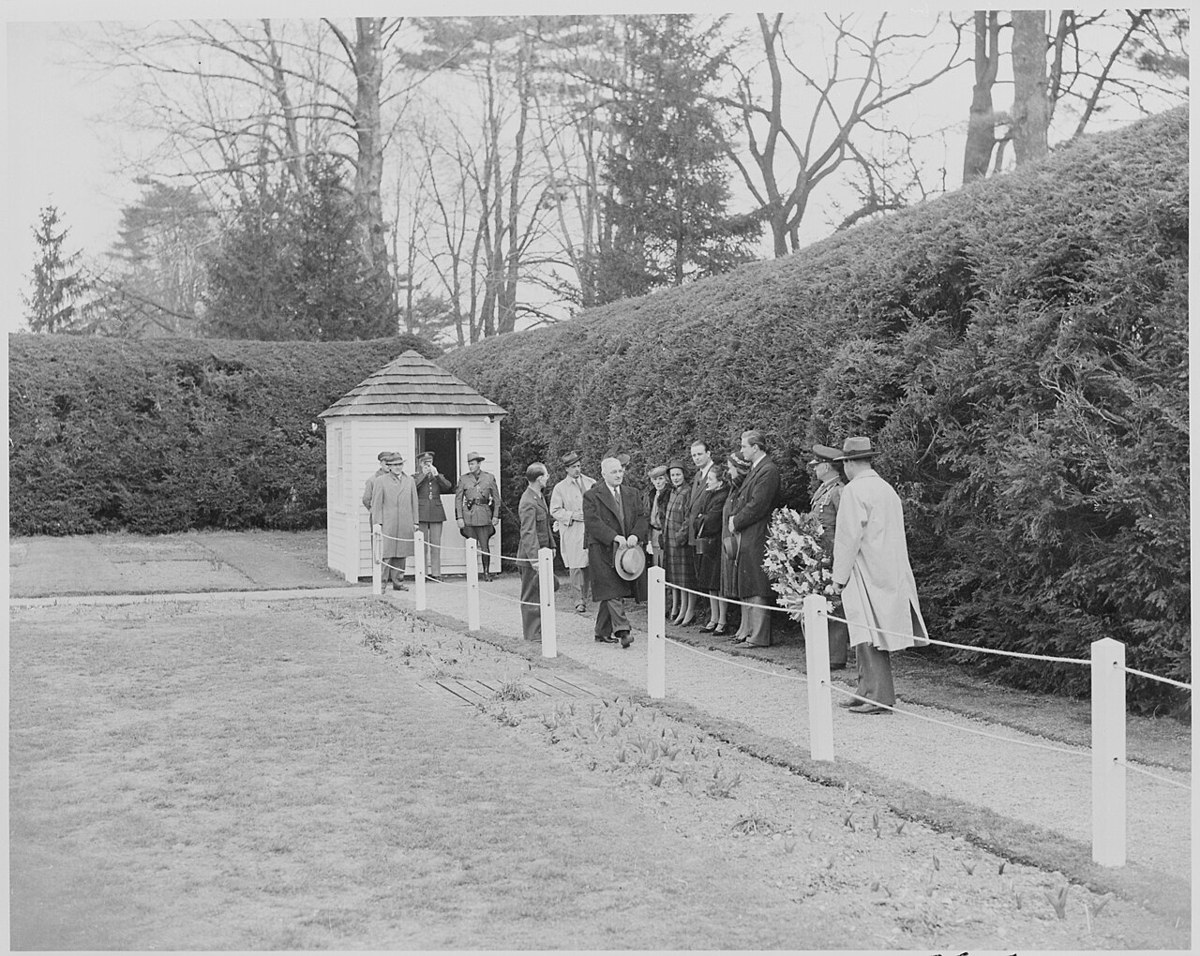
On 15 April 1945 Roosevelt was buried in the rose garden at Springwood, the family estate at Hyde Park, with West Point cadets as an honour guard and an Army Air Forces flyover (National Archives). Handwritten burial instructions he had written in December 1937 were found only after the interment, and he and Eleanor Roosevelt had both opposed lying in state (National Archives, Prologue blog). Eleanor Roosevelt was buried in the same place later.

How the death was announced and used
At Warm Springs, Hassett told the press association reporters of the death (United Press). In Washington, press secretary Stephen Early received the news by telephone and wire flashes carried it worldwide (National Archives, FDR Library blog "Flash, the President is Dead"). Vice President Harry Truman was summoned to the White House that afternoon and took the oath of office the same day (Truman Library Institute; Miller Center). The Truman Library Institute quotes him as saying he felt "like the moon, the stars, and all the planets had fallen on me." The archive has not seen the text of his Memoirs for the exchange with Eleanor Roosevelt on his arrival and does not reproduce it.

The news reached other governments and publics in different ways.
- Germany. Time of 23 April 1945 reported that "plain Germans barely glanced up from their ruins" and that "Professional Nazis spat." Accounts of Joseph Goebbels's telephone call to Hitler, the comparison with 1762 and Hitler's order of the day are not included because the archive has not examined the diaries or Kershaw's text.
- United States and United Kingdom. Churchill paid tribute to Roosevelt in the House of Commons on 17 April (ww2today); the Miller Center records that he described the news as like a "physical blow."
- Soviet Union. Ambassador Harriman reported on 13 April that Molotov came to the embassy and said that "all Russia would mourn his death and that the world had lost a great leader to guide the way in peace" (Foreign Relations of the United States, 1945, vol. 5, doc. 627). The Miller Center says Stalin was distressed at the news.
- Japan. Time quoted Prime Minister Kantaro Suzuki in an English-language broadcast: "I must admit that Roosevelt's leadership has been very effective and has been responsible for the Americans' advantageous position today. For that reason I can easily understand the great loss his passing means to the American people and my profound sympathy goes to them."
The fact of the unpublished health record became a subject of argument after 1945.
Timeline
- 27 March 1944: Bruenn examines Roosevelt at Bethesda and records heart failure.
- 7 November 1944: re-elected for a fourth term.
- 20 January 1945: fourth inauguration.
- 4 to 11 February 1945: Yalta conference.
- 30 March 1945: arrives at Warm Springs.
- 12 April 1945: collapses at about 13:00; death at 15:35; Truman takes the oath that day.
- 13 April 1945: funeral train leaves Warm Springs.
- 14 April 1945: cortege in Washington; East Room service; train leaves for Hyde Park.
- 15 April 1945: buried at Hyde Park.
- 1970: Bruenn publishes his clinical notes.
Same-standard note
This page uses the same sections and definitions as every "How they died" page and marks disputed points. Roosevelt died in office of natural causes during a war. The control of information here was about his health: his physicians' public statements in 1944 described it as good, and the cardiologist's findings were withheld from the public until 1970. This differs in kind from leaders who were killed, executed or died in custody, and from leaders whose deaths were announced by the state alone, such as Stalin, and no equivalence is implied.
Sources
- Howard G. Bruenn, "Clinical Notes on the Illness and Death of President Franklin D. Roosevelt", Annals of Internal Medicine 72 (1970), 579 to 591: https://doi.org/10.7326/0003-4819-72-4-579 (read through the summary at https://hekint.org/2017/01/31/franklin-delano-roosevelts-last-illness/)
- National Park Service, "The Dying President": https://www.nps.gov/hofr/blogs/the-dying-president.htm
- United Press, "Roosevelt dies of stroke at Little White House", 12 April 1945: https://www.upi.com/Archives/1945/04/12/Roosevelt-dies-of-stroke-at-Little-White-House/6802441123641/
- National Archives, FDR Library blog: https://fdr.blogs.archives.gov/2020/04/15/more-than-a-moment-for-the-nation-the-presidential-funeral-of-fdr/ ; https://fdr.blogs.archives.gov/2025/04/11/flash-the-president-is-dead-april-12-1945/ ; https://prologue.blogs.archives.gov/2020/04/10/the-death-of-a-president
- Miller Center, "Franklin D. Roosevelt: Death of the President": https://millercenter.org/president/fdroosevelt/death-of-the-president
- Truman Library Institute, "WWII 80: The President is Dead": https://www.trumanlibraryinstitute.org/wwii-80-the-president-is-dead/
- "The Enemy Speaks", Time, 23 April 1945: https://time.com/archive/6792608/international-the-enemy-speaks/
- Foreign Relations of the United States, 1945, vol. 5, doc. 627 (Harriman telegram, 13 April 1945): https://history.state.gov/historicaldocuments/frus1945v05/d627
- Churchill's tribute, 17 April 1945: https://www.ww2today.com/p/45-04-17-churchill-pays-tribute-to-roosevelt
- Also named in the text: Ross T. McIntire, White House Physician (1946); Steven Lomazow and Eric Fettmann, FDR's Deadly Secret (2009).
- US National Archives photographs 197001, 520676, 195351 and 199365 (Yalta, caisson, funeral train, grave).