In one line: From 4 March 1933 to 12 April 1945 Franklin D. Roosevelt was President of the United States, elected four times in a constitutional democracy; his administration ran the New Deal and the war effort, built wartime censorship and information offices, and ordered the exclusion of Japanese Americans from the West Coast, after which about 120,000 people of Japanese ancestry, roughly two-thirds of them U.S. citizens, were held in camps.
The leader and the people under the leader
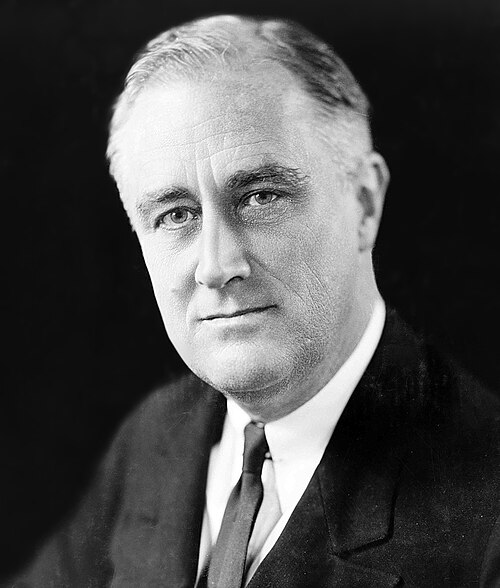
Photo: Elias Goldensky, Public domain (copyright registered 1933, not renewed) Franklin D. Roosevelt
President of the United States · 1933 to 1945
Head of state, head of government and Commander in Chief, who won the presidency in 1932, 1936, 1940 and 1944 and died in office on 12 April 1945.
In their words
“All Americans abhor censorship, just as they abhor war. But the experience of this and of all other Nations has demonstrated that some degree of censorship is essential in wartime, and we are at war.”
“I hereby authorize and direct the Secretary of War, and the Military Commanders whom he may from time to time designate, whenever he or any designated Commander deems such actions necessary or desirable, to prescribe military areas in such places and of such extent as he or the appropriate Military Commanders may determine, from which any or all persons may be excluded, and with such respect to which, the right of any person to enter, remain in, or leave shall be subject to whatever restrictions the Secretary of War or the appropriate Military Commander may impose in his discretion.”
“If you feel that your Government is not disclosing enough of the truth, you have every right to say so. But—in the absence of all the facts, as revealed by official sources—you have no right in the ethics of patriotism to deal out unconfirmed reports in such a way as to make people believe that they are gospel truth.”
In the archive: The Office of War Information's Domestic Branch, 1942-43

White House
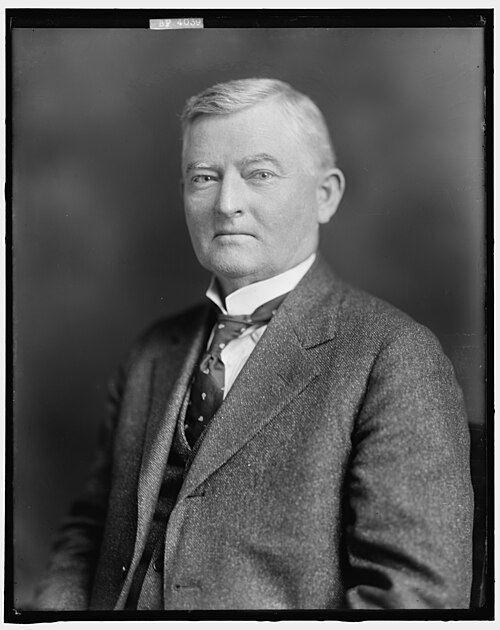
Photo: Harris & Ewing, Public domain (Library of Congress: no known restrictions on publication) John Nance Garner
Vice President of the United States · 1933 to 1941
Presided over the Senate from 4 March 1933 to 20 January 1941; a former Speaker of the House, he sought the 1940 Democratic presidential nomination and was not renominated as vice president.
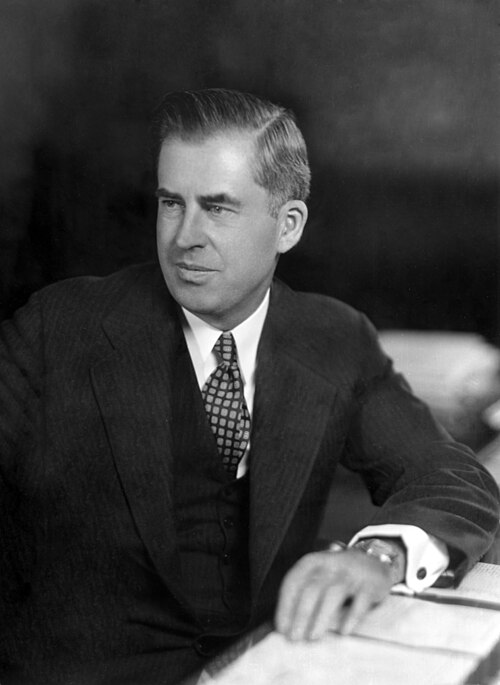
Photo: Unknown (U.S. Department of Agriculture), Public domain (U.S. federal government work) Henry A. Wallace
Vice President of the United States · 1941 to 1945
Presided over the Senate from 20 January 1941 and chaired the Board of Economic Warfare until July 1943; earlier Secretary of Agriculture (1933 to 1940), he was not renominated in 1944.
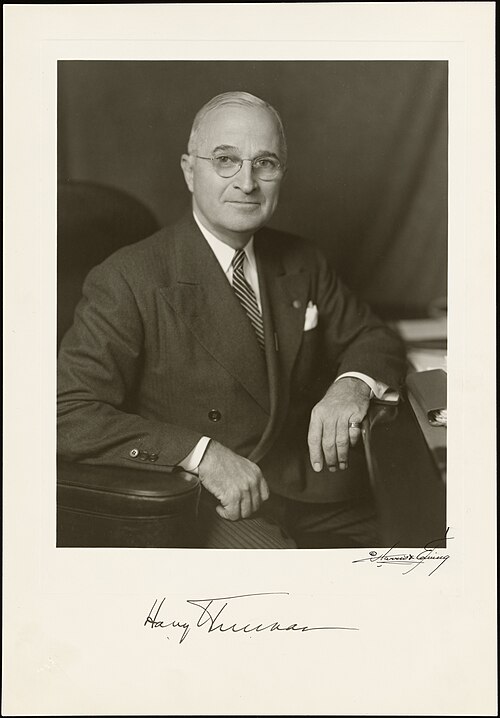
Photo: Harris & Ewing Studio, CC0 (Smithsonian Open Access) Harry S. Truman
Vice President of the United States · 1945
Sworn in as vice president on 20 January 1945 and succeeded to the presidency on Roosevelt's death 82 days later; earlier a Senator from Missouri who chaired the Senate committee investigating the national defense program.
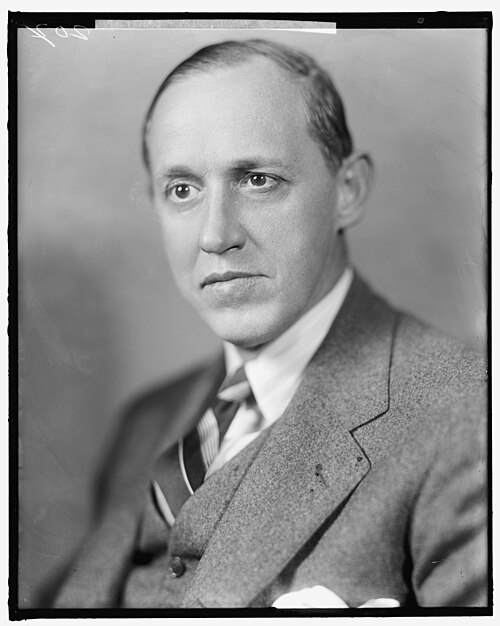
Photo: Harris & Ewing, Public domain (Library of Congress: no known restrictions on publication) Harry Hopkins
Special Assistant to the President · 1940 to 1945
Lived at the White House from May 1940 as Roosevelt's personal adviser and envoy to Churchill and Stalin; earlier ran the federal relief programmes (FERA, CWA, WPA) and served as Secretary of Commerce from 1938 to 1940.


Cabinet
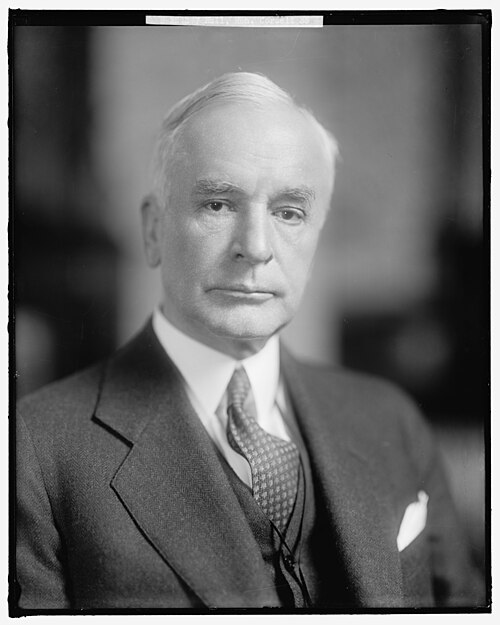
Photo: Harris & Ewing, Public domain (Library of Congress: no known restrictions on publication) Cordell Hull
Secretary of State · 1933 to 1944
Headed the State Department from 4 March 1933 to 30 November 1944, negotiated reciprocal trade agreements, and delivered the U.S. note to Japan of 26 November 1941.
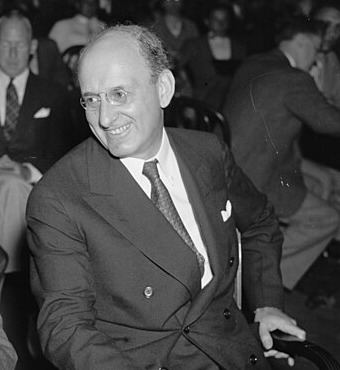
Photo: Harris & Ewing, Public domain (Library of Congress: no known restrictions on publication) Henry Morgenthau Jr.
Secretary of the Treasury · 1934 to 1945
Headed the Treasury from 1 January 1934 to 22 July 1945; the department ran the wartime war bond drives.
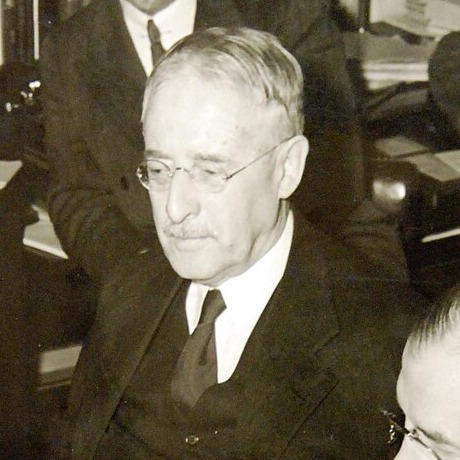
Photo: U.S. Office of War Information photographer (National Museum of the U.S. Navy, Lot-1952-5), Public domain (U.S. federal government work) Henry L. Stimson
Secretary of War · 1940 to 1945
Headed the War Department from 10 July 1940 to 21 September 1945; the department carried out the West Coast exclusion of Japanese Americans under Executive Order 9066.
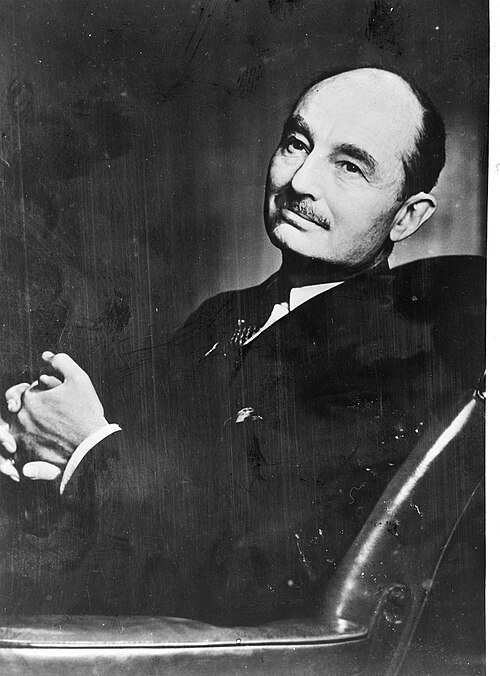
Photo: Anefo (Dutch news agency), CC0 (Nationaal Archief) Francis Biddle
Attorney General · 1941 to 1945
Headed the Justice Department from 26 August 1941 to 26 June 1945, which administered the enemy-alien proclamations and the FBI; earlier Solicitor General, and afterwards a judge at the Nuremberg trial.
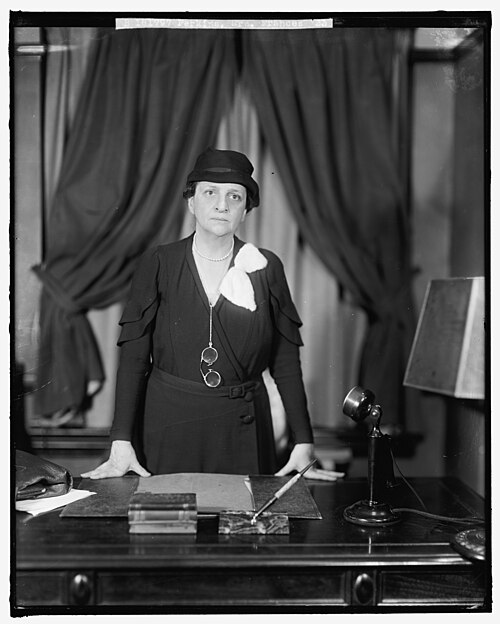
Photo: Harris & Ewing, Public domain (Library of Congress: no known restrictions on publication) Frances Perkins
Secretary of Labor · 1933 to 1945
The first woman in a U.S. cabinet, she headed the Labor Department from 4 March 1933 to 30 June 1945 and chaired the Committee on Economic Security that drafted the Social Security Act.


.jpg)


Armed forces
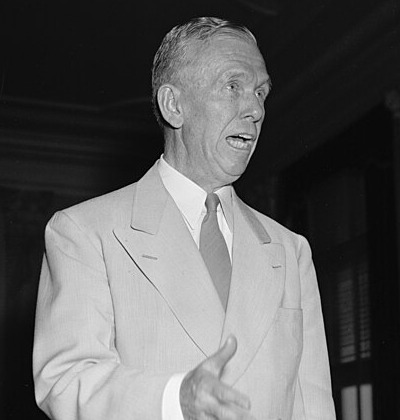
Photo: Harris & Ewing, Public domain (Library of Congress: no known restrictions on publication) George C. Marshall
Chief of Staff of the Army · 1939 to 1945
Chief of Staff from 1 September 1939 to 21 November 1945, directed the wartime expansion of the Army and in 1942 asked Frank Capra to make the Why We Fight films for soldiers.
In the archive: Why We Fight: the U.S. Army's orientation films, 1942-1945
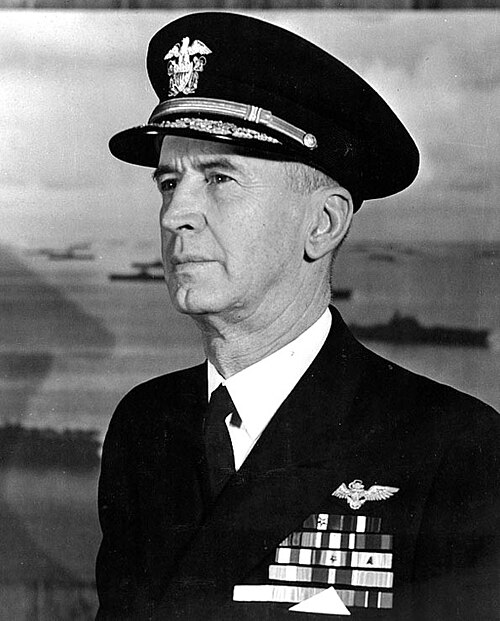
Photo: Unknown (U.S. Navy), Public domain (U.S. federal government work) Ernest J. King
Commander in Chief, U.S. Fleet, and Chief of Naval Operations · 1941 to 1945
Commanded the U.S. Fleet from 30 December 1941 and was also Chief of Naval Operations from 26 March 1942 to December 1945; promoted Fleet Admiral in December 1944.


War information, censorship and intelligence
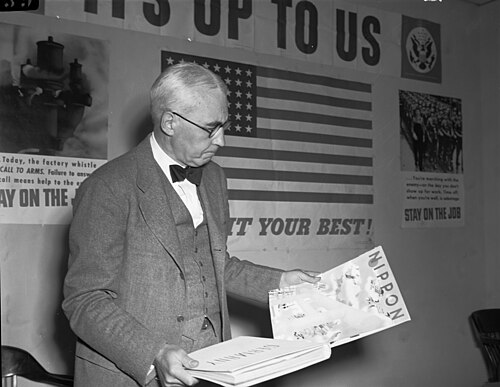
Photo: U.S. Office of War Information, Public domain (U.S. federal government work) Elmer Davis
Director of the Office of War Information · 1942 to 1945
A CBS news commentator, he directed the Office of War Information from its creation on 13 June 1942, and gave a weekly radio news commentary to the public.
In their words
“All of us in the news business ought to remember that our primary responsibility is to the man who buys his newspaper, or turns on his radio, expecting us to give him in so far as is humanly possible not only the truth and nothing but the truth, but the whole truth.”
In the archive: The Office of War Information's Domestic Branch, 1942-43, The U.S. Office of War Information and the Writers' War Board: a 'strategy of truth' meets the advertising men
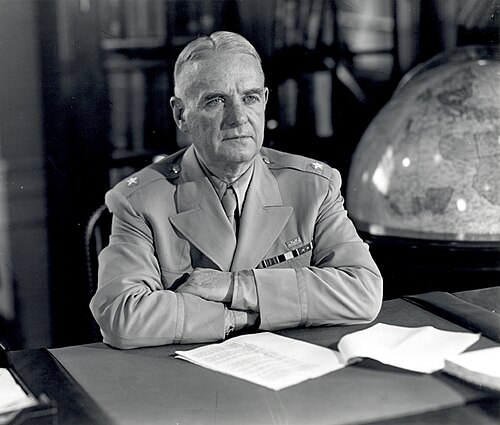
Photo: Unknown (U.S. government), Public domain (U.S. federal government work) William J. Donovan
Coordinator of Information; from 1942 Director of the Office of Strategic Services · 1941 to 1945
Headed the Coordinator of Information from 11 July 1941 and the Office of Strategic Services, created on 13 June 1942, until it was dissolved in 1945; the OSS ran intelligence, sabotage and propaganda operations abroad.
In the archive: The U.S. Office of War Information and the Writers' War Board: a 'strategy of truth' meets the advertising men
No public-domain or openly licensed portrait from his years in office found. Nearest: source, a 1953 photograph from a 1961 Swedish book, tagged public domain on Commons but not verified. Byron Price
Director of Censorship · 1941 to 1945
An Associated Press executive news editor, named Director of Censorship on 19 December 1941, he ran the Office of Censorship, whose voluntary press and radio code took effect in January 1942, until it closed in November 1945.
In their words
“The code was in the form of a request to newspapers and all other publications to refrain from publishing information on a given list of subjects, such as the movements of troops and ships, exact war production statistics, and the development of new military models, unless such information was given out officially.”
In the archive: The U.S. Office of War Information and the Writers' War Board: a 'strategy of truth' meets the advertising men

_Donovan,_Head_of_the_OSS.jpg)

Background and rise to power
Roosevelt, a New York Democrat, was Assistant Secretary of the Navy from 1913 to 1920 and Governor of New York from 1929 to 1932. In November 1932, in the third year of the Depression, he defeated the Republican incumbent Herbert Hoover by 472 electoral votes to 59. In his inaugural address he said "the only thing we have to fear is fear itself".
He won again in 1936 (523 electoral votes to 8), 1940 (449 to 82) and 1944 (432 to 99); the Twenty-second Amendment (1951) later limited presidents to two elected terms. He died at Warm Springs, Georgia, on 12 April 1945, and Vice President Harry Truman succeeded him.
How power was organized
Elections, Congress and the courts continued to operate during the war. Democrats held both houses of Congress throughout, elections ran on schedule during the war, the Supreme Court struck down parts of the New Deal (the National Industrial Recovery Act in 1935), and Roosevelt's plan of February 1937 to add justices failed in the Senate. The press was privately owned, and most newspapers by number endorsed his Republican opponents in 1936, 1940 and 1944 (Winfield).
The "hundred days" of 1933 brought the Emergency Banking Act and the National Industrial Recovery Act; the Social Security Act followed in 1935. Roosevelt moved from the Neutrality Acts to Lend-Lease (11 March 1941). After Japan attacked Pearl Harbor on 7 December 1941, "a date which will live in infamy" in his words to Congress, the United States declared war on Japan, and Germany and Italy declared war on it on 11 December. The First War Powers Act of 18 December gave the President wide authority over agencies and communications.
On 19 February 1942 Roosevelt signed Executive Order 9066. It says "the successful prosecution of the war requires every possible protection against espionage and against sabotage" and authorises "the Secretary of War, and the Military Commanders whom he may from time to time designate" to prescribe military areas "from which any or all persons may be excluded". Its text names no ethnic group; the orders issued under it did. Lt. Gen. John L. DeWitt applied it to people of Japanese ancestry on the West Coast, citizens and non-citizens alike; Congress made violation a misdemeanour (Public Law 503, 21 March), and Executive Order 9102 created the War Relocation Authority. About 120,000 people went to assembly centres and then ten camps, held without individual charges or hearings (the posted exclusion order). Proclamations of December 1941 also made Japanese, German and Italian nationals enemy aliens, and the Justice Department interned some. On 18 December 1944 the Supreme Court upheld the exclusion order in Korematsu v. United States and, the same day, held in Ex parte Endo that a loyal citizen could not be detained; the orders had been rescinded on 17 December and the last camp closed in March 1946. In 1983 a congressional commission concluded that the policy was shaped by "race prejudice, war hysteria and a failure of political leadership"; the Civil Liberties Act of 1988 gave an apology and redress.
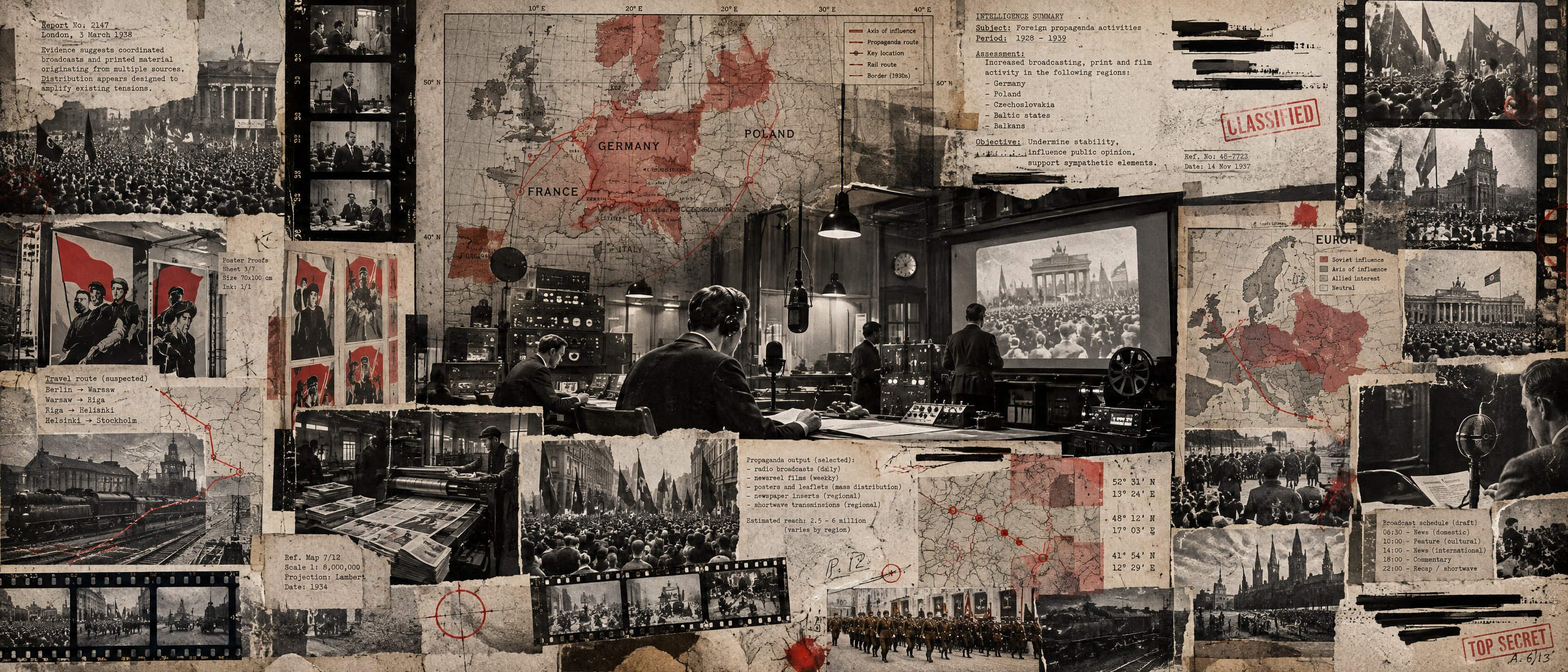
The propaganda apparatus
Roosevelt's own channels. The first of about thirty radio "fireside chats" (12 March 1933) began "I want to talk for a few minutes with the people of the United States about banking". His frequent press conferences had ground rules limiting what reporters could quote, and Stephen Early ran the press office from 1933 to 1945 (Winfield). New Deal publicity included the Blue Eagle campaign of the National Recovery Administration, the Resettlement Administration photographers whose work forms the Library of Congress FSA/OWI collection, and the films The Plow That Broke the Plains (1936) and The River (1938).
Censorship. Executive Order 8985 (19 December 1941) created the Office of Censorship under Byron Price of the Associated Press. Censorship of press and radio was voluntary: the Code of Wartime Practices for the American Press (15 January 1942) asked editors not to publish listed categories such as troop movements and ship sailings. Censorship of international mail, cables and telephone calls was compulsory, and the armed forces censored dispatches from the fronts. George Roeder shows that photographs of American dead were withheld until September 1943, when the President approved release and Life printed one (The Censored War). The OWI did not hold these powers (the offices compared).
The Office of War Information. Executive Order 9182 (13 June 1942) merged four information offices into the OWI "in recognition of the right of the American people and of all other peoples opposing the Axis aggressors to be truthfully informed about the common war effort", and told its director, Elmer Davis, to run programs "through the use of press, radio, motion picture, and other facilities". The Domestic Branch issued posters, pamphlets and guides for magazine editors; its Bureau of Motion Pictures under Lowell Mellett issued a studio manual and read scripts. The Overseas Branch ran the broadcasts that became the Voice of America. OWI's film Japanese Relocation (1942) called the removal a "mass migration" (the Domestic Branch). In April 1943 writers resigned, saying the OWI's home-front activities were "now dominated by high pressure promoters who prefer slick salesmanship to honest information", and the House then cut the branch's funds, some members charging it promoted Roosevelt (Winkler). The advertising industry's War Advertising Council carried government themes in commercial advertising, and Henry Morgenthau's Treasury ran the war bond drives.
Other channels. William J. Donovan's Office of Strategic Services included a Morale Operations branch for propaganda abroad (wartime radio). At General Marshall's request the Army made the Why We Fight films (Capra's series). Rumor clinics ran alongside.
Objects include OWI's This Is the Enemy, the careless-talk poster Loose Lips Might Sink Ships, United We Win and a plant-security poster using the slur "Jap" (All the Ear-Marks of a Sneaky Jap!); a few listed items were made by private bodies, and their entries say so.
The archive's definitions fit most clearly: glittering generalities (the Four Freedoms, "United We Win"), transfer (the flag and the President's image), fear appeal (careless talk), euphemism ("evacuation", "assembly centers", "non-alien" for citizens), name-calling (the "Jap" poster) and card-stacking (Japanese Relocation). Later comparisons: ethnic labels, citizen vigilance, fear in health messaging.
Timeline
- 8 November 1932: elected President.
- 4 March 1933: inauguration.
- 11 March 1941: Lend-Lease Act.
- 7 to 8 December 1941: Pearl Harbor; war declared on Japan.
- 19 December 1941: Office of Censorship created.
- 19 February 1942: Executive Order 9066.
- 24 March 1942: first Civilian Exclusion Order (Bainbridge Island).
- 13 June 1942: Executive Order 9182 creates the OWI; the OSS is created.
- April 1943: OWI writers resign.
- 17 to 18 December 1944: exclusion orders rescinded; Korematsu and Endo decided.
- 12 April 1945: Roosevelt dies; Truman succeeds.
- 1983 and 1988: the commission's report; the Civil Liberties Act.
Same-standard note
This page uses the same structure and definitions as every other regime page: a technique is listed only where the archive's working definition and a documented example fit, and offices and dates are stated without judging the people who held them. The context is history, not a ranking: a constitutional democracy with elections, courts that upheld the exclusion order in Korematsu and barred detaining loyal citizens in Endo, a Congress that cut its information agency and a privately owned press, and which also excluded and confined about 120,000 people by ancestry, ran compulsory mail censorship, and issued posters and films with slurs and euphemisms. Other regime pages record other systems, each with its own scale, intent and context.
Sources
- Executive Orders 9066 (19 February 1942), 9102 (18 March 1942), 8985 (19 December 1941) and 9182 (13 June 1942); Public Law 77-503; Public Proclamation No. 21 (17 December 1944); Proclamations 2525 to 2527 (December 1941).
- Roosevelt, first inaugural address (4 March 1933), first fireside chat (12 March 1933), message to Congress (8 December 1941).
- Korematsu v. United States, 323 U.S. 214 (1944); Ex parte Endo, 323 U.S. 283 (1944).
- Commission on Wartime Relocation and Internment of Civilians, Personal Justice Denied (1982 to 1983).
- Allan M. Winkler, The Politics of Propaganda: The Office of War Information, 1942 to 1945 (1978).
- George H. Roeder Jr., The Censored War (1993); Michael S. Sweeney, Secrets of Victory (2001).
- Clayton R. Koppes and Gregory D. Black, Hollywood Goes to War (1987).
- Betty Houchin Winfield, FDR and the News Media (1990).
- National Archives, Records of the Office of War Information (RG 208).
In the archive
Collection objects (22)
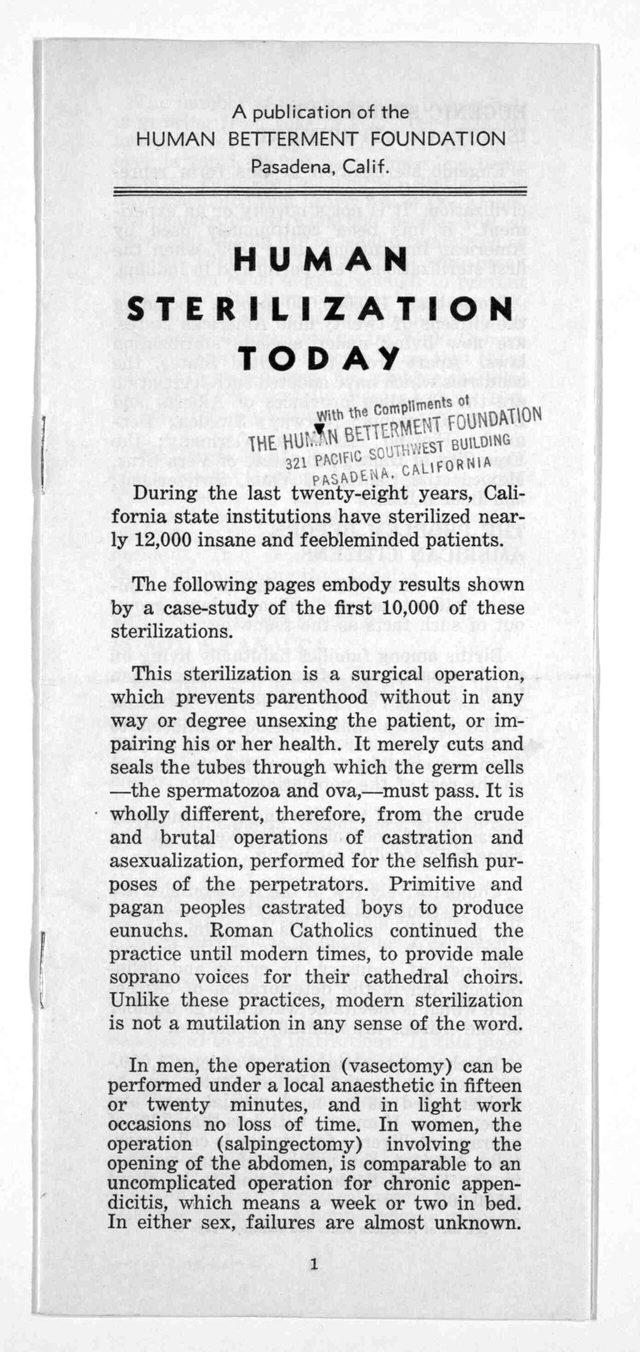 Human Sterilization TodayContent note
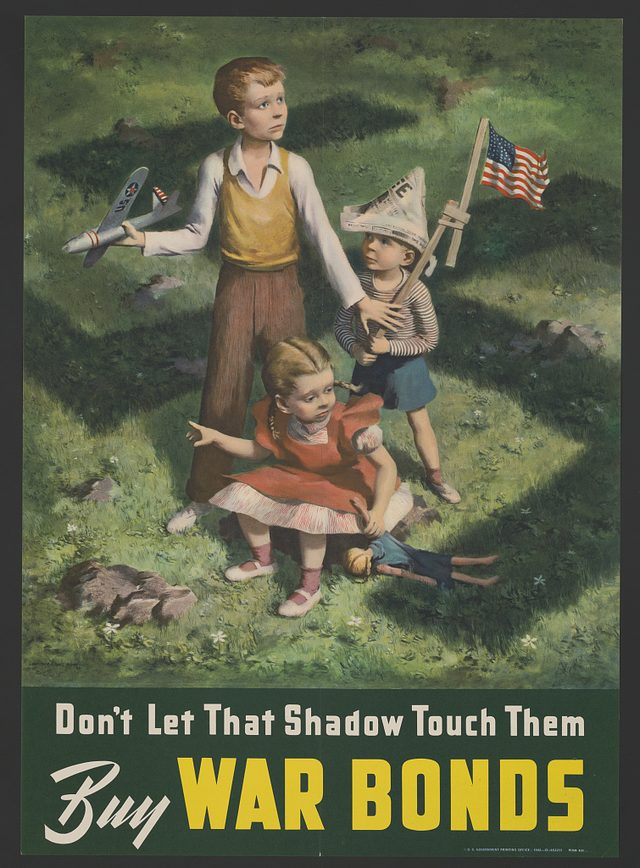 Don't Let That Shadow Touch Them: Buy War Bonds
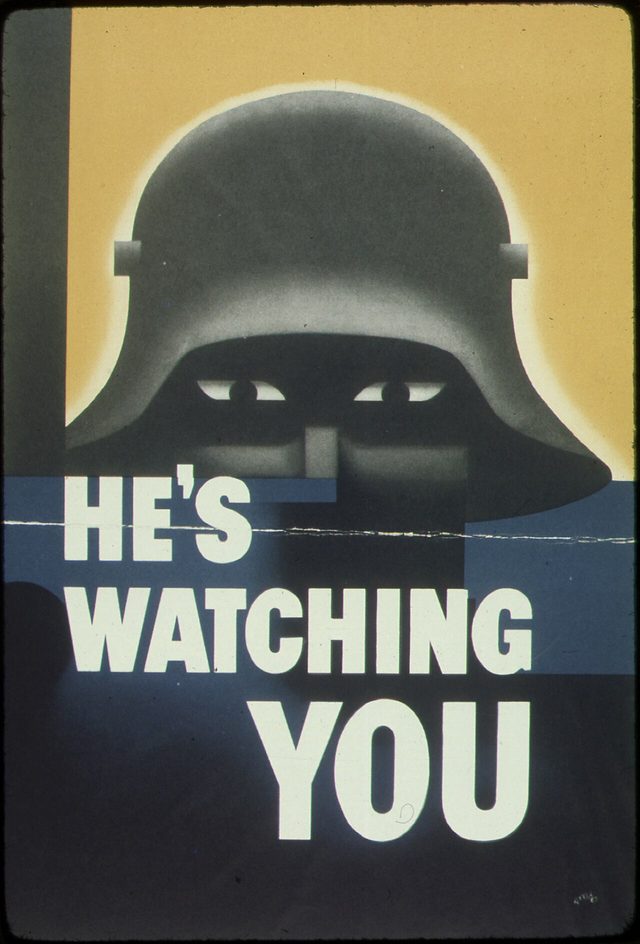 He's Watching You
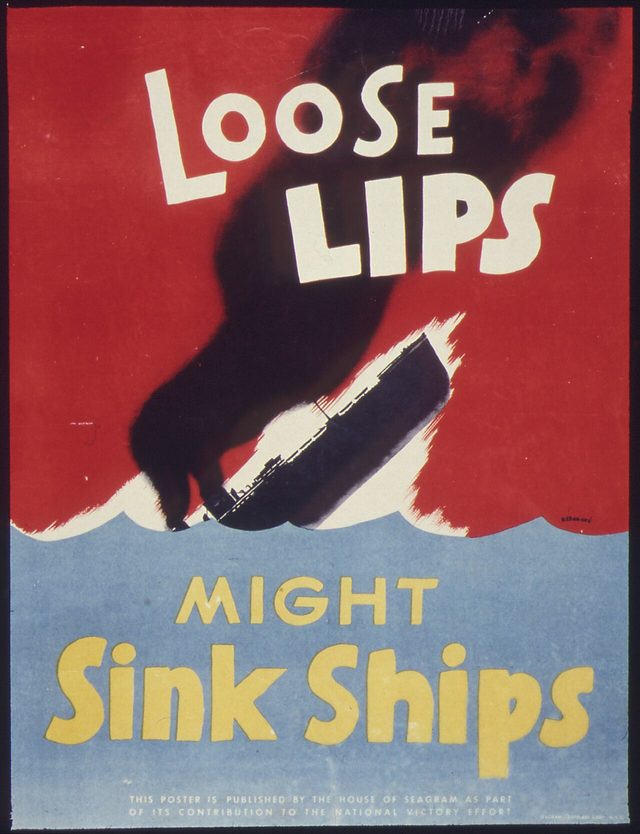 Loose Lips Might Sink Ships
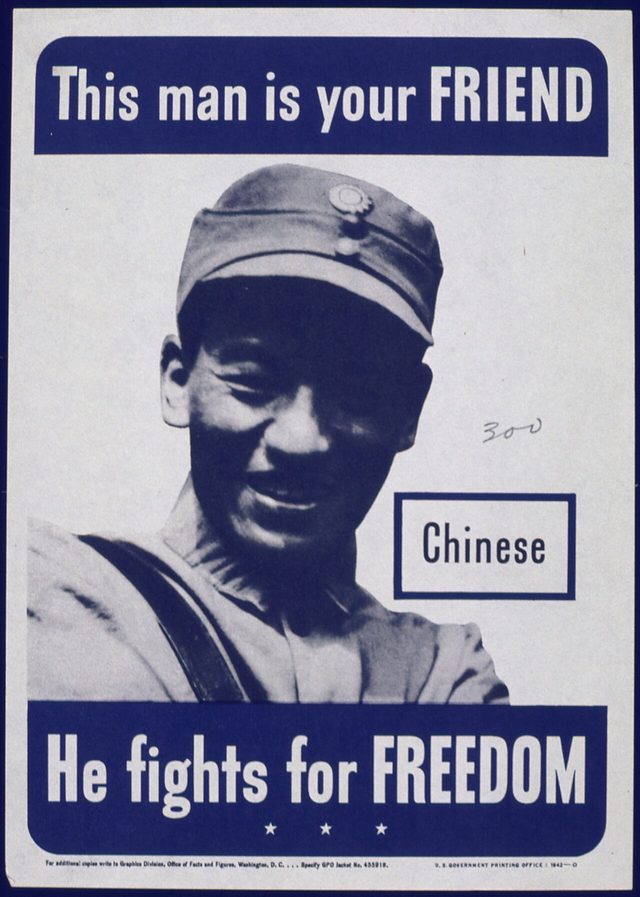 This Man Is Your Friend: Chinese. He Fights for Freedom
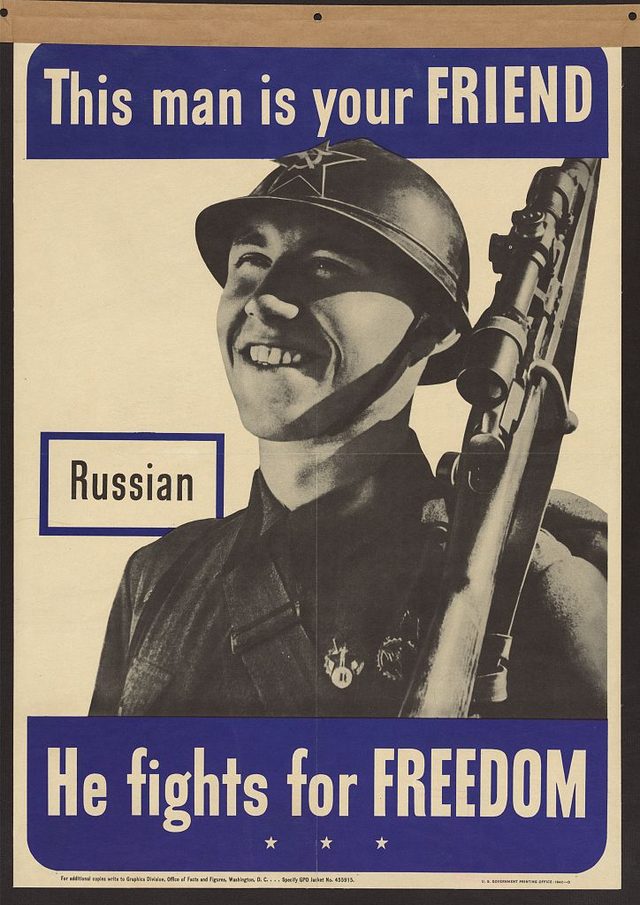 This Man Is Your Friend: Russian. He Fights for Freedom
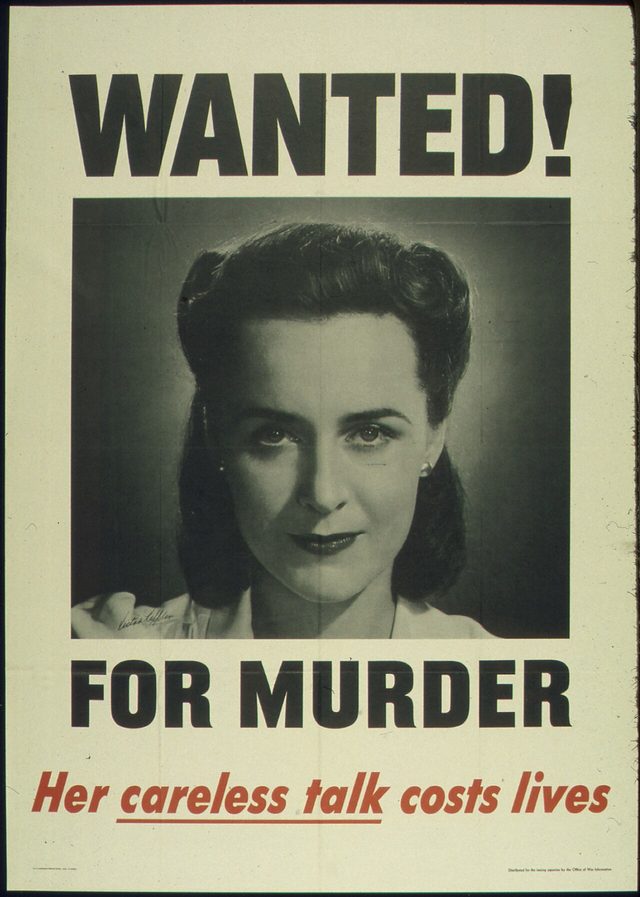 Wanted! For Murder — Her Careless Talk Costs Lives
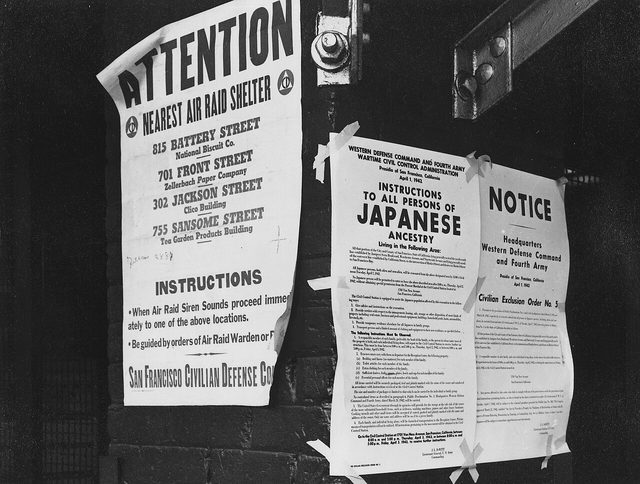 'Instructions to All Persons of Japanese Ancestry' (exclusion order posted in San Francisco)
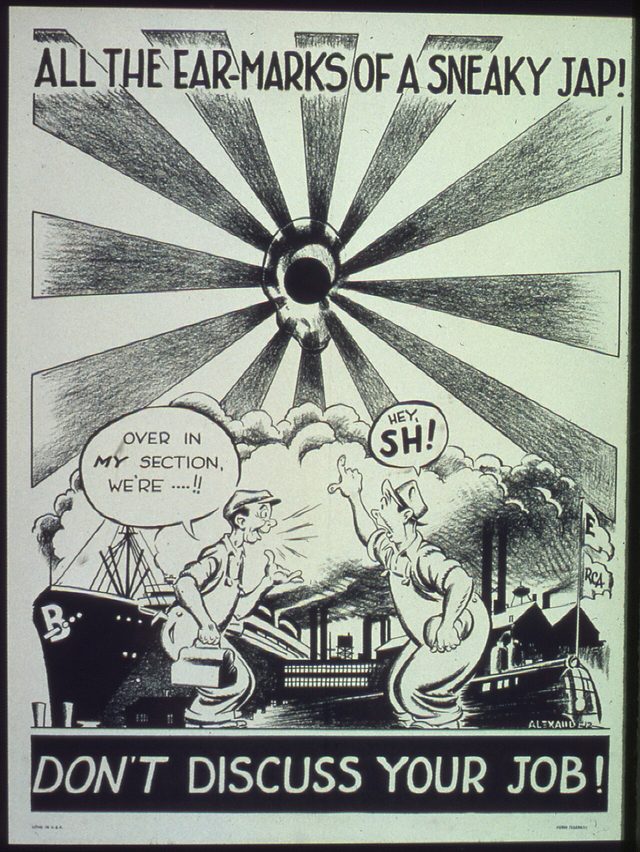 All the Ear-Marks of a Sneaky Jap!Content note
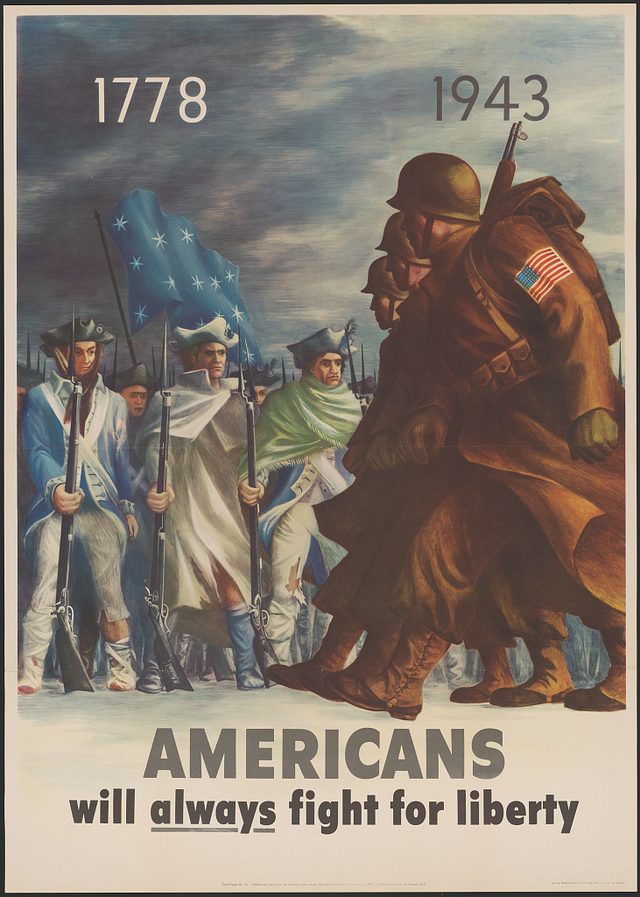 Americans Will Always Fight for Liberty
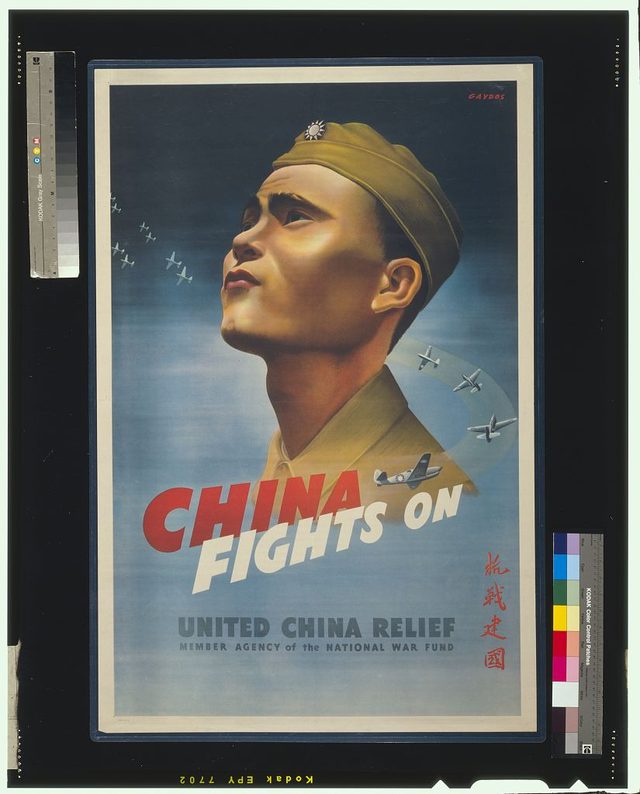 China Fights On
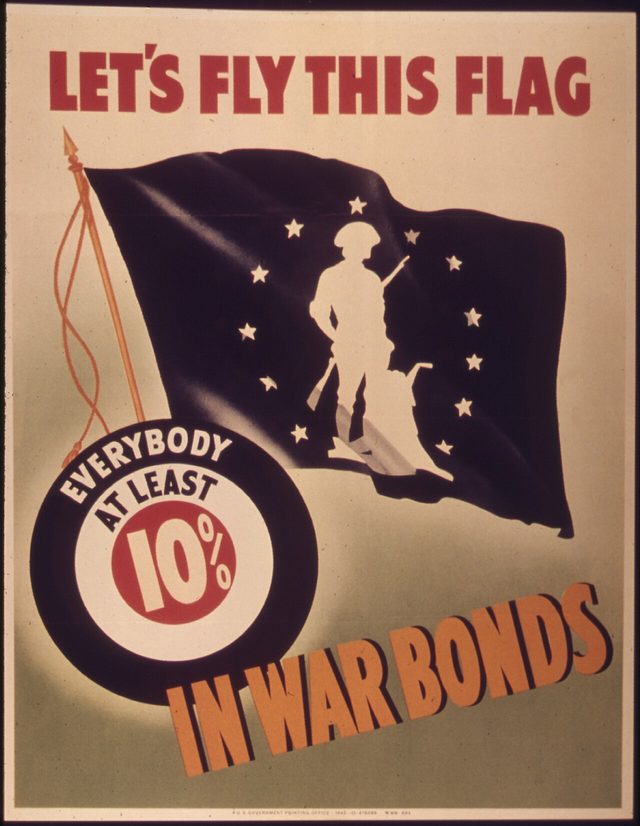 Let's Fly This Flag: Everybody at Least 10 Percent in War Bonds
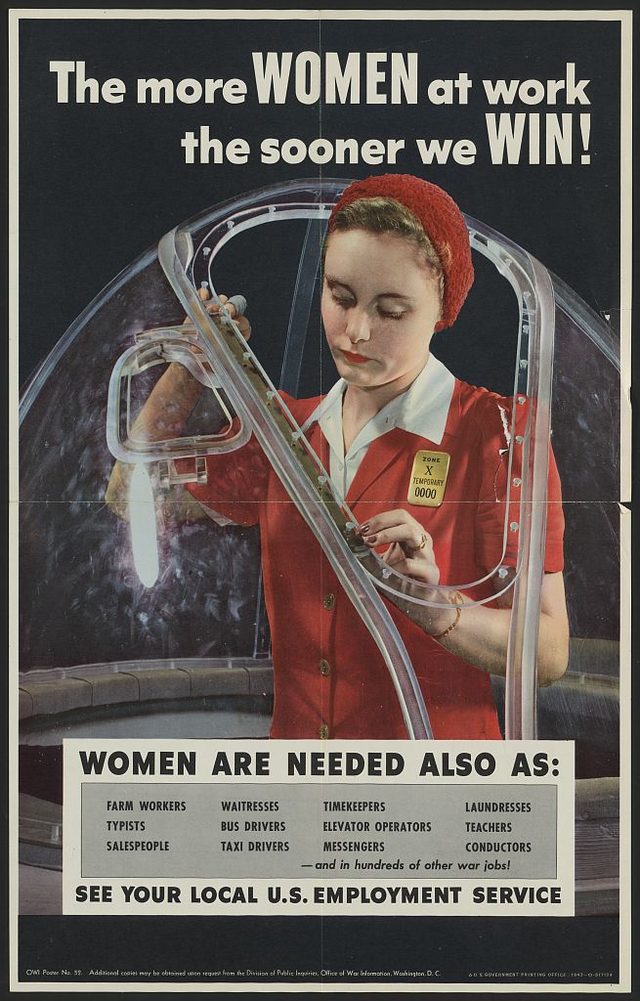 The More Women at Work the Sooner We Win!
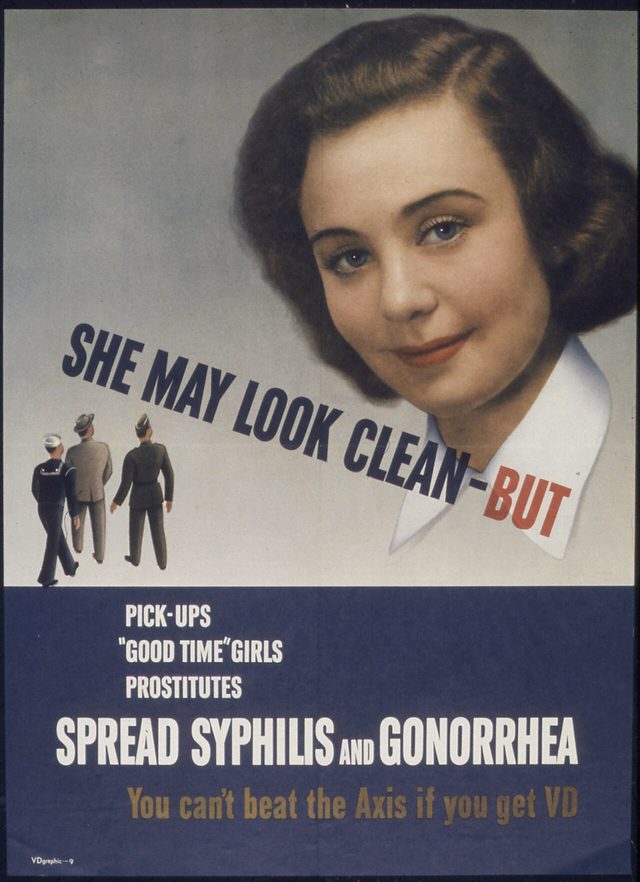 She May Look Clean—But
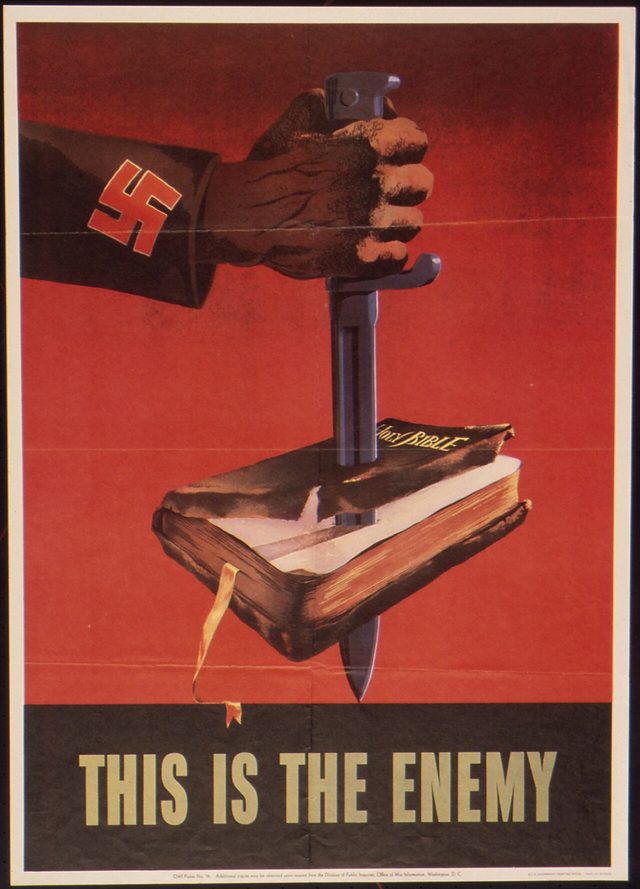 This Is the EnemyContent note
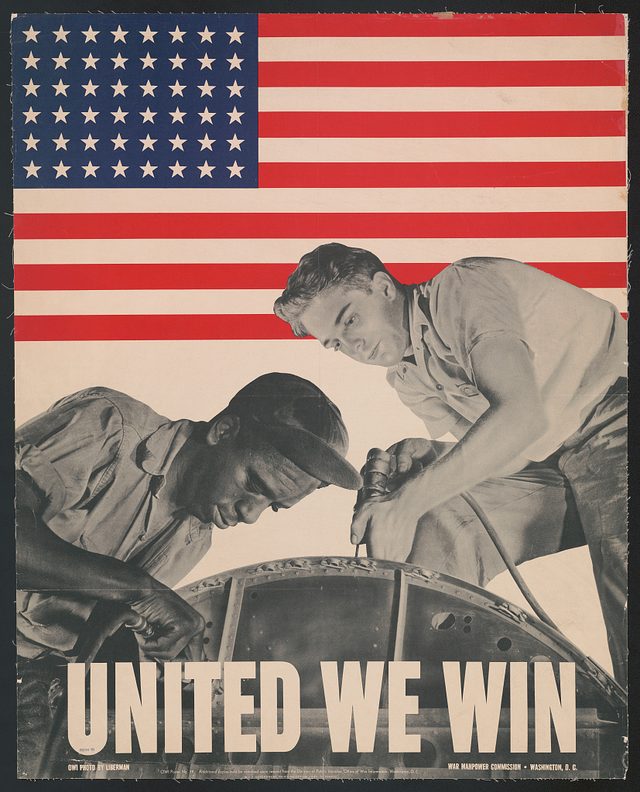 United We Win
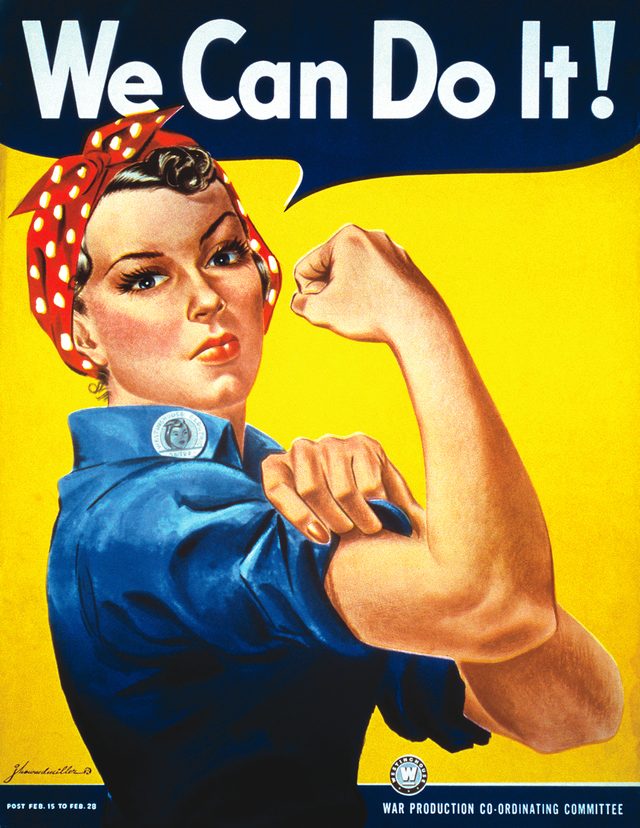 We Can Do It!
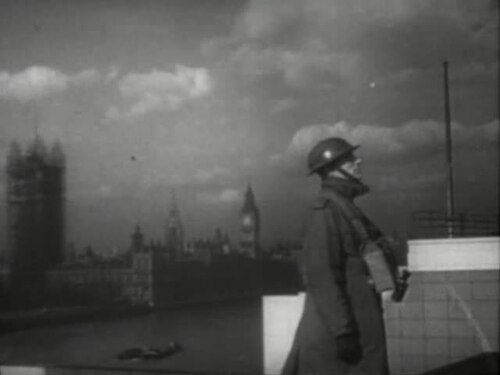 Why We Fight: The Battle of Britain (film frame)
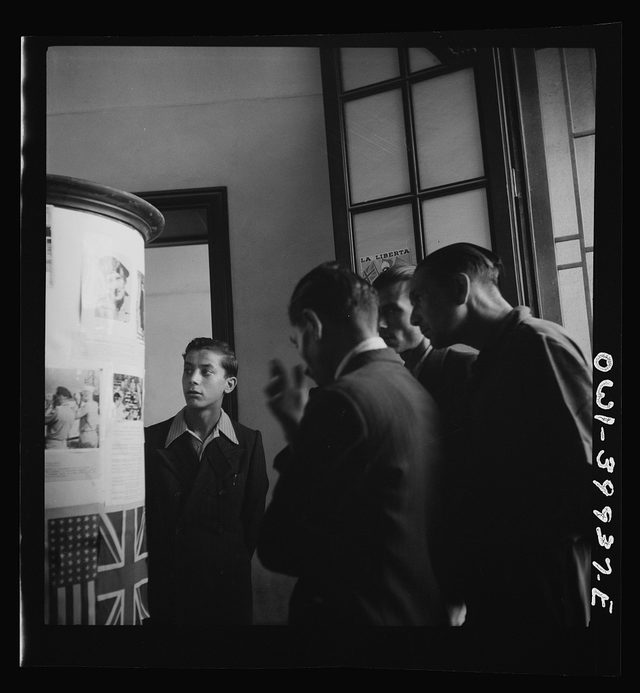 Catania, Sicily: reading Allied news under U.S. and British flags, 1943
 Air-raid notice: 'This city is the next target' (US leaflet to Japanese civilians)
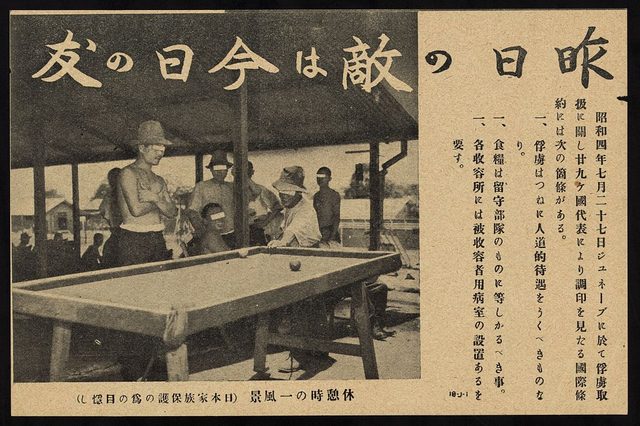 'Yesterday's enemy is today's friend' (US leaflet 18-J-1 to Japanese troops)
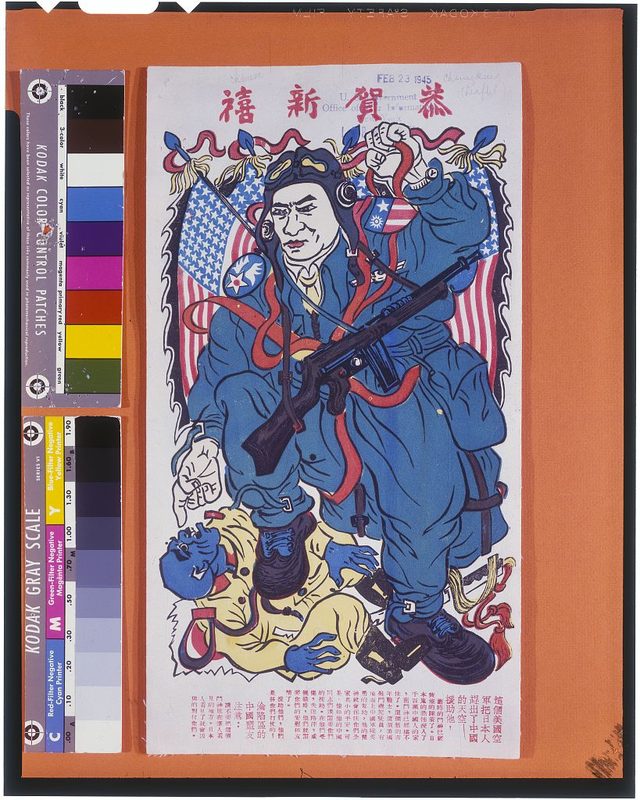 This American Airman Drives the Jap from China's Skies: Give Him Your Help! (Chinese New Year poster)Content note
Case studies
- The Office of War Information's Domestic Branch, 1942-43
- The U.S. Office of War Information and the Writers' War Board: a 'strategy of truth' meets the advertising men
- Why We Fight: the U.S. Army's orientation films, 1942-1945
- World War II rumor clinics and rumor control (1940 to 1947)
- Wartime radio voices: open and hidden broadcasts aimed at the enemy, 1939-1945
Then and now
- Then and now: national and ethnic labels for an enemy or a disease (US 1942, US 2020)
- Then and now: making every citizen a lookout (US home front 1942, "If You See Something, Say Something" 2010s)
- Then and now: fear in public-health messaging (US 1940s, UK 2021)