In one line: Hirohito, emperor of Japan from 1926 to 1989, died at the Imperial Palace in Tokyo at 06:33 on 7 January 1989 after 111 days of illness, and was buried on 24 February 1989 after a state funeral attended by delegations from 163 countries.
The final days
Hirohito came to the throne on 25 December 1926. After the surrender broadcast of 15 August 1945 he remained emperor under the 1947 constitution, which made the office symbolic (see Japan under the Shōwa regime). In 1988, aged 87, UPI described him as the world's oldest and longest-reigning monarch.
On 22 September 1987 he underwent an intestinal bypass operation. UPI reported on 30 September 1987 that doctors said he was "recovering steadily from chronic inflammation of the pancreas", and a UPI report of October 1988 describes the operation as removing "an egg-sized blockage caused by a swollen pancreas". Chief court physician Akira Takagi later told a news conference that the emperor had been diagnosed in September 1987 as possibly having duodenal cancer, and that he had never been told, following the custom of sparing Japanese patients bad news (UPI, January 1989). The public account of 1987 was therefore the pancreatic one.
On 19 September 1988 he fell ill again, with internal bleeding. The Imperial Household Agency said it "has never said the emperor is in serious condition", and two Japanese press reports of cancer in August 1988 went unconfirmed (UPI, 18 October 1988). On 2 November 1988 the palace spokesman Kenji Maeda said, when asked about the diagnosis: "Rather than discuss whether he has cancer or does not have cancer, you should understand that in modern Japanese society it is impolite to disclose such a thing" (UPI, 2 November 1988). The same report gives his weight as 95 pounds and says he had received 51 transfusions in about two months. Surgery was ruled out because of his age and condition. His last public statement had been on 15 August 1988 at the national memorial service: "My heart still aches (for those killed in World War II)" (UPI, 7 January 1989).
Self-restraint. From the day he fell ill, officials and businesses practised jishuku, voluntary restraint. UPI reported cancelled foreign trips, festivals and weddings. In December 1988, in the middle of it, the mayor of Nagasaki, Hitoshi Motoshima, said in the city council: "From my own experiences with army education, I think the emperor bears some responsibility for the war" (UPI, 7 December 1988). It was reported as the first such statement by the mayor of a major city. UPI wrote in January 1990 that because he "defied the taboo, he was ostracized by his conservative political party", and that he was shot through the back outside Nagasaki City Hall on 18 January 1990; police arrested Kazumi Tajiri, a leader of the right-wing group Seikijuku, who UPI said had blamed Hirohito for not saving the city from the atomic bomb (UPI, 18 January 1990).
The death
Hirohito died at 06:33 on Saturday 7 January 1989, in his bed at the Imperial Palace. The Grand Steward of the Imperial Household Agency, Shoichi Fujimori, announced: "He died of a malignant tumor of the duodenum." His daughter Takako Shimazu said he "died peacefully" (UPI, 7 January 1989). It was the first time the palace named cancer. Prime Minister Noboru Takeshita said: "The sad news of the passing of his late Majesty the Emperor has left me grief-stricken" (UPI, 7 January 1989; the agency spells his given name "Norobu"). His son Akihito succeeded him the same day.
For the period of mourning the government suspended entertainment activities for civil servants for six days and asked private business to do the same for two. Television commercials were suspended for two days. UPI reported hundreds of thousands of people going to the palace on the day of the announcement (7 January 1989).
What happened to the body
The funeral had two parts and followed the 22 Shinto rites that custom required between a death and a burial, which UPI said earlier imperial funerals had followed exclusively (6 January 1989). On 24 February 1989 a Shinto rite (Sōjōden no gi) was followed by the government's state ceremony, the Taiso no Rei, at Shinjuku Gyoen, the former imperial garden in Tokyo.
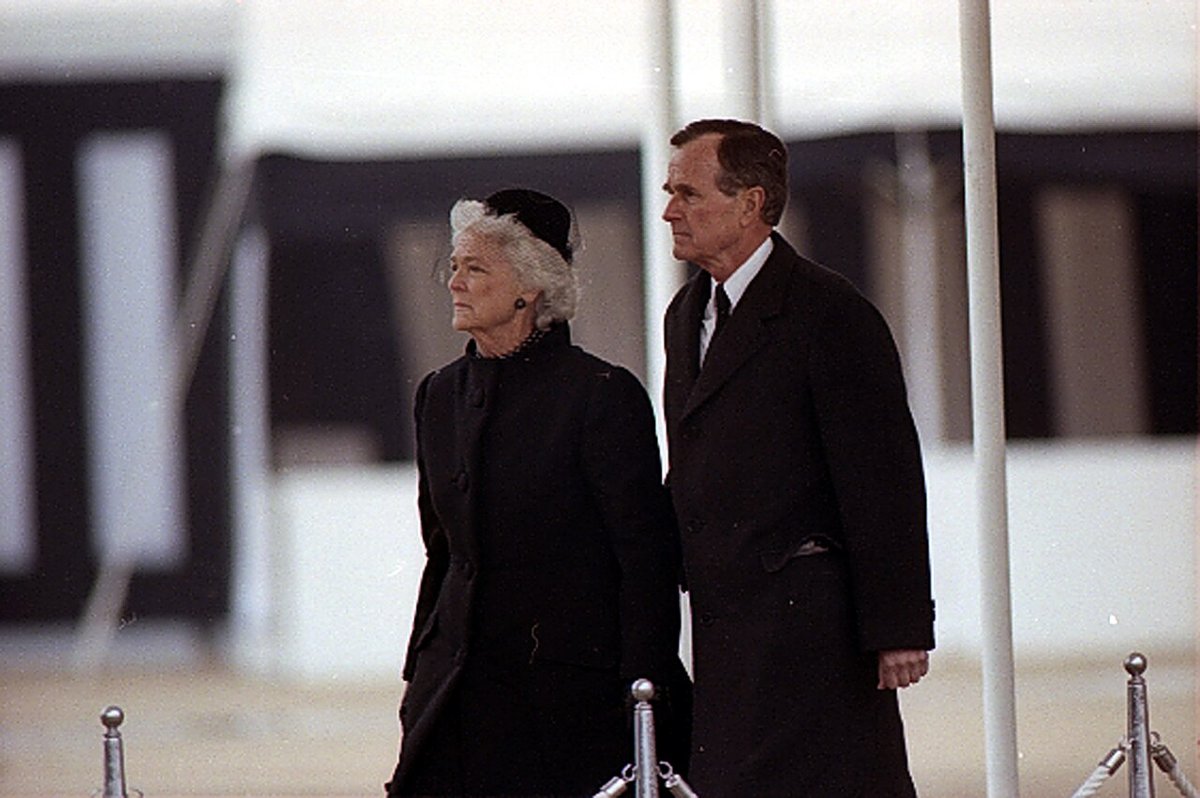



UPI's report of the day describes a 13-hour programme. Rain fell throughout. A 32-car cortege took the coffin about four miles from the palace to Shinjuku, preceded by 155 officials carrying imperial banners and 225 costumed mourners, with 51 pallbearers in grey. About 700 delegates from 163 nations and 28 international organisations attended the state ceremony, and 10,000 people attended the ceremony in the garden. About 200,000 people lined the route, against the 800,000 expected (UPI, 24 February 1989). Akihito said: "The people will remember him forever."
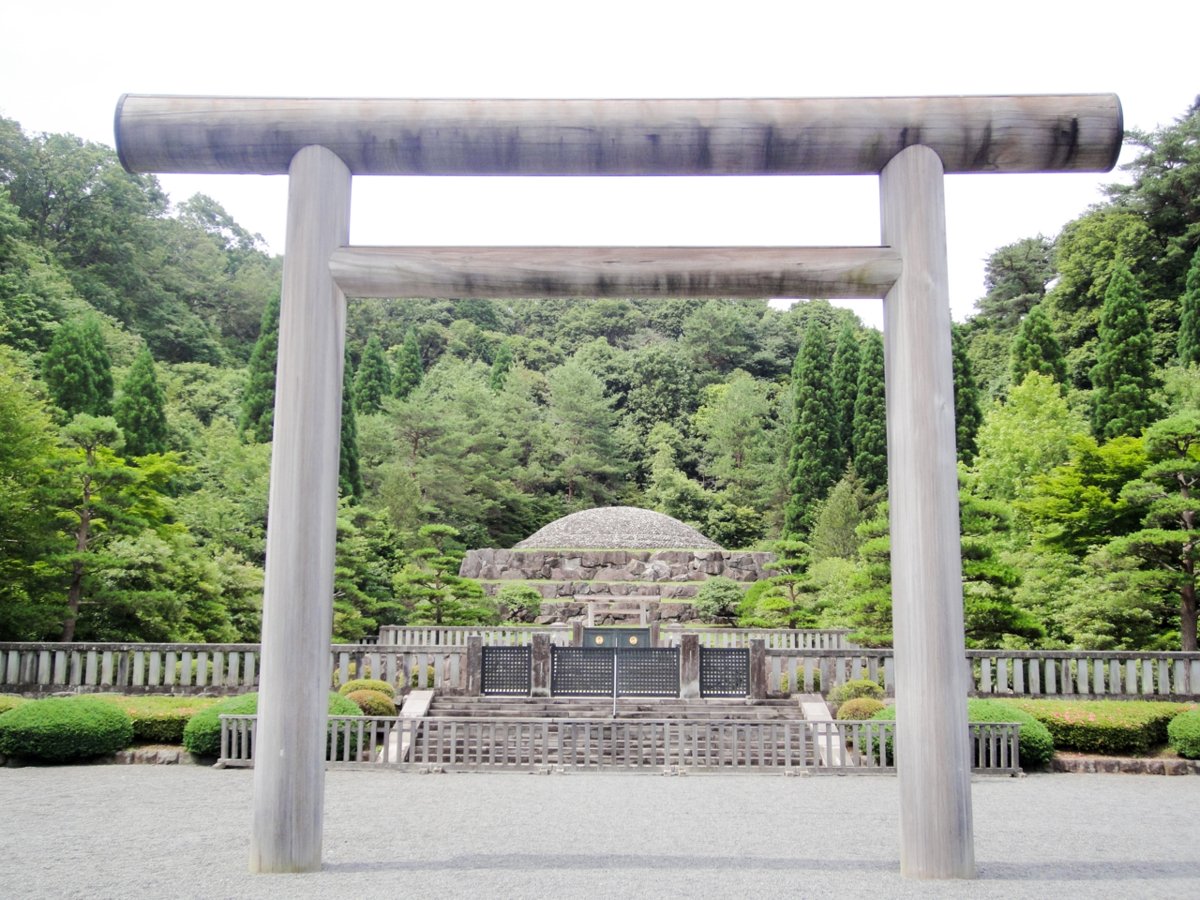
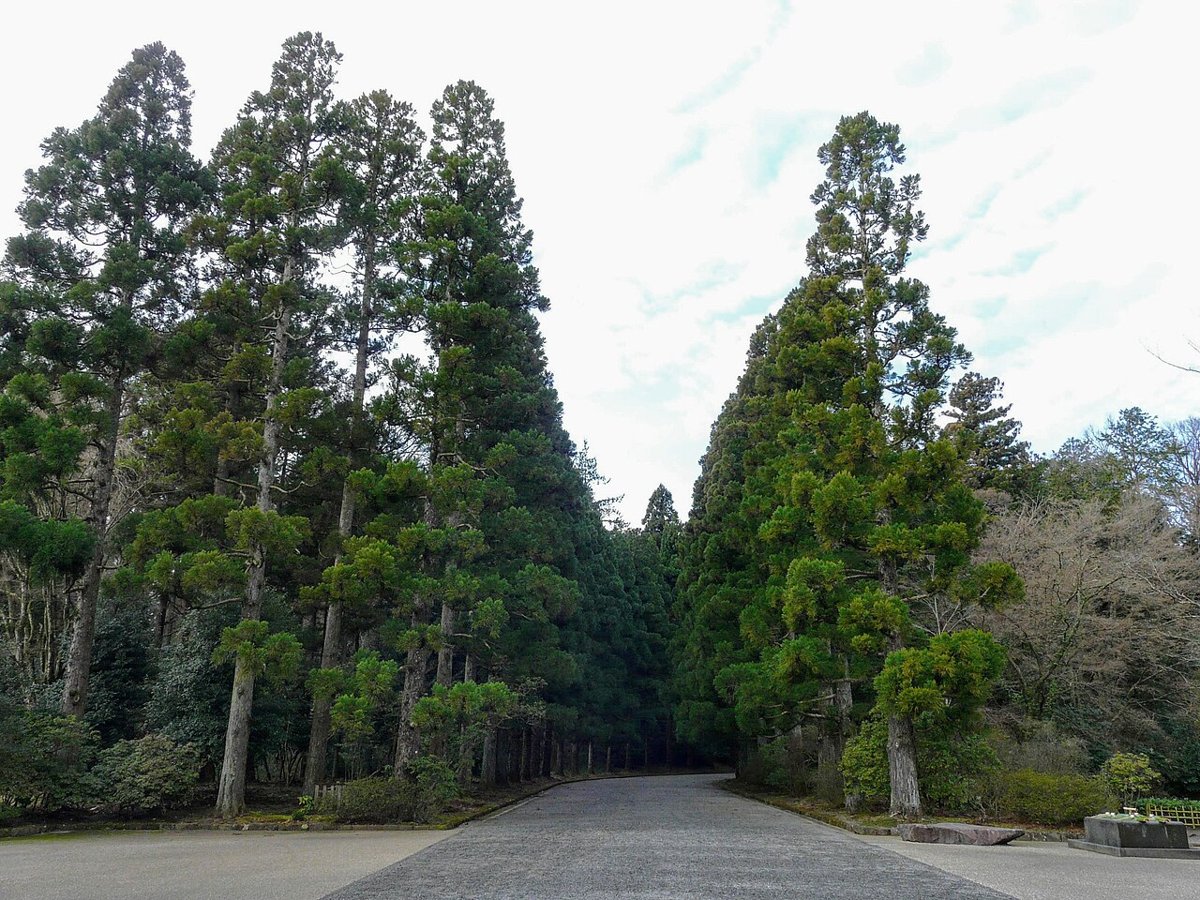
The coffin was taken to the Musashi Imperial Graveyard at Hachiōji, in western Tokyo, beside the tombs of Hirohito's father, Emperor Taishō, and Empress Teimei. It was placed in a stone enclosure about three metres below ground. UPI wrote that the Imperial Household Agency refused to identify the items buried with him, but that they "reportedly" included a microscope he used in marine biology, a list of sumo wrestlers and a Mickey Mouse watch; the contents are unconfirmed. A Shinto rite purified the wooded site on 16 January 1989. UPI gave the planned mausoleum as an oval mound 32.8 feet high on 26,750 square feet, to take about a year to finish.
How the death was announced and used
Attendance. A UPI feature of 20 February 1989 counted 138 countries and 51 heads of state expected. By the day, UPI reported 163 countries. President George H. W. Bush attended, as did Prince Philip with Foreign Secretary Sir Geoffrey Howe, the governors-general of Australia and New Zealand, and the Soviet vice president Anatoli Lukyanov. China and South Korea downgraded their representation, and North Korea boycotted, calling Seoul's attendance a "traitorous act". The Netherlands declined to take part "because of the memory of Japanese aggression against Dutch colonies" (UPI, 6 January 1989). Bush said: "I feel you look ahead, don't always look back." Howe called Japan "an important, democratic member of the free world."
Protest. Veterans' groups in Britain, Australia, New Zealand and the Netherlands objected to their governments' attendance. The Australian veterans' leader Bruce Ruxton said: "Hirohito was the biggest war criminal on earth—he would have made Hitler look like a Sunday school teacher." New Zealand's defence minister Bob Tizard said: "Emperor Hirohito should have been hanged as a war criminal" (UPI, 20 February 1989). Opposition parties in Japan protested the government's funding of the Shinto rites as a breach of the constitution's separation of state and religion, which forbids the government from taking part in religious activities. About 800 people demonstrated in Tokyo and about 3,000 in Osaka, and "suspected leftist radicals" set off a bomb on a hillside, leaving a four-yard hole and no casualties; the procession passed 20 minutes later. UPI reported that a brief scuffle at the Tokyo march led to no arrests (24 February 1989).
The silence about the diagnosis. Throughout the illness the Imperial Household Agency withheld the diagnosis from the public and, by its own physician's account, from Hirohito, and confirmed it only with the announcement of his death.
Timeline
- 25 December 1926: becomes emperor.
- 22 September 1987: intestinal bypass operation; described publicly as pancreatic.
- 15 August 1988: last public statement.
- 19 September 1988: falls ill with internal bleeding; restraint begins.
- 7 December 1988: Motoshima's statement in Nagasaki.
- 7 January 1989: dies at 06:33; cancer of the duodenum named for the first time.
- 16 January 1989: Shinto rite at the mausoleum site.
- 24 February 1989: state funeral at Shinjuku Gyoen; burial at Hachiōji.
Same-standard note
This page uses the same sections and definitions as every "How they died" page. Hirohito died of illness in his bed in office, after a silence about the diagnosis that the palace explained by Japanese custom, and he was buried after a state funeral that foreign governments chose individually whether to attend. This differs in circumstances from leaders who were killed or tried, and from other leaders who died in office, and no equivalence is implied. His role in the war, and his responsibility for it, are covered on the regime page.
Sources
- UPI Archives (wire reports): "Some Japanese still view Emperor as living god", 30 September 1987; "Emperor Hirohito vomited blood around midnight Tuesday...", 18 October 1988; "Emperor Hirohito weakening", 2 November 1988; "Nagasaki mayor criticizes emperor's World War II role", 7 December 1988; "Hundreds of thousands throng palace after Hirohito's death", 7 January 1989; "Hirohito's funeral to reflect conflict between old and new", 6 January 1989; "Religious rite purifies site of Hirohito's mausoleum", 16 January 1989; "Attending Hirohito funeral a touchy issue", 20 February 1989; "Emperor Hirohito was laid to rest Friday at the...", 24 February 1989; "Japanese mayor shot and wounded", 18 January 1990. All at https://www.upi.com/Archives/.
- George Bush Presidential Library and Museum photograph, 24 February 1989 (through Wikimedia Commons).