In one line: From 1937 to 1945 the Empire of Japan, a constitutional monarchy under Emperor Hirohito in which the cabinet, Army and Navy shared power, fought a full-scale war in China and, from December 1941, a war against the United States, Britain and the Netherlands, ruled occupied territory across East and Southeast Asia, and ran a state information system that controlled the press, broadcasting and film until the surrender of 15 August 1945.
The leader and the people under the leader
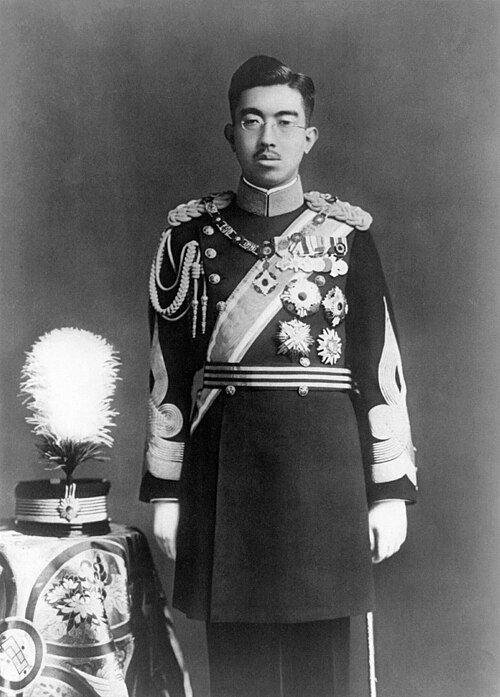
Photo: Unknown, Public domain (PD-Japan-oldphoto) Hirohito (Emperor Shōwa)
Emperor of Japan · 1926 to 1989
Head of state under the 1889 Constitution, which gave the Emperor sovereignty and the supreme command of the Army and Navy; he attended the Imperial Conferences that formally approved decisions on war, was not prosecuted after 1945, and reigned until 1989.

Prime ministers and cabinet
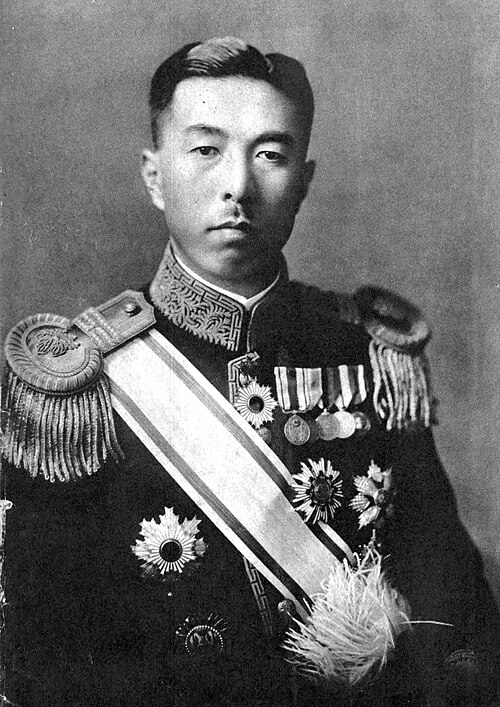
Photo: Cabinet Information Division (内閣情報部), Public domain (PD-Japan-oldphoto) Fumimaro Konoe
Prime Minister · 1937 to 1939 and 1940 to 1941
Headed three cabinets (June 1937 to January 1939, July 1940 to October 1941); the war with China began and the National General Mobilization Law passed under the first, and the Tripartite Pact and the Imperial Rule Assistance Association under the second.
In their words
“It is China's cooperation and not conquest that Japan sincerely desires. Japan desires to build up a stabilized Far East by cooperating with the Chinese people who have awakened to the need of self-determination as an Oriental race.”
“If the true object of Japan in conducting the present vast military campaign be fully understood, it will be plain that what she seeks is neither territory nor indemnity for the costs of military operations. Japan demands only the minimum guarantee needed for the execution by China of her function as a participant in the establishment of the new order.”
In the archive: Imperial Japan's wartime propaganda at home: the Information Bureau, the neighbourhood associations and the war communiqués
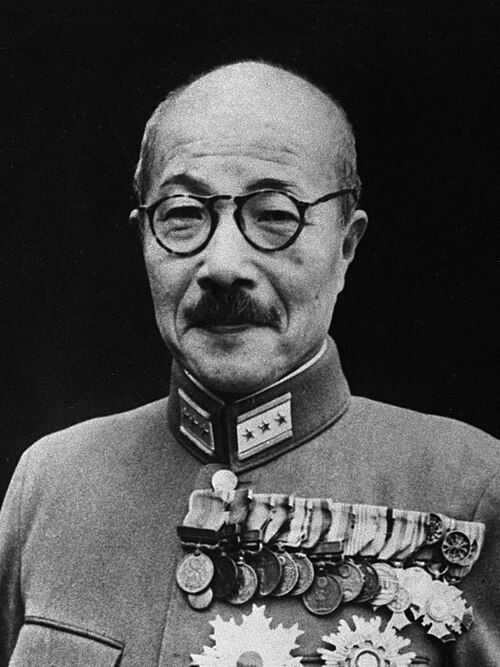
Photo: Unknown, Public domain (PD-Japan-oldphoto) Hideki Tōjō
Prime Minister and Army Minister · 1941 to 1944
Prime minister from 18 October 1941 to 22 July 1944 while also army minister, and from February 1944 chief of the Army General Staff; sentenced to death by the Tokyo tribunal and hanged on 23 December 1948.
In their words
“America and Britain are undergoing a continuous change due to defeats suffered in this war and are carrying out vicious propaganda by constantly accusing our country of brutal acts.”
“However, in order to establish a structure of a united people literally, the Imperial Rule Assistance Association was formed and was followed by the organization of the Imperial Rule Assistance Political Society.”
“The primary requisite of public service behind the home front is truly the support given by the people to the men and officers of the Imperial army, and the spirit of the people behind the home front must be equivalent to the spirit of the armed forces carrying out military operations and overwhelming the enemy.”
In the archive: 'Asia for the Asiatics': Japan's Co-Prosperity Sphere and the movements that used it
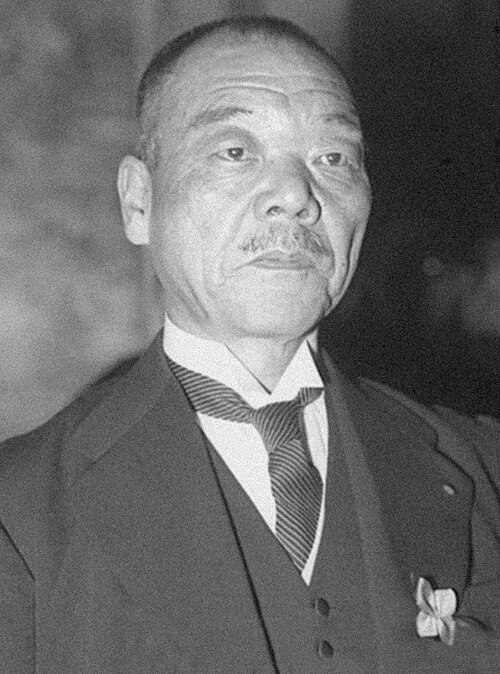
Photo: Kyodo News, Public domain (PD-Japan-oldphoto) Kuniaki Koiso
Prime Minister · 1944 to 1945
Formed a cabinet on 22 July 1944 after the fall of Saipan, announced on 7 September 1944 that independence would be granted to the East Indies at a future date, and resigned on 7 April 1945; earlier Governor-General of Korea, 1942 to 1944.
In the archive: Imperial Japan's wartime propaganda at home: the Information Bureau, the neighbourhood associations and the war communiqués
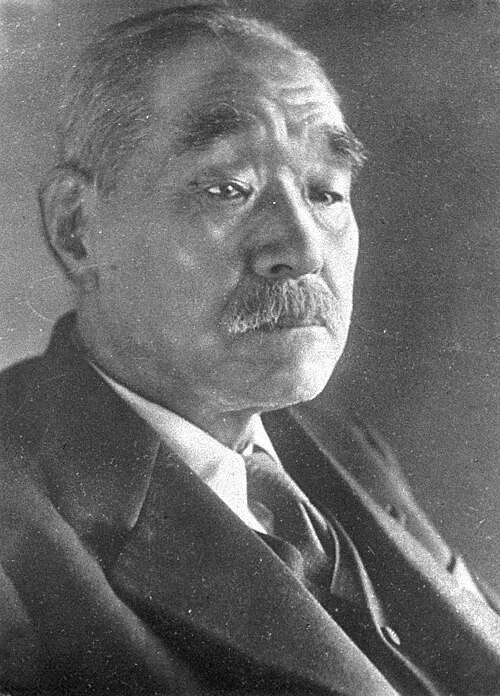
Photo: Unknown, Public domain (PD-Japan-oldphoto) Kantarō Suzuki
Prime Minister · 1945
Retired admiral and former Grand Chamberlain who led the cabinet from 7 April to 17 August 1945, which received the Allied Potsdam Declaration and accepted its terms after Imperial Conferences on 9 to 10 August and 14 August.
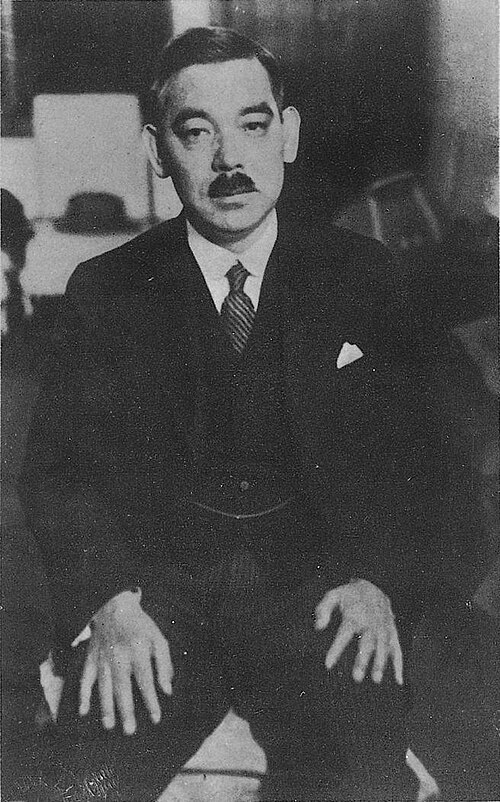
Photo: Unknown, Public domain (PD-Japan-oldphoto) Yōsuke Matsuoka
Foreign Minister · 1940 to 1941
Foreign minister from 22 July 1940 to 16 July 1941, who announced the term "Greater East Asia Co-Prosperity Sphere" on 1 August 1940 and signed the Tripartite Pact (27 September 1940) and the Neutrality Pact with the Soviet Union (13 April 1941); died on 27 June 1946 during the Tokyo trial.
In the archive: 'Asia for the Asiatics': Japan's Co-Prosperity Sphere and the movements that used it
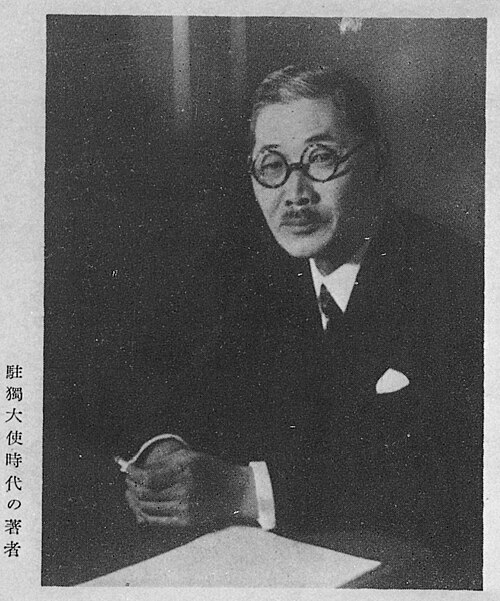
Photo: Unknown, Public domain (PD-Japan-oldphoto) Shigenori Tōgō
Foreign Minister · 1941 to 1942 and 1945
Foreign minister in the Tōjō cabinet from 18 October 1941 until he resigned on 1 September 1942 over the creation of the Greater East Asia Ministry, and again from 7 April to 17 August 1945; sentenced to 20 years by the Tokyo tribunal.
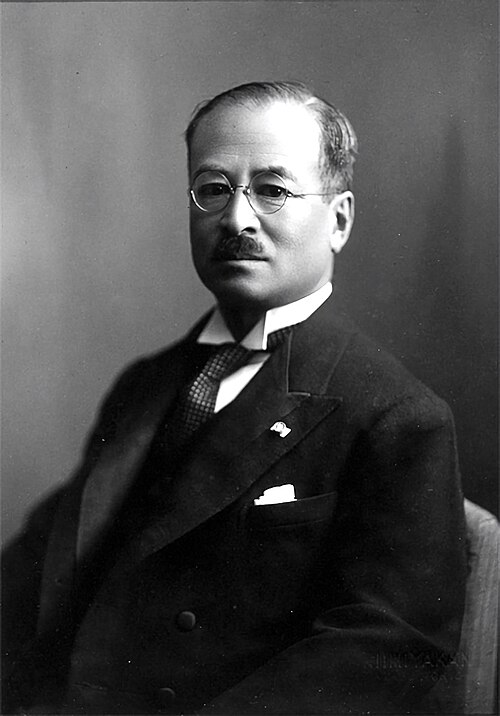
Photo: Unknown, Public domain (PD-Japan-oldphoto) Kōichi Kido
Lord Keeper of the Privy Seal · 1940 to 1945
Imperial Household official who advised the Emperor from June 1940 to November 1945, including on the choice of prime ministers; his diary was used as evidence at the Tokyo trial, which sentenced him to life imprisonment.

.jpg)


Army and Navy
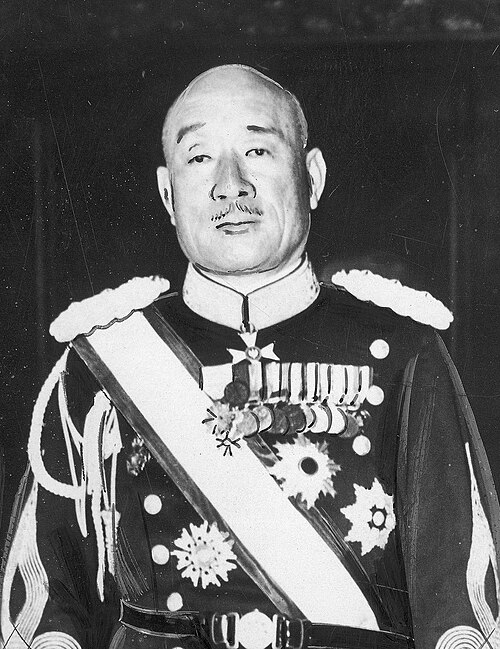
Photo: Unknown, Public domain (PD-Japan-oldphoto; PD-Poland) Hajime Sugiyama
Chief of the Army General Staff · 1940 to 1944
Army chief of staff from 3 October 1940 to 21 February 1944 and army minister in 1937 to 1938 and again in 1944 to 1945; presented Army plans at Imperial Conferences and killed himself on 12 September 1945.
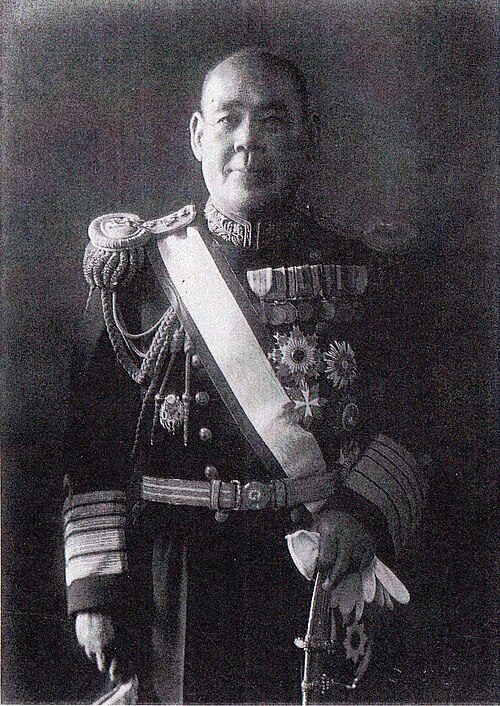
Photo: Unknown, Public domain (PD-Japan-oldphoto) Osami Nagano
Chief of the Navy General Staff · 1941 to 1944
Navy chief of staff from 9 April 1941 to 21 February 1944, who took part in the Liaison and Imperial Conferences that decided on war in 1941; died on 5 January 1947 during the Tokyo trial.
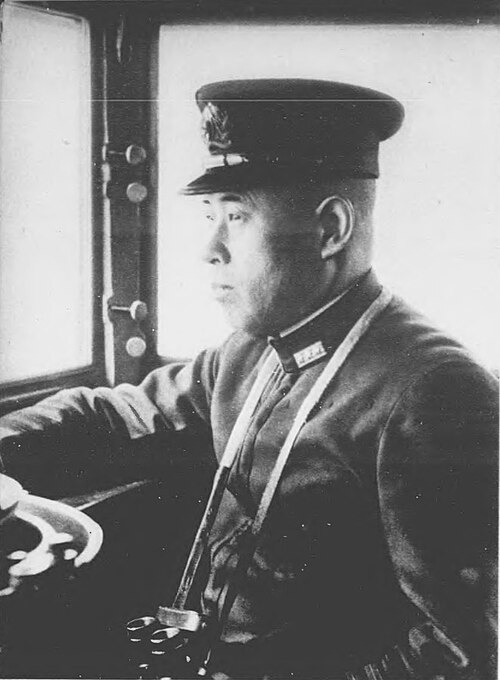
Photo: Ministry of the Navy (海軍省), Public domain (PD-Japan-oldphoto) Isoroku Yamamoto
Commander-in-Chief of the Combined Fleet · 1939 to 1943
Commanded the Combined Fleet from 30 August 1939 and planned the attacks on Pearl Harbor and Midway; killed on 18 April 1943 when U.S. fighters shot down his aircraft, with the death announced on 21 May and a state funeral held on 5 June 1943.


Information and propaganda
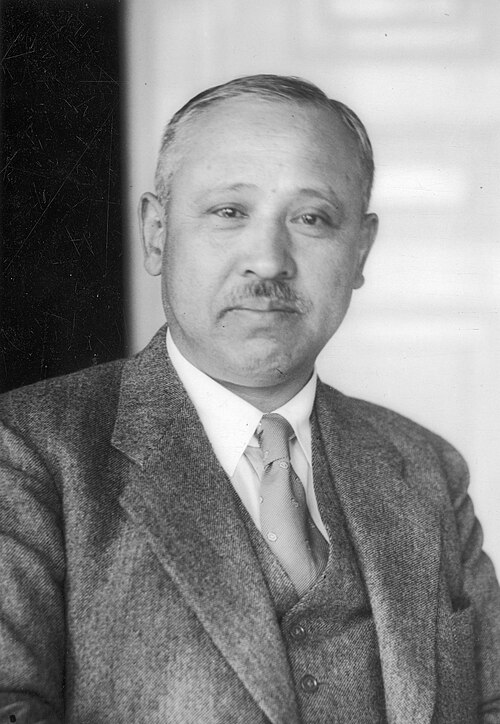
Photo: Unknown, Public domain (PD-Japan-oldphoto; PD-Poland) Nobufumi Itō
President of the Cabinet Information Bureau · 1940 to 1941
First president of the Cabinet Information Bureau, from its creation on 6 December 1940 until 18 October 1941; a career diplomat.
No dated, clearly licensed portrait found. Nearest: source, tagged PD-Japan-oldphoto but sourced to a 1956 book with no date for the photograph. Taketora Ogata
President of the Cabinet Information Bureau · 1944 to 1945
Minister of State and president of the Cabinet Information Bureau in the Koiso cabinet from 22 July 1944 to 7 April 1945, and again from 17 August to 13 September 1945; formerly a newspaper editor.
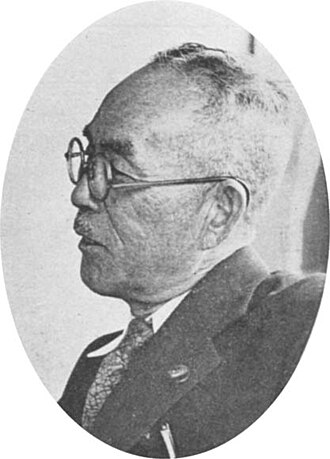
Photo: Unknown, Public domain (PD-Japan-oldphoto) Hiroshi Shimomura
President of the Cabinet Information Bureau · 1945
Minister of State and president of the Cabinet Information Bureau from 7 April to 17 August 1945, the office that handled the broadcast of the Emperor's rescript of 15 August; earlier an official in the colonial government of Taiwan.


Colonial and occupation administration
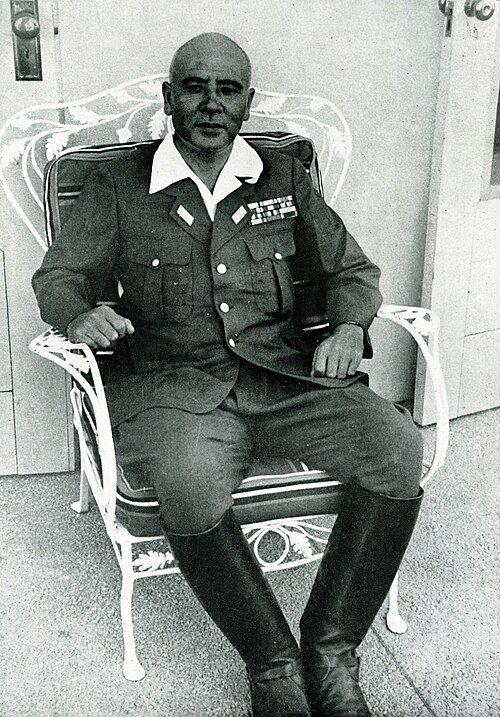
Photo: Philippine Dispatch Army Press Department (比島派遣軍報道部), Public domain (PD-Japan-oldphoto) Masaharu Homma
Commander of the Fourteenth Army (Philippines) · 1941 to 1943
Led the Fourteenth Army in the invasion of the Philippines in December 1941 and headed the first military administration there; Bataan surrendered on 9 April 1942, he was retired in August 1943, and a U.S. military commission in Manila convicted him in February 1946 and he was shot on 3 April 1946.
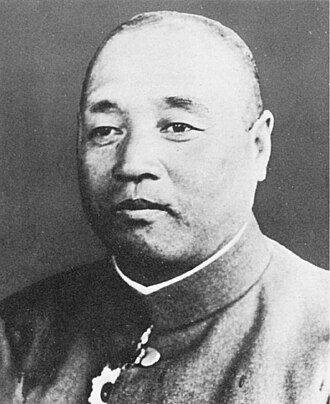
Photo: Not recorded, Public domain (PD-USGov, as tagged on Commons) Hitoshi Imamura
Commander of the Sixteenth Army (Java) · 1941 to 1942
Commanded the Sixteenth Army, which invaded Java on 1 March 1942 and governed it, then the Eighth Area Army at Rabaul; convicted by an Australian military court in 1947, sentenced to ten years and released in 1954.
In the archive: 'Asia for the Asiatics': Japan's Co-Prosperity Sphere and the movements that used it


Background and rise to power
The Meiji Constitution was promulgated on 11 February 1889. Japan already ruled Taiwan (from 1895) and Korea (annexed in 1910); the Army seized Manchuria after the Mukden incident of 18 September 1931 and set up Manchukuo in 1932. Party cabinets ended after Prime Minister Inukai Tsuyoshi was assassinated on 15 May 1932, and in May 1936 the rule that the Army and Navy ministers must be serving officers was restored, so either service could bring down a cabinet by withdrawing its minister.
This page starts with the first cabinet of Prince Konoe Fumimaro, formed on 4 June 1937. On 7 July 1937 fighting at the Marco Polo Bridge near Beijing widened into war with China. Neither state declared war; Japan called it the "China Incident". Japanese forces took Nanjing on 13 December 1937; the Tokyo tribunal's judgment (Chapter VIII) later stated that "Estimates made at a later date indicate that the total number of civilians and prisoners of war murdered in Nanking and its vicinity during the first six weeks of the Japanese occupation was over 200,000", a figure others dispute.
How power was organized
Under the constitution, in Itō Miyoji's English translation, "The Emperor is sacred and inviolable" (Article 3) and "The Emperor has the supreme command of the Army and Navy" (Article 11). Ministers answered to him, not to the elected House of Representatives; the Lord Keeper of the Privy Seal (Kido Kōichi from June 1940) advised on appointments. The Army and Navy General Staffs reported to the Emperor directly, outside the cabinet. Imperial General Headquarters was set up on 20 November 1937; major decisions were taken at Liaison Conferences of cabinet and service chiefs and confirmed at Imperial Conferences in the Emperor's presence.
The National General Mobilization Law (Law No. 55, passed by the Diet on 24 March and promulgated on 1 April 1938) let the government control labour, goods, finance and publications by imperial ordinance, without a vote in the Diet. The parties dissolved themselves in July and August 1940 and the Imperial Rule Assistance Association was founded on 12 October. The Special Higher Police and the military police (Kempeitai) enforced order in Japan and in occupied territory. Hideki Tōjō was prime minister and army minister together from October 1941 and, from February 1944, chief of the Army General Staff as well. How far Hirohito shaped decisions is disputed: Herbert Bix argues that he took an active part in strategy, while other historians describe a monarch who normally approved what the cabinet and services had agreed. John Dower (Embracing Defeat) records that the occupation authorities kept him on the throne and did not prosecute him.
The war widened on 7 and 8 December 1941 with attacks on Pearl Harbor, Malaya, Hong Kong and the Philippines, then the Dutch East Indies and Burma, and occupied territory was run by military administrations. The record includes the killing of Chinese civilians in Singapore in February 1942, the Bataan Death March of April 1942, the forced labour of about 200,000 Asian workers and about 60,000 Allied prisoners on the Burma-Thailand railway, human experiments on prisoners at Unit 731 near Harbin, and military "comfort stations" in which women from Korea, China, the Philippines and the Dutch East Indies, were held; estimates of their number range widely. In Korea, Korean-language teaching was curtailed from 1938 and Koreans were pressed to take Japanese names from 1940. Estimates of Chinese deaths in the war run from 10 million to 20 million or more; the Japanese government counts about 3 million Japanese dead.
The propaganda apparatus
A Cabinet Information Committee (1936) became the Cabinet Information Division on 25 September 1937 and, on 6 December 1940, the Cabinet Information Bureau (Jōhōkyoku), which combined publicity with guidance and censorship of the press, broadcasting, film and publishing. Its presidents were Itō Nobufumi (1940 to 1941), Tani Masayuki, Amō Eiji, Ogata Taketora (1944 to 1945) and Shimomura Hiroshi (April to August 1945). It published the photo weekly Shashin Shūhō until July 1945 (the Information Bureau and the home front). Imperial General Headquarters issued the war communiqués, the Ministry of Education issued the doctrine (Kokutai no Hongi, 1937; Shinmin no Michi, 1941), and neighbourhood associations (tonarigumi, from September 1940) carried slogans, savings drives and rationing to households. The state news agency Dōmei, one broadcasting monopoly (NHK), directed newspaper mergers and the Film Law of 1939 left few independent outlets. Kushner (The Thought War) and Young (Japan's Total Empire) show that advertisers, newspapers and film companies took part as well as being directed.
In occupied territory the Army ran the message, drafting writers, artists and photographers into propaganda units. In Java, governed by the Sixteenth Army under Imamura Hitoshi, the army propaganda department (Sendenbu) launched the "3A" movement in April 1942, whose slogans (in Indonesian) presented Japan as the light, protector and leader of Asia, and a Japanese-language campaign. In the Philippines the Fourteenth Army under Homma Masaharu set up the first military administration, and the Second Republic followed in October 1943. Matsuoka Yōsuke announced the "Greater East Asia Co-Prosperity Sphere" on 1 August 1940 and the Tokyo conference of November 1943 was its showpiece (the Co-Prosperity Sphere). See also wartime radio voices (Radio Tokyo's Zero Hour) and China's wartime propaganda.
The communiqués moved from broadly accurate to fabricated: that of 10 June 1942 claimed two enemy carriers sunk and gave Japan's own losses as one carrier sunk and one heavily damaged, when four had been sunk; that of 19 October 1944 reported eleven enemy carriers sunk, when no U.S. ship was. The archive's definitions fit most clearly: identity-fusion (Kokutai no Hongi ties being Japanese to loyalty to the throne), euphemism (tenshin, a word for a change of direction, used for retreat; "China Incident" for war), card stacking (the communiqués), name-calling (kichiku Bei-Ei, a slogan casting the Americans and British as demons and beasts, which John Dower's War Without Mercy sets beside U.S. propaganda's racial language about the Japanese), semantic hijack (Zeitaku wa teki da, "Luxury is the enemy", as the archive's gallery entry translates the 1940 street sign) and glittering generalities ("co-prosperity"). The Imperial Rescript on the Termination of the War, dated 14 August and broadcast on 15 August 1945, said in its standard English translation that "the war situation has developed not necessarily to Japan's advantage" and announced acceptance of the Allied terms without the word "surrender".
Timeline
- 11 February 1889: the Meiji Constitution is promulgated.
- 4 June 1937: first Konoe cabinet.
- 7 July 1937: fighting at the Marco Polo Bridge; war with China begins.
- 13 December 1937: Japanese forces take Nanjing.
- 24 March 1938: National General Mobilization Law passed by the Diet (promulgated 1 April).
- 27 September 1940: Tripartite Pact with Germany and Italy.
- 6 December 1940: Cabinet Information Bureau created.
- 18 October 1941: Tōjō becomes prime minister.
- 7 to 8 December 1941: attacks on Pearl Harbor, Malaya, Hong Kong and the Philippines.
- 1 to 9 March 1942: Java invaded; Dutch forces surrender.
- 10 June 1942: the Midway communiqué.
- 5 to 6 November 1943: Greater East Asia Conference in Tokyo.
- 22 July 1944: Tōjō resigns after the fall of Saipan; Koiso cabinet.
- 6 and 9 August 1945: atomic bombs on Hiroshima and Nagasaki.
- 15 August 1945: the Emperor's rescript is broadcast; surrender signed on 2 September.
- 3 May 1946 to 12 November 1948: the Tokyo trial of 28 leaders; Tōjō and six others are sentenced to death and hanged on 23 December 1948; Kido and Koiso receive life, Tōgō 20 years; Matsuoka and Nagano die during the trial.
Same-standard note
This page uses the same structure and definitions as every other regime page: a technique is listed only where the archive's working definition and a documented example fit, and offices and dates are stated without judging the people who held them. The scale and purpose of what this state did are set out as history, not as a ranking: an empire with colonies in Taiwan and Korea that fought a war across Asia and the Pacific, with mass killing of civilians and prisoners, forced labour and military sexual slavery documented in the record. Whether to call the regime "fascist" is disputed among historians and this page uses no label. Other regime pages record other systems, each with its own scale, intent and context.
Sources
- Constitution of the Empire of Japan, 11 February 1889 (Itō Miyoji's translation, National Diet Library), Articles 3 and 11; National General Mobilization Law, Law No. 55 of 1938; Imperial Rescript on the Termination of the War, 14 August 1945.
- Judgment of the International Military Tribunal for the Far East (12 November 1948).
- John W. Dower, War Without Mercy (1986), Embracing Defeat (1999); Herbert P. Bix, Hirohito and the Making of Modern Japan (2000).
- Barak Kushner, The Thought War (2006); Louise Young, Japan's Total Empire (1998); Tsujita Masanori, Daihon'ei happyō (2016).
- National Archives of Japan and JACAR records on the Cabinet Information Bureau.
In the archive
Collection objects (15)
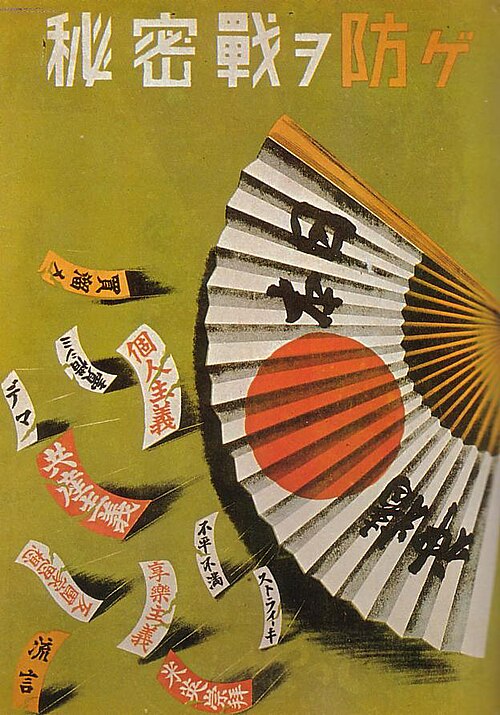 秘密戰ヲ防ゲ (Guard Against Secret Warfare), Japanese home-front counterintelligence poster
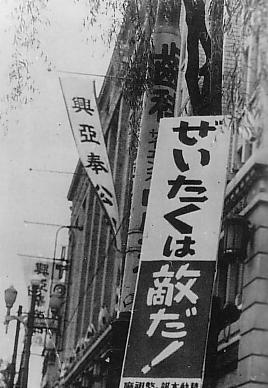 'Zeitaku wa teki da!' (Luxury Is the Enemy!) street sign, Tokyo
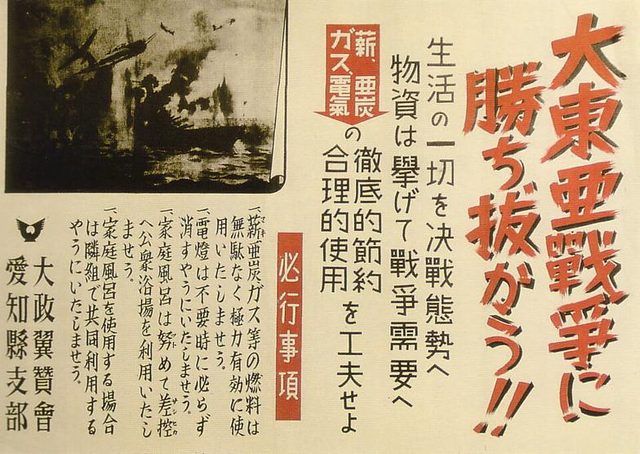 'Daitōa sensō ni kachinukō!!' (Let's win the Greater East Asia War!) fuel-saving poster, Aichi
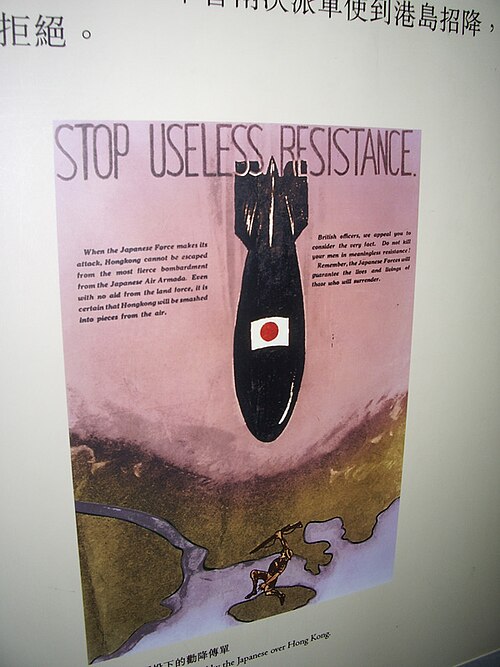 'Stop useless resistance' (Japanese leaflet to the Hong Kong garrison)
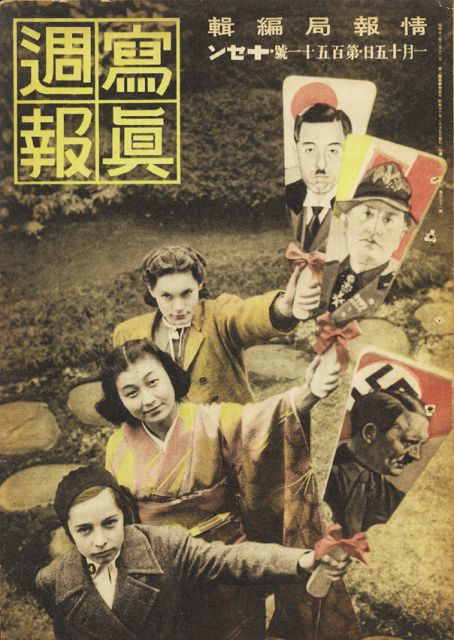 Axis battledores (hagoita) and 'Axis young ladies': cover of Shashin Shūhō No. 151, Japan
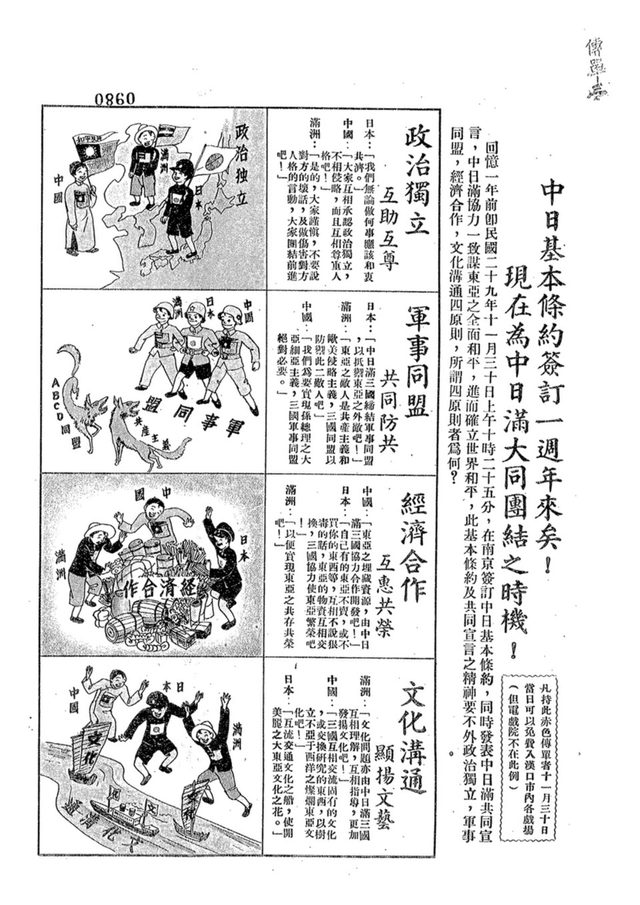 中日基本條約簽訂一週年來矣! (The Sino-Japanese Basic Treaty's first anniversary has come!), four-panel leaflet for Hankou
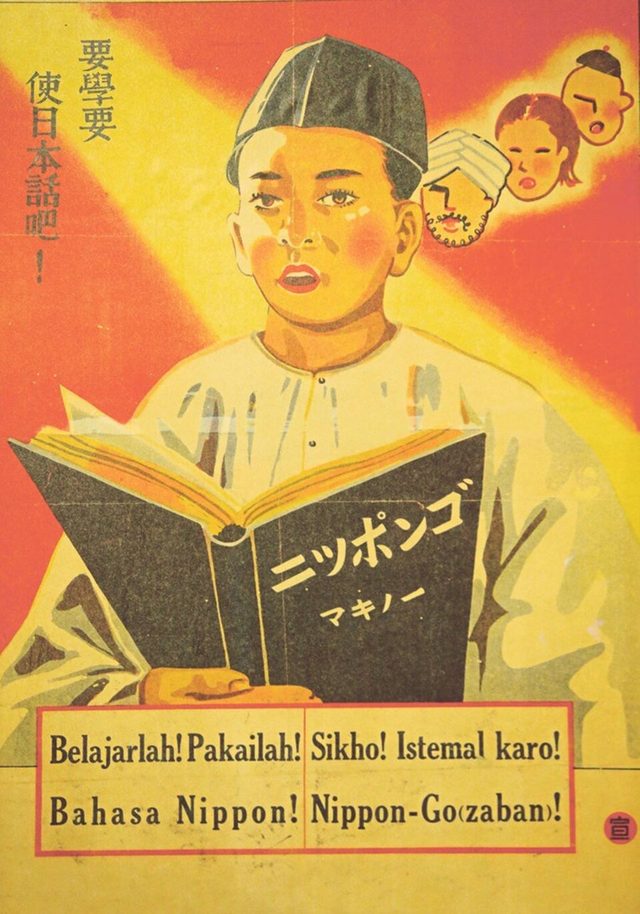 Belajarlah! Pakailah! Bahasa Nippon! (Learn! Use! The Japanese Language!)
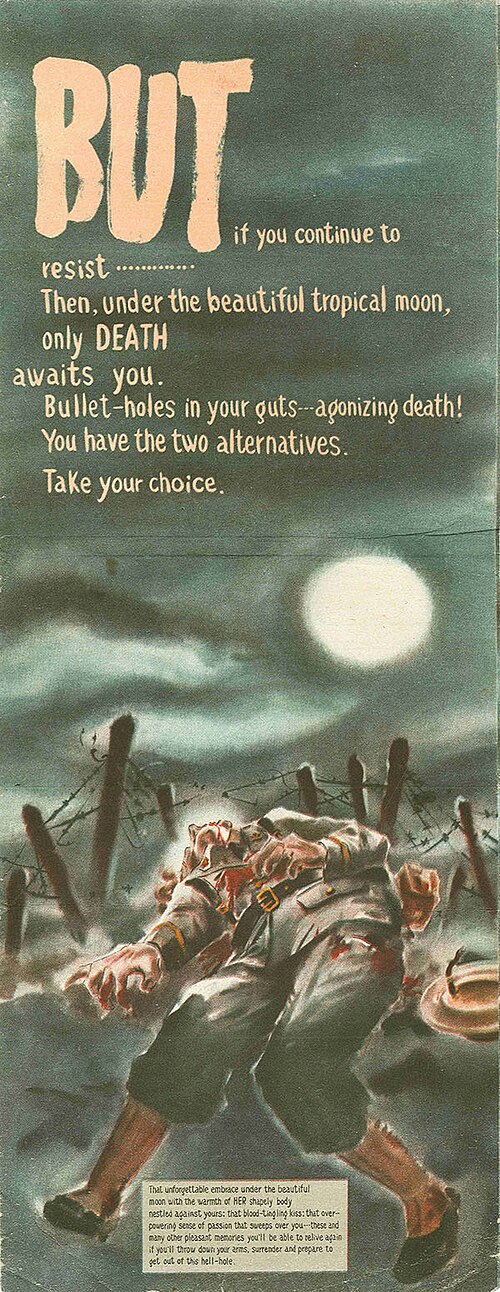 'BUT if you continue to resist...' (Japanese leaflet to Australian troops)Content note
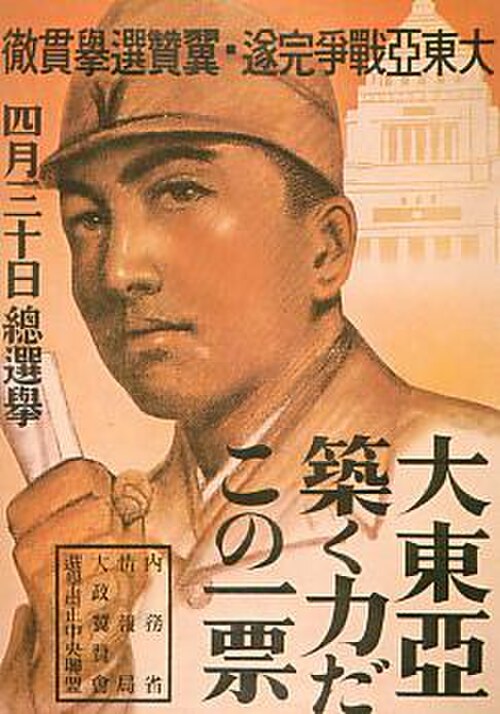 'Daitōa kizuku chikara da, kono ippyō' (This one vote is the power that builds Greater East Asia) election poster
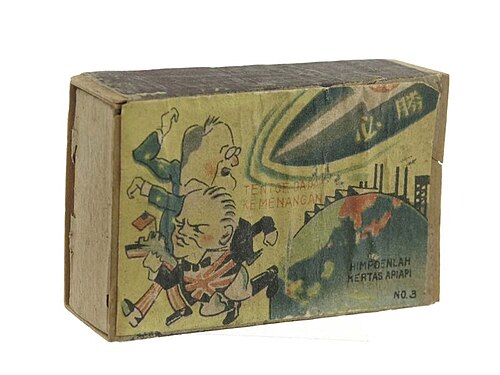 Matchbox label, Japanese wartime propaganda in Malay: "Tentoe dapat kemenangan" (Victory will surely be won), No. 3 (c. 1943)
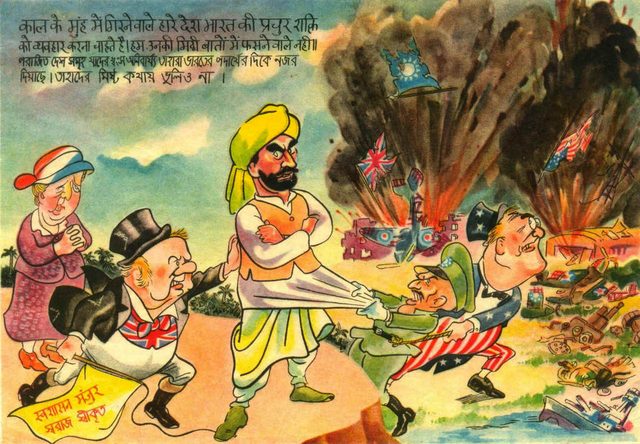 Japanese leaflet for India in Hindi and Bengali: Allied leaders pull an Indian (1943)
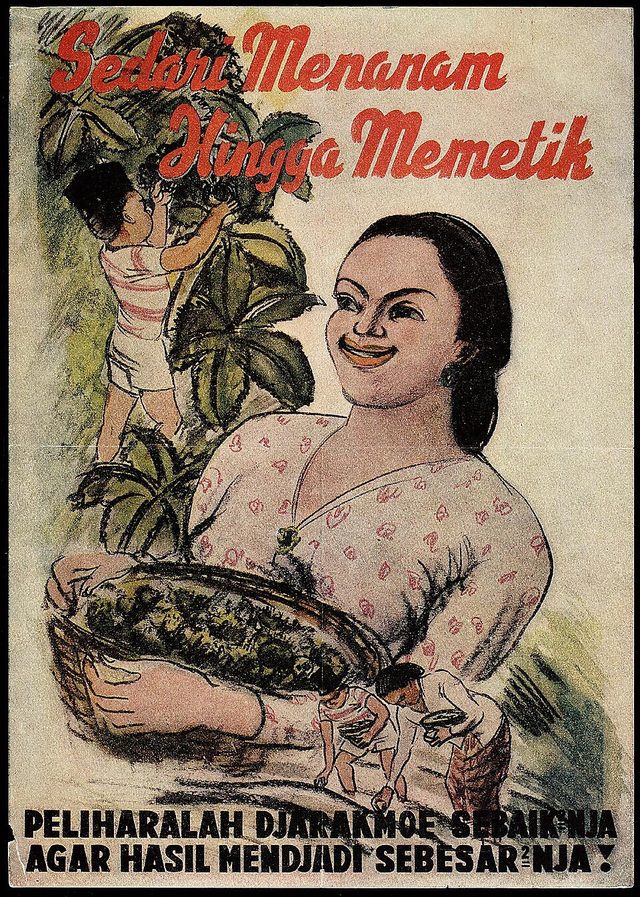 Sedari Menanam Hingga Memetik (From Planting to Harvest)
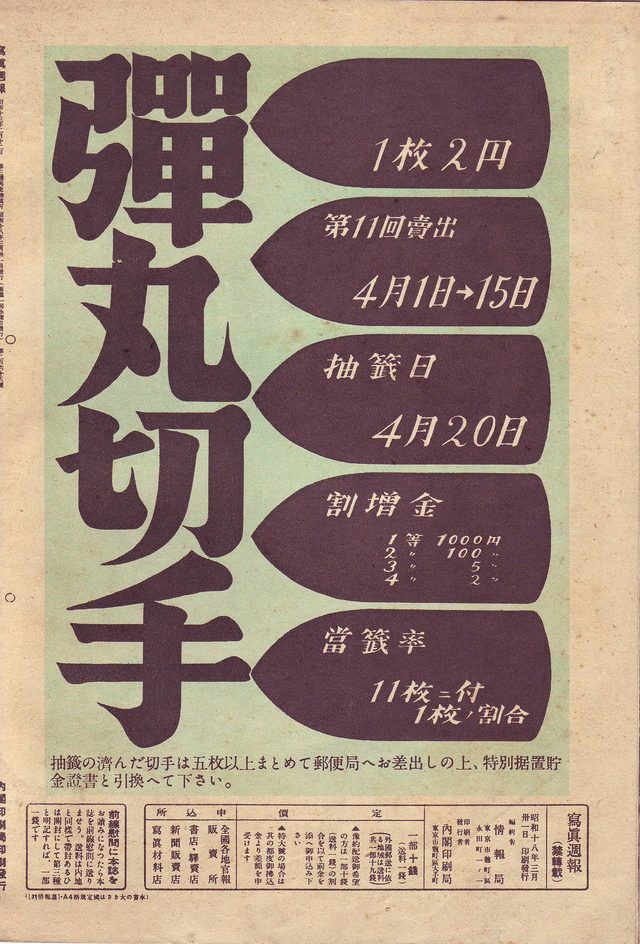 'Dangan kitte' (Bullet Stamps) war-savings lottery advertisement, back cover of Shashin Shūhō
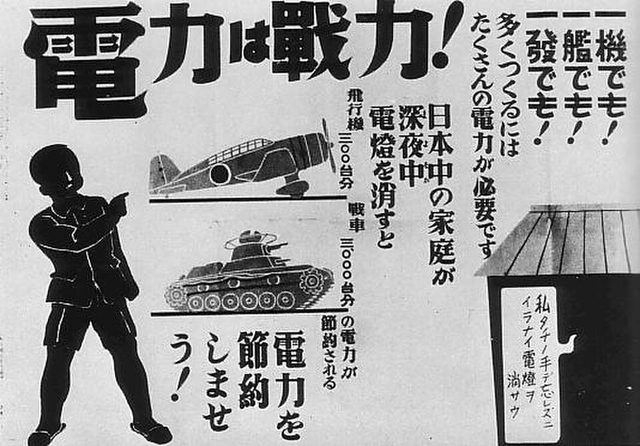 'Denryoku wa senryoku!' (Electric Power Is Military Power!) home-front poster
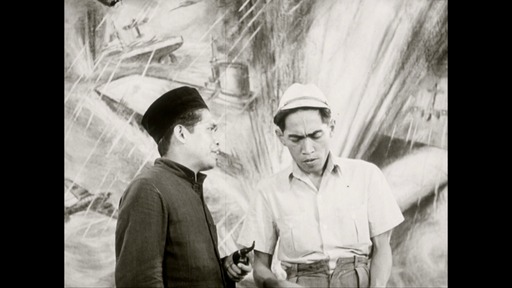 Still from "Japanse propaganda tentoonstelling", Japanese military propaganda film shot in Java (c. 1944)
Case studies
- Imperial Japan's wartime propaganda at home: the Information Bureau, the neighbourhood associations and the war communiqués
- 'Asia for the Asiatics': Japan's Co-Prosperity Sphere and the movements that used it
- Wartime radio voices: open and hidden broadcasts aimed at the enemy, 1939-1945
- Chinese wartime propaganda, 1937-1945: Chongqing, Yan'an and Wang Jingwei's Nanjing