In one line: Mao Zedong, Chairman of the Chinese Communist Party, died at 00:10 on 9 September 1976 aged 82, the state announced it at 4 p.m. and organised a week of official mourning, the Gang of Four were arrested on 6 October, and his body was preserved in a mausoleum although he had signed a cremation pledge in 1956.
The final days
The year began with the death of Premier Zhou Enlai on 8 January 1976. After the Tiananmen Incident of 5 April, the Politburo removed Deng Xiaoping from his posts on 7 April and named Hua Guofeng Premier and First Vice Chairman. Mao's health failed through the same months. Accounts give a heart attack in May or June (Chinese sources say early June), and a far more severe one on 2 September, though a 2023 U.S. National Archives post dates the third on 5 September. The long illness is disputed too: his physician Li Zhisui (The Private Life of Chairman Mao, 1994) reports a diagnosis of motor neurone disease (ALS) in 1974, while other accounts, including the Archives post, say Parkinson's disease. Parts of Li's book have been disputed by Chinese writers, and historians use it with care.
The death
The official time is 00:10 on 9 September 1976, in Beijing, at Zhongnanhai according to published accounts. Wang Dongxing, who headed the central guard, took charge of informing the Politburo. Accounts of the last hours differ: Chinese sources summarised in the 1998 Historical Truth describe more than four hours of unsuccessful resuscitation, while other accounts describe a decision to end life support at midnight. The sources used for this page do not let it choose between them. The state gave no cause beyond the wording quoted below.
What happened to the body
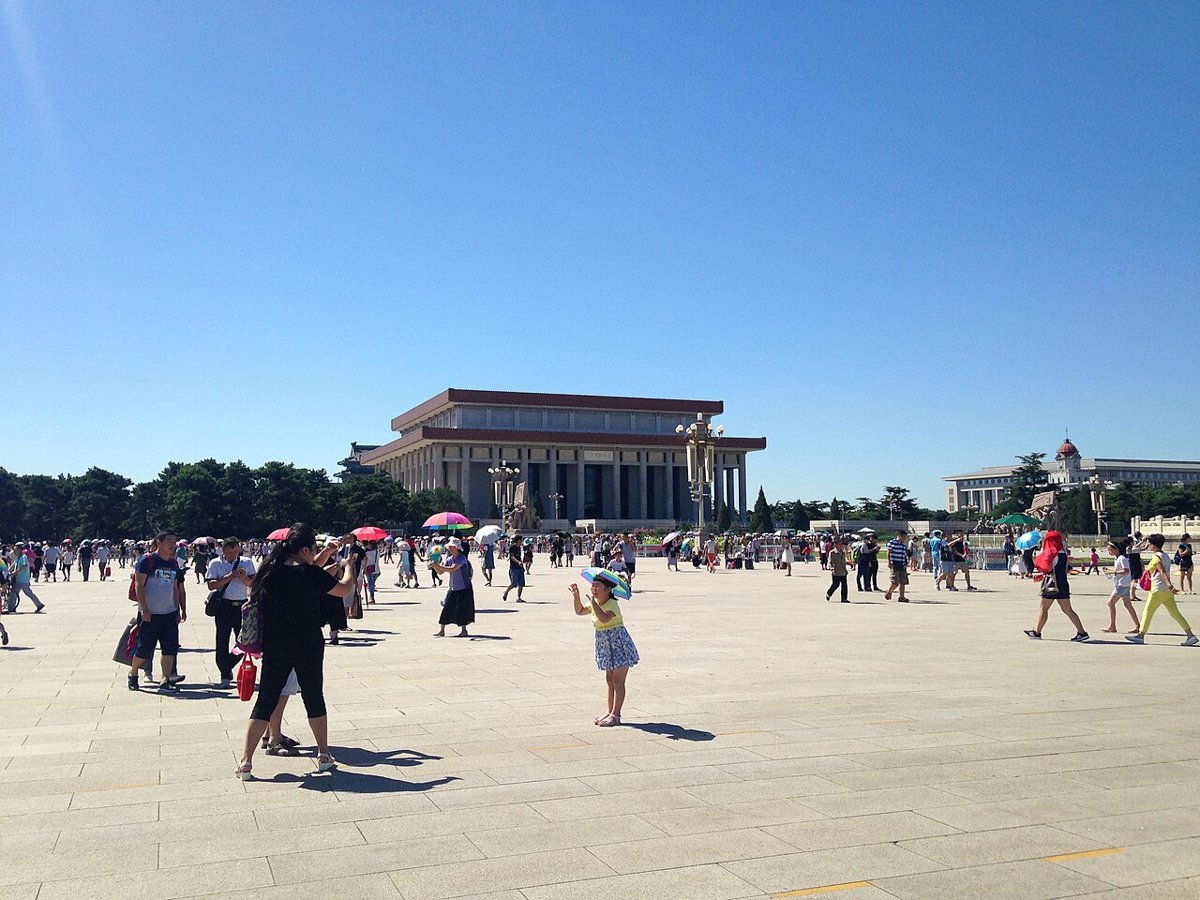
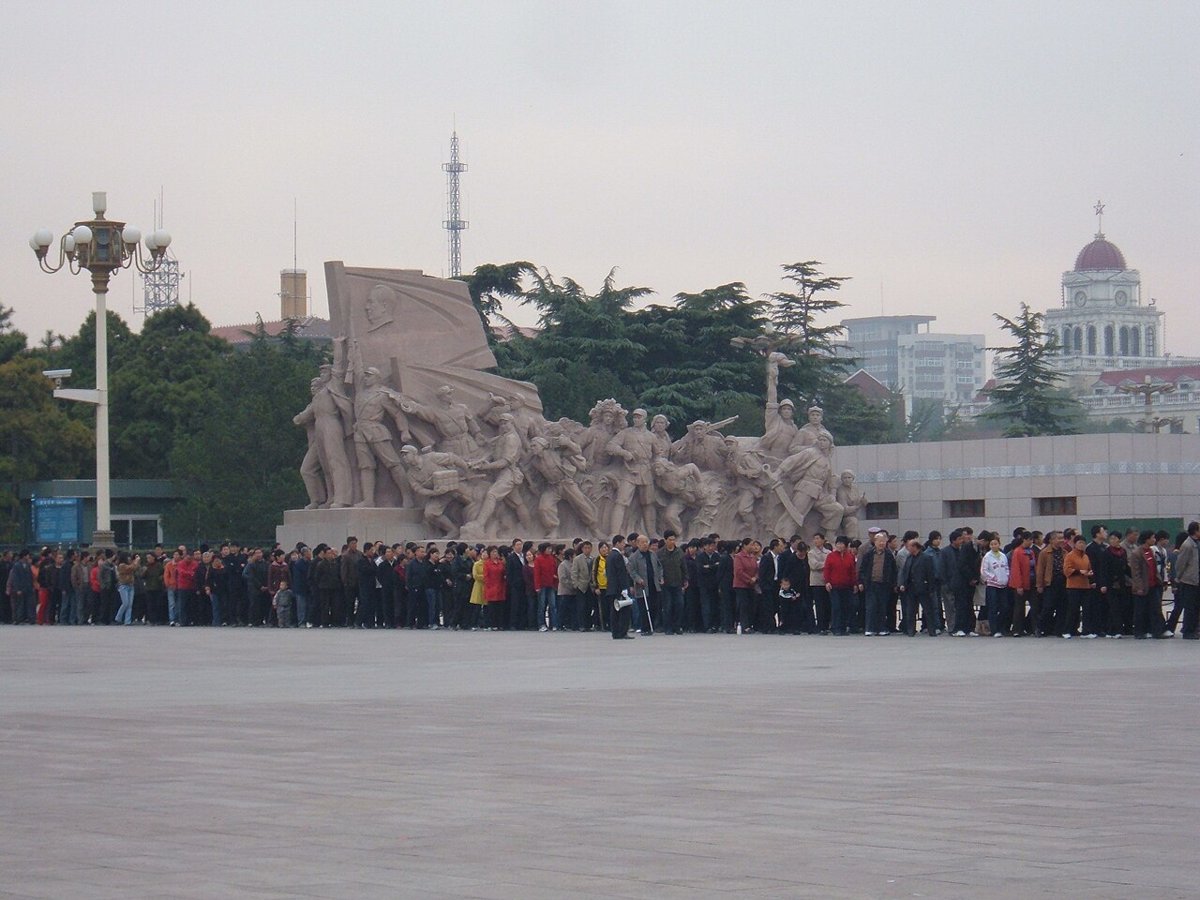
Mao lay in state at the Great Hall of the People from 11 to 17 September. On 27 April 1956 he had been the first to sign a proposal, "A call to bring in cremation", that officials agree to be cremated after death; Zhu De, Peng Dehuai and Deng Xiaoping are named among the next signers (Radio Free Asia, 10 March 2014, which gives 136 signatures in all). Chinese-language accounts give different totals, 136 in some and 151 in others, and the sources found for this page do not reproduce the signed document, so the count is not settled here. After his death the Politburo decided to preserve the body permanently, and on 8 October 1976 the Central Committee, the Standing Committee of the National People's Congress, the State Council and the Central Military Commission jointly decided to build the memorial hall (People's Daily Online). The sources found for this page contain no published record of how the leadership reached that decision, and historians say reliable records are lacking. The reasons given in Chinese accounts are political. Li Zhisui reports that embalming began within hours of death. The hall in Tiananmen Square was begun on 24 November 1976, finished on 24 May 1977 and opened on 9 September 1977 (People's Daily Online), and the preserved body remains on public view. Whether the 1956 pledge should be honoured has been debated outside China's official press, for example in a VOA Chinese discussion of 2014; the Party has not moved the body.


How the death was announced and used
The announcement was broadcast at 4 p.m. on 9 September, about sixteen hours after the death, and printed in Peking Review no. 38 (13 September 1976). It said that Mao "passed away at 00:10 hours on September 9, 1976 in Peking as a result of the worsening of his illness and despite all treatment, although meticulous medical care was given him in every way after he fell ill." It set mourning services at the Great Hall from 11 to 17 September, a rally in Tiananmen Square at 3 p.m. on 18 September, three minutes of silence with sirens, the suspension of recreation, and a decision not to invite foreign delegations. On 18 September Hua Guofeng delivered the memorial address. The state radio and television carried the rally live, as the announcement had directed.
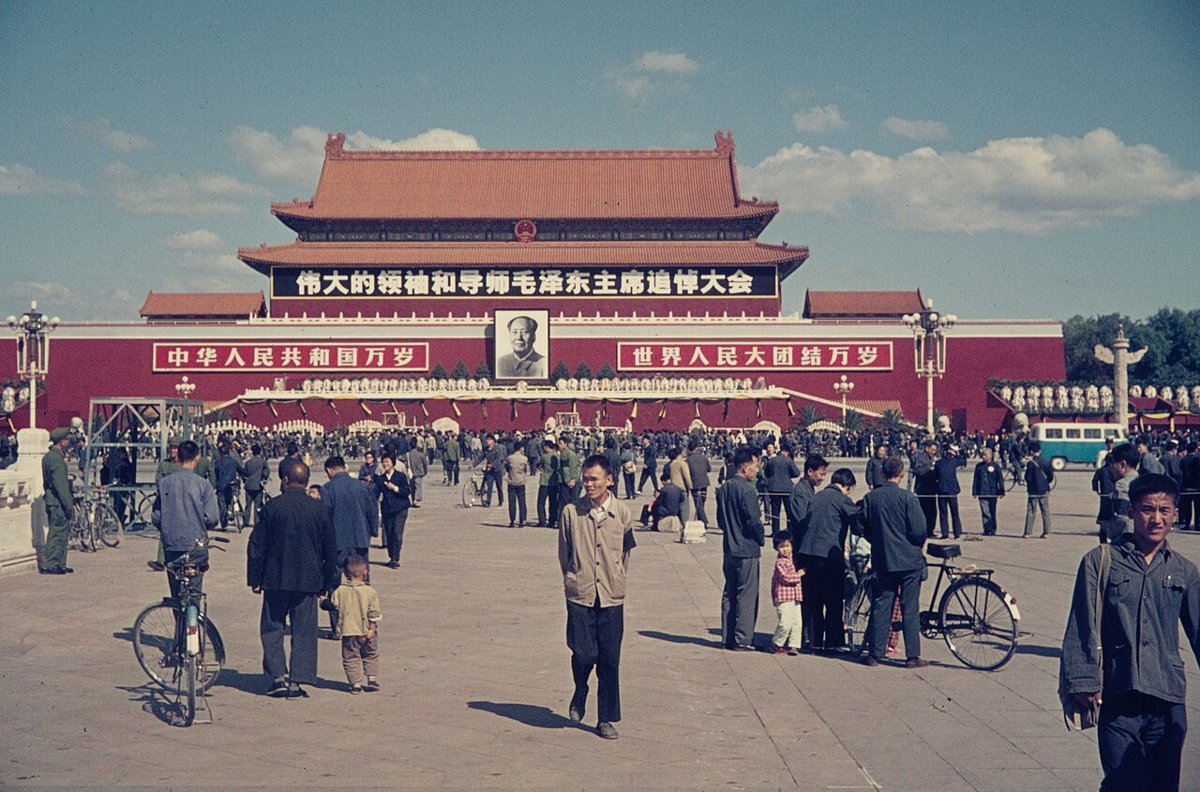

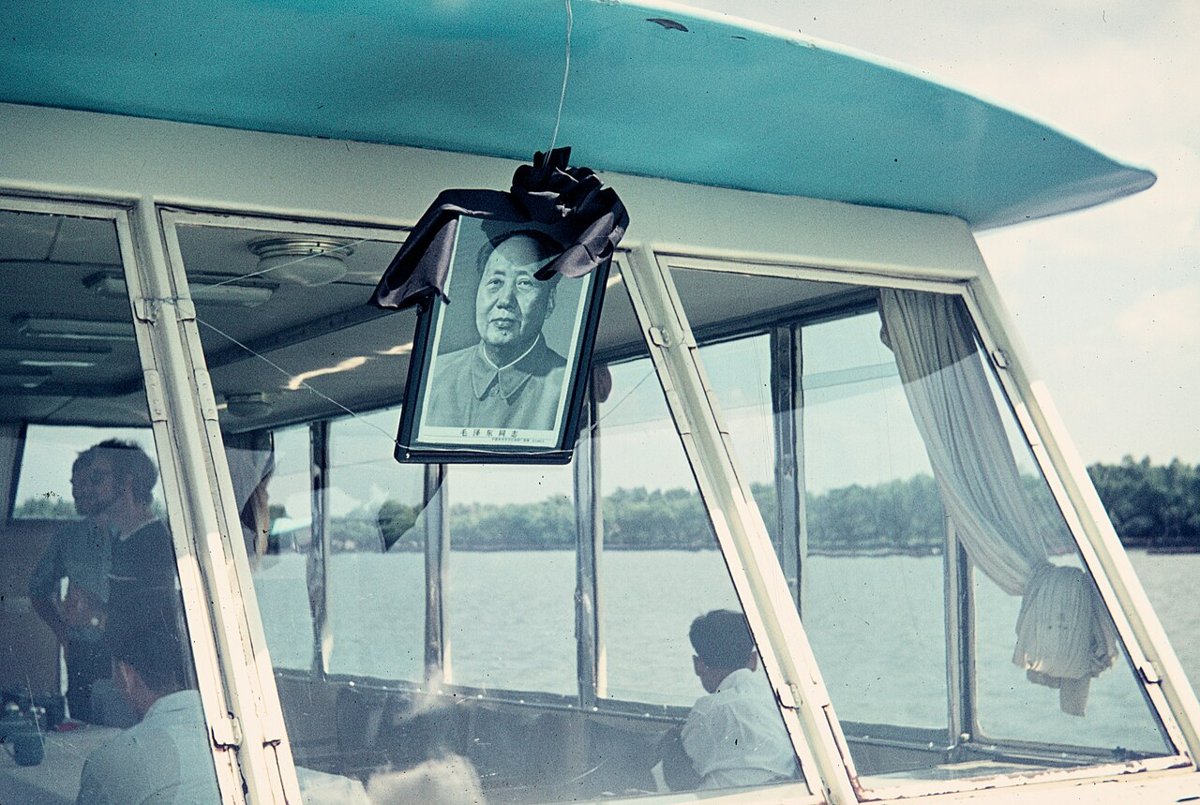

Hua's camp then publicised a handwritten note said to be from Mao, "with you in charge, I am at ease". Its wording and circumstances are contested: Zhang Chunqiao is reported to have denied that it existed, and Jiang Qing is reported to have said at her 1980 trial that some note existed but not as publicised. On 6 October Hua, Marshal Ye Jianying and Wang Dongxing had Jiang Qing, Zhang Chunqiao, Yao Wenyuan and Wang Hongwen arrested; the Politburo made Hua Party Chairman on 7 October. A Central Committee notice of 18 October called them an anti-Party group, and rallies followed on 21 October. A special court tried them from 20 November 1980 to 25 January 1981: Jiang Qing and Zhang Chunqiao received death sentences suspended for two years, Wang Hongwen life imprisonment and Yao Wenyuan twenty years. Jiang Qing contested the charges in court; the Party's account is that the four usurped power.
The Central Committee's "Resolution on Certain Questions in the History of Our Party since the Founding of the People's Republic of China", adopted on 27 June 1981, gave the Party's assessment: "Comrade Mao Zedong was a great Marxist and a great proletarian revolutionary, strategist and theorist. It is true that he made gross mistakes during the 'cultural revolution', but, if we judge his activities as a whole, his contributions to the Chinese revolution far outweigh his mistakes. His merits are primary and his errors secondary." The same text says that the "cultural revolution", "which lasted from May 1966 to October 1976, was responsible for the most severe setback and the heaviest losses suffered by the Party, the state and the people since the founding of the People's Republic."
Timeline
- 8 January 1976: Zhou Enlai dies.
- 7 April 1976: Hua Guofeng is named Premier and First Vice Chairman.
- 2 September 1976: severe heart attack, by most accounts.
- 9 September 1976: death at 00:10; announced at 4 p.m.
- 18 September 1976: memorial rally in Tiananmen Square.
- 6 October 1976: arrest of the Gang of Four.
- 24 November 1976: work begins on the mausoleum.
- 9 September 1977: the mausoleum opens.
- 20 November 1980 to 25 January 1981: the trial.
- 27 June 1981: the Party resolution.
Same-standard note
This page tells each death in the same order and marks disputed points, here the diagnosis, the last hours and the cremation question, with the sources on each side. Mao died of illness, in office, and the state organised a week of mourning; the Soviet page records a different sequence of events, though the bodies of both leaders were preserved, and neither page implies an equivalence. The 1981 resolution is quoted as the Party's official assessment and is not endorsed or rebutted here.
Sources
- "Message to the Whole Party, the Whole Army and the People of All Nationalities Throughout the Country", Xinhua, 9 September 1976, Peking Review no. 38, 13 September 1976 (marxists.org scan); Hua Guofeng, memorial address, 18 September 1976.
- Central Committee of the CCP, "Resolution on Certain Questions in the History of Our Party since the Founding of the People's Republic of China", 27 June 1981 (marxists.org).
- Roderick MacFarquhar and Michael Schoenhals, Mao's Last Revolution (2006); Frederick Teiwes and Warren Sun, The End of the Maoist Era (2007); Li Zhisui, The Private Life of Chairman Mao (1994).
- Lin Ke, Xu Tao and Wu Xujun, Historical Truth (1998), cited as summarised in secondary reporting and not seen directly; U.S. National Archives, "The Slow Vanishing of Mao Zedong" (2023).
- Cremation proposal of 27 April 1956: Radio Free Asia, "Petition Calls For the Cremation of China's Chairman Mao", 10 March 2014 (136 signatures; first signer Mao, then Zhu De, Peng Dehuai, Deng Xiaoping); "毛泽东的每一天:4月27日", Red Song Association site, https://mzd.szhgh.com/pingshu/202204/299861.html (151 signers named as Mao, Zhu De, Liu Shaoqi, Zhou Enlai, Deng Xiaoping and others; no primary citation given). a Communist Party member network chronology of Mao's life, 1951 to 1956, which records under 27 April 1956 that he signed to be cremated after death (https://news.12371.cn/2013/12/20/ARTI1387528393842240.shtml). Memorial hall: People's Daily Online, "Mao Zedong Memorial Hall overview", 8 September 2020 (https://cpc.people.com.cn/n1/2020/0908/c143528-31854065.html). FRAME case studies on Mao's death, the Gang of Four and the 1981 resolution.