Isoroku Yamamoto
Illustration, not an archive object
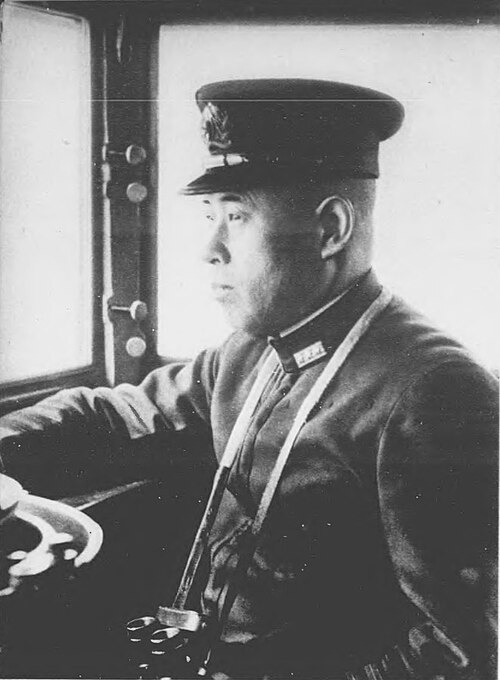

Commander in Chief of the Combined Fleet (1939-43) · Japan
On the regime page: Empire of Japan, 1937 to 1945
4 quotes, oldest first. Filter with other speakers.
“If I am told to fight regardless of the consequences, I shall run wild considerably for the first six months or a year, but I have utterly no confidence for the second and third years.”
English: As rendered from the Memoirs of Prince Konoye in Samuel Eliot Morison, History of United States Naval Operations in World War II, vol. 3, p. 46 (cited by Parker). Original-language text not found.
Reply to Konoe, then Prime Minister, who had asked what the Navy could do if war with the United States came, around the time of the Tripartite Pact. Yamamoto went on to say he hoped efforts would be made to avoid war with the United States.
Yamamoto to Prince Konoe, 1940, from the Memoirs of Prince Konoye, as quoted in the epigraph of Frederick D. Parker, A Priceless Advantage: U.S. Navy Communications Intelligence and the Battles of Coral Sea, Midway, and the Aleutians (Center for Cryptologic History, National Security Agency, 1993), citing Morison, vol. 3, p. 46 Source
Content note: Military order for a war of conquest in the Southwest Pacific. The words are shown as they were said or written. Why
“1. In the east the United States Fleet will be destroyed and United States lines of operation and supply lines extending toward the Far East will be cut. 2. In the west, British Malaya will be invaded and the Burma route, British lines of operations and supply lines extending toward the east will be cut. 3. The enemy forces in the Orient will be destroyed and enemy bases of operations and areas rich in natural resources will be captured. 4. A structure for sustained warfare will be established by capturing and exploiting strategic points and by strengthening defense. 5. The enemy forces will be intercepted and crushed. 6. Battle successes will be exploited, thereby destroying the morale of the enemy.”
English: English text of Japanese Monograph No. 152 (Military History Section, HQ Army Forces Far East). Original-language text not found.
Outline of the Combined Fleet's operations in the event of war with the United States, Britain and the Netherlands. The monograph adds that the plan to destroy the US Fleet in the east meant operations in the Hawaiian area.
Top Secret Combined Fleet Operation Order No. 1, 5 November 1941, Chapter I (Outline of Operations), Admiral Isoroku Yamamoto, CinC Combined Fleet, Japanese Monograph No. 152, Appendix No. 1 (Military History Section, Headquarters, Army Forces Far East), as published on ibiblio.org Source
Content note: Military order for a surprise attack on a naval base. The words are shown as they were said or written. Why
“The Task Force will move out from HITOKAPPU-WAN and proceed to the HAWAII area, maintaining the greatest secrecy as to its movements and a close watch against submarine or air attacks. At the opening of hostilities the Task Force will attack the main strength of the UNITED STATES Fleet in the HAWAII area and inflict crippling damage on it.”
English: Allied Translator and Interpreter Section, US Army Forces Pacific (1945), as printed in Pearl Harbor Attack Hearings, Part 13. Original-language text not found.
Order to the Pearl Harbor Task Force assembled in the Kurile Islands. A second paragraph ordered the Task Force to return to Japan at once if an agreement was reached in the negotiations with the United States.
Combined Fleet Ultrasecret Operation Order (essentials), 22 November 1941, Admiral Isoroku Yamamoto, CinC Combined Fleet; Reply to a Questionnaire Concerning the Pearl Harbor Attack, Doc. #1032 (Allied Translator and Interpreter Section, US Army Forces Pacific, 17-20 October 1945), enclosed in GHQ SCAP letter AG 350.05 of 1 November 1945, Joint Committee Exhibit No. 8, in Pearl Harbor Attack Hearings, Part 13 (US Government Printing Office, 1946), p. 418 Source
Content note: Military order setting the date for attack. The words are shown as they were said or written. Why
“X-Day will be 8 December.”
English: Allied Translator and Interpreter Section, US Army Forces Pacific (1945), as printed in Pearl Harbor Attack Hearings, Part 13. Original-language text not found.
Dispatch fixing the date of the attack on the American fleet in Hawaii and the opening of other operations.
Combined Fleet Dispatch Operation Order (essentials), time of origin about 1730 hours, 2 December 1941; Reply to a Questionnaire Concerning the Pearl Harbor Attack, Doc. #1032 (Allied Translator and Interpreter Section, US Army Forces Pacific, 17-20 October 1945), enclosed in GHQ SCAP letter AG 350.05 of 1 November 1945, Joint Committee Exhibit No. 8, in Pearl Harbor Attack Hearings, Part 13 (US Government Printing Office, 1946), p. 418 Source
Often attributed, not verified
These words circulate under Isoroku Yamamoto’s name but could not be traced to a source. They are listed so readers can check them, not as Isoroku Yamamoto’s words.
“I fear all we have done is to awaken a sleeping giant and fill him with a terrible resolve.”
Not found in the Pearl Harbor Attack Hearings exhibits (including the Japanese statements in Part 13), in Konoe's memoir, or in the Yamamoto texts checked. No letter, diary or conversation with a date and witness was located. The line is widely repeated in books and journalism without a primary citation; not published.
“Should hostilities once break out between Japan and the United States, it would not be enough if we merely took Guam and the Philippines, or even Hawaii and San Francisco. We would have to march into Washington and [dictate the terms of peace / sign the treaty] in the White House.”
The letter to Sasakawa is cited in many works, but the English wording differs between books ('dictate the terms of peace in the White House' in Prange; 'sign the treaty in the White House' in Wohlstetter and others) and the Japanese original and a single full reliable text were not seen. Only fragments were checked, so no wording is published until the original is found.