Josephus Daniels
Illustration, not an archive object
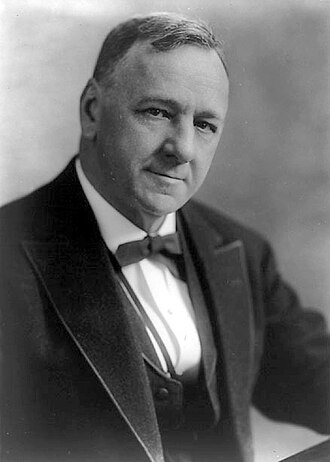

Secretary of the Navy of the United States (1913-1921) · United States
On the regime page: Wilson administration
4 quotes, oldest first. Filter with other speakers.
“The use or introduction for drinking purposes of alcoholic liquors on board any naval vessel, or within any navy yard or station, is strictly prohibited, and commanding officers will be held responsible for the enforcement of this order.”
Daniels issued the order in his second year in office. It replaced the existing article of the Naval Instructions, ended the officers' wine mess and was recommended, he says, by the Surgeon General of the Navy.
General Order No. 99, Navy Department, 1 June 1914, effective 1 July 1914, as printed in Josephus Daniels, Our Navy at War (Washington, D.C.: Pictorial Bureau, 1922), p. 344 Source
“Arrests of suspects sent fear into the hearts of any who might be plotting sabotage. In one day I ordered the arrest of more than a score in one plant.”
Daniels continues his account of naval intelligence work at home during the war, in the paragraph that follows his description of the Investigation Section.
Josephus Daniels, Our Navy at War (Washington, D.C.: Pictorial Bureau, 1922), p. 263 Source
“Close inspection and censorship of mails and cables prevented Germany from communicating with its agents in this country, and also prevented them from sending out military information.”
Daniels summarises the censorship of mail and cable traffic, which the Navy operated for cables and radio and which the Post Office and the Exports Administrative Board shared for the mails after the Trading with the Enemy Act of October 1917.
Josephus Daniels, Our Navy at War (Washington, D.C.: Pictorial Bureau, 1922), p. 263 Source