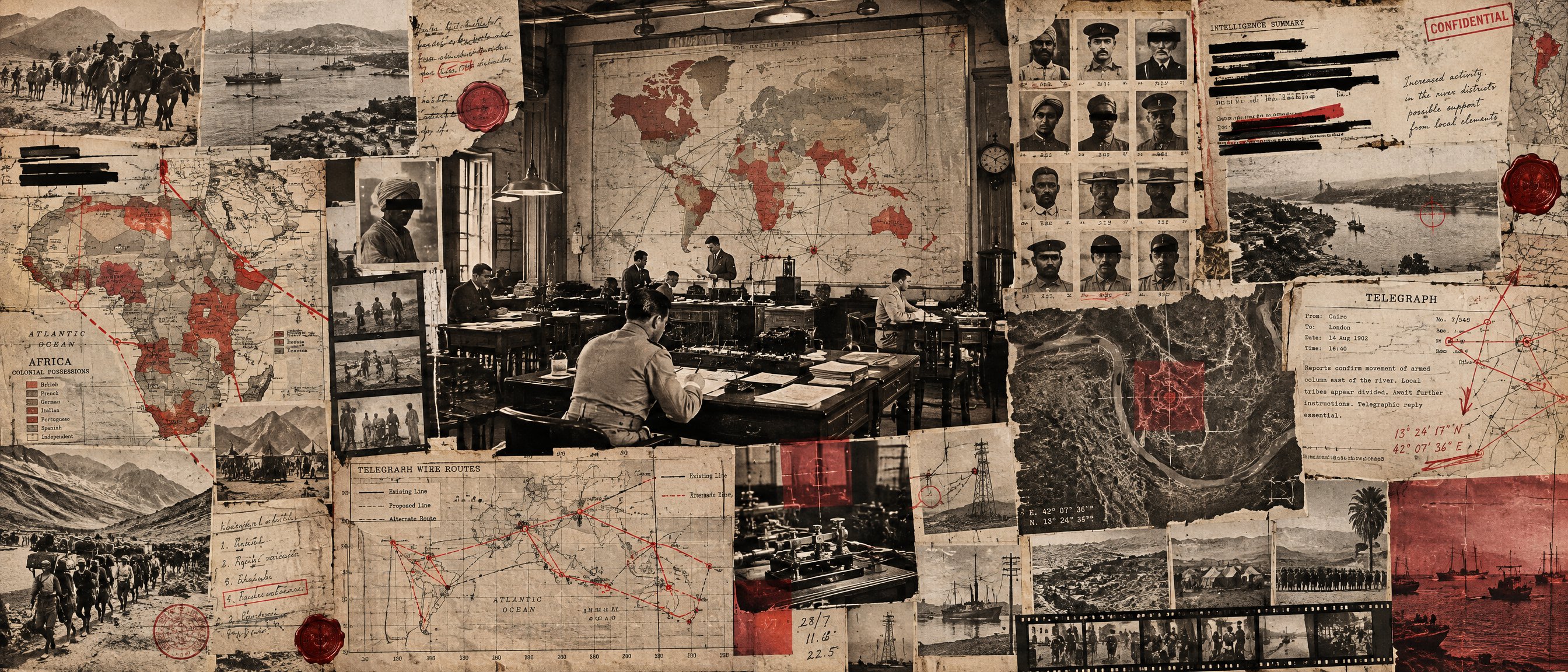
In one line: From 4 March 1913 to 4 March 1921 the United States was governed by the administration of Woodrow Wilson, which took the country into the First World War in April 1917, created a federal propaganda agency, enforced the Espionage and Sedition Acts against anti-war speech, and segregated Black and white staff in several federal offices.
The leader and the people under the leader
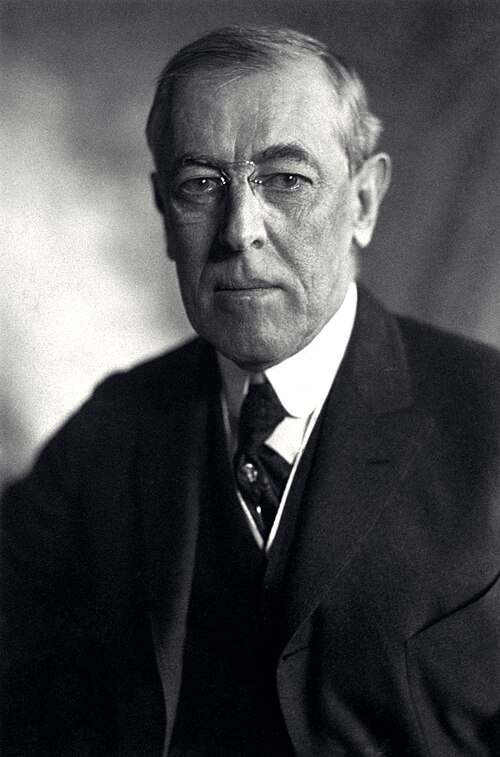
Photo: Harris & Ewing, Public domain (Library of Congress: no known restrictions on publication) Woodrow Wilson
President of the United States · 1913 to 1921
Head of state and head of government under Article II of the Constitution; asked Congress to declare war on Germany on 2 April 1917, created the Committee on Public Information by executive order on 13 April 1917, and signed the Espionage Act of 1917 and the Sedition Act of 1918.
In their words
“You deal in the raw material of opinion and, if my convictions have any validity, opinion ultimately governs the world.”
“The world must be made safe for democracy. Its peace must be planted upon the tested foundations of political liberty. We have no selfish ends to serve. We desire no conquest, no dominion.”
“authority to exercise censorship over the press to the extent that that censorship is embodied in the recent action of the House of Representatives is absolutely necessary to the public safety.”
In the archive: Wartime censorship in the First World War: Britain, Germany, France and the United States, Votes for Women and the anti-suffrage campaigns, 1908 to 1920

White House and advisers
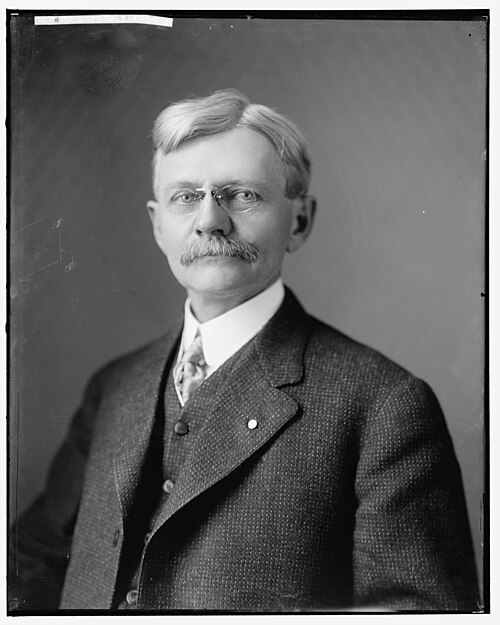
Photo: Harris & Ewing, Public domain (Library of Congress: no known restrictions on publication) Thomas R. Marshall
Vice President of the United States · 1913 to 1921
Presided over the Senate for both of Wilson's terms; no transfer of presidential powers took place after Wilson's stroke of 2 October 1919.
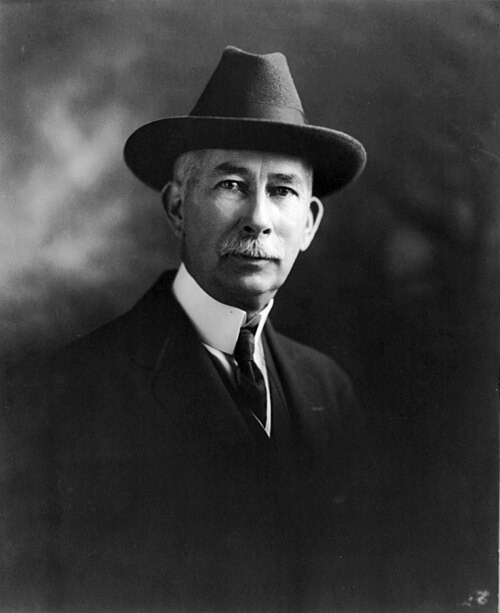
Photo: Unknown author, Public domain (published in the United States before 1931) Edward M. House
Confidential adviser to the President (no office) · 1913 to 1919
Held no office but carried Wilson's messages to European governments in 1914 to 1916, organised the scholars' group known as The Inquiry in 1917, and sat on the American delegation at the Paris Peace Conference in 1919.
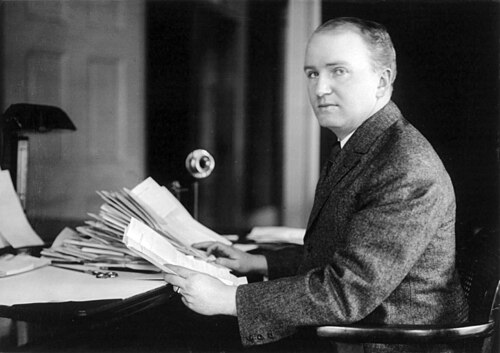
Photo: Clinedinst, Washington, D.C., Public domain (published in the United States before 1931) Joseph Tumulty
Secretary to the President · 1913 to 1921
Managed Wilson's schedule, correspondence and contacts with the press, Congress and the Democratic Party from the White House.


Cabinet
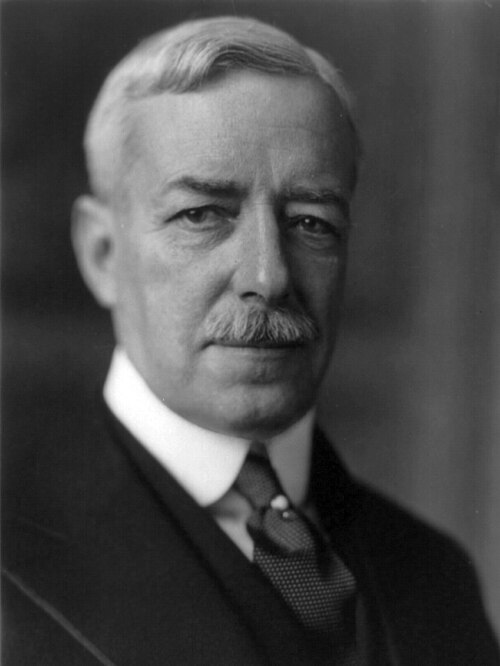
Photo: Harris & Ewing, Public domain (Library of Congress: no known restrictions on publication) Robert Lansing
Secretary of State · 1915 to 1920
Succeeded William Jennings Bryan in June 1915, conducted foreign policy through the entry into the war and the Paris Peace Conference, and resigned on 13 February 1920 after Wilson said he would accept it.
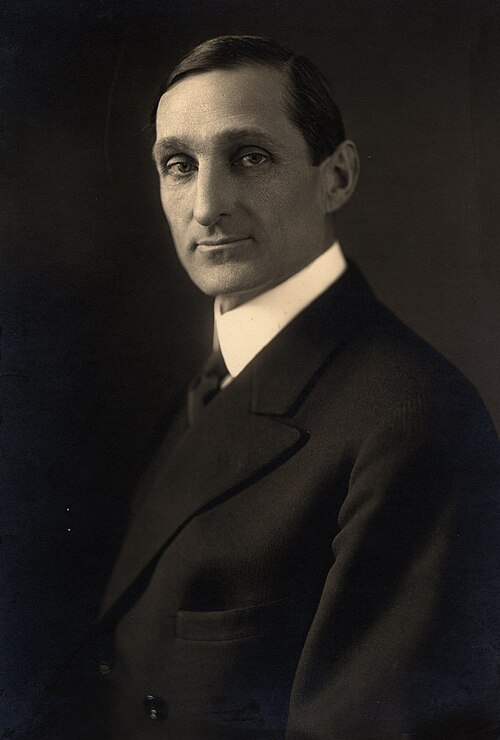
Photo: Harris & Ewing, Public domain (published in the United States before 1931; Library of Congress: no known restrictions on publication) William G. McAdoo
Secretary of the Treasury · 1913 to 1918
Ran the Liberty Loan campaigns and, from December 1917, the federal railroads as Director General; left the Treasury in December 1918, and his department separated work areas by race in some offices from 1913.
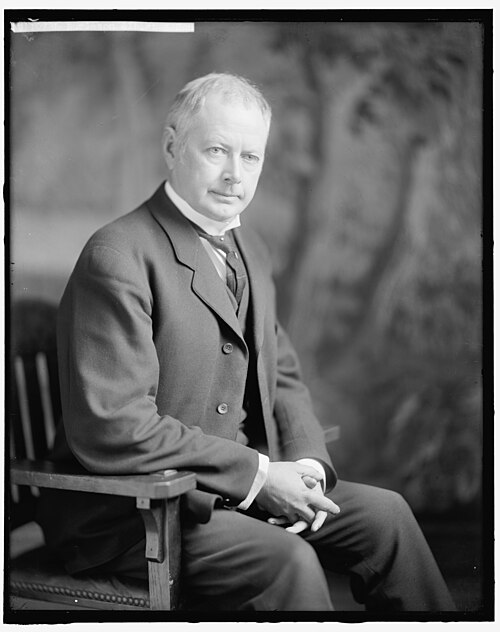
Photo: Harris & Ewing, Public domain (Library of Congress: no known restrictions on publication) Albert S. Burleson
Postmaster General · 1913 to 1921
Ran the Post Office, which under Title XII of the Espionage Act refused to carry periodicals such as The Masses and withdrew mailing privileges from the Milwaukee Leader, and which segregated Black and white clerks in some offices from 1913.
In the archive: Wartime censorship in the First World War: Britain, Germany, France and the United States
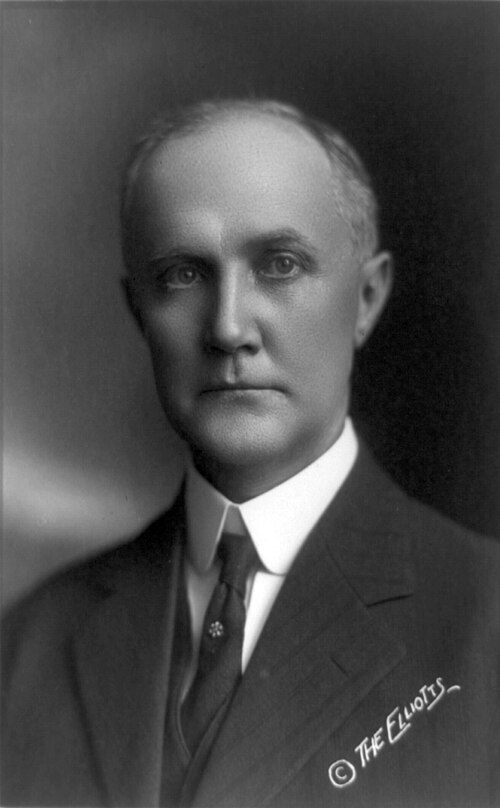
Photo: The Elliotts, Public domain (published in the United States before 1931) Thomas W. Gregory
Attorney General · 1914 to 1919
Headed the Justice Department and its Bureau of Investigation while the Espionage and Sedition Acts were passed and enforced, and gave official recognition to the volunteer American Protective League; left office on 4 March 1919.
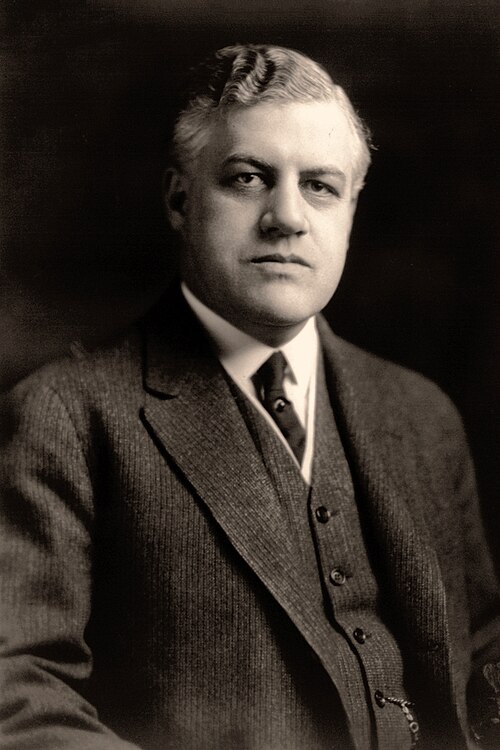
Photo: Harris & Ewing, Public domain (Library of Congress: no known restrictions on publication) A. Mitchell Palmer
Attorney General · 1919 to 1921
Headed the Justice Department when it raided radical organisations and arrested several thousand people in November 1919 and January 1920; earlier Alien Property Custodian from 1917.
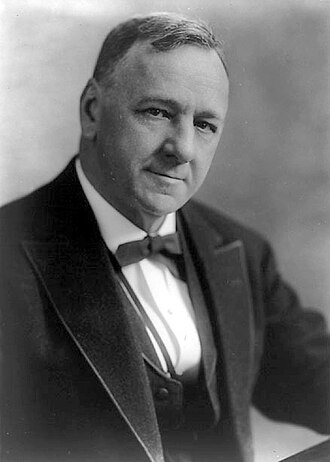
Photo: Harris & Ewing, Public domain (Library of Congress: no known restrictions on publication) Josephus Daniels
Secretary of the Navy · 1913 to 1921
Headed the Navy Department through the war, including the transport of American troops to France, and banned alcohol aboard Navy ships from 1914.
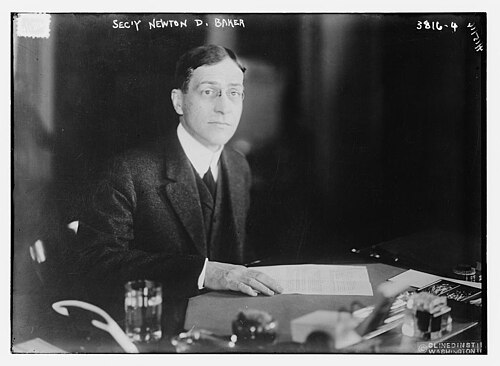
Photo: George Grantham Bain (Bain News Service), Public domain (published in the United States before 1931) Newton D. Baker
Secretary of War · 1916 to 1921
Directed the Army's wartime expansion and the draft under the Selective Service Act of 18 May 1917, and named Pershing to command the American Expeditionary Forces.
In their words
“The whole business of mobilizing the mind of the world so far as American participation in the war was concerned was in a sense the work of the Committee on Public Information.”
“We had an alternative to face when we went into this war. The instant reaction of habit and tradition was to establish strict censorship, to allow to ooze out just such information as a few select persons might deem to be helpful, and to suppress all of the things which these persons deemed hurtful.”
.jpg)


Armed forces
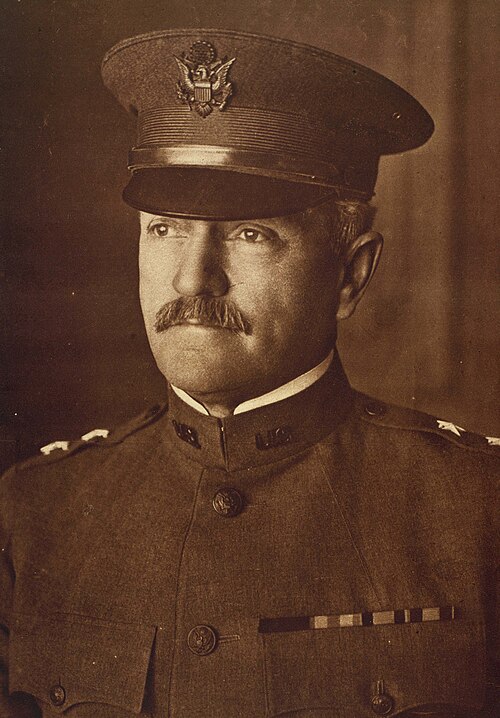
Photo: New York Times Co., Mid-Week Pictorial, Public domain (published in the United States in 1919; Library of Congress: no known restrictions on reproduction) John J. Pershing
Commander of the American Expeditionary Forces · 1917 to 1919
Named in May 1917 to command the American forces in France, insisted that they fight as a separate army, and led them in the Meuse-Argonne offensive of 26 September to 11 November 1918.

War agencies and information
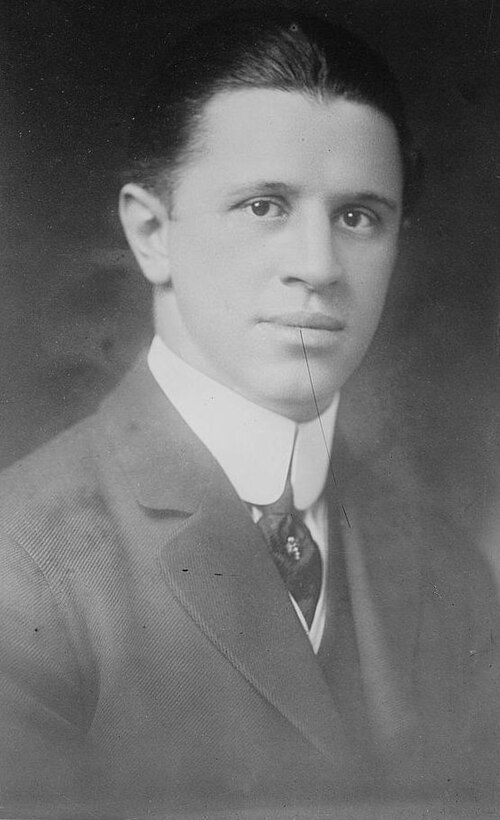
Photo: George Grantham Bain (Bain News Service), Public domain (published in the United States before 1931) George Creel
Chairman, Committee on Public Information · 1917 to 1919
Chaired the committee created by Executive Order 2594 on 13 April 1917, which ran the Four Minute Men, the Division of Pictorial Publicity, the Official Bulletin and the Division of Films; the committee was wound up in 1919.
In their words
“In all things, from first to last, without halt or change, it was a plain publicity proposition, a vast enterprise in salesmanship, the world's greatest adventure in advertising.”
“We did not call it propaganda, for that word, in German hands, had come to be associated with deceit and corruption. Our effort was educational and informative throughout, for we had such confidence in our case as to feel that no other argument was needed than the simple, straightforward presentation of facts.”
In the archive: The Committee on Public Information: how the U.S. government sold the First World War at home (1917-1919)
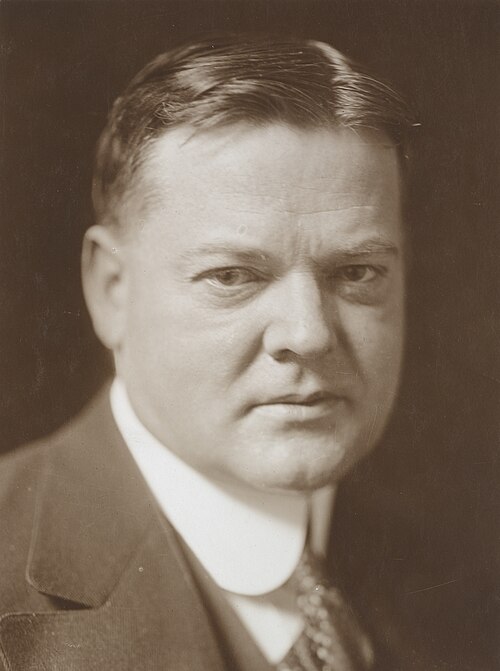
Photo: C.P.I. photographer (Committee on Public Information), War Department collection, Public domain (PD-USGov-Military) Herbert Hoover
U.S. Food Administrator · 1917 to 1919
Named by Wilson in May 1917 and headed the Food Administration from its creation in August 1917, which ran voluntary food-saving campaigns through pledge cards and posters; after the Armistice he directed food relief to Europe.
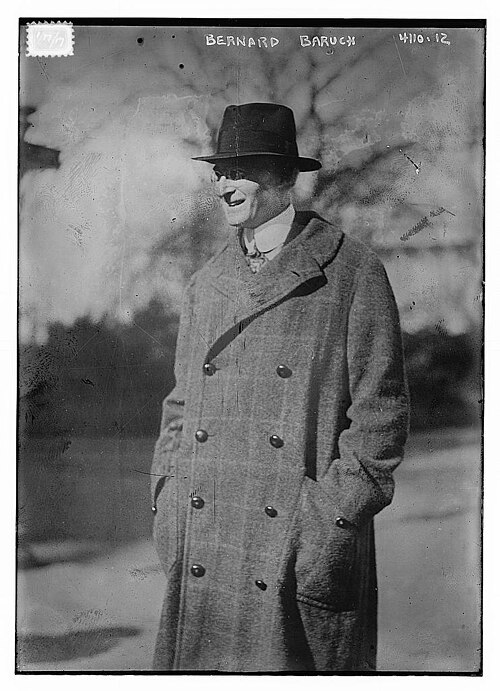
Photo: George Grantham Bain (Bain News Service), Public domain (published in the United States before 1931; Library of Congress: no known restrictions on publication) Bernard Baruch
Chairman, War Industries Board · 1918 to 1919
Chaired the board from 4 March 1918, which set priorities and prices for war materials; the board was dissolved in January 1919.


Background and rise to power
Woodrow Wilson, president of Princeton University from 1902 to 1910 and governor of New Jersey from 1911 to 1913, won the presidency in 1912 in a four-way race against William Howard Taft, Theodore Roosevelt and Eugene V. Debs, with 41.8 per cent of the popular vote and 435 electoral votes. In 1916 he was re-elected with 49.2 per cent and 277 electoral votes; the Democratic campaign used the slogan "He kept us out of war".
The United States stayed neutral after war began in Europe in 1914. The sinking of the Lusitania on 7 May 1915, renewed German submarine warfare and the Zimmermann telegram, published on 1 March 1917, led to Wilson's war message of 2 April 1917, which said "The world must be made safe for democracy." Congress declared war on 6 April 1917.
How power was organized
The administration ran through the president, a small White House staff and a cabinet of ten. Edward M. House, who held no office, advised Wilson on foreign affairs and in 1917 organised "The Inquiry", a group of scholars preparing material on peace terms. Vice President Thomas R. Marshall presided over the Senate. After Wilson's stroke of 2 October 1919 no transfer of his powers took place; none was provided for until the Twenty-fifth Amendment of 1967.
The cabinet held both the war ministries and the offices that policed speech. William G. McAdoo (Treasury) ran the Liberty Loan drives and, from December 1917, the federal railroads; Newton D. Baker (War) oversaw the draft begun by the Selective Service Act of 18 May 1917; Josephus Daniels led the Navy; Robert Lansing was Secretary of State from 1915 to 1920. Joseph Tumulty, secretary to the president, managed Wilson's correspondence and press contacts. Albert S. Burleson, Postmaster General, could declare matter "nonmailable" under Title XII of the Espionage Act. Attorneys General Thomas W. Gregory and, from March 1919, A. Mitchell Palmer led the Justice Department and its Bureau of Investigation, which brought the prosecutions. Wartime agencies (the Food Administration under Herbert Hoover, the War Industries Board under Bernard Baruch and the Committee on Public Information) answered to Wilson. General John J. Pershing commanded the American Expeditionary Forces in France.
Segregation of federal offices began in 1913. The Post Office and Treasury Departments separated Black and white clerks by work area, lunch room and washroom in some offices, and other departments followed. Black leaders including William Monroe Trotter protested to Wilson in person in November 1914; Wilson said the aim was to reduce friction (Wolgemuth 1959; Yellin 2013). Suffragists picketed the White House from January 1917 and some were jailed; Wilson endorsed a federal amendment in January 1918, and the Nineteenth Amendment was ratified on 18 August 1920 (suffrage and anti-suffrage; the "Kaiser Wilson" banner).
The propaganda apparatus
George Creel, a journalist, chaired the Committee on Public Information (CPI), created by Executive Order 2594 on 13 April 1917, a week after the declaration of war. The Secretaries of State, War and the Navy sat on it with Creel. It began with a voluntary press code and a daily government newspaper, the Official Bulletin, and grew into divisions for news, films, posters and speakers. Its Division of Pictorial Publicity recruited commercial artists for posters. The Four Minute Men were volunteers who gave talks of that length in cinemas from bulletins written in Washington; the CPI's report counts 75,000 speakers and 755,190 speeches. Its films included Pershing's Crusaders (1918) (the CPI; campaign record; Four Minute Men poster). Creel called the work "a plain publicity proposition" (How We Advertised America, 1920) and wrote that its emphasis was "expression, not suppression" (Complete Report of the Chairman, 1920).
The CPI's copy also asked citizens to inform. Its 1918 "Spies and Lies" advertisement said: "Report the man who spreads pessimistic stories, divulges—or seeks—confidential military information, cries for peace, or belittles our efforts to win the war." In September 1918 the CPI released the "Sisson Documents", purchased papers said to show that Lenin and Trotsky were German agents; George Kennan concluded in 1956 that they were forgeries. Hoover's Food Administration ran a voluntary food-saving campaign with pledge cards and posters.
The restrictions on speech ran through Congress, the courts, the Justice Department and the Post Office, not the CPI. The Espionage Act of 15 June 1917 made it a crime to make "false reports or false statements with intent to interfere with the operation or success of the military or naval forces" or to obstruct recruiting. The Trading with the Enemy Act of 6 October 1917 required foreign-language papers to file English translations of war news or hold a permit. The Sedition Act of 16 May 1918 added "any disloyal, profane, scurrilous, or abusive language about the form of government of the United States". Burleson excluded The Masses and the Milwaukee Leader from the mails; Judge Learned Hand ordered The Masses mailed in July 1917 and was reversed on appeal. The Justice Department worked with the volunteer American Protective League, which claimed about 250,000 members and which investigated neighbours and joined "slacker" raids on draft evaders in 1918 (Jensen 1968; Capozzola 2008). Debs was convicted for a speech at Canton, Ohio, on 16 June 1918 and sentenced to ten years; the Supreme Court upheld convictions under the Act in Schenck, Debs and Abrams (1919). Wilson said on 7 December 1915 that citizens "born under other flags" had "poured the poison of disloyalty into the very arteries of our national life". Counts of prosecutions differ and no total is given here (wartime censorship).
In the Fourteen Points of 8 January 1918 Wilson called for "Open covenants of peace, openly arrived at". After the Armistice of 11 November 1918 he led the delegation to the Paris Peace Conference. Palmer's Justice Department raided radicals and immigrants in November 1919 and January 1920. Congress repealed the 1918 amendments on 3 March 1921, the day before Wilson left office; Debs was still in prison, and President Harding commuted his sentence in December 1921. The archive's definitions fit most clearly: name-calling ("the Hun", "disloyal"), fear appeal ("Spies and Lies"), transfer (the Four Minute Men borrowing the name of the 1775 militia) and testimonial (the historians' endorsement of the Sisson Documents).
Timeline
- 4 March 1913: Wilson is inaugurated; Marshall becomes vice president.
- 1913: separation of staff begins in the Post Office and Treasury.
- 6 April 1917: Congress declares war on Germany.
- 13 April 1917: Executive Order 2594 creates the CPI.
- 15 June 1917: the Espionage Act.
- 16 May 1918: the Sedition Act.
- September 1918: the Sisson Documents are released; Debs is sentenced.
- 11 November 1918: the Armistice.
- 2 October 1919: Wilson's stroke.
- 2 January 1920: the largest of the Palmer raids.
- 18 August 1920: the Nineteenth Amendment is ratified.
- 4 March 1921: Wilson leaves office.
Same-standard note
This page uses the same structure and definitions as every other regime page: a technique is listed only where the archive's working definition and a documented example fit, the same technique ids are applied to every regime, and offices and dates are stated without judging the people who held them. This was a constitutional government in a declared war, and it also prosecuted anti-war speakers, closed periodicals to the mails and segregated federal offices; the restrictions were enacted by Congress and upheld by the Supreme Court at the time, and the 1918 amendments were repealed in 1921. Other regime pages record other systems, each with its own scale, intent and context.
Sources
- Executive Order 2594 (13 April 1917); Espionage Act, 40 Stat. 217; Trading with the Enemy Act, 40 Stat. 411; Sedition Act, 40 Stat. 553. Wilson, annual message of 7 December 1915, war message of 2 April 1917, Fourteen Points address of 8 January 1918.
- Masses Publishing Co. v. Patten, 244 F. 535 (S.D.N.Y. 1917); Schenck v. United States, 249 U.S. 47 (1919); Debs v. United States, 249 U.S. 211 (1919); Abrams v. United States, 250 U.S. 616 (1919).
- Committee on Public Information, Complete Report of the Chairman (1920); George Creel, How We Advertised America (1920); George F. Kennan, "The Sisson Documents", Journal of Modern History 28 (1956).
- David M. Kennedy, Over Here (1980); Stephen Vaughn, Holding Fast the Inner Lines (1980); John Milton Cooper Jr., Woodrow Wilson (2009); Arthur S. Link, Wilson, 5 vols (1947 to 1965).
- Kathleen L. Wolgemuth, "Woodrow Wilson and Federal Segregation", Journal of Negro History 44 (1959); Eric S. Yellin, Racism in the Nation's Service (2013); Joan M. Jensen, The Price of Vigilance (1968); Christopher Capozzola, Uncle Sam Wants You (2008).
In the archive
Collection objects (33)
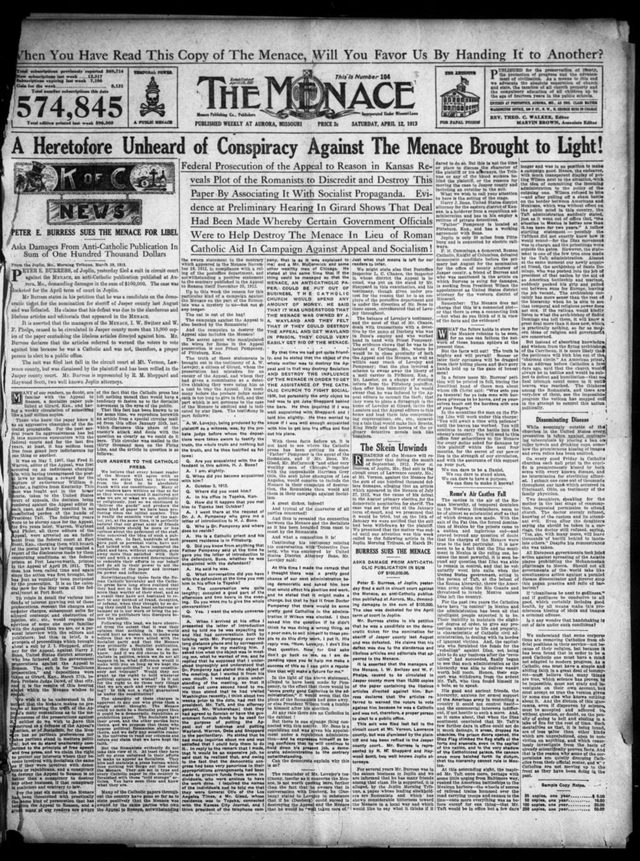 The Menace front page, 12 April 1913 (Aurora, Missouri)Content note
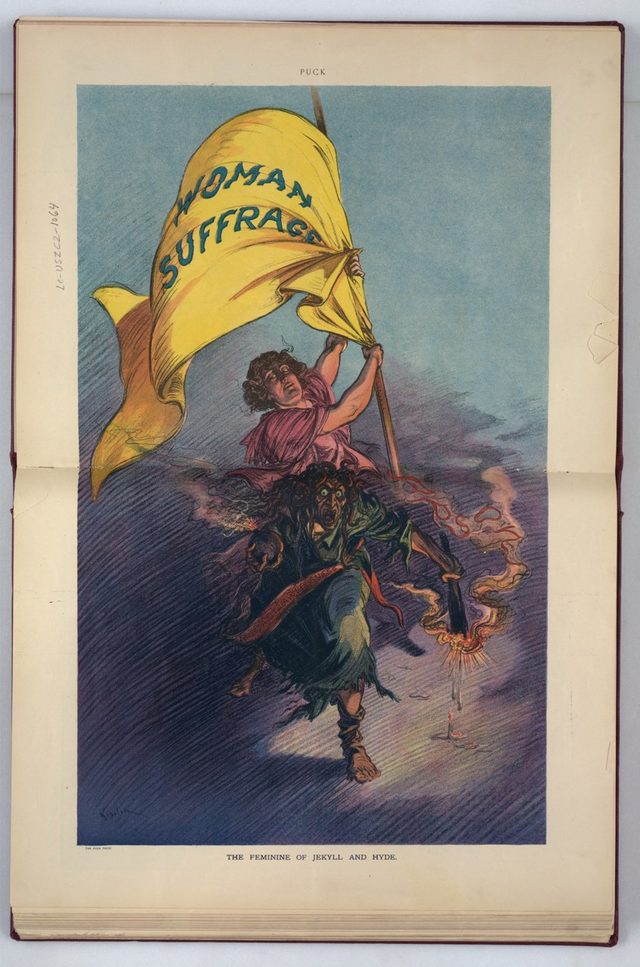 "The Feminine of Jekyll and Hyde" (Puck, 1913)
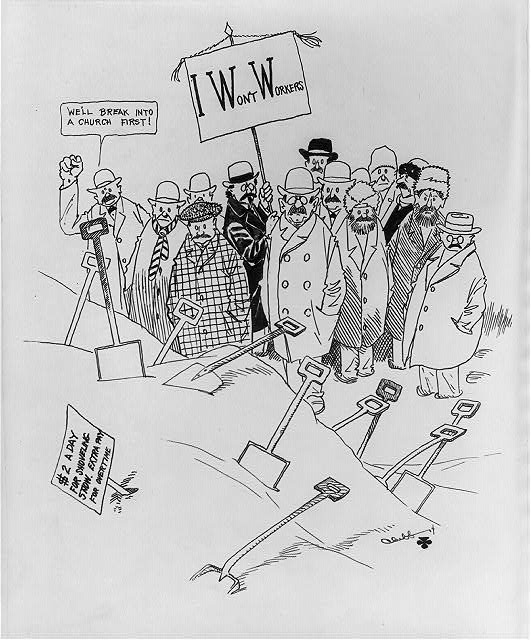 The unemployed
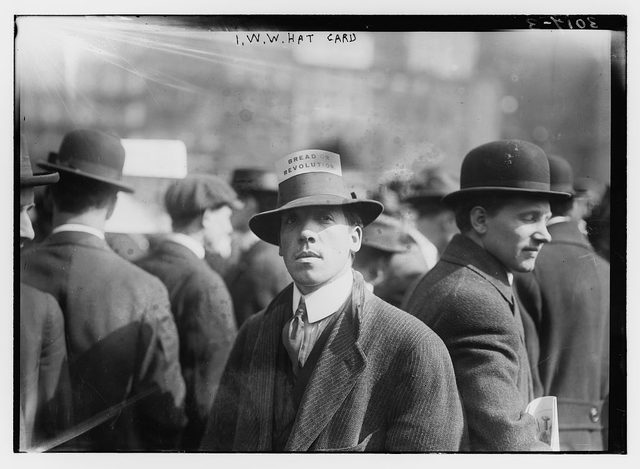 I.W.W. Hat Card
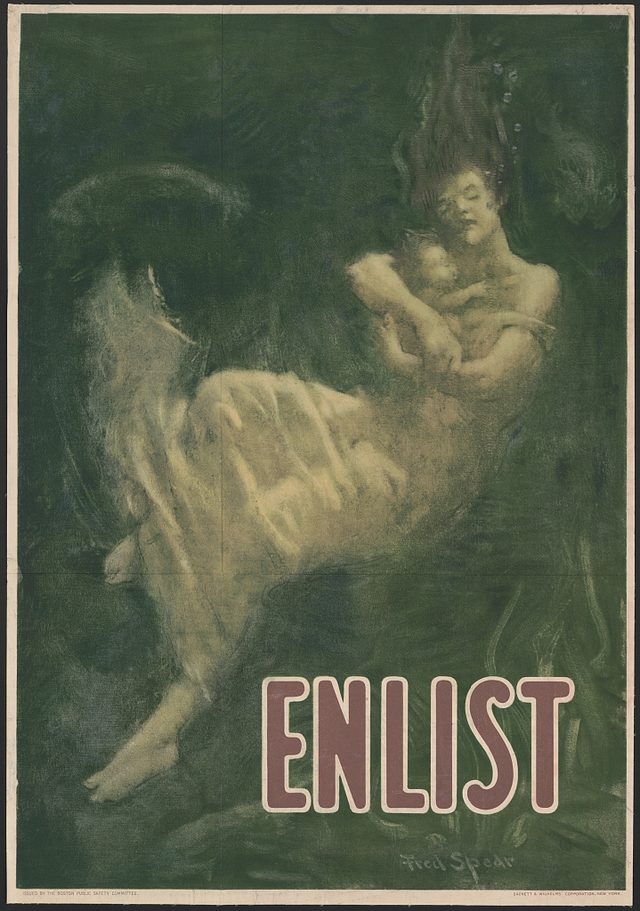 EnlistContent note
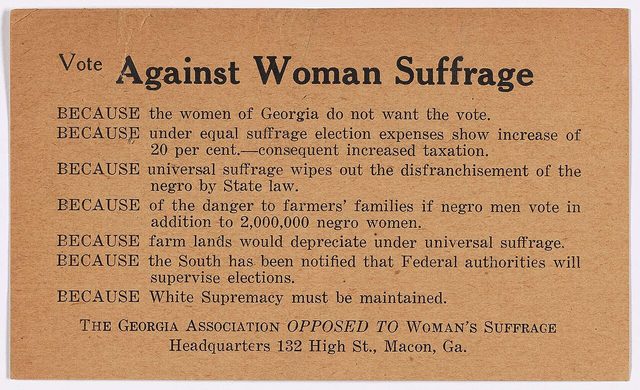 Vote Against Woman Suffrage
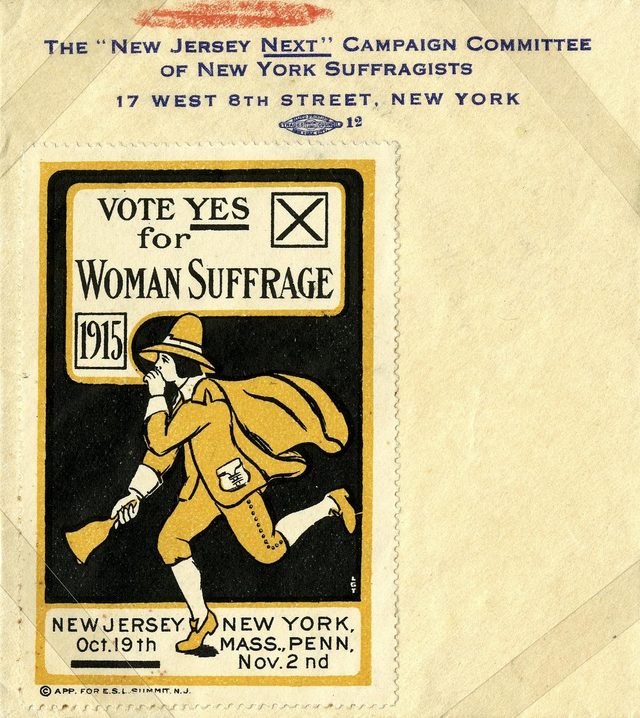 "Vote Yes for Woman Suffrage" poster stamp, New Jersey Next Campaign Committee (United States, 1915)
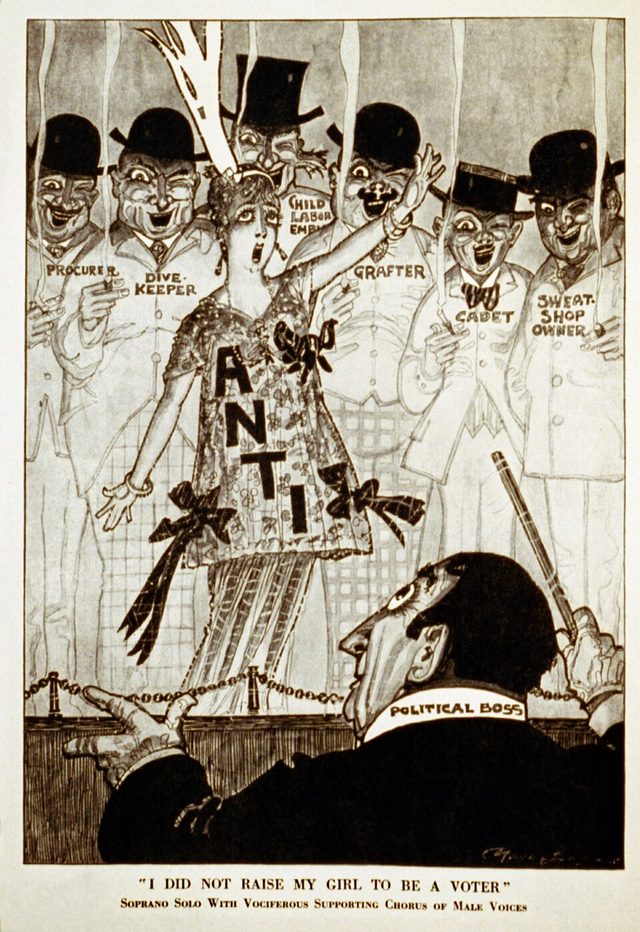 "I did not raise my girl to be a voter"
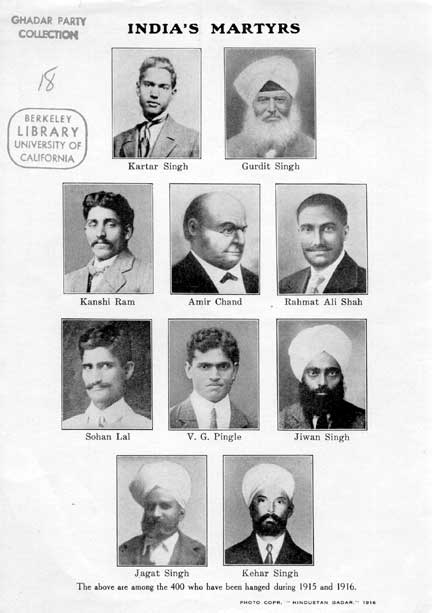 India's Martyrs (Ghadar Party handbill, San Francisco, 1916)
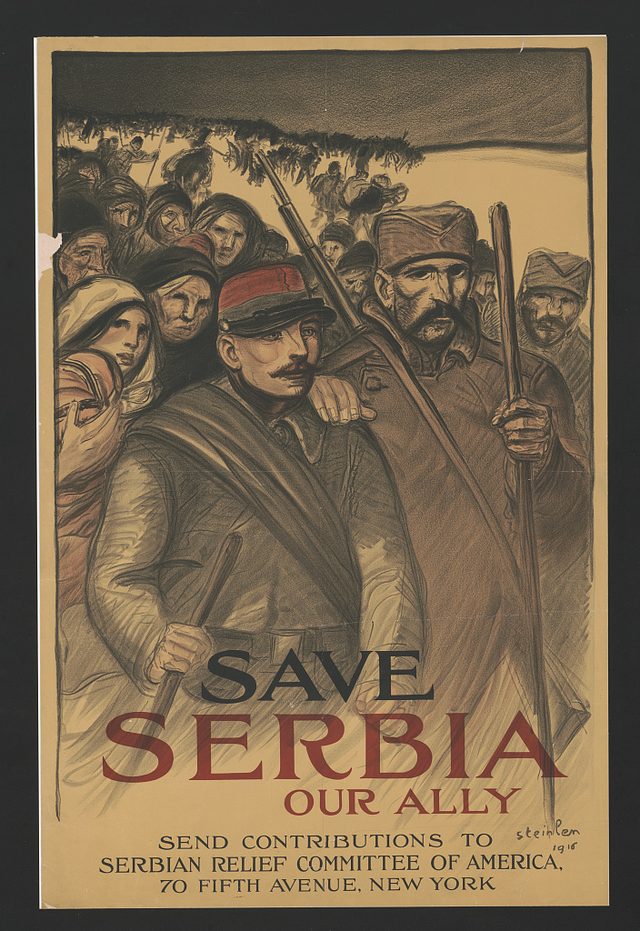 Save Serbia our ally: Serbian Relief Committee of America poster
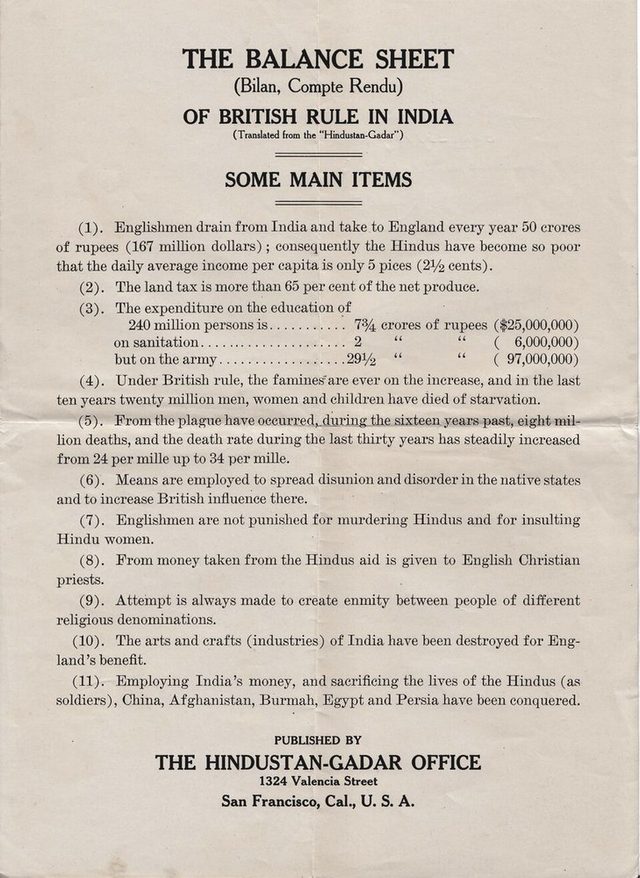 The Balance Sheet of British Rule in India (Hindustan-Gadar broadside)
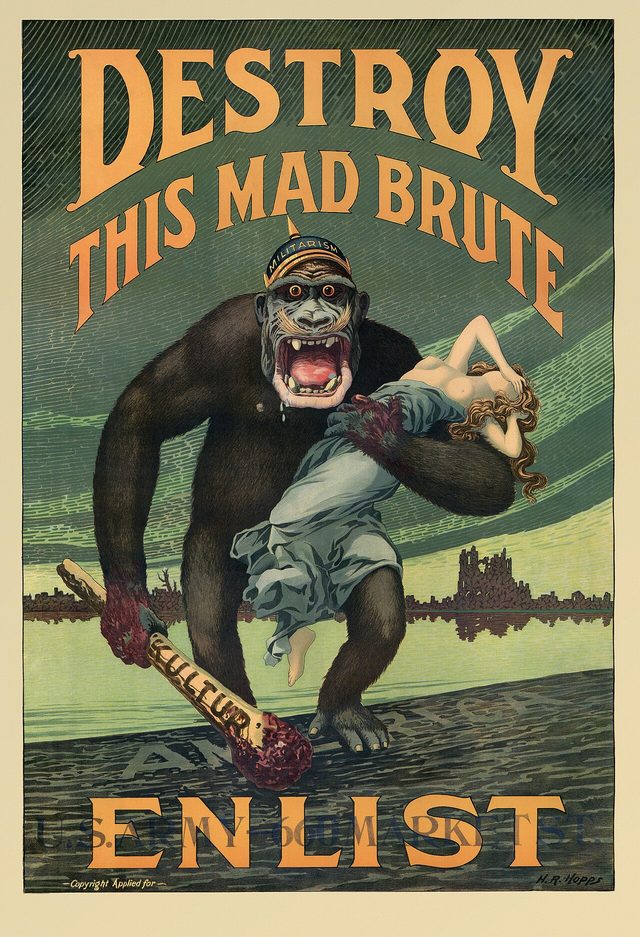 Destroy This Mad Brute — EnlistContent note
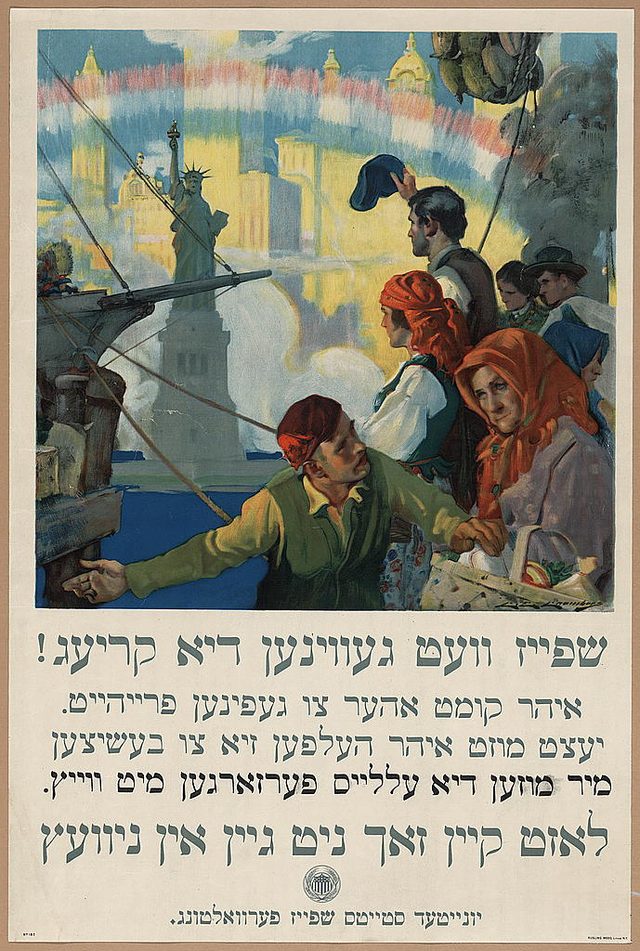 שפייז וועט געווינען דיא קריעג! (Food Will Win the War!), Yiddish edition
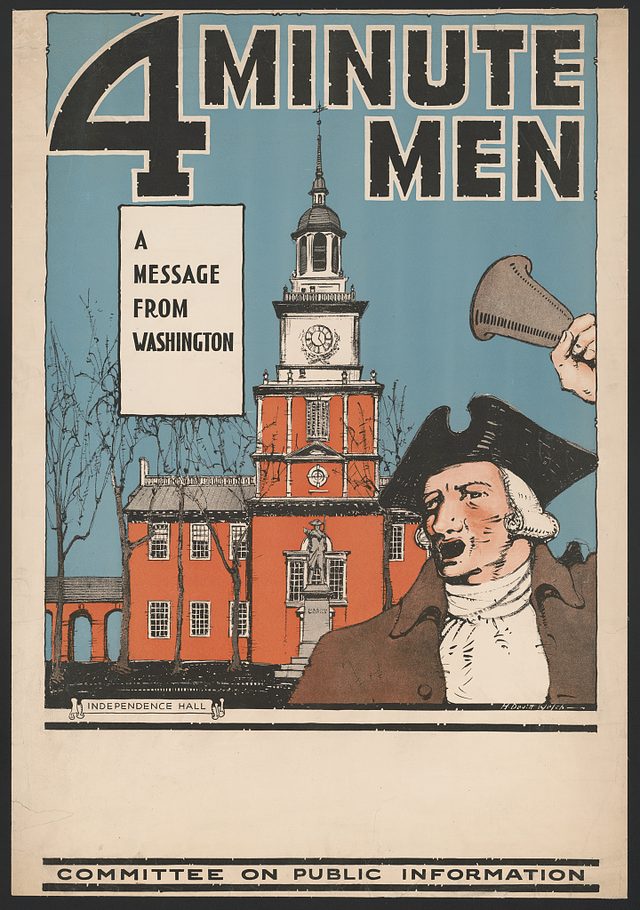 4 Minute Men: A Message from Washington
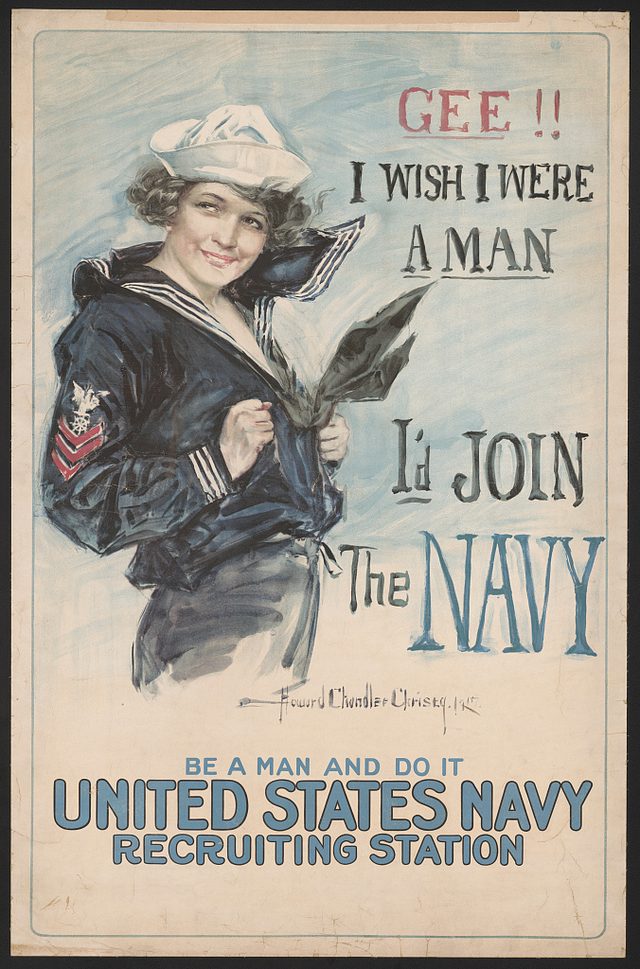 Gee!! I Wish I Were a Man, I'd Join the Navy
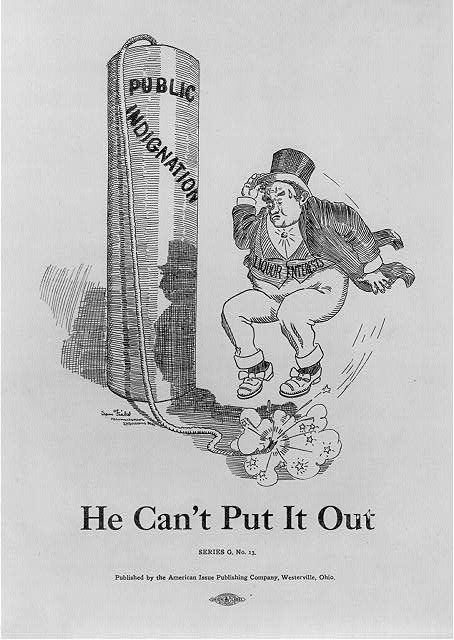 He Can't Put It Out
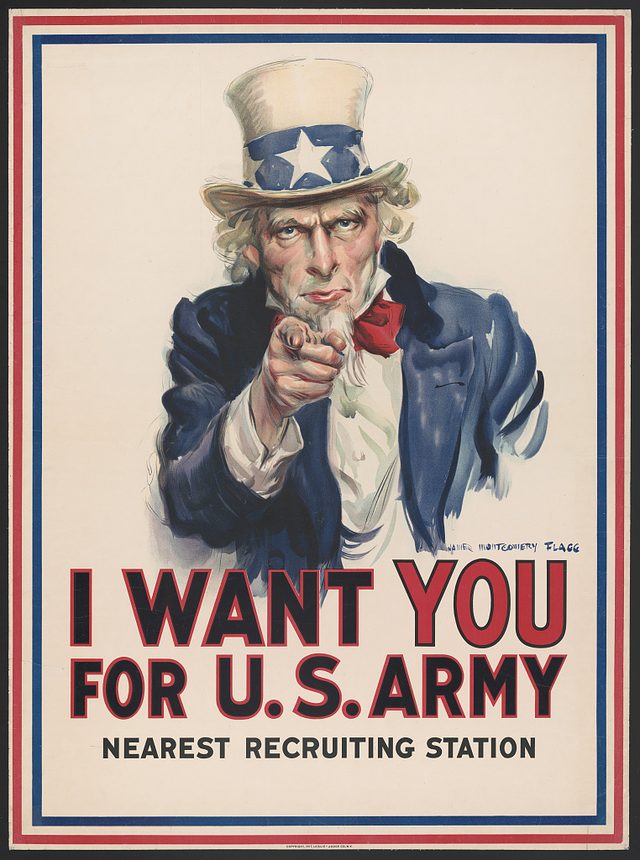 I Want You for U.S. Army
![Virginia Arnold [holding Kaiser Wilson banner]](../../collection/images/kaiser-wilson-banner-1917-640.jpg) Virginia Arnold [holding Kaiser Wilson banner]
Virginia Arnold [holding Kaiser Wilson banner]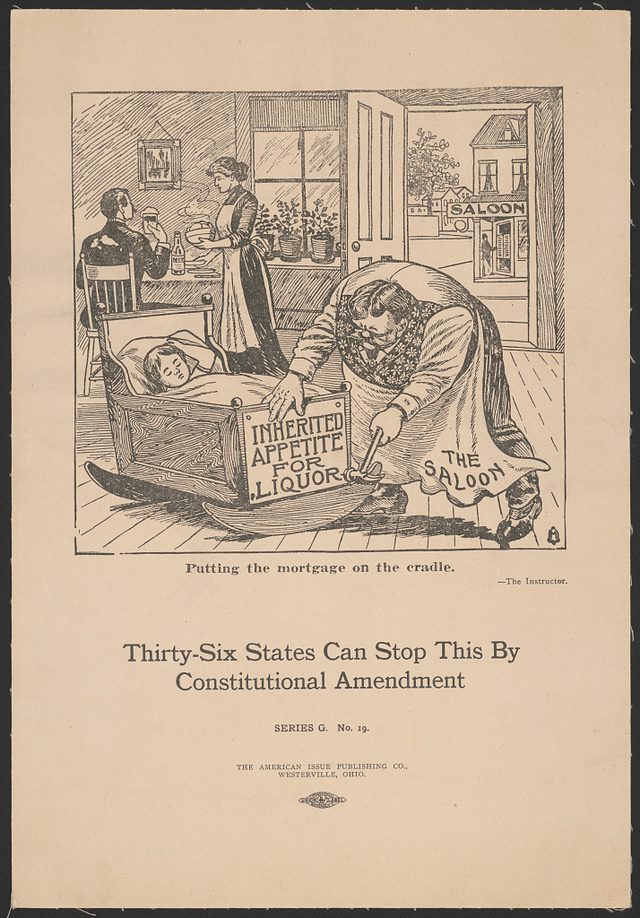 Putting the mortgage on the cradle
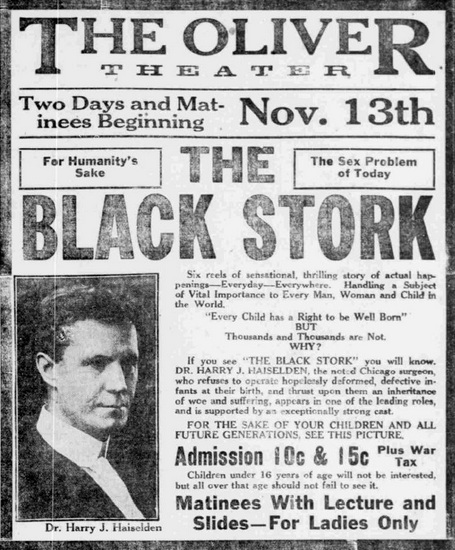 The Black Stork (cinema advertisement)Content note
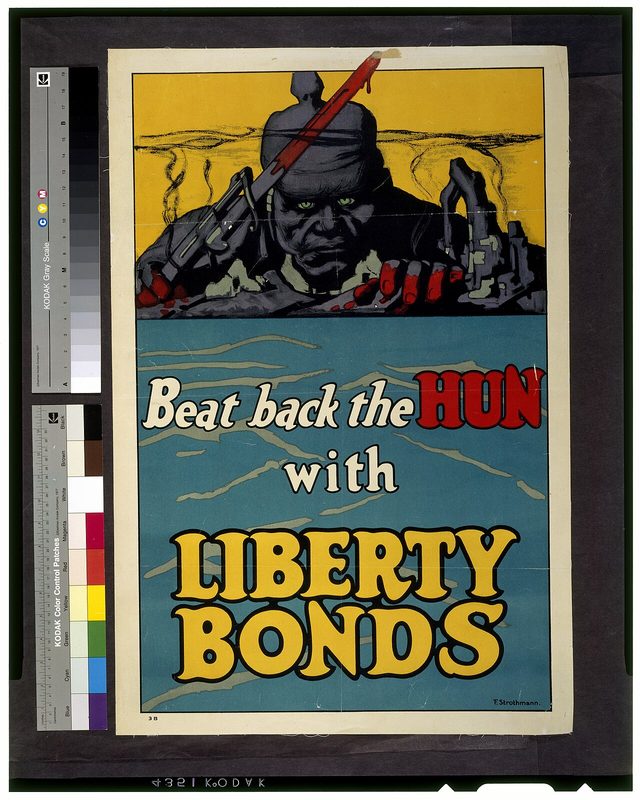 Beat Back the Hun with Liberty BondsContent note
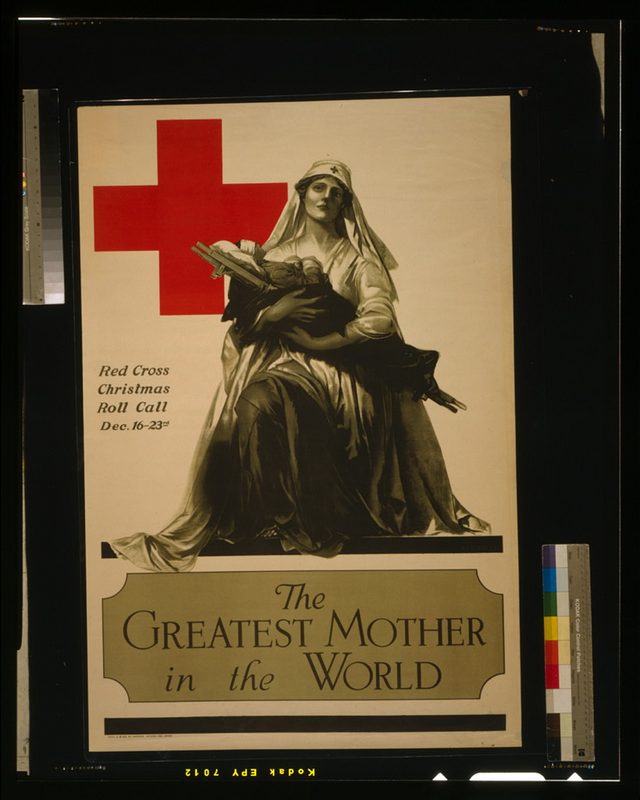 The Greatest Mother in the World: Red Cross Christmas Roll Call
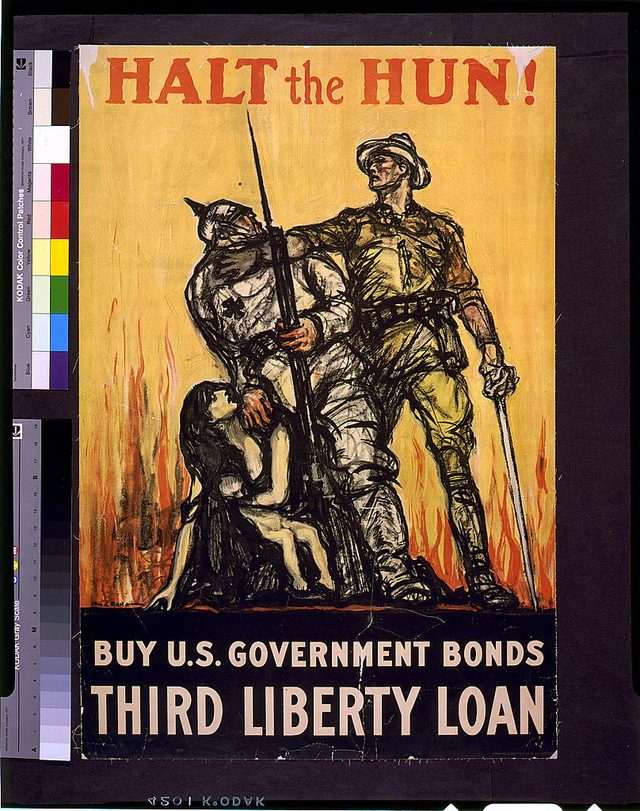 Halt the Hun! Buy U.S. Government Bonds, Third Liberty LoanContent note
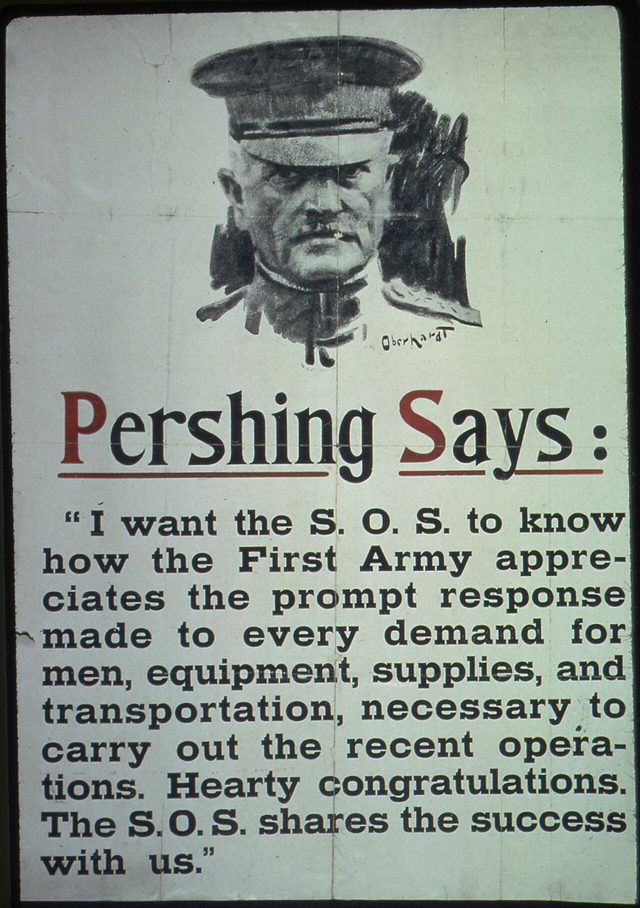 Pershing Says: The S.O.S. Shares the Success With Us
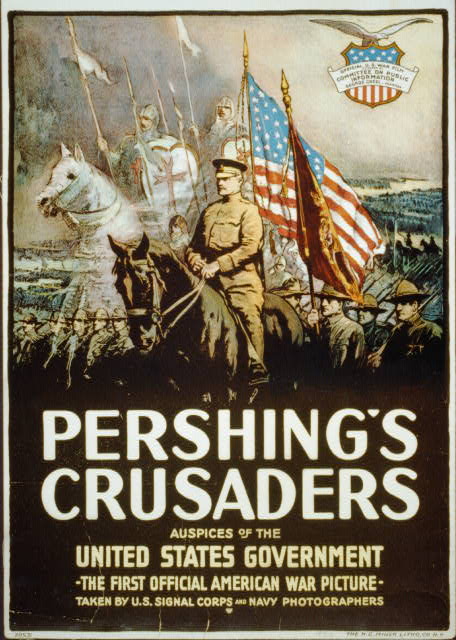 Pershing's Crusaders
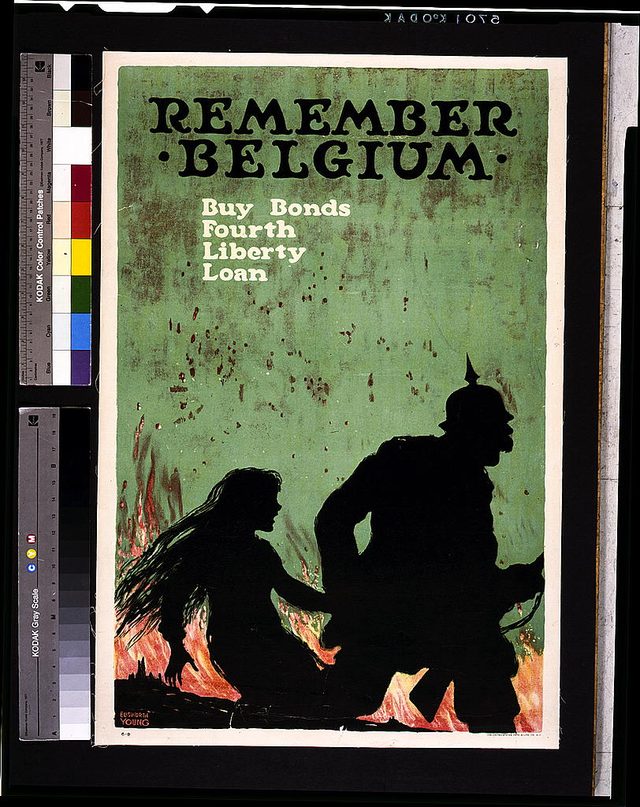 Remember Belgium. Buy Bonds. Fourth Liberty LoanContent note
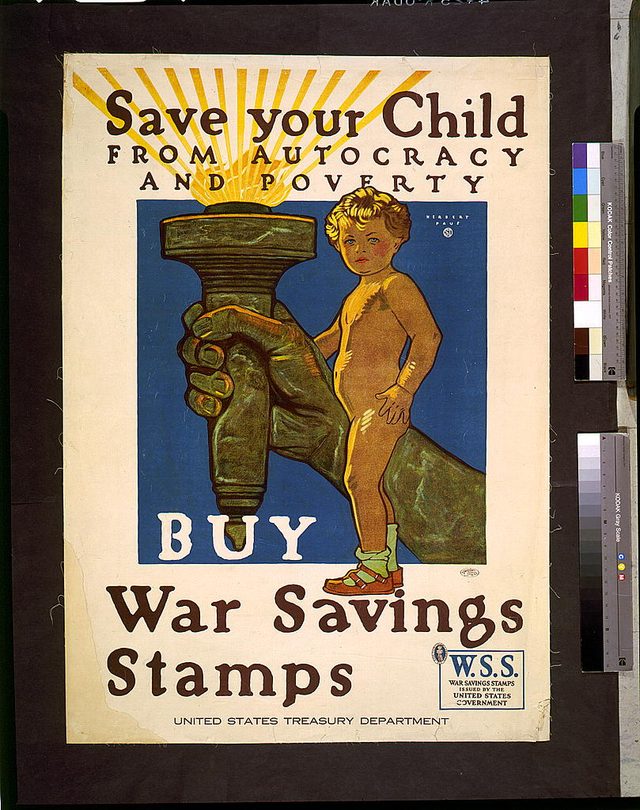 Save Your Child from Autocracy and Poverty: Buy War Savings Stamps
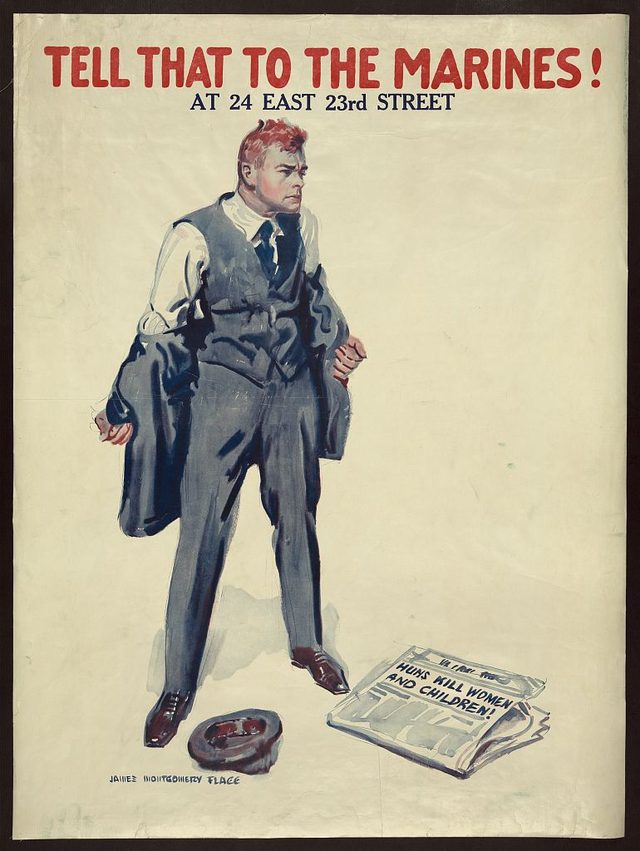 Tell That to the Marines!Content note
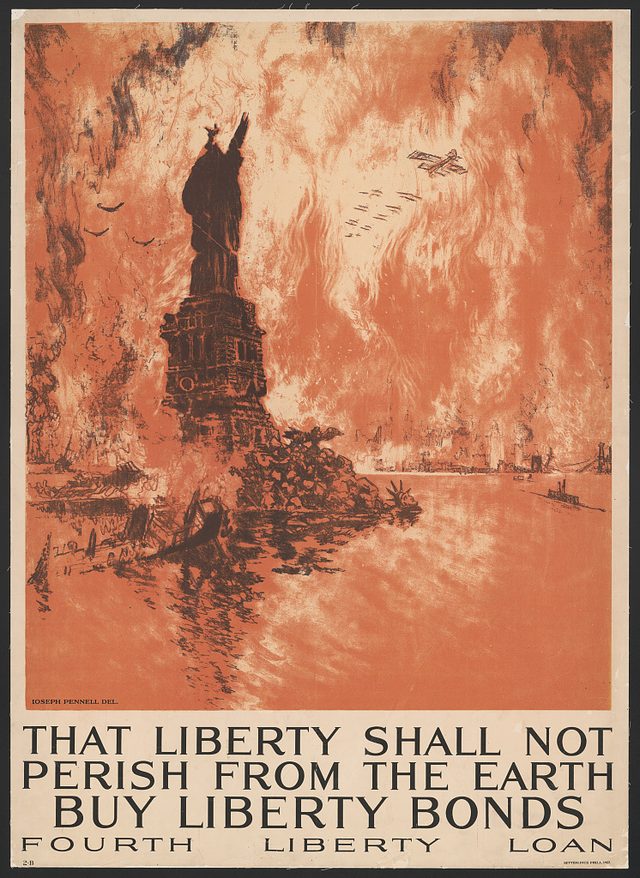 That Liberty Shall Not Perish from the Earth: Buy Liberty Bonds
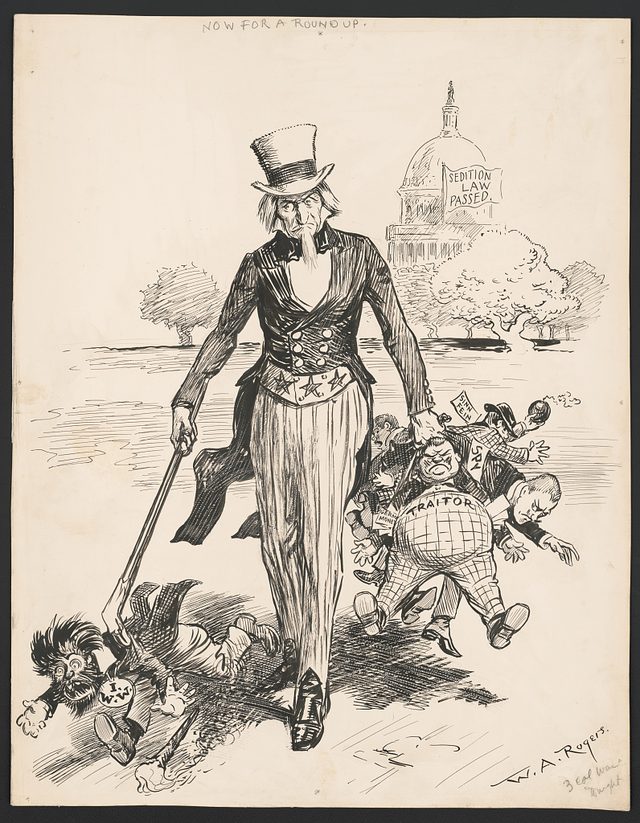 Now for a round-up
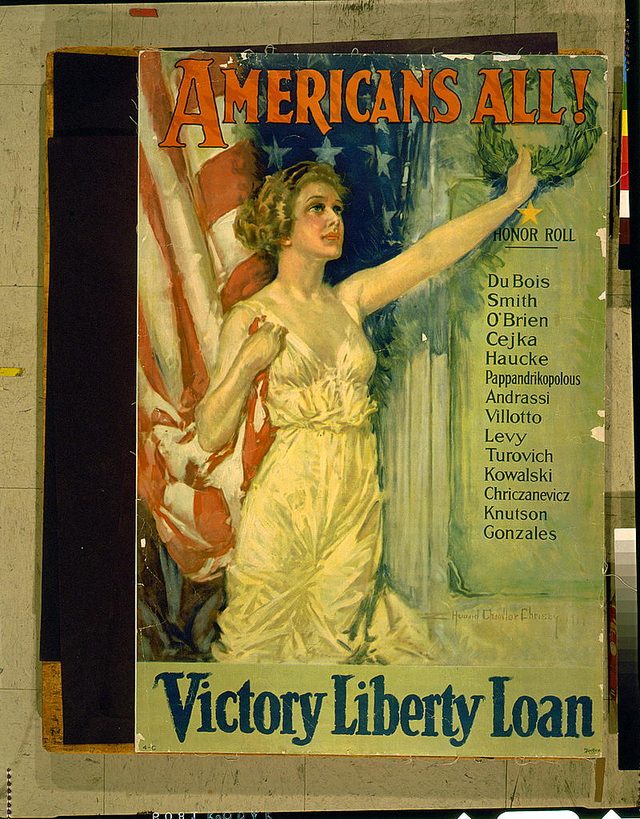 Americans All! Victory Liberty Loan
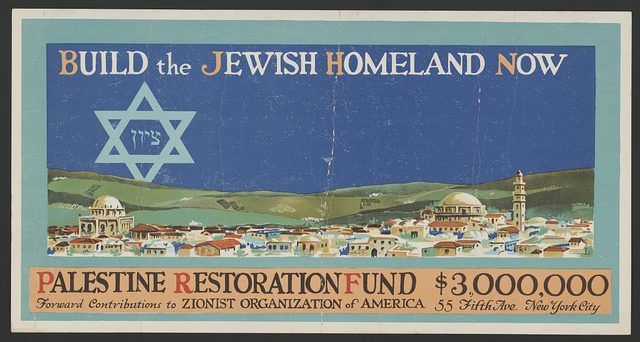 Build the Jewish Homeland Now: Palestine Restoration Fund $3,000,000
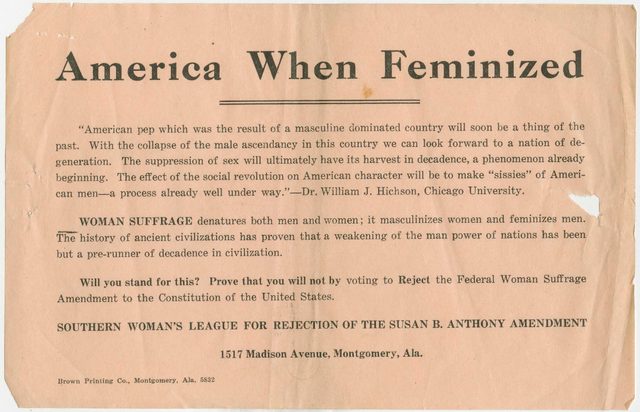 America When Feminized
Case studies
- The Committee on Public Information: how the U.S. government sold the First World War at home (1917-1919)
- Wartime censorship in the First World War: Britain, Germany, France and the United States
- Votes for Women and the anti-suffrage campaigns, 1908 to 1920