Solomon Lozovsky
Illustration, not an archive object
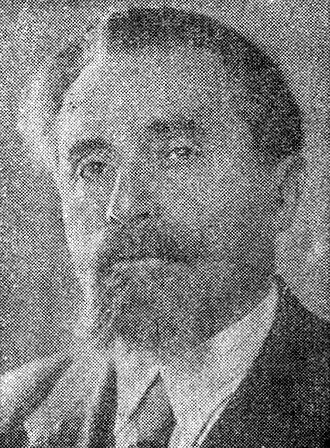

Deputy People's Commissar and Deputy Minister of Foreign Affairs; head of the Soviet Information Bureau (Sovinformburo), 1941-1946; General Secretary of the Profintern (Red International of Labour Unions) · Soviet Union
On the regime page: Soviet Union under Stalin
4 quotes, oldest first. Filter with other speakers.
“The mission was to get into all foreign press outlets. There was a war on, they were our allies, we had to print things about the Soviet Union. We wormed our way into the papers, each committee in its own way-the Slavic committee in its own way, the Jewish, Women's, and Youth committees each in their own ways. If the word "information" implies "espionage," then all of the Sovinformburo's activity was espionage activity.”
English: Laura Esther Wolfson, in Stalin's Secret Pogrom (Yale University Press, 2001). Original-language text not found.
Lozovsky was tried with thirteen other members and associates of the Jewish Anti-Fascist Committee before the Military Collegium of the Supreme Court in a closed session in Moscow, May to July 1952. He was sentenced to death and shot on 12 August 1952. Here Lozovsky describes to the court how the wartime anti-fascist committees placed material about the Soviet Union in foreign newspapers, in answer to the charge that the committee had sent secret information abroad.
Testimony of Solomon Lozovsky, trial of the Jewish Anti-Fascist Committee, May 1952, in Joshua Rubenstein and Vladimir P. Naumov (eds.), Stalin's Secret Pogrom: The Postwar Inquisition of the Jewish Anti-Fascist Committee, trans. Laura Esther Wolfson (New Haven: Yale University Press, 2001), p. 230 Source
“As regards my testimony in all of the interrogation records, it is wrong, starting from February 3,1949, all the way to the end, and this was conscious on my part.”
English: Laura Esther Wolfson, in Stalin's Secret Pogrom (Yale University Press, 2001). Original-language text not found.
Lozovsky was tried with thirteen other members and associates of the Jewish Anti-Fascist Committee before the Military Collegium of the Supreme Court in a closed session in Moscow, May to July 1952. He was sentenced to death and shot on 12 August 1952. Lozovsky tells the presiding officer that all his statements in the interrogation records, from his first on 3 February 1949, were false.
Testimony of Solomon Lozovsky, trial of the Jewish Anti-Fascist Committee, May 1952, in Joshua Rubenstein and Vladimir P. Naumov (eds.), Stalin's Secret Pogrom: The Postwar Inquisition of the Jewish Anti-Fascist Committee, trans. Laura Esther Wolfson (New Haven: Yale University Press, 2001), p. 234 Source
“As you know, my family name is Dridzo. This name cannot be translated into any language. When we asked our father what it meant, he told us that, according to a story passed down from father to son, a distant ancestor of ours was among the eight hundred thousand Jews who fled from Spain in 1492, when the chief inquisitor, Tomas de Torquemada, issued a decree compelling Jews to convert to Catholicism or leave the country. Anyone who refused was required to leave Spain within two months. I became Lozovsky in 1905 at a conference of Bolsheviks in Tammerfors, where I first met Comrade Lenin and also Comrade Stalin.”
English: Laura Esther Wolfson, in Stalin's Secret Pogrom (Yale University Press, 2001). Original-language text not found.
Lozovsky was tried with thirteen other members and associates of the Jewish Anti-Fascist Committee before the Military Collegium of the Supreme Court in a closed session in Moscow, May to July 1952. He was sentenced to death and shot on 12 August 1952. These are the first words of his six days of testimony, which he opened by repudiating the confession signed during pre-trial interrogation.
Testimony of Solomon Lozovsky, evening session of 27 May 1952, trial of the Jewish Anti-Fascist Committee, in Joshua Rubenstein and Vladimir P. Naumov (eds.), Stalin's Secret Pogrom: The Postwar Inquisition of the Jewish Anti-Fascist Committee, trans. Laura Esther Wolfson (New Haven: Yale University Press, 2001), p. 221 Source
“I have said everything and request no favors. I need either complete rehabilitation or death. I have given my entire life for the cause of the party and do not wish to be a parasite. If the court finds me guilty of anything at all, then I would ask for the opportunity to appeal to the government to substitute execution for punishment. But should anything come to light indicating that I was innocent, then I ask that I be posthumously readmitted to the ranks of the -party. and that the information about my rehabilitation be published in the newspapers.”
English: Laura Esther Wolfson, in Stalin's Secret Pogrom (Yale University Press, 2001). Original-language text not found.
Lozovsky was tried with thirteen other members and associates of the Jewish Anti-Fascist Committee before the Military Collegium of the Supreme Court in a closed session in Moscow, May to July 1952. He was sentenced to death and shot on 12 August 1952. The passage is the close of his final statement, delivered after the session resumed on 11 July 1952.
Final statement of Solomon Lozovsky, trial of the Jewish Anti-Fascist Committee, July 1952, in Joshua Rubenstein and Vladimir P. Naumov (eds.), Stalin's Secret Pogrom: The Postwar Inquisition of the Jewish Anti-Fascist Committee, trans. Laura Esther Wolfson (New Haven: Yale University Press, 2001), p. 475 Source