In one line: in spring 2020 the French government put a page on its own website that listed Covid-19 fact-checking articles from five chosen news outlets as "safe and verified" sources, and took it down within a week after journalists' societies, a union and a minister objected that the state was ranking the press.
What happened
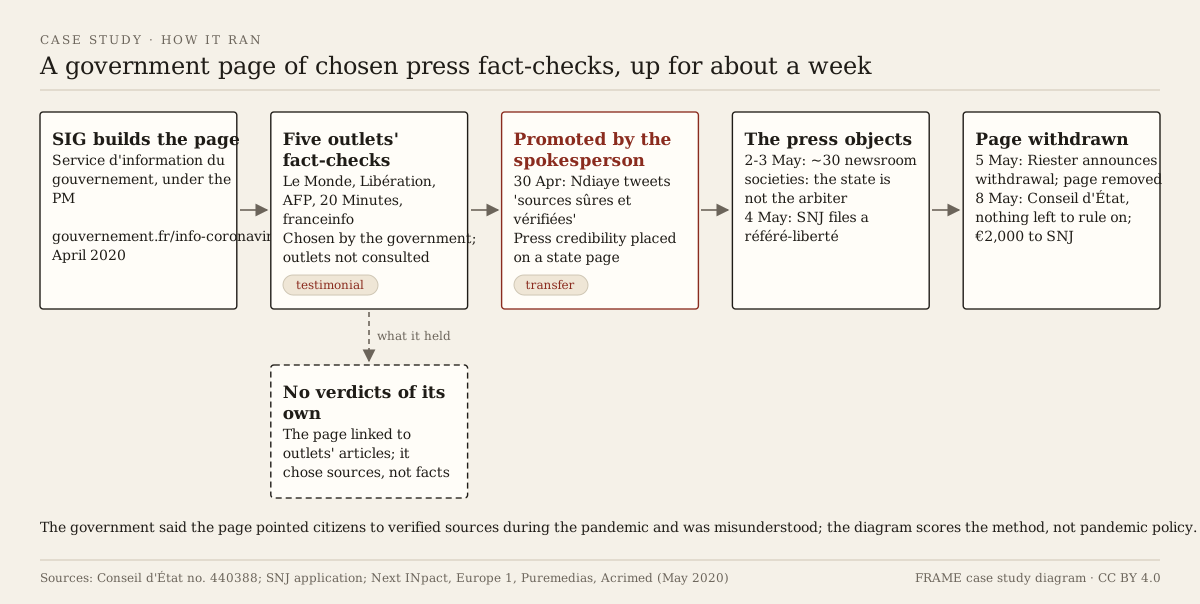
- Mid to late April 2020. During the first Covid-19 lockdown, a section titled Désinfox coronavirus appears at gouvernement.fr/info-coronavirus/desinfox. Acrimed reports that it was put online by the Service d'information du gouvernement (SIG), which works under the Prime Minister's direct authority, and that it listed articles published from 15 April onwards.
- What the page held. Links to fact-checking articles about Covid-19 from five outlets' verification desks: Le Monde (Les Décodeurs), Libération (CheckNews), Agence France-Presse (AFP Factuel), 20 Minutes (Fake Off) and franceinfo (Vrai ou fake). The page did not publish its own verdicts. It chose which outlets and which articles to show.
- 30 April 2020. Government spokesperson Sibeth Ndiaye promotes the page on Twitter: "La crise du Covid-19 favorise la propagation de fake news. Plus que jamais, il est nécessaire de se fier à des sources d'informations sûres et vérifiées. C'est pourquoi le site du gouvernement propose désormais un espace dédié." ("The Covid-19 crisis encourages the spread of fake news. More than ever, we need to rely on safe and verified sources of information. That is why the government website now offers a dedicated space.")
- Weekend of 2-3 May. About thirty sociétés de journalistes and sociétés de rédacteurs (newsroom staff associations), including those at outlets on the list, publish a joint statement headed "L'État n'est pas l'arbitre de l'information" ("The state is not the arbiter of information"). They say that by picking out certain articles the government "gives the impression, in a harmful blurring of roles, of labelling the output of certain media", and ask for the section to be removed at once. Reports say the outlets had not been consulted before their articles were used.
- 4 May. The Syndicat national des journalistes (SNJ), which had criticised the page in a joint text with the SNJ-CGT, files an emergency référé-liberté at the Conseil d'État. It asks the court to order the Prime Minister to remove the page for serious and manifestly illegal harm to pluralism of opinion and to the neutrality of public authorities. It calls the page a "manifest interference by public authorities in press freedom" that could plant "suspicion about relations between the press and the political world" in readers' minds.
- 5 May. At questions to the government in the National Assembly, deputy Frédérique Dumas asks for the section to be withdrawn. Culture Minister Franck Riester answers that "the government has taken the decision to withdraw this page" and that it is "absolutely not the role of the State to label media or to steer the French towards one outlet or another" (translated). He praises journalists' work against disinformation during the crisis. The page is taken down the same day.
- 8 May. The Conseil d'État's interim-relief judge (order no. 440388) records that the Prime Minister removed the page as of 5 May, after the application was filed, so there is no longer anything to rule on. The judge orders the State to pay the SNJ €2,000 in costs.
- After the removal. Ndiaye says on Europe 1 that the service was "misunderstood": "il y a eu une incompréhension sur notre intention", but it was "in no case about sorting the wheat from the chaff in the media; that is not the government's role" (translated).

Sibeth Ndiaye, who promoted the page as government spokesperson in 2020. Photo by Hegor, 2009 (cropped), CC BY-SA 3.0, via Wikimedia Commons. Taken eleven years before these events, when she worked in local government communications.
How it works
- Testimonial: the page's authority came from named institutions. The labels "Le Monde", "AFP" and "franceinfo" vouched for each item, and the government's framing ("safe and verified sources") invited readers to stop checking once they saw a trusted masthead. The outlets had not agreed to vouch for the page itself.
- Transfer: the credibility of independent newsrooms was placed on a government web page. The newsroom societies' complaint was about this transfer running both ways: the state borrowed the press's credibility, and the chosen outlets took on the look of state-approved sources.
Tags considered and not applied: Semantic hijacking for the word "désinfox" (the page used it plainly, and no one showed it stretching a term's meaning); Card stacking (no one showed that the chosen articles left out a counter-finding). The record's complaint was about who did the selecting, not about false content.
Then and now

Pershing Says: The S.O.S. Shares the Success With Us, American Expeditionary Forces, 1918. Public domain.
The 1918 poster uses a commander's name in place of evidence. The 2020 page uses a different kind of name, a newspaper's, but the device is the same: a trusted source vouches, and the vouching is meant to settle the question. The difference is that Pershing had agreed to the words printed under his name. The French newsrooms had not agreed to appear on a government page, and said so within days.
French precedents, briefly. The body that ran the page began as the Service d'information et de diffusion, created by decree on 6 February 1976 under the Prime Minister and renamed the Service d'information du gouvernement in 1996. Its job is government communication, not the press. From 1962 to 1966 France had a Minister of Information, Alain Peyrefitte, whose ministry oversaw state broadcasting. Some 2020 critics used that history in their headlines, saying that by sorting press articles the government was trying to recreate a ministry of information. No cited source establishes that intent; the record shows only the parallel the critics drew. Parliament had already legislated on false information: the law of 22 December 2018 on the manipulation of information (no. 2018-1202), upheld with reservations by the Conseil constitutionnel on 20 December 2018 (decision 2018-773 DC), requires large platforms to meet transparency duties in the three months before general elections. That law works through judges and platforms. Désinfox worked through an official web page choosing among newspapers. In 2021 the state created VIGINUM (decree 2021-922 of 13 July 2021) to detect foreign digital interference, which is also a different task from ranking domestic press.
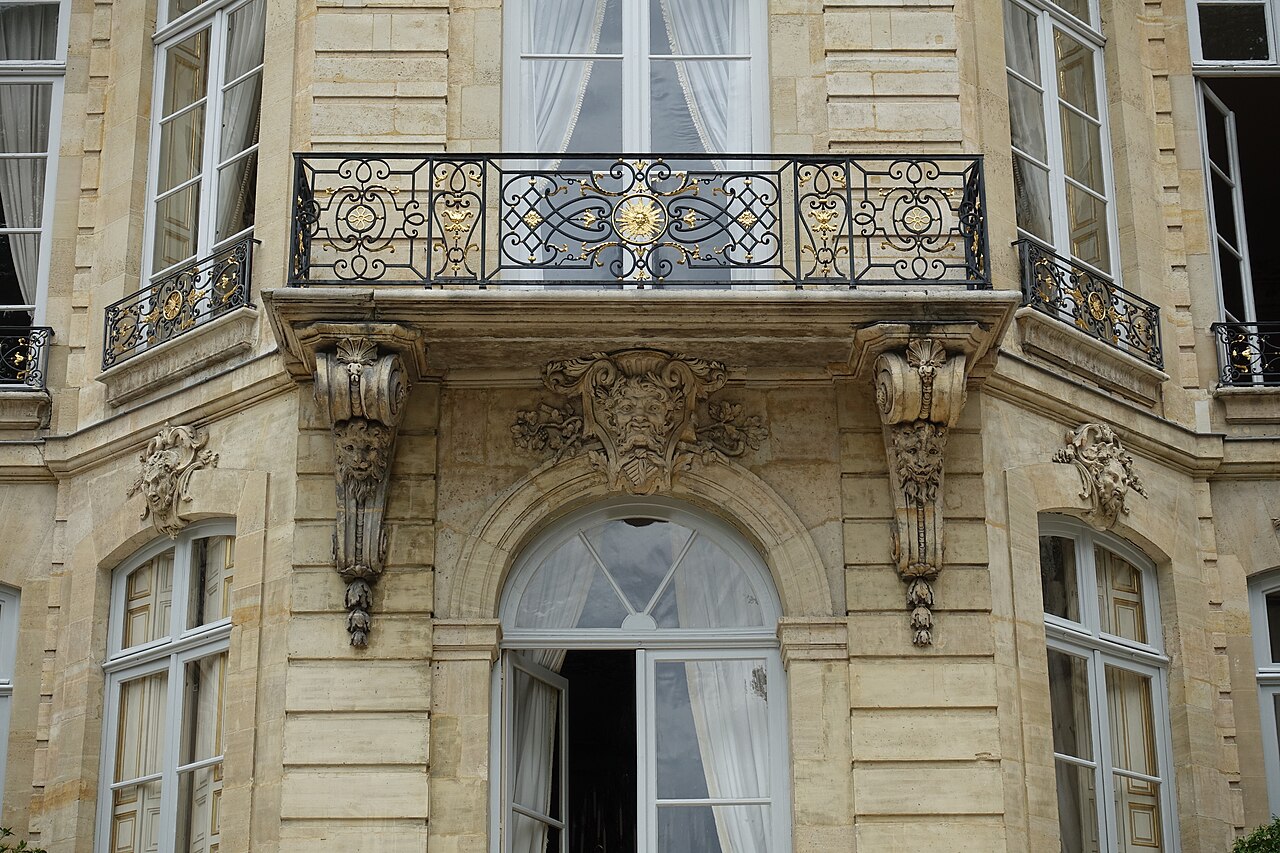
Hôtel de Matignon, the Prime Minister's residence and office. The SIG, which ran the page, works under the Prime Minister. Photo by Guilhem Vellut, 3 June 2017, CC BY 2.0, via Wikimedia Commons.
Positions on the record
- The government's stated rationale. Covid-19 was helping fake news spread, and citizens needed to rely on "safe and verified" sources. The page pointed them to professional fact-checkers' work instead of issuing government verdicts. After the removal, Ndiaye said the intention had been misunderstood and that sorting the media "is not the government's role". Riester, as minister responsible for the press, said the same when he announced the withdrawal.
- Critics' position. About thirty newsroom societies: "the state is not the arbiter of information"; choosing articles makes it look as if the government is labelling some outlets' output. The SNJ: interference in press freedom and a breach of pluralism and public neutrality. The objections came partly from the outlets that had been chosen.
- This archive's reading. Documented: the page, its five sources, the spokesperson's promotion, the objections, the SNJ application, the 5 May withdrawal and the Conseil d'État's 8 May no-ruling order with costs against the State. Not shown: that any linked article was altered, that outlets were paid or pressured, or that the page was hidden or falsely attributed. It was openly a government page and ran for about a week. The Conseil d'État did not decide whether it was lawful, because it had already been removed. Scale matters here: this is a short-lived, openly signed curation page, far removed from the covert cases elsewhere in this archive.
Same-method test
Change the flag and the finding stays the same. If any government, of any party, put a "trusted sources" list of chosen private newsrooms on an official site, calling them safe and verified, and without the newsrooms' agreement, it would be scored as testimonial and transfer here. A comparison in the opposite direction is the U.S. Department of Education's 2004 payment to commentator Armstrong Williams, which the GAO found in 2005 to be covert propaganda (see Israel's Strategic Affairs Ministry paid for news content, and a later ministry's STOIC campaign aimed at U.S. lawmakers). There the government's role was hidden and money changed hands. Désinfox was open and unpaid. The two cases share the same borrowing of press credibility, but not the concealment.
How to spot it
- Ask who is doing the selecting. An aggregator run by a newsroom or an independent body is different from a curated list on a government site, even when the articles are identical.
- Check whether the outlets whose names appear on the page agreed to be there.
- Tell apart a government that states its own position (attributable, arguable) from a government that ranks other people's reporting as the trustworthy kind.
- Read the objections of the people named. Here the outlets on the list spoke first.
Images
| Image | Source | Licence |
|---|---|---|
| Mechanism diagram (above) | Drawn for FRAME from the sourced facts on this page (make_diagrams.py) |
CC BY 4.0, FRAME |
| Sibeth Ndiaye (2009, cropped) | Wikimedia Commons, Hegor | CC BY-SA 3.0 |
| Hôtel de Matignon, garden façade (2017) | Wikimedia Commons, Guilhem Vellut | CC BY 2.0 |
| Pershing Says (1918) | FRAME gallery | Public domain (U.S. government work) |
.jpg)
.jpg)
Image gaps
- A screenshot of the Désinfox page as it appeared on gouvernement.fr. Not included: the page is offline, and gouvernement.fr and web archives could not be reached from the environment used to build this page. French government site content is generally reusable under the Licence Ouverte / Etalab, but the page embedded third-party press headlines and logos, which are not openly licensed. Partly fillable: an archived capture with the press logos blurred could be added after its licence is checked.
- Ndiaye's 30 April 2020 tweet. Not included: no openly licensed capture was found. Its text is quoted above.
- A 2020 photo of Sibeth Ndiaye as spokesperson. The only openly licensed portrait found on Commons dates from 2009.
- The newsroom societies' statement and the SNJ application. Not included: both are copyrighted texts. The SNJ application was published by Next INpact (link below).
Sources
- Conseil d'État, juge des référés, 8 May 2020, no. 440388 (Légifrance)
- SNJ référé-liberté application, 4 May 2020, as published by Next INpact
- Next INpact, 5 May 2020: Riester announces withdrawal; SNJ application published
- Next INpact, 4 May 2020: the SNJ challenges Désinfox Coronavirus
- SNJ: le SNJ dépose un référé-liberté contre « Desinfox Coronavirus »
- SNJ-CGT, 2 May 2020: Liberté de la presse, une conquête permanente
- Puremedias (ozap), 5 May 2020: Franck Riester annonce le retrait du site controversé
- Puremedias (ozap), 2020: le gouvernement sélectionne des médias pour lutter contre les fausses informations
- Europe 1, May 2020: le gouvernement supprime son service controversé
- Europe 1, May 2020: « il y a eu une incompréhension sur notre intention », assure Sibeth Ndiaye
- Stratégies, May 2020: « Désinfox Coronavirus » : le gouvernement supprime ce service
- Acrimed, May 2020: « Désinfox » gouvernemental, un tollé justifié… à généraliser
- Nieman Lab, May 2020: The French government took down a COVID-19 "fake news" website
- Les Crises, May 2020: sous la pression, la page « désinfox coronavirus » retirée
- info.gouv.fr: Histoire du Service d'information du Gouvernement
- Loi no. 2018-1202 du 22 décembre 2018 relative à la lutte contre la manipulation de l'information (Légifrance)
- Conseil constitutionnel, decision no. 2018-773 DC of 20 December 2018
- SGDSN: les missions de VIGINUM (decree no. 2021-922 of 13 July 2021)
- France Archives: cabinet of Alain Peyrefitte, Minister of Information