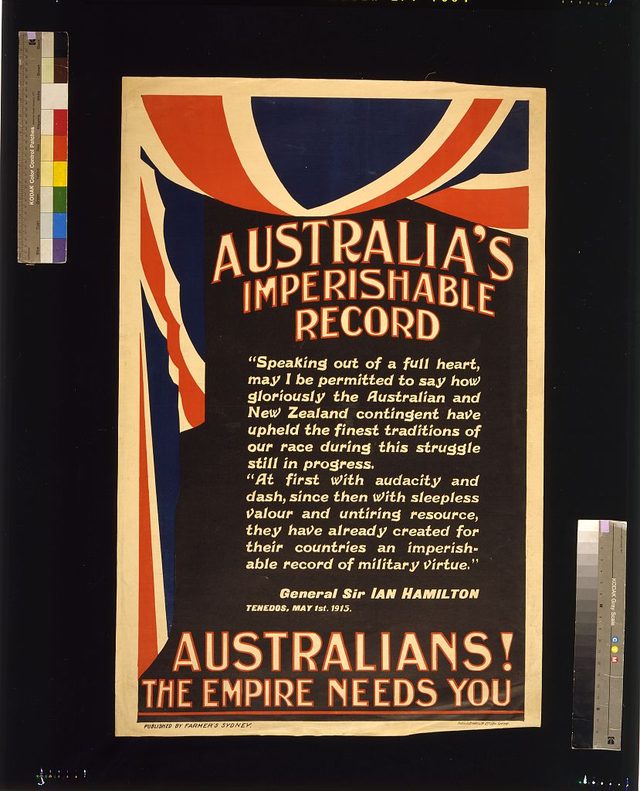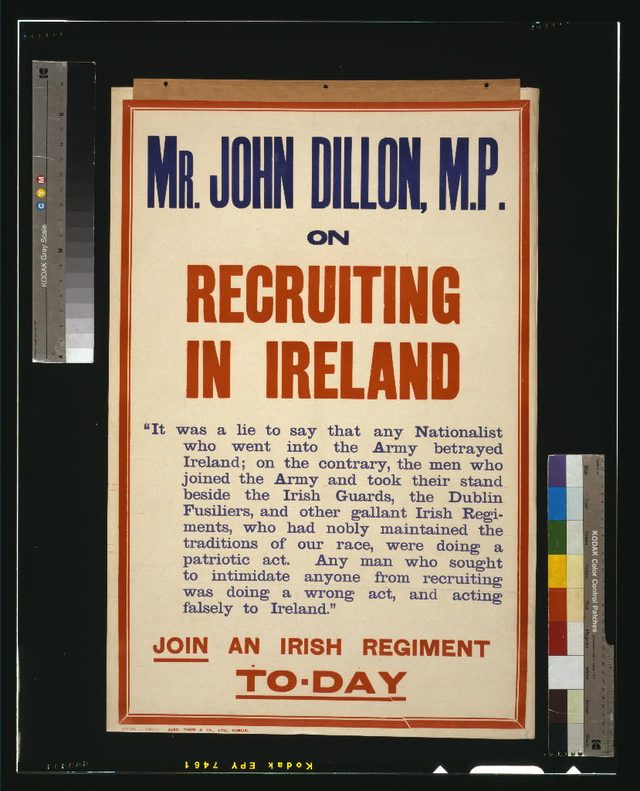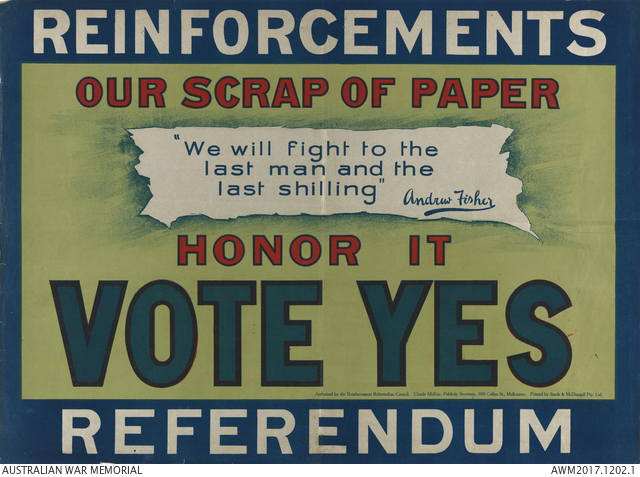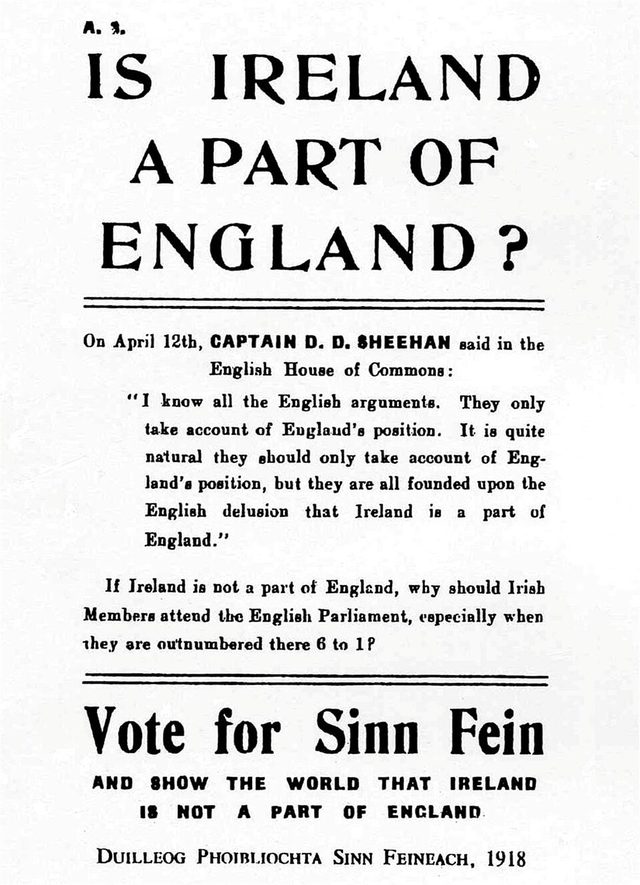
Also called Appeal to authority, Celebrity endorsement
A named person or institution vouches; the vouch is meant to end checking.
The tell
Celebrity, clergy, or 'experts say' without the underlying data.
Not this
A primary witness describing what they saw.
History and effect
IPA 1937; grew out of print advertising's use of celebrity endorsement and was carried wholesale into political and wartime messaging.
Trust in a named person substitutes for verification of the claim, shortcutting the audience's own scrutiny.
Lineage: IPA 1937
How it works
A testimonial pairs a claim with a name. The sender finds a person or institution the audience already trusts or admires (a general, a doctor, a film star, a scientist, a church, a famous visitor) and attaches their approval to a product, policy, war effort or government. The claim itself may be vague or never stated in detail. The endorsement is the argument.
The mechanics turn on a transfer of trust across a boundary. The endorser's reputation was earned in one field, and the testimonial spends it in another: a general vouching for supply work, a physician's white coat selling a brand of cigarette, an actor's fame recommending a candidate, a novelist praising a foreign country's economy after a guided tour. The audience is invited not to ask whether the endorser knows anything about the question, or whether the endorser was paid, briefed or selected, and not to ask for the data the endorser saw, if any.
Several features make a testimonial more effective. The endorser is named and recognizable. The link between the endorser and the sender (payment, employment, political alliance, a hosted trip) is hidden or not mentioned. Only favorable endorsers are shown, and the ones who declined or disagreed are left out. In the institutional form, a vague appeal ("experts agree", "doctors recommend", "scientists say") stands in for a named person, which removes even the possibility of checking who said what.
The modern variant removes the endorser's consent entirely. Cloned voices and recut video can make a real, trusted person appear to endorse something they never said. Matryoshka's midterm clips: borrowed faces and a borrowed logo documents clips of real actors recut with cloned audio to attack U.S. politicians; the actors had said nothing of the kind. Here testimonial overlaps with Synthetic media.
Why it works
The foundational experiment is Hovland and Weiss (1951). They gave people identical articles attributed either to a high-credibility source or a low-credibility one, and found more immediate opinion change with the high-credibility source, even though the content was the same. They also found that the difference shrank over the following weeks, a pattern that became central to later research on the "sleeper effect". A later meta-analysis by Kumkale and Albarracín (2004) found that the sleeper effect appears under specific conditions (for example, when the message is strong and the discounting cue comes after it) and is not a general rule. FRAME has a separate technique page on Sleeper effect.
Petty, Cacioppo and Goldman (1981) showed when a source's prestige matters most. Students read a proposal for a new comprehensive exam policy attributed either to a commission chaired by a Princeton professor or to a local high school class. When the policy would not affect them personally, the prestigious source increased agreement regardless of whether the arguments were strong. When it would affect them, argument quality mattered more than the source. This is the core prediction of the Elaboration Likelihood Model (Petty and Cacioppo 1986): endorsements work best on audiences who are not motivated or able to examine the claim.
Obedience research is often cited in discussions of authority. Stanley Milgram's experiments (1974) found high rates of compliance with an authority figure's instructions. The findings have been partly replicated under modified, safer conditions (Burger 2009), but archival work has raised questions about how the experiments were run and reported (Perry 2013), and researchers disagree on how far they generalize. They are best treated as evidence that authority cues are powerful in some settings, not as a precise measure. Cialdini (2001) lists authority as a core compliance principle and notes how often its symbols (titles, uniforms, credentials) do the work on their own.
Celebrity endorsement has its own account. McCracken (1989) argued that celebrities carry cultural meanings from their roles and public lives, and that endorsement moves those meanings onto the product. In politics, Garthwaite and Moore (2013) estimated that Oprah Winfrey's 2008 endorsement of Barack Obama gained him votes in the Democratic primary; the size of such effects is debated, and most research finds celebrity endorsements matter less in politics than in advertising.
Examples across eras and sides
- "Pershing says" (United States, 1918). An American Expeditionary Forces poster, Pershing Says: The S.O.S. Shares the Success With Us, quotes General John J. Pershing thanking the Services of Supply for its prompt response to every demand. The commanding general's name is the whole message; there is no account of what the supply service delivered (Sources: NARA 1918).
- Western visitors to the Soviet Union (1930s). Soviet authorities hosted prominent Western writers and intellectuals on guided visits, and the favorable accounts some of them published abroad were used as testimony for Soviet achievements. Paul Hollander documented the same pattern of hosted "political pilgrims" in later visits to China and Cuba. The visitors were real and often sincere, but they saw what their hosts arranged (Sources: Hollander 1981).
- "More doctors smoke Camels" (United States, R. J. Reynolds, 1940s). Cigarette advertising from the 1930s to the early 1950s used images of physicians, and R. J. Reynolds's Camel campaign claimed that more doctors smoked Camels than any other brand, based on surveys the company's agency arranged. The physician stood in for any claim about health that the ads did not make directly. The same industry later ran A Frank Statement to Cigarette Smokers, which leaned on unnamed "authorities" in a similar way (Sources: Gardner and Brandt 2006).
- The Pentagon's military analysts (United States, 2002 to 2008). The New York Times reported that the Department of Defense cultivated retired military officers who appeared on television as independent analysts, giving them briefings and access while many had business ties to defense contractors. Viewers saw experienced officers; they were not told about the briefings or the business ties (Sources: Barstow 2008).
- Celebrity endorsements in both parties (United States, 2007 to 2008). In the same election cycle, Oprah Winfrey campaigned for Barack Obama in the Democratic primary and the actor Chuck Norris appeared in a campaign ad for Mike Huckabee in the Republican primary. Celebrity endorsement is legal and usually disclosed; it fits the technique when fame substitutes for any argument on the issues. Research on the Winfrey endorsement suggests a measurable effect, though the estimate is contested (Sources: Garthwaite and Moore 2013).
- Fabricated endorsers (United States and Russia-aligned operations, 2024 to 2026). Before the January 2024 New Hampshire primary, robocalls used an AI-generated imitation of President Joe Biden's voice to tell Democrats not to vote; the Federal Communications Commission later fined the political consultant responsible. The Matryoshka network recut real celebrity videos with cloned audio to attack Democratic candidates (Matryoshka's midterm clips: borrowed faces and a borrowed logo). In both cases the "endorser" never said the words (Sources: FCC 2024).
How to spot it
- The main reason offered to believe the claim is who said it, not what they showed.
- The endorser's expertise is in a different field from the claim (an actor on medicine, a general on economics, a novelist on agriculture).
- The endorser's relationship to the sender (payment, employment, a hosted trip, a party role) is missing or in small print.
- Vague sources stand in for names: "experts say", "doctors recommend", "scientists agree", with no study or person you can check.
- Only supporters are quoted, and you cannot tell whether other qualified people disagree.
- A clip or quote of a famous person endorsing something surprising has no original source, no date and no matching statement on the person's own channels.
Where it ends: edge cases and legitimate persuasion
Named variants include the celebrity endorsement, the expert or credential endorsement ("four out of five doctors"), the institutional seal, the ordinary-person testimonial (which overlaps with Plain folks), the negative testimonial (showing that a disliked figure supports the other side, a form of Transfer), and the fabricated endorsement (Synthetic media). When many endorsers are stacked together to suggest everyone agrees, the testimonial shades into Bandwagon or Manufactured consensus. When an endorsement is routed through an apparently independent outlet to hide its origin, it overlaps with Narrative laundering.
Not every appeal to a source is propaganda. A primary witness describing what they saw is evidence. An expert explaining a finding while showing the data, the method and the uncertainty is giving an argument, not a testimonial. Relying on a qualified, independent authority is often reasonable when you cannot check a question yourself; everyone does it with doctors and engineers. U.S. law also draws a line: the Federal Trade Commission's endorsement guides require advertisers to disclose material connections, such as payment, between an endorser and the company (FTC 2023).
The test a reader can apply has three questions. Is the endorser speaking within their own competence? Is the relationship between the endorser and the sender disclosed? And would the claim still stand, with its evidence visible, if the name were removed? If the answer to the last question is no, the name was doing the work.
Sources
- Barstow, David. 2008. "Behind TV Analysts, Pentagon's Hidden Hand." The New York Times, 20 April 2008.
- Burger, Jerry M. 2009. "Replicating Milgram: Would People Still Obey Today?" American Psychologist 64(1): 1–11.
- Cialdini, Robert B. 2001. Influence: Science and Practice. 4th ed. Boston: Allyn & Bacon.
- Federal Communications Commission (FCC). 2024. Forfeiture order against political consultant Steve Kramer concerning AI-generated robocalls before the New Hampshire presidential primary. Washington, DC: FCC.
- Federal Trade Commission (FTC). 2023. Guides Concerning the Use of Endorsements and Testimonials in Advertising. 16 C.F.R. Part 255.
- Gardner, Martha N., and Allan M. Brandt. 2006. "'The Doctors' Choice Is America's Choice': The Physician in US Cigarette Advertisements, 1930–1953." American Journal of Public Health 96(2): 222–232.
- Garthwaite, Craig, and Timothy J. Moore. 2013. "Can Celebrity Endorsements Affect Political Outcomes? Evidence from the 2008 US Democratic Presidential Primary." Journal of Law, Economics, and Organization 29(2): 355–384.
- Hollander, Paul. 1981. Political Pilgrims: Travels of Western Intellectuals to the Soviet Union, China, and Cuba, 1928–1978. New York: Oxford University Press.
- Hovland, Carl I., and Walter Weiss. 1951. "The Influence of Source Credibility on Communication Effectiveness." Public Opinion Quarterly 15(4): 635–650.
- Kumkale, G. Tarcan, and Dolores Albarracín. 2004. "The Sleeper Effect in Persuasion: A Meta-Analytic Review." Psychological Bulletin 130(1): 143–172.
- McCracken, Grant. 1989. "Who Is the Celebrity Endorser? Cultural Foundations of the Endorsement Process." Journal of Consumer Research 16(3): 310–321.
- Milgram, Stanley. 1974. Obedience to Authority: An Experimental View. New York: Harper & Row.
- National Archives and Records Administration (NARA). 1918. "Pershing says, 'I want S.O.S. to know how the First Army appreciates the prompt response made to every demand...'" Poster, National Archives Identifier 512615.
- Perry, Gina. 2013. Behind the Shock Machine: The Untold Story of the Notorious Milgram Psychology Experiments. New York: The New Press.
- Petty, Richard E., and John T. Cacioppo. 1986. Communication and Persuasion: Central and Peripheral Routes to Attitude Change. New York: Springer-Verlag.
- Petty, Richard E., John T. Cacioppo, and Rachel Goldman. 1981. "Personal Involvement as a Determinant of Argument-Based Persuasion." Journal of Personality and Social Psychology 41(5): 847–855.
Case studies
- The Nayirah testimony: a Kuwaiti government PR campaign at a House human rights caucus — The Nayirah testimony: a Kuwaiti government PR campaign at a House human rights caucus
- How the US and UK governments presented the case for war in Iraq, 2002-03 — How the US and UK governments presented the case for war in Iraq, 2002-03
- The Pentagon's retired military analyst outreach programme (2002-2008) — The Pentagon's retired military analyst outreach programme (2002-2008)
- "Désinfox coronavirus": the French government's page of selected press fact-checks — "Désinfox coronavirus": the French government's page of selected press fact-checks
- Ethyl: how leaded petrol was named, defended and kept on sale — Ethyl: how leaded petrol was named, defended and kept on sale
- The tobacco industry's smoking-and-health doubt campaign, 1953 to 1998 — The tobacco industry's smoking-and-health doubt campaign, 1953 to 1998
- Fossil-fuel industry climate doubt campaigns, 1977 to the 2000s — Fossil-fuel industry climate doubt campaigns, 1977 to the 2000s
- The Alar campaign: an advocacy report, a TV exclusive and a planned echo — The Alar campaign: an advocacy report, a TV exclusive and a planned echo
- OxyContin's launch marketing: a one-paragraph letter and a "less than one percent" message — OxyContin's launch marketing
- The Congress for Cultural Freedom: a CIA-funded intellectuals' network, 1950-1967 — The Congress for Cultural Freedom: CIA money behind an intellectuals' network
- The Crusade for Freedom: Truth Dollars for a CIA-funded radio, 1950-1971 — The Crusade for Freedom: a donation drive in front of a CIA-funded radio
- The Korean War germ-warfare charges: commissions, confessions and the 1953 recall — The Korean War germ-warfare allegations, 1952
- Chieu Hoi and Radio Hanoi: both sides' propaganda aimed at the other side's soldiers in Vietnam — Chieu Hoi and Radio Hanoi: propaganda aimed at the other side's soldiers
- Red Army Faction: communiqués, hunger strikes and the 'isolation torture' campaign — Red Army Faction: communiqués, hunger strikes and the 'isolation torture' campaign
- Shining Path: the Gonzalo cult, the 'people's war' and the state's reply — Shining Path: the Gonzalo cult, the 'people's war' and the state's reply
- Britain's Ministry of Information films and London Can Take It! (1940-1942) — Britain's Ministry of Information films and London Can Take It!
- Reefer Madness and the 1930s marihuana campaign — Reefer Madness and the 1930s marihuana campaign
- State television across borders: from Der schwarze Kanal and ZDF-Magazin to RT, CGTN, Alhurra and Al Jazeera — State television across borders, from Der schwarze Kanal to RT and CGTN
- Abolitionist and pro-slavery print, 1787-1860 — Abolitionist and pro-slavery print, 1787-1860
- India's Emergency: 'India is Indira' and the censored press — India's Emergency: 'India is Indira' and the censored press
- Xinjiang's 'vocational training centres': the government's messaging and its critics' — Xinjiang's 'vocational training centres': the government's messaging and its critics'
- Indian Chronicles: fake local outlets, revived NGOs and a borrowed professor — Indian Chronicles: fake local outlets, revived NGOs and a borrowed professor
- The Kim leader cult, the anti-US month and the leaflets sent back — The Kim leader cult, the anti-US month and the leaflets sent back
- Operation Spectrum: Singapore's 'Marxist conspiracy' and its answers — Operation Spectrum: Singapore's 'Marxist conspiracy' and its answers
- The Great Leap Forward's 'sputnik' harvests and the famine that followed — The Great Leap Forward's 'sputnik' harvests and the famine that followed
- Wellington House and the Bryce Report: atrocity evidence, confirmed and unconfirmed (1914-1915) — Wellington House and the Bryce Report: atrocity evidence, confirmed and unconfirmed (1914-1915)
- The German 'corpse factory': a false atrocity story and its long afterlife (1917-1925) — The German 'corpse factory': a false atrocity story and its long afterlife (1917-1925)
- The Committee on Public Information: how the U.S. government sold the First World War at home (1917-1919) — The Committee on Public Information: how the U.S. government sold the First World War at home (1917-1919)
- Germany answers back: the Manifesto of the 93 and the Lusitania medal (1914-1916) — Germany answers back: the Manifesto of the 93 and the Lusitania medal (1914-1916)
- Russia's war of words: tsarist lubki, the Liberty Loan and the fight over 'German agents' (1914-1918) — Russia's war of words: tsarist lubki, the Liberty Loan and the fight over 'German agents' (1914-1918)
- The Institute for Propaganda Analysis (1937-1942) — The Institute for Propaganda Analysis (1937-1942)
- The Active Measures Working Group (1981 to 1992) — The Active Measures Working Group (1981 to 1992)
- The 1800 election: "Jefferson and no God" and "squints at monarchy" — The 1800 election: "Jefferson and no God" and "squints at monarchy"
- 2004: outside-group ads on Kerry's Navy record and Bush's Guard record — 2004: outside-group ads on Kerry's Navy record and Bush's Guard record
- Mood over argument: "Morning in America" (Reagan-Bush 1984) and "Hope" / "Yes We Can" (Obama 2008) — Mood over argument: "Morning in America" (Reagan-Bush 1984) and "Hope" / "Yes We Can" (Obama 2008)
- The steelworker ad and the welfare ads: two fact-checked attacks from the 2012 U.S. presidential race — The steelworker ad and the welfare ads: two fact-checked attacks from the 2012 U.S. presidential race
- Crime and victim attack ads in two U.S. presidential races: Horton and the furloughs (1988), James Byrd Jr. and hate-crimes law (2000) — Crime and victim attack ads in two U.S. presidential races: Horton and the furloughs (1988), James Byrd Jr. and hate-crimes law (2000)
- The MMR scare: from a 1998 press conference to Vaxxed, and its 1802 ancestors — The MMR scare: from a 1998 press conference to Vaxxed, and its 1802 ancestors
- Just Say No and the fried egg: anti-drug campaigns, 1971-2016 — Just Say No and the fried egg: anti-drug campaigns, 1971-2016
- The satanic panic: ritual-abuse claims in the US and UK, 1980-1994 — The satanic panic: ritual-abuse claims in the US and UK, 1980-1994
- Follow the science, Plandemic: COVID-19 messaging from officials and contrarians, 2020-2022 — Follow the science, Plandemic: COVID-19 messaging from officials and contrarians, 2020-2022
- Gay plague, tombstones and Silence = Death: messaging in the AIDS crisis, 1981-1990 — Gay plague, tombstones and Silence = Death: messaging in the AIDS crisis, 1981-1990
- Better babies, fitter families: eugenics campaigns in the US, Sweden and Germany — Better babies, fitter families: eugenics campaigns in the US, Sweden and Germany
- Votes for Women and the anti-suffrage campaigns, 1908 to 1920 — Votes for Women and the anti-suffrage campaigns, 1908 to 1920
- MAGA and the Resistance: grassroots organising for and against Trump, 2016-2021 — MAGA and the Resistance: grassroots organising for and against Trump, 2016-2021
- Chinese wartime propaganda, 1937-1945: Chongqing, Yan'an and Wang Jingwei's Nanjing — Chinese wartime propaganda, 1937-1945: Chongqing, Yan'an and Wang Jingwei's Nanjing
- Before Triumph of the Will: staging scale for a fringe party at Nuremberg, 1923-1933 — Before Triumph of the Will: staging scale for a fringe party at Nuremberg, 1923-1933
- The Moscow show trials: confession, spectacle and consent (1936-1938) — The Moscow show trials: confession, spectacle and consent (1936-1938)
- The Yan'an Rectification Movement: doctrine, self-criticism and the Rescue Campaign (1942-1945) — The Yan'an Rectification Movement: doctrine, self-criticism and the Rescue Campaign (1942-1945)
- Propaganda of the Chinese Civil War, 1945-1949: land reform, surrender leaflets and the fall of the mainland — Propaganda of the Chinese Civil War, 1945-1949: land reform, surrender leaflets and the fall of the mainland
- The Mao cult before the state: 'Mao Zedong Thought' and 'The East Is Red', 1943-1949 — The Mao cult before the state: 'Mao Zedong Thought' and 'The East Is Red', 1943-1949
- The SS as its own propaganda institution: Das Schwarze Korps, the Ahnenerbe and the order myth, 1931-1945 — The SS as its own propaganda institution: Das Schwarze Korps, the Ahnenerbe and the order myth, 1931-1945
- The Agitprop Department: the Communist Party's standing propaganda apparatus, 1920-1991 — The Agitprop Department: the Communist Party's standing propaganda apparatus, 1920-1991
- The NKVD as its own propagandist: 'enemies of the people,' informants and the vigilant state (1934-1946) — The NKVD as its own propagandist: 'enemies of the people,' informants and the vigilant state (1934-1946)
- The Union of Soviet Writers and socialist realism, 1932-1969 — The Union of Soviet Writers and socialist realism, 1932-1969
- Selling the Gulag: the "re-forging" of the White Sea-Baltic Canal, 1930-1937 — Selling the Gulag: the 're-forging' of the White Sea-Baltic Canal, 1930-1937
- The PLA's Political Commissar System: Dual Command, the General Political Department and PLA Daily — The PLA's Political Commissar System: dual command, the General Political Department and PLA Daily
- The Hundred Flowers and Anti-Rightist Campaigns: soliciting criticism, then purging it (1956-1959) — The Hundred Flowers and Anti-Rightist Campaigns: soliciting criticism, then purging it (1956-1959)
- Two ladders to the top: the Napolas, the Adolf Hitler Schools, and the Reich's rival cadet pipelines (1933-1945) — Two ladders to the top: the Napolas, the Adolf Hitler Schools, and the Reich's rival cadet pipelines (1933-1945)
- The All-Union Pioneer Organization: scouting rebuilt as a communist pipeline, 1922-1991 — The All-Union Pioneer Organization: scouting rebuilt as a communist pipeline, 1922-1991
- The Pavlik Morozov cult: a Soviet martyr built from a disputed murder — The Pavlik Morozov cult: a Soviet martyr built from a disputed murder
- Red scarf to Party card: a century of the Communist Youth League of China — Red scarf to Party card: a century of the Communist Youth League of China
- Class struggle in the classroom: nationalizing China's school curriculum and textbooks, 1949-1977 — Class struggle in the classroom: nationalizing China's school curriculum and textbooks, 1949-1977
- The Red Guards: how Mao turned millions of students into a political weapon, 1966-68 — The Red Guards: how Mao turned millions of students into a political weapon, 1966-68
- Down to the countryside: how China rebranded a mass relocation of youth as revolutionary 're-education' (1968-1980) — Down to the countryside: how China rebranded a mass relocation of youth as revolutionary 're-education' (1968-1980)
- The Nero Decree: Hitler's order to destroy Germany, and the myth built on defying it — The Nero Decree: Hitler's order to destroy Germany, and the myth built on defying it
- Wonder weapons: how the Reich sold the V-1, V-2 and Me 262 as war-winners, 1944-1945 — Wonder weapons: how the Reich sold the V-1, V-2 and Me 262 as war-winners, 1944-1945
- Grief on schedule: Mao's death, Hua Guofeng's succession and the 'two whatevers', 1976-1978 — Grief on schedule: Mao's death, Hua Guofeng's succession and the 'two whatevers', 1976-1978
- Boluan Fanzheng: how Deng Xiaoping's faction used a debate about truth to break Hua Guofeng's hold on power, 1977-1981 — Boluan Fanzheng: how Deng Xiaoping's faction used a debate about truth to break Hua Guofeng's hold on power, 1977-1981
- History will absolve me: the 26th of July Movement and Batista's press, 1953–1959 — History will absolve me: the 26th of July Movement and Batista's press, 1953–1959
- ¡Venceremos!: Cuba's 1961 literacy campaign, the primer, and the year-end declaration — ¡Venceremos!: Cuba's 1961 literacy campaign, the primer, and the year-end declaration