In one line: a small UK government team set up to track disinformation, first about elections and COVID-19 and later about Russia's invasion of Ukraine, had "trusted flagger" access to the big platforms; records obtained by the civil-liberties group Big Brother Watch in 2023 showed it and two sister units logging posts by MPs, academics and campaigners who criticised government policy, which the government says was never monitoring of individuals.
What happened
- 2018. The Cabinet Office sets up a Rapid Response Unit (RRU) to track media and social media coverage and respond on the government's behalf. It runs until August 2022.
- 2019. The Counter Disinformation Unit (CDU) is formed in the Department for Digital, Culture, Media and Sport (DCMS). Its stated purpose is to identify false information spread by foreign states to mislead people in the UK.
- March 2020. With the COVID-19 pandemic, the CDU is "stood up" as a cross-government cell. Its work covers false cures, conspiracy theories about 5G masts and other pandemic claims. Soldiers from the Army's 77th Brigade, a unit that works on information operations, collate posts about COVID-19 and pass them to the Cabinet Office as part of the same cross-government effort, according to a whistleblower quoted by Big Brother Watch.
- 2022. After Russia's full-scale invasion of Ukraine, the government says the CDU's focus is Russian disinformation, including denials of the Bucha killings and of the bombing of the Mariupol maternity hospital.
- 29 to 30 January 2023. Big Brother Watch publishes Ministry of Truth: the secretive government units spying on your speech. It is built on freedom-of-information requests and on subject access requests filed by dozens of public figures for their own data. It reports that the units logged posts by journalists, academics and politicians, among them the Conservative former minister David Davis, who appears in an RRU "vaccine hesitancy" report for arguing that vaccine passports were discriminatory. The Big Brother Watch staff Silkie Carlo and Mark Johnson were flagged for their campaign against domestic COVID-19 certificates.
- 30 January 2023. In the Commons, Defence Secretary Ben Wallace says he has asked for the 77th Brigade claims to be looked into. He says the unit's work had been used to assess UK disinformation trends, but "it is not to be involved in regulating, policing or even reporting opinion that it may or may not agree with."
- February to July 2023. In a written answer, the government says the CDU "does not monitor individuals", though content it reviews may include names and handles. In a House of Lords debate in July, the minister Viscount Camrose says it does not monitor "individuals or political debate", or refer content from politicians, political parties or journalists to platforms. The government publishes a fact sheet on the CDU and RRU; Big Brother Watch publishes a point-by-point reply.
- October 2023. The CDU becomes the National Security Online Information Team (NSOIT), in the Department for Science, Innovation and Technology. The government says the new name reflects a narrower remit: foreign states, risks to elections, and AI and deepfakes.
- Later. Big Brother Watch reports a letter from X saying that 58 per cent of the content the CDU flagged to it between November 2020 and February 2023 did not break X's rules, and that government flagging fell by about 95 per cent after its report was published.
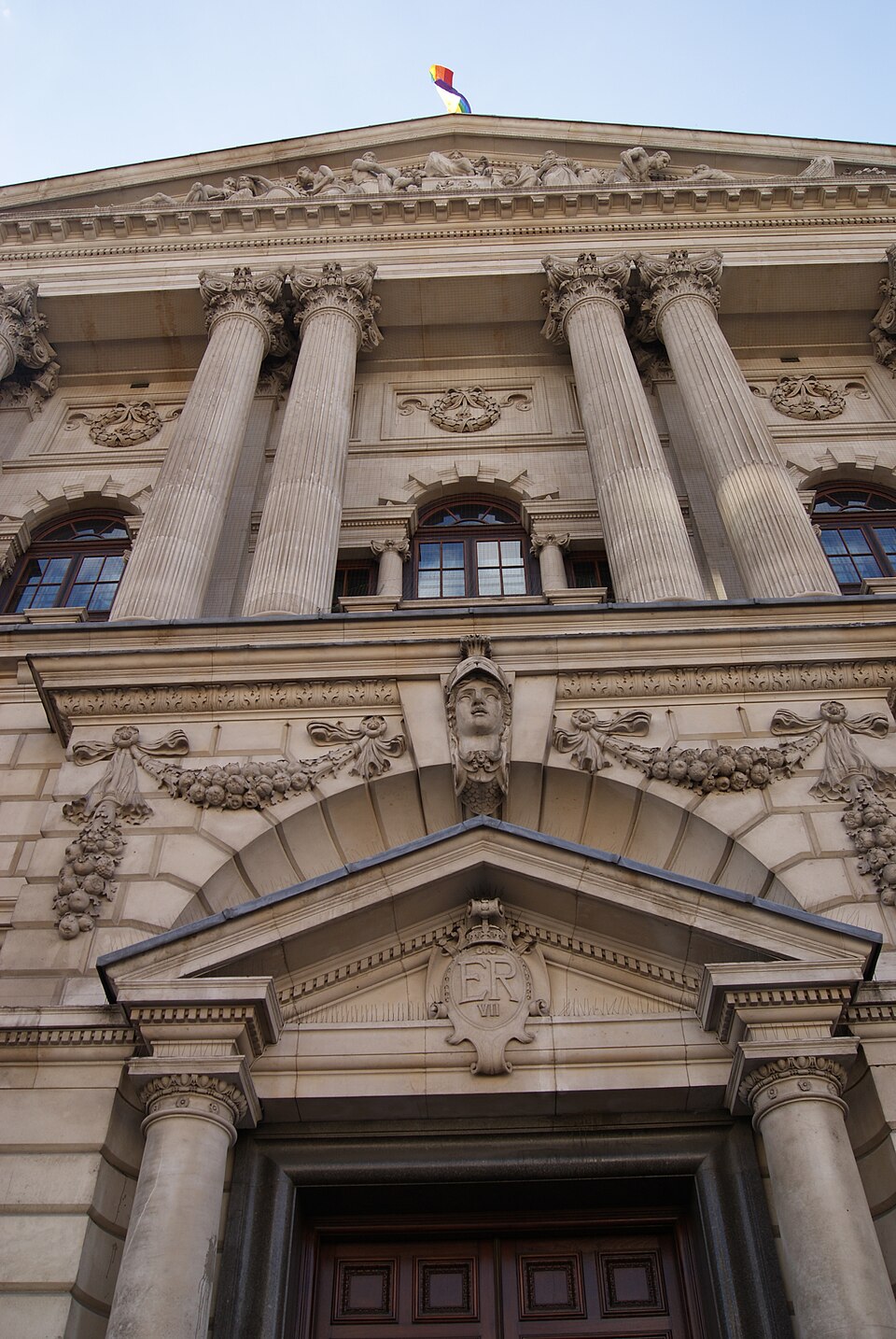
The building at 100 Parliament Street, London, part of Government Offices Great George Street, home of the Department for Culture, Media and Sport, in which the Counter Disinformation Unit was formed in 2019. Photographed 29 June 2013 by Smuconlaw, Wikimedia Commons, CC BY-SA 3.0.
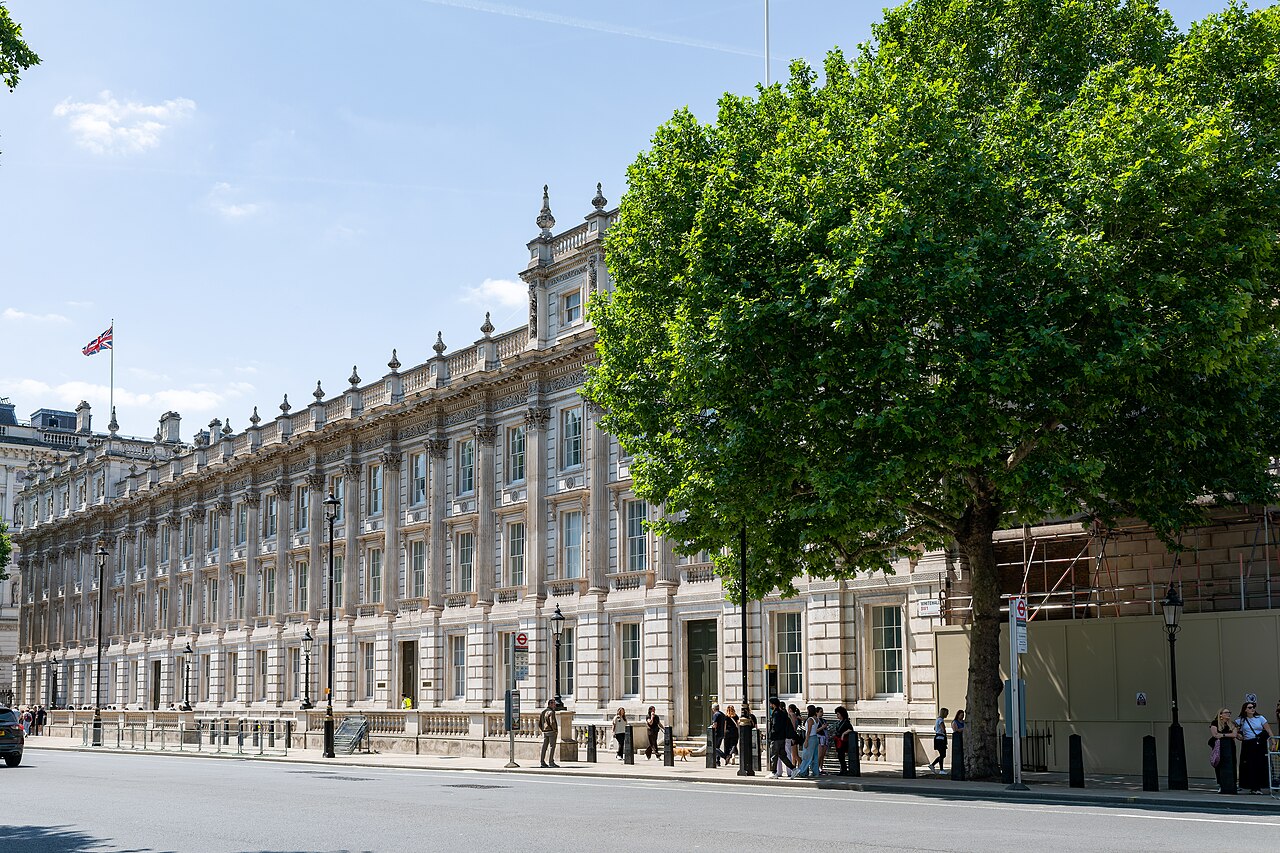
The Treasury Buildings on Whitehall, London, which house the Cabinet Office, where the Rapid Response Unit was set up in 2018. Photographed 16 June 2025 by Tilman2007, Wikimedia Commons, CC BY-SA 4.0.
How it worked
- Monitoring. The units used publicly available posts and articles to build pictures of "narratives and trends", which the government says were anonymised wherever possible.
- Flagging. The CDU had trusted-flagger status with major platforms, meaning its reports were routed to staff for priority review. Platforms, not the government, decided whether content broke their rules. The 58 per cent figure from X is the only public measure of how often a flag matched a platform's own rules.
- Rebuttal. The government says the CDU fed evidence to departments that published rebuttals, for example of Russian denials over Bucha and Mariupol.
- What it countered. Foreign-state claims (Russia on Ukraine), and pandemic claims circulating in the UK. The second is where the dispute lies: the documents show the units logged lawful criticism of policy alongside claims such as false cures and 5G conspiracy theories.
No FRAME technique is tagged on this page. The units' own output was internal reports and flags, not public messaging that can be scored.
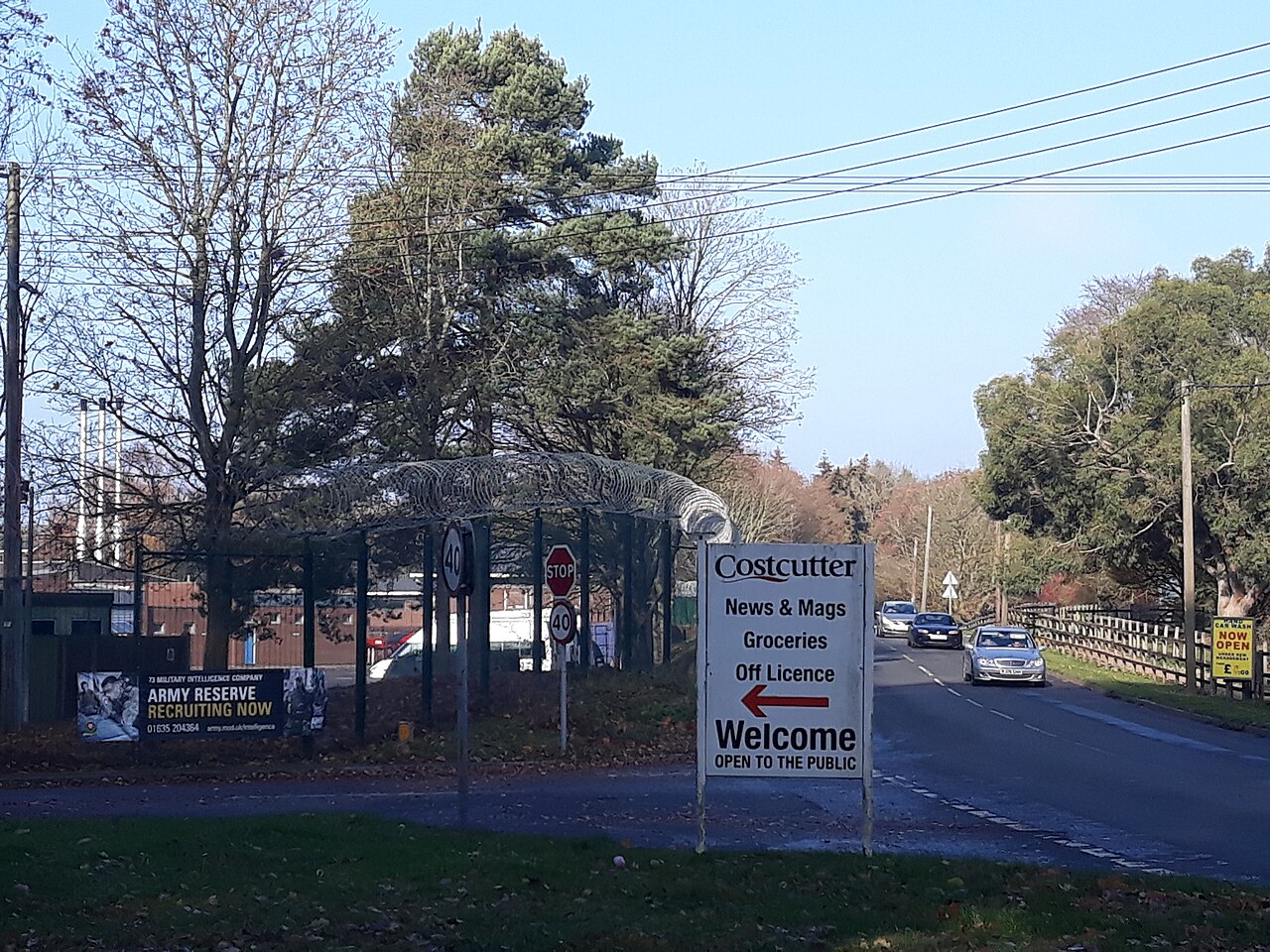
The entrance to Denison Barracks, Hermitage, Berkshire, the base of the Army's 77th Brigade, with a banner recruiting for 73 Military Intelligence Company. Photographed 17 November 2018 by Simon Burchell, Wikimedia Commons, CC BY-SA 4.0.
Measured effect
- On disinformation: no public evaluation of whether the CDU reduced the reach or belief of any false claim exists.
- On platforms: the X letter reported by Big Brother Watch shows most flags to X did not match X's rules. There is no comparable figure for other platforms.
- On the units themselves: Big Brother Watch's reported 95 per cent fall in flagging after its report is a change in the units' behaviour, not a measure of effect on the public.
Positions on the record
- The UK government: the CDU tracks trends, not people; it does not monitor individuals or political debate; freedom of expression underpins its work; its main targets are foreign-state disinformation and content that risks harm. The renaming to NSOIT reflects a national-security focus.
- The Ministry of Defence: it has said the 77th Brigade does not act against British citizens and that its work is internationally focused. Wallace told the Commons its capability had been used on UK disinformation trends and ordered a review.
- Big Brother Watch: the units carried out "mass political monitoring" of lawful speech and should be closed; it launched a crowdfunded legal challenge.
- Parliamentarians across parties: David Davis (Conservative) called for the units he was logged by to be shut down. In the Lords, the Liberal Democrat peer Lord Strasburger said the CDU was "monitoring political dissent under the cover of countering disinformation", the crossbench peer Lord Singh called it "Orwellian-sounding", and Labour's Lord Stevenson of Balmacara said it "sounds rather suspicious". The Labour MP Bell Ribeiro-Addy tabled questions on it.
- Supporters of the work: the government points to Russian disinformation on Ukraine and to harmful health claims as the reasons such a team is needed. No independent public defence of the CDU's domestic COVID-19 logging was found for this page.
Same-method test
A foreign interior ministry team that logged its own MPs' criticism of pandemic policy, flagged posts to platforms through a priority channel, and said it tracked trends rather than people would be recorded the same way: the stated remit, the documents obtained by critics, the platform's own figure on how many flags matched its rules. The differences with state rebuttal services in Russia or China (Government fact-check units: Russia, China, India and Ukraine) include these: the CDU published no list of "false" outlets, had no legal power to remove content, was exposed by FOI and subject access law, and was questioned in both Houses of Parliament. The similarity with the U.S. debate over government contacts with platforms (The debate over counter-disinformation) is the flagging channel itself.
What the record shows and doesn't
- Documented: the units existed; the CDU had trusted-flagger access; RRU and CDU documents obtained by Big Brother Watch contain posts by named MPs, academics and campaigners; the government's statements that it did not monitor individuals; the 77th Brigade review order; the renaming.
- Documented by one side, not independently confirmed: the X letter's 58 per cent figure and the 95 per cent fall in flagging, both reported by Big Brother Watch.
- Not shown: that any named MP's post was removed at the government's request. Also not shown: that the logging was limited to anonymised trend-tracking, since named individuals appear in the documents. "A Ministry of Truth" and "a team that tracks trends, not people" are both frames laid over this record.
See also
- The DHS Disinformation Governance Board (2022): a U.S. body paused within weeks over similar concerns.
- The State Department's Global Engagement Center (2016 to 2025): the U.S. State Department's foreign-facing counterpart.
- Platform interventions: labels, nudges, notes, friction and takedowns: what platforms do with flags and labels.
- The debate over counter-disinformation: the wider argument over governments and platforms.
- Countering propaganda: the index of this section.
Images
| Image | Source | Licence |
|---|---|---|
| Department for Culture, Media and Sport, 100 Parliament Street, London | Wikimedia Commons, Smuconlaw | CC BY-SA 3.0 |
| Treasury Buildings (Cabinet Office and Privy Council Office), Whitehall, London | Wikimedia Commons, Tilman2007 | CC BY-SA 4.0 |
| Entrance to Denison Barracks, Hermitage, Berkshire | Wikimedia Commons, Simon Burchell | CC BY-SA 4.0 |

,_WHITEHALL_SW1_London_20250616_0001.jpg)

Image gaps
- Pages from the Big Brother Watch report and the government fact sheet. The report is Big Brother Watch's copyright; the fact sheet is Crown copyright under the Open Government Licence but gov.uk could not be reached from the build environment. The fact sheet can be added.
- Official portraits of David Davis, Ben Wallace or Viscount Camrose. UK Parliament portraits are CC BY 3.0. The one Wallace photo found on Commons shows a Moscow visit and carries No. 10 use restrictions, so none is hosted.
- The 77th Brigade badge. The Commons file is a re-drawing of the UK Defence Brand, so it is not hosted.
Sources
- Big Brother Watch: Ministry of Truth report (PDF, 29 January 2023)
- Big Brother Watch: Inside Whitehall's Ministry of Truth (press release)
- Big Brother Watch: Fact checking the government's fact sheet on the CDU
- Big Brother Watch: UnHerd, government censorship unit sees 95% fall in flagged content
- Big Brother Watch: Defence Secretary admits 77th Brigade tasked to "UK disinformation"
- UK government: Fact sheet on the CDU and RRU (2023)
- UK Parliament written question on the Counter Disinformation Unit (February 2023)
- Hansard, House of Lords: Counter Disinformation Unit (18 July 2023)
- UK Parliament written question on the National Security Online Information Team (March 2024)
- PublicTechnology: CDU "does not monitor individuals", minister pledges (1 March 2023)
- PublicTechnology: disinformation unit focused on foreign states, election risks and deepfakes (May 2024)
- STV News: UK government defends "Orwellian-sounding" Counter-Disinformation Unit
- Global Government Forum: UK minister defends rebranded Counter Disinformation Unit
- Forces News: Army monitoring of UK citizens' posts to be investigated, Ben Wallace says (January 2023)
- The National: British Army "monitored citizens' social media posts during pandemic" (30 January 2023)
- Yahoo News: David Davis says secret unit should be shut down
- Wikipedia: Counter disinformation unit (used for orientation)