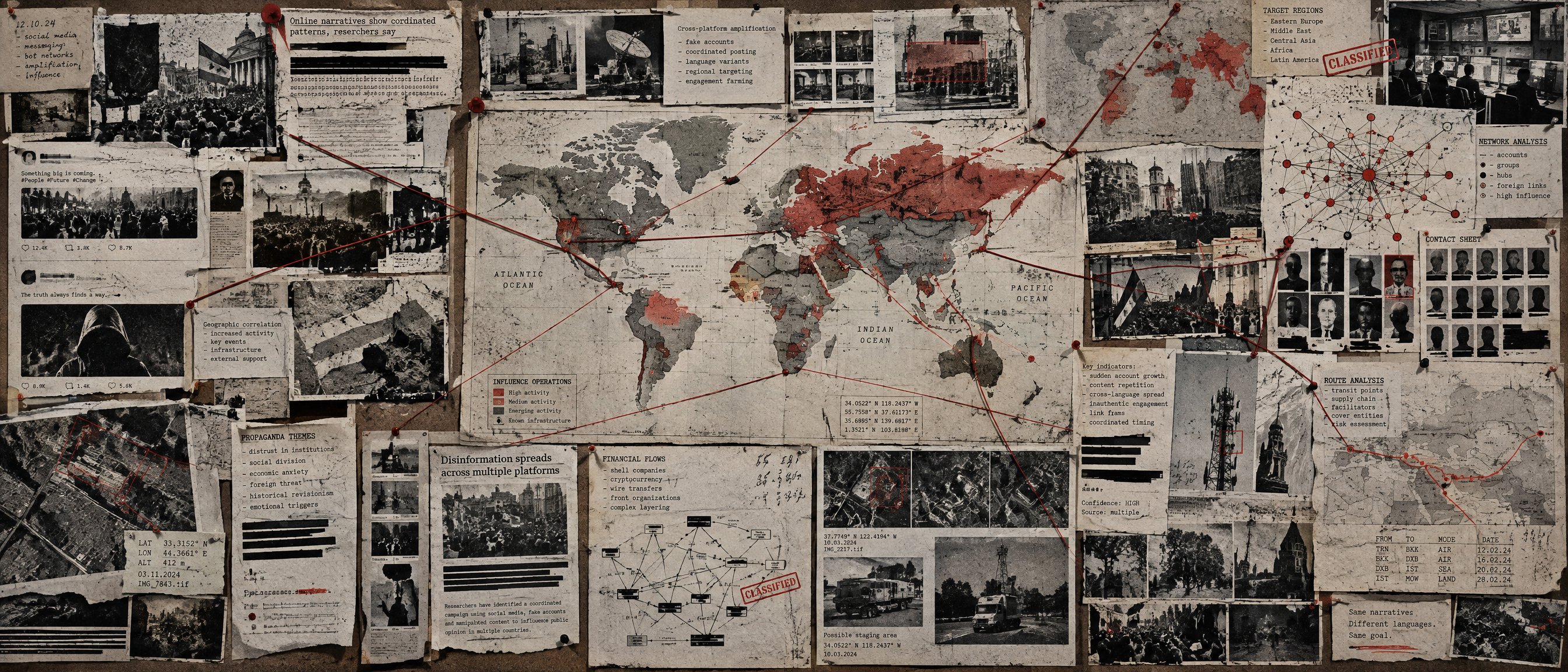
What has been tried against propaganda and disinformation, who tried it, and what the measured effects were, including null results, backfire findings and the criticism each approach drew from across the spectrum.
The section has two parts:
- Methods (this folder): research-led pages on each approach. Each carries an evidence rating that summarises the published record, not FRAME's view of whether the method is good.
- Cases (in case studies): the history of specific bodies and programmes, from the 1937 Institute for Propaganda Analysis to the units set up after 2014.
Evidence ratings
| Rating | Meaning |
|---|---|
| strong | Replicated by independent teams, in realistic settings, with effects that last. No method here reaches this yet. |
| moderate | Replicated by independent teams, but effects are modest or measured mostly in surveys. |
| mixed | Some replicated positive results alongside null results, fading effects or side effects. |
| contested | The main claim of effect is disputed in the published record. |
Methods
| Page | Evidence | What the record shows |
|---|---|---|
| Inoculation and prebunking | mixed | People reliably learn to name manipulation techniques in tests; whether that improves telling true from false news, and for how long, is disputed. |
| Fact-checking and corrections | moderate | Corrections move beliefs toward accuracy on average and rarely backfire, but effects are modest, fade, and did not change views of the politician corrected in the one US test. |
| Media literacy | mixed | Short-term gains in classroom and survey experiments; some field trials found none, and some studies find extra distrust of true news. |
| Platform interventions: labels, nudges, notes, friction and takedowns | mixed | Labels, notes, prompts and bans cut sharing or belief somewhat in the studies that exist; several have side effects or nulls, and many figures are the platforms' own. |
| The debate over counter-disinformation | mixed | The argument over counter-disinformation itself: whether the category is sound, whether it became censorship, whether it empowers states over dissent, or whether it does too little. |
Cases
Rules for this section
- Same standard for every side. A state rebuttal unit, a fact-checker or a platform label is described the same way whichever government, party or company runs it. Every case page has a same-method test.
- Report effects as measured. Pages give the study design, the sample and the caveats, and include null and backfire results. A company's own figure is marked as such.
- Criticism from every direction. Each page records criticism from the right, the left, civil-liberties groups and targeted governments where it exists, and says so when a direction has none on the record.
- Tag techniques only on evidence. Most pages here record a counter-measure, not propaganda output, and carry no technique tags.
- Images. Openly licensed only. Provenance for this section's images is in images.json.
Adding a page
- A method page goes here as
counter/counter-<slug>.mdwithtype: counterand anevidence:rating. A historical case goes incase-studies/<slug>.mdwithtype: case-study. - Add a row to the tables above, and for a case, to the case studies index.
- Run
python3 scripts/weekly_audit.py --markdown-checkand the bias panel (scripts/bias_panel.py), which coverscounter/*.md.