In one line: from 2017 several governments set up their own units to label reports as "fake", "rumour" or foreign narrative; they differ in whether a label carries legal force, whether courts can overturn it and whether it names specific people, and each has been criticised for labelling reports or opinions that were accurate or that criticised the government.
What happened
- 2 March 2014 (Ukraine, civil society). Lecturers, graduates and students of the Kyiv-Mohyla Journalism School launch StopFake.org to check claims about the annexation of Crimea and the war in eastern Ukraine. It is not a government body; it is included here as a contrast.
- 22 February 2017 (Russia). Foreign Ministry spokeswoman Maria Zakharova launches a section of the ministry's website for "fake news" about Russia. It opens with five items, from Bloomberg, the New York Times, NBC, the Daily Telegraph and the Santa Monica Observer, each shown as a screenshot with a red "FAKE" stamp and the line "This article puts forward information that does not correspond to reality." Zakharova says the aim is "to show the main trends in publishing fake news about our country and to try to stop their spread."
- 29 August 2018 (China). The China Internet Joint Rumor-Dispelling Platform (Piyao) launches, overseen by the Cyberspace Administration of China's reporting centre and run by Xinhua. It merges data from about 40 existing rumour-reporting platforms into a database of some 30,000 items, takes reports from the public and uses AI to flag "rumours". From 2020, provincial and city rumour-refutation platforms are folded into it.
- November 2019 (India). The Press Information Bureau (PIB), the government's press office, sets up a fact-check unit to rebut WhatsApp forwards and social media posts about the government.
- December 2019 to January 2020 (China). Wuhan police summon the ophthalmologist Li Wenliang over messages to colleagues about a SARS-like illness and admonish him for "rumor-mongering". In March 2020 a national investigation finds the summons "not appropriate"; the Supreme People's Court had said earlier that those admonished should not have been.
- 19 March 2021 (Ukraine). President Volodymyr Zelensky signs Decree No. 106 enacting a National Security and Defense Council decision of 11 March to create a Centre for Countering Disinformation (CCD).
- April 2023 (India). An amendment to the IT Rules lets the central government designate a Fact Check Unit whose finding that online content about "the business of the Central Government" is "fake, false or misleading" would oblige platforms to act on it or risk losing legal protection. The comedian Kunal Kamra, the Editors Guild of India and other media bodies challenge it.
- July and October 2022 (Ukraine). The CCD publishes a list titled "Speakers Promoting Common Narratives of the Russian Federation", including foreign commentators such as the journalist Glenn Greenwald and Doug Bandow of the Cato Institute. An updated list appears in October.
- January to March 2024 (India). A two-judge bench of the Bombay High Court splits. In March 2024 the government notifies the PIB unit as the Fact Check Unit; the Supreme Court stays that notification pending the High Court's final ruling.
- 26 September 2024 (India). Justice Atul Chandurkar, as tie-breaking judge, holds the amendment unconstitutional as a violation of Articles 14 and 19 of the Constitution. The rule is struck down.
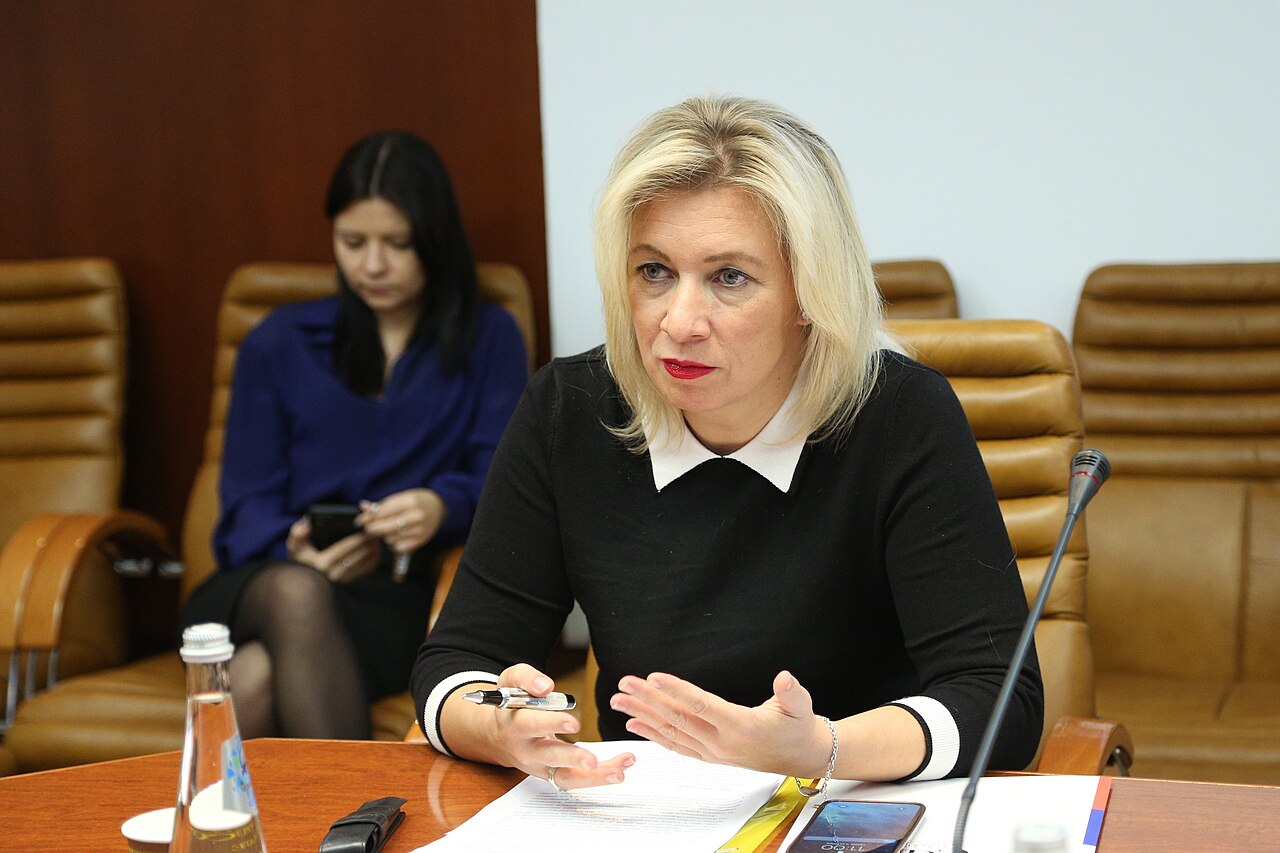
Maria Zakharova, Russian Foreign Ministry spokeswoman, who launched the ministry's "fake news" web section on 22 February 2017, at an event at the Council of the Federation, 5 October 2022. Photo: council.gov.ru, Wikimedia Commons, CC BY 4.0.
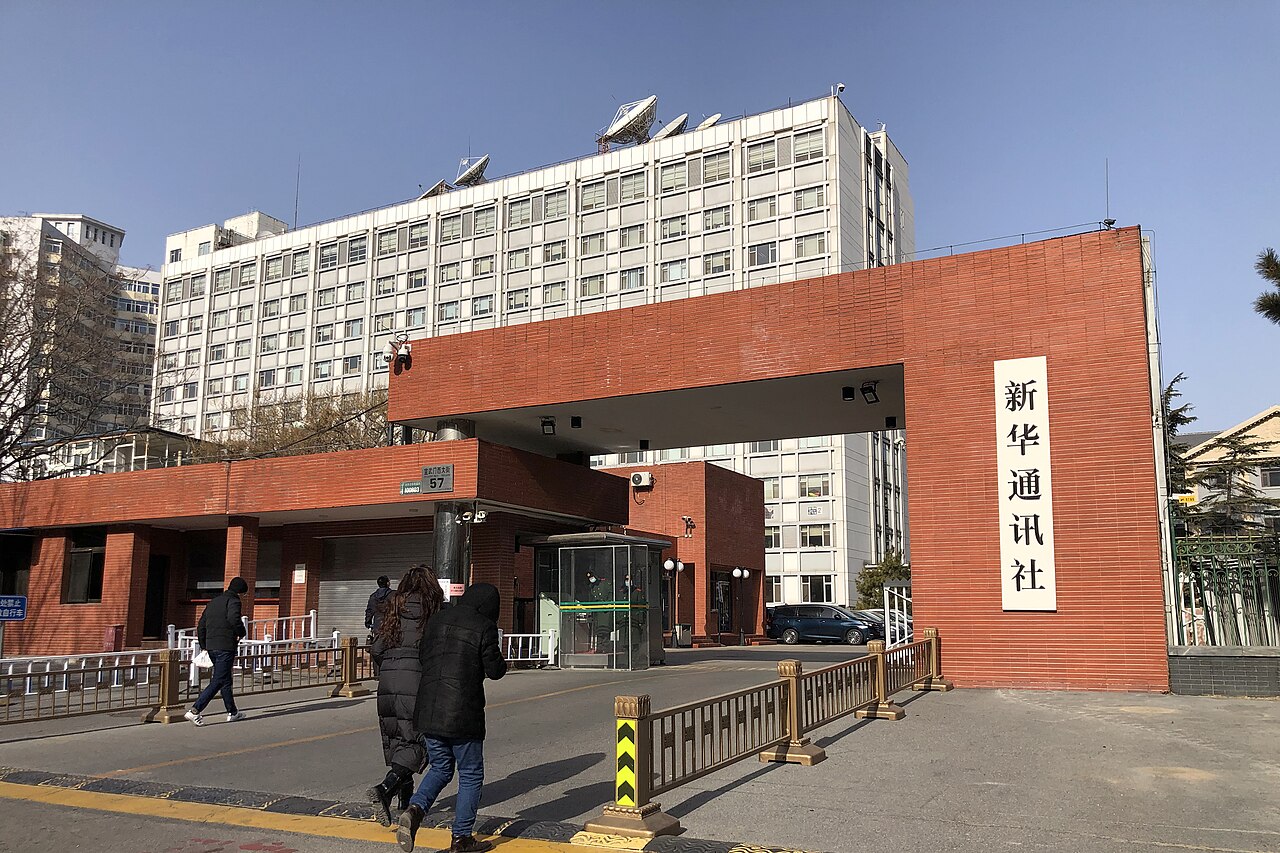
Gate of the Xinhua News Agency headquarters, Beijing (Xuanwumen). Xinhua runs the China Internet Joint Rumor-Dispelling Platform (Piyao) that launched in August 2018. Photographed 15 January 2021 by N509FZ, Wikimedia Commons, CC BY-SA 4.0.
How it worked
| Unit | Who runs it | What it labels | Legal force of a label |
|---|---|---|---|
| Russian MFA "fake" page | Foreign Ministry press service | Named foreign articles about Russia | None in itself; a statement by the ministry |
| Piyao (China) | CAC reporting centre, run by Xinhua | Online "rumours", public tips, AI-flagged posts | Operates alongside laws that let police punish "rumour-mongering" |
| PIB Fact Check (India) | Government press office | Posts and reports about the government | None since the 2023 rule was struck down; the 2023 rule would have required platforms to act |
| CCD (Ukraine) | National Security and Defense Council | Russian narratives; in 2022, named "speakers" | None found for the list itself; issued in wartime |
| StopFake (Ukraine) | Journalism school project, later an NGO | Specific false claims about Ukraine | None; a civil-society publisher |
The Russian page gave no evidence for each label beyond a link to the article. The PIB unit's critics say it issues denials rather than demonstrations: Newslaundry wrote in 2020 that it "does not understand the difference between 'refutation' and 'repudiation'". Piyao combines rebuttal with a reporting channel for the public and ties into a legal system in which "rumour" is an offence.
No FRAME technique is tagged here. Whether a given label was accurate depends on the item, and the page documents patterns of criticism rather than scoring single labels.
Measured effect
No independent evaluation of any of these units' effect on public belief was found. What is documented is the other side of the ledger, labels that were wrong or disputed:
- India. PIB Fact Check called an Intelligence Bureau recruitment notice fake; the Ministry of Information and Broadcasting then said the IB had confirmed the notice was genuine. It labelled a report by The Wire on ventilators at Ahmedabad Civil Hospital "fake", a label The Wire disputed. Pratik Sinha of Alt News said PIB had checked opposition leaders such as Rahul Gandhi several times and BJP leaders not once.
- China. The best-known "rumour" case, Li Wenliang's, was an accurate early warning; the state later said the police action was inappropriate and honoured him as a martyr after his death.
- Russia. Western outlets reported that the ministry offered no evidence for why the listed stories were false.
- Ukraine. People on the CCD's 2022 list rejected the label; Greenwald called the list "McCarthyite idiocy".
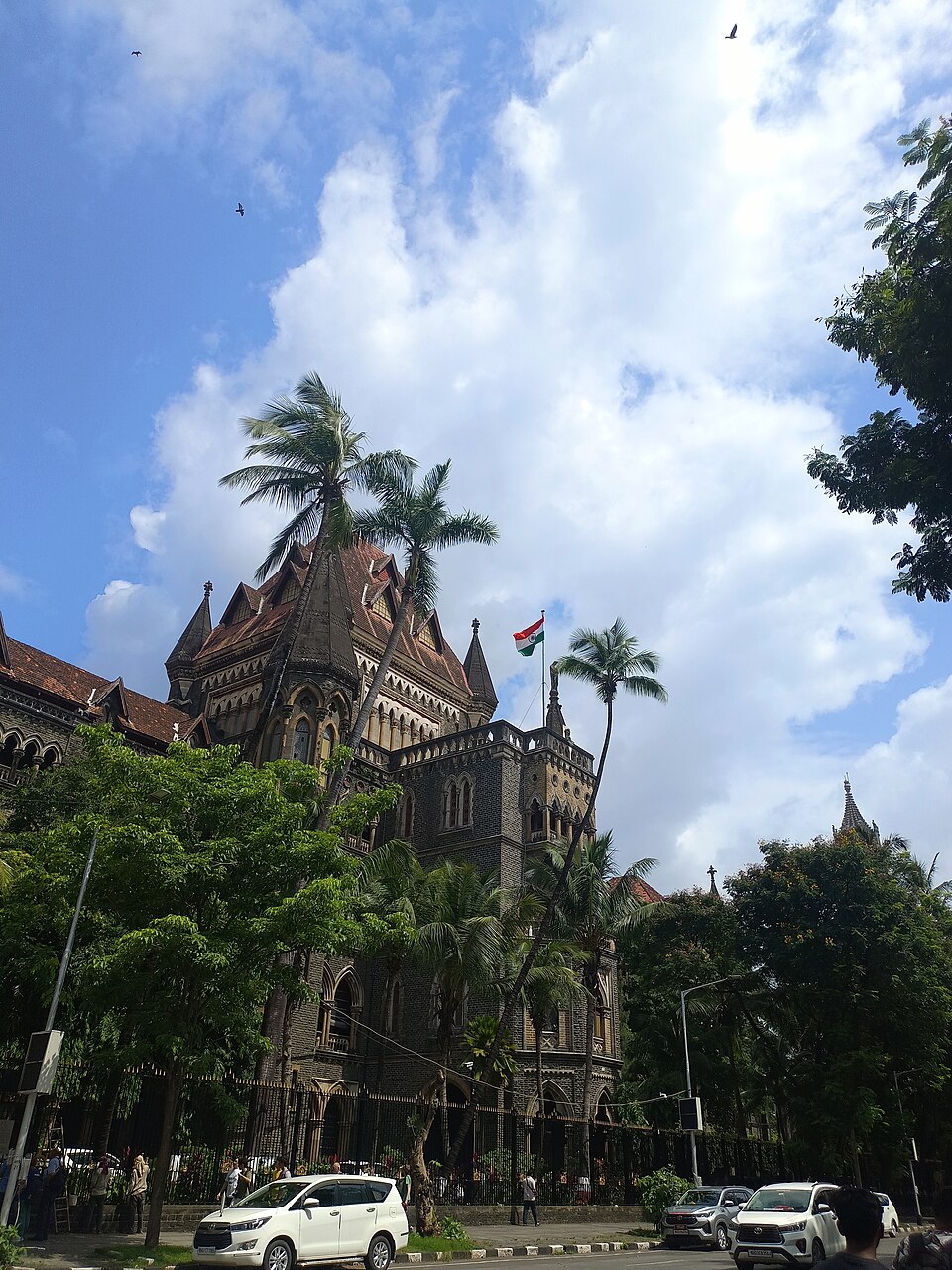
The Bombay High Court building, Mumbai, where a bench heard the challenge to India's 2023 Fact Check Unit rule and struck it down on 26 September 2024. Photographed 11 August 2025 by Jinoy Tom Jacob, Wikimedia Commons, CC BY-SA 4.0.
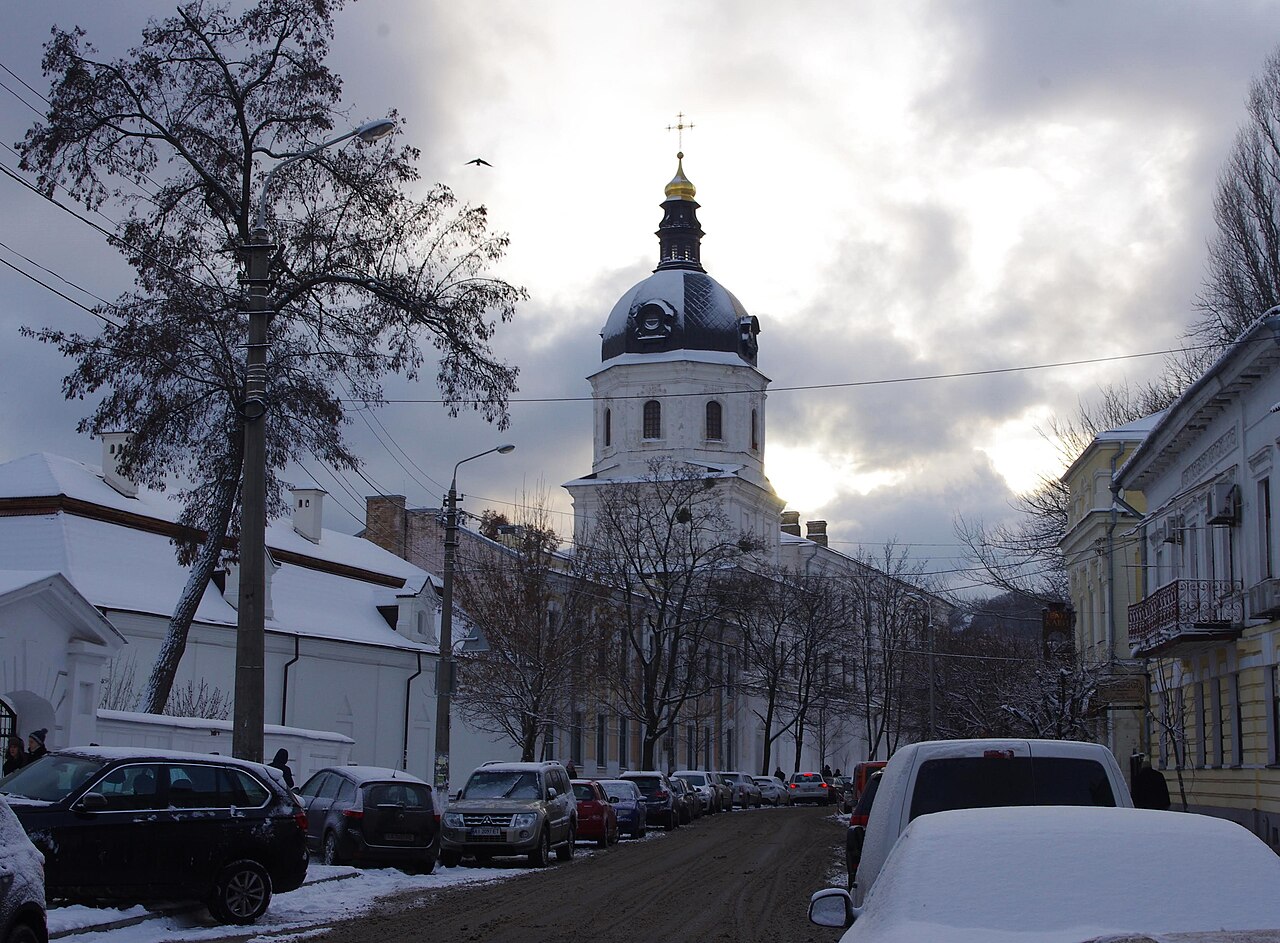
The Kyiv-Mohyla Academy complex, Kyiv (the Brotherhood Monastery ensemble). Lecturers, graduates and students of its journalism school launched StopFake.org, the civil-society contrast case on this page, on 2 March 2014. Photographed 26 January 2016 by Hwyrd, Wikimedia Commons, CC BY-SA 4.0.
Positions on the record
- The governments: each says it is correcting falsehoods that harm the public or national security. Russia describes Western coverage as a campaign of "fake news" against it. China presents Piyao as protecting the online environment. India's government said the Fact Check Unit would counter false information about government business. Ukraine says the CCD counters Russian disinformation in wartime.
- Press-freedom and media bodies: the Editors Guild of India said "determination of fake news cannot be in the sole hands of the government and will result in the censorship of the press". Global Voices and Hong Kong Free Press described Piyao as centralising control over what counts as a rumour ("fake news is in the eye of the beholder").
- Courts: India's Bombay High Court struck down the 2023 rule. No comparable court review of the Russian page, Piyao or the CCD list was found.
- Critics of the CCD list: libertarian and free-speech commentators, including people named on it, say it treats policy criticism, for example of NATO expansion, as enemy propaganda.
- StopFake: in 2020 the Ukrainian outlet Zaborona reported photographs of StopFake's English-language host, Marko Suprun, with members of far-right bands. StopFake called the report untrue and "guilt by association" in an "information attack" on the project.
Same-method test
The test applied here is the one used for the U.S. and UK bodies (The State Department's Global Engagement Center (2016 to 2025), The DHS Disinformation Governance Board (2022), The UK's Counter Disinformation Unit and its sister units (2019 to 2024)) and for the EU's service (EUvsDisinfo and the EEAS East StratCom Task Force): what did the unit label, on what evidence, with what legal consequence, and could anyone overturn it? Held to that test, the units differ in documented ways. India's rule was reviewed and struck down by its own courts. China's "rumour" label sits inside a system where the police can punish the person labelled, as Li Wenliang's case shows. Russia's page was a ministry statement with no evidence attached and no appeal. Ukraine's list named foreign individuals during a war. The U.S. DHS board issued no labels before it was closed; the UK unit flagged posts to platforms without publishing labels. The EU's EUvsDisinfo did publish labels on named outlets' articles, and was sued by three Dutch outlets it had wrongly listed. The U.S. GEC published "Faces of Kremlin Propaganda" profiles naming Russian officials, such as the foreign ministry spokesperson Maria Zakharova. These are differences in legal force and review, not in whether the government was entitled to rebut claims.
What the record shows and doesn't
- Documented: the launch dates, the structure of each unit, the Bombay High Court ruling, Li Wenliang's admonition and the later finding, the disputed PIB labels, the CCD list and the reactions to it.
- Not shown: the share of each unit's labels that were accurate. No independent audit of any of them was found. Individual wrong labels show errors, not an error rate.
See also
- Fact-checking and corrections: independent fact-checking, its history and what it has been shown to do.
- EUvsDisinfo and the EEAS East StratCom Task Force and Baltic counter-disinformation: Estonia, Latvia and Lithuania: EU and Baltic approaches to Russian media.
- The debate over counter-disinformation: the wider argument over who should decide what is false.
- Countering propaganda: the index of this section.
Images
| Image | Source | Licence |
|---|---|---|
| Maria Zakharova, Director of the Information and Press Department, Russian Ministry of Foreign Affairs | Wikimedia Commons, Council of the Federation of the Federal Assembly of the Russian Federation (council.gov.ru) | CC BY 4.0 |
| Gate of Xinhua News Agency headquarters, Beijing | Wikimedia Commons, N509FZ | CC BY-SA 4.0 |
| Bombay High Court building, Mumbai | Wikimedia Commons, Jinoy Tom Jacob (Wikimedia user Gnoeee) | CC BY-SA 4.0 |
| Buildings of the National University of Kyiv-Mohyla Academy, Kyiv | Wikimedia Commons, Hwyrd | CC BY-SA 4.0 |
.jpg)
.jpg)
.jpg)

Image gaps
- The Russian MFA page with its "FAKE" stamps. The page is a screenshot of third-party newspaper articles; not hosted.
- Piyao, PIB Fact Check and CCD graphics. Government material with unclear or restrictive licences; not included. The PIB logo on Commons carries India's GODL licence, which was not treated as cleared here.
- A photo of Li Wenliang. No openly licensed photo was checked.
- A photo of the Ukrainian Centre for Countering Disinformation or the National Security and Defense Council. None found. The Ukrainian image is of the Kyiv-Mohyla Academy, home of the civil-society contrast case StopFake.
Sources
- RFE/RL: Russia launches new project to track "fake news" (February 2017)
- Fortune: Russia's foreign ministry website flags "fake news" (23 February 2017)
- Vice: The Kremlin is literally stamping reports it doesn't like as "fake news"
- DFRLab: Busting fakes, Kremlin style
- Chinese government: China launches official online rumor information platform (30 August 2018)
- South China Morning Post: China launches Piyao platform
- Global Voices: "Fake news" is in the eye of the beholder (31 August 2018) and Hong Kong Free Press republication
- Law Library of Congress: Spreading rumors and police reprimand under Chinese law (March 2020)
- China Daily: Li Wenliang police summons "not appropriate" (19 March 2020)
- Mayo Clinic Proceedings: Dr Li Wenliang
- JURIST: India's plan to decide what constitutes "fake news" draws criticism (January 2023)
- The Wire: Any news PIB's fact-check unit calls "fake" must be taken down
- India TV: Centre establishes fact-checking unit under IT Rules (March 2024)
- Columbia Global Freedom of Expression: Kunal Kamra v. Union of India
- Indian Constitutional Law and Philosophy: Justice Chandurkar's tie-breaking judgment (24 September 2024)
- Deccan Herald: Bombay HC strikes down amended IT Rules as unconstitutional
- Alt News: Government fact-checks its own fact-checking arm on IB recruitment
- Free Press Journal: PIB fact check of The Wire's ventilators piece
- Newslaundry: The embarrassment that is PIB Fact Check (26 May 2020)
- Kyiv Post: Zelensky signs decree on the Center for Countering Disinformation (20 March 2021)
- Centre for Countering Disinformation: About
- Wikipedia: Center for Countering Disinformation (used for orientation on the 2022 list)
- StopFake: About us
- New Eastern Europe: Zaborona vs. StopFake (3 August 2020)