Plain folks: performing 'one of us'
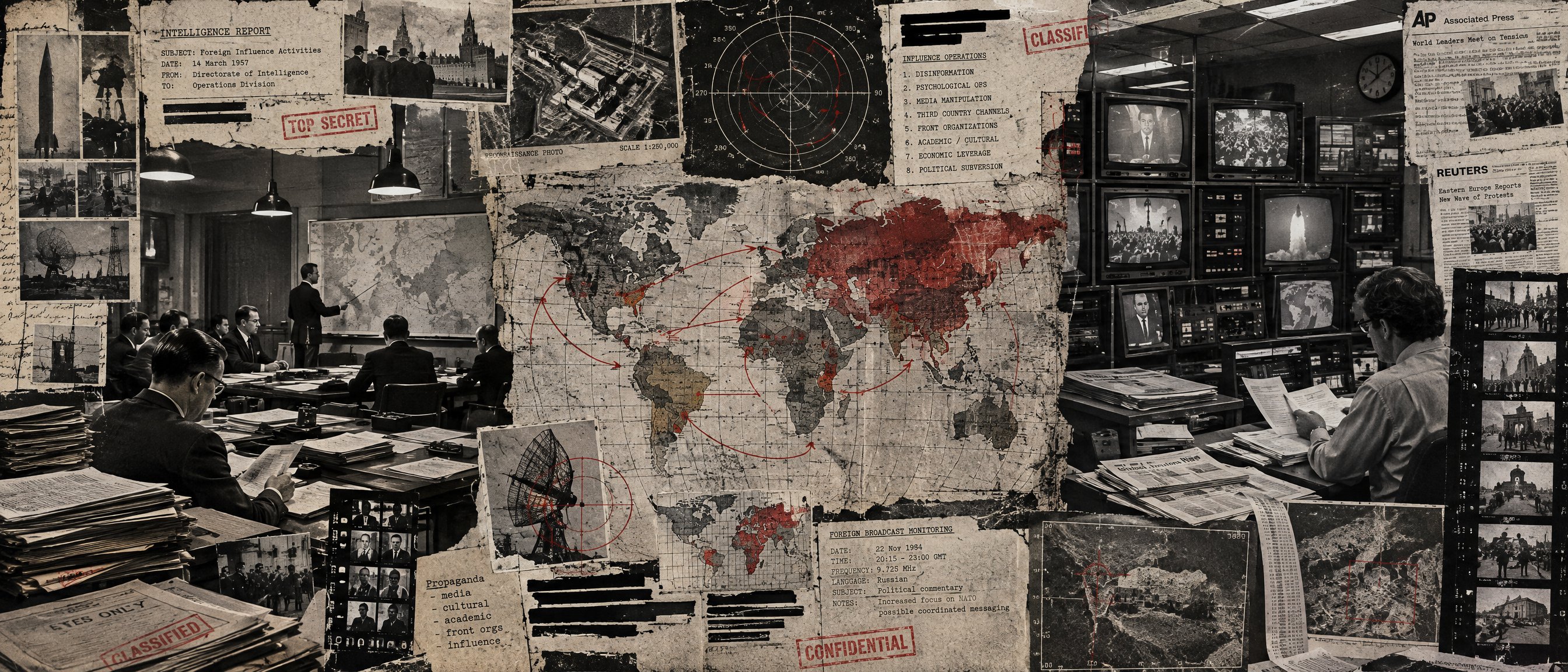
Illustration, not an archive object
By the end: Tell a performance of ordinariness from a person who really is that thing, and ask whether the identity bears on the claim. About 7 minutes.
What it is
Definition
The speaker performs ordinary-person identity to make the message feel homegrown.
The tell
Costume, dialect, or 'as a mom/veteran/worker' as the warrant.
Not this
A person who actually is that thing, speaking in their own register.
Plain folks tries to make a message feel homegrown. The speaker is usually more powerful or more distant than the audience, and closes the gap on the surface only.
It is one of the Institute for Propaganda Analysis's 1937 devices, and a durable feature of electoral politics, from the stump speech to the shirt-sleeves photograph.

Illustration, not an archive object How it works
The performance is built from signals:
- Clothes such as shirt-sleeves or a cardigan.
- Food and drink: a diner breakfast, a regional dish.
- Setting: a farm, a factory floor, a kitchen table.
- Speech: dialect, slang, "folks" and "friends".
- Biography: humble origins, military service, being a parent, with the rest left out.
A common second move is contrast: the opponent is cast as elite or out of touch. The audience feels recognition, and the identity does the work of a reason. The technique often fails once the staging shows.
A newer form uses many invented speakers: accounts posing as ordinary local people. Then plain folks merges with astroturfing.
Why it works on people
- Similarity and liking. People like those who share their attitudes and traits (Byrne 1971). A meta-analysis by Montoya, Horton and Kirchner (2008) found that perceived similarity predicts attraction more than actual similarity does. The technique only has to create the impression of sameness.
- Group prototypicality. Followers back leaders who seem to embody the group (Haslam, Reicher and Platow 2011).
- Trustworthiness. The Yale program (Hovland, Janis and Kelley 1953) separated expertise from trustworthiness. Plain folks gives up the first to bid for the second.
The limits: how much a "common touch" moves votes, compared with party loyalty and the economy, is debated. It can also backfire when the staging is detected.
Same device, different stakes (1 of 3)
Three real objects from the archive. The technique is the same in each; the setting, the choice the audience had and what was at stake are not.

We Can Do It! · 1943 · Westinghouse Electric / War Production Co-ordinating Committee · Full record Notice: A factory worker in a red bandana flexes her arm under 'We Can Do It!'. It was made for internal display at Westinghouse plants, so management's production message is carried by an ordinary employee's face and pose. Its audience was the company's own workers, and it became widely famous only decades later. The slogan stands in for any specific target or grievance.
Same device, different stakes (2 of 3)
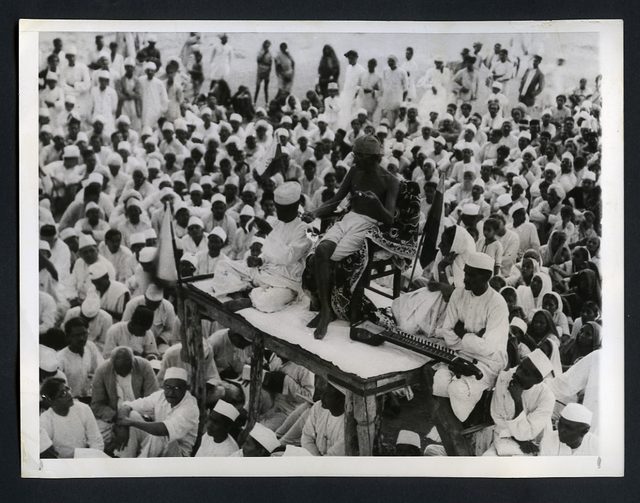
Gandhi spins while addressing a crowd (1930) · 1930 · Indian National Congress (Civil Disobedience movement) · Full record Notice: Gandhi spins khadi by hand on a raised platform while addressing a crowd during the 1930 Civil Disobedience movement. The caption describes it as performing the boycott's own discipline in public, so that the spinning wheel stands for the whole campaign. The prop is the movement's own practice rather than a persona for a message from above, and the test on this page still applies: is it true, and does it bear on the claim?
Same device, different stakes (3 of 3)
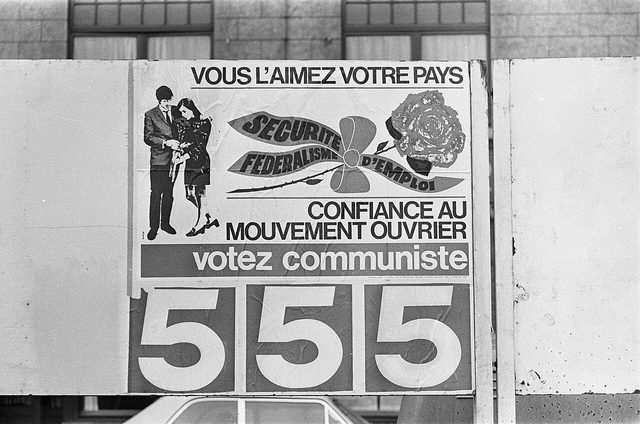
"Vous l'aimez votre pays": Communist Party of Belgium election poster, Brussels · Mar 18, 1968 · Communist Party of Belgium (poster photographed in Brussels by Anefo) · Full record Notice: A Brussels election hoarding shows a young couple in everyday dress with the line 'You love it, your country', ribbons of virtue words, 'Vote Communist' and the list number 555. The couple is offered as the voter, and the virtue words stand in for a programme. It is a legal party's poster ahead of the 31 March 1968 general election; the party is named, and the stake is a vote.
Check yourself
A nurse opens her testimony on hospital staffing by saying, in her own words, that she has worked nights on a ward for twelve years. Is that plain folks?
Show the answer
No. She really is a nurse, speaking in her own register, and her experience bears on staffing. It would become plain folks if the role were a costume or an invented persona, or if the proposal looked the same without it. Right. The test has two parts: is the identity claim true, and does the identity bear on the claim? Both hold here.
Spot it in the archive
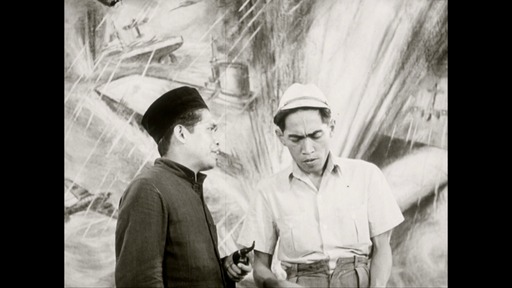
Still from "Japanse propaganda tentoonstelling", Japanese military propaganda film shot in Java (c. 1944) · 1944 · Propaganda department of the Japanese military administration in Java (film producer recorded as unknown) · Full record In a c. 1944 film made for a military administration in Java, a visitor and a gallery attendant, both Indonesian, stand before a painted naval battle and talk about the strength of the American fleet. The archive's catalogue calls the scene staged. Which technique is doing the work?
The message is delivered by two ordinary local speakers rather than by an officer, and the catalogue says the conversation is staged. Their everyday identity is the warrant.
Show the answer
Plain folks The message is delivered by two ordinary local speakers rather than by an officer, and the catalogue says the conversation is staged. Their everyday identity is the warrant.
How to spot it, and what next
- Does the message lean on clothes, food, accent, setting or family rather than on the proposal?
- Is the biography selective: the humble start shown, the wealth or connections left out?
- Is the opponent described mainly as elite or out of touch, rather than as wrong on a specific point?
- For a persona claiming to be an ordinary local: is there a real history, or thin posts, recycled photos and a biography that cannot be confirmed?
Read the full page: Plain folks in the technique library · All 11 examples in the collection