
Alfredo Rocco
Illustration, not an archive object
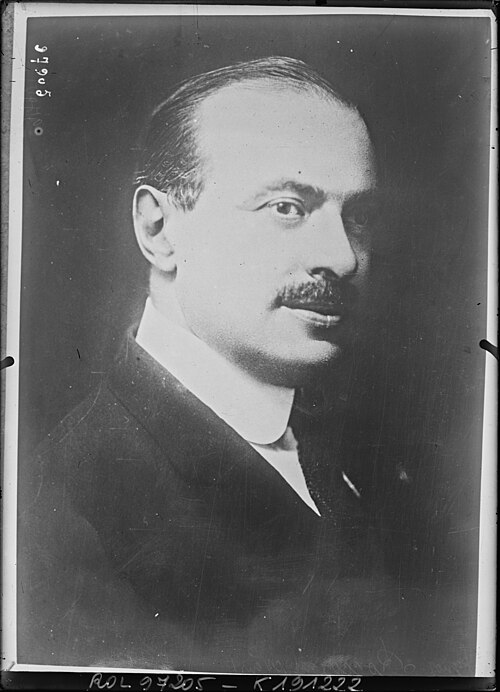

Minister of Justice · Italy
On the regime page: Fascist Italy under Mussolini
7 quotes, oldest first. Filter with other speakers.
“Nationalism loudly proclaims its incompatibility with economic individualism and the complete error of all the principles upon which it is based. The fundamental attitude of Nationalist economy must be that of a violent, absolute, irreconcilable opposition to individualist, Liberal and Socialist economy which rests on principles antagonistic to those of the Nationalist movement, on individualism, utilitarianism, materialism, internationalism.”
English: Herman Finer, in Mussolini's Italy (Henry Holt and Company, New York, 1935). Original-language text not found.
Rocco and the economist Filippo Carli presented the report on economic policy to the congress of the Nationalist Association, which merged into the Fascist Party in 1923. Finer cites it as an early statement of ideas later developed in the Fascist corporate system.
Report by Alfredo Rocco and Filippo Carli to the Congress of the Italian Nationalist Association, Milan, 16-18 May 1914, as quoted and translated in Herman Finer, Mussolini's Italy (Henry Holt and Company, New York, 1935), p. 494, citing Rosenstock-Franck, L'économie corporative fasciste (1934), p. 16 Source
“For Liberalism, the individual is the end and society the means; nor is it conceivable that the individual, considered in the dignity of an ultimate finality, be lowered to mere instrumentality. For Fascism, society is the end, individuals the means, and its whole life consists in using individuals as instruments for its social ends. The state therefore guards and protects the welfare and development of individuals not for their exclusive interest, but because of the identity of the needs of individuals with those of society as a whole. We can thus accept and explain institutions and practices, which like the death penalty, are condemned by Liberalism in the name of the preeminence of individualism.”
Original (Italian)
Per il liberalismo (come per la democrazia e il socialismo) l'individuo è fine, la società è mezzo; nè è concepibile che l'individuo, che è fine, possa mai assumere il valore di mezzo. Per il fascismo la società è fine e l'individuo è mezzo, e tutta la vita della società consiste nell'assumere l'individuo come strumento dei fini sociali. Anche quando l'individuo è tutelato e favorito nel suo benessere e nel suo sviluppo, ciò non avviene mai nell'interesse esclusivo del singolo, ma sempre per una convergenza tra l'interesse del singolo e l'interesse sociale. Si spiegano così istituti, come la pena di morte, che il liberalismo condanna in nome della preminenza dei fini dell'individuo.
English: Professor Bigongiari of Columbia University, in International Conciliation, no. 223 (October 1926)
Rocco, Minister of Justice and a former leader of the Italian Nationalist Association, gave the address at the Aula dei Notari in Perugia at the opening of a course of summer lectures. The Carnegie Endowment published it in English in 1926, stating that it had Mussolini's approval.
Alfredo Rocco, "The Political Doctrine of Fascism", speech at Perugia, 30 August 1925, in International Conciliation, no. 223 (October 1926), translated by Professor Bigongiari of Columbia University (Carnegie Endowment for International Peace, New York), p. 403. Italian: Alfredo Rocco, La dottrina del fascismo e il suo posto nella storia del pensiero politico: discorso pronunciato nell'Aula dei Notari di Perugia il 30 agosto 1925 (La periodica lombarda, 1925), p. 14 Source
Content note: Describes war as an eternal law and accepts the total sacrifice of individuals. The words are shown as they were said or written. Why
“For Fascism, society has historical and immanent ends of preservation, expansion, improvement, quite distinct from those of the individuals which at a given moment compose it; so distinct in fact that they may even be in opposition. Hence the necessity, for which the older doctrines make little allowance, of sacrifice, even up to the total immolation of individuals, in behalf of society; hence the true explanation of war, eternal law of mankind, interpreted by the liberal-democratic doctrines as a degenerate absurdity or as a maddened monstrosity.”
Original (Italian)
Per il fascismo la società ha scopi suoi storici ed immanenti, di conservazione, di espansione, di perfezionamento, distinti dagli scopi dei singoli individui che, pro tempore, la compongono, e che possono eventualmente anche essere in contrasto con gli scopi individuali. Di qui la possibilità, che le dottrine dominanti non concepiscono, del sacrificio anche totale dell'individuo alla società e la spiegazione del fatto bellico, legge eterna della specie umana, che quelle dottrine non spiegano se non come una assurda degenerazione o una mostruosa pazzìa.
English: Professor Bigongiari of Columbia University, in International Conciliation, no. 223 (October 1926)
Rocco, Minister of Justice and a former leader of the Italian Nationalist Association, gave the address at the Aula dei Notari in Perugia at the opening of a course of summer lectures. The Carnegie Endowment published it in English in 1926, stating that it had Mussolini's approval.
Alfredo Rocco, "The Political Doctrine of Fascism", speech at Perugia, 30 August 1925, in International Conciliation, no. 223 (October 1926), translated by Professor Bigongiari of Columbia University (Carnegie Endowment for International Peace, New York), p. 402. Italian: Alfredo Rocco, La dottrina del fascismo e il suo posto nella storia del pensiero politico: discorso pronunciato nell'Aula dei Notari di Perugia il 30 agosto 1925 (La periodica lombarda, 1925), pp. 13-14 Source
“Fascism on the other hand faces squarely the problem of the right of the state and of the duty of individuals. Individual rights are only recognized in so far as they are implied in the rights of the state. In this preeminence of duty we find the highest ethical value of Fascism.”
Original (Italian)
Per il fascismo il problema preminente è quello del diritto dello Stato e del dovere dell'individuo e delle classi; gli stessi diritti dell'individuo, quando vengono riconosciuti, non sono che riflesso dei diritti dello Stato che il singolo fa valere come portatore di un interesse proprio e come organo di un interesse sociale con quello convergente. In questa preminenza del dovere sta il più alto valore etico del fascismo.
English: Professor Bigongiari of Columbia University, in International Conciliation, no. 223 (October 1926)
Rocco, Minister of Justice and a former leader of the Italian Nationalist Association, gave the address at the Aula dei Notari in Perugia at the opening of a course of summer lectures. The Carnegie Endowment published it in English in 1926, stating that it had Mussolini's approval.
Alfredo Rocco, "The Political Doctrine of Fascism", speech at Perugia, 30 August 1925, in International Conciliation, no. 223 (October 1926), translated by Professor Bigongiari of Columbia University (Carnegie Endowment for International Peace, New York), p. 403. Italian: Alfredo Rocco, La dottrina del fascismo e il suo posto nella storia del pensiero politico: discorso pronunciato nell'Aula dei Notari di Perugia il 30 agosto 1925 (La periodica lombarda, 1925), p. 14 Source
“Freedom therefore is due to the citizen and to classes on condition that they exercise it in the interest of society as a whole and within the limits set by social exigencies, liberty being, like any other individual right, a concession of the state.”
Original (Italian)
La libertà, pertanto, è data all'individuo e ai gruppi nell'interesse sociale ed entro i limiti dell'interesse sociale. Come tutti i diritti individuali, anche la libertà è una concessione dello Stato.
English: Professor Bigongiari of Columbia University, in International Conciliation, no. 223 (October 1926)
Rocco, Minister of Justice and a former leader of the Italian Nationalist Association, gave the address at the Aula dei Notari in Perugia at the opening of a course of summer lectures. The Carnegie Endowment published it in English in 1926, stating that it had Mussolini's approval.
Alfredo Rocco, "The Political Doctrine of Fascism", speech at Perugia, 30 August 1925, in International Conciliation, no. 223 (October 1926), translated by Professor Bigongiari of Columbia University (Carnegie Endowment for International Peace, New York), p. 404. Italian: Alfredo Rocco, La dottrina del fascismo e il suo posto nella storia del pensiero politico: discorso pronunciato nell'Aula dei Notari di Perugia il 30 agosto 1925 (La periodica lombarda, 1925), p. 15 Source
Content note: Declares the mass of citizens unsuited to judge social interests. The words are shown as they were said or written. Why
“Fascism therefore not only rejects the dogma of popular sovereignty and substitutes for it that of state sovereignty, but it also proclaims that the great mass of citizens is not a suitable advocate of social interests for the reason that the capacity to ignore individual private interests in favor of the higher demands of society and of history is a very rare gift and the privilege of the chosen few.”
Original (Italian)
Non solo dunque il fascismo respinge il dogma della sovranità popolare, per sostituirvi quello della sovranità dello Stato, ma ritiene che degli interessi della società, l'interprete meno adatto sia proprio la massa popolare, incapace di sollevarsi dalla considerazione dei propri interessi a quella dei grandi interessi storici della società, è dote rarissima e privilegio di pochi.
English: Professor Bigongiari of Columbia University, in International Conciliation, no. 223 (October 1926)
Rocco, Minister of Justice and a former leader of the Italian Nationalist Association, gave the address at the Aula dei Notari in Perugia at the opening of a course of summer lectures. The Carnegie Endowment published it in English in 1926, stating that it had Mussolini's approval.
Alfredo Rocco, "The Political Doctrine of Fascism", speech at Perugia, 30 August 1925, in International Conciliation, no. 223 (October 1926), translated by Professor Bigongiari of Columbia University (Carnegie Endowment for International Peace, New York), p. 405. Italian: Alfredo Rocco, La dottrina del fascismo e il suo posto nella storia del pensiero politico: discorso pronunciato nell'Aula dei Notari di Perugia il 30 agosto 1925 (La periodica lombarda, 1925), p. 16 Source
“It is an unavoidable necessity of the State, that all those who belong to public administration must not only absolve with scrupulous regularity the specific duties of their office, but further carry out every activity in whatever form, with intimate, convinced, and sincere devotion to the State, in the particular positive order which it assumes at a determinate historic phase of its development. This follows from the very nature of the relationship of public employment, according to the fundamental conception of it, as laid down by the national Government, as a militia into which one enters and in which one has the title to remain only when conscience, which inspires and upholds the work, responds to the impulses not of an enforced exterior discipline, but to a spontaneous spiritual persuasion, concentrated in the oath. [...] This supreme exigency implies that the public official must be considered as unsatisfactory for his duties, not only for the material inobservance of single legislative or regulation dispositions, which discipline bureaucratic action, but also for attitudes which contrast with the national spirit, from which those dispositions, like any other law of the State, have drawn their life.”
English: Herman Finer, in Mussolini's Italy (Henry Holt and Company, New York, 1935). Original-language text not found.
Finer quotes Rocco's argument for the law of 24 December 1925, which allowed the State to dismiss civil servants who did not give full guarantee of faith in their duties or who were incompatible with the general political aims of the Government. Rocco was Minister of Justice.
Alfredo Rocco, defending the law of 24 December 1925 on the dismissal of civil servants, as quoted and translated in Herman Finer, Mussolini's Italy (Henry Holt and Company, New York, 1935), pp. 271-272, citing Rocco, La trasformazione dello Stato, pp. 74-75 Source