Giovanni Gentile
Illustration, not an archive object
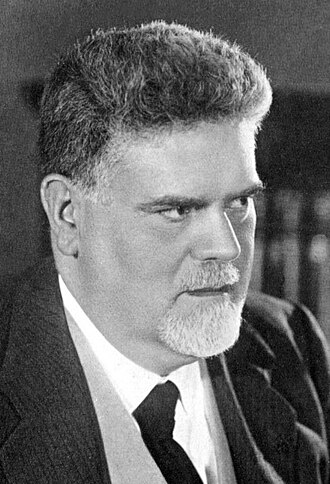

Philosopher; Minister of Public Instruction (1922 to 1924); principal author of the doctrinal part of "The Doctrine of Fascism" · Italy
On the regime page: Fascist Italy under Mussolini
5 quotes, oldest first. Filter with other speakers.
“...Fascism is a party, a political doctrine. But Fascism—in so far as it is a party, a political doctrine—is before all else a total conception of life. That is its force...its great merit, and the secret of the prestige it exercises over all those who are not victims of the malign and interminable maunderings of certain newspapers. One cannot be a Fascist in politics and not a Fascist...in school, not a Fascist in one’s family, not a Fascist in one’s workplace.”
Original (Italian)
Signori, il fascismo è un partito, una dottrina politica. Ma il fascismo, — e questa è la sua forza, lo sappiano quelli che ancora non se ne sono capacitati; questo è il suo gran merito, e il segreto del prestigio che esercita su tutti gli animi che non sono vittima del chiacchierio maligno e interminabile di certi giornali — in tanto è un partito, una dottrina politica, in quanto prima di tutto è una concezione totale della vita. Non si può essere fascisti in politica e non fascisti, come ricordavo testè alla Sezione del fascio, in scuola, non fascisti nella propria famiglia, non fascisti nella propria officina.
English: A. James Gregor, in Giovanni Gentile, Origins and Doctrine of Fascism, with Selections from Other Works (Transaction Publishers, 2003)
Gentile, then a senator and the leading philosopher associated with the regime, spoke to a Florence audience in the Salone dei Cinquecento on the question "what is Fascism". The lecture was reprinted with his other speeches in the Vallecchi volume of 1925.
Giovanni Gentile, "Che cosa è il fascismo", lecture given at Florence, 8 March 1925, in Che cosa è il fascismo: Discorsi e polemiche (Vallecchi, Florence), pp. 38-39 of the Italian volume; English in "Fascism is Religion", Selections from What is Fascism?, ed. and trans. A. James Gregor, Origins and Doctrine of Fascism (Transaction, 2003), p. 57 Source
Content note: Justification of political violence. The words are shown as they were said or written. Why
“Now, we say it clearly once again for all persons of good will. There is violence and there is violence. No one worthy of marching under Fascist guidons has ever confused the two. Those who are not worthy of remaining with us—are to be expelled when discovered. There is private violence, which is arbitrary, anarchic, and which undermines society. If Fascism is not a word devoid of meaning—something that even its adversaries do not pretend—private violence finds no more determined, more genuine, more formidable an enemy than Fascism. There is another violence, willed by God and by all men who believe in God and in order—in support of laws that God certainly wishes to obtain in the world.”
Original (Italian)
Ora, o Signori, diciamolo chiaro ancora una volta per tutti gli uomini di buona volontà. C’è violenza e violenza; e nessun fascista mai, degno di marciare sotto un gagliardetto, le ha mai scambiate. E chi le avesse scambiate, non è degno di stare con noi; e sarà espulso, quando sarà scoperto. C'è la violenza del privato, che è arbitrio, anarchia, disgregazione sociale; e se il fascismo non è una parola vuota di senso — ciò che neanche gli avversari pretenderanno — nessun nemico cotesta violenza ha trovato mai più risoluto, più schietto, più formidabile del fascismo. Ma c’è un’altra violenza, che è voluta da Dio e da tutti gli uomini che credono in Dio e nell'ordine e nella legge che Dio certamente vuole nel mondo [...]
English: A. James Gregor, in Giovanni Gentile, Origins and Doctrine of Fascism, with Selections from Other Works (Transaction Publishers, 2003)
Gentile addressed the violence of the Fascist action squads of 1920 to 1922 and the moral criticism of it made after the Fascist government took office. He distinguished "private" violence from violence "willed by God" in support of law, and described the squads' truncheons as having once been welcomed.
Giovanni Gentile, "Che cosa è il fascismo", lecture given at Florence, 8 March 1925, in Che cosa è il fascismo: Discorsi e polemiche (Vallecchi, Florence), section on Fascist violence (pp. 29-32 of the Italian volume); English in "Fascist Violence", Selections from What is Fascism?, ed. and trans. A. James Gregor, Origins and Doctrine of Fascism (Transaction, 2003), p. 50 Source
Content note: Endorses political violence. The words are shown as they were said or written. Why
“An energetic, violent faith, not disposed to respect anything that stood against the life and greatness of the Fatherland.”
Original (Italian)
Fede energica, violenta, non disposta a nulla rispettare che opponesse alla vita, alla grandezza della Patria.
English: Literal translation supplied with the lead, not a published edition
Written after the March 1925 Bologna conference on Fascist culture and published as the manifesto of the Fascist intellectuals. The sentence describes the faith behind the Fascist squads (squadrismo) of 1919-22.
Giovanni Gentile, Manifesto degli intellettuali fascisti, in Il Popolo d'Italia, 21 April 1925; Italian as printed on an Edatlas teaching sheet and on it.wikisource Source
“The first point, therefore, that must be established in a definition of Fascism, is the totalitarian character of its doctrine, which concerns itself not only with political order and direction of the nation, but with its will, thought and sentiment.”
Original (Italian)
Primo punto dunque da fissare nella definizione del Fascismo: carattere totalitario della sua dottrina, la quale non concerne soltanto l’ordinamento e l’indirizzo politico della nazione, ma tutta la sua volontà, il suo pensiero, il suo sentimento.
English: A. James Gregor, in Giovanni Gentile, Origins and Doctrine of Fascism, with Selections from Other Works (Transaction Publishers, 2003)
Gentile set out the doctrine of the regime in a short book published in 1929 by the Fascist publishing house in Rome. Section IX opens his account of what, in his view, defined Fascism as a doctrine.
Giovanni Gentile, Origini e dottrina del fascismo (Libreria del Littorio, Rome, 1929), section IX, "Carattere totalitario della dottrina fascista"; English in Origins and Doctrine of Fascism, trans. A. James Gregor (Transaction, 2003), p. 21 Source
“For Fascism, on the other hand, the State and the individual are one, or better, perhaps, “State” and “individual” are terms that are inseparable in a necessary synthesis.”
English: A. James Gregor, in Giovanni Gentile, Origins and Doctrine of Fascism, with Selections from Other Works (Transaction Publishers, 2003). Original-language text not found.
In section XII Gentile contrasts the Fascist conception of the State with liberal individualism and with Nationalist doctrine, which in his account made the individual a result of the State.
Giovanni Gentile, Origini e dottrina del fascismo (Libreria del Littorio, Rome, 1929), section XII, "La dottrina fascista dello Stato"; English in Origins and Doctrine of Fascism, trans. A. James Gregor (Transaction, 2003), p. 25 Source