Bernhard Dernburg
Illustration, not an archive object
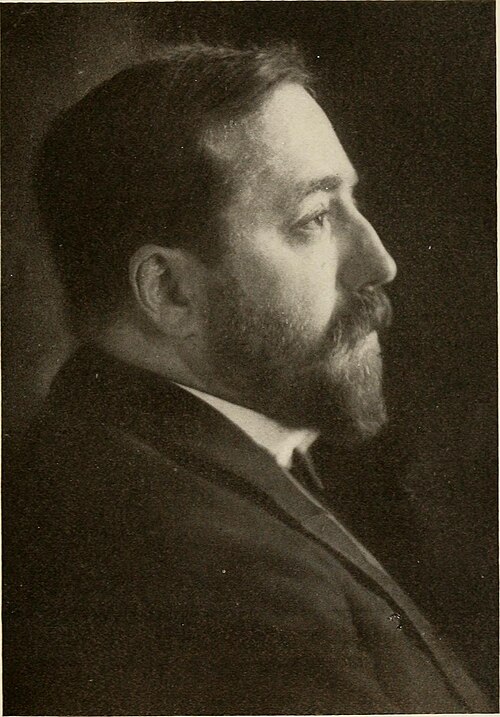

Head of the Imperial Colonial Office, 1907-1910; leader of German publicity efforts in the United States, 1914-1915 · Germany
On the regime page: German Empire under Wilhelm II
6 quotes, oldest first. Filter with other speakers.
Content note: Racial terminology and colonial policy toward Africans. The words are shown as they were said or written. Why
“I hope that my remarks will convince the commission that the government can prosper only if it adopts a cautious, slow, what some call “Negro-friendly” and I call Negro-preserving policy, and that it does not permit itself to be diverted from this path by any interests or opinions.”
Original (German)
Ich möchte mit meinen Ausführungen in der Kommission die Überzeugung erwecken, daß die Regierung nur prosperieren kann, wenn sie eine vorsichtige, langsame, wie manche sagen „negerfreundliche“ und, wie ich sage, negererhaltende Politik einschlägt, daß sie sich von diesem Wege durch irgend welche Interessen oder Ansichten nach keiner Richtung abdrängen lassen darf.
English: Pamela Selwyn, in German History in Intersections (GHIS), document 233
Account given to the Reichstag budget committee by the head of the Imperial Colonial Office after a 30-day journey through German East Africa.
Bernhard Dernburg, statement to the Reichstag budget committee, 18 February 1908, Deutsches Kolonialblatt 19, no. 5 (1 March 1908), pp. 217-22, reproduced in Gerhard A. Ritter, Das Deutsche Kaiserreich 1871-1914: Ein historisches Lesebuch, 5th ed. (Göttingen: Vandenhoeck & Ruprecht, 1992), pp. 348-51 Source
Content note: Racial claim; defends racially separate justice and corporal punishment. The words are shown as they were said or written. Why
“It is in the nature of the Negroes that the existing racial justice cannot be changed in the near future and that certain means of punishment that evoke horror in our homeland cannot be abolished.”
Original (German)
In der Natur der Neger liegt es, daß die bestehende Rassenjustiz auf längere Zeit nicht wird geändert werden und daß gewisse Züchtigungsmittel, welche die Heimat perhorresziert, auch nicht abgeschafft werden können.
English: Pamela Selwyn, in German History in Intersections (GHIS), document 233
Account given to the Reichstag budget committee by the head of the Imperial Colonial Office after a 30-day journey through German East Africa.
Bernhard Dernburg, statement to the Reichstag budget committee, 18 February 1908, Deutsches Kolonialblatt 19, no. 5 (1 March 1908), pp. 217-22, reproduced in Gerhard A. Ritter, Das Deutsche Kaiserreich 1871-1914: Ein historisches Lesebuch, 5th ed. (Göttingen: Vandenhoeck & Ruprecht, 1992), pp. 348-51 Source
Content note: Describes a colonists' right to beat African workers. The words are shown as they were said or written. Why
“On the coast, the many White men walking around with whips make an unpleasant impression. I found one lying on the table of the main cash office in Dar es Salaam (movement). It is still common even today, and those gentlemen who have been there will confirm this. Any White man has a certain right to beat his servants, workers etc. (shouting). They do not exercise it everywhere, as I can gladly confirm, but send their matters to court.”
Original (German)
An der Küste macht es einen unangenehmen Eindruck, daß so viele Weiße mit der Peitsche spazieren gehen. Auf dem Tische der Hauptkasse in Daressalam habe ich eine vorgefunden. (Bewegung.) Es ist heute noch stark üblich, und die Herren, die dort gewesen sind, werden es mir bestätigen. Jeder Weiße hat ein gewisses Züchtigungsrecht gegenüber seinen Dienstboten, Arbeitern usw. (Zuruf.) Sie üben es nicht überall aus, wie ich gern bestätigen will, sondern schicken ihre Sachen nach dem Gericht.
English: Pamela Selwyn, in German History in Intersections (GHIS), document 233
Account given to the Reichstag budget committee by the head of the Imperial Colonial Office after a 30-day journey through German East Africa.
Bernhard Dernburg, statement to the Reichstag budget committee, 18 February 1908, Deutsches Kolonialblatt 19, no. 5 (1 March 1908), pp. 217-22, reproduced in Gerhard A. Ritter, Das Deutsche Kaiserreich 1871-1914: Ein historisches Lesebuch, 5th ed. (Göttingen: Vandenhoeck & Ruprecht, 1992), pp. 348-51 Source
“The German Government has been taxed with considering treaties as "scraps of paper." That is certainly not the German record, nor the German position toward treaties. But this treaty was a scrap of paper; the English on their side did not put any faith in it, nor were they prepared to maintain it under all circumstances.”
Passage on the 1839 Belgian neutrality treaty and the phrase 'scrap of paper' applied to Germany's treatment of treaties, written for an American readership.
Bernhard Dernburg, Search-Lights on the War (New York: The Fatherland Corporation, 1915), "Germany and the Powers" (from The North American Review, December 1914), pp. 43-44 Source
“Geographically, Belgium does certainly belong to the German Empire. She commands the mouth of the biggest German stream. Antwerp is most essentially a German port and the main outlet of the trade of western Germany. That Antwerp should not belong to Germany is as much an anomaly as if New Orleans and the Mississippi delta had been excluded from the Louisiana Purchase, or as if New York had remained English after the War of Independence.”
Article for an American readership, written during the war, setting out what Germany might do 'if she is entirely victorious', by a former Colonial Secretary who was then in the United States on what the magazine's editor called 'an important mission'.
Bernhard Dernburg, Search-Lights on the War (New York: The Fatherland Corporation, 1915), "When Germany Wins" (reprinted from The Independent), p. 60 Source
“But as a general rule, I would not consider it wise for my country to attempt any territorial aggrandizement in Europe.”
Same article: the writer's statement on territorial expansion in Europe, before his discussion of Belgium.
Bernhard Dernburg, Search-Lights on the War (New York: The Fatherland Corporation, 1915), "When Germany Wins" (reprinted from The Independent), p. 60 Source