In one line: From 15 June 1888 to 9 November 1918 Wilhelm II reigned over a federal empire with an elected Reichstag but a chancellor answerable to the emperor, and in the war of 1914 to 1918 the army's deputy commands ran censorship under the state of siege while the Supreme Army Command, the Foreign Office and the Reich sold war loans and answered Allied charges over the killing of civilians in Belgium and the sinking of the Lusitania.
The leader and the people under the leader
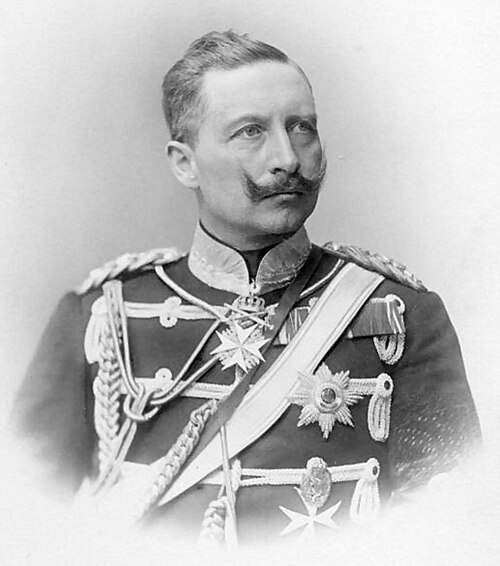
Photo: E. Bieber, CC BY-SA 3.0 de Wilhelm II
German Emperor and King of Prussia · 1888 to 1918
Head of state who under the 1871 constitution appointed and dismissed the chancellor and commanded the army and navy; he declared the state of war on 31 July 1914 and, after his abdication was announced on 9 November 1918, went into exile in the Netherlands.
In their words
“No lust of conquest drives us on; we are inspired by the unalterable will to protect the place in which God has set us for ourselves and all coming generations.”
“a great movement must be engineered among the people, among the "general public," indifferent as yet, to arouse its interest and enthusiasm for the navy, in order that pressure from the people itself might be brought to bear upon the Reichstag members.”
“I cannot bring myself to dismiss this propaganda by branding it with catchwords such as "a piece of rascality," etc., since it constitutes an achievement which, in spite of its repugnant nature, cannot be ignored; it did us more harm than the arms in the hands of our opponents.”
In the archive: Germany answers back: the Manifesto of the 93 and the Lusitania medal (1914-1916), German South West Africa, 1904-1908: the war on the Herero and Nama and the contest over its record

Chancellors and ministers
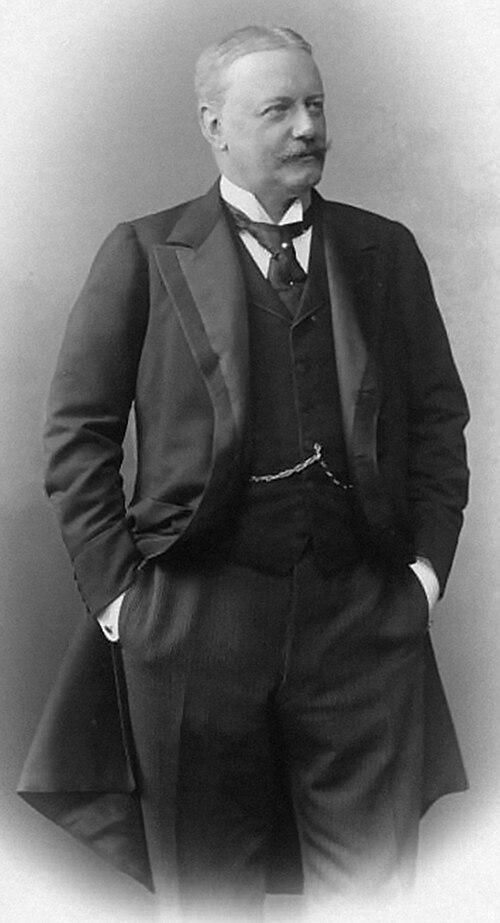
Photo: Unknown (Bundesarchiv), CC BY-SA 3.0 de Bernhard von Bülow
Reich Chancellor · 1900 to 1909
Led the government through the Herero and Nama war of 1904 to 1908, the dissolution of the Reichstag in December 1906 and the Daily Telegraph affair of October 1908, and resigned on 14 July 1909 after his finance bill failed in the Reichstag.
In the archive: German South West Africa, 1904-1908: the war on the Herero and Nama and the contest over its record
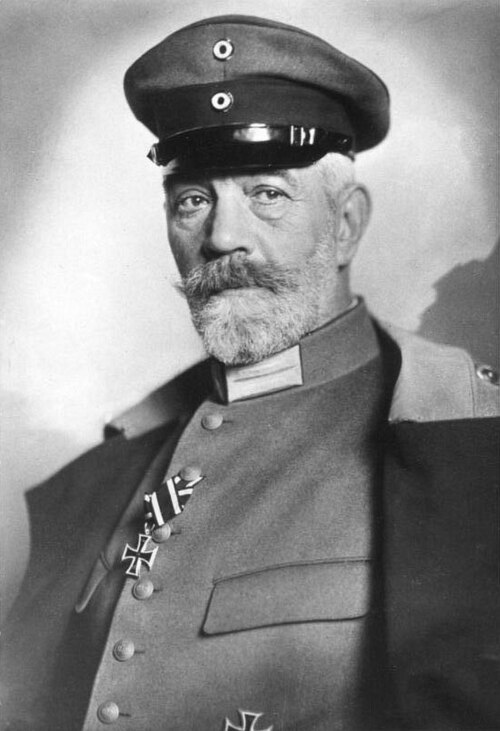
Photo: Nicola Perscheid, Public domain (PD-old-auto-expired) Theobald von Bethmann Hollweg
Reich Chancellor and Prussian Minister-President · 1909 to 1917
Chancellor when the war began, he told the Reichstag on 4 August 1914 that the entry into Belgium broke international law, and he resigned on 13 July 1917 after Hindenburg and Ludendorff asked the emperor to replace him.
In the archive: Wellington House and the Bryce Report: atrocity evidence, confirmed and unconfirmed (1914-1915)
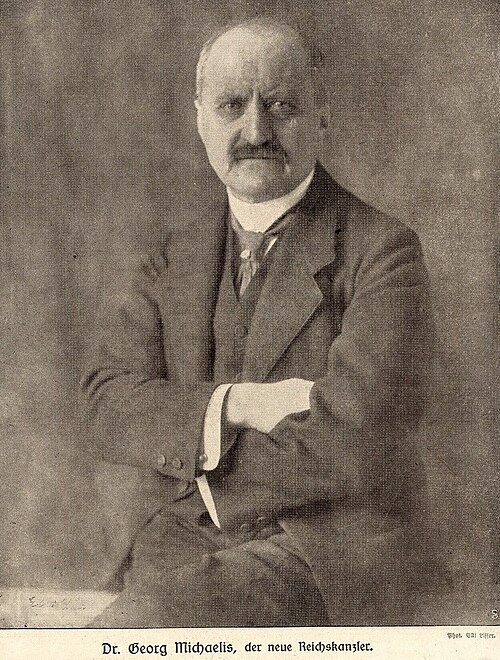
Photo: Elly Lisser (1883 to 1943), Public domain (PD-old-auto-1923) Georg Michaelis
Reich Chancellor and Prussian Minister-President · 1917
A Prussian civil servant and state food commissioner who became chancellor on 14 July 1917 and resigned on 1 November 1917; the Reichstag's Peace Resolution of 19 July 1917 was passed during his term.
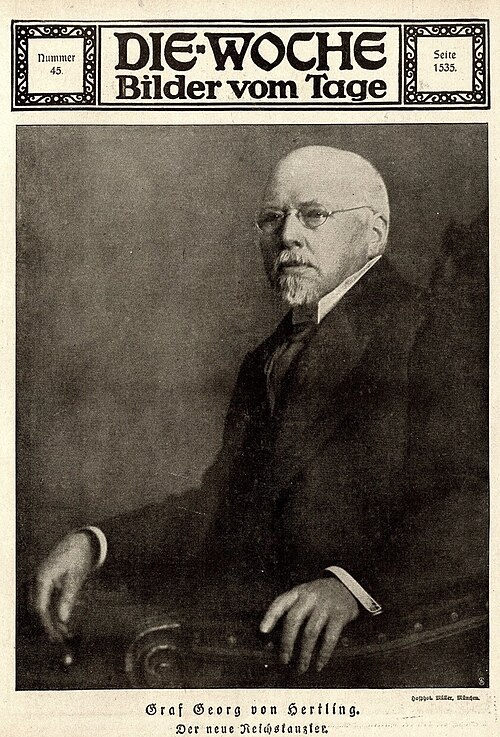
Photo: Photograph credited on the page to a Munich court photographer (Hofphotograph Müller), Public domain (PD-old-auto-1923) Georg von Hertling
Reich Chancellor and Prussian Minister-President · 1917 to 1918
Bavarian Centre Party politician and former Bavarian minister-president who was chancellor from 1 November 1917 to 30 September 1918, a term that included the Treaty of Brest-Litovsk of 3 March 1918 and the spring offensive.
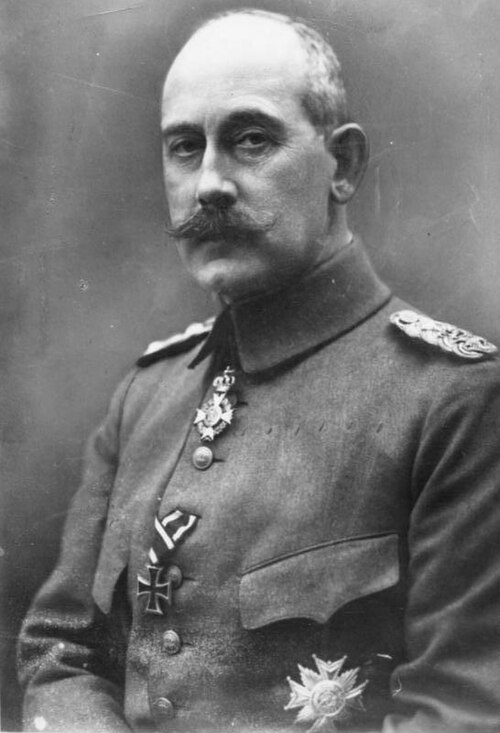
Photo: Unknown (Bundesarchiv), CC BY-SA 3.0 de Max von Baden
Reich Chancellor · 1918
Became chancellor on 3 October 1918 at the head of a cabinet that included Social Democrats, sent the request for an armistice to President Wilson, announced Wilhelm II's abdication on 9 November 1918 and handed the chancellorship to Friedrich Ebert the same day.


Armed forces and the Supreme Army Command
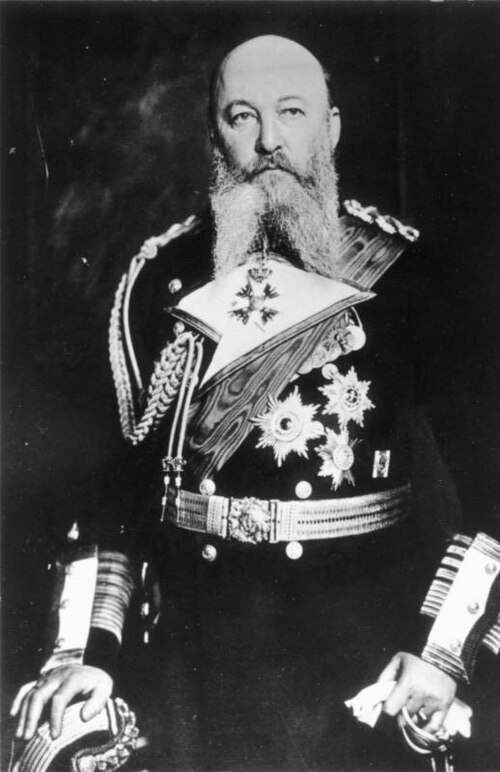
Photo: Nicola Perscheid, CC BY-SA 3.0 de Alfred von Tirpitz
State Secretary of the Imperial Naval Office · 1897 to 1916
Directed the fleet-building programme of the Navy Laws of 1898 and 1900, ran a publicity bureau in his office to win press and Reichstag support, resigned on 15 March 1916 in a dispute over submarine warfare, and helped found the Fatherland Party in September 1917.
In their words
“We did not want to put railings round ourselves, but wanted to have the fleet as a thing belonging to the German people. We instituted tours to the water-side and exhibited the ships and the wharves; we applied to the schools, and we called upon novelists to write for us: stacks of novels and pamphlets were the result.”
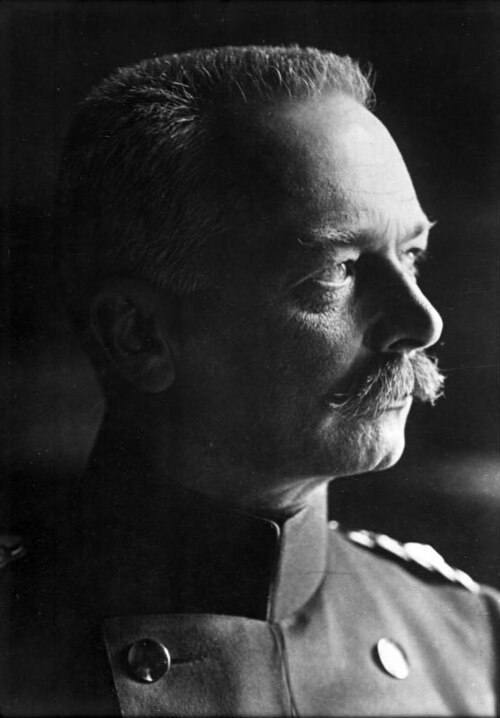
Photo: Unknown (Bundesarchiv), CC BY-SA 3.0 de Erich von Falkenhayn
Chief of the General Staff of the Field Army · 1914 to 1916
Replaced Moltke on 14 September 1914 after the Marne, directed the army under Wilhelm II, launched the attack on Verdun in February 1916 and was replaced by Hindenburg on 29 August 1916; Prussian war minister from 1913 to January 1915.
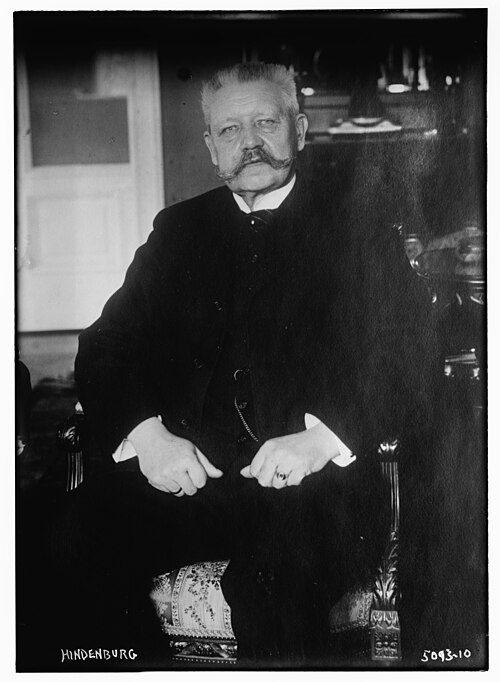
Photo: Bain News Service, Public domain (PD-Bain, PD-old-70-1923) Paul von Hindenburg
Chief of the General Staff of the Field Army (Third Supreme Army Command) · 1916 to 1919
Named with Ludendorff to lead the Supreme Army Command on 29 August 1916, when the pair also took charge of the war economy and pressed for unrestricted submarine warfare; his name and signature appeared on war-loan posters, and he remained in post until 3 July 1919.
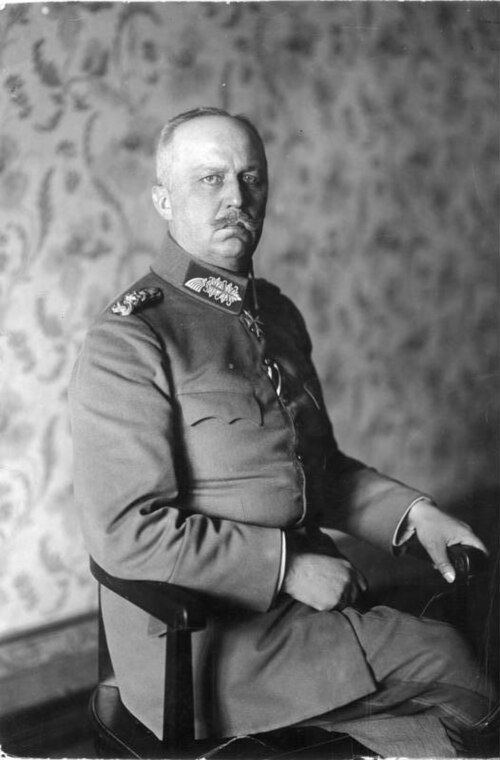
Photo: Unknown (Bundesarchiv), CC BY-SA 3.0 de Erich Ludendorff
First Quartermaster General · 1916 to 1918
Shared command of the army with Hindenburg from 29 August 1916, wrote on 4 July 1917 asking the War Ministry to use film for propaganda, led the spring offensive of 1918, told the government on 29 September 1918 that an armistice was needed, and resigned on 26 October 1918.
In their words
“In accordance with the proposal submitted to me by Lieut.-Colonel Nicolai, General Headquarters arranged for patriotic instruction in the Field Army. But this was only a poor substitute for the work of enlightening public opinion at home, work which was done so consistently and effectively in the Entente countries.”
“At home our attempt to improve the moral of the people by means of propaganda never got beyond the initial stages. After two years of pressure from me, the Chancellor had at last, in August, 1918, decided to create a Central Bureau for Press and propaganda purposes, both at home and abroad.”


Foreign and colonial office
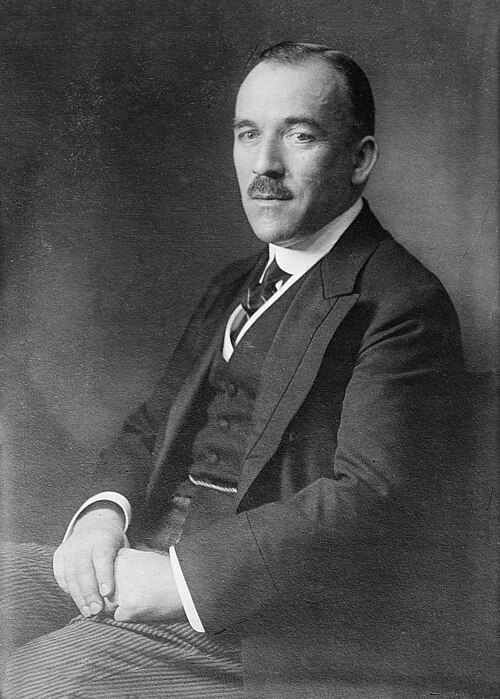
Photo: Bain News Service, Public domain (PD-US) Gottlieb von Jagow
State Secretary of the Foreign Office · 1913 to 1916
Headed the Foreign Office through the July crisis of 1914, when it sent Belgium the ultimatum of 2 August, and through the creation of its wartime Central Office for Foreign Services in October 1914; succeeded by Zimmermann on 22 November 1916.
In the archive: Germany answers back: the Manifesto of the 93 and the Lusitania medal (1914-1916)
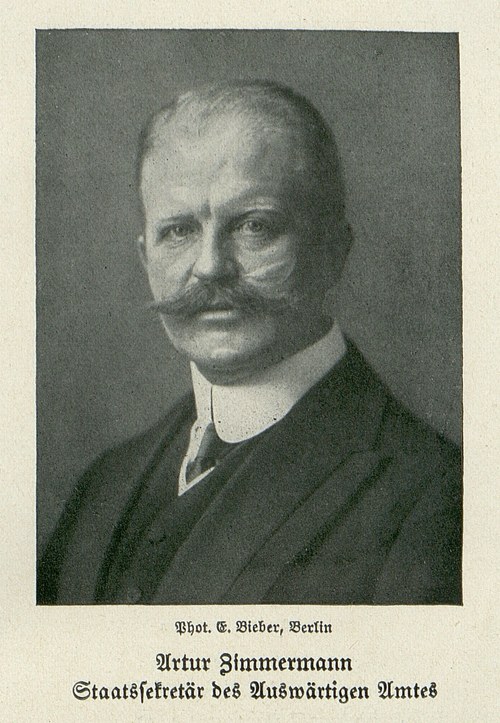
Photo: Photograph by E. Bieber, Berlin, as printed in the book, Public domain (PD-US-expired, PD-EU-no author disclosure) Arthur Zimmermann
State Secretary of the Foreign Office · 1916 to 1917
Under-secretary from 1911 and head of the office from 22 November 1916 to 6 August 1917; his telegram of 16 January 1917 proposing an alliance to Mexico was intercepted, published in the United States on 1 March 1917, and confirmed by him on 3 March.
In their words
“We intend to begin on the 1st of February unrestricted submarine warfare. We shall endeavor in spite of this to keep the United States of America neutral.”
“In the event of this not succeeding, we make Mexico a proposal of alliance on the following basis: make war together, make peace together, generous financial support and an understanding on our part that Mexico is to reconquer the lost territory in Texas, New Mexico, and Arizona.”
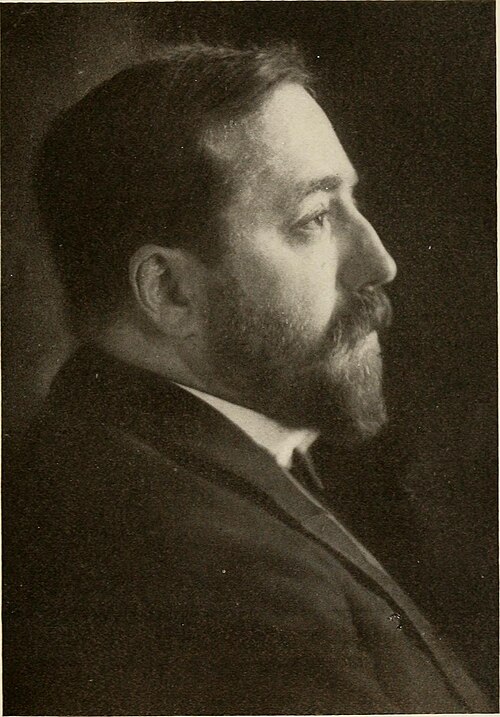
Photo: Rudolf Dührkoop (died 1918), No known restrictions (Internet Archive Book Images; photographer died 1918) Bernhard Dernburg
State Secretary of the Reich Colonial Office · 1907 to 1910
First head of the Colonial Office, created in 1907 after the colonial scandals and wars; in 1914 and 1915 he spoke for the German government in the United States, defending the sinking of the Lusitania (7 May 1915) in public statements before leaving on 12 June.
In the archive: Germany answers back: the Manifesto of the 93 and the Lusitania medal (1914-1916)


War press and propaganda offices
No public-domain or openly licensed portrait found. Nearest: Wikimedia Commons category Walter Nicolai (source), not opened; searches by name returned no file. Walter Nicolai
Head of Section IIIb of the General Staff (military intelligence, counter-espionage and press) · 1913 to 1919
Led the army's intelligence service, within which the War Press Office and the Supreme Censorship Office worked, and took part in the war-loan publicity and the founding of the Fatherland Party; not the physician Georg Friedrich Nicolai, who wrote the 1914 counter-appeal.
In the archive: Wartime censorship in the First World War: Britain, Germany, France and the United States
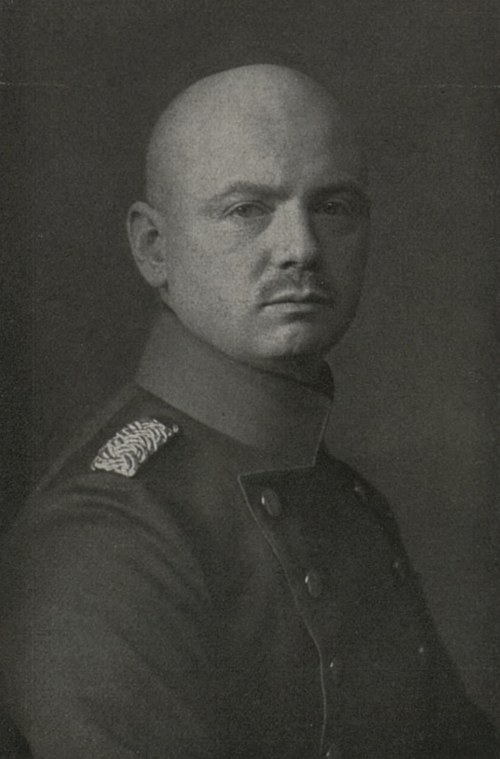
Photo: Emilie Bieber, Berlin (studio credit), Public domain (PD-old) Erhard Deutelmoser
Head of the War Press Office (Kriegspresseamt); later head of the Foreign Office news department · 1915 to 1916
An army major who led the Kriegspresseamt from its creation in October 1915 until 28 October 1916, then headed the news department of the Foreign Office and, from November 1917, served as press chief in the Reich Chancellery.
In the archive: Wartime censorship in the First World War: Britain, Germany, France and the United States
No public-domain or openly licensed portrait found. Nearest: Wikimedia Commons file Hans Bernd von Haeften.jpg shows his son, a different person; no file of Hans von Haeften was found. Hans von Haeften
Head of the Military Office of the Foreign Office and of the Picture and Film Office (Bild- und Filmamt, BUFA) · 1917 to 1918
Army officer and liaison between the Supreme Army Command and the Foreign Office who pressed for the creation of BUFA on 30 January 1917 and led it, which produced photographs and films for propaganda at home and abroad.
.png)
Background and rise to power
The Empire was proclaimed at Versailles on 18 January 1871 and its constitution took effect on 16 April 1871. Wilhelm II, grandson of the first emperor, took the throne at 29 on 15 June 1888, the "year of the three emperors", when his father Frederick III died after 99 days as emperor. On 20 March 1890 he accepted the resignation of Otto von Bismarck, who had been chancellor since 1871.
Scholars differ on how far Wilhelm II governed. John Röhl argues for a "personal rule" in which the emperor's wishes shaped policy; Wolfgang Mommsen describes a system of competing offices in which he could not impose a course; Christopher Clark stresses his dependence on advisers. Colonial policy under Bülow included the war in South West Africa, in which the General Staff's own history (Die Kämpfe der deutschen Truppen in Südwestafrika, vol. 1, 1906) says the waterless Omaheke "sollte vollenden, was die deutschen Waffen begonnen hatten: die Vernichtung des Hererovolkes" (the Herero and Nama war). Wilhelm II ordered General von Trotha's proclamation of 2 October 1904 lifted in December of that year, after lobbying by Bülow. Whether responsibility for the war's course reached above Trotha remains a question in the literature.
How power was organized
The Empire was a union of 25 states under Prussian leadership, with Alsace-Lorraine held as imperial territory. Under the 1871 constitution the King of Prussia held the presidency of the union with the title German Emperor. He appointed and dismissed the chancellor, who chaired the Bundesrat (the council of state governments) and was answerable to him, not to the Reichstag. The Reichstag was elected by men over 25 and had to pass the budget and laws, but the government was not formed from its majority. In war the emperor was supreme commander.
The war changed this in practice. On 31 July 1914 Wilhelm II declared a state of war, bringing into force Prussia's Law on the State of Siege of 4 June 1851. Executive power in each army-corps district passed to its military commander, and the Social Democrats voted for the first war credits on 4 August under the Burgfrieden, the political truce (wartime censorship). From 29 August 1916 Hindenburg and Ludendorff ran the army and increasingly the economy and domestic politics, and they pressed for Bethmann Hollweg's removal in July 1917. Constitutional changes of 28 October 1918 made the chancellor answerable to the Reichstag.
The invasion of Belgium began on 4 August 1914 after the ultimatum of 2 August. Between August and October German troops killed about 6,500 civilians in Belgium and France in mass executions and burnings, among them 674 at Dinant and 248 at Leuven (Horne and Kramer's count), and burned the university library at Leuven from 25 August. The government and army said they were reprisals against attacks by civilians. Horne and Kramer, working through German military records, found no evidence of organised civilian resistance and read the franc-tireur claim as a belief spread among the troops (Bryce Report).
The propaganda apparatus
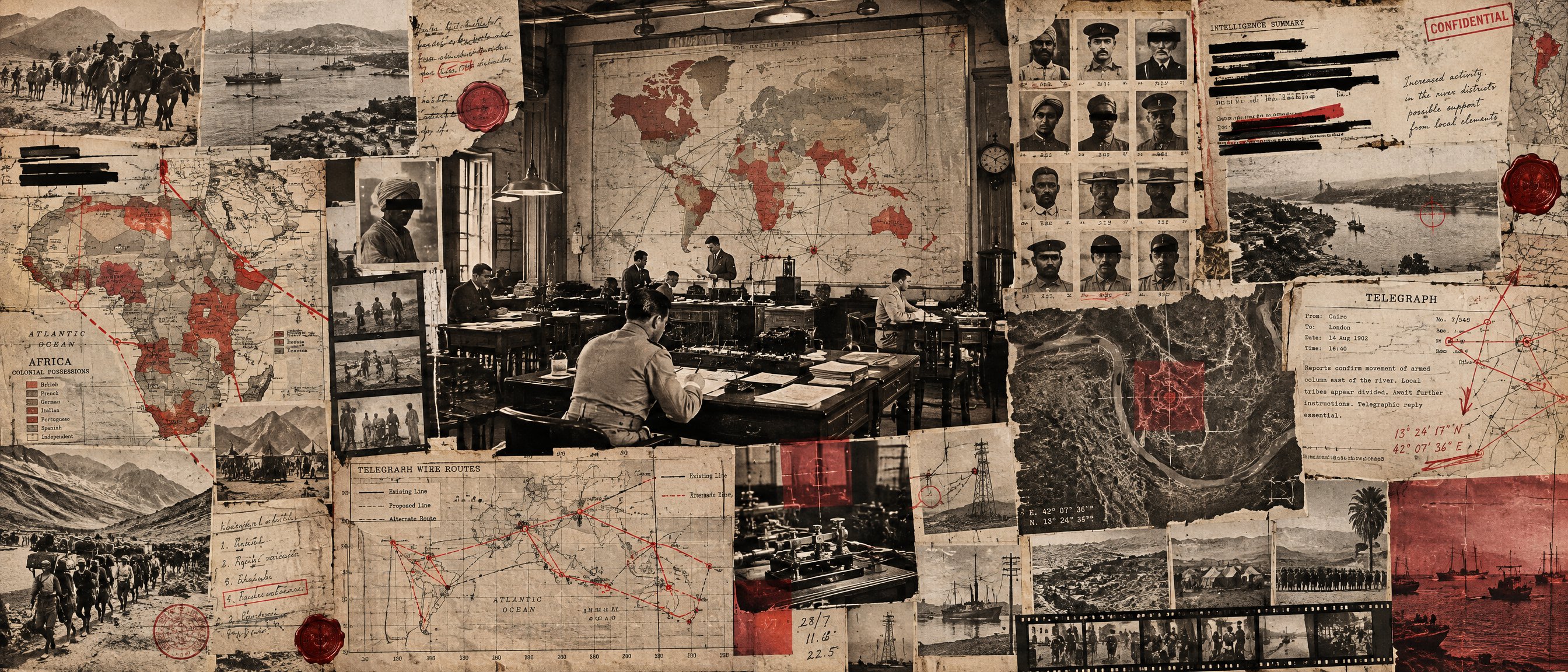
There was no single propaganda ministry. Press and censorship rested on the deputy commands under the state of siege. In February 1915 the military created the Supreme Censorship Office (Oberzensurstelle) to make practice uniform, and in October 1915 the War Press Office (Kriegspresseamt) was set up under the Supreme Army Command with the Oberzensurstelle attached; it formed part of Nicolai's Section IIIb. Erhard Deutelmoser led it until 28 October 1916. Censors were formally limited to military matters, but since almost every political question touched the war, they could act against almost any political statement. The Berlin command banned the Social Democratic Vorwärts in September 1914 and October 1916 (censorship in Germany, Britain, France and the United States; Ponsonby on war-time falsehood).
Abroad, the Foreign Office set up the Central Office for Foreign Services (Zentralstelle für Auslandsdienst) in October 1914 to supply pamphlets and pictures to neutral countries (with a Nachrichtenstelle für den Orient for Muslim readers). Bernhard Dernburg spoke for the government in the United States. On 4 October 1914 German papers printed "An die Kulturwelt!", signed by 93 scholars and artists, whose paragraphs begin "Es ist nicht wahr" ("It is not true"), among them that German troops treated Louvain brutally (manifesto of the 93). The Foreign Office's White Book of May 1915 answered the Bryce Report, and later posters such as Sind wir die Barbaren? (1916) answered Allied charges with statistics. A private medal satirising the Lusitania was copied in Britain (the Goetz medal).
At home the largest campaign was the war loan. The Reich issued nine loans from September 1914 to September 1918 and raised about 98 billion marks (WWI posters). Designs included Helft uns siegen!, Die beste Sparkasse and a poster carrying Hindenburg's signed line, "Wer Kriegsanleihe zeichnet, macht mir die schönste Geburtstagsgabe!" (testimonial). Wilhelm II's address of 31 July 1914 ("Neider überall zwingen uns zu gerechter Verteidigung") was printed as a Red Cross benefit sheet (Unser Kaiser an sein Volk); his proclamation "An das deutsche Volk" followed on 6 August 1914. The Supreme Army Command added film: the Military Film and Photo Office of the Foreign Office (November 1916) became the Picture and Film Office (BUFA) on 30 January 1917 under Hans von Haeften. In a letter of 4 July 1917 Ludendorff asked the War Ministry to use film for propaganda, and Ufa was founded on 18 December 1917.
The English text of the Zimmermann telegram, released by the United States on 1 March 1917, proposed that Mexico "make war together, make peace together" with Germany and reconquer "the lost territory in Texas, New Mexico, and Arizona". British naval intelligence had intercepted it; the United States declared war on 6 April 1917. The archive's definitions fit most clearly: testimonial (the manifesto, the Hindenburg poster), whataboutism (the manifesto's counter-charges, Sind wir die Barbaren?), card stacking (the White Book, the U-boat loan poster), transfer (the emperor's address on a charity sheet), scapegoating (the 1917 loan poster "Das ist der Weg zum Frieden — die Feinde wollen es so!") and euphemism (Kriegsgefangene for women and children in the South West Africa camps).
Timeline
- 15 June 1888: Wilhelm II becomes emperor on the death of Frederick III.
- 2 October 1904: Trotha's proclamation against the Herero.
- 31 July 1914: Wilhelm II declares the state of war and the state of siege takes effect.
- 4 August 1914: Germany invades Belgium; Britain declares war.
- 4 October 1914: the manifesto "An die Kulturwelt!".
- 7 May 1915: a German submarine sinks the Lusitania.
- October 1915: the Kriegspresseamt is created.
- 29 August 1916: Hindenburg and Ludendorff take over the Supreme Army Command.
- 16 January 1917: the Zimmermann telegram is sent.
- 19 July 1917: the Reichstag passes the Peace Resolution.
- 9 November 1918: Max von Baden announces the abdication and hands the chancellorship to Ebert; a republic is proclaimed.
- 11 November 1918: the armistice.
Same-standard note
This page uses the same structure and definitions as every other regime page: a technique is listed only where the archive's working definition and a documented example fit, the same technique ids are applied to every regime, and offices and dates are stated without judging the people who held them. The scale and context are set out as history, not as a ranking: a monarchy with an elected legislature and army-run censorship under a state-of-siege law, at war from 1914 to 1918, whose troops killed civilians in Belgium and whose colonial army fought a war of annihilation against the Herero and Nama; the Allied governments' own censorship and atrocity publicity are covered in the same case studies and are not weighed against it here. Other regime pages record other systems, each with its own scale, intent and context.
Sources
- Constitution of the German Empire, 16 April 1871 (Reichsgesetzblatt 1871, p. 63); Prussian Law on the State of Siege, 4 June 1851; Wilhelm II, address of 31 July 1914 and proclamation "An das deutsche Volk", 6 August 1914; "An die Kulturwelt!", 4 October 1914; Zimmermann telegram, 16 January 1917, English text released by the US Department of State, 1 March 1917.
- Christopher Clark, Kaiser Wilhelm II (2000); John C. G. Röhl, Wilhelm II, 3 vols (1993 to 2014); Wolfgang J. Mommsen, Imperial Germany 1867 to 1918 (1995).
- David Welch, Germany, Propaganda and Total War 1914 to 1918 (2000); records of the Kriegspresseamt and the Oberzensurstelle as cited by Welch.
- John Horne and Alan Kramer, German Atrocities, 1914 (2001); Isabel V. Hull, Absolute Destruction (2005); Barbara Tuchman, The Zimmermann Telegram (1958).
In the archive
Collection objects (23)
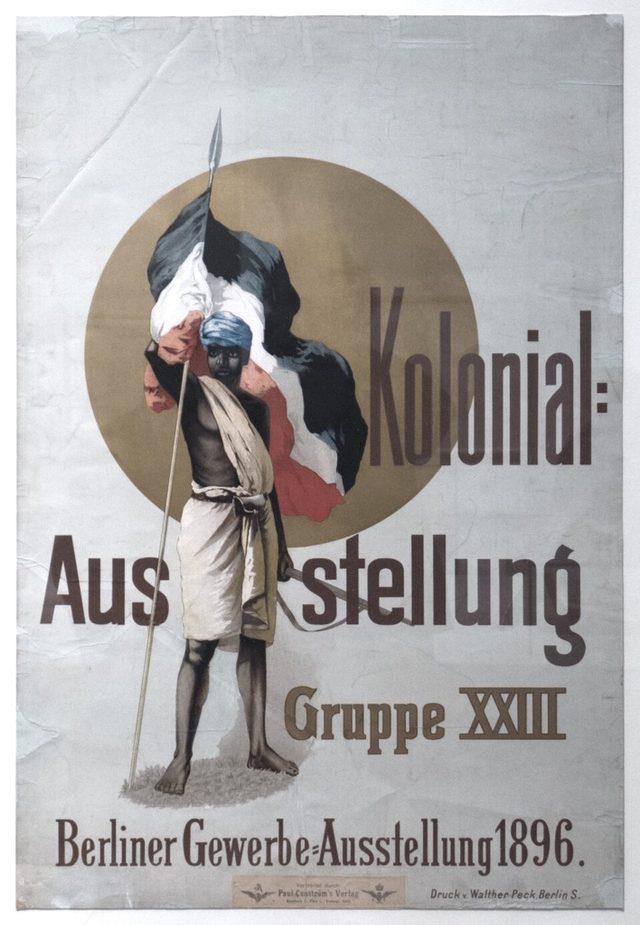 Kolonial-Ausstellung, Gruppe XXIII, Berliner Gewerbe-Ausstellung 1896
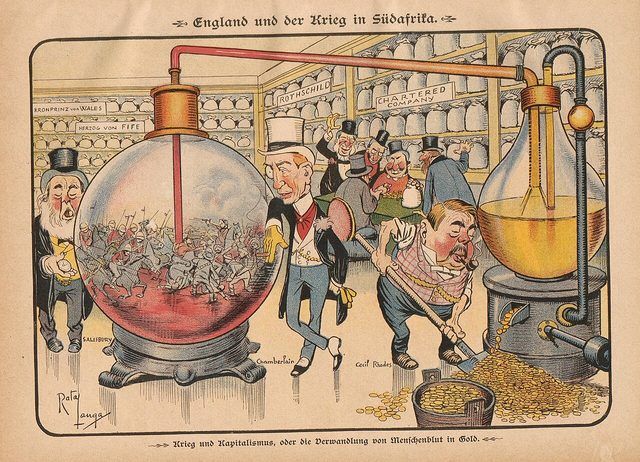 "England and the War in South Africa" (Der wahre Jacob, 1899)
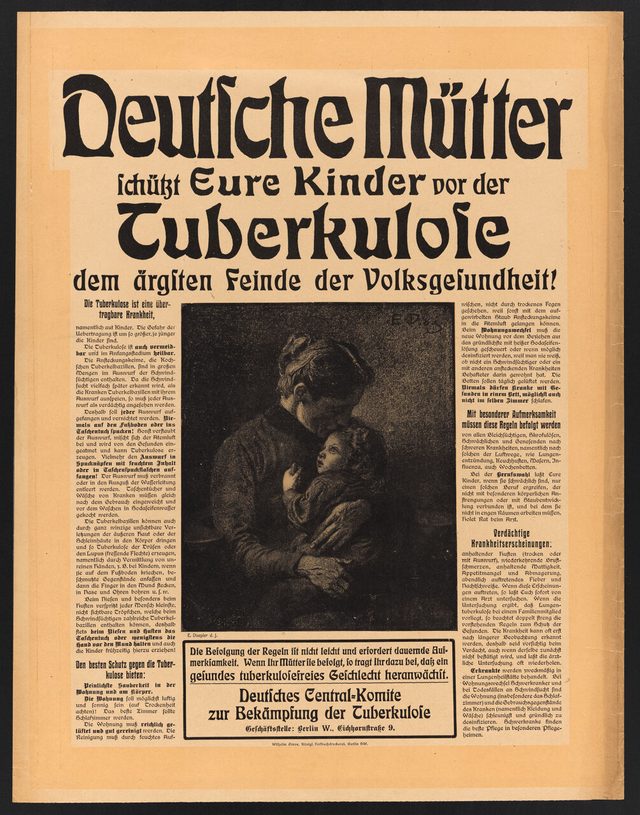 Deutsche Mütter, schützt Eure Kinder vor der Tuberkulose (German Mothers, Protect Your Children from Tuberculosis)
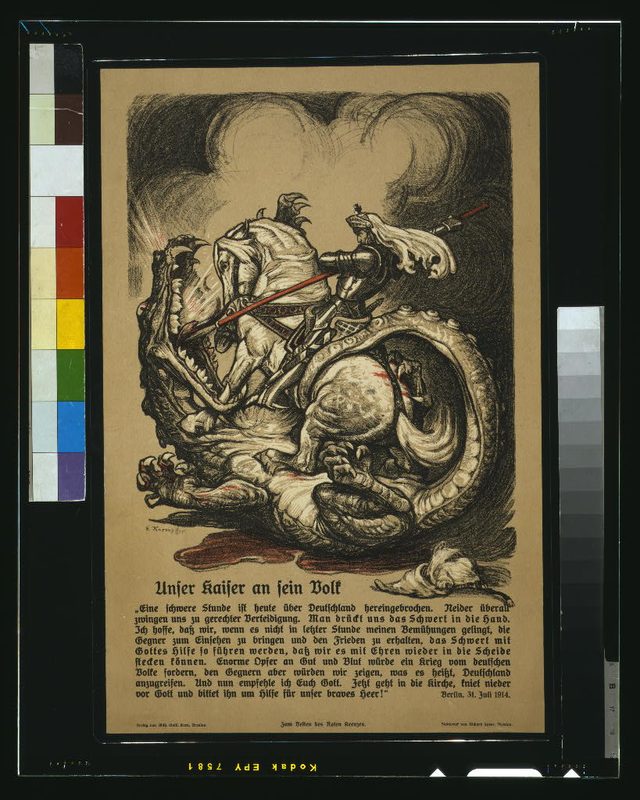 Unser Kaiser an sein Volk (Our Emperor to His People)
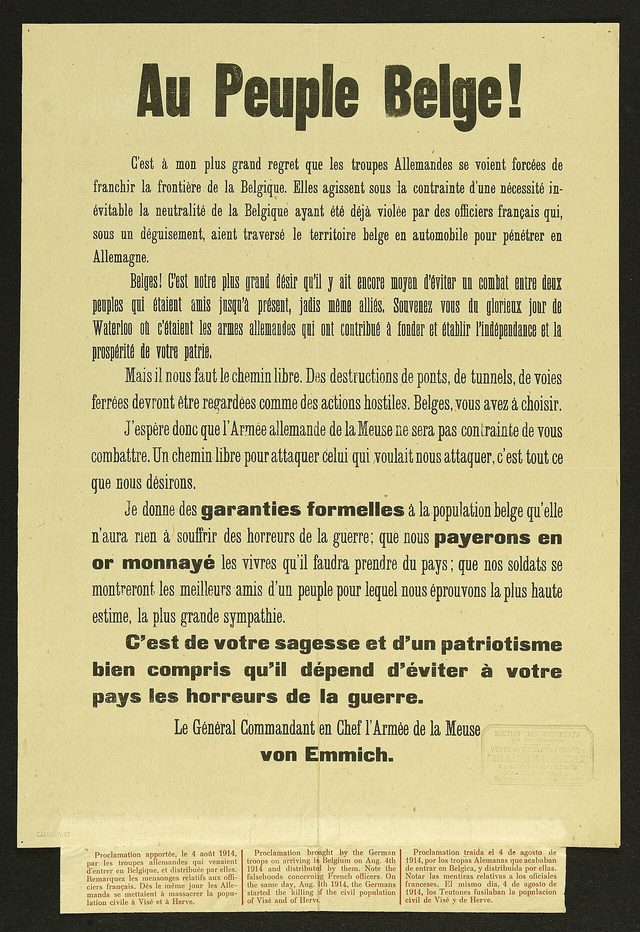 Au Peuple Belge! (von Emmich proclamation, with Allied caption strip)
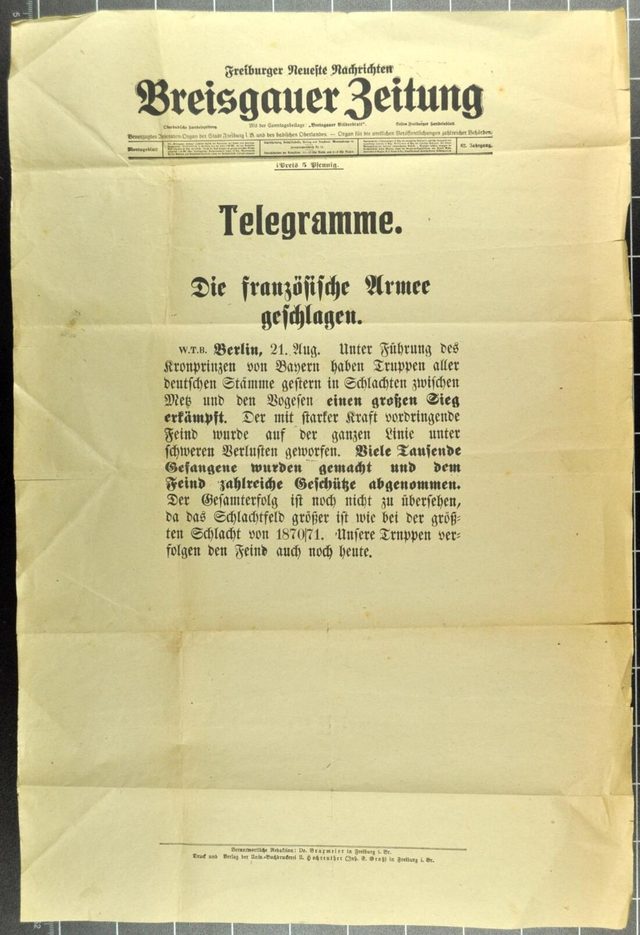 Breisgauer Zeitung, Telegramme: "Die französische Armee geschlagen" (The French army beaten), August 1914
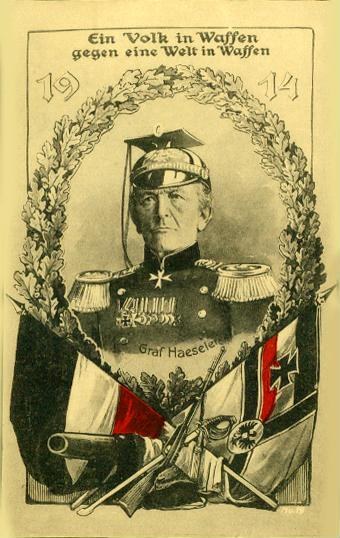 Ein Volk in Waffen gegen eine Welt in Waffen (A People in Arms against a World in Arms), Red Cross welfare postcard
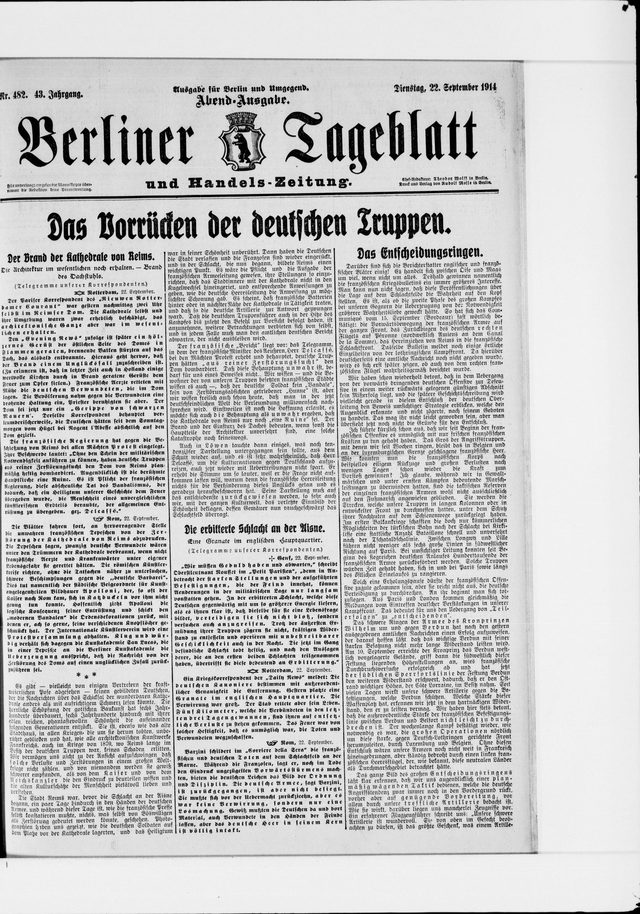 Berliner Tageblatt, evening edition, 22 September 1914: "Der Brand der Kathedrale von Reims"
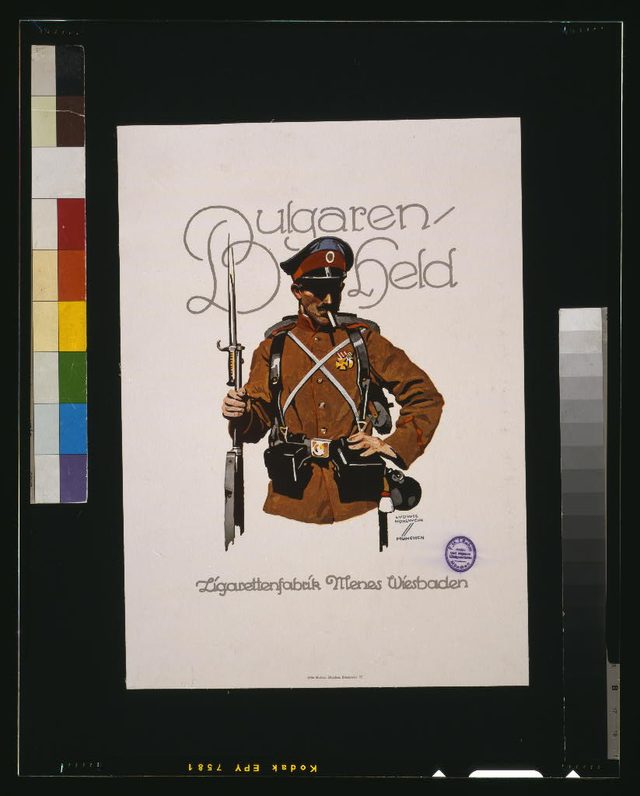 Bulgaren-Held (Bulgarian Hero)
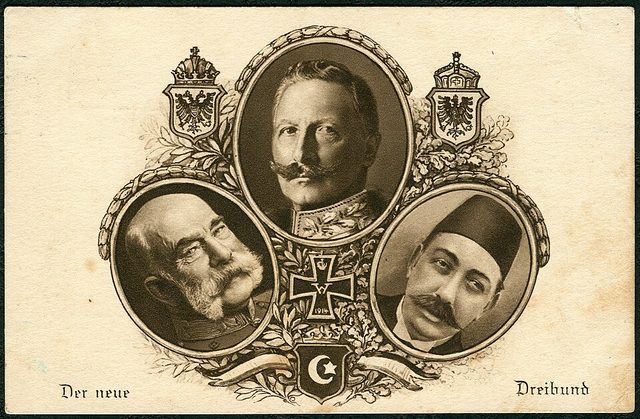 Der neue Dreibund (The New Triple Alliance): postcard
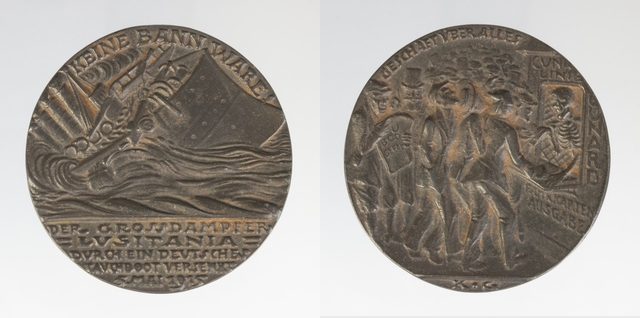 Karl Goetz "Lusitania" medal (Germany, 1915)Content note
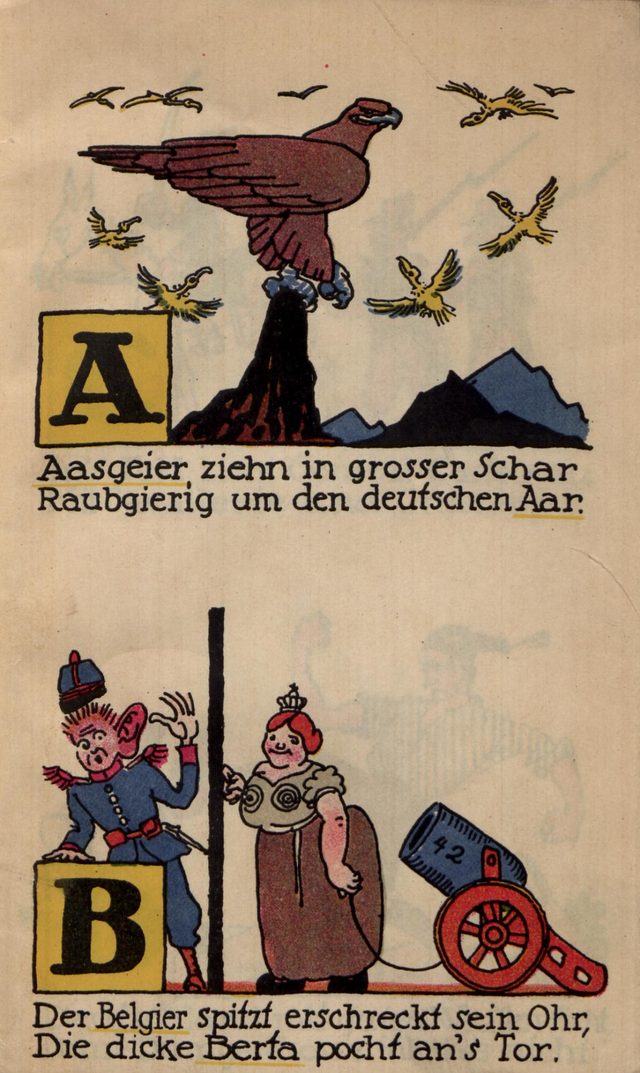 Kriegs-ABC (German children's war alphabet, letters A and B, 1915)
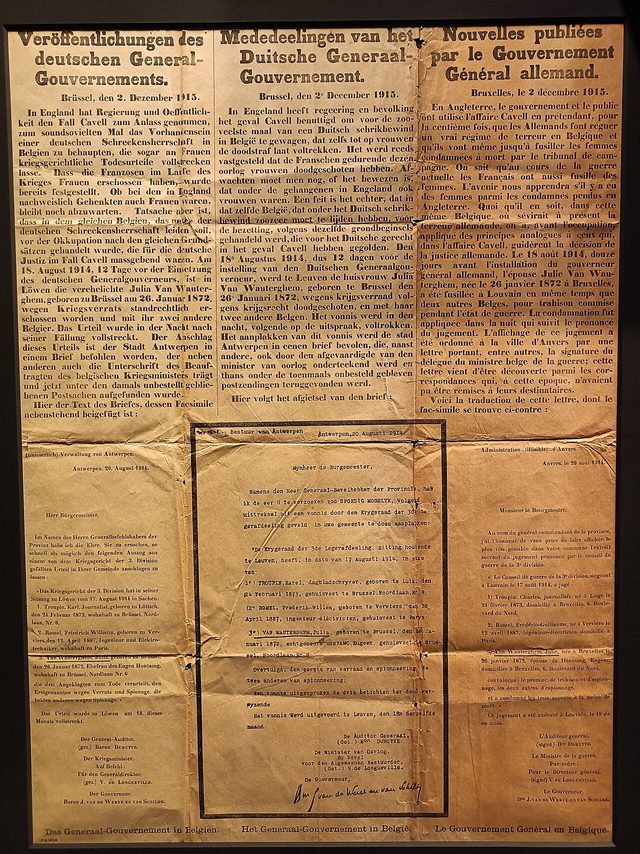 Veröffentlichungen des deutschen General-Gouvernements (Cavell notice, Brussels)
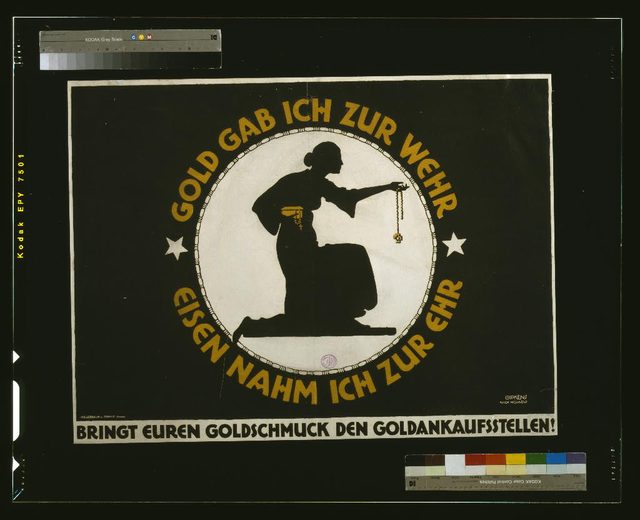 Gold gab ich zur Wehr, Eisen nahm ich zur Ehr (I Gave Gold for Defence, I Took Iron for Honour)
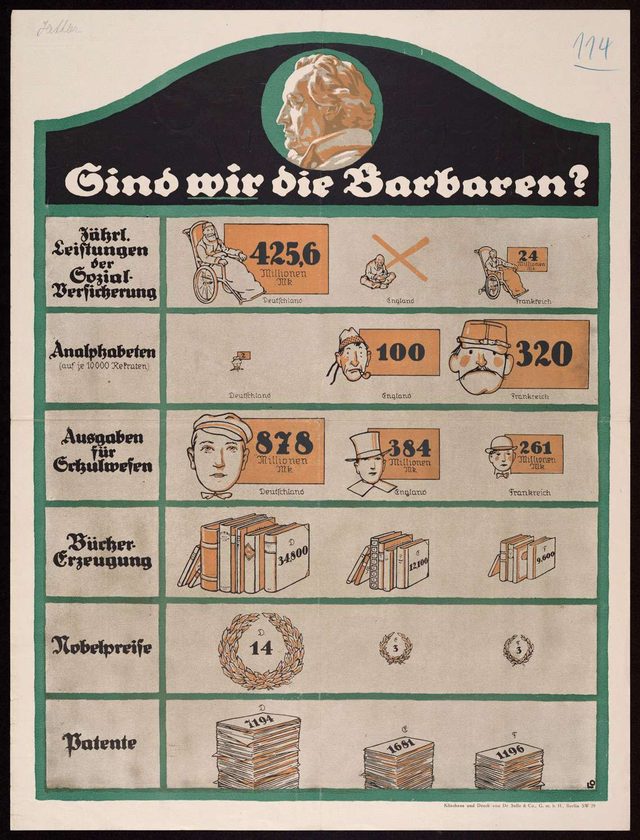 Sind wir die Barbaren? (Are We the Barbarians?)
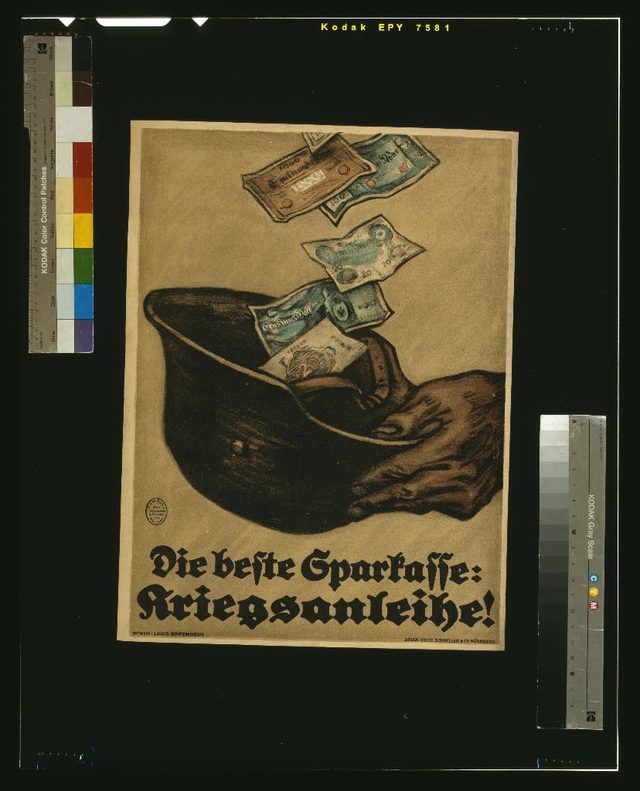 Die beste Sparkasse: Kriegsanleihe! (The Best Savings Bank: War Loan!)
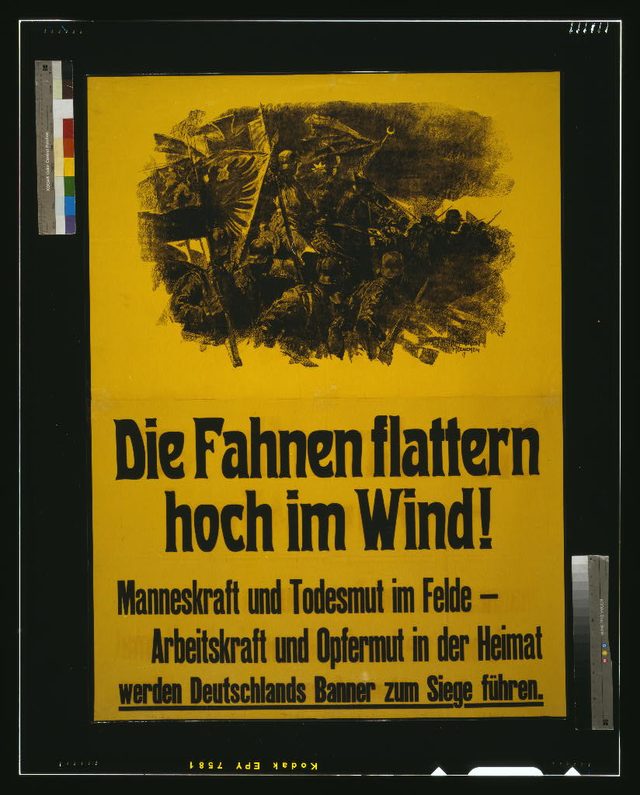 Die Fahnen flattern hoch im Wind! (The Flags Flutter High in the Wind!)
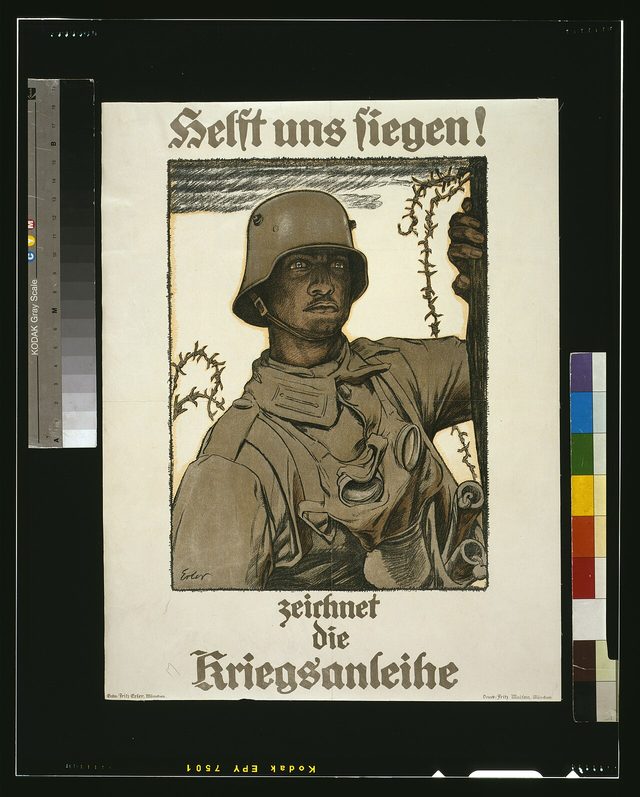 Helft uns siegen! Zeichnet die Kriegsanleihe (Help Us Win! Subscribe to the War Loan)
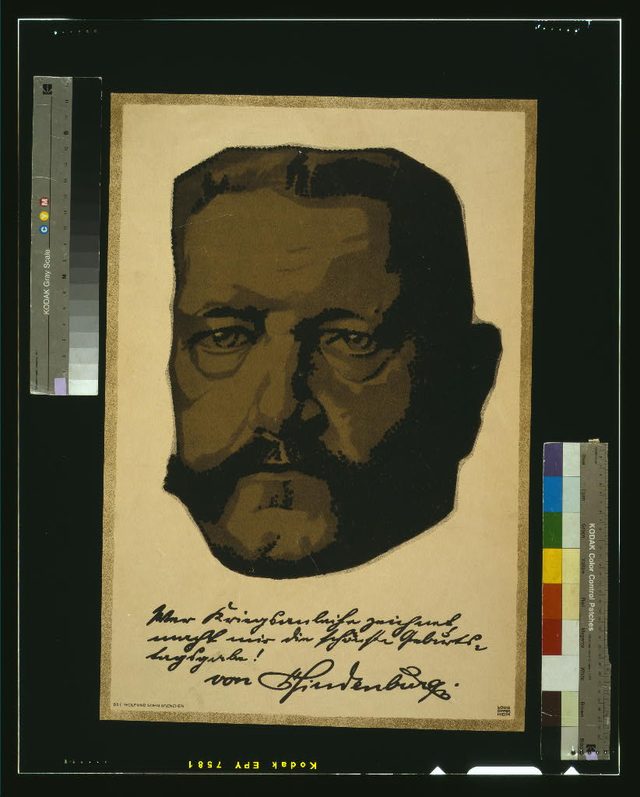 Wer Kriegsanleihe zeichnet, macht mir die schönste Geburtstagsgabe! (Whoever Subscribes to the War Loan Gives Me the Finest Birthday Present!)
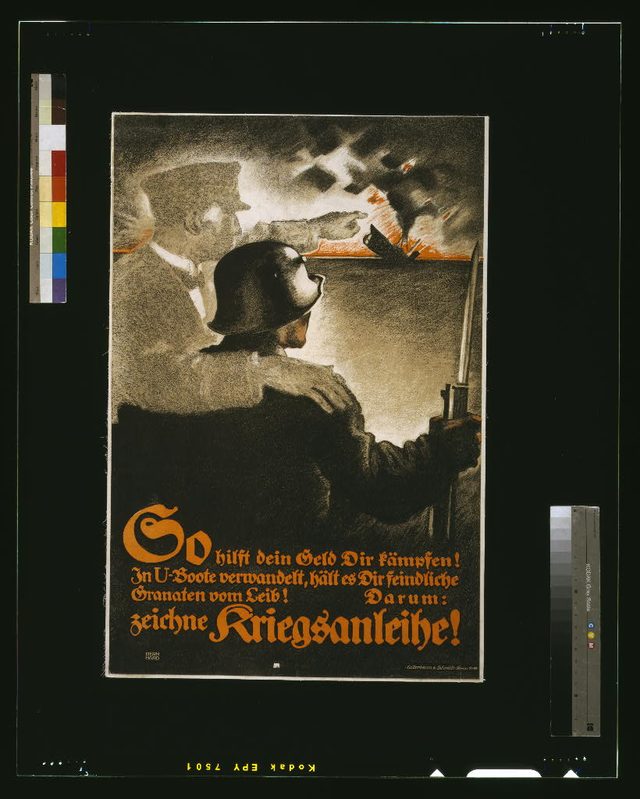 So hilft dein Geld Dir kämpfen! In U-Boote verwandelt, hält es Dir feindliche Granaten vom Leib! (This Is How Your Money Helps You Fight! Turned into U-boats, It Keeps Enemy Shells off Your Body!)
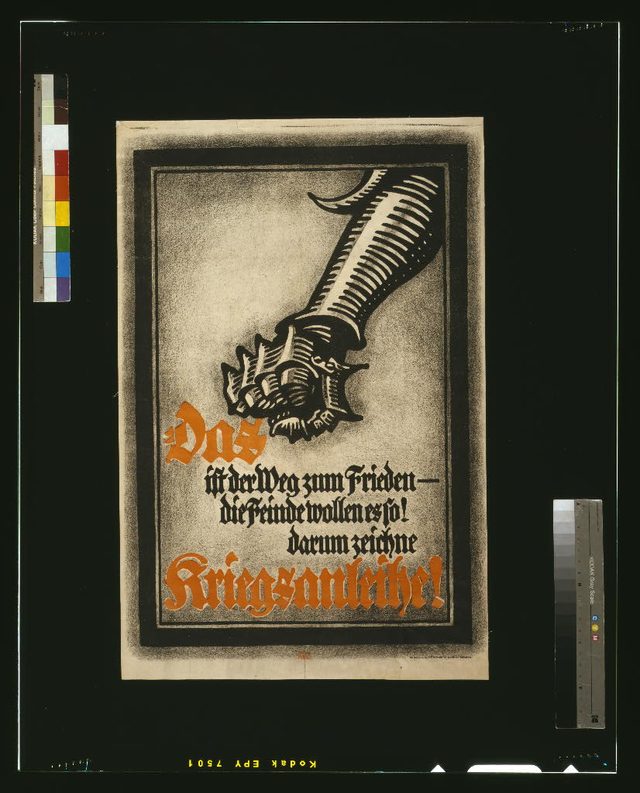 Das ist der Weg zum Frieden, die Feinde wollen es so! Darum zeichne Kriegsanleihe! (That Is the Way to Peace, the Enemies Want It So! Therefore Subscribe to the War Loan!)
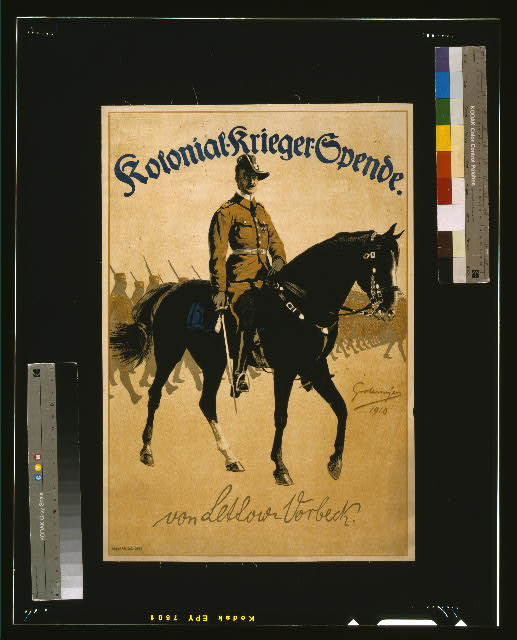 Kolonial-Krieger-Spende. von Lettow-Vorbeck (Colonial Servicemen's Fund)
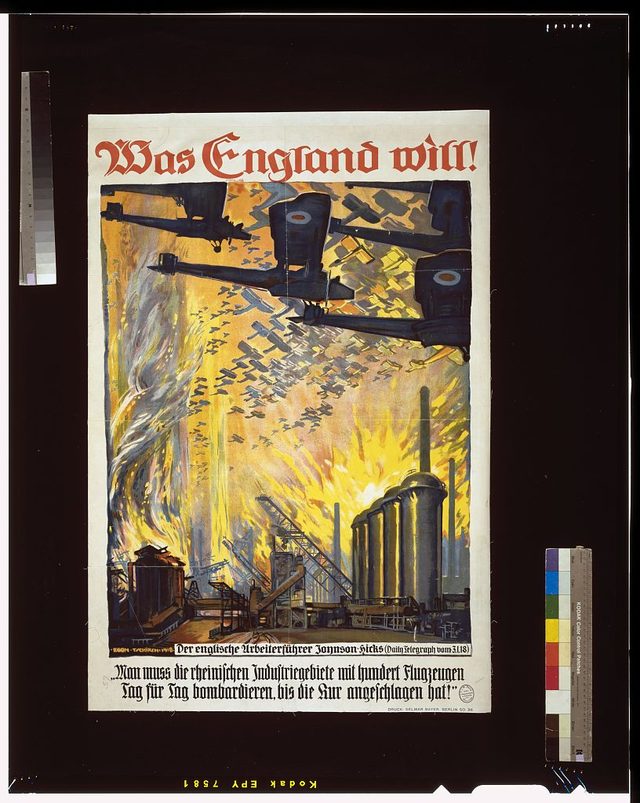 Was England will! (What England Wants!)
Case studies
- Wartime censorship in the First World War: Britain, Germany, France and the United States
- Germany answers back: the Manifesto of the 93 and the Lusitania medal (1914-1916)
- Wellington House and the Bryce Report: atrocity evidence, confirmed and unconfirmed (1914-1915)
- German South West Africa, 1904-1908: the war on the Herero and Nama and the contest over its record
- Holy war on three sides: the Ottoman jihad call, Germany's Islam policy and Britain's Arab Revolt messaging (1914-1918)