Hitoshi Imamura
Illustration, not an archive object
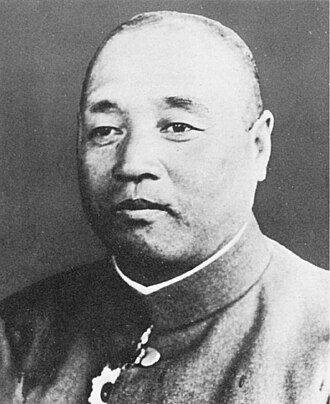

General; Commander of the 16th Army (Java) and the 8th Area Army (Rabaul) · Japan
On the regime page: Empire of Japan, 1937 to 1945
4 quotes, oldest first. Filter with other speakers.
“Among the acts committed by my subordinates there are some which are clearly against humanity or a breach of International Law, and I deeply regret it and feel my responsibility, but I consider the nature of these acts as follows:”
English: English translation on the court record (translator not named), as digitised by the War Crimes Documentation Initiative, University of Hawai'i at Manoa. Original-language text not found.
Opening of Part III.B of Imamura's written statement to the court, where he accepts that some acts by his subordinates were unlawful before setting out his view of their nature.
Statement of General Imamura Hitoshi, Exhibit 3, Trial of General Imamura Hitoshi, Australian military court, Rabaul, 9 May 1947 (National Archives of Australia, A471, 81635), English translation of the court record as digitised in the War Crimes Documentation Initiative Digital Library, University of Hawai'i at Manoa Source
Content note: Defence statement at a war crimes trial. The words are shown as they were said or written. Why
“I, as the General Officer Commanding the 8th Army Group, hold the highest responsibility for the control of my subordinates. 2. However, to my charge that the acts for which my subordinates have been charged with war crimes were because I unlawfully disregarded my duties to control the conduct of my subordinates whereby these resulted, I deny it on the following grounds. (a) I have never ordered or intimated my subordinates to do things which would be against humanity or to violate International Law, nor was there any occasion when I overlooked these things although I knew they were occurring.”
English: English translation on the court record (translator not named), as digitised by the War Crimes Documentation Initiative, University of Hawai'i at Manoa. Original-language text not found.
From Part III.C, 'My responsibility as GOC of the Army Group', in answer to the charge that he failed to control his subordinates.
Statement of General Imamura Hitoshi, Exhibit 3, Trial of General Imamura Hitoshi, Australian military court, Rabaul, 9 May 1947 (National Archives of Australia, A471, 81635), English translation of the court record as digitised in the War Crimes Documentation Initiative Digital Library, University of Hawai'i at Manoa Source
Content note: Defence statement at a war crimes trial. The words are shown as they were said or written. Why
“Although you reach the final stage, unless labourers take hostile actions or attempt to desert, treat them as co-operators until the last.”
English: English translation on the court record (translator not named), as digitised by the War Crimes Documentation Initiative, University of Hawai'i at Manoa. Original-language text not found.
Imamura's account of an instruction he says he gave through his Chief of Staff, Kato, when an Army unit asked what to do about labourers if the situation reached its worst. The Chinese, Indian and Indonesian labourers in question are the subject of several charges.
Statement of General Imamura Hitoshi, Exhibit 3, Trial of General Imamura Hitoshi, Australian military court, Rabaul, 9 May 1947 (National Archives of Australia, A471, 81635), English translation of the court record as digitised in the War Crimes Documentation Initiative Digital Library, University of Hawai'i at Manoa Source
Content note: Defence statement comparing his subordinates' acts with Allied conduct, including the atomic bombings. The words are shown as they were said or written. Why
“The majority of the acts of my subordinates are, for example, like during a fire when a person is sacrificing his life to save his parents, wife, and children from the fire, collides into a person blocking his passage and injures him. After the fire is extinguished, disregarding the fact that the injuries resulted during a fire when a person was desperately saving his family, it is the same as deciding by only considering that one should have taken steps to prevent himself from colliding into another person. Because he collided into a person and injured him, it would amount to an offence. And I consider it is exactly like not considering the war situation at that time and their state of mind. Considering the fact that in a big war which would stake the existence of a nation, in order to gain victory, steps taken such as the use of an atomic bomb without warning, which would kill or wound about 300,000 innocent citizens in a second, cannot be prevented.”
English: English translation on the court record (translator not named), as digitised by the War Crimes Documentation Initiative, University of Hawai'i at Manoa. Original-language text not found.
From Part III.B of the statement, in which Imamura compares the conduct of his subordinates to a person injuring another while fleeing a fire, and refers to the atomic bombings and to alleged Allied misconduct after the surrender.
Statement of General Imamura Hitoshi, Exhibit 3, Trial of General Imamura Hitoshi, Australian military court, Rabaul, 9 May 1947 (National Archives of Australia, A471, 81635), English translation of the court record as digitised in the War Crimes Documentation Initiative Digital Library, University of Hawai'i at Manoa Source