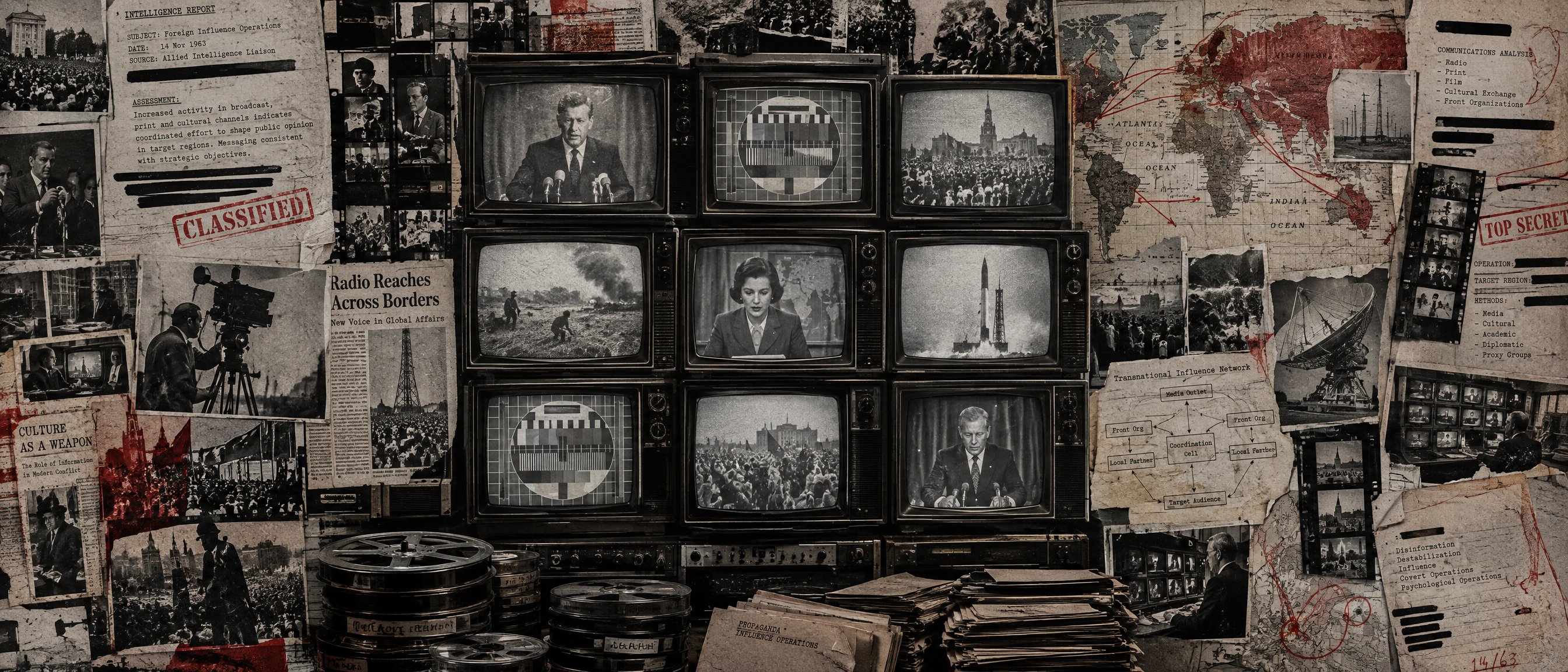
In one line: a 1988 book arguing that the US news media, though privately owned and free of formal censorship, select and frame news in ways that serve powerful interests because of five structural "filters", a model that has been widely cited and widely disputed as an account of media and propaganda in a democracy.
The source
- Work: Edward S. Herman and Noam Chomsky, Manufacturing Consent: The Political Economy of the Mass Media (New York: Pantheon Books, 1988). Updated edition with a new introduction (New York: Pantheon, 2002).
- Authors: Edward S. Herman (1925-2017), professor of finance at the Wharton School, University of Pennsylvania, and a media critic; Noam Chomsky (born 1928), linguist at the Massachusetts Institute of Technology and political writer. Chapter 1 sets out the model; the rest of the book applies it.
- Chapters: 1, A Propaganda Model; 2, Worthy and Unworthy Victims; 3, Legitimizing versus Meaningless Third World Elections (El Salvador, Guatemala, Nicaragua); 4, The KGB-Bulgarian Plot to Kill the Pope; 5 and 6, The Indochina Wars (Vietnam; Laos and Cambodia); 7, Conclusions.
- Language: English.
- Rights on this archive: in copyright. Summarised here, with short quotations only.
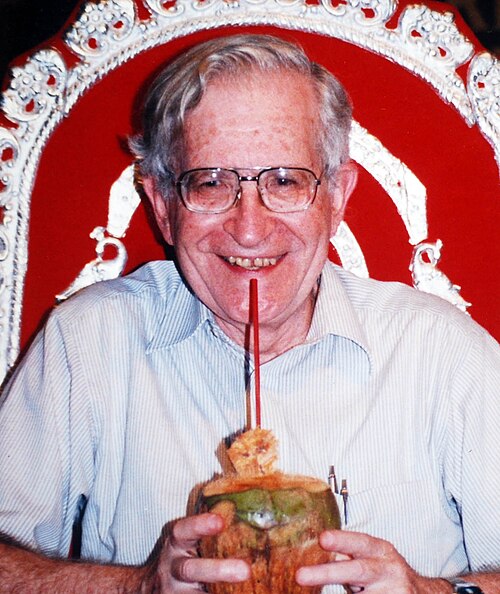
Noam Chomsky. Photo by Fotokannan, transferred to Wikimedia Commons from Malayalam Wikipedia (Commons date 9 May 2010). CC BY-SA 3.0.
Context
The book came out in the late Cold War, during US involvement in the Central American conflicts of the 1980s. Its title borrows a phrase from Walter Lippmann's Public Opinion (1922; see Walter Lippmann, Public Opinion (1922)), which described the "manufacture of consent" as a routine task of modern government. Herman and Chomsky had worked together earlier, including The Political Economy of Human Rights (1979, two volumes).
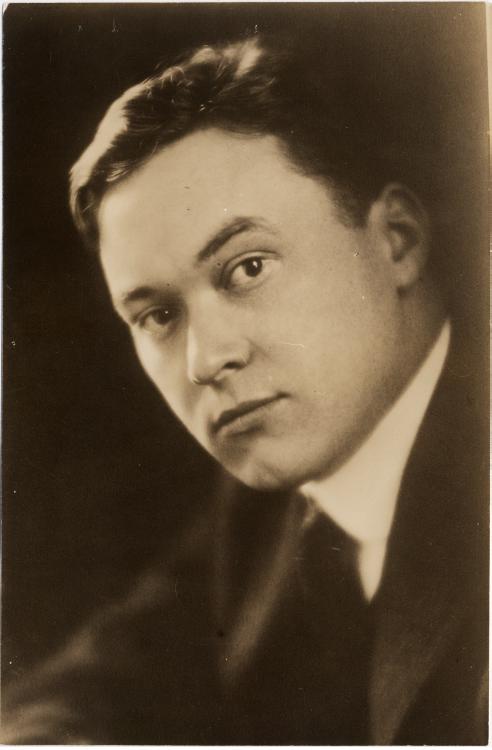
Walter Lippmann, portrait by Pirie MacDonald, published 1914. Walter Lippmann Papers, Yale University Manuscripts & Archives, via Wikimedia Commons. Public domain.
Their aim was to explain why, in their reading of the record, US coverage of foreign affairs tended to follow the priorities of the US government and large business without any central direction. They present the model as a claim about institutional structure, not about the honesty of individual journalists.
What it says
The central claim. The authors argue that "the media serve, and propagandize on behalf of, the powerful societal interests that control and finance them." In their account this happens mostly through the selection of personnel and journalists' internalised sense of what is newsworthy, not through orders.
Filter 1: size, ownership and profit orientation. The dominant media firms are large, profit-seeking corporations owned by wealthy individuals or other corporations, which the authors argue limits what they will treat as normal.
Filter 2: advertising as the primary income source. Because advertisers, not audiences, supply most revenue, the authors argue that outlets and programmes suited to advertisers are favoured.
Filter 3: sourcing. Newsrooms depend on a steady supply of material from government, business and "experts" funded or approved by those primary sources. The authors describe how think tanks and consultancies supply experts who reflect their funders' views.
Filter 4: flak. Organised negative responses to coverage (complaints, lawsuits, campaigns by monitoring groups, pressure from officials) act "as a means of disciplining the media."
Filter 5: anticommunism. "Anticommunism" works "as a national religion and control mechanism", sorting events into our side and theirs and making criticism look disloyal.
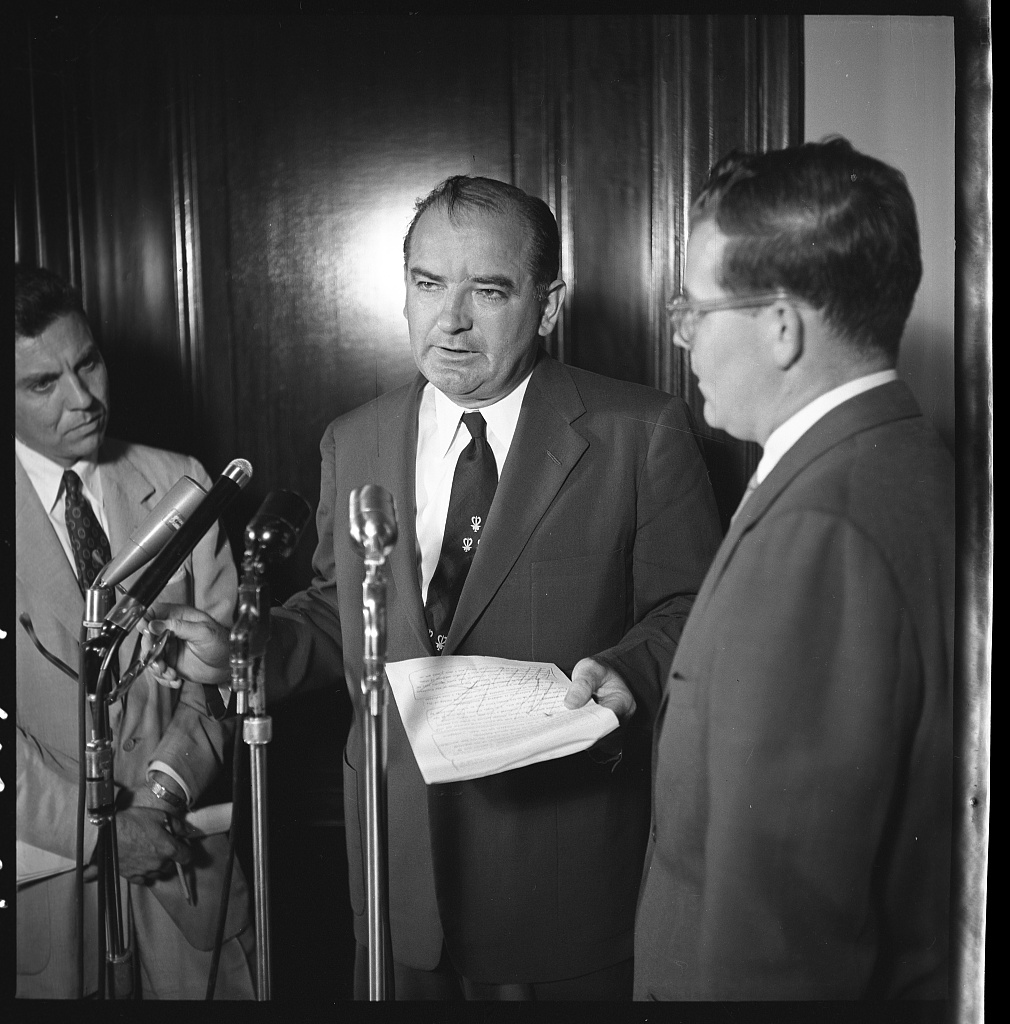
Senator Joseph McCarthy holding papers before microphones, 1954. U.S. News & World Report staff photograph, Library of Congress (LC-DIG-ds-07186). No known restrictions on publication; the Library does not identify the occasion with certainty.
Worthy and unworthy victims. The model predicts that victims of governments the US opposes will receive more, and more indignant, coverage than comparable victims of the US government or its allies. The book's main test compares coverage of Father Jerzy Popiełuszko, a Polish priest murdered by officers of the Polish security service in October 1984, with coverage of 100 religious figures killed in Latin America by forces of US-allied governments, among them Archbishop Óscar Romero of San Salvador. The authors count 78 New York Times articles on Popiełuszko and calculate that, per victim, he received roughly 137 to 179 times the coverage given to the Latin American victims across the outlets they measured.
Later updates to the fifth filter. In "The Propaganda Model: A Retrospective" (2000) and the 2002 introduction, the authors write that the Soviet collapse weakened the anticommunism filter but that faith in the "miracle of the market" had taken on a similar ideological role. Chomsky has since argued that the "war on terror" took over much of the function after 2001.
How it worked in practice
The propaganda model is an analytical framework, not an operation. Its documented uses:
- The book's own case studies: coverage of elections in El Salvador and Guatemala versus Nicaragua (1980s); the claim, which the book disputes, that the Bulgarian and Soviet intelligence services were behind the 1981 attempt on Pope John Paul II's life; and coverage of the wars in Vietnam, Laos and Cambodia.
- Media-monitoring groups such as Fairness and Accuracy in Reporting (FAIR, United States) and Media Lens (United Kingdom) use the model to analyse coverage.
- Academic research applies it to other countries and periods; Jeffery Klaehn (2002) and Andrew Mullen (2010) review and test it.
- Film. Mark Achbar and Peter Wintonick's documentary Manufacturing Consent: Noam Chomsky and the Media (1992) carried the model to a wider audience.
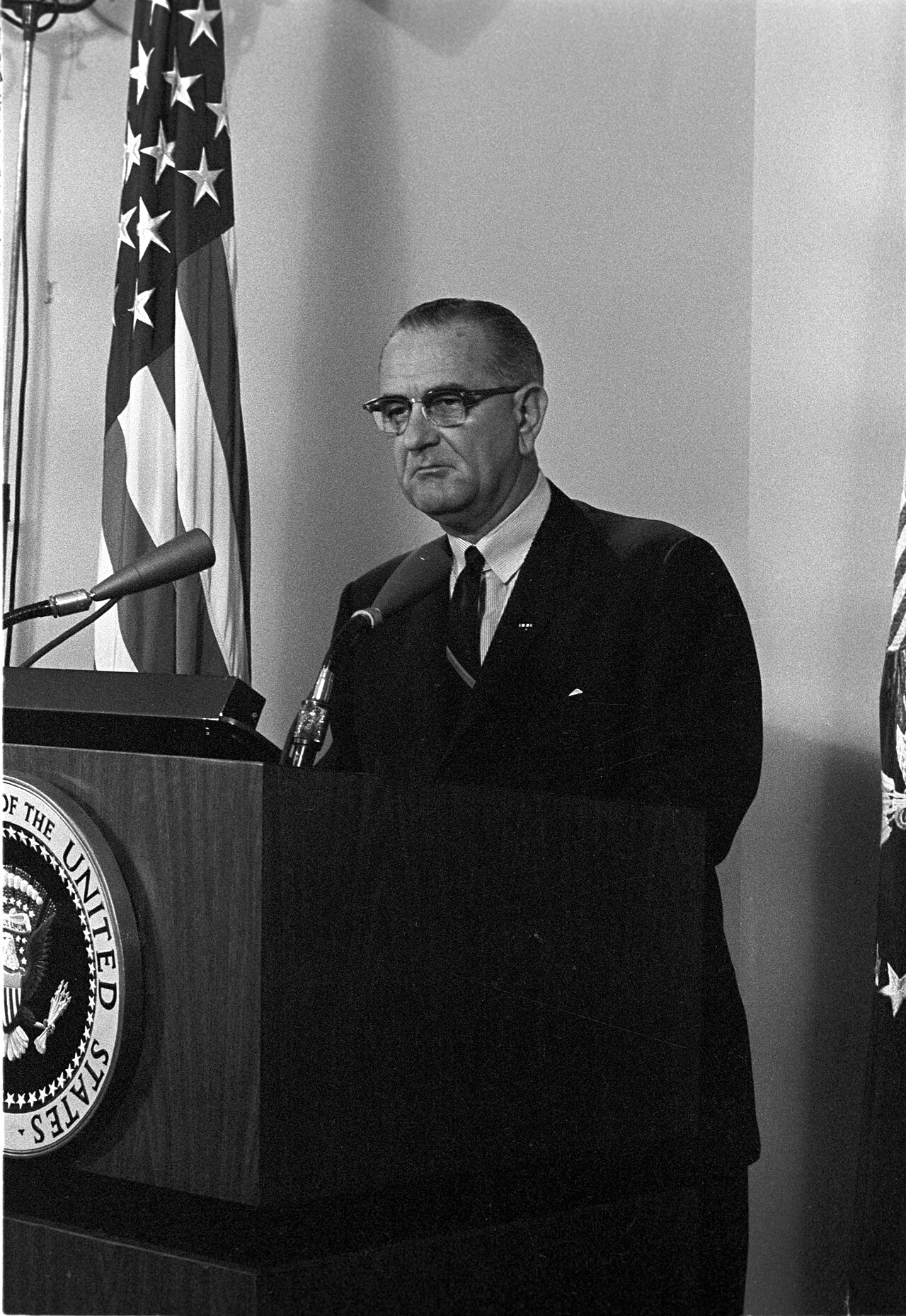
President Lyndon B. Johnson at the podium for his televised address of 4 August 1964 on the Gulf of Tonkin incidents. White House Photo Office, LBJ Library / NARA. Public domain (U.S. government work).
Techniques in this archive's taxonomy
In the model these patterns arise from structure, not from a coordinated plan, so the tags describe outcomes the authors document rather than a deliberate campaign.
- Card stacking: the worthy/unworthy comparison is a claim of systematic selection and omission; the sourcing filter explains which facts reach the page.
- Manufactured consensus: the taxonomy lists Herman and Chomsky as partial lineage. The model argues that many outlets independently reach the same frame because they share the same filters.
- Narrative laundering: the sourcing filter describes experts and institutes funded by government or business whose views reach the news as independent analysis.
Reception and criticism
- Supporters. Herman's 2000 retrospective argues that concentration and commercialisation had made the model more relevant. Eric Herring and Piers Robinson (2003) argue that it is sound and largely ignored in academic research, even by scholars who share its conclusions. Andrew Mullen (2010) argues that this neglect was itself predicted by the model.
- Mainstream media scholarship. Daniel C. Hallin, whose The Uncensored War (1986) described coverage of the Vietnam War as bounded by spheres of consensus, legitimate controversy and deviance, argues in We Keep America on Top of the World (1994) that journalistic professionalism is central to how news works and that coverage widens when official elites disagree. Herman replied that "professionalism" is too vague to explain the patterns. Michael Schudson ("The Sociology of News Production", 1989; The Power of News, 1995) argues that the model is too deterministic and that critics on the left reduce news to a cover for business and state power.
- Critiques of bias in the other direction. A separate body of work argues that US national news leans left, not toward business and government. S. Robert Lichter, Stanley Rothman and Linda S. Lichter's The Media Elite (1986) surveyed 238 journalists at leading outlets and reported predominantly liberal views. Tim Groseclose and Jeffrey Milyo's "A Measure of Media Bias" (Quarterly Journal of Economics, 2005) compared outlets' citations of think tanks with those of members of Congress and scored most outlets studied, except Fox News' Special Report and the Washington Times, to the left of the average member. These works measure journalists' views and outlets' citations; the propaganda model measures ownership, funding and sourcing. The two approaches start from different units of analysis and reach different conclusions.
This archive records each position without deciding between them.
Same-standard note
Herman and Chomsky contrast their model with systems where a state or party controls the press directly, such as the Soviet system described in Lenin and the Communist Party of the Soviet Union, the agitprop model (1902-1991). The difference in mechanism is large: Soviet media worked under party direction, censorship and legal penalties for dissent, while the model describes privately owned media where dissent is legal and published, and argues that narrowing comes from market structure. This archive applies the same filter questions (ownership, funding, sources, pressure, governing ideology) to media in any country or camp, and applies the opposite-direction critiques above to the same outlets on the same terms.
Sources
- Edward S. Herman and Noam Chomsky, Manufacturing Consent: The Political Economy of the Mass Media (New York: Pantheon, 1988; updated ed. with new introduction, 2002).
- Edward S. Herman, "The Propaganda Model: A Retrospective", Journalism Studies 1, no. 1 (2000): 101-112.
- "Manufacturing Consent", Wikipedia (pointer only, for Chomsky's later remarks on the fifth filter): https://en.wikipedia.org/wiki/Manufacturing_Consent
- Walter Lippmann, Public Opinion (New York: Harcourt, Brace, 1922).
- Daniel C. Hallin, The Uncensored War: The Media and Vietnam (New York: Oxford University Press, 1986).
- Daniel C. Hallin, We Keep America on Top of the World: Television Journalism and the Public Sphere (London: Routledge, 1994).
- Michael Schudson, "The Sociology of News Production", Media, Culture & Society 11 (1989).
- Michael Schudson, The Power of News (Cambridge, Mass.: Harvard University Press, 1995).
- Eric Herring and Piers Robinson, "Too Polemical or Too Critical? Chomsky on the Study of the News Media and US Foreign Policy", Review of International Studies 29, no. 3 (2003): 553-568.
- Jeffery Klaehn, "A Critical Review and Assessment of Herman and Chomsky's 'Propaganda Model'", European Journal of Communication 17, no. 2 (2002).
- Andrew Mullen, "Twenty Years On: The Second-Order Prediction of the Herman-Chomsky Propaganda Model", Media, Culture & Society 32 (2010).
- S. Robert Lichter, Stanley Rothman and Linda S. Lichter, The Media Elite: America's New Powerbrokers (Bethesda, Md.: Adler & Adler, 1986).
- Tim Groseclose and Jeffrey Milyo, "A Measure of Media Bias", Quarterly Journal of Economics 120, no. 4 (2005): 1191-1237.
- Mark Achbar and Peter Wintonick, dirs., Manufacturing Consent: Noam Chomsky and the Media (Necessary Illusions / National Film Board of Canada, 1992).