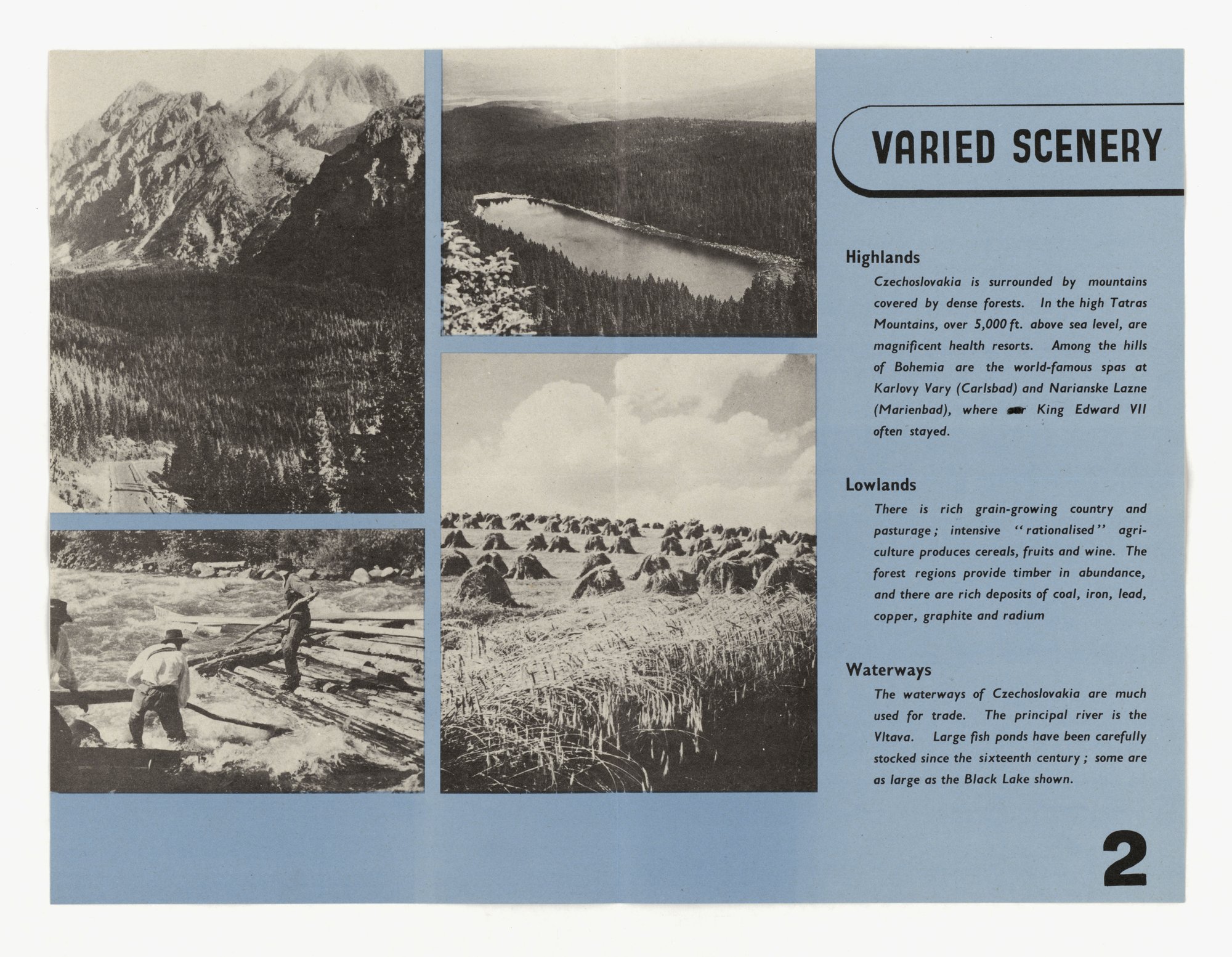
Varied Scenery - Czechoslovakia
Page 2 of an illustrated pamphlet: four photographs (Tatra mountains, the Black Lake, a grain field and log-rafting on a river) with text on highlands, lowlands and waterways. It is largely descriptive geography; the only technique honestly present is mild glittering-generalities in phrases such as 'magnificent health resorts' and 'world-famous spas', with royal visits named as a recommendation.
Propaganda techniques used in this leaflet
- Date
- 1939
- Period
- Second World War
- Made by
- Issuer not stated; no imprint visible on this page of a Czechoslovakia-themed illustrated pamphlet (page number printed)
- Region
- Eastern Europe and Eurasia
- Country
- Czechoslovakia
- Medium
- Leaflet
- Issuer type
- State
- Regime
- Czechoslovak Government in Exile
- Leader
- Edvard Benes
- Audience
- Foreign public
- Purpose
- Warn or inform
- Theme
- Economy and finance
- Event
- World War II
- Source
- Unidentified Source blurred: contractors, cutouts, buried disclosure
- Source
- U.S. National Archives and Records Administration, Record Group 44, World War II Foreign Posters, retrieved October 3, 2026
- Rights
- Held by NARA, Unrestricted; hosted by owner decision
Issuer not stated. National Archives and Records Administration, 44-PF-776.
Text on the object
VARIED SCENERY

Highlands
Czechoslovakia is surrounded by mountains covered by dense forests. In the high Tatras Mountains, over 5,000 ft. above sea level, are magnificent health resorts. Among the hills of Bohemia are the world-famous spas at Karlovy Vary (Carlsbad) and Narianske Lazne (Marienbad), where [illegible] King Edward VII often stayed.

Lowlands
There is rich grain-growing country and pasturage; intensive "rationalised" agriculture produces cereals, fruits and wine. The forest regions provide timber in abundance, and there are rich deposits of coal, iron, lead, copper, graphite and radium

Waterways
The waterways of Czechoslovakia are much used for trade. The principal river is the Vltava. Large fish ponds have been carefully stocked since the sixteenth century; some are as large as the Black Lake shown.

2