Also called Virtue words, Purr words
Virtue words (freedom, security, the people, science) used as substitutes for a testable claim.
The tell
Swap the virtue word for a concrete metric and the sentence collapses.
Not this
A defined principle applied to a named case.
History and effect
Also an IPA 1937 device, and the mirror image of name-calling: instead of a loaded negative label, a loaded positive one (freedom, security, the people, science) stands in for a claim.
It produces warm assent without ever requiring the audience to say what the word actually commits the speaker to.
Lineage: IPA 1937
How it works
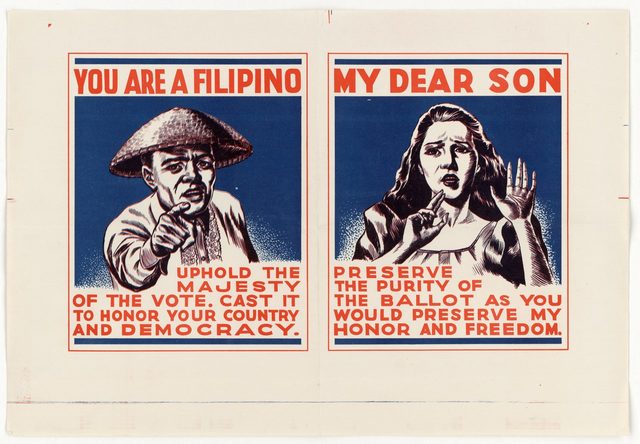
A glittering generality attaches a cause, law, war, candidate or product to a word the audience already values (freedom, peace, justice, the people, security, greatness, natural) and then leaves that word undefined. Each listener supplies a meaning, and each supplies a favourable one. The Institute for Propaganda Analysis listed the device among its seven in 1937, and Alfred McClung Lee and Elizabeth Briant Lee's The Fine Art of Propaganda (1939) applied it to radio speeches by the priest Charles Coughlin. The IPA's point was that the virtue word asks for approval without asking for evidence.
It has four moving parts: a term with a strong positive charge for the audience; a link between that term and something specific and contestable; no definition or measure that would show whether the thing delivers what the word promises; and an implied opposite: if the law is the Patriot Act, opposing it sounds unpatriotic; if the campaign is for peace, critics sound as though they favour war. That last part is where the device meets Name-calling, its mirror image.
The usual vehicles are slogans, operation names, bill titles, product labels and movement names. Rhetoric scholars have described the vocabulary. S. I. Hayakawa (1941) contrasted "purr words" with "snarl words"; Richard Weaver (1953) called the most powerful terms "god terms"; Michael Calvin McGee (1980) called terms such as liberty and equality "ideographs", ordinary words that summarise a political commitment without spelling it out. Advisers on both sides of US politics have written openly about choosing such words, including the Republican pollster Frank Luntz (Words That Work, 2007) and the linguist George Lakoff, writing for progressives (Don't Think of an Elephant!, 2004).
Why it works
Positive words produce a feeling before they produce an argument. Robert Zajonc (1980) argued that affective reactions can precede detailed thought, and Paul Slovic and colleagues (2002) described the affect heuristic, in which the feeling attached to something serves as a shortcut for judging it. In Petty and Cacioppo's elaboration likelihood model (1986), when scrutiny is low, peripheral cues such as attractive wording outweigh argument quality.
Vagueness is also an asset. An undefined virtue word can unite people who would disagree over any specific version of it. The communication scholar Eric Eisenberg (1984) called this "strategic ambiguity". George Orwell made the same observation in 1946 about words such as democracy, freedom, patriotic and justice, which he said have several meanings that cannot be reconciled: "Words of this kind are often used in a consciously dishonest way." Finally, the implied opposite raises the social cost of dissent, since objecting to the label can be heard as objecting to the value. See Affect heuristic in the Learn library.
Examples across eras and sides
- Helft uns siegen! (1917, Germany, Imperial war-loan campaign). Fritz Erler's poster puts a steel-helmeted infantryman over the words "Help us win! Subscribe to the war loan." "Winning" is offered as the reason to buy, with no statement of cost, odds or war aims for the buyer to weigh. Every major combatant ran similar campaigns (Library of Congress poster collection; see Helft uns siegen! Zeichnet die Kriegsanleihe (Help Us Win! Subscribe to the War Loan)).
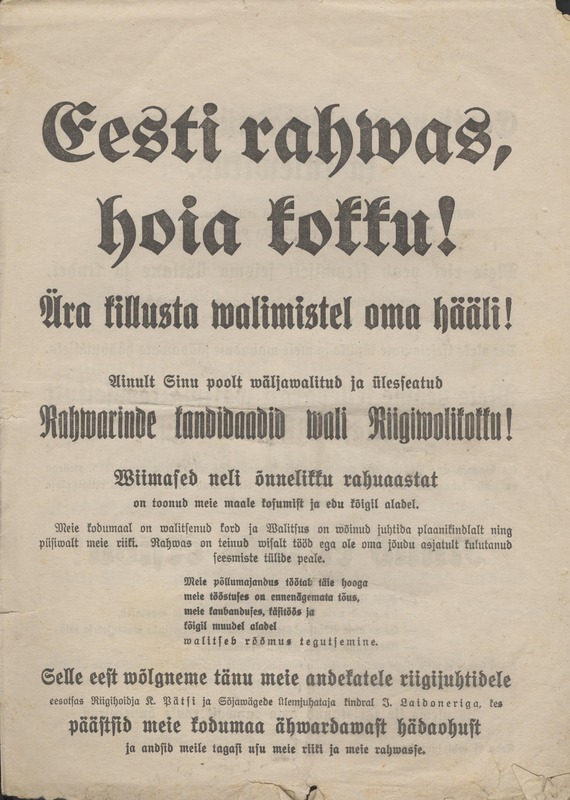
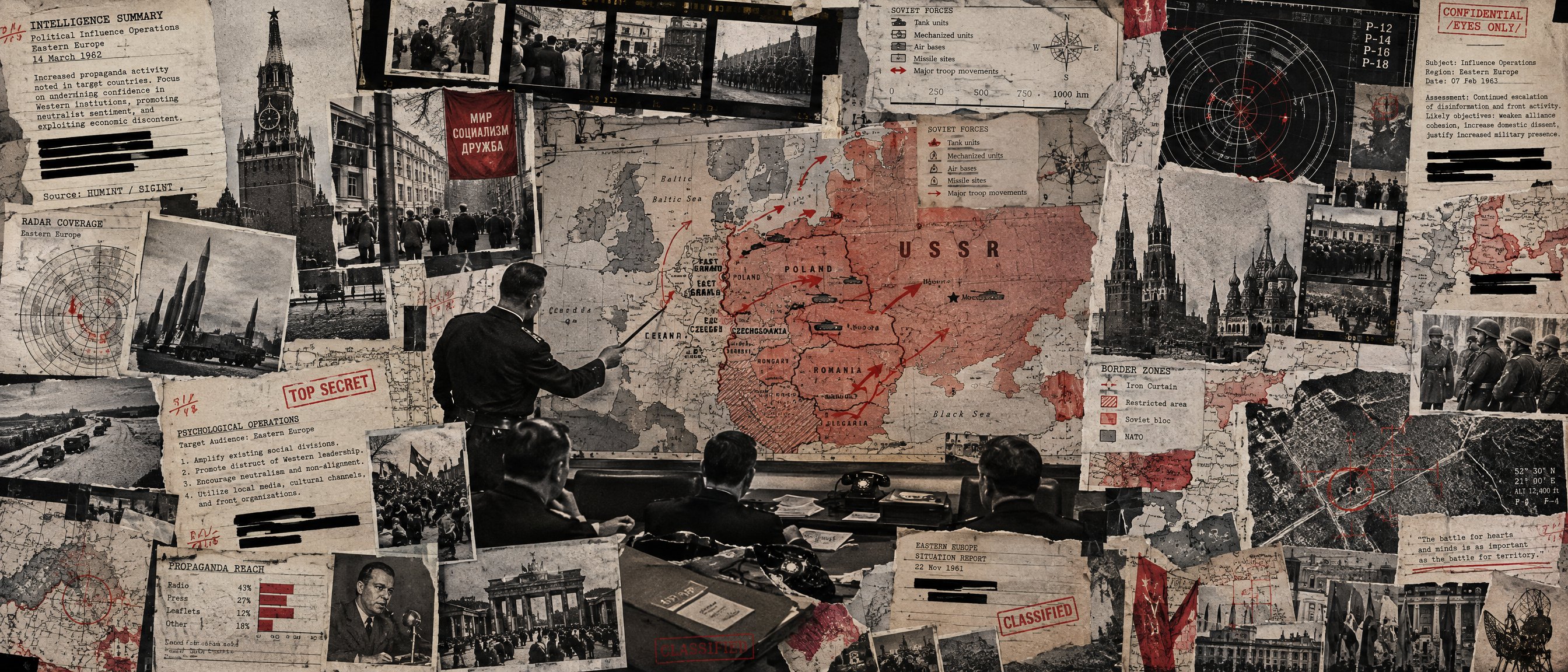
- The Stockholm Appeal (1950, Stockholm and worldwide, Soviet-sponsored peace movement). The Partisans of Peace movement, which became the World Peace Council, launched an appeal in Stockholm in 1950 to outlaw atomic weapons, and its organisers reported hundreds of millions of signatures. The historian Lawrence Wittner documents that the movement followed Soviet direction and that its "peace" tracked Soviet foreign policy, at a time when the United States held the larger atomic arsenal and the Soviet Union, which had tested its first bomb in 1949, was building its own. Critics could be cast as opponents of peace (Lawrence S. Wittner, One World or None, 1993).
- Campaign slogans (1984, 2008, 2016, United States, both major parties). Ronald Reagan's 1984 re-election advertising opened with "It's morning again in America"; Barack Obama's 2008 campaign used "Hope" and "Change we can believe in"; Donald Trump's 2016 campaign used "Make America Great Again", echoing Reagan's 1980 "Let's Make America Great Again". Each phrase names a positive state (renewal, hope, change, greatness) without stating a measure, while each campaign also published specific policy positions elsewhere (Kathleen Hall Jamieson, Packaging the Presidency, 3rd ed., 1996; campaign materials).
- Military operation names (1989-2003, United States, Department of Defense). The 1989 invasion of Panama was named Operation Just Cause; the 2001 campaign in Afghanistan was first announced as Operation Infinite Justice and renamed Operation Enduring Freedom after objections that, in Islamic belief, only God provides infinite justice; the 2003 invasion of Iraq was named Operation Iraqi Freedom. Gregory Sieminski, writing in the Army War College journal, identifies Just Cause as a turning point toward names chosen for their public-relations effect. The names foreground a value; the stated aims (removing Manuel Noriega, dismantling al-Qaeda and removing the Taliban government, disarming Iraq and removing Saddam Hussein's government) are what could be measured (Gregory C. Sieminski, "The Art of Naming Operations", Parameters, 1995).
- Bill backronyms (2001, United States, Congress). The Uniting and Strengthening America by Providing Appropriate Tools Required to Intercept and Obstruct Terrorism Act was built so its initials spell USA PATRIOT, and it passed the Senate 98 to 1. The same year Senators Dick Durbin (Democrat) and Orrin Hatch (Republican) introduced the Development, Relief, and Education for Alien Minors Act, the DREAM Act. Each acronym attaches a virtue word to a long, specific text, so a vote against the text can be described as a vote against the word (bill texts, 2001).
- The Chinese Dream (2012, China, Communist Party leadership). In November 2012, visiting the "Road to Rejuvenation" exhibition at the National Museum of China, Xi Jinping described the Chinese Dream as the great rejuvenation of the Chinese nation, and the phrase became a central slogan of his leadership. Official texts later tied it to the "two centenary" goals, which give it a partly measurable content; in much public use the dream itself is left open (Xi Jinping, The Governance of China, Foreign Languages Press, 2014).
- "Natural" on food labels (ongoing, United States, food manufacturers). "Natural" is one of the most common positive claims on US packaged food. The Food and Drug Administration had no formal definition; its longstanding policy treated the word as meaning that nothing artificial or synthetic has been added that would not normally be expected, and in 2015 it asked the public whether and how to define it. The label carries a strong positive association while committing the seller to little a shopper could check (U.S. Food and Drug Administration, "Use of the Term 'Natural' in the Labeling of Human Food Products", request for comments, 2015).
How to spot it
- Replace the virtue word with a concrete measure (a number, a date, a named outcome). Does the sentence still say something you could check?
- What would count as failure? If no possible result could show that the "freedom", "peace" or "greatness" was not delivered, the word is doing the work of an argument.
- Is the word defined anywhere, in the bill text, the platform, the label regulation, or the stated war aims? Do those contents match the name?
- Who is implicitly cast as being against the word, and is that a fair description of what they actually oppose?
- Would people on the other side use the same word to support the opposite policy? If so, the word alone settles nothing.
- Is the name of the thing (a law, operation, product or movement) doing work that its contents do not?
Where it ends: edge cases and legitimate persuasion
- Defined principles. "Liberté, égalité, fraternité", the motto of the French Republic written into Article 2 of the 1958 Constitution, names values that are then given content by law and courts. A principle that is defined and applied to a named case is the "Not this" line on this page. It becomes a glittering generality only when invoked in place of an argument about a specific policy.
- Euphemism. Euphemism / doublespeak softens something unwelcome ("special military operation" for a war, Address announcing a 'special military operation'); a glittering generality adds shine to something already presented as good. Operation names can do both at once.
- Transfer and semantic hijack. Transfer borrows prestige from a symbol such as a flag or a church; this device borrows it from a word, and the two often appear together, as in Helft uns siegen! Zeichnet die Kriegsanleihe (Help Us Win! Subscribe to the War Loan). When a virtue word is redefined to mean something close to its opposite, the case moves toward Semantic hijacking.
- Name-calling. Name-calling is the mirror: a loaded negative word in place of a claim.
- Legitimate slogans. Slogans, mottos and memorable titles are normal in politics and business, and every party and government uses them. Use is honest when the concrete commitments the word implies are stated and can be checked elsewhere, when the speaker accepts being judged against them, and when the word is not used to paint opponents as enemies of the value itself.
Sources
- Eisenberg, Eric M. "Ambiguity as Strategy in Organizational Communication." Communication Monographs, 1984.
- Hayakawa, S. I. Language in Action. Harcourt, Brace, 1941 (later Language in Thought and Action).
- Jamieson, Kathleen Hall. Packaging the Presidency: A History and Criticism of Presidential Campaign Advertising. Oxford University Press, 3rd ed., 1996.
- Lakoff, George. Don't Think of an Elephant! Know Your Values and Frame the Debate. Chelsea Green, 2004.
- Lee, Alfred McClung, and Elizabeth Briant Lee, eds. The Fine Art of Propaganda: A Study of Father Coughlin's Speeches. Institute for Propaganda Analysis / Harcourt, Brace, 1939.
- Luntz, Frank. Words That Work: It's Not What You Say, It's What People Hear. Hyperion, 2007.
- McGee, Michael Calvin. "The 'Ideograph': A Link Between Rhetoric and Ideology." Quarterly Journal of Speech, 1980.
- Orwell, George. "Politics and the English Language." Horizon, 1946.
- Petty, Richard E., and John T. Cacioppo. Communication and Persuasion: Central and Peripheral Routes to Attitude Change. Springer, 1986.
- Sieminski, Gregory C. "The Art of Naming Operations." Parameters (U.S. Army War College), 1995.
- Slovic, Paul, Melissa Finucane, Ellen Peters, and Donald G. MacGregor. "The Affect Heuristic." In Heuristics and Biases, ed. Gilovich, Griffin and Kahneman. Cambridge University Press, 2002.
- U.S. Food and Drug Administration. "Use of the Term 'Natural' in the Labeling of Human Food Products; Request for Information and Comments." Federal Register, 2015.
- Weaver, Richard M. The Ethics of Rhetoric. Henry Regnery, 1953.
- Wittner, Lawrence S. One World or None: A History of the World Nuclear Disarmament Movement Through 1953. Stanford University Press, 1993.
- Xi Jinping. The Governance of China. Foreign Languages Press, 2014.
- Zajonc, Robert B. "Feeling and Thinking: Preferences Need No Inferences." American Psychologist, 1980.
Case studies
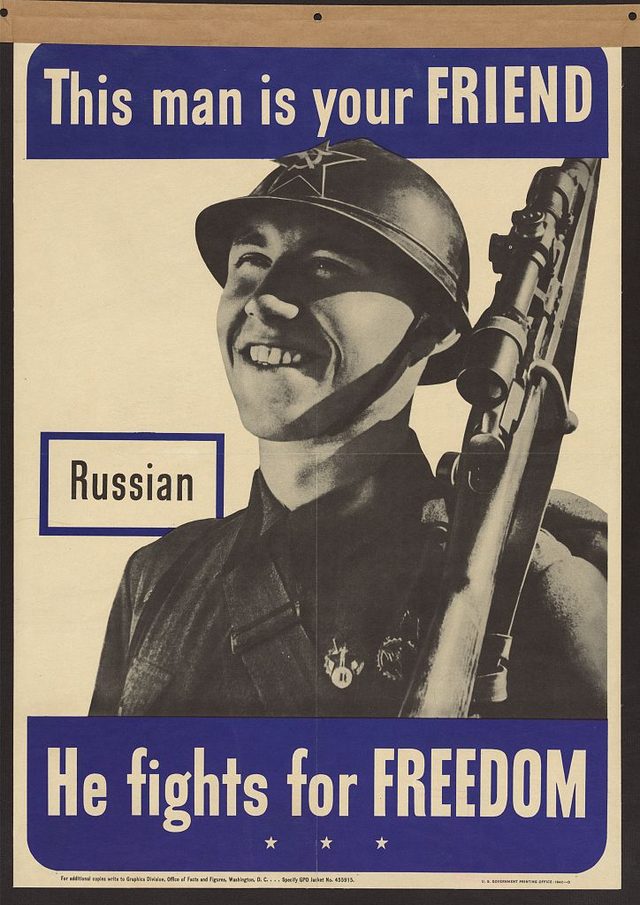
- The Office of War Information's Domestic Branch, 1942-43 — The Office of War Information's Domestic Branch, 1942-43
- Taxpayer-funded government advertising in Canada and Australia, 1996-2019 — Taxpayer-funded government advertising in Canada and Australia, 1996-2019
- Torches of Freedom: the 1929 Easter Parade cigarette march — Torches of Freedom: the 1929 Easter Parade cigarette march
- Ethyl: how leaded petrol was named, defended and kept on sale — Ethyl: how leaded petrol was named, defended and kept on sale
- The Crusade for Freedom: Truth Dollars for a CIA-funded radio, 1950-1971 — The Crusade for Freedom: a donation drive in front of a CIA-funded radio
- 'Asia for the Asiatics': Japan's Co-Prosperity Sphere and the movements that used it — 'Asia for the Asiatics': Japan's Co-Prosperity Sphere and the movements that used it
- 'Benevolent assimilation': the Philippine-American War and the propaganda on every side — 'Benevolent assimilation': the Philippine-American War and the propaganda on every side
- Buy Empire, burn foreign cloth: the Empire Marketing Board and the swadeshi boycotts — Buy Empire, burn foreign cloth: the Empire Marketing Board and the swadeshi boycotts
- The Congo Free State press war: Leopold II's Press Bureau and the Congo Reform Association — The Congo Free State press war: Leopold II's Press Bureau and the Congo Reform Association
- The Islamic State's media machine: Dabiq, Rumiyah, Amaq and the 'virtual caliphate' — The Islamic State's media machine: Dabiq, Rumiyah, Amaq and the 'virtual caliphate'
- The second Ku Klux Klan: selling membership as '100% Americanism' — The second Ku Klux Klan: selling membership as '100% Americanism'
- Shining Path: the Gonzalo cult, the 'people's war' and the state's reply — Shining Path: the Gonzalo cult, the 'people's war' and the state's reply
- Octavian, Antony and the Res Gestae: how Augustus wrote his own reign — Octavian, Antony and the Res Gestae: how Augustus wrote his own reign
- Union and Confederate print, 1861-1865 — Union and Confederate print, 1861-1865
- The loudspeaker war: propaganda across the Taiwan Strait, 1949-1987 — The loudspeaker war: propaganda across the Taiwan Strait, 1949-1987
- The Kim leader cult, the anti-US month and the leaflets sent back — The Kim leader cult, the anti-US month and the leaflets sent back
- Marcos's martial law: the 'New Society' and the online contest over its memory — Marcos's martial law: the 'New Society' and the online contest over its memory
- Screened, state-written and contested: East Asia's history-textbook disputes since 1955 — Screened, state-written and contested: East Asia's history-textbook disputes since 1955
- The Great Leap Forward's 'sputnik' harvests and the famine that followed — The Great Leap Forward's 'sputnik' harvests and the famine that followed
- Managing the news: France's 'bourrage de crâne' and Austria-Hungary's War Press Office (1914-1918) — Managing the news: France's 'bourrage de crâne' and Austria-Hungary's War Press Office (1914-1918)
- Holy war on three sides: the Ottoman jihad call, Germany's Islam policy and Britain's Arab Revolt messaging (1914-1918) — Holy war on three sides: the Ottoman jihad call, Germany's Islam policy and Britain's Arab Revolt messaging (1914-1918)
- Russia's war of words: tsarist lubki, the Liberty Loan and the fight over 'German agents' (1914-1918) — Russia's war of words: tsarist lubki, the Liberty Loan and the fight over 'German agents' (1914-1918)
- The Institute for Propaganda Analysis (1937-1942) — The Institute for Propaganda Analysis (1937-1942)
- Mood over argument: "Morning in America" (Reagan-Bush 1984) and "Hope" / "Yes We Can" (Obama 2008) — Mood over argument: "Morning in America" (Reagan-Bush 1984) and "Hope" / "Yes We Can" (Obama 2008)
- Follow the science, Plandemic: COVID-19 messaging from officials and contrarians, 2020-2022 — Follow the science, Plandemic: COVID-19 messaging from officials and contrarians, 2020-2022
- Better babies, fitter families: eugenics campaigns in the US, Sweden and Germany — Better babies, fitter families: eugenics campaigns in the US, Sweden and Germany
- The 1933 book burnings and Nazi control of publishing — The 1933 book burnings and Nazi control of publishing
- Labor organizing and anti-union campaigns in the United States, 1910-1941 — Labor organizing and anti-union campaigns in the United States, 1910-1941
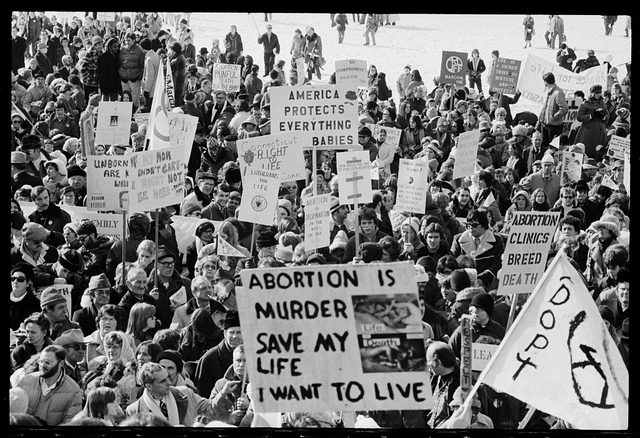
- The US abortion debate: persuasion campaigns on both sides since the 1960s — The US abortion debate: persuasion campaigns on both sides since the 1960s
- Gun rights and gun control: persuasion on both sides of the U.S. gun debate — Gun rights and gun control: persuasion on both sides of the U.S. gun debate
- MAGA and the Resistance: grassroots organising for and against Trump, 2016-2021 — MAGA and the Resistance: grassroots organising for and against Trump, 2016-2021
- Mobutu's authenticité: how Zaire's party-state wrote one man into the nation — Mobutu's authenticité: how Zaire's party-state wrote one man into the nation
- Perón cumple, Evita dignifica: Argentina's state media machine, and the decree that erased it — Perón cumple, Evita dignifica: Argentina's state media machine, and the decree that erased it
- Fascist Italy's propaganda machine: from the Duce's Press Office to the Ministry of Popular Culture — Fascist Italy's propaganda machine: from the Duce's Press Office to the Ministry of Popular Culture
- Imperial Japan's wartime propaganda at home: the Information Bureau, the neighbourhood associations and the war communiqués — Imperial Japan's wartime propaganda at home: the Information Bureau, the neighbourhood associations and the war communiqués
- Britain's Ministry of Information and Political Warfare Executive: posters at home, black radio abroad — Britain's Ministry of Information and Political Warfare Executive: posters at home, black radio abroad
- The U.S. Office of War Information and the Writers' War Board: a 'strategy of truth' meets the advertising men — The U.S. Office of War Information and the Writers' War Board: a 'strategy of truth' meets the advertising men
- Chinese wartime propaganda, 1937-1945: Chongqing, Yan'an and Wang Jingwei's Nanjing — Chinese wartime propaganda, 1937-1945: Chongqing, Yan'an and Wang Jingwei's Nanjing
- Before the state: the NSDAP's propaganda in its fringe years, 1920-1923 — Before the state: the NSDAP's propaganda in its fringe years, 1920-1923
- Hitler über Deutschland: the 1932 campaigns that made the NSDAP a mass party — Hitler über Deutschland: the 1932 campaigns that made the NSDAP a mass party
- Before Triumph of the Will: staging scale for a fringe party at Nuremberg, 1923-1933 — Before Triumph of the Will: staging scale for a fringe party at Nuremberg, 1923-1933
- Bolshevik agitprop, 1917-1921: soviets, decrees, agit-trains and the ROSTA windows — Bolshevik agitprop, 1917-1921: soviets, decrees, agit-trains and the ROSTA windows
- The Lenin cult after 1924: an embalmed body, a mausoleum and a doctrine called "Leninism" — The Lenin cult after 1924: an embalmed body, a mausoleum and a doctrine called "Leninism"
- "Liquidate the kulaks as a class": the propaganda campaign for collectivization (1929-1933) — "Liquidate the kulaks as a class": the propaganda campaign for collectivization (1929-1933)
- Divide the land, label the enemy: propaganda and discipline in the Jiangxi Soviet (1927-1934) — Divide the land, label the enemy: propaganda and discipline in the Jiangxi Soviet (1927-1934)
- Propaganda of the Chinese Civil War, 1945-1949: land reform, surrender leaflets and the fall of the mainland — Propaganda of the Chinese Civil War, 1945-1949: land reform, surrender leaflets and the fall of the mainland
- Land reform and the struggle session: how the CCP's class labels decided who kept their land, 1946-1952 — Land reform and the struggle session: how the CCP's class labels decided who kept their land, 1946-1952
- The Mao cult before the state: 'Mao Zedong Thought' and 'The East Is Red', 1943-1949 — The Mao cult before the state: 'Mao Zedong Thought' and 'The East Is Red', 1943-1949
- The SS as its own propaganda institution: Das Schwarze Korps, the Ahnenerbe and the order myth, 1931-1945 — The SS as its own propaganda institution: Das Schwarze Korps, the Ahnenerbe and the order myth, 1931-1945
- Manufactured unanimity: the Nazi single-list plebiscites, 1934-1938 — Manufactured unanimity: the Nazi single-list plebiscites, 1934-1938
- The Union of Soviet Writers and socialist realism, 1932-1969 — The Union of Soviet Writers and socialist realism, 1932-1969
- Selling the Gulag: the "re-forging" of the White Sea-Baltic Canal, 1930-1937 — Selling the Gulag: the 're-forging' of the White Sea-Baltic Canal, 1930-1937
- The PLA's Political Commissar System: Dual Command, the General Political Department and PLA Daily — The PLA's Political Commissar System: dual command, the General Political Department and PLA Daily
- The Hitler Youth: from a party wing to a legal duty, 1926-1945 — The Hitler Youth: from a party wing to a legal duty, 1926-1945
- The Bund Deutscher Mädel: raising Nazi Germany's girls for the Volk — The Bund Deutscher Mädel: raising Nazi Germany's girls for the Volk
- Two ladders to the top: the Napolas, the Adolf Hitler Schools, and the Reich's rival cadet pipelines (1933-1945) — Two ladders to the top: the Napolas, the Adolf Hitler Schools, and the Reich's rival cadet pipelines (1933-1945)
- Kinderlandverschickung: evacuating Germany's children into Hitler Youth camps, 1940-1945 — Kinderlandverschickung: evacuating Germany's children into Hitler Youth camps, 1940-1945
- The All-Union Pioneer Organization: scouting rebuilt as a communist pipeline, 1922-1991 — The All-Union Pioneer Organization: scouting rebuilt as a communist pipeline, 1922-1991
- The Komsomol: youth pipeline, mass mobilization and internal discipline, 1918-1991 — The Komsomol: youth pipeline, mass mobilization and internal discipline, 1918-1991
- The Little Octobrists (Oktyabryata): a red star badge for seven-year-olds — The Little Octobrists (Oktyabryata): a red star badge for seven-year-olds
- The Pavlik Morozov cult: a Soviet martyr built from a disputed murder — The Pavlik Morozov cult: a Soviet martyr built from a disputed murder
- A corner of the flag on a six-year-old: the Young Pioneers of China — A corner of the flag on a six-year-old: the Young Pioneers of China
- Red scarf to Party card: a century of the Communist Youth League of China — Red scarf to Party card: a century of the Communist Youth League of China
- Class struggle in the classroom: nationalizing China's school curriculum and textbooks, 1949-1977 — Class struggle in the classroom: nationalizing China's school curriculum and textbooks, 1949-1977
- Down to the countryside: how China rebranded a mass relocation of youth as revolutionary 're-education' (1968-1980) — Down to the countryside: how China rebranded a mass relocation of youth as revolutionary 're-education' (1968-1980)
- The Volkssturm: staging a 'people's storm' out of Nazi Germany's last conscription, 1944-45 — The Volkssturm: staging a 'people's storm' out of Nazi Germany's last conscription, 1944-45
- The Nero Decree: Hitler's order to destroy Germany, and the myth built on defying it — The Nero Decree: Hitler's order to destroy Germany, and the myth built on defying it
- Wonder weapons: how the Reich sold the V-1, V-2 and Me 262 as war-winners, 1944-1945 — Wonder weapons: how the Reich sold the V-1, V-2 and Me 262 as war-winners, 1944-1945
- The Wehrmachtbericht's collapse: from 'Endsieg' to Dönitz's surrender broadcasts, 1944-1945 — The Wehrmachtbericht's collapse: from 'Endsieg' to Dönitz's surrender broadcasts, 1944-1945
- From 'ill health' to Swan Lake: the GKChP's case for its own coup, 19-21 August 1991 — From 'ill health' to Swan Lake: the GKChP's case for its own coup, 19-21 August 1991
- The end of the USSR: Gorbachev's resignation and the flag over the Kremlin (December 1991) — The end of the USSR: Gorbachev's resignation and the flag over the Kremlin (December 1991)
- Grief on schedule: Mao's death, Hua Guofeng's succession and the 'two whatevers', 1976-1978 — Grief on schedule: Mao's death, Hua Guofeng's succession and the 'two whatevers', 1976-1978
- History will absolve me: the 26th of July Movement and Batista's press, 1953–1959 — History will absolve me: the 26th of July Movement and Batista's press, 1953–1959
- ¡Venceremos!: Cuba's 1961 literacy campaign, the primer, and the year-end declaration — ¡Venceremos!: Cuba's 1961 literacy campaign, the primer, and the year-end declaration
- Órgano oficial del Comité Central: Cuba's standing media apparatus after 1959 — Órgano oficial del Comité Central: Cuba's standing media apparatus after 1959
- Pioneros por el comunismo: Cuba's youth ladder, the single textbook, and the reply that uses the same devices — Pioneros por el comunismo: Cuba's youth ladder, the single textbook, and the reply that uses the same devices
- Playa Girón and the Bay of Pigs: mercenaries in one telling, Cuban patriots in the other — Playa Girón and the Bay of Pigs: mercenaries in one telling, Cuban patriots in the other