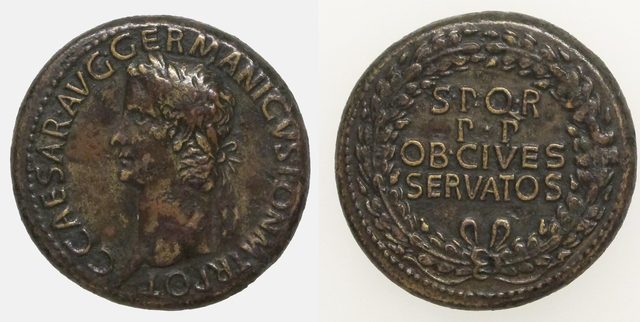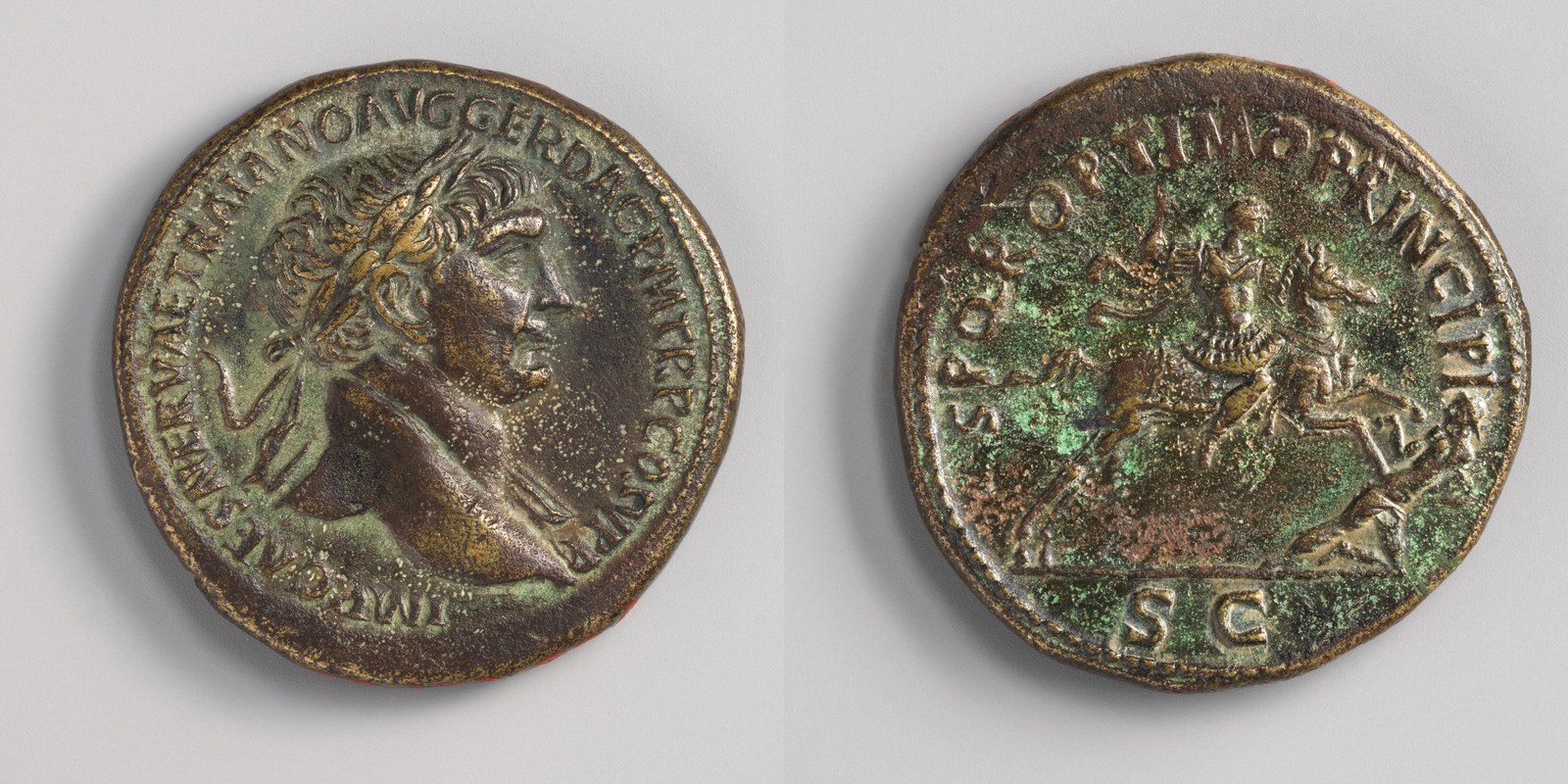
Bronze sestertius of Trajan, reverse S P Q R OPTIMO PRINCIPI, S C, the emperor on horseback riding down an enemy
A Roman bronze sestertius of Trajan shown front and back: the obverse has his laureate bust and titles including Germanicus and Dacicus, the reverse the emperor on horseback riding down a fallen enemy under the legend of the Senate and People of Rome to the best of princes, with S C for the Senate's authority.
Propaganda techniques used in this banknote or coin
- Date
- 0103
- Period
- Pre-1914
- Made by
- Roman imperial mint at Rome, under Emperor Trajan and the Senate
Full record
Region, Country, Medium, Issuer type, Regime, Leader, Audience, Purpose, Themes, Source, Rights
- Region
- Western and Central Europe
- Country
- Roman Empire
- Medium
- Banknotes and coins
- Issuer type
- State
- Regime
- Roman Principate
- Leader
- Trajan
- Audience
- Domestic public
- Purpose
- Persuade or win support
- Themes
- War and the military, Elections and party politics
- Source
- Identified Openly sourced: the speaker is who they say they are
- Source
- The Metropolitan Museum of Art (Open Access), retrieved October 2, 2026
- Rights
- Public domain (The Met Open Access, CC0; isPublicDomain true in the Met API; object about 1,900 years old)
The Metropolitan Museum of Art, Rogers Fund, 1908 (08.170.384), Open Access
Text on the object
Original (Latin) · read from the image, not independently checked
Obverse (clockwise from lower left): IMP CAES NERVAE TRAIANO AVG GER DAC P M TR P COS V P P

Reverse: S P Q R OPTIMO PRINCIPI

In exergue: S C
Obverse: Imperator Caesar Nerva Trajan Augustus, Germanicus, Dacicus, Pontifex Maximus, holding tribunician power, consul for the fifth time, Father of the Fatherland.

Reverse: The Senate and People of Rome to the best of princes.

In exergue: By decree of the Senate.
Read from the image; some letters on the obverse are worn and the string of titles was read from the Met's photograph without checking a catalogue, and the translation expands standard abbreviations. The legend on this specimen runs P M TR P COS V P P.