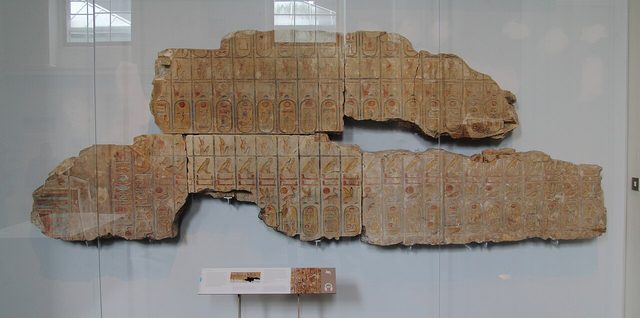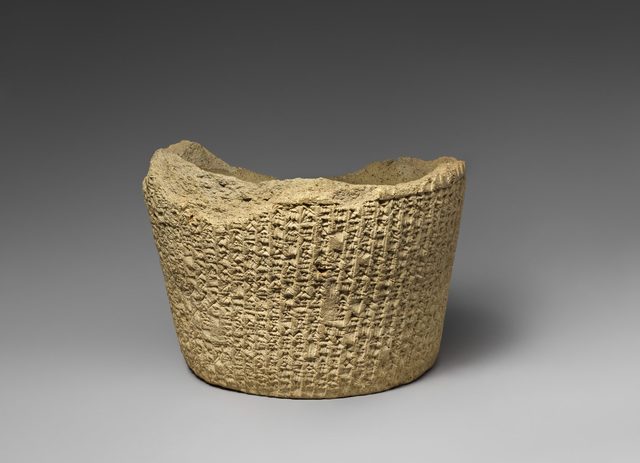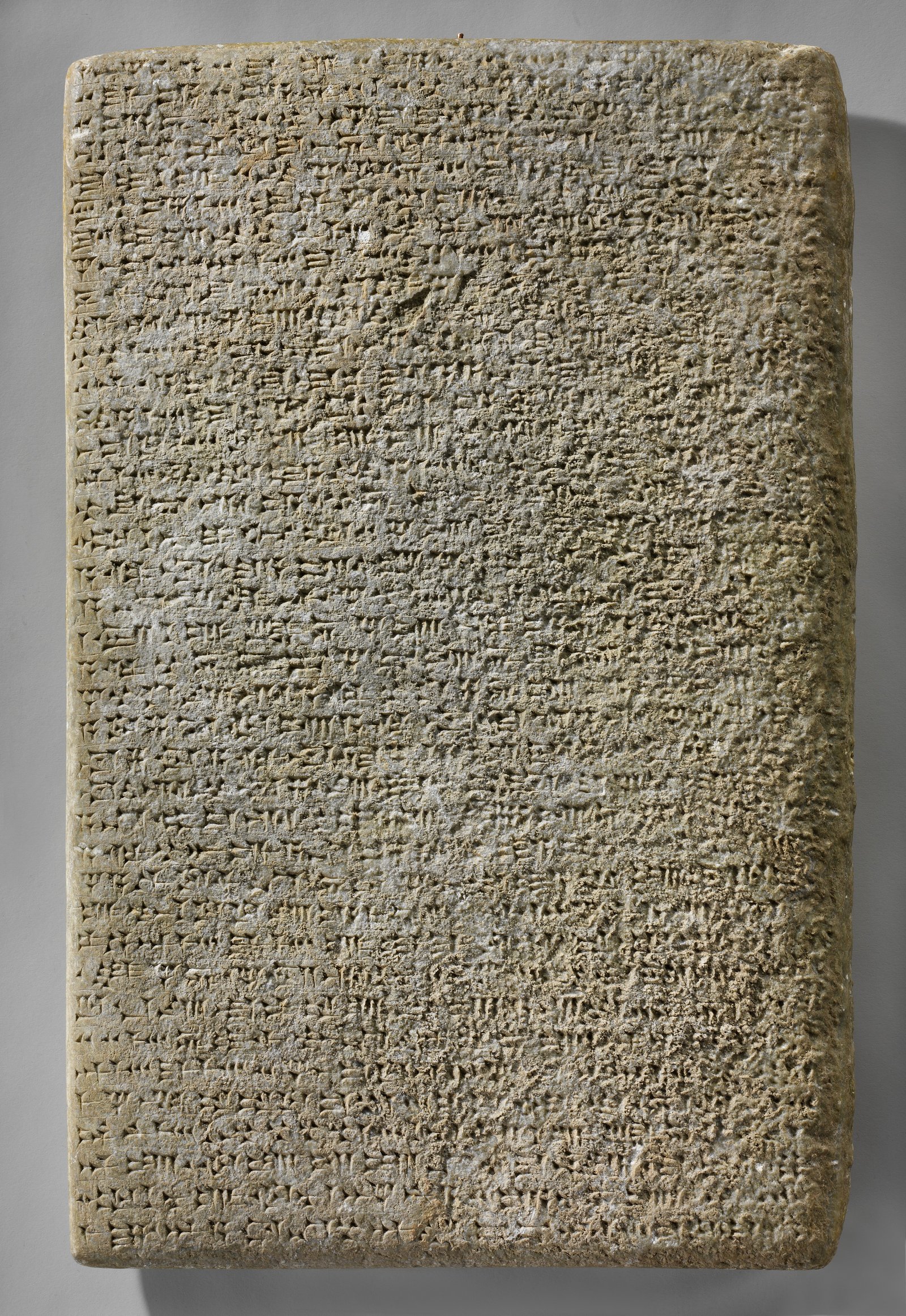
Gypsum alabaster slab inscribed in cuneiform, from Nimrud (Kalhu), reign of Ashurnasirpal II
A rectangular alabaster slab covered edge to edge with lines of cuneiform, one of the wall slabs of a royal palace at Nimrud. Palace texts of this kind give the king a string of titles and credit his conquests to the god Ashur, so the god's authority is borrowed for the king's acts.
- Date
- 0000
- Period
- Pre-1914
- Made by
- Royal court of Ashurnasirpal II, king of Assyria, at Kalhu (Nimrud)
- Country
- Neo Assyrian Empire
- Medium
- Object
- Issuer type
- State
- Regime
- Neo Assyrian Empire
- Leader
- Ashurnasirpal II
- Audience
- Mixed
- Purpose
- Commemorate
- Techniques
- TransferGlittering generalities
- Leader
- Ashurnasirpal II
- Source
- Identified Openly sourced: the speaker is who they say they are
- Source
- The Metropolitan Museum of Art (Open Access), retrieved October 2, 2026
- Rights
- Public domain (The Met Open Access, CC0; isPublicDomain true in the Met API; object about 2,800 years old)
The Metropolitan Museum of Art, Rogers Fund, 1958 (58.31.57), Open Access
Text on the object
[illegible: the cuneiform on this slab was not transcribed in this entry]
Not translated: the text was not read. For comparison only, the opening of the Standard Inscription found on many Nimrud palace slabs reads in Luckenbill's 1926 translation (vol. 1, sec. 486): "Palace of Assur-nasir-pal, the priest of Assur, the favorite of Enlil (Bel) and Urta, the beloved of Anu and Dagan, the strong one among the great gods, the mighty king, king of the universe, king of Assyria". It is not shown that this slab carries that text.
No signs were read from the image; the entry does not claim the slab carries the Standard Inscription.