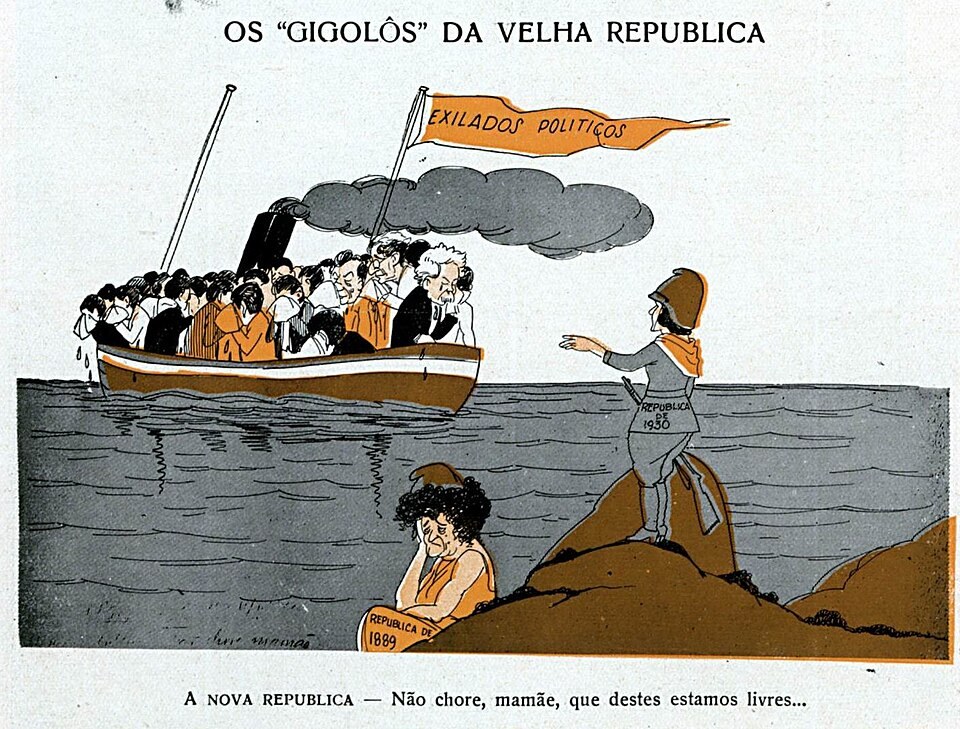
Os "gigolôs" da Velha República (The "Gigolos" of the Old Republic)
A rowboat under a pennant reading 'Exilados políticos' carries a crowd of men in dark suits weeping into handkerchiefs. From a rock ashore a helmeted soldier sashed 'República de 1930' tells the seated, weeping woman marked 'República de 1889' not to cry, 'we are free of these'. The tell is the headline label 'gigolôs' (kept men) applied to the whole ousted political class.
- Date
- November 22, 1930
- Period
- Interwar
- Made by
- Careta (Rio de Janeiro illustrated weekly); cartoonist Alfredo Storni
- Region
- Latin America
- Country
- Brazil
- Medium
- Cartoon
- Issuer type
- Media
- Regime
- Brazilian Provisional Government
- Leader
- Getulio Vargas
- Audience
- Domestic public
- Purpose
- Persuade or win support
- Theme
- Elections and party politics
- Event
- Brazilian Revolution of 1930
- Techniques
- Name-calling
- Source
- Identified Openly sourced: the speaker is who they say they are
- Source
- Wikimedia Commons (from Hemeroteca Digital Brasileira, Fundação Biblioteca Nacional), retrieved September 29, 2026
- Rights
- Public domain (published Rio de Janeiro 1930, before 1931; Commons PD-Brazil tag on file page)
Alfredo Storni, Careta (Rio de Janeiro) no. 1170, 22 November 1930, via Wikimedia Commons
Text on the object
OS "GIGOLÔS" DA VELHA REPUBLICA

[pennant on the boat:] EXILADOS POLITICOS
[sash on the standing soldier:] REPUBLICA DE 1930
[banner at the seated woman's feet:] REPUBLICA DE 1889

A NOVA REPUBLICA — Não chore, mamãe, que destes estamos livres...

[signature, lower left, faint:] [illegible]
THE "GIGOLOS" OF THE OLD REPUBLIC

[pennant on the boat:] POLITICAL EXILES
[sash on the standing soldier:] REPUBLIC OF 1930
[banner at the seated woman's feet:] REPUBLIC OF 1889

THE NEW REPUBLIC — Don't cry, mama, we're free of these...
The signature at lower left is too faint to read; the Commons file page credits the cartoon to Alfredo Storni. 'Gigolô' in Brazilian Portuguese means a man kept by a woman.