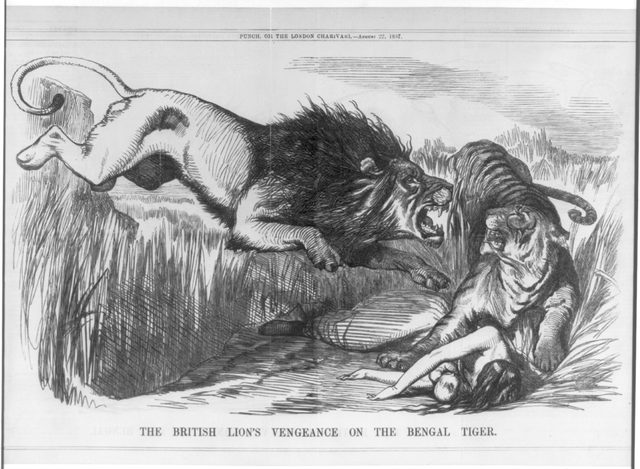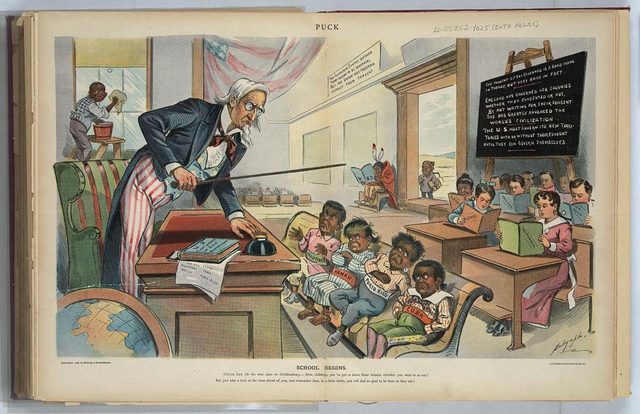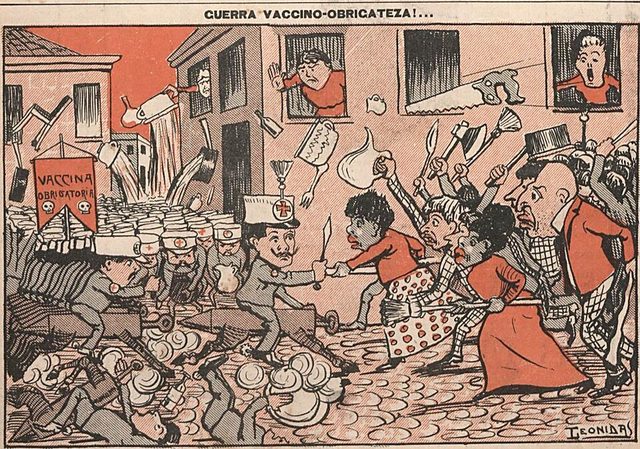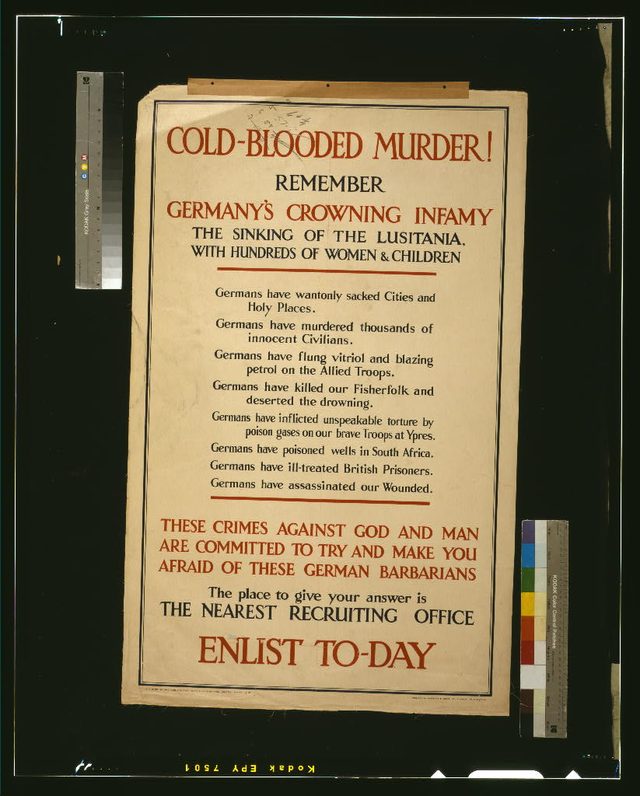
Also called Ad hominem labeling, Loaded label
Attach a loaded label so the audience rejects the target without checking the claim.
The tell
The insult does the work; evidence is optional or arrives later as decoration.
Not this
Accurate naming of a documented crime or office.
History and effect
One of the seven devices the Institute for Propaganda Analysis named in 1937 to teach American students to recognize domestic and Axis propaganda alike. The move itself is far older — Roman political invective ran on the same logic — but the IPA gave it a teachable name.
It triggers immediate social rejection of the target: the audience discharges contempt or disgust before it ever gets to the underlying claim.
Lineage: IPA 1937
How it works
Name-calling starts with a choice of word. The sender picks a label that already carries a strong verdict in the audience's vocabulary ("traitor", "enemy of the people", "vermin", "criminal", a wartime epithet for a nation) and attaches it to a person, group or idea. The label does not describe a specific act that can be checked. It assigns the target to a category the audience has already learned to reject, so the verdict arrives with the word.
The second step is substitution. Where an argument would normally set out what the target did and why it matters, the label stands in for that whole chain. A poster that calls an army "the Hun" does not need to show what that army did in a particular town; a hashtag that calls a party "criminals" does not need to name a charge. If evidence appears at all, it tends to arrive afterwards and is selected to fit the label that has already been applied. The Institute for Propaganda Analysis described the device in exactly these terms: a bad name is given so that the audience condemns without examining the evidence (Lee and Lee 1939).
The third step is repetition and spread. A label becomes most effective once it is short enough to be repeated by people other than the sender: a slogan, a nickname, a chant, a hashtag. Each repetition makes the category feel more established, and the people repeating it do much of the distribution. The Matryoshka clips described in Matryoshka's midterm clips: borrowed faces and a borrowed logo show the modern version: a single hashtag sorting a whole party into a criminal category, pushed across many short videos, with no specific charge attached to any of the people named.
What the message depends on is a shared vocabulary of contempt. The label only works if the audience already treats the category as bad. That is why name-calling often borrows from existing fears (disease, dirt, animals, betrayal) and why the same word can be ineffective or even flattering with a different audience.
Why it works
The first mechanism is categorization. Gordon Allport, in The Nature of Prejudice (1954), argued that some labels act as "labels of primary potency": once a person is named by a category word, that word crowds out every other thing that is true about them. Social identity theory (Tajfel and Turner 1979) adds the group dimension. People sort others into in-groups and out-groups quickly and favor their own group even on trivial grounds, so a label that places the target in an out-group lets the audience reject them as a matter of group loyalty rather than judgment. FRAME's Learn library covers this in Social identity and In-group favoritism.
The second mechanism is dehumanization. Nick Haslam's review (2006) distinguishes labels that deny people uniquely human traits (likening them to animals) from labels that deny them warmth and feeling (likening them to machines or objects). Kteily and colleagues (2015) found that people willing to rate an out-group as less "evolved" on a simple scale were also more likely to support hostile policies toward that group. This research is correlational at its core, and whether dehumanizing language causes hostility or mainly expresses hostility that already exists is still debated. Yanagizawa-Drott (2014) estimated that reception of Radio Télévision Libre des Mille Collines (RTLM) in Rwanda increased participation in the 1994 killings, but estimates of that kind depend on modeling assumptions about radio coverage and should be read as an estimate, not a settled count.
The third mechanism is repetition. Hasher, Goldstein and Toppino (1977) showed that statements heard more than once are rated as more likely to be true, and Fazio and colleagues (2015) found that the effect persists even when people know the correct answer. A label repeated often enough starts to feel like a description. FRAME's Learn library covers this in Illusory truth effect.
Finally, name-calling works because it is fast. A label asks for no effort, while checking what it implies asks for a lot. The Elaboration Likelihood Model (Petty and Cacioppo 1986) predicts that when attention or motivation is low, people lean on simple cues rather than weighing arguments, and a label is one of the simplest cues there is.
Examples across eras and sides
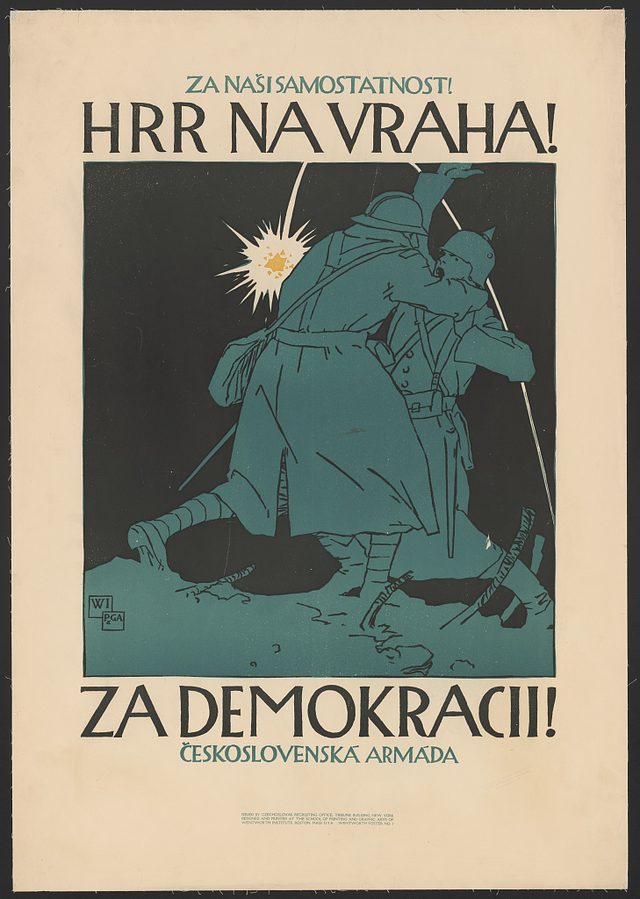
- "The Hun" (United States and Allied powers, 1914 to 1918). Allied propaganda in the First World War used "the Hun" as the standard epithet for German forces, an echo of Kaiser Wilhelm II's 1900 speech urging troops bound for China to fight like the Huns of old. The U.S. Treasury poster Beat Back the Hun with Liberty Bonds puts the single label over a bloodied, ape-like figure and asks for bond purchases on the strength of the name alone. Lasswell's study of wartime propaganda treated this kind of enemy labeling as a central tool of all the belligerents, not one side (Sources: Lasswell 1927).
- "Enemy of the people" (Soviet Union, 1930s). During the purges of 1936 to 1938 the phrase vrag naroda was applied to officials, officers and ordinary citizens before and during their trials, and families of those labeled could be punished in turn. In his 1956 closed speech to the Twentieth Party Congress, Nikita Khrushchev criticized the term, saying it had made proof unnecessary (Sources: Conquest 1990).
- "Ox demons and snake spirits" (China, 1966). On 1 June 1966 the People's Daily published an editorial calling for a sweep against "ox demons and snake spirits", a phrase from Buddhist and folk imagery that became a catch-all label for people targeted in the early Cultural Revolution. Teachers, officials and others were paraded under such labels at struggle sessions (Sources: MacFarquhar and Schoenhals 2006).
- "Inyenzi" (Rwanda, 1990 to 1994). The extremist paper Kangura and the station RTLM repeatedly called Tutsi "inyenzi" (cockroaches) and linked them to the rebel Rwandan Patriotic Front. The International Criminal Tribunal for Rwanda examined this broadcasting and publishing in the "Media case" (Prosecutor v. Nahimana, Barayagwiza and Ngeze, judgment 2003). This is genocide-scale use of the technique and is not comparable in scale or consequence to the electoral examples below (Sources: Des Forges 1999; ICTR 2003).
- GOPAC's word list (United States, Republican, 1990). A memo distributed by GOPAC, the political action committee then associated with Newt Gingrich, titled Language: A Key Mechanism of Control, advised Republican candidates to describe opponents with a list of "contrasting words" that included terms such as "sick", "pathetic", "corrupt" and "traitors". The memo treated these words as tools to be applied regardless of the specific opponent (Sources: GOPAC 1990).
- "Basket of deplorables" (United States, Democratic, 2016). At a New York fundraiser on 9 September 2016, Hillary Clinton said that half of Donald Trump's supporters could be put in "the basket of deplorables", listing traits such as racism and sexism. She expressed regret for the "half" the next day and later wrote about the remark as a mistake. The phrase assigned a large group of voters to a single disqualifying category (Sources: Clinton 2017).
- "Traitors abroad" (Iran, 2026). Iranian state media promoted the Alaj portal, which asked citizens to send in names of Iranians abroad it described as "anti-homeland", "separatist" and traitors, with penalties attached. The labels came before any named act or charge (see Alaj: the portal Iranian state media promoted for reporting 'traitors abroad').
How to spot it
- The strongest word in the message is a category label, and it arrives before any specific act, date or document.
- You cannot state what the target is accused of doing without repeating the label itself.
- The label compares people to animals, vermin, disease or dirt, or places them outside the nation ("traitor", "enemy", "foreign").
- The same label is applied to many different people with very different conduct.
- The label is short enough to chant, print on a sign or use as a hashtag, and it is repeated far more often than any supporting evidence.
- Evidence, if it appears, is thin compared with the size of the label, or turns up only after the audience has been asked to reject the target.
Where it ends: edge cases and legitimate persuasion
Named variants include the wartime epithet ("the Hun"), the political nickname, the dehumanizing metaphor (vermin, cockroaches, disease), the hashtag label, and guilt by association, where the target is labeled through a group they are said to resemble. Name-calling is the mirror image of Glittering generalities: one attaches a vague bad word, the other a vague good word, and both skip the evidence. It often opens the way for Scapegoating, which assigns blame for a complex problem to a labeled group, and for Accusation in a mirror, where the label describes what the sender plans to do. Euphemism / doublespeak runs the other way, softening a label for one's own side. When a label quietly changes the meaning of an established word, it overlaps with Semantic hijacking.
Not every negative word is name-calling. Calling a person convicted of fraud a "convicted fraudster" is accurate naming of a documented fact. Calling a military force by its legal name while describing documented actions is reporting. Strong language in opinion writing is also not automatically propaganda when the writer sets out the specific conduct being condemned.
The test a reader can apply has two parts. First, strip the label out and ask what specific, checkable claim remains; if nothing is left, the label was doing the work. Second, ask whether the sender would use the same word for someone on their own side who did the same thing. A label that is applied consistently to documented conduct is a description. A label that is applied to a category of people, before or instead of any evidence, is name-calling.
Sources
- Allport, Gordon W. 1954. The Nature of Prejudice. Cambridge, MA: Addison-Wesley.
- Clinton, Hillary Rodham. 2017. What Happened. New York: Simon & Schuster.
- Conquest, Robert. 1990. The Great Terror: A Reassessment. New York: Oxford University Press.
- Des Forges, Alison. 1999. Leave None to Tell the Story: Genocide in Rwanda. New York: Human Rights Watch.
- Fazio, Lisa K., Nadia M. Brashier, B. Keith Payne, and Elizabeth J. Marsh. 2015. "Knowledge Does Not Protect Against Illusory Truth." Journal of Experimental Psychology: General 144(5): 993–1002.
- GOPAC. 1990. Language: A Key Mechanism of Control. Memo distributed to Republican candidates.
- Haslam, Nick. 2006. "Dehumanization: An Integrative Review." Personality and Social Psychology Review 10(3): 252–264.
- Hasher, Lynn, David Goldstein, and Thomas Toppino. 1977. "Frequency and the Conference of Referential Validity." Journal of Verbal Learning and Verbal Behavior 16(1): 107–112.
- International Criminal Tribunal for Rwanda. 2003. The Prosecutor v. Ferdinand Nahimana, Jean-Bosco Barayagwiza and Hassan Ngeze, Case No. ICTR-99-52-T, Judgement and Sentence, 3 December 2003.
- Kteily, Nour, Emile Bruneau, Adam Waytz, and Sarah Cotterill. 2015. "The Ascent of Man: Theoretical and Empirical Evidence for Blatant Dehumanization." Journal of Personality and Social Psychology 109(5): 901–931.
- Lasswell, Harold D. 1927. Propaganda Technique in the World War. New York: Alfred A. Knopf.
- Lee, Alfred McClung, and Elizabeth Briant Lee, eds. 1939. The Fine Art of Propaganda: A Study of Father Coughlin's Speeches. New York: Harcourt, Brace and Company (for the Institute for Propaganda Analysis).
- MacFarquhar, Roderick, and Michael Schoenhals. 2006. Mao's Last Revolution. Cambridge, MA: Belknap Press of Harvard University Press.
- Petty, Richard E., and John T. Cacioppo. 1986. Communication and Persuasion: Central and Peripheral Routes to Attitude Change. New York: Springer-Verlag.
- Tajfel, Henri, and John C. Turner. 1979. "An Integrative Theory of Intergroup Conflict." In The Social Psychology of Intergroup Relations, edited by William G. Austin and Stephen Worchel, 33–47. Monterey, CA: Brooks/Cole.
- Yanagizawa-Drott, David. 2014. "Propaganda and Conflict: Evidence from the Rwandan Genocide." Quarterly Journal of Economics 129(4): 1947–1994.
Case studies
- Alaj: the portal Iranian state media promoted for reporting 'traitors abroad' — Alaj: the portal Iranian state media promoted for reporting 'traitors abroad'
- The German 'corpse factory': a false atrocity story and its long afterlife (1917-1925) — The German 'corpse factory': a false atrocity story and its long afterlife (1917-1925)
- The Committee on Public Information: how the U.S. government sold the First World War at home (1917-1919) — The Committee on Public Information: how the U.S. government sold the First World War at home (1917-1919)
- Matryoshka's midterm clips: borrowed faces and a borrowed logo — Matryoshka's midterm clips: borrowed faces and a borrowed logo
- Kangura, Radio Rwanda and RTLM: Hutu Power propaganda before and during the genocide against the Tutsi, 1990-1994 — Kangura, Radio Rwanda and RTLM: Hutu Power propaganda, 1990-1994
- Collectivisation, the 1932-33 famine and its denial: the kulak label, the silence and the foreign press — Collectivisation, the 1932-33 famine and its denial
- Angkar: language control in Democratic Kampuchea, 1975-1979, and the contests over its record — Angkar: language control in Democratic Kampuchea, 1975-1979
- Media war over Croatia and Bosnia, 1987-1995, and the denial of Srebrenica — Media war over Croatia and Bosnia, 1987-1995, and the denial of Srebrenica
- Anti-Rohingya propaganda in Myanmar, 2012-2018: the 'Bengali' label, the monks' sermons and the military's covert Facebook pages — Anti-Rohingya propaganda in Myanmar, 2012-2018
- German South West Africa, 1904-1908: the war on the Herero and Nama and the contest over its record — German South West Africa, 1904-1908: the war on the Herero and Nama
- COINTELPRO: the FBI's covert media and information operations against U.S. groups, 1956-1971 — COINTELPRO: the FBI's covert media and information operations against U.S. groups, 1956-1971
- Fossil-fuel industry climate doubt campaigns, 1977 to the 2000s — Fossil-fuel industry climate doubt campaigns, 1977 to the 2000s
- McCarthy's numbers: 205, 57, 81 and the move from 'card-carrying Communists' to 'security risks' (1950-54) — McCarthy's shifting numbers, 1950
- Big-character posters: how the opening labels of China's Cultural Revolution did the work of charges (1966-68) — Big-character posters and the labels of the Cultural Revolution
- Lubang Buaya, 1965: the mutilation story the autopsies did not support — Indonesia 1965: the Lubang Buaya story
- 'Asia for the Asiatics': Japan's Co-Prosperity Sphere and the movements that used it — 'Asia for the Asiatics': Japan's Co-Prosperity Sphere and the movements that used it
- The Kenya Emergency, 1952-1960: 'rehabilitation', the Hola water cart, and the oath — The Kenya Emergency, 1952-1960: 'rehabilitation', the Hola water cart, and the oath
- 'Benevolent assimilation': the Philippine-American War and the propaganda on every side — 'Benevolent assimilation': the Philippine-American War and the propaganda on every side
- Algeria 1954-1962: 'events', psychological action, and the FLN's single voice — Algeria 1954-1962: 'events', psychological action, and the FLN's single voice
- The Congo Free State press war: Leopold II's Press Bureau and the Congo Reform Association — The Congo Free State press war: Leopold II's Press Bureau and the Congo Reform Association
- The Islamic State's media machine: Dabiq, Rumiyah, Amaq and the 'virtual caliphate' — The Islamic State's media machine: Dabiq, Rumiyah, Amaq and the 'virtual caliphate'
- Christchurch and its copycats: livestreamed attacks and 'manifesto culture', 2019-2022 — Christchurch and its copycats: livestreamed attacks and 'manifesto culture', 2019-2022
- Red Army Faction: communiqués, hunger strikes and the 'isolation torture' campaign — Red Army Faction: communiqués, hunger strikes and the 'isolation torture' campaign
- Shining Path: the Gonzalo cult, the 'people's war' and the state's reply — Shining Path: the Gonzalo cult, the 'people's war' and the state's reply
- Film under Goebbels: Triumph des Willens (1935) and Der ewige Jude (1940) — Film under Goebbels: Triumph des Willens and Der ewige Jude
- Why We Fight: the U.S. Army's orientation films, 1942-1945 — Why We Fight: the U.S. Army's orientation films
- Wartime radio voices: open and hidden broadcasts aimed at the enemy, 1939-1945 — Wartime radio voices, open and hidden
- Kadesh and Behistun: kings carving their own record — Kadesh and Behistun: kings carving their own record
- Octavian, Antony and the Res Gestae: how Augustus wrote his own reign — Octavian, Antony and the Res Gestae: how Augustus wrote his own reign
- The Reformation print war: Luther, Cranach and the Catholic reply — The Reformation print war: Luther, Cranach and the Catholic reply
- The English Civil War pamphlet war, 1641-1649 — The English Civil War pamphlet war, 1641-1649
- Join or Die to the Boston Massacre: patriot and loyalist print, 1754-1783 — Join or Die to the Boston Massacre: patriot and loyalist print, 1754-1783
- Revolution, counter-revolution and Napoleon's bulletins, 1789-1815 — Revolution, counter-revolution and Napoleon's bulletins, 1789-1815
- Abolitionist and pro-slavery print, 1787-1860 — Abolitionist and pro-slavery print, 1787-1860
- Union and Confederate print, 1861-1865 — Union and Confederate print, 1861-1865
- Remember the Maine: the yellow press and Spain, 1895-1898 — Remember the Maine: the yellow press and Spain, 1895-1898
- Gwangju, May 1980: 'rioters', 'spies' and the censored press — Gwangju, May 1980: 'rioters', 'spies' and the censored press
- Pengkhianatan G30S/PKI: how Indonesia's New Order kept 1965 on screen — Pengkhianatan G30S/PKI: how Indonesia's New Order kept 1965 on screen
- The loudspeaker war: propaganda across the Taiwan Strait, 1949-1987 — The loudspeaker war: propaganda across the Taiwan Strait, 1949-1987
- The Kim leader cult, the anti-US month and the leaflets sent back — The Kim leader cult, the anti-US month and the leaflets sent back
- Operation Spectrum: Singapore's 'Marxist conspiracy' and its answers — Operation Spectrum: Singapore's 'Marxist conspiracy' and its answers
- Marcos's martial law: the 'New Society' and the online contest over its memory — Marcos's martial law: the 'New Society' and the online contest over its memory
- The Great Leap Forward's 'sputnik' harvests and the famine that followed — The Great Leap Forward's 'sputnik' harvests and the famine that followed
- Holy war on three sides: the Ottoman jihad call, Germany's Islam policy and Britain's Arab Revolt messaging (1914-1918) — Holy war on three sides: the Ottoman jihad call, Germany's Islam policy and Britain's Arab Revolt messaging (1914-1918)
- Russia's war of words: tsarist lubki, the Liberty Loan and the fight over 'German agents' (1914-1918) — Russia's war of words: tsarist lubki, the Liberty Loan and the fight over 'German agents' (1914-1918)
- The Institute for Propaganda Analysis (1937-1942) — The Institute for Propaganda Analysis (1937-1942)
- The 1800 election: "Jefferson and no God" and "squints at monarchy" — The 1800 election: "Jefferson and no God" and "squints at monarchy"
- British election posters and broadcasts, 1978 to 2005: Conservative and Labour attack campaigns — British election posters and broadcasts, 1978 to 2005: Conservative and Labour attack campaigns
- Facebook's April 2019 takedowns in India: a Congress IT cell, a BJP-linked IT firm and a Pakistani military network — Facebook's April 2019 takedowns in India: a Congress IT cell, a BJP-linked IT firm and a Pakistani military network
- Brazil 2018 and 2022: WhatsApp blasts, removal orders against both campaigns, and the electoral court's new powers — Brazil 2018 and 2022: WhatsApp blasts, removal orders against both campaigns, and the electoral court's new powers
- The MMR scare: from a 1998 press conference to Vaxxed, and its 1802 ancestors — The MMR scare: from a 1998 press conference to Vaxxed, and its 1802 ancestors
- Just Say No and the fried egg: anti-drug campaigns, 1971-2016 — Just Say No and the fried egg: anti-drug campaigns, 1971-2016
- Follow the science, Plandemic: COVID-19 messaging from officials and contrarians, 2020-2022 — Follow the science, Plandemic: COVID-19 messaging from officials and contrarians, 2020-2022
- Gay plague, tombstones and Silence = Death: messaging in the AIDS crisis, 1981-1990 — Gay plague, tombstones and Silence = Death: messaging in the AIDS crisis, 1981-1990
- Better babies, fitter families: eugenics campaigns in the US, Sweden and Germany — Better babies, fitter families: eugenics campaigns in the US, Sweden and Germany
- The Index of Prohibited Books (1559-1966) — The Index of Prohibited Books (1559-1966)
- Wartime censorship in the First World War: Britain, Germany, France and the United States — Wartime censorship in the First World War: Britain, Germany, France and the United States
- The 1933 book burnings and Nazi control of publishing — The 1933 book burnings and Nazi control of publishing
- China's Great Firewall and the June Fourth anniversary — China's Great Firewall and the June Fourth anniversary
- Apartheid South Africa's banned organisations, persons and publications — Apartheid South Africa's banned organisations, persons and publications
- Government pressure on platforms and broadcasters ("jawboning"), 2020-2026 — Government pressure on platforms and broadcasters ("jawboning"), 2020-2026
- Temperance, Prohibition and the wets: the dry campaigns and their opponents, 1874 to 1933 — Temperance, Prohibition and the wets: the dry campaigns and their opponents, 1874 to 1933
- Labor organizing and anti-union campaigns in the United States, 1910-1941 — Labor organizing and anti-union campaigns in the United States, 1910-1941
- Black Lives Matter and Blue Lives Matter: two slogans, their campaigns, and a foreign operation that posed as both — Black Lives Matter and Blue Lives Matter: two slogans, their campaigns, and a foreign operation that posed as both
- Gun rights and gun control: persuasion on both sides of the U.S. gun debate — Gun rights and gun control: persuasion on both sides of the U.S. gun debate
- MAGA and the Resistance: grassroots organising for and against Trump, 2016-2021 — MAGA and the Resistance: grassroots organising for and against Trump, 2016-2021
- The civil rights movement and the Citizens' Councils: boycotts and marches, 'outside agitator' labels, state money and economic pressure — The civil rights movement and the Citizens' Councils: boycotts and marches, 'outside agitator' labels, state money and economic pressure
- Voice of the Arabs and the Voice of Britain: the Arab radio war, 1953-1967 — Voice of the Arabs and the Voice of Britain: the Arab radio war, 1953-1967
- South Africa's information war: the apartheid state's secret projects and the ANC's Radio Freedom — South Africa's information war: the apartheid state's secret projects and the ANC's Radio Freedom
- The Cuba-United States radio war: Radio Swan's cover story and Havana's 'gusanos' — The Cuba-United States radio war: Radio Swan's cover story and Havana's 'gusanos'
- The Reich Ministry of Public Enlightenment and Propaganda, 1933-1945 — The Reich Ministry of Public Enlightenment and Propaganda, 1933-1945
- Fascist Italy's propaganda machine: from the Duce's Press Office to the Ministry of Popular Culture — Fascist Italy's propaganda machine: from the Duce's Press Office to the Ministry of Popular Culture
- Imperial Japan's wartime propaganda at home: the Information Bureau, the neighbourhood associations and the war communiqués — Imperial Japan's wartime propaganda at home: the Information Bureau, the neighbourhood associations and the war communiqués
- Soviet wartime propaganda, 1939-1945: Sovinformburo, Agitprop and the Red Army press — Soviet wartime propaganda, 1939-1945: Sovinformburo, Agitprop and the Red Army press
- Before the state: the NSDAP's propaganda in its fringe years, 1920-1923 — Before the state: the NSDAP's propaganda in its fringe years, 1920-1923
- Hitler über Deutschland: the 1932 campaigns that made the NSDAP a mass party — Hitler über Deutschland: the 1932 campaigns that made the NSDAP a mass party
- The SA in the street: uniforms, a martyr and staged disorder as proof only the NSDAP could 'restore order' (1921-1933) — The SA in the street: uniforms, a martyr and staged disorder as proof only the NSDAP could 'restore order' (1921-1933)
- From a fire to a vote: the Reichstag Fire Decree and the Enabling Act, February-March 1933 — From a fire to a vote: the Reichstag Fire Decree and the Enabling Act, February-March 1933
- Bolshevik agitprop, 1917-1921: soviets, decrees, agit-trains and the ROSTA windows — Bolshevik agitprop, 1917-1921: soviets, decrees, agit-trains and the ROSTA windows
- 'Trotskyism or Leninism': the press campaign that removed Trotsky from Soviet leadership (1924-1929) — 'Trotskyism or Leninism': the press campaign that removed Trotsky from Soviet leadership (1924-1929)
- "Liquidate the kulaks as a class": the propaganda campaign for collectivization (1929-1933) — "Liquidate the kulaks as a class": the propaganda campaign for collectivization (1929-1933)
- The Moscow show trials: confession, spectacle and consent (1936-1938) — The Moscow show trials: confession, spectacle and consent (1936-1938)
- Divide the land, label the enemy: propaganda and discipline in the Jiangxi Soviet (1927-1934) — Divide the land, label the enemy: propaganda and discipline in the Jiangxi Soviet (1927-1934)
- The Yan'an Rectification Movement: doctrine, self-criticism and the Rescue Campaign (1942-1945) — The Yan'an Rectification Movement: doctrine, self-criticism and the Rescue Campaign (1942-1945)
- Propaganda of the Chinese Civil War, 1945-1949: land reform, surrender leaflets and the fall of the mainland — Propaganda of the Chinese Civil War, 1945-1949: land reform, surrender leaflets and the fall of the mainland
- Land reform and the struggle session: how the CCP's class labels decided who kept their land, 1946-1952 — Land reform and the struggle session: how the CCP's class labels decided who kept their land, 1946-1952
- The Gestapo's Denunciation Apparatus: Policing by Public Tip-Off, 1933-1945 — The Gestapo's denunciation apparatus: policing by public tip-off, 1933-1945
- The People's Court: the Volksgerichtshof as a stage for verdicts, 1934-1945 — The People's Court: the Volksgerichtshof as a stage for verdicts, 1934-1945
- The SS as its own propaganda institution: Das Schwarze Korps, the Ahnenerbe and the order myth, 1931-1945 — The SS as its own propaganda institution: Das Schwarze Korps, the Ahnenerbe and the order myth, 1931-1945
- The NKVD as its own propagandist: 'enemies of the people,' informants and the vigilant state (1934-1946) — The NKVD as its own propagandist: 'enemies of the people,' informants and the vigilant state (1934-1946)
- The Union of Soviet Writers and socialist realism, 1932-1969 — The Union of Soviet Writers and socialist realism, 1932-1969
- The danwei: how the work unit became China's basic unit of political control, 1951-2003 — The danwei: how the work unit became China's basic unit of political control, 1951-2003
- The Hundred Flowers and Anti-Rightist Campaigns: soliciting criticism, then purging it (1956-1959) — The Hundred Flowers and Anti-Rightist Campaigns: soliciting criticism, then purging it (1956-1959)
- Nazi control of school curriculum and teachers, 1933-1938 — Nazi control of school curriculum and teachers, 1933-1938
- The Komsomol: youth pipeline, mass mobilization and internal discipline, 1918-1991 — The Komsomol: youth pipeline, mass mobilization and internal discipline, 1918-1991
- Soviet control of school curriculum and textbooks — Soviet control of school curriculum and textbooks
- Class struggle in the classroom: nationalizing China's school curriculum and textbooks, 1949-1977 — Class struggle in the classroom: nationalizing China's school curriculum and textbooks, 1949-1977
- The Red Guards: how Mao turned millions of students into a political weapon, 1966-68 — The Red Guards: how Mao turned millions of students into a political weapon, 1966-68
- Werwolf: Nazi Germany's propaganda of a nationwide resistance that barely existed, 1944-1945 — Werwolf: Nazi Germany's propaganda of a nationwide resistance that barely existed, 1944-1945
- From 'ill health' to Swan Lake: the GKChP's case for its own coup, 19-21 August 1991 — From 'ill health' to Swan Lake: the GKChP's case for its own coup, 19-21 August 1991
- Yeltsin on the tank: the broadcast image that framed the August 1991 coup's collapse — Yeltsin on the tank: the broadcast image that framed the August 1991 coup's collapse
- The end of the USSR: Gorbachev's resignation and the flag over the Kremlin (December 1991) — The end of the USSR: Gorbachev's resignation and the flag over the Kremlin (December 1991)
- The Gang of Four: arrest, denunciation and a trial that closed the Cultural Revolution's books (1976-1981) — The Gang of Four: arrest, denunciation and a trial that closed the Cultural Revolution's books (1976-1981)
- History will absolve me: the 26th of July Movement and Batista's press, 1953–1959 — History will absolve me: the 26th of July Movement and Batista's press, 1953–1959
- ¡Venceremos!: Cuba's 1961 literacy campaign, the primer, and the year-end declaration — ¡Venceremos!: Cuba's 1961 literacy campaign, the primer, and the year-end declaration
- The peoples of three continents: OSPAAAL, a Havana secretariat, and Tricontinental — The peoples of three continents: OSPAAAL, a Havana secretariat, and Tricontinental
- Pioneros por el comunismo: Cuba's youth ladder, the single textbook, and the reply that uses the same devices — Pioneros por el comunismo: Cuba's youth ladder, the single textbook, and the reply that uses the same devices
- Playa Girón and the Bay of Pigs: mercenaries in one telling, Cuban patriots in the other — Playa Girón and the Bay of Pigs: mercenaries in one telling, Cuban patriots in the other
- Cuba's crisis years: Mariel, the Special Period, the Malecón, and 11 July — Cuba's crisis years: Mariel, the Special Period, the Malecón, and 11 July
Then and now
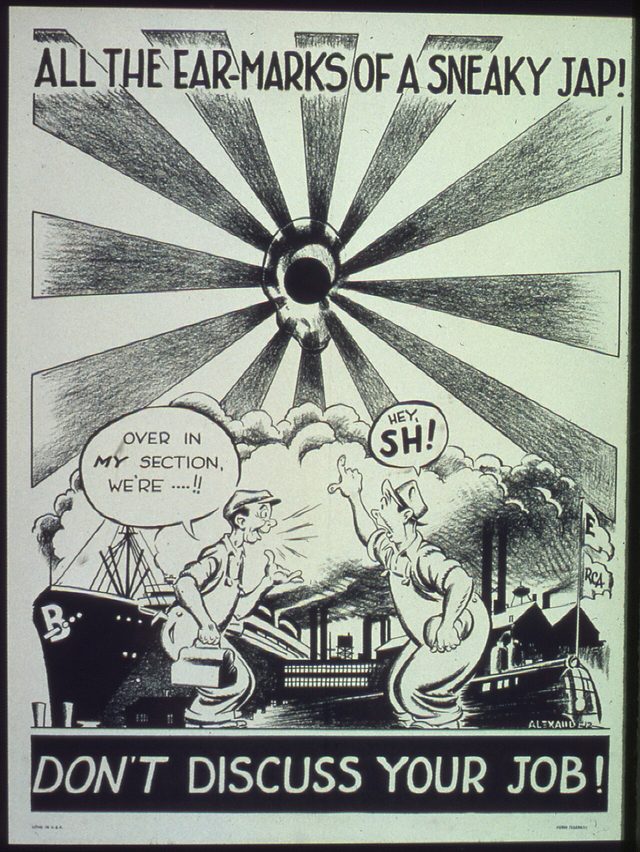
- Then and now: national and ethnic labels for an enemy or a disease (US 1942, US 2020) — National and ethnic labels for an enemy or a disease: US 1942 and US 2020
- Then and now: blaming Jews for disease (occupied Poland 1941, COVID-19 2020) — Blaming Jews for disease: occupied Poland 1941 and COVID-19 conspiracy theories 2020