Yaşasın Vatan, Yaşasın Millet, Yaşasın Hürriyet! (Long Live the Fatherland, the Nation, Liberty!)
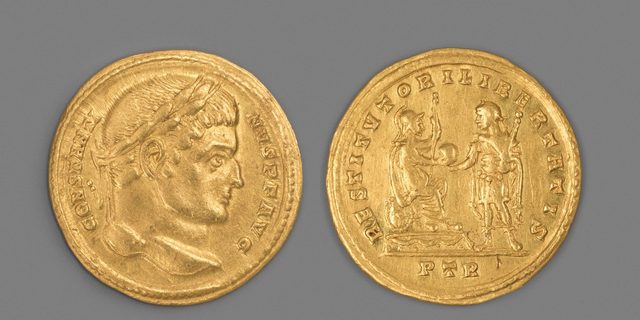
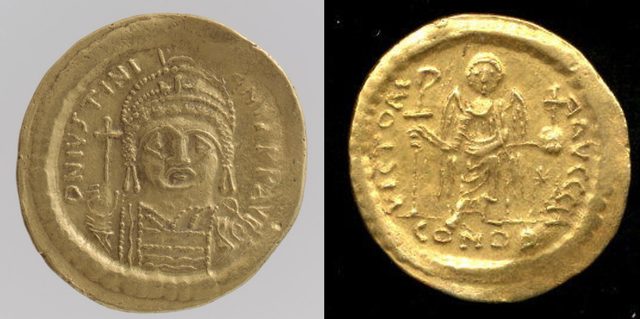
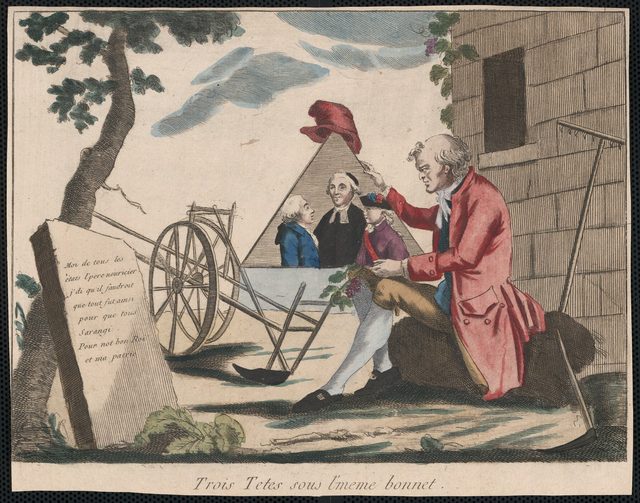
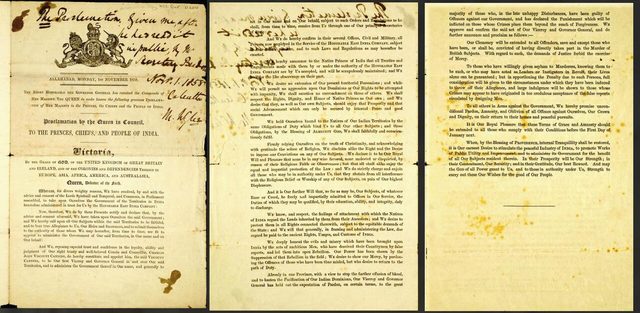
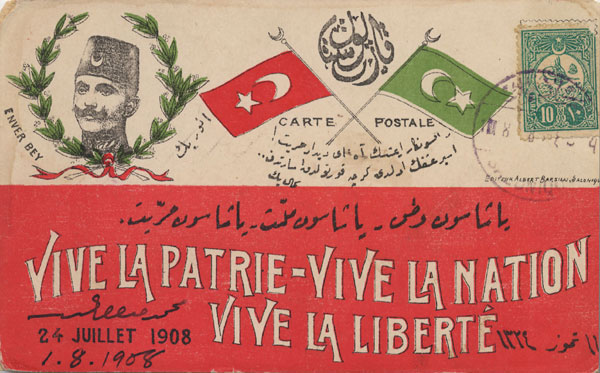
A postcard marking the 24 July 1908 restoration of the Ottoman constitution shows Enver Bey framed by a laurel wreath, Ottoman flags and the chant 'Long live the fatherland, long live the nation, long live liberty' in Ottoman Turkish and French. The three-word chant substitutes shared feeling for any specific claim about what the restored constitution would actually change.
- Date
- July 24, 1908
- Period
- Pre-1914
- Made by
- Young Turk movement / Committee of Union and Progress; postcard publisher unidentified
- Region
- Middle East and North Africa
- Country
- Ottoman Empire
- Medium
- Postcard
- Issuer type
- Party
- Regime
- Ottoman Empire
- Leader
- Abdul Hamid II
- Audience
- Domestic public
- Purpose
- Commemorate
- Theme
- Elections and party politics
- Event
- Young Turk Revolution
- Techniques
- Glittering generalities
- Source
- Identified Openly sourced: the speaker is who they say they are
- Source
- Wikimedia Commons, retrieved September 28, 2026
- Rights
- Public domain (per Wikimedia Commons)
http://www.karalahana.net/fotograf/displayimage.php?album=93&pos=0
Text on the object
ENVER BEY

[illegible — ornate Ottoman calligraphic device between the flags]

CARTE POSTALE

[illegible — cursive handwritten Ottoman message]

یاشاسون وطن، یاشاسون ملت، یاشاسون حریت.

VIVE LA PATRIE-VIVE LA NATION
VIVE LA LIBERTÉ

[illegible — handwritten Ottoman flourish/signature]
24 JUILLET 1908                    ١١ تموز ١٣٢٤
1.8.1908 [handwritten]

EDITEUR ALBERT BARSAMIAN, SALONIQUE
ENVER BEY

[illegible calligraphic device]

POSTCARD

[illegible handwritten message]

Long live the fatherland, long live the nation, long live liberty.

LONG LIVE THE FATHERLAND-LONG LIVE THE NATION
LONG LIVE LIBERTY

[illegible handwritten flourish/signature]
24 July 1908                    11 Temmuz 1324 (Rumi calendar)
1 August 1908 [handwritten]

Publisher: Albert Barsamian, Salonica
Mixes printed Ottoman Turkish (Arabic script) and French, plus a handwritten sender's message and a second handwritten date, both in cursive too indistinct to transcribe reliably. '11 Temmuz 1324' is the same 24 July 1908 date given in the Ottoman Rumi calendar, then in use alongside the Gregorian calendar. The small stylized device between the two flags reads as an ornamental calligram (possibly a phrase honouring the Sultan) but is not transcribed with confidence given its seal-like styling.