Testimonial: when the name is the argument
Illustration, not an archive object
By the end: Tell a named voucher used to end checking from a witness or expert who shows their evidence, and ask whether the name is doing the work. About 7 minutes.
What it is
Definition
A named person or institution vouches; the vouch is meant to end checking.
The tell
Celebrity, clergy, or 'experts say' without the underlying data.
Not this
A primary witness describing what they saw.
A testimonial gives you a name where you were expecting a reason. The message says "believe this, because this person says so."
The device grew out of print advertising's use of celebrity endorsement and was carried into political and wartime messaging. The Institute for Propaganda Analysis listed it among its seven devices in 1937. It is also called appeal to authority or celebrity endorsement.

Illustration, not an archive object How it works
The sender pairs a claim with a person or institution the audience already trusts or admires: a general, a doctor, a film star, a church. The claim may be vague. The endorsement is the argument.
The trust is earned in one field and spent in another. A general vouches for supply work, a physician's white coat sells a cigarette, an actor recommends a candidate.
Four features make it stronger:
- The endorser is named and recognizable.
- The link to the sender (pay, employment, a hosted trip) is hidden.
- Only favorable endorsers are shown.
- A vague voice ("experts agree") replaces a name, so there is nobody to check.
The modern form removes consent: cloned voices and recut video can make a real person appear to endorse something they never said.
Why it works on people
Who says something changes how much we believe it, especially when we are not checking the claim ourselves.
- Source credibility. Hovland and Weiss (1951) gave people identical articles attributed to a high-credibility or a low-credibility source. There was more immediate opinion change with the high-credibility source, though the content was the same.
- When prestige matters. In Petty, Cacioppo and Goldman (1981), a prestigious source raised agreement whatever the argument quality when the policy would not affect the reader. When it would affect them, argument quality mattered more.
- Authority cues. Milgram's obedience experiments (1974) show authority can be powerful. Later work has partly replicated them and also questioned how they were run, so treat them as evidence of power in some settings, not a precise measure.
Same device, different stakes (1 of 3)
Three real objects from the archive. The technique is the same in each; the setting, the choice the audience had and what was at stake are not.
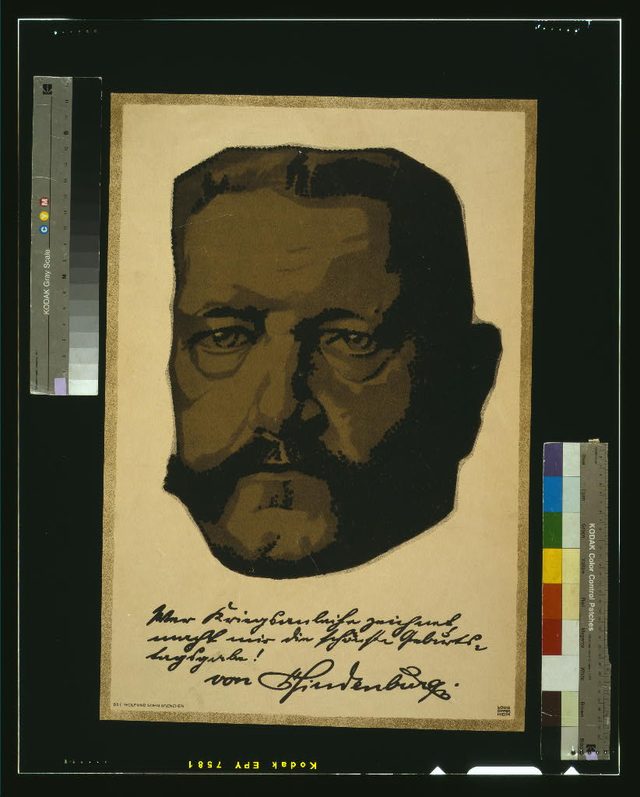
Wer Kriegsanleihe zeichnet, macht mir die schönste Geburtstagsgabe! (Whoever Subscribes to the War Loan Gives Me the Finest Birthday Present!) · 1917 · Imperial German war-loan campaign; artist Louis Oppenheim (text signed by Paul von Hindenburg) · Full record Notice: A close-cropped portrait of Field Marshal Hindenburg sits above a facsimile of his handwriting asking people to subscribe to the war loan as his birthday present. The vouch is the whole ask; the poster gives no figures about the loan. Readers are asked to put money into a wartime government loan.
Same device, different stakes (2 of 3)
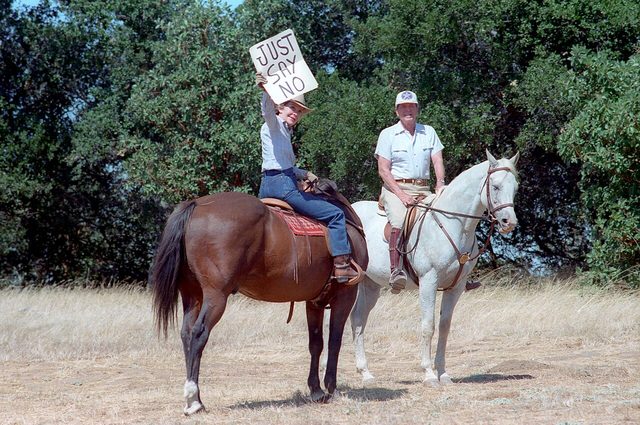
Nancy Reagan holds up a 'Just Say No' sign for press photographers · Sep 6, 1986 · U.S. government (First Lady Nancy Reagan and the White House) · Full record Notice: The First Lady holds a hand-lettered 'Just Say No' sign for press photographers at the family's California ranch, eight days before a televised address launching a national anti-drug campaign. Her name and image stand behind the slogan. Nothing is sold or recruited; the ask is a behavior, in peacetime, made in the sender's own name.
Same device, different stakes (3 of 3)
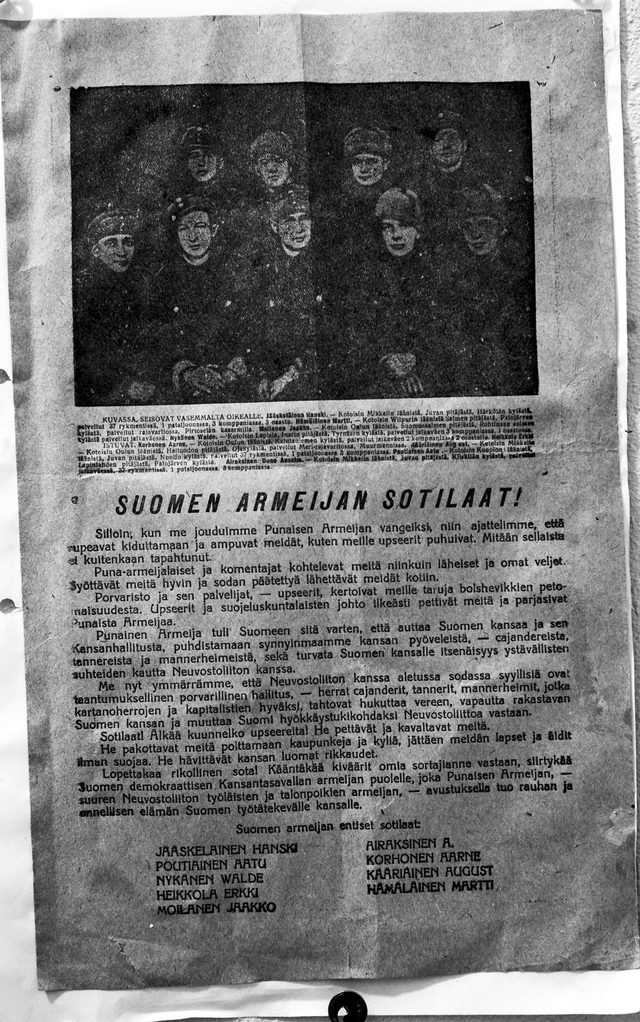
Suomen armeijan sotilaat! (Soldiers of the Finnish Army!): Soviet leaflet signed by named Finnish prisoners · 1939 · Soviet forces (Red Army propaganda); the issuing unit is not printed, and the text is signed by eight named 'former soldiers of the Finnish army' · Full record Notice: A Finnish-language leaflet shows eight named men, each listed with a home parish, who sign a first-person text saying they were treated well as prisoners and that their officers lied. It is aimed at enemy soldiers in wartime. The men are presented as former prisoners of the side issuing it; the archive has not checked their statements or how they came to sign.
Check yourself
A nurse tells a public hearing what she saw on her ward last winter, and gives dates and staffing numbers you can check. Is that a testimonial?
Show the answer
No. She is a primary witness speaking within her own competence, and the claim stands on evidence you can see. It would become a testimonial if her job title were offered in place of the facts. Right. The test is whether the claim would still stand, with its evidence visible, if the name were removed. Here it would.
Spot it in the archive
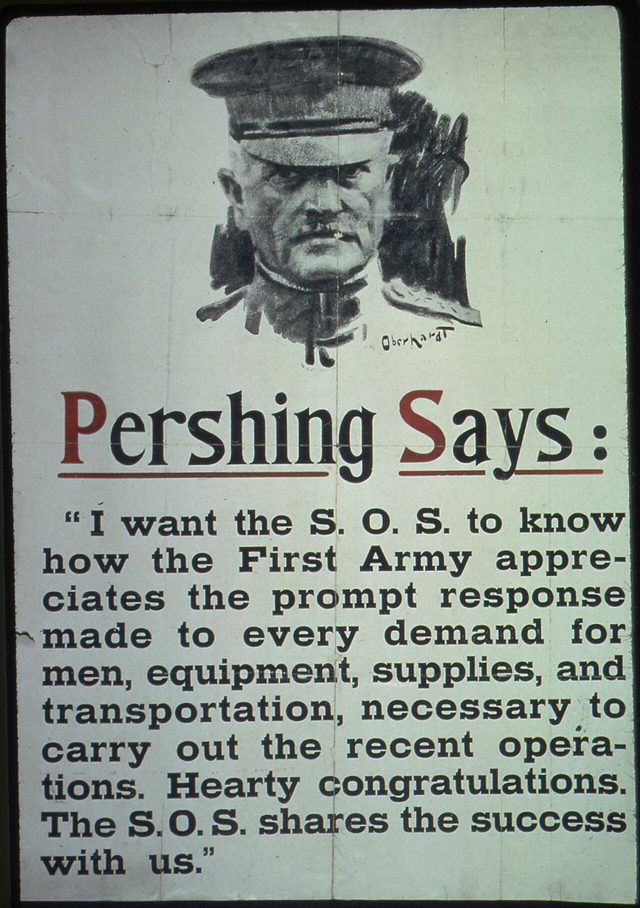
Pershing Says: The S.O.S. Shares the Success With Us · 1918 · American Expeditionary Forces (Services of Supply) · Full record A 1918 morale poster for supply troops quotes a named general thanking them for their 'prompt response' to every wartime demand, and ends 'Hearty congratulations.' Which technique is doing the work?
The commander's name carries the poster. There is no account of what the supply service delivered, so the personal authority of the speaker stands in for any evidence.
Show the answer
Testimonial The commander's name carries the poster. There is no account of what the supply service delivered, so the personal authority of the speaker stands in for any evidence.
How to spot it, and what next
- Is the main reason to believe the claim who said it, or what they showed?
- Is the endorser speaking within their own field, and is their link to the sender (pay, job, hosted trip, party role) stated?
- Are vague voices standing in for names: 'experts say', 'doctors recommend'?
- Would the claim still stand, with its evidence visible, if the name were removed? For a surprising clip of a famous person, is there an original source and date?
Read the full page: Testimonial in the technique library · All 22 examples in the collection