Albert S. Burleson
Illustration, not an archive object
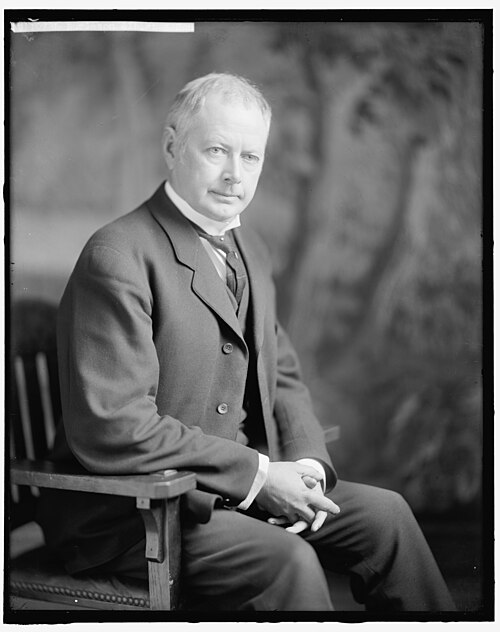

Postmaster General of the United States (1913-1921) · United States
On the regime page: Wilson administration
3 quotes, oldest first. Filter with other speakers.
Content note: Threat to suppress newspapers. The words are shown as they were said or written. Why
“We shall take great care not to let criticism which is personally or politically offensive to the administration affect our action. But if newspapers go so far as to impugn the motives of the government and thus encourage insubordination, they will be dealt with severely. For instance, papers may not say that the government is controlled by Wall Street, or munition manufacturers, or any other special interests. Publication of any news calculated to urge the people to violate law will be considered grounds for drastic action. We will not tolerate campaigns against conscription, enlistments, sale of securities or revenue collections. We will not permit the publication or circulation of anything hampering the war's prosecution, or attacking improperly our allies.”
Burleson spoke after a Cabinet meeting that discussed the executive order putting the Trading with the Enemy Act into effect, which gave the Post Office power to license foreign-language newspapers. The Espionage Act of June 1917 already allowed the Post Office to refuse to carry matter it judged to be unlawful.
Remarks to reporters after the Cabinet meeting, Washington, 9 October 1917, as reported by the Associated Press in the Richmond Times-Dispatch, 10 October 1917, p. 3 (the same report is in The New York Times, 10 October 1917, the Birmingham Age-Herald, 10 October 1917, p. 9, and the Wheeling Intelligencer, 10 October 1917, p. 10) Source
“The trouble is [...] that most Socialist papers do contain this matter.”
Burleson spoke after a Cabinet meeting that discussed the executive order putting the Trading with the Enemy Act into effect, which gave the Post Office power to license foreign-language newspapers. The Espionage Act of June 1917 already allowed the Post Office to refuse to carry matter it judged to be unlawful. He was explaining that no Socialist paper would be barred from the mails unless it contained "treasonable or seditious matter."
Remarks to reporters after the Cabinet meeting, Washington, 9 October 1917, as reported by the Associated Press in the Richmond Times-Dispatch, 10 October 1917, p. 3 (the same report is in The New York Times, 10 October 1917, the Birmingham Age-Herald, 10 October 1917, p. 9, and the Wheeling Intelligencer, 10 October 1917, p. 10) Source
“No one connected with the Government, from the President down, seeks by reason of these laws to avoid criticism, or even attack, but no publication containing matter which falls within the prohibition of the law will be permitted to circulate.”
The letter set out how the Post Office would apply the Espionage Act and the Trading with the Enemy Act to newspapers and magazines, listing six kinds of matter that could not be mailed. The Masses had been refused mailing rights in August 1917 under the Espionage Act.
Letter from Postmaster General Burleson to publishers on the Espionage and Trading with the Enemy acts, made public 25 October 1917, as quoted in The New York Times, 26 October 1917 (Washington dispatch of 25 October) and The Sun (New York), 26 October 1917, p. 2 Source