Andrew Cunningham
Illustration, not an archive object
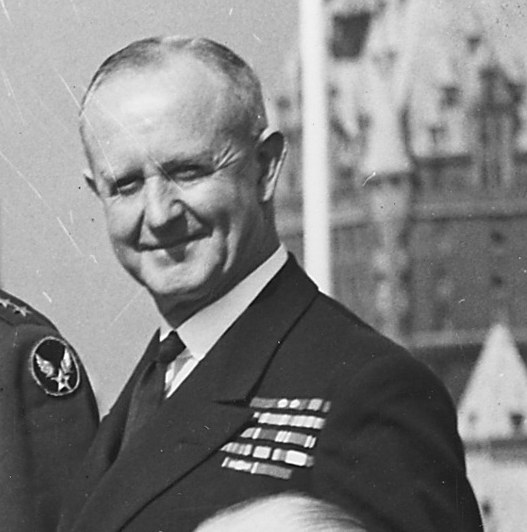

First Sea Lord and Chief of the Naval Staff (October 1943 to 1946); Commander-in-Chief Mediterranean Fleet (1939 to 1942) · United Kingdom
On the regime page: Churchill wartime government
3 quotes, oldest first. Filter with other speakers.
“It takes the Navy three years to build a new ship. It will take three hundred years to build a new tradition. The evacuation [i.e., rescue] will continue.”
When the Army on Crete was in danger of being left behind, Cunningham decided that the Navy would continue to take men off the island despite heavy losses from air attack. Churchill quotes his words in describing the decision, at the end of May 1941, to continue the rescue.
Winston S. Churchill, The Second World War, vol. 3, The Grand Alliance (Reprint Society, London, 1952, by arrangement with Cassell), p. 239 Source
“Their Lordships may rest assured that determining factor in operating in Aegean is not fear of sustaining losses, but need to avoid loss which, without commensurate advantage to ourselves, will cripple Fleet out here.”
During the German attack on Crete the Admiralty pressed Cunningham, commanding the Mediterranean Fleet, to keep his ships operating in the Aegean against German sea reinforcement. This is his reply to the Admiralty's message of 23 May.
Winston S. Churchill, The Second World War, vol. 3, The Grand Alliance (Reprint Society, London, 1952, by arrangement with Cassell), p. 235, quoting the signal from C.-in-C. Mediterranean to the Admiralty of 26 May 1941 Source
“the Italian battle fleet now lies at anchor under the guns of the fortress of Malta”
After Italy's armistice of 8 September 1943 the Italian fleet sailed to Malta to surrender. Cunningham was then Allied naval commander in the Mediterranean; Churchill reports that he informed the Admiralty in these words.
Winston S. Churchill, The Second World War, vol. 5, Closing the Ring (Cassell), running head "Italy: the Armistice", p. 101 of the Internet Archive scan, quoting Admiral Cunningham's message to the Admiralty on the morning of 11 September 1943 Source