Charles Portal
Illustration, not an archive object
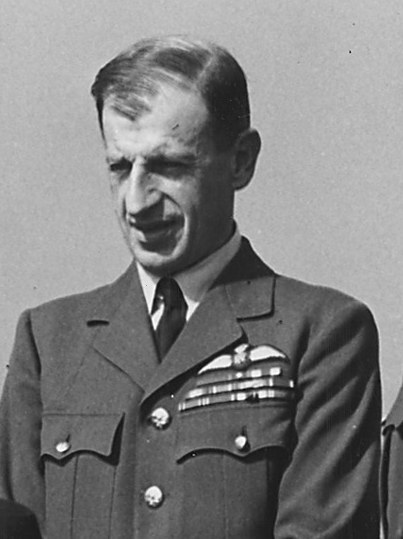

Chief of the Air Staff, Royal Air Force (from October 1940) · United Kingdom
On the regime page: Churchill wartime government
5 quotes, oldest first. Filter with other speakers.
“I agree with Lord Trenchard's main thesis that the most vulnerable point in the German nation at war is the morale of her civilian population under air attack, and that until this morale has been broken it will not be possible to launch an army on the mainland of Europe with any prospect of success.”
Written for the Chiefs of Staff Committee in reply to a memorandum of 19 May 1941 by Marshal of the RAF Lord Trenchard on the air war. Portal, who had been Chief of the Air Staff since October 1940, initialled the note.
Note by Sir Charles Portal, Chief of the Air Staff, on Lord Trenchard's memorandum, 2 June 1941, in Sir Charles Webster and Noble Frankland, The Strategic Air Offensive Against Germany 1939-1945, vol. 4, Annexes and Appendices (HMSO, 1961), Appendix 10 (iv), p. 200 Source
Content note: Bombing aimed so that misses fall on civilians. The words are shown as they were said or written. Why
“I also agree that to exploit this weakness the main weight of our air attack should be directed against objectives in Germany, so situated that bombs which miss their target will directly affect the morale of the German civilian population.”
Written for the Chiefs of Staff Committee in reply to a memorandum of 19 May 1941 by Marshal of the RAF Lord Trenchard on the air war. Portal, who had been Chief of the Air Staff since October 1940, initialled the note.
Note by Sir Charles Portal, Chief of the Air Staff, on Lord Trenchard's memorandum, 2 June 1941, in Sir Charles Webster and Noble Frankland, The Strategic Air Offensive Against Germany 1939-1945, vol. 4, Annexes and Appendices (HMSO, 1961), Appendix 10 (iv), p. 200 Source
“The morale effect of bombing depends largely on the enemy's knowledge of our ability to inflict very severe material damage. Small scale raids will therefore be of little value unless there are also many heavy raids. Furthermore morale is apt to recover quickly and the maximum effect can only be achieved by repeated attacks on the same place.”
Written for the Chiefs of Staff Committee in reply to a memorandum of 19 May 1941 by Marshal of the RAF Lord Trenchard on the air war. Portal, who had been Chief of the Air Staff since October 1940, initialled the note.
Note by Sir Charles Portal, Chief of the Air Staff, on Lord Trenchard's memorandum, 2 June 1941, in Sir Charles Webster and Noble Frankland, The Strategic Air Offensive Against Germany 1939-1945, vol. 4, Annexes and Appendices (HMSO, 1961), Appendix 10 (iv), p. 200 Source
Content note: Order that built-up areas be the aiming points. The words are shown as they were said or written. Why
“Ref the new bombing directive: I suppose it is clear that the aiming points are to be the built-up areas, not, for instance, the dockyards or aircraft factories where these are mentioned in Appendix A.
This must be made quite clear if it is not already understood.”The day after the Air Ministry's directive of 14 February 1942 (signed by Bottomley, Deputy Chief of the Air Staff) told Bomber Command to focus on the morale of enemy civilians, especially industrial workers, Portal sent this minute. Bomber Command recorded the point so that Arthur Harris would have it when he took over on 22 February.
Minute from Sir Charles Portal to Air Vice-Marshal N. H. Bottomley, 15 February 1942, quoted in Webster and Frankland, The Strategic Air Offensive Against Germany 1939-1945, vol. 1, Preparation (HMSO, 1961), p. 324 Source
Content note: Projected civilian deaths and homelessness from bombing. The words are shown as they were said or written. Why
“Assuming that the results attained per ton of bombs equal those realised during the German attacks of 1940-41, the results would include:
(a) the destruction of 6 million German dwellings, with a proportionate destruction of industrial buildings, sources of power, means of transportation and public utilities;
(b) 25 million Germans rendered homeless;
(c) an additional 60 million 'incidents' of bomb damage to houses;
(d) civilian casualties estimated at about 900,000 killed and 1,000,000 seriously injured.”Portal circulated the note at the Chiefs of Staff Committee's request of 5 October 1942, to support the Air Staff's case for a combined heavy bomber force of 4,000 to 6,000 aircraft by 1944. The estimate scaled the results of the German raids on Britain in 1940 and 1941 to the planned tonnage.
Note by the Chief of the Air Staff for the Chiefs of Staff on an Estimate of the Effects of an Anglo-American Bomber Offensive Against Germany, 3 November 1942, Summary para (iv), in Webster and Frankland, The Strategic Air Offensive Against Germany 1939-1945, vol. 4 (HMSO, 1961), Appendix 20, pp. 263-264 Source
Often attributed, not verified
These words circulate under Charles Portal’s name but could not be traced to a source. They are listed so readers can check them, not as Charles Portal’s words.
“I suppose it is clear that the aiming points will be the built up areas, and not the dockyards or aircraft factories.”
The official history prints 'the aiming points are to be the built-up areas, not, for instance, the dockyards or aircraft factories where these are mentioned in Appendix A' (vol. 1, p. 324). The wording circulating online differs ('will be', 'and not'); the verified quote is published instead.