Roberto Farinacci
Illustration, not an archive object
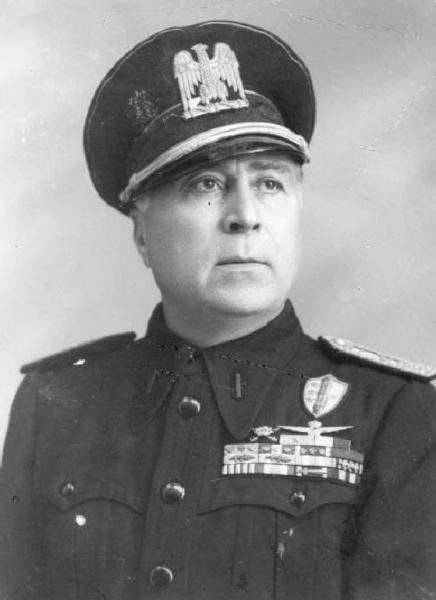

Secretary of the National Fascist Party · Italy
On the regime page: Fascist Italy under Mussolini
4 quotes, oldest first. Filter with other speakers.
“each one vies with the other to create interpretations and philosophies always more and more in contradiction with one another; the multitude of those who have an average culture — without speaking of the workmen who also have some right to understand something — ends up by not understanding anything.”
English: Gaetano Salvemini, in Under the Axe of Fascism (Victor Gollancz, London, 1936). Original-language text not found.
Salvemini introduces the passage as a remark by a "Fascist high personage" on the confusion of Fascist doctrine in the literature about it. Farinacci had become Secretary of the National Fascist Party in February 1925.
Speech at Florence, 21 June 1925, quoted in the preface of Gaetano Salvemini, Under the Axe of Fascism (Victor Gollancz, London, 1936) Source
Content note: Justification of reprisals after a killing. The words are shown as they were said or written. Why
“The campaign which the opposition parties waged against the Fascist rule, the Fascist Party and its leaders, had a most lamentable epilogue. In the house of a “Venerable” Freemason, which was used as a lodge, Giovanni Luporini, one of the most brilliant figures of Tuscan Fascism, was lured into an ambush and treacherously murdered. The local leaders have had to display the utmost energy and authority to prevent the legitimate exasperation of our faithful comrades from having still graver consequences. [...] The martyrdom of Giovanni Luporini cannot weaken Fascism. We shall pursue our course unshaken as long as a single enemy of the national cause treads the sacred soil of our country.”
Original (Italian)
La campagna che andavano da tempo conducendo le opposizioni contro il regime, in particolar modo contro il fascismo e i suoi dirigenti, ha avuto il suo epilogo tristissimo. In casa di uno dei venerabili della Massoneria fiorentina, trasformata in Loggia, è stato in un agguato proditoriamente assassinata una delle fulgide figure del fascismo toscano, Giovanni Luporini. I dirigenti locali hanno dovuto spiegare tutta la loro attività perchè la legittima esasperazione dei nostri compagni di fede non avesse conseguenze peggiori. [...] Il martirio di Giovanni Luporini non può fiaccare il fascismo, che dal sacrificio trae maggior fede e maggior entusiasmo. Facciamo nostre le parole del padre del nostro compagno di fede e di battaglia barbaramente assassinato e proseguiamo imperterriti nella nostra azione, fino a quando un solo avversario della causa nazionale calpesti il suolo sacro della Patria nostra.
English: Gaetano Salvemini, in The Fascist Dictatorship in Italy, vol. 1 (Henry Holt and Company, New York, 1927)
Farinacci wrote after the Fascist Giovanni Luporini was shot dead in a Freemason's house in Florence on the evening of 3 October 1925. In the reprisals that followed, according to Salvemini and the contemporary press, three men were killed and homes and shops of suspected Freemasons and opponents were looted.
Article by Roberto Farinacci, Secretary of the National Fascist Party, in the Florentine Fascist weekly Battaglie Sindacali (extra edition, 5 October 1925), reported in Il Piccolo (Trieste), 6 October 1925, p. 2 (Italian); English in Gaetano Salvemini, The Fascist Dictatorship in Italy, vol. 1 (Henry Holt and Company, New York, 1927), pp. 211-212 Source
“The Italian people to-day are by no means lying on a bed of roses. They are tormented by an economic crisis the gravity of which it would be ridiculous to deny or even attenuate. It dominates all industry, commerce, and agriculture. Even the most favourably situated provinces find themselves faced by economic difficulties that are neither light to bear nor easy to solve. No one, however affected by an incurable frenzy or abject servility, can deny the reality of things as they are, or, with the aid of artificial rhetoric, make them appear otherwise than they are.”
English: Gaetano Salvemini, in Under the Axe of Fascism (Victor Gollancz, London, 1936). Original-language text not found.
Farinacci edited Il Regime Fascista and had been Party Secretary in 1925 and 1926. Salvemini quotes the article beside official statements of the same month that Italy was prosperous.
Article in Il Regime Fascista (Cremona), 28 October 1930, quoted in Gaetano Salvemini, Under the Axe of Fascism (Victor Gollancz, London, 1936), p. 214 Source
Content note: Defence of racial policy against papal criticism. The words are shown as they were said or written. Why
“Fascism allows religious action but not political action. When the Pope took up a stand, in a political sense, against the Fascist racial manifesto, I was the first one to oppose him in my paper. [...] The Pope is wrong when he alleges that the racial problem is a religious question; for Italy it is a political principle and a practical necessity.”
English: Unnamed (as printed in The Jewish Chronicle, 23 September 1938). Original-language text not found.
Farinacci, editor of Il Regime Fascista and a Minister of State, gave the interview after attending the Nazi Party congress at Nuremberg. It followed the Fascist "Manifesto of Race" of July 1938 and public criticism of racial policy by the Pope.
Interview with Roberto Farinacci in Das Schwarze Korps (Berlin), September 1938, as translated and quoted in "Racial Paper Proscribed: Farinacci's Violent Outburst", The Jewish Chronicle (London), 23 September 1938 Source