Hirohito (Emperor Shōwa)
Illustration, not an archive object
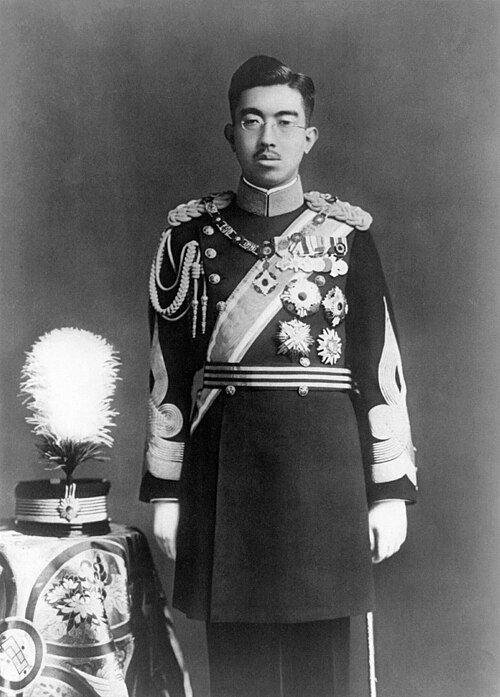

Emperor of Japan · Japan
On the regime page: Empire of Japan, 1937 to 1945
12 quotes, oldest first. Filter with other speakers.
“To enhance justice on earth and make of the world one household is the great injunction, bequeathed by our [Imperial] Ancestors and which we lay to heart day and night. In the stupendous crisis now confronting the world, it appears that endless will be the aggravation of war and confusion, and incalculable the disasters to be inflicted upon mankind. We fervently hope that the cessation of the disturbances and the restoration of peace will be realized as swiftly as possible.”
Original (Japanese)
大義ヲ八絋ニ宣揚シ坤輿ヲ一宇タラシムルハ實ニ皇祖皇宗ノ大訓ニシテ朕ガ夙夜眷々措カザル所ナリ而シテ今ヤ世局ハ其ノ騷亂底止スル所ヲ知ラズ人類ノ蒙ルベキ禍患亦将ニ測ルベカラザルモノアラントス朕ハ禍亂ノ戡定平和ノ克復一ノ日モ速ナランコトニ軫念極メテ切ナリ
English: English text of the Imperial Rescript as published in Papers Relating to the Foreign Relations of the United States: Japan, 1931-1941, vol. 2 (Washington: Government Printing Office, 1943)
Rescript issued on the day Japan, Germany and Italy signed the Tripartite Pact in Berlin. The first paragraph is quoted; the rescript goes on to call on the nation to meet the emergency.
Imperial Rescript on the conclusion of the Tripartite Pact between Japan, Germany and Italy, 27 September 1940, countersigned by Prime Minister Konoe and Army Minister Tojo; English text in Papers Relating to the Foreign Relations of the United States: Japan, 1931-1941, vol. 2 (Washington: Government Printing Office, 1943) Source
“We hereby declare war on the United States of America and the British Empire. The men and officers of Our army and navy shall do their utmost in prosecuting the war, Our public servants of various departments shall perform faithfully and diligently their appointed tasks, and all other subjects of Ours shall pursue their respective duties; the entire nation with a united will shall mobilize their total strength so that nothing will miscarry in the attainment of our war aims.”
Original (Japanese)
朕茲ニ米國及英國ニ對シテ戰ヲ宣ス朕カ陸海將兵ハ全力ヲ奮テ交戰ニ從事シ朕カ百僚有司ハ勵精職務ヲ奉行シ朕カ衆庶ハ各々其ノ本分ヲ盡シ億兆一心國家ノ總力ヲ擧ケテ征戰ノ目的ヲ逹成スルニ遺算ナカラムコトヲ期セヨ
English: Official English text released by the Board of Information, Tokyo, 8 December 1941, as printed in the Japan Times & Advertiser, 8 December 1941, p. 1
Rescript dated 8 December 1941 (Tokyo time), the day of the attacks on Pearl Harbor and Malaya, countersigned by Prime Minister Tojo and ministers. This is the operative declaration; the rescript then gives the government's reasons.
Imperial Rescript declaring war on the United States and the British Empire, 8 December 1941; English text in Japan Times & Advertiser, 8 December 1941, p. 1, as reproduced in "The World and Japan" Database (GRIPS / University of Tokyo) Source
“This trend of affairs would, if left unchecked, not only nullify Our Empire's efforts of many years for the sake of the stabilization of East Asia, but also endanger the very existence of Our nation. The situation being such as it is, Our Empire for its existence and self-defense has no other recourse but to appeal to arms and to crush every obstacle in its path.”
Original (Japanese)
斯ノ如クニシテ推移セムカ東亞安定ニ關スル帝國積年ノ努力ハ悉ク水泡ニ歸シ帝國ノ存立亦正ニ危殆ニ瀕セリ事旣ニ此ニ至ル帝國ハ今ヤ自存自衞ノ爲蹶然起ツテ一切ノ障礙ヲ破碎スルノ外ナキナリ
English: Official English text released by the Board of Information, Tokyo, 8 December 1941, as printed in the Japan Times & Advertiser, 8 December 1941, p. 1
Closing passage of the reasons given in the declaration of war, which cites the economic measures taken against Japan and the unresolved war in China.
Imperial Rescript declaring war on the United States and the British Empire, 8 December 1941; English text in Japan Times & Advertiser, 8 December 1941, p. 1, as reproduced in "The World and Japan" Database (GRIPS / University of Tokyo) Source
“Lately the world situation has rapidly changed and the encroachments of enemy mount in fury. This is truly the opportunity to crush the evil designs of the enemy nations, fulfill the purpose of the Holy War, and manifest the glory of our Nation.”
English: Foreign Broadcast Intelligence Service, Federal Communications Commission (US monitoring-service translation of the Tokyo broadcast). Original-language text not found.
Rescript read at the opening of an extraordinary Diet session during the Battle of Okinawa and two months before the surrender broadcast.
Imperial Rescript opening the 87th Imperial Diet, 9 June 1945, English translation by the Foreign Broadcast Intelligence Service, Federal Communications Commission, as published on ibiblio.org (Hyperwar) Source
“Indeed, We declared war on America and Britain out of Our sincere desire to ensure Japan's self-preservation and the stabilization of East Asia, it being far from Our thought either to infringe upon the sovereignity of other nations or to embark upon territorial aggrandizement.”
Original (Japanese)
曩ニ米英二國ニ宣戰セル所以モ亦實ニ帝國ノ自存ト東亞ノ安定トヲ庶幾スルニ出テ他國ノ主權ヲ排シ領土ヲ侵スカ如キハ固ヨリ朕カ志ニアラス
English: English text of the Imperial Rescript as printed in the Nippon Times, 15 August 1945
Passage in which the rescript states the reasons for the 1941 declaration of war, within the broadcast announcing acceptance of the Potsdam Declaration. It was the first time most Japanese heard the Emperor's voice.
Imperial Rescript ending the war ("Gyokuon-hoso", Jewel Voice Broadcast), recorded 14 August and broadcast 15 August 1945; English text in the Nippon Times, 15 August 1945, as reproduced in "The World and Japan" Database (GRIPS / University of Tokyo) Source
“Moreover, the enemy has begun to employ a new and most cruel bomb, the power of which to do damage is indeed incalculable, taking the toll of many innocent lives. Should We continue to fight, it would not only result in an ultimate collapse and obliteration of the Japanese nation, but also it would lead to the total extinction of human civilization.”
Original (Japanese)
加之敵ハ新ニ殘虐ナル爆彈ヲ使用シテ頻ニ無辜ヲ殺傷シ慘害ノ及フ所眞ニ測ルヘカラサルニ至ル 而モ尚交戰ヲ繼續セムカ終ニ我カ民族ノ滅亡ヲ招來スルノミナラス延テ人類ノ文明ヲモ破却スヘシ
English: English text of the Imperial Rescript as printed in the Nippon Times, 15 August 1945
The rescript's stated reason for accepting the Potsdam terms, referring to the atomic bombings of Hiroshima and Nagasaki, which are not named.
Imperial Rescript ending the war ("Gyokuon-hoso", Jewel Voice Broadcast), recorded 14 August and broadcast 15 August 1945; English text in the Nippon Times, 15 August 1945, as reproduced in "The World and Japan" Database (GRIPS / University of Tokyo) Source
“We are keenly aware of the inmost feelings of all ye, Our subjects. However, it is according to the dictate of time and fate that We have resolved to pave the way for a grand peace for all the generations to come by enduring the unendurable and suffering what is insufferable.”
Original (Japanese)
爾臣民ノ衷情モ朕善ク之ヲ知ル 然レトモ朕ハ時運ノ趨ク所堪ヘ難キヲ堪ヘ忍ヒ難キヲ忍ヒ以テ萬世ノ爲ニ太平ヲ開カムト欲ス
English: English text of the Imperial Rescript as printed in the Nippon Times, 15 August 1945
The best-known passage of the broadcast, addressed to the Japanese public on the hardships to come.
Imperial Rescript ending the war ("Gyokuon-hoso", Jewel Voice Broadcast), recorded 14 August and broadcast 15 August 1945; English text in the Nippon Times, 15 August 1945, as reproduced in "The World and Japan" Database (GRIPS / University of Tokyo) Source
“But now the war has lasted for nearly four years. Despite the best that has been done by every one - the gallant fighting of military and naval forces, the diligence and assiduity of Our servants of the State and the devoted service of Our one hundred million people, the war situation has developed not necessarily to Japan's advantage, while the general trends of the world have all turned against her interest.”
Original (Japanese)
然ルニ交戰已ニ四歲ヲ閱シ朕カ陸海將兵ノ勇戰朕カ百僚有司ノ勵精朕カ一億衆庻ノ奉公各〻最善ヲ盡セルニ拘ラス戰局必スシモ好轉セス世界ノ大勢亦我ニ利アラス
English: English text of the Imperial Rescript as printed in the Nippon Times, 15 August 1945
Passage of the rescript announcing acceptance of the Potsdam Declaration, in which the Emperor describes the state of the war after nearly four years. It comes directly after the passage on Japan's reasons for declaring war and before the passage on the new bomb.
Imperial Rescript ending the war ("Gyokuon-hoso", Jewel Voice Broadcast), recorded 14 August and broadcast 15 August 1945; English text in the Nippon Times, 15 August 1945, as reproduced in "The World and Japan" Database (GRIPS / University of Tokyo) Source
“Now that the Soviet Union has entered the war against us, to continue the war under the present internal and external conditions would be only to increase needlessly the ravages of war finally to the point of endangering the very foundation of the Empire's existence”
English: US translation as reproduced in CINCPAC-CINCPOA Bulletin 164-45 (Psychological Warfare, Part Two, Supplement 2), via taiwandocuments.org. Original-language text not found.
Rescript to the army and navy issued two days after the surrender broadcast, giving the Soviet declaration of war as a reason for ending the fighting.
Imperial Rescript to the officers and men of the Imperial forces, 17 August 1945; English translation in US Pacific Fleet CINCPAC-CINCPOA Bulletin No. 164-45, as reproduced on taiwandocuments.org Source
“It is our desire that our people will surmount the manifold hardships and trials attending the termination of the war and make manifest the innate glory of Japan's national policy, win the confidence of the world, establish firmly a peaceful state and contribute to the progress of mankind,”
English: English translation as printed in the New York Times, via ibiblio.org (Hyperwar). Original-language text not found.
Rescript read at the first Diet session after the surrender and two days after the signing of the Instrument of Surrender.
Imperial Rescript read at the opening of the Imperial Diet, 4 September 1945, English translation as printed in the New York Times, via ibiblio.org (Hyperwar) Source
“We stand by the people and we wish always to share with them in their moment of joys and sorrows. The ties between us and our people have always stood upon mutual trust and affection. They do not depend upon mere legends and myths. They are not predicated on the false conception that the Emperor is divine and that the Japanese people are superior to other races and fated to rule the world.”
Original (Japanese)
朕ハ爾等國民ト共ニ在リ、常ニ利害ヲ同ジウシ休戚ヲ分タント欲ス。朕ト爾等國民トノ間ノ紐帶ハ、終始相互ノ信賴ト敬愛トニ依リテ結バレ、單ナル神話ト傳說トニ依リテ生ゼルモノニ非ズ。天皇ヲ以テ現御神トシ、且日本國民ヲ以テ他ノ民族ニ優越セル民族ニシテ、延テ世界ヲ支配スベキ運命ヲ有ストノ架空ナル觀念ニ基クモノニモ非ズ。
English: English text as reproduced in Sources in Modern East Asian History and Politics, pp. 175-176, via "The World and Japan" Database (GRIPS / University of Tokyo)
New Year rescript issued under the Allied occupation, after the paragraph affirming the Charter Oath of 1868. The database notes that this paragraph's wording was suggested by Harold Henderson of the Civil Information and Education Section at General MacArthur's headquarters.
Imperial Rescript of 1 January 1946 ("Rescript on the Construction of a New Japan", "Humanity Declaration"); English text in Sources in Modern East Asian History and Politics, pp. 175-176, via "The World and Japan" Database Source
“it is indeed regrettable that there was an unfortunate past between us for a period in this century and I believe that it should not be repeated again,”
English: English wire-service rendering of the Emperor's remarks as reported by United Press International, 6 September 1984. Original-language text not found.
First state visit to Japan by a South Korean head of state. The remarks were broadcast live and followed Korean requests for a statement on the period of Japanese rule (1910-1945).
Remarks at a state banquet for South Korean President Chun Doo Hwan, Imperial Palace, Tokyo, 6 September 1984, as reported by United Press International, 6 September 1984 Source
Often attributed, not verified
These words circulate under Hirohito (Emperor Shōwa)’s name but could not be traced to a source. They are listed so readers can check them, not as Hirohito (Emperor Shōwa)’s words.
“While I am thinking that the people of the four oceans are all of one family, why should the wind and the waves of this world be so restless?”
The event, Hirohito reading Meiji's poem Yomo no umi at the 6 September 1941 conference, is widely reported, but the English wording differs between translations and I could not read a primary record (for example the conference records translated in Ike, Japan's Decision for War, 1967) in full text. Only web summaries were seen. The poem is Meiji's, not Hirohito's own words; what is in question is the exact English text and the record of what he said around it. Not published.
“It's very regrettable that nuclear bombs were dropped, and I feel sorry for the citizens of Hiroshima, but it couldn't be helped because that happened in wartime.”
The remark is reported in many secondary accounts with varying English wording. The transcript of the 31 October 1975 press conference, or a contemporary newspaper report with the Japanese original, was not located here. Not published until a primary text is seen.
“I cannot help feeling sad when I consider the people who have served me so loyally, the soldiers and sailors who have been killed or wounded on the battlefields overseas, the families who have lost their homes and so often their lives as well in the air raids here”
The remarks of 9-10 and 14 August 1945 are known from the notes of participants (cabinet secretary Sakomizu, Prime Minister Suzuki and others) as translated in later histories, and the wording differs from one account to another. No verbatim primary text or named translation of the notes was read here. The rescript broadcast on 15 August is verified and included instead.
“I come to you, General MacArthur, to offer myself to the judgment of the powers you represent as the one to bear sole responsibility for every political and military decision made and action taken by my people in the conduct of the war.”
The wording circulates from MacArthur's memoir. I did not read the memoir page or a Japanese record of the meeting in this check, and accounts of what was said differ. Not published.