In one line: Since the Eritrean People's Liberation Front (EPLF) entered Asmara on 24 May 1991, Isaias Afwerki has led an Eritrean state that won independence by a UN-verified referendum in 1993, has had the PFDJ as its only legal party, has never put its 1997 constitution into effect or held a national election, and has had no independent domestic press since 18 September 2001; the government describes its measures as defence of sovereignty against Ethiopia and the outside world, and a UN commission of inquiry found in 2016 that crimes against humanity had been committed, a finding the government rejects.
The leader and the people under the leader
Roster as of October 2, 2026. Offices and office-holders change; this page is a dated snapshot.
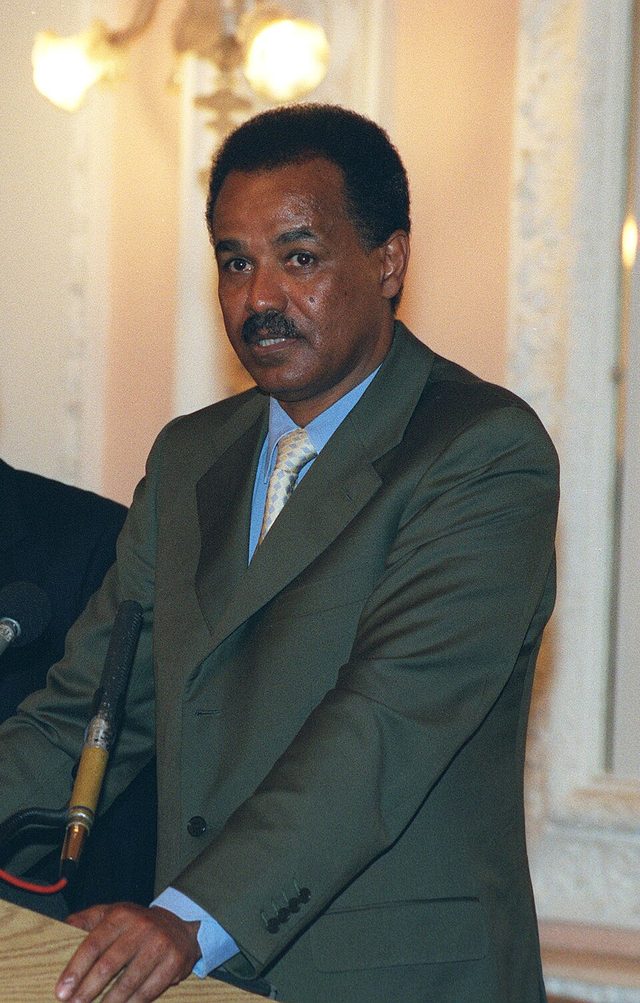
Photo: Helene C. Stikkel, U.S. Department of Defense, Public domain (U.S. federal government work, Department of Defense photograph 021210-D-2987S-057)
Isaias Afwerki
President of Eritrea and head of the PFDJ · 1991 to present
Isaias Afwerki: Read more
Led the EPLF as secretary general, headed the provisional government from May 1991, was elected president by the National Assembly on 24 May 1993 and has held the office since; no national or presidential election has been held (UN Commission of Inquiry, 2016).
In their words
“Eritrea will wait three or four decades, maybe more, before it holds elections. Who knows?”
“we don't release. We don't take to trial. We have our own ways to deal with him and others like him. We have our own ways of dealing with that.”
Party and presidency
YGNo public-domain or openly licensed portrait found. Nearest: none; a Commons search for the name returned no photograph of him.
Yemane Gebreab
Head of Political Affairs of the PFDJ and Presidential Adviser · in office as of October 2, 2026 (start dates not verified)
Yemane Gebreab: Read more
Presidential Adviser when, in April 2015, he announced that national service would be limited to 18 months (UN Commission of Inquiry); described in Eritrean press reports as Head of Political Affairs of the PFDJ and adviser to the President as of 2025.
Government and armed forces
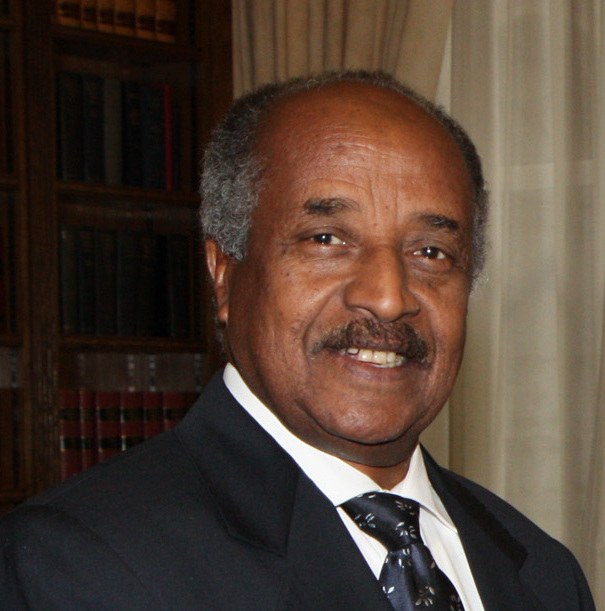
Photo: Foreign and Commonwealth Office (United Kingdom), Open Government Licence v1.0
Osman Saleh Mohammed
Minister of Foreign Affairs · 2007 to present
Osman Saleh Mohammed: Read more
Minister of Education from independence in 1993 to 2007 and Foreign Minister since April 2007; met the UN Secretary-General on 29 September 2025.
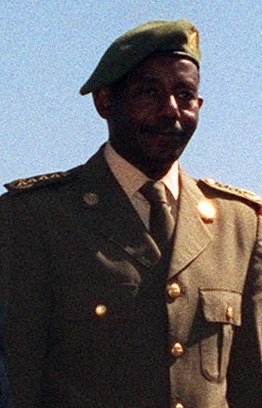
Photo: Helene C. Stikkel, U.S. Department of Defense (crop by a Wikipedia user), Public domain (U.S. federal government work, Department of Defense photograph 021210-D-2987S-013)
Sebhat Ephrem
Minister of Defence until 2013 · until 2013 (start year not verified)
Sebhat Ephrem: Read more
Minister of Defence until 2013, when he was transferred to Energy and Minerals (Martin Plaut, 2024, who reports that the defence post has had no officially appointed minister since); his earlier offices and start dates rest on a single Wikipedia article and are not stated here, and his status as of October 2, 2026 was not verified.
FWNo public-domain or openly licensed portrait found. Nearest: none; neither Commons nor the English Wikipedia article has a freely licensed photograph of him.
Filipos Woldeyohannes
Chief of Staff of the Eritrean Defence Forces · 2014 to at least 2021 (current status not verified)
Filipos Woldeyohannes: Read more
General appointed Chief of Staff of the Eritrean Defence Forces in 2014 after the death of his predecessor (African Arguments, 2023); the United States designated him as Chief of Staff in August 2021 over abuses by Eritrean forces in the Tigray war, which Eritrea rejects; his status as of October 2, 2026 was not re-verified.
Information and media
YGNo public-domain or openly licensed portrait found. Nearest: none; a Commons search for the name returned no photograph of him.
Yemane Gebremeskel
Minister of Information · 2015 to present
Yemane Gebremeskel: Read more
Director of the President's Office before his appointment as Minister of Information on 11 March 2015, which put him over Eri-TV, Dimtsi Hafash, Haddas Eritrea, Eritrea Profile and Shabait.com; he issues the government's public replies to the UN, Human Rights Watch and Ethiopia.
In their words
“In normal times, the National Service is limited to 18 months by law… This normative configuration is affected today due to Ethiopia's continued occupation of sovereign Eritrean territories and its pronounced plans of destabilization against the country.”
“demobilization is predicated on removal of the main threat… You are talking about prolongation of national service in response to...continued belligerence by Ethiopia.”
AANo public-domain or openly licensed portrait found. Nearest: none; Commons has no photograph of him.
Ali Abdu Ahmed
Minister of Information · to November 2012 (start year not verified)
Ali Abdu Ahmed: Read more
Minister of Information until November 2012, when he left Eritrea during a trip abroad (Martin Plaut, 2013); Awate reported that the post then stayed vacant until Yemane Gebremeskel was appointed in March 2015. His start year is given as 2002 in a single Wikipedia article and is not stated here.
Detained from 2001
PSNo public-domain or openly licensed portrait found. Nearest: none; a Commons search for the name returned no photograph of him.
Petros Solomon
Former government minister; signatory of the G-15 letter · arrested 18 September 2001
Petros Solomon: Read more
One of the 15 senior officials who signed the open letter of May 2001 to the President; he was among the 11 arrested on 18 September 2001, has not been charged or tried, and the government has not disclosed where he is held.
MANo public-domain or openly licensed portrait found. Nearest: none; neither Commons nor the English Wikipedia article has a freely licensed photograph of him.
Mahmoud Ahmed Sherifo
Former Vice-President; signatory of the G-15 letter · arrested 18 September 2001
Mahmoud Ahmed Sherifo: Read more
Former Eritrean vice-president named by Amnesty International among the 15 who signed the 2001 letter; arrested on 18 September 2001, and reported to have died in custody in 2002, which the government has not confirmed.
DINo public-domain or openly licensed portrait found. Nearest: source, CC BY-SA 4.0, which shows a model of his presumed cell, not him.
Dawit Isaak
Swedish-Eritrean journalist and co-owner of the newspaper Setit · arrested 23 September 2001
Dawit Isaak: Read more
Arrested on 23 September 2001 after the private press reported on the G-15 letter; held without charge or trial, and the government has given no account of his condition or whereabouts that outside bodies accept.
Background and rise to power
The EPLF fought the Ethiopian government for independence for three decades and entered Asmara on 24 May 1991. It formed the Provisional Government of Eritrea, headed by Isaias Afwerki as its secretary general, and ran it until independence. A referendum on 23 to 25 April 1993, verified by the UN Observer Mission (UNOVER), recorded about 99.8 per cent for independence on a turnout reported at 98.2 per cent; independence was declared on 24 May 1993, the National Assembly elected Isaias president, and Eritrea joined the UN on 28 May. At its third congress at Nakfa on 10 to 16 February 1994 the EPLF renamed itself the People's Front for Democracy and Justice (PFDJ) and elected Isaias secretary general.
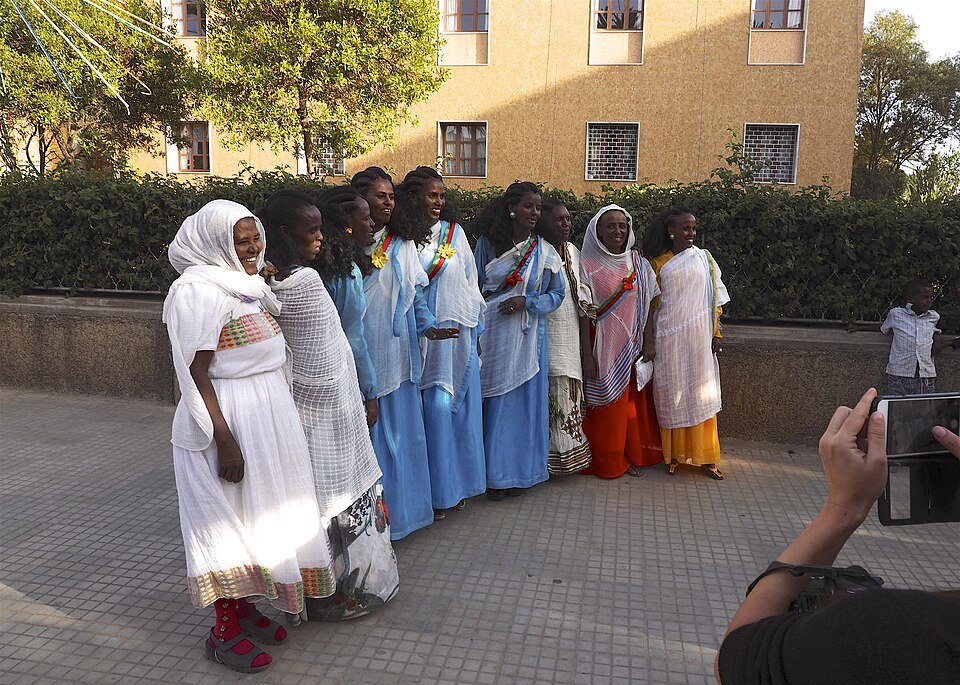
Women photographed in Asmara on 24 May 2016, the anniversary of independence, which Eritrea observes as a public holiday. Source: Clay Gilliland, CC BY-SA 2.0, via Wikimedia Commons, CC BY-SA 2.0 (stated on the Commons file page; originally a Flickr upload).
A constitutional commission appointed by the president drafted a constitution, which a constituent assembly ratified on 23 May 1997. It has never been put into effect. The UN Commission of Inquiry (COI) noted in 2016 that, besides the 1993 referendum and the election of 75 members of a constituent assembly, no national elections had taken place and no presidential election had ever been held, and quoted Isaias telling Al Jazeera in 2008 that "Eritrea will wait three or four decades, maybe more, before it holds elections. Who knows?" The Eritrean delegation to the 2014 Universal Periodic Review said national elections would not be held until "the threats to national security and sovereignty had been eliminated."
Scholars describe this period differently. Dan Connell, whose Against All Odds (1993) presented the EPLF's years of struggle as a social revolution that built a self-reliant movement across religious and ethnic lines, was expelled from Eritrea in 2002 and later wrote a critique of its post-liberation politics (Enough!) and interviews with the imprisoned critics (Conversations with Eritrean Political Prisoners). Gaim Kibreab (Eritrea: A Dream Deferred, 2009) and Bereket Habte Selassie (Wounded Nation, 2010) wrote other book-length accounts of the post-independence period, and Kjetil Tronvoll and Daniel Mekonnen (The African Garrison State, 2014) describe the path from liberation movement to militarised state. The government's own account is that a state emerging from a long war and facing a hostile neighbour had to prioritise defence, a position set out below.
How power was organized
The PFDJ is the only legal party; no other party has been licensed and Human Rights Watch reports that gatherings of more than seven people are prohibited. Isaias is head of state and has led the party since 1994. Martin Plaut (Understanding Eritrea, 2016) describes the rule as "arbitrary and personal", with the constitution written but not implemented, no elections and "no annual budget", while Alex de Waal (The Real Politics of the Horn of Africa, 2015) describes Isaias as running "a very tight political business model" that keeps the sources of finance away from the army. Tronvoll and Mekonnen call the result a "garrison state". Freedom House scored Eritrea 3 out of 100 and "Not Free" in Freedom in the World 2025.
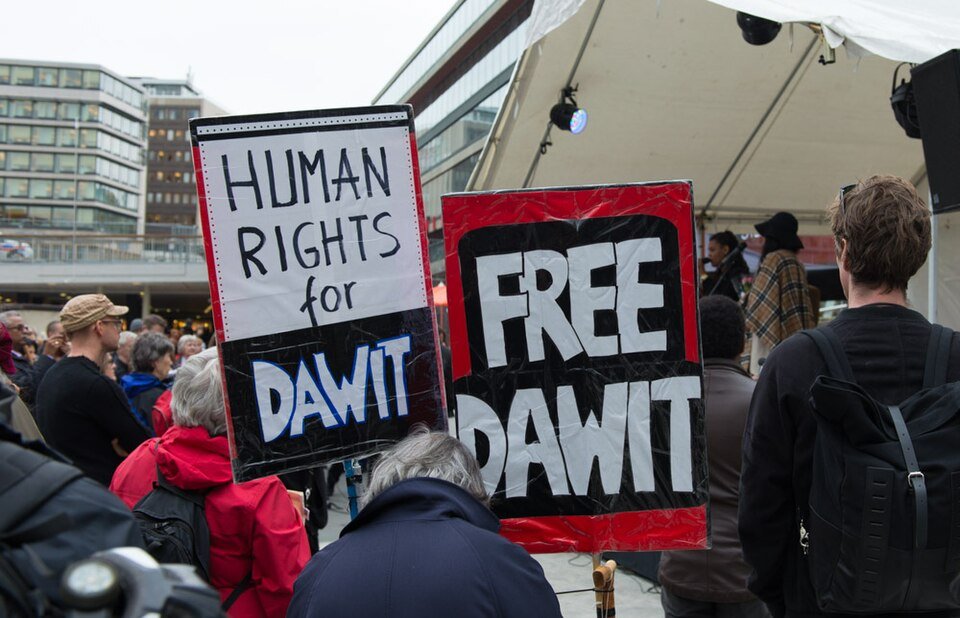
A demonstration in Stockholm in June 2015 marking 5,000 days of the detention of Dawit Isaak, the Swedish-Eritrean journalist arrested on 23 September 2001; the government has not charged or tried him. Source: Frankie Fouganthin, CC BY-SA 4.0, via Wikimedia Commons, CC BY-SA 4.0 (stated on the Commons file page, own work).
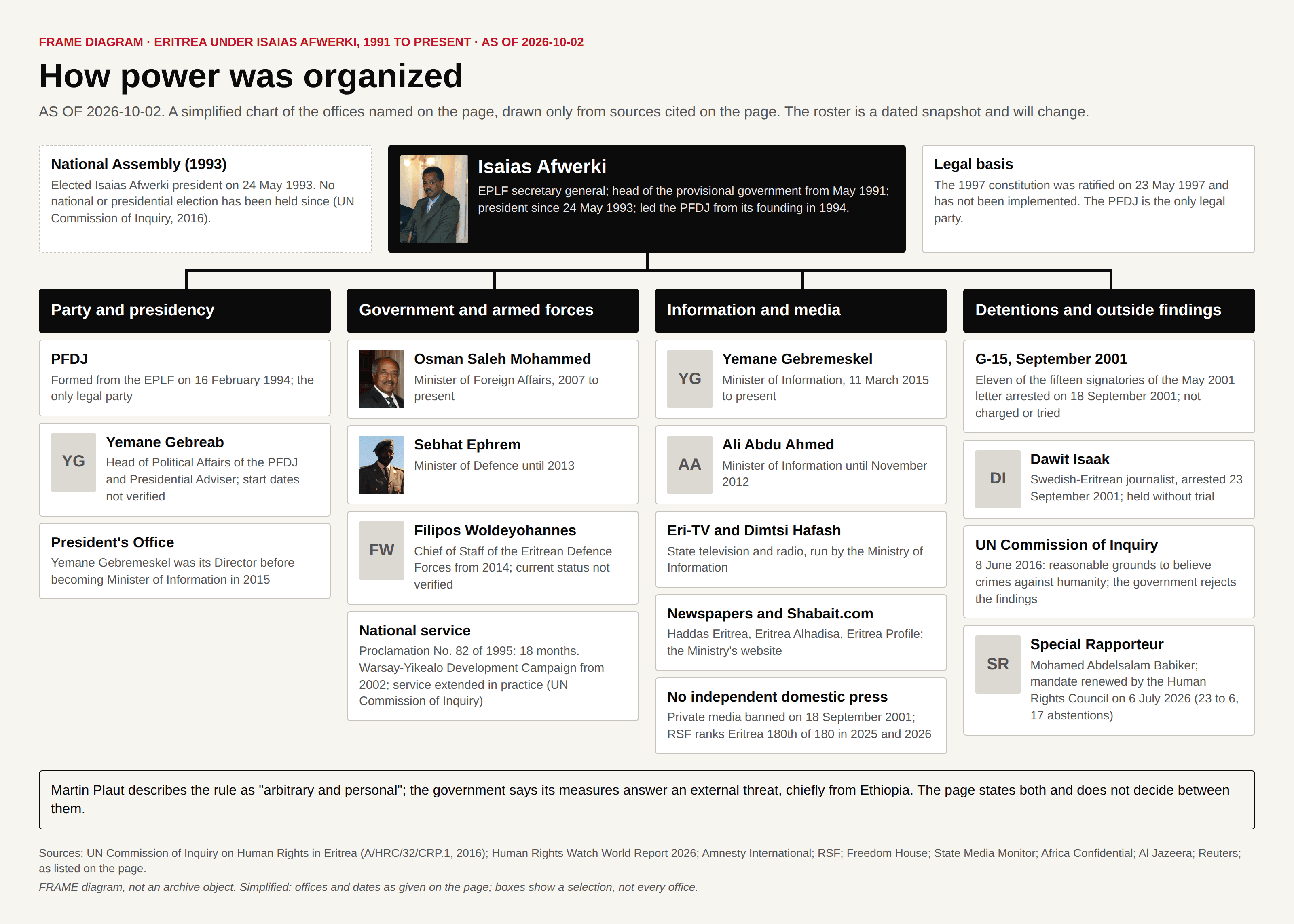
How power was organized, as of 2 October 2026: a chart of the offices named on this page, simplified from the sources cited on this page. Source: FRAME diagram. Portraits, cropped to thumbnails: U.S. Department of Defense, photograph by Helene C. Stikkel, 10 December 2002; Foreign and Commonwealth Office, via Flickr and Wikimedia Commons, 7 February 2012; U.S. Department of Defense, photograph by Helene C. Stikkel, 10 December 2002, CC BY 4.0 (FRAME archive content); portraits are public domain or CC0: Open Government Licence v1.0; Public domain (U.S. federal government work, Department of Defense photograph 021210-D-2987S-013); Public domain (U.S. federal government work, Department of Defense photograph 021210-D-2987S-057).
National service is the central institution. Proclamation No. 82 of 1995 required Eritreans of 18 to 40 to serve 18 months, six of military training and twelve of active service or development work. In 2002 the Warsay-Yikealo Development Campaign (WYDC) deployed conscripts in civil ministries, state-owned enterprises and the army, and the COI found that service was in practice extended indefinitely from about that year. Training takes place at the Sawa camp. The government's position is that service is limited by law to 18 months and has been prolonged because of Ethiopia. The Ministry of Foreign Affairs said on 19 June 2015 that "by law national service is only required for eighteen months" but that, because of Ethiopia's refusal to abide by the boundary ruling, the government "had been left with no other choice but to rely on its population to defend its independence and sovereignty." The Ministry of Information said in December 2015: "In normal times, the National Service is limited to 18 months by law… This normative configuration is affected today due to Ethiopia's continued occupation of sovereign Eritrean territories." Information Minister Yemane Gebremeskel said in February 2016 that "demobilization is predicated on removal of the main threat." The COI concluded that "despite the justifications for a military/national service programme advanced in 1995, the military/national service programmes today serve primarily to boost the economic development of the nation, profit state-endorsed enterprises, and maintain control over the Eritrean population in a manner inconsistent with international law." Kibreab (The Eritrean National Service) argues that open-ended service drives emigration. Michael Woldemariam analyses the Eritrea-Ethiopia "no war, no peace" rivalry through the strategic calculations of both governments, which is a different frame from the COI's. This page did not find a scholarly source that endorses the government's account of national service in full, and it says so rather than imply a balance the sources do not show.
The war with Ethiopia (May 1998 to June 2000 fighting; Algiers Agreement of 12 December 2000) opened the first crisis within the leadership. In May 2001 fifteen senior PFDJ officials, later called the G-15, signed an open letter urging the president to implement the constitution and hold elections. On 18 September 2001 security forces arrested eleven of them (the other four were abroad or, in one case, retracted) and the government banned all privately owned media. Amnesty International records that journalists were arrested on 21 to 23 September and names ten, among them Dawit Isaak and Amanuel Asrat; Reporters Without Borders counted eleven in 2016, and the Committee to Protect Journalists reported at least ten detained in the days after 18 September 2001. The government said in a statement quoted by the COI that the eleven officials "were detained for conspiring and attempting to overthrow the legal government of the country in times of war and for colluding with hostile foreign powers", adding that "not a single Eritrean has been detained in the past twenty four years since independence for expressing his/her opinion." The COI observed that the government cited the law on treason but mentioned no trial or conviction. No member of the group has been charged or tried; Amnesty reported in 2021 that nine of the 21 had reportedly died in custody, which the authorities have not confirmed.
Illustration, not an archive object
The propaganda apparatus
Offices. The Ministry of Information owns, operates and supervises all state media; there is no independent regulator, and the Minister of Information appoints senior editors (State Media Monitor). Yemane Gebremeskel, who was Director of the President's Office before his appointment on 11 March 2015, is the minister as of 2 October 2026 and the government's usual spokesman; his predecessor Ali Abdu Ahmed left the post in November 2012 (Plaut), and Awate reports it was then vacant until 2015.
Channels. The Ministry runs Eri-TV, the radio service Dimtsi Hafash ("Voice of the Broad Masses"), the newspapers Haddas Eritrea (Tigrinya), Eritrea Alhadisa (Arabic) and Eritrea Profile (English), and the website Shabait.com, which publishes Isaias's interviews with Eri-TV and Dimtsi Hafash, ministry statements and replies to outside reports. No independent domestic outlet has operated since 18 September 2001. Reporters Without Borders ranked Eritrea 180th of 180 countries in its 2025 index (score 11.32) and again in 2026 (score 10.24), and said in 2016 that it had held that last place for eight years running. The COI called the increase in foreign journalists granted access to Eritrea during its reporting period "a positive development." The state telecommunications operator EriTel is described as the sole operator of landline and mobile networks, controlling the internet gateway, and one market analyst (BuddeComm) puts household internet access at about 2 per cent.
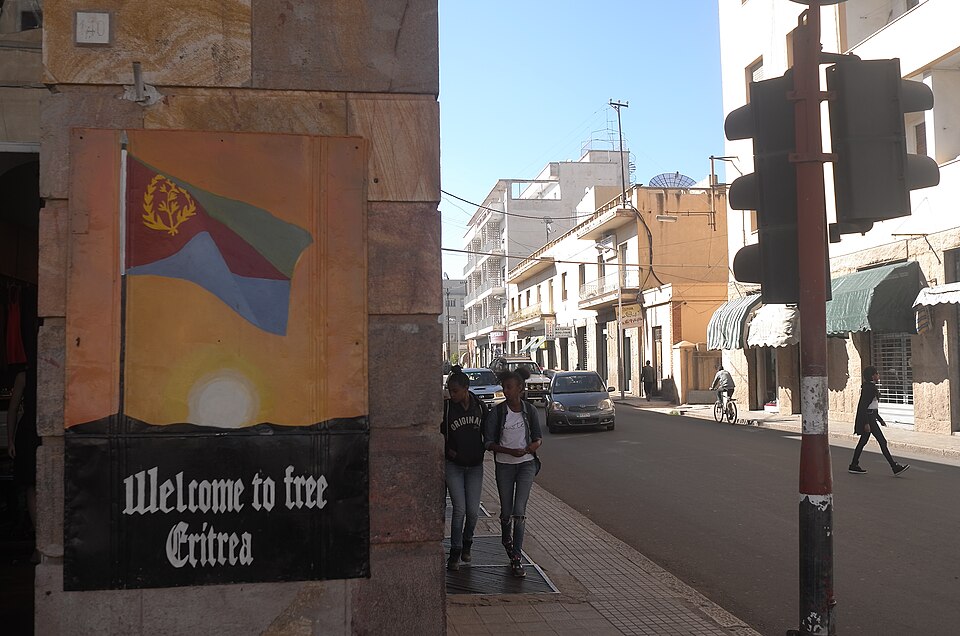
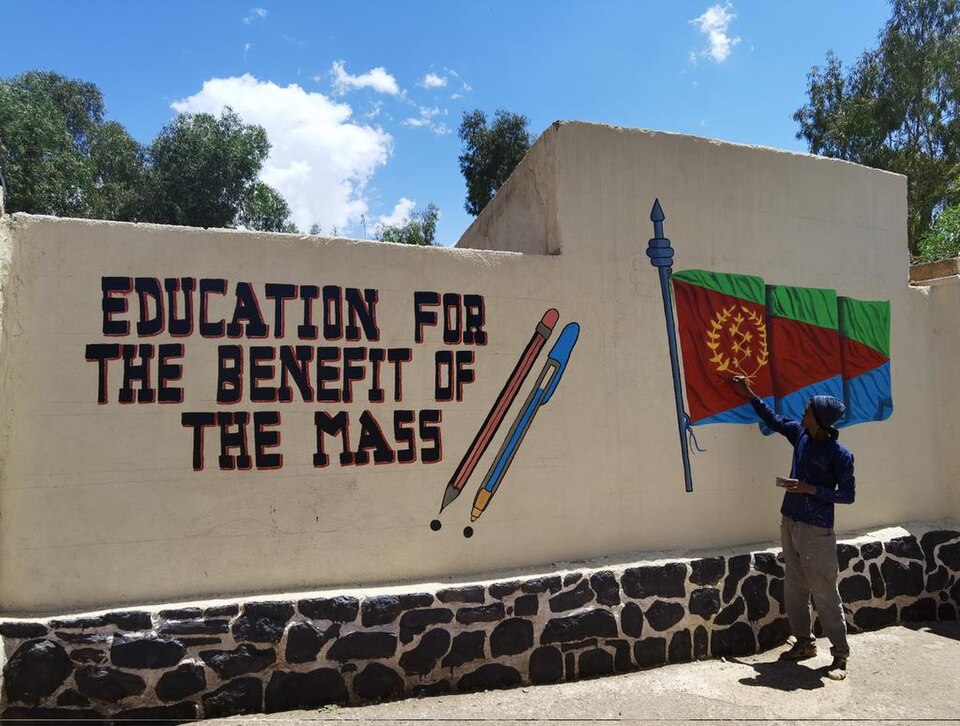
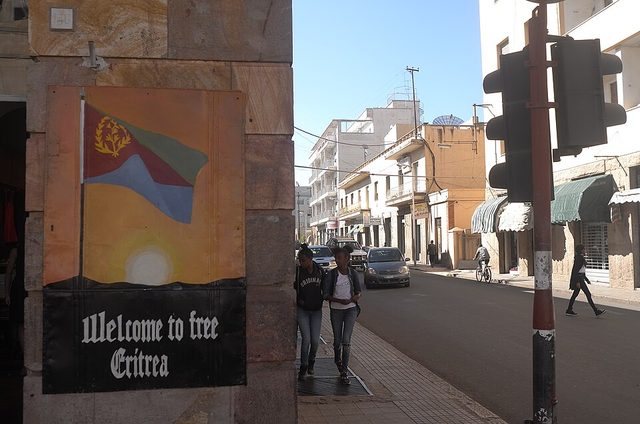
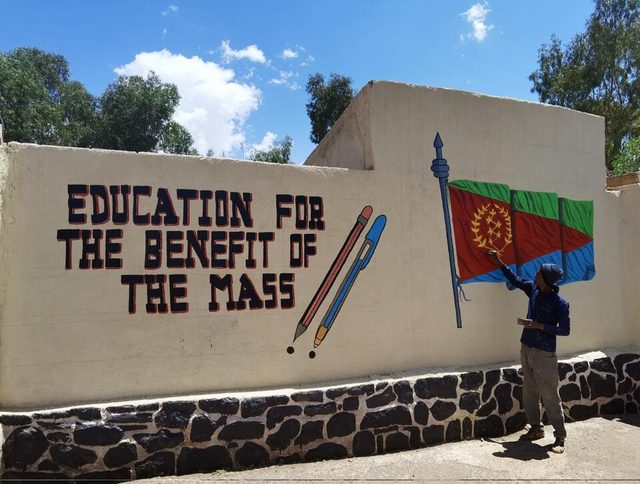
Messaging. Public messaging draws on the liberation war and on external threat. Slogans and flags are painted in public places, for example a panel in Asmara reading "Welcome to free Eritrea" (the 2017 Asmara sign) and a mural reading "Education for the benefit of the mass" (the Asmara mural); the archive records who painted them as not identified. The Ministry's account of national service, quoted above, is a threat appeal, which the archive tags as fear appeal without ruling on whether the threat is accurate; the glittering generalities are the slogans, and card stacking is the absence of other domestic voices. A Ministry of Information statement is the government's usual reply to outside findings; the COI's 2016 report cites a Shabait.com article headed "Commission of Inquiry Report: Devoid of credibility and substance", and Al Jazeera reported that Yemane Gebremeskel rejected the 2016 findings on Twitter.
Outside findings. The COI report (A/HRC/32/CRP.1, 8 June 2016) found "reasonable grounds to believe" that Eritrean officials had committed enslavement (in a "persistent, widespread and systematic manner since no later than 2002"), imprisonment, enforced disappearance, torture, other inhumane acts, persecution, rape and murder as crimes against humanity, within what it called a "widespread and systematic attack against the civilian population of Eritrea since May 1991"; Al Jazeera, reporting the findings, gave the figure of 300,000 to 400,000 people "enslaved" through conscription. Special Rapporteur Mohamed Abdelsalam Babiker, described by Plaut as the outgoing rapporteur, reports each year to the Human Rights Council, which on 6 July 2026 voted 23 to 6 with 17 abstentions to renew the mandate; Eritrea's ambassador said before the vote that if it passed Eritrea would stop engaging with the Council on the mandate. Human Rights Watch's World Report 2026 describes indefinite national service, the G-15 and ten journalists as still missing, and Eritrean forces still holding parts of Tigray. Plaut reports that Eritrea has refused for 14 years to cooperate with successive Special Rapporteurs.
Press detainees and exile media. Dawit Isaak, a Swedish-Eritrean journalist and co-owner of Setit, was arrested on 23 September 2001. In a 2009 interview on Sweden's TV4 Isaias said "we don't release. We don't take to trial. We have our own ways to deal with him and others like him" (quoted by the COI). The UN Working Group on Arbitrary Detention called his detention arbitrary in 2023 (RSF). Radio Erena ("Our Eritrea"), a Tigrinya-language station set up in Paris in 2009 by Eritrean journalists with the support of Reporters Without Borders and founded by Biniam Simon, formerly of Eri-TV, broadcasts by satellite and reports intermittent jamming; for jamming as a wider practice see Cold War radio jamming.
The diaspora. The government levies a 2 per cent tax on income of Eritreans abroad, which it describes as voluntary; the UN Security Council condemned its coercive collection in Resolution 2023 of December 2011, adopted 13 to 0 with China and Russia abstaining. State-linked "Eritrea festivals" abroad have drawn protests: police were injured at Giessen, Germany, in July 2023, and violence followed in Stockholm in August 2023 (Al Jazeera; researchers writing in the Review of African Political Economy, 2024, describe the festivals as both cultural events and a source of revenue and support for the government). Opponents and supporters differ on whether the events are cultural gatherings or party fundraising.
Peace, war and sanctions. The Joint Declaration with Ethiopia of 9 July 2018 (confirmed at Jeddah on 16 September 2018) ended the state of war, and the UN Security Council lifted its sanctions on 14 November 2018. Eritrean forces entered Tigray from November 2020; Ethiopia's prime minister acknowledged this on 23 March 2021, after earlier denials, and Eritrea acknowledged its troops in a letter to the Security Council in mid-April 2021 and said they would withdraw. Eritrea was not a party to the Pretoria agreement of 2 November 2022; HRW reports that Eritrean forces still occupy parts of Tigray.
Timeline
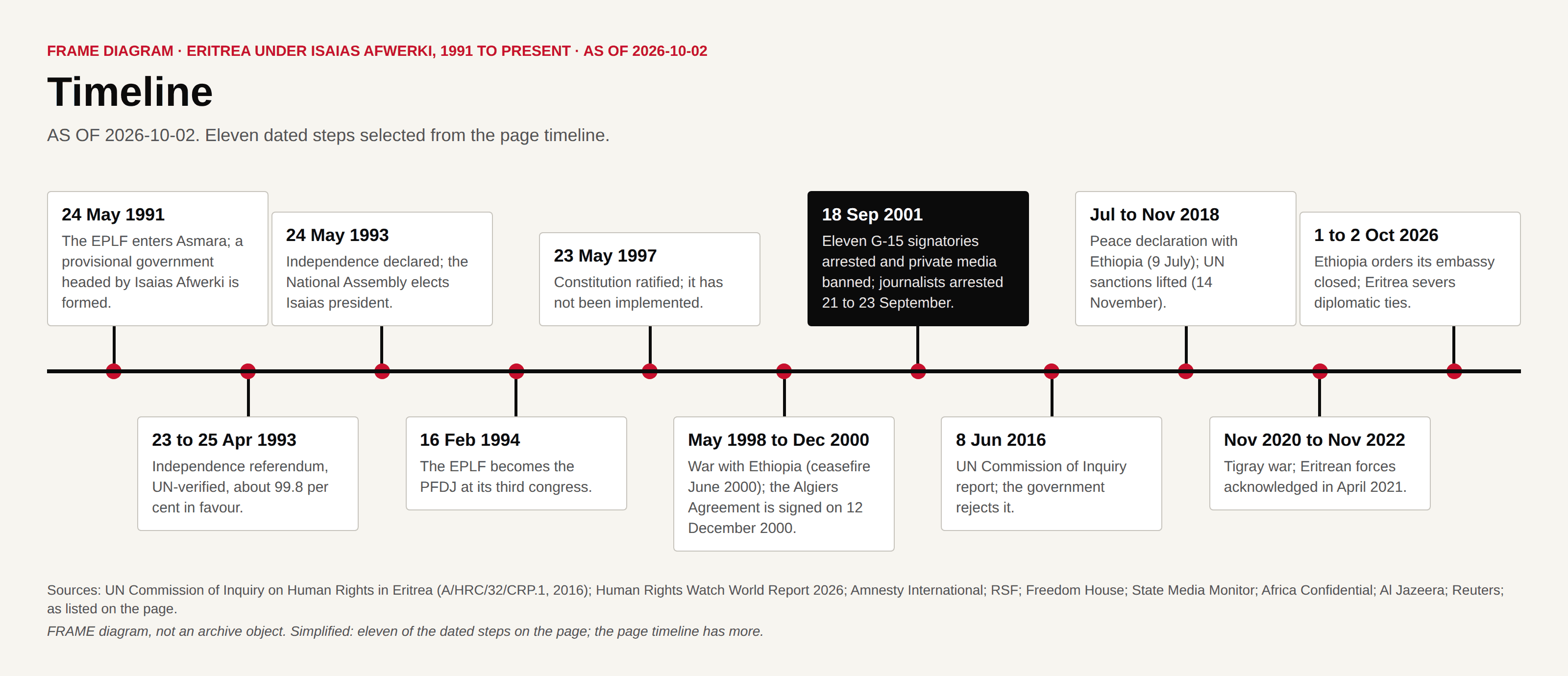
24 May 1991: the EPLF enters Asmara; the Provisional Government of Eritrea, headed by Isaias Afwerki, is formed.
23 to 25 April 1993: independence referendum, UN-verified, about 99.8 per cent in favour.
24 May 1993: independence declared; the National Assembly elects Isaias president; UN membership on 28 May.
16 February 1994: the EPLF becomes the PFDJ at its third congress.
1995: National Service Proclamation No. 82 sets service at 18 months.
23 May 1997: constitution ratified; it has not been implemented.
May 1998 to June 2000: war with Ethiopia (a ceasefire on 18 June 2000); the Algiers Agreement is signed on 12 December 2000.
May 2001: the G-15 open letter; 18 September 2001, arrests of eleven signatories and the ban on private media; 21 to 23 September, arrests of journalists.
2002: the Warsay-Yikealo Development Campaign; in April 2002 the Eritrea-Ethiopia Boundary Commission issues its "final and binding" boundary decision, which awarded Badme to Eritrea, and Ethiopia does not implement it at that time.
22 December 2009 and 5 December 2011: UN sanctions imposed and the diaspora tax condemned (Resolution 2023).
8 June 2016: UN Commission of Inquiry report; the government rejects it.
9 July and 16 September 2018: peace with Ethiopia; 14 November 2018, UN sanctions lifted.
November 2020 to November 2022: the Tigray war; Eritrean forces acknowledged in April 2021.
18 September 2026: the 2021 U.S. national emergency lapses and sanctions on the PFDJ and Defence Forces end.
1 to 2 October 2026: Ethiopia orders its embassy in Eritrea closed; Eritrea severs diplomatic ties.
Timeline, as of 2 October 2026: eleven dated steps selected from this page, simplified from the sources cited on this page. Source: FRAME diagram, drawn from the sources listed on this page, CC BY 4.0 (FRAME archive content).
Where it stands as of October 2, 2026
Illustration, not an archive object
Isaias Afwerki remains president, the PFDJ the only legal party, and the 1997 constitution is unimplemented. Yemane Gebremeskel is Information Minister, and no independent domestic press has existed since 2001. The United States let the national emergency of September 2021 lapse on 18 September 2026, a step the State Department said would "advance US regional interests"; Yemane Gebremeskel said the earlier sanctions "were not warranted by any metrics" (Al Jazeera, 19 September 2026). In February 2026 Ethiopia accused Eritrea of occupying Ethiopian territory and backing rebels; the Ministry of Information called the accusations "astounding in tone and substance", and Human Rights Watch describes the tension as rising notably over "Ethiopia's ongoing quest for access to the sea." On 1 to 2 October 2026 Ethiopia ordered its embassy closed and expelled ten Eritrean diplomats after accusing Eritrea, Sudan and Egypt of backing the TPLF alliance; all three deny it, and Eritrea's foreign ministry said Eritrea "has no option but to reciprocate in kind and sever all diplomatic ties" (Al Jazeera, 1 October 2026; Reuters attributes the words to Yemane Gebremeskel). These events were unfolding on the day of writing and may change.
Same-standard note
This page uses the same structure and technique definitions as every other regime page, and applies them on the same terms: a technique is listed only where the working definition and a documented example fit, and the government's own statements are quoted and attributed in the same way as outside findings. The facts are a snapshot as of 2 October 2026 and several sources are secondary; the quotations from Isaias and from the Ministries are taken from the UN Commission of Inquiry's report, which cites the originals, and the broadcast and interview texts themselves were not retrieved. Where scholars and the government disagree, in particular on whether external threat explains national service, both views are stated and the page does not decide between them. Scale and context differ from other regime pages, and nothing here implies equivalence.
Scholarship: Dan Connell, Against All Odds (1993), Enough! A Critique of Eritrea's Post-Liberation Politics and Conversations with Eritrean Political Prisoners (author page); Gaim Kibreab, Eritrea: A Dream Deferred (2009) and The Eritrean National Service (Boydell); Bereket Habte Selassie, Wounded Nation (2010); Kjetil Tronvoll and Daniel R. Mekonnen, The African Garrison State (2014) (review); Martin Plaut, Understanding Eritrea (2016) (review); Alex de Waal, The Real Politics of the Horn of Africa (2015) (interview); Michael Woldemariam on the Eritrea-Ethiopia rivalry (African Union library record).


.jpg)
