Also called Scare tactic, Threat messaging
Imminent harm is staged so the audience accepts the offered protection without comparing base rates or alternatives.
The tell
Catastrophe language plus a single prescribed remedy; no time for tradeoffs.
Not this
A dated, sourced warning with magnitude and uncertainty.
History and effect
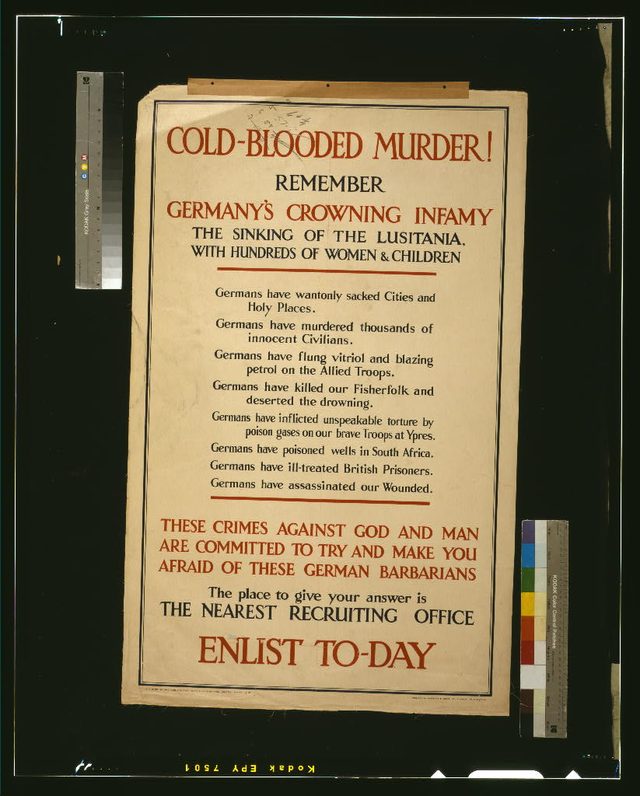
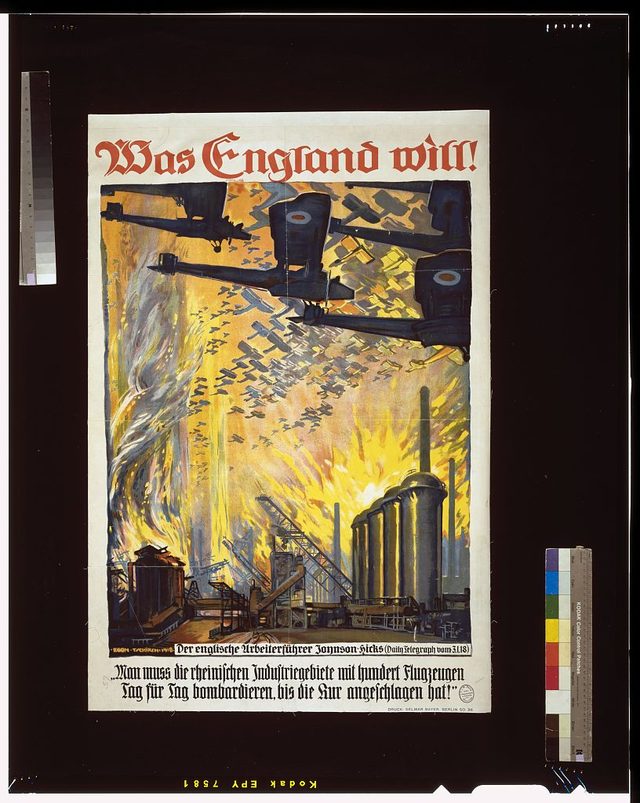
Rooted in Aristotle's account of pathos and mass-produced as a genre by WWI and WWII recruitment and home-front security posters.
It floods the audience with urgency so the one remedy on offer is accepted on reflex, without comparing it to base rates or alternatives.
Lineage: Aristotle pathos; wartime poster tradition
How it works
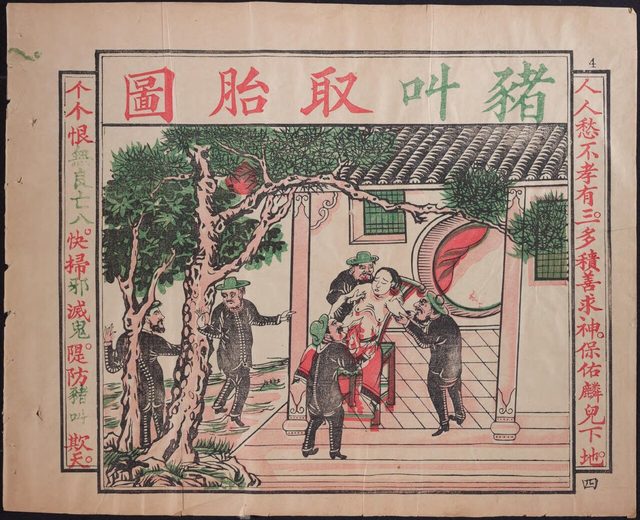
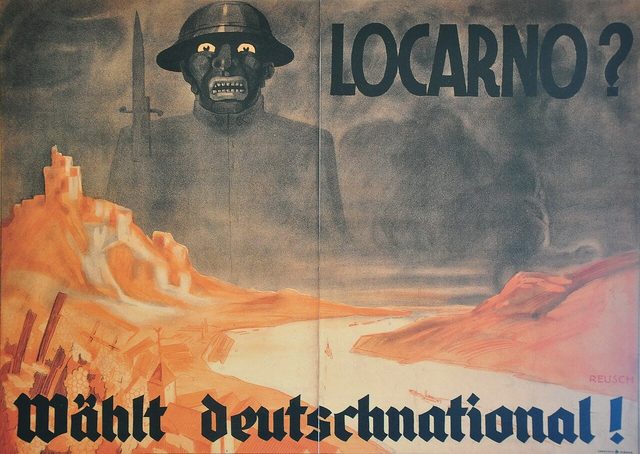
A fear appeal has four moving parts: a threat made concrete (a face, a figure, a colour on a chart); closeness, so the harm looks near in place and time; a single remedy (enlist, buy the bond, stay silent, vote, do not smoke); and an omission. What is left out is how likely the harm is, how large it is compared with other risks, what the remedy costs, and whether another remedy exists. The archive's definition turns on that omission. A warning that carries its magnitude and uncertainty is not this technique, however frightening its subject.
In Harry Hopps's Destroy This Mad Brute (Destroy This Mad Brute — Enlist) the threat is an ape in a helmet marked "militarism", the closeness is a shoreline labelled America, and the remedy is "Enlist". The careless-talk posters (He's Watching You, Wanted! For Murder — Her Careless Talk Costs Lives) move the threat indoors, with silence as the remedy.
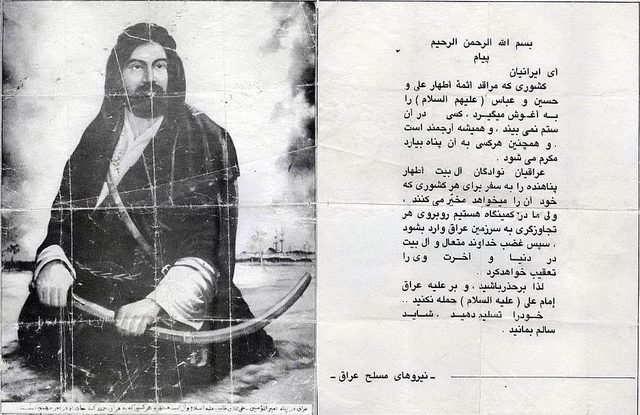
Later variants keep the structure. The Homeland Security Advisory System (Homeland Security Advisory System threat-level chart) showed a colour level with no base rate and usually no place or plot, and was never set below yellow ("elevated"). Public-health campaigns such as the FDA's The Real Cost (The Real Cost — "Your Skin") stage a slow, documented harm as instant bodily horror. Election advertisements link an opponent to catastrophe by juxtaposition. A legal notice can state a maximum sentence with no named case (The Justice Department's FARA release and public demonstrations); state media can announce penalties for people labelled traitors before anyone is charged (Alaj: the portal Iranian state media promoted for reporting 'traitors abroad'). The remedy is always what the sender wants, which is why the missing comparison matters.
Why it works
Aristotle's Rhetoric (Book II) defined fear as pain caused by imagining a destructive evil in the near future. Irving Janis and Seymour Feshbach (1953) found that the most frightening of three dental-hygiene lectures produced the least reported change, which they put down to defensive avoidance. Howard Leventhal's parallel process model (1970) separated danger control (acting against the threat) from fear control (managing the feeling, often by denial). Kim Witte's Extended Parallel Process Model (1992) predicts that people adopt the recommendation when both perceived threat and perceived efficacy are high, and reject or avoid the message when threat is high and efficacy low. Meta-analyses by Witte and Mike Allen (2000) and by Melanie Tannenbaum and colleagues (2015) found fear appeals persuasive on average, more so with an efficacy message and a one-time action, which is why they end on one easy remedy.
The availability heuristic (Tversky and Kahneman 1973) makes vivid harms feel more frequent than they are, and Paul Slovic (1987) found that "dread" risks, seen as catastrophic and uncontrollable, are judged more serious than their frequency implies.
Examples across eras and sides
- War posters (1915 to 1917, United Kingdom, United States, Germany). Britain's Remember Belgium (Remember Belgium — Enlist To-Day) compresses documented atrocities in occupied Belgium into one burning village and one remedy, enlistment; the US Army's Hopps poster brings the threat to American shores. Germany's war-loan campaign used the same form, though Fritz Erler's Helft uns siegen! (Helft uns siegen! Zeichnet die Kriegsanleihe (Help Us Win! Subscribe to the War Loan)) only implies the stakes of defeat. (Library of Congress poster collection; archive entries.)
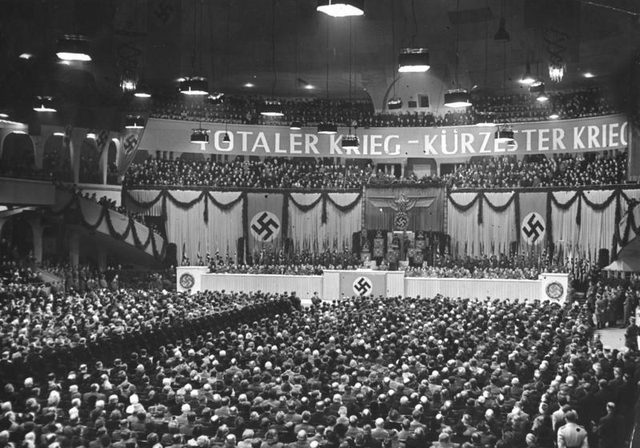
- Goebbels's "total war" speech (1943, Germany, Nazi government). At the Berlin Sportpalast on 18 February 1943, weeks after Stalingrad, Joseph Goebbels presented Bolshevism, which the speech tied to Jews, as an imminent threat to Europe that only total war could stop, then asked the selected audience whether they wanted total war. (Randall Bytwerk, ed., Landmark Speeches of National Socialism, 2008.)
- "Daisy" (1964, United States, Johnson campaign). Aired once as a paid advertisement on NBC on 7 September 1964, it cuts from a girl counting petals to a nuclear explosion as Johnson's voice says "These are the stakes." Barry Goldwater is never named; the link is left to the viewer, and the remedy is a vote. (Robert Mann, Daisy Petals and Mushroom Clouds, 2011.)
- "Weekend Passes" (1988, United States, National Security Political Action Committee). An independent pro-Bush committee showed the police photograph of William Horton, who did not return from a Massachusetts prison furlough and later committed assault and rape in Maryland, and tied the programme to Michael Dukakis. Tali Mendelberg argues the image of a Black man carried the fear as an implicit racial appeal. (Kathleen Hall Jamieson, Dirty Politics, 1992; Mendelberg, The Race Card, 2001.)
- The "Grim Reaper" (1987, Australia, federal AIDS campaign). The National Advisory Committee on AIDS aired a television advertisement in which a Grim Reaper bowls down men, women and a child, to make a general audience feel personally at risk and to urge safe sex. It is credited with raising awareness and was criticised, including by gay community groups, for adding to stigma against gay men. (National Film and Sound Archive of Australia holdings.)
- RTLM radio (1993 to 1994, Rwanda, privately owned station close to the ruling circle). Radio Télévision Libre des Mille Collines told Hutu listeners that the Rwandan Patriotic Front and the Tutsi, whom it called inyenzi ("cockroaches"), meant to exterminate them, and presented killing as self-defence. The ICTR convicted founders Ferdinand Nahimana and Jean-Bosco Barayagwiza, with some convictions revised on appeal. (ICTR, Prosecutor v. Nahimana, Barayagwiza and Ngeze, 2003 and 2007.)
- "Mushroom cloud" (2002, United States, executive branch). On CNN on 8 September 2002, National Security Adviser Condoleezza Rice said of Iraq, "we don't want the smoking gun to be a mushroom cloud," framing the wait for evidence as the danger itself. The Iraq Survey Group later reported that Iraq had ended its nuclear programme in 1991 and found no evidence of a concerted effort to restart it. (Iraq Survey Group, Comprehensive Report, 2004.)
- EU referendum (2016, United Kingdom, both campaigns). HM Treasury, under a government that backed Remain, projected a recession after a Leave vote in its central short-term scenario; Leave campaigners called such warnings "Project Fear", and no recession followed in 2016 to 2017. Vote Leave material stated that Turkey, "population 76 million", was joining the EU, although accession talks had stalled and needed the UK's consent. (HM Treasury, 2016; Clarke, Goodwin and Whiteley, Brexit, 2017.)
How to spot it
- Does the message say how likely the harm is, how many people it affects, and over what period?
- Is only one remedy offered, and does the sender gain from it (recruits, votes, sales, compliance)?
- Is the closeness of the threat documented (a named plot, place or date) or only suggested by an image?
- Is there a deadline, and is a reason given for it?
- Is the threat a named actor with evidence, or a type of person or a silhouette?
- Is a maximum penalty or worst case presented as the expected outcome?
Where it ends: edge cases and legitimate persuasion
- Proportionate warnings. A storm warning with a forecast track, probabilities and evacuation zones may frighten, but it gives magnitude, uncertainty and options. Fear itself is not the test; the missing comparison is.
- True harms, dramatised. The Real Cost rests on documented harms, and a CDC-published evaluation (Farrelly and colleagues, 2017) associated it with lower youth smoking initiation. The archive still tags the method, and applies the same test to climate messaging (Saffron O'Neill and Sophie Nicholson-Cole, 2009, found fearful climate imagery drew attention but could leave viewers feeling powerless) and to economic warnings from either side.
- Legal notices. Stating a statutory penalty is ordinary; it becomes this technique when the penalty is detached from the legal test that triggers it.
- Neighbours. When the threat is a whole group, see Scapegoating; when the sender attributes its own intent to the target, Accusation in a mirror; when only frightening data is chosen, Card stacking; when the emotion is anger, Outrage bait; when many shifting alarms replace one, Firehosing.
- Where honest persuasion stops. A message that names the threat, quantifies it, cites its source, admits uncertainty and offers more than one response is legitimate even when alarming. It becomes a fear appeal when those elements are removed so the remedy is accepted without comparison.
Sources
- Aristotle, Rhetoric, Book II.
- Bytwerk, Randall L., ed., Landmark Speeches of National Socialism, Texas A&M University Press, 2008.
- Clarke, Harold D., Matthew Goodwin and Paul Whiteley, Brexit: Why Britain Voted to Leave the European Union, Cambridge University Press, 2017.
- Farrelly, Matthew C., et al., "Association between The Real Cost media campaign and smoking initiation among youths, United States, 2014-2016", Morbidity and Mortality Weekly Report, 2017.
- HM Treasury, The immediate economic impact of leaving the EU, 2016.
- International Criminal Tribunal for Rwanda, Prosecutor v. Nahimana, Barayagwiza and Ngeze, Trial Chamber judgment 2003; Appeals Chamber judgment 2007.
- Iraq Survey Group, Comprehensive Report of the Special Advisor to the DCI on Iraq's WMD, 2004.
- Jamieson, Kathleen Hall, Dirty Politics: Deception, Distraction, and Democracy, Oxford University Press, 1992.
- Janis, Irving L., and Seymour Feshbach, "Effects of fear-arousing communications", Journal of Abnormal and Social Psychology, 1953.
- Leventhal, Howard, "Findings and theory in the study of fear communications", Advances in Experimental Social Psychology, 1970.
- Mann, Robert, Daisy Petals and Mushroom Clouds, Louisiana State University Press, 2011.
- Mendelberg, Tali, The Race Card, Princeton University Press, 2001.
- O'Neill, Saffron, and Sophie Nicholson-Cole, "'Fear won't do it'", Science Communication, 2009.
- Slovic, Paul, "Perception of risk", Science, 1987.
- Tannenbaum, Melanie B., et al., "Appealing to fear: A meta-analysis of fear appeal effectiveness and theories", Psychological Bulletin, 2015.
- Tversky, Amos, and Daniel Kahneman, "Availability: A heuristic for judging frequency and probability", Cognitive Psychology, 1973.
- Witte, Kim, "Putting the fear back into fear appeals: The extended parallel process model", Communication Monographs, 1992.
- Witte, Kim, and Mike Allen, "A meta-analysis of fear appeals", Health Education and Behavior, 2000.
Case studies
- Alaj: the portal Iranian state media promoted for reporting 'traitors abroad' — Alaj: the portal Iranian state media promoted for reporting 'traitors abroad'
- Wellington House and the Bryce Report: atrocity evidence, confirmed and unconfirmed (1914-1915) — Wellington House and the Bryce Report: atrocity evidence, confirmed and unconfirmed (1914-1915)
- The Committee on Public Information: how the U.S. government sold the First World War at home (1917-1919) — The Committee on Public Information: how the U.S. government sold the First World War at home (1917-1919)
- The Justice Department's FARA release and public demonstrations — The Justice Department's FARA release and public demonstrations
- Kangura, Radio Rwanda and RTLM: Hutu Power propaganda before and during the genocide against the Tutsi, 1990-1994 — Kangura, Radio Rwanda and RTLM: Hutu Power propaganda, 1990-1994
- The Armenian genocide, 1915-1923: the wartime 'internal enemy' frame, the rival record, and a century of state denial — The Armenian genocide, 1915-1923, and a century of state denial
- Angkar: language control in Democratic Kampuchea, 1975-1979, and the contests over its record — Angkar: language control in Democratic Kampuchea, 1975-1979
- Media war over Croatia and Bosnia, 1987-1995, and the denial of Srebrenica — Media war over Croatia and Bosnia, 1987-1995, and the denial of Srebrenica
- Anti-Rohingya propaganda in Myanmar, 2012-2018: the 'Bengali' label, the monks' sermons and the military's covert Facebook pages — Anti-Rohingya propaganda in Myanmar, 2012-2018
- How the US and UK governments presented the case for war in Iraq, 2002-03 — How the US and UK governments presented the case for war in Iraq, 2002-03
- The Alar campaign: an advocacy report, a TV exclusive and a planned echo — The Alar campaign: an advocacy report, a TV exclusive and a planned echo
- 'For whites only': the forged Klan letters sent to Olympic committees in 1984 — Forged Klan letters to Olympic teams, 1984
- McCarthy's numbers: 205, 57, 81 and the move from 'card-carrying Communists' to 'security risks' (1950-54) — McCarthy's shifting numbers, 1950
- Lubang Buaya, 1965: the mutilation story the autopsies did not support — Indonesia 1965: the Lubang Buaya story
- Chieu Hoi and Radio Hanoi: both sides' propaganda aimed at the other side's soldiers in Vietnam — Chieu Hoi and Radio Hanoi: propaganda aimed at the other side's soldiers
- The Kenya Emergency, 1952-1960: 'rehabilitation', the Hola water cart, and the oath — The Kenya Emergency, 1952-1960: 'rehabilitation', the Hola water cart, and the oath
- 'Benevolent assimilation': the Philippine-American War and the propaganda on every side — 'Benevolent assimilation': the Philippine-American War and the propaganda on every side
- The Islamic State's media machine: Dabiq, Rumiyah, Amaq and the 'virtual caliphate' — The Islamic State's media machine: Dabiq, Rumiyah, Amaq and the 'virtual caliphate'
- The second Ku Klux Klan: selling membership as '100% Americanism' — The second Ku Klux Klan: selling membership as '100% Americanism'
- Christchurch and its copycats: livestreamed attacks and 'manifesto culture', 2019-2022 — Christchurch and its copycats: livestreamed attacks and 'manifesto culture', 2019-2022
- Red Army Faction: communiqués, hunger strikes and the 'isolation torture' campaign — Red Army Faction: communiqués, hunger strikes and the 'isolation torture' campaign
- Shining Path: the Gonzalo cult, the 'people's war' and the state's reply — Shining Path: the Gonzalo cult, the 'people's war' and the state's reply
- Walls, prisons and airwaves: republican and loyalist paramilitary propaganda in Northern Ireland — Walls, prisons and airwaves: republican and loyalist paramilitary propaganda in Northern Ireland
- Reefer Madness and the 1930s marihuana campaign — Reefer Madness and the 1930s marihuana campaign
- Wartime radio voices: open and hidden broadcasts aimed at the enemy, 1939-1945 — Wartime radio voices, open and hidden
- The English Civil War pamphlet war, 1641-1649 — The English Civil War pamphlet war, 1641-1649
- Join or Die to the Boston Massacre: patriot and loyalist print, 1754-1783 — Join or Die to the Boston Massacre: patriot and loyalist print, 1754-1783
- Revolution, counter-revolution and Napoleon's bulletins, 1789-1815 — Revolution, counter-revolution and Napoleon's bulletins, 1789-1815
- Abolitionist and pro-slavery print, 1787-1860 — Abolitionist and pro-slavery print, 1787-1860
- Union and Confederate print, 1861-1865 — Union and Confederate print, 1861-1865
- Pengkhianatan G30S/PKI: how Indonesia's New Order kept 1965 on screen — Pengkhianatan G30S/PKI: how Indonesia's New Order kept 1965 on screen
- The loudspeaker war: propaganda across the Taiwan Strait, 1949-1987 — The loudspeaker war: propaganda across the Taiwan Strait, 1949-1987
- Operation Spectrum: Singapore's 'Marxist conspiracy' and its answers — Operation Spectrum: Singapore's 'Marxist conspiracy' and its answers
- Marcos's martial law: the 'New Society' and the online contest over its memory — Marcos's martial law: the 'New Society' and the online contest over its memory
- The 1800 election: "Jefferson and no God" and "squints at monarchy" — The 1800 election: "Jefferson and no God" and "squints at monarchy"
- Crime and victim attack ads in two U.S. presidential races: Horton and the furloughs (1988), James Byrd Jr. and hate-crimes law (2000) — Crime and victim attack ads in two U.S. presidential races: Horton and the furloughs (1988), James Byrd Jr. and hate-crimes law (2000)
- Mood over argument: "Morning in America" (Reagan-Bush 1984) and "Hope" / "Yes We Can" (Obama 2008) — Mood over argument: "Morning in America" (Reagan-Bush 1984) and "Hope" / "Yes We Can" (Obama 2008)
- British election posters and broadcasts, 1978 to 2005: Conservative and Labour attack campaigns — British election posters and broadcasts, 1978 to 2005: Conservative and Labour attack campaigns
- Brazil 2018 and 2022: WhatsApp blasts, removal orders against both campaigns, and the electoral court's new powers — Brazil 2018 and 2022: WhatsApp blasts, removal orders against both campaigns, and the electoral court's new powers
- The MMR scare: from a 1998 press conference to Vaxxed, and its 1802 ancestors — The MMR scare: from a 1998 press conference to Vaxxed, and its 1802 ancestors
- Just Say No and the fried egg: anti-drug campaigns, 1971-2016 — Just Say No and the fried egg: anti-drug campaigns, 1971-2016
- The satanic panic: ritual-abuse claims in the US and UK, 1980-1994 — The satanic panic: ritual-abuse claims in the US and UK, 1980-1994
- Follow the science, Plandemic: COVID-19 messaging from officials and contrarians, 2020-2022 — Follow the science, Plandemic: COVID-19 messaging from officials and contrarians, 2020-2022
- Gay plague, tombstones and Silence = Death: messaging in the AIDS crisis, 1981-1990 — Gay plague, tombstones and Silence = Death: messaging in the AIDS crisis, 1981-1990
- Better babies, fitter families: eugenics campaigns in the US, Sweden and Germany — Better babies, fitter families: eugenics campaigns in the US, Sweden and Germany
- Wartime censorship in the First World War: Britain, Germany, France and the United States — Wartime censorship in the First World War: Britain, Germany, France and the United States
- Votes for Women and the anti-suffrage campaigns, 1908 to 1920 — Votes for Women and the anti-suffrage campaigns, 1908 to 1920
- Temperance, Prohibition and the wets: the dry campaigns and their opponents, 1874 to 1933 — Temperance, Prohibition and the wets: the dry campaigns and their opponents, 1874 to 1933
- Labor organizing and anti-union campaigns in the United States, 1910-1941 — Labor organizing and anti-union campaigns in the United States, 1910-1941
- The US abortion debate: persuasion campaigns on both sides since the 1960s — The US abortion debate: persuasion campaigns on both sides since the 1960s
- Black Lives Matter and Blue Lives Matter: two slogans, their campaigns, and a foreign operation that posed as both — Black Lives Matter and Blue Lives Matter: two slogans, their campaigns, and a foreign operation that posed as both
- Gun rights and gun control: persuasion on both sides of the U.S. gun debate — Gun rights and gun control: persuasion on both sides of the U.S. gun debate
- The civil rights movement and the Citizens' Councils: boycotts and marches, 'outside agitator' labels, state money and economic pressure — The civil rights movement and the Citizens' Councils: boycotts and marches, 'outside agitator' labels, state money and economic pressure
- South Africa's information war: the apartheid state's secret projects and the ANC's Radio Freedom — South Africa's information war: the apartheid state's secret projects and the ANC's Radio Freedom
- The Reich Ministry of Public Enlightenment and Propaganda, 1933-1945 — The Reich Ministry of Public Enlightenment and Propaganda, 1933-1945
- Fascist Italy's propaganda machine: from the Duce's Press Office to the Ministry of Popular Culture — Fascist Italy's propaganda machine: from the Duce's Press Office to the Ministry of Popular Culture
- Imperial Japan's wartime propaganda at home: the Information Bureau, the neighbourhood associations and the war communiqués — Imperial Japan's wartime propaganda at home: the Information Bureau, the neighbourhood associations and the war communiqués
- Soviet wartime propaganda, 1939-1945: Sovinformburo, Agitprop and the Red Army press — Soviet wartime propaganda, 1939-1945: Sovinformburo, Agitprop and the Red Army press
- Britain's Ministry of Information and Political Warfare Executive: posters at home, black radio abroad — Britain's Ministry of Information and Political Warfare Executive: posters at home, black radio abroad
- The U.S. Office of War Information and the Writers' War Board: a 'strategy of truth' meets the advertising men — The U.S. Office of War Information and the Writers' War Board: a 'strategy of truth' meets the advertising men
- Before the state: the NSDAP's propaganda in its fringe years, 1920-1923 — Before the state: the NSDAP's propaganda in its fringe years, 1920-1923
- Hitler über Deutschland: the 1932 campaigns that made the NSDAP a mass party — Hitler über Deutschland: the 1932 campaigns that made the NSDAP a mass party
- The SA in the street: uniforms, a martyr and staged disorder as proof only the NSDAP could 'restore order' (1921-1933) — The SA in the street: uniforms, a martyr and staged disorder as proof only the NSDAP could 'restore order' (1921-1933)
- From a fire to a vote: the Reichstag Fire Decree and the Enabling Act, February-March 1933 — From a fire to a vote: the Reichstag Fire Decree and the Enabling Act, February-March 1933
- "Liquidate the kulaks as a class": the propaganda campaign for collectivization (1929-1933) — "Liquidate the kulaks as a class": the propaganda campaign for collectivization (1929-1933)
- The Moscow show trials: confession, spectacle and consent (1936-1938) — The Moscow show trials: confession, spectacle and consent (1936-1938)
- The Yan'an Rectification Movement: doctrine, self-criticism and the Rescue Campaign (1942-1945) — The Yan'an Rectification Movement: doctrine, self-criticism and the Rescue Campaign (1942-1945)
- Propaganda of the Chinese Civil War, 1945-1949: land reform, surrender leaflets and the fall of the mainland — Propaganda of the Chinese Civil War, 1945-1949: land reform, surrender leaflets and the fall of the mainland
- Land reform and the struggle session: how the CCP's class labels decided who kept their land, 1946-1952 — Land reform and the struggle session: how the CCP's class labels decided who kept their land, 1946-1952
- The Gestapo's Denunciation Apparatus: Policing by Public Tip-Off, 1933-1945 — The Gestapo's denunciation apparatus: policing by public tip-off, 1933-1945
- The People's Court: the Volksgerichtshof as a stage for verdicts, 1934-1945 — The People's Court: the Volksgerichtshof as a stage for verdicts, 1934-1945
- Manufactured unanimity: the Nazi single-list plebiscites, 1934-1938 — Manufactured unanimity: the Nazi single-list plebiscites, 1934-1938
- The NKVD as its own propagandist: 'enemies of the people,' informants and the vigilant state (1934-1946) — The NKVD as its own propagandist: 'enemies of the people,' informants and the vigilant state (1934-1946)
- The danwei: how the work unit became China's basic unit of political control, 1951-2003 — The danwei: how the work unit became China's basic unit of political control, 1951-2003
- The Hundred Flowers and Anti-Rightist Campaigns: soliciting criticism, then purging it (1956-1959) — The Hundred Flowers and Anti-Rightist Campaigns: soliciting criticism, then purging it (1956-1959)
- Kinderlandverschickung: evacuating Germany's children into Hitler Youth camps, 1940-1945 — Kinderlandverschickung: evacuating Germany's children into Hitler Youth camps, 1940-1945
- The Volkssturm: staging a 'people's storm' out of Nazi Germany's last conscription, 1944-45 — The Volkssturm: staging a 'people's storm' out of Nazi Germany's last conscription, 1944-45
- The Nero Decree: Hitler's order to destroy Germany, and the myth built on defying it — The Nero Decree: Hitler's order to destroy Germany, and the myth built on defying it
- Wonder weapons: how the Reich sold the V-1, V-2 and Me 262 as war-winners, 1944-1945 — Wonder weapons: how the Reich sold the V-1, V-2 and Me 262 as war-winners, 1944-1945
- Werwolf: Nazi Germany's propaganda of a nationwide resistance that barely existed, 1944-1945 — Werwolf: Nazi Germany's propaganda of a nationwide resistance that barely existed, 1944-1945
- The Wehrmachtbericht's collapse: from 'Endsieg' to Dönitz's surrender broadcasts, 1944-1945 — The Wehrmachtbericht's collapse: from 'Endsieg' to Dönitz's surrender broadcasts, 1944-1945
- From 'ill health' to Swan Lake: the GKChP's case for its own coup, 19-21 August 1991 — From 'ill health' to Swan Lake: the GKChP's case for its own coup, 19-21 August 1991
- Yeltsin on the tank: the broadcast image that framed the August 1991 coup's collapse — Yeltsin on the tank: the broadcast image that framed the August 1991 coup's collapse
- A committee on every block: Cuba's Committees for the Defense of the Revolution — A committee on every block: Cuba's Committees for the Defense of the Revolution
Then and now
- Then and now: fear in public-health messaging (US 1940s, UK 2021) — Fear in public-health messaging: a US WWII VD poster and the UK's 2021 COVID-19 campaign
- Then and now: campaign ads that imply the other side will kill you (Daisy 1964, Medicare cliff ad 2011) — Campaign ads that imply the other side will kill you: Daisy 1964 and the 2011 Medicare cliff ad
- Then and now: making every citizen a lookout (US home front 1942, "If You See Something, Say Something" 2010s) — Making every citizen a lookout: US home front 1942 and "If You See Something, Say Something"