In one line: From about 1550 to 1070 BCE a line of kings (the 18th to 20th Dynasties) ruled Egypt from Thebes and Memphis, and its best-documented rulers (Hatshepsut, Thutmose III, Akhenaten, Ramesses II) used temple walls, statues and royal inscriptions to claim divine descent, to record wars and building, and later to alter, erase or leave out their predecessors' monuments, with scholars still disputing why and when.
The leader and the people under the leader
Photo: Ancient Egyptian royal or private workshop; photograph by the Metropolitan Museum of Art, Public domain (The Met Open Access, CC0; isPublicDomain true in the Met API)
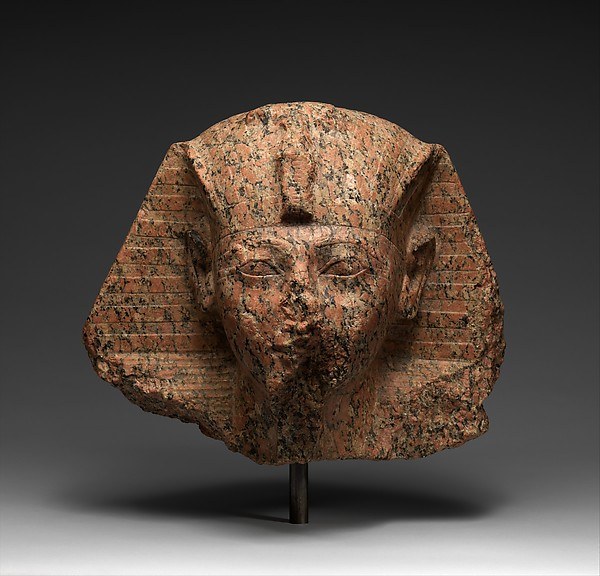
Hatshepsut
Regent for Thutmose III, then king of Egypt (throne name Maatkare) · c. 1479 to 1458 BCE (king from about regnal year 7)
Hatshepsut: Read more
Regent for the child Thutmose III from about 1479 BCE and king from about his regnal year 7; built the temple at Deir el-Bahri whose reliefs tell of her divine birth and the Punt expedition, and whose kingly images were altered or removed late in Thutmose III's reign.
In their words
“Khnemet-Amon-Hatshepsut shall be the name of this my daughter, whom I have placed in thy body, this saying which comes out of thy mouth. She shall exercise the excellent kingship in this whole land.”
“This my daughter, Khnemet-Amon, Hatshepsut, who liveth, I have appointed [her]; she is my successor upon my throne, she it assuredly is who shall sit upon my wonderful seat. She shall command the people in every place of the palace; she it is who shall lead you; ye shall proclaim her word, ye shall be united at her command. He who shall do her homage shall live, he who shall speak evil in blasphemy of her majesty shall die.”
“O ye people, who shall see my monument after years, those who shall speak of that which I have made, beware (lest) ye say, 'I know not, I know not why this was made, (and) a mountain fashioned entirely from gold like anything which happens.'”
Rulers of the Thutmoside line
Photo: Ancient Egyptian royal or private workshop; photograph by the Metropolitan Museum of Art, Public domain (The Met Open Access, CC0; isPublicDomain true in the Met API)
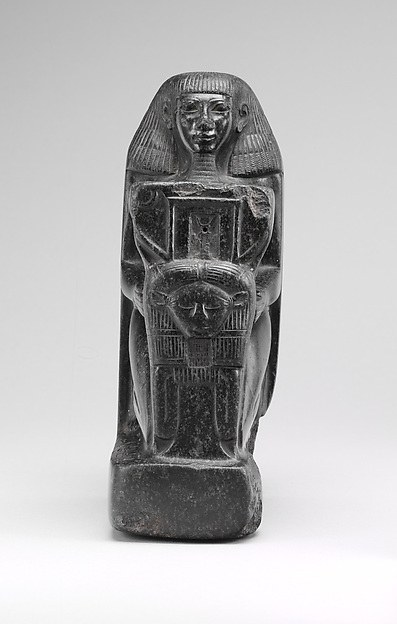
Senenmut
Royal steward and Great Steward of Amun · from about 1473 BCE until his death
Senenmut: Read more
Official who held the Great Steward of Amun post from about Hatshepsut's regnal year 7, giving him control over the secular activities of the Karnak temple; his tomb entrance was cut into the quarry at Deir el-Bahri where her broken statues were later dumped.
Photo: Ancient Egyptian royal or private workshop; photograph by the Metropolitan Museum of Art, Public domain (The Met Open Access, CC0; isPublicDomain true in the Met API)
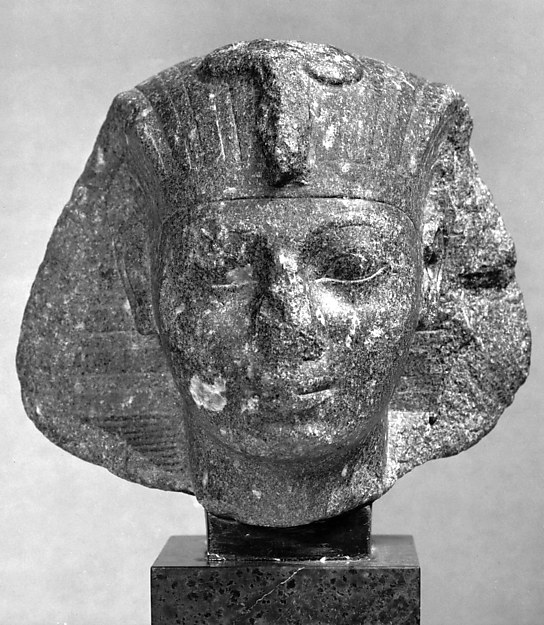
Thutmose III
King of Egypt; sole ruler from about 1458 BCE · c. 1479 to 1425 BCE (sole rule from c. 1458)
Thutmose III: Read more
Recognised as the junior king throughout Hatshepsut's reign and sole ruler after it; his Karnak Annals record campaigns from year 22 to year 42, and late in his reign her kingly images were erased or reassigned to his father and grandfather.
In their words
“Now, all that his majesty did to this city, to that wretched foe and his wretched army, was recorded on (each) day by its (the day's) name, under the title of: [...]. Then it was recorded upon a roll of leather in the temple of Amon this day.”
“I have not uttered exaggeration, in order to boast of that which I did, saying: "I have done something," although my majesty had not done it. I have not done (anything) to people, against which contradiction might be uttered.”
Amarna kings and the restoration
Photo: Ancient Egyptian royal or private workshop; photograph by the Metropolitan Museum of Art, Public domain (The Met Open Access, CC0; isPublicDomain true in the Met API)
Akhenaten (Amenhotep IV)
King of Egypt · c. 1349 to 1336 BCE
Akhenaten (Amenhotep IV): Read more
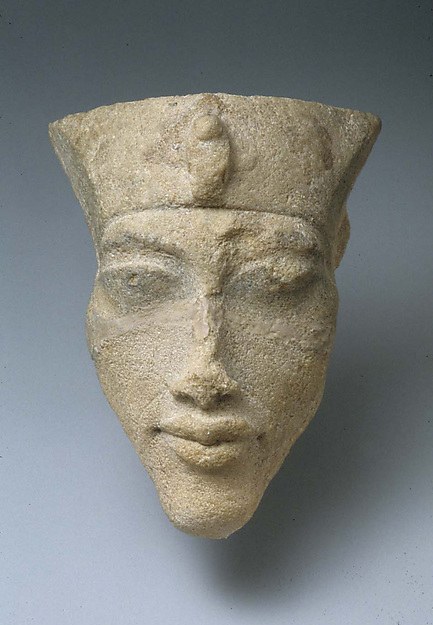
Founded the city of Akhetaten and made the worship of the Aten the centre of royal religion; his temples were later dismantled and he is absent from the Abydos king list.
In their words
“Now, as for the area within the four landmarks, [...] it belongs to my father, Aton, who is given life, forever and ever; [...] I have made it for Aton, my father, forever and ever.”
“It is my oath by the truth, (namely), that which my heart shall speak; (and) that which I do not speak is falsity; forever and ever.”
Photo: Ancient Egyptian royal or private workshop; photograph by the Metropolitan Museum of Art, Public domain (The Met Open Access, CC0; isPublicDomain true in the Met API)
Tutankhamun
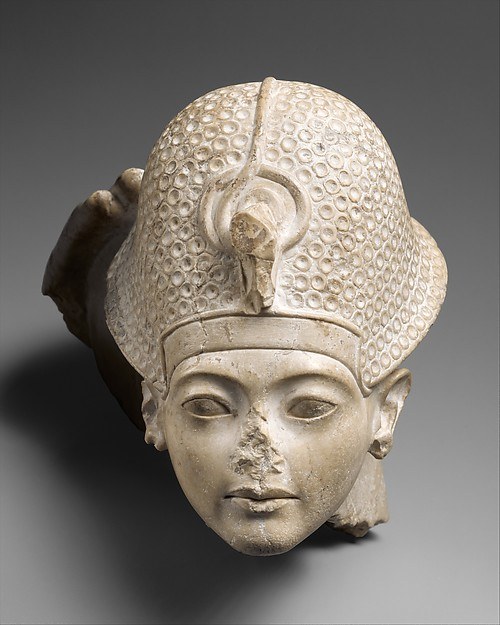
King of Egypt · c. 1336 to 1327 BCE
Tutankhamun: Read more
Child king; an inscription at Soleb in Nubia records that he restored the dedications of Amenhotep III that had been cut out in the Amarna period.
H(No public-domain or openly licensed portrait of Horemheb found on the Met Open Access API (searches for Horemheb returned nothing). Nearest: statues in the Egyptian Museum, Cairo, and the Turin and Vienna museums, none checked for licence.
Horemheb (Haremhab)
General, then king of Egypt · c. 1323 to 1295 BCE
Horemheb (Haremhab): Read more
Army commander who became king after Ay; his coronation inscription records the restoration of the temples, his edict set penalties for officials who robbed the poor, and Donald Redford holds him mainly responsible for the dismantling of Akhenaten's buildings.
In their words
“He restored the temples (from) the pools of the marshes to Nubia. He shaped all their images [...] more than before, increasing the beauty in that which he made. Re rejoiced when he saw them, which had been found ruined aforetime.”
“This is wrong, and the Pharaoh will suppress it by his excellent measures. [...] my majesty commands: that every officer who seizeth the dues [...] and taketh the craft of any citizen of the army or of any person who is in the whole land, the law shall be executed against him, in that his nose shall be cut off, and he shall be sent to Tha[ru].”
Ramesside kings
Photo: Ancient Egyptian royal or private workshop; photograph by the Metropolitan Museum of Art, Public domain (The Met Open Access, CC0; isPublicDomain true in the Met API)
Seti I
King of Egypt · c. 1294 to 1279 BCE
Seti I: Read more
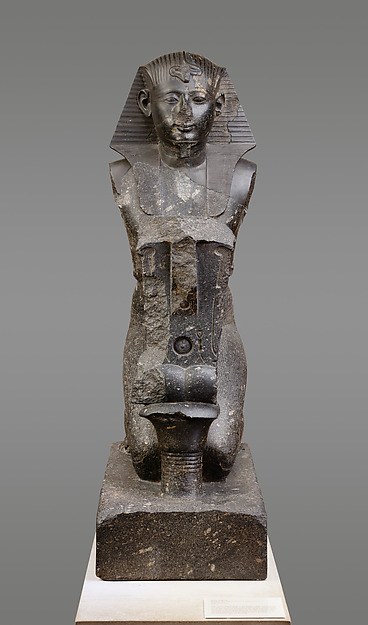
Second king of the Nineteenth Dynasty; built the temple at Abydos whose wall carries the list of 76 earlier kings, and carved war reliefs on the north wall of the Great Hall at Karnak.
Photo: Ancient Egyptian royal or private workshop; photograph by the Metropolitan Museum of Art, Public domain (The Met Open Access, CC0; isPublicDomain true in the Met API)
Ramesses II
King of Egypt · c. 1279 to 1213 BCE
Ramesses II: Read more
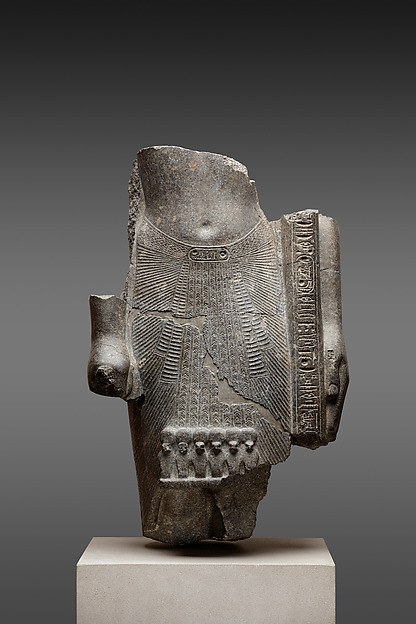
Ruled about 66 years; had the Battle of Kadesh carved in several temples and set down in a poem, concluded a treaty with the Hittite king Hattusili III in his year 21, and celebrated a first jubilee in year 30.
In their words
“I charged all countries, while I was alone, my infantry and my chariotry having forsaken me. Not one among them stood to turn about. I swear, as Re loves me, as my father, Atum, favors me, that, as for every matter which his majesty has stated, I did it in truth, in the presence of my infantry and my chariotry.”
“Now, at the beginning, since eternity, the relations of the great ruler of Egypt with the great chief of Kheta were (such) that the god prevented hostilities between them, by treaty. Whereas, in the time of Metella, the great chief of Kheta, my brother, he fought w[ith Ramses II], the great ruler of Egypt, yet afterward, beginning with this day, behold, Khetasar, the great chief of Kheta, is [in] a treaty-relation [...] in order not to permit hostilities to arise between them, forever.”
Background and rise to power
The New Kingdom is the label modern Egyptologists give to the 18th to 20th Dynasties, about 1550 to 1070 BCE on the chronology the Metropolitan Museum used in its 2005 Hatshepsut catalogue; other chronologies differ by years or a decade or two, and this page follows the Museum's dates throughout (Roehrig, Dreyfus and Keller 2005). The 18th Dynasty began about 1550 BCE with Ahmose I. Its kings ruled a unified Egypt with armies in Nubia and the Levant, and its record is unusually rich because the kings and their officials carved long texts on temple walls.
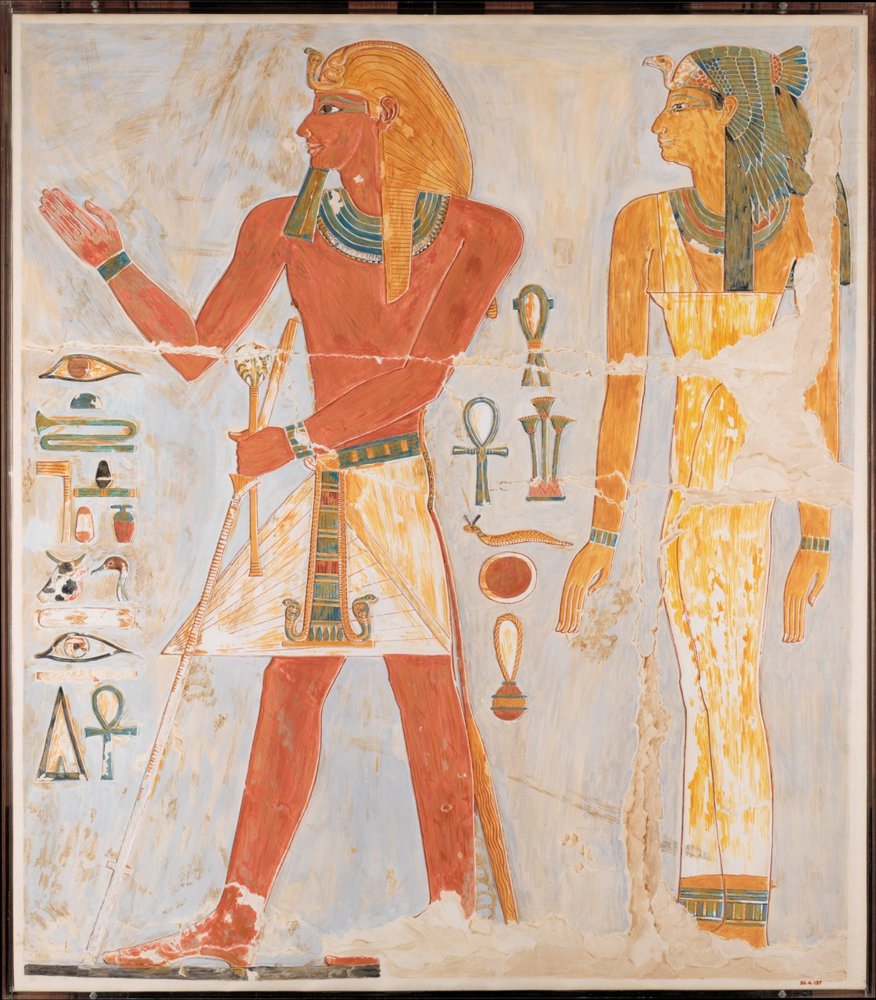
A 1925 facsimile by Nina de Garis Davies of a painted relief in Hatshepsut's temple at Deir el-Bahri showing her father Thutmose I and his mother Seniseneb. A modern copy of the wall, held by the Metropolitan Museum. Source: The Metropolitan Museum of Art, Rogers Fund, 1930 (30.4.137), Open Access, Public domain (The Met Open Access, CC0; isPublicDomain true in the Met API).
Hatshepsut was the daughter of Thutmose I and wife of Thutmose II. On the Museum's chronology she acted as regent for the young Thutmose III from about 1479 BCE, and by his regnal year 7 she had begun to use royal titles. Scholars agree on that date but not on how it happened: the catalogue notes that her coronation date "remains a subject of debate" and that she dated her years from the start of Thutmose III's reign, so her own year numbers do not mark her accession (Keller, in Roehrig et al. 2005). Her last dated mention as king is in year 20, and she is absent from the record when Thutmose III's Megiddo campaign began late in year 22 (Keller). The scenes at her temple at Deir el-Bahri present her as conceived by the god Amun-Re in the form of her father Thutmose I; Dieter Arnold calls this "the invented story of her divine birth" and says what legitimised her claim was an oracle of Amun's barque, while Ann Macy Roth reads the birth scenes as a "historical myth" by which she identifies as her royal father's daughter and Amun's daughter at once (Arnold; Roth, in Roehrig et al. 2005).
Thutmose III ruled alone from about 1458 BCE to 1425 BCE and left the long Annals of his campaigns at Karnak. Near the end of his reign Hatshepsut's kingly images were altered or removed, a campaign discussed below. His son Amenhotep II became co-ruler about two years before his father's death (Dorman, in Roehrig et al. 2005).
Akhenaten (about 1349 to 1336 BCE) moved the court to a new city, Akhetaten (Tell el-Amarna), and made the worship of the Aten central, with boundary stelae that declare the city's land to belong to the god (Breasted 1906, vol. 2, sections 949 to 972). After the 18th Dynasty's brief successors (Tutankhamun, about 1336 to 1327; Ay, about 1327 to 1323), the general Horemheb became king (about 1323 to 1295) and was followed by Ramesses I and Seti I. Ramesses II (about 1279 to 1213) came to the throne as Seti I's son and reigned 66 years.
How power was organized
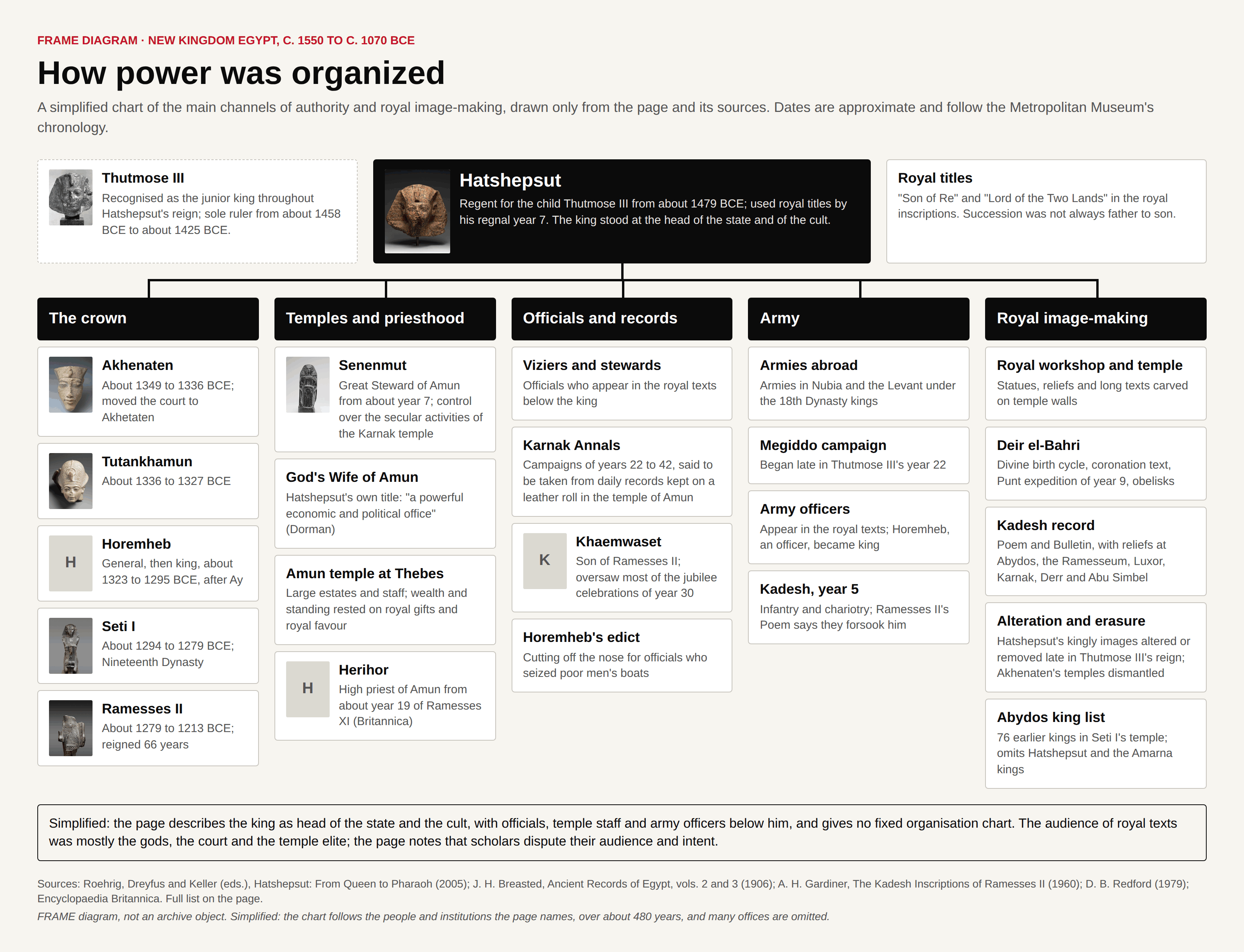
The king stood at the head of the state and of the cult, with titles such as "Son of Re" and "Lord of the Two Lands" throughout the royal inscriptions quoted here. Below him were officials such as the viziers, stewards, army officers and temple staff who appear in the same texts. Succession was not always father to son: Hatshepsut held the throne beside a recognised male co-ruler, and Horemheb, an army officer, became king after Ay.
The king, the temples, the officials, the army and the royal image-makers, simplified from the sources cited on this page. Source: FRAME diagram. Portraits, cropped to thumbnails: The Metropolitan Museum of Art, Gift of Edward S. Harkness, 1921 (21.9.17), Open Access; The Metropolitan Museum of Art, Rogers Fund, 1935 (35.3.297), Open Access; The Metropolitan Museum of Art, Samuel D. Lee Fund, 1942 (42.2.1), Open Access; The Metropolitan Museum of Art, Bequest of George D. Pratt, 1935 (48.149.7), Open Access; The Metropolitan Museum of Art, Rogers Fund, 1922 (22.2.21), Open Access; The Metropolitan Museum of Art, Purchase, Fletcher Fund and The Guide Foundation Inc. Gift, 1966 (66.99.22), Open Access; The Metropolitan Museum of Art, Rogers Fund, 1950 (50.6), Open Access, CC BY 4.0 (FRAME archive content); portraits are public domain or CC0: Public domain (The Met Open Access, CC0; isPublicDomain true in the Met API).
Temples held large estates and staff. Senenmut, from about year 7 of Hatshepsut, held the post of Great Steward of Amun, "which gave him control over the burgeoning secular activities of the temple of Karnak" (Dorman, in Roehrig et al. 2005); Hatshepsut's own title God's Wife of Amun was, in Dorman's words, "a powerful economic and political office" that may have given her leverage during Thutmose III's minority. The page applies the same standard to this priesthood as to any state body: the Amun temple at Thebes was an institution whose own wealth and standing rested on royal gifts and royal favour, and whose cult images the kings credited as the source of their authority. Horemheb's coronation inscription says he "restored the temples (from) the pools of the marshes to Nubia" (Breasted 1906, vol. 3, section 31), a claim from the king's own text.
Ramesses II also used his sons: Khaemwaset oversaw most of the jubilee celebrations recorded from his thirtieth year (Breasted 1906, vol. 3, sections 543 to 560).
Illustration, not an archive object
The propaganda apparatus
Where the word fits, and where scholars dispute it. Egyptologists do use the word, though not uniformly. Ann Macy Roth writes of a "propagandistic motive" in the tale of the divine births of the first three Fifth Dynasty kings and titles her own essay on Hatshepsut's temple "Architecture as Political Statement" (Roehrig et al. 2005). Alan Gardiner wrote that the Kadesh record was meant to display the king's achievement "to his awe-stricken subjects" (Gardiner 1960). The dispute is over audience and intent. Roth notes that "few ordinary Thebans" would have entered Hatshepsut's temple to see the upper reliefs, which were seen by "the elite of Thebes", members of the court and officials, even though the festival route and the temple's outside appearance spoke to the wider Theban public. Much royal decoration was also addressed to the gods and to posterity: Hatshepsut's obelisk inscription speaks to "ye people, who shall see my monument after years" (Breasted 1906, vol. 2, section 318). The word "propaganda" is modern; this page uses it for royal self-presentation made to be seen, read or performed, without claiming the reach of a modern state's press, and how far these texts report events rather than assert ideology is itself disputed, as the Kadesh evidence shows.
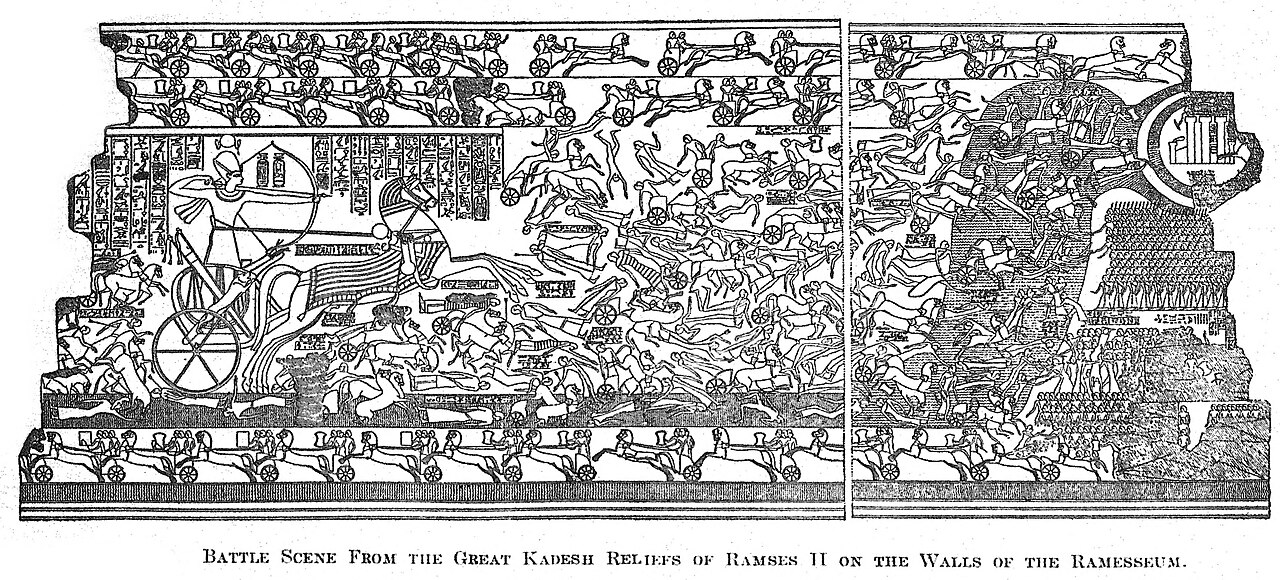
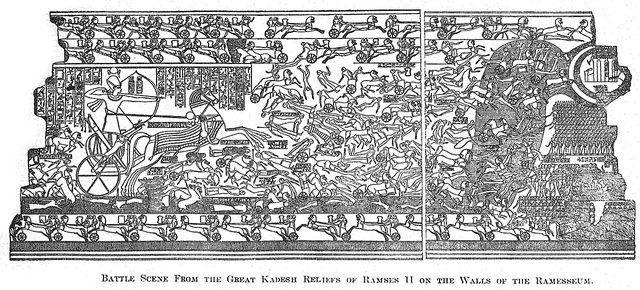
Content note: A drawing of an Egyptian royal battle relief showing Hittite soldiers and horses killed and drowned, as the king's monument presented the battle; it is a one-sided image made by the winning side's own account. This object is shown as it was published. Why
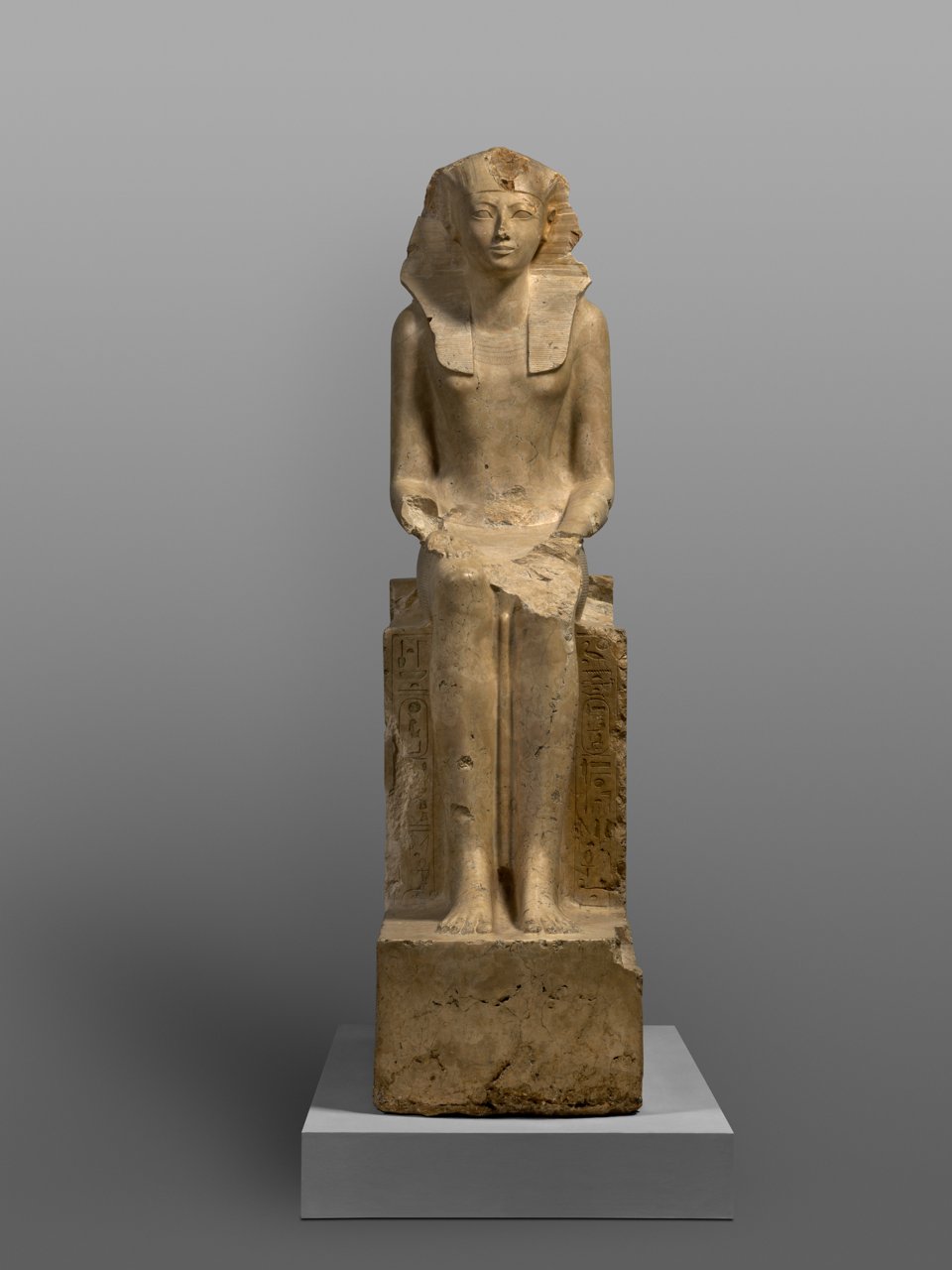
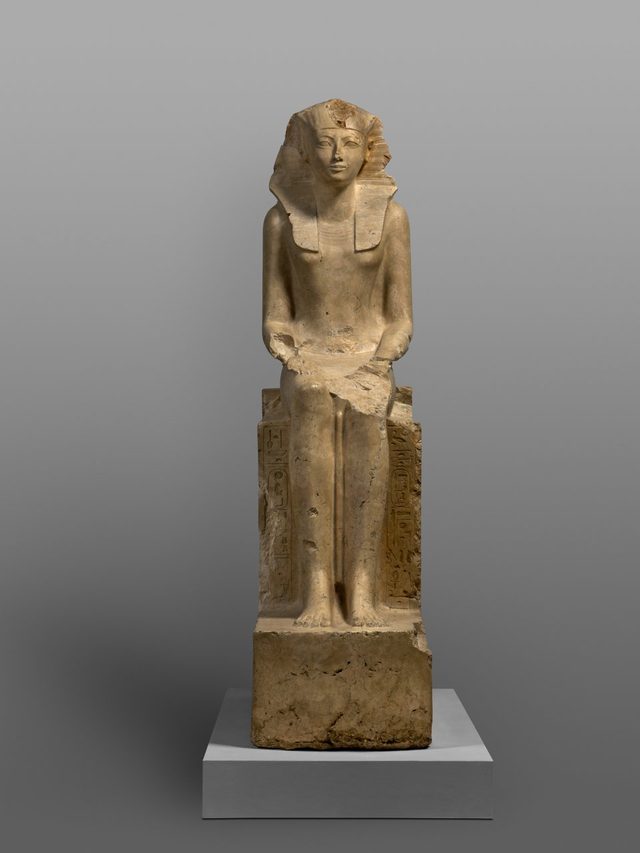
Hatshepsut. The message machinery was the royal workshop and the temple. At Deir el-Bahri, the terraces carry the divine birth cycle (Amun in the guise of Thutmose I visits her mother, Ahmose), the coronation text, a trading expedition to Punt in year 9, and the transport of obelisks (Roth, in Roehrig et al. 2005; catalogue entry 79). Roth shows the scenes had Fifth Dynasty precedents (Sahure's temple; the Westcar papyrus, which tells of royal divine births), so the programme borrowed earlier kings' prestige. Her statues combined male royal dress with feminine titles: the Metropolitan Museum's seated statue has a throne inscription reading "The bodily daughter of Re, Khenemet-Amun-Hatshepsut, beloved of Amun-Re" (catalogue entry 96).
The erasure. Peter Dorman describes cartouches chiselled away, her figure erased or replaced by an offering table, her name changed to Thutmose I or II, and the Deir el-Bahri statues dragged out, smashed and dumped in a quarry; her images as queen were never touched, so it was not a blanket obliteration (Dorman, in Roehrig et al. 2005). Ann Macy Roth lists eight techniques of erasure and notes that Amarna-period iconoclasts also attacked the gods' images at the same temple. The dating is disputed in stages. Charles Nims (1966) showed that the wall erasure could not be earlier than Thutmose III's year 42, about twenty years after Hatshepsut's death, and Dorman reads the Karnak evidence (the Annals wall built over half-erased reliefs, and a barque shrine dated year 45) as fixing it late in the reign. Dorothea Arnold argues the statue destruction began earlier, proposing between years 30 and 42, with the uraeus removed first (Roehrig et al. 2005). Jun Yi Wong (Antiquity, 2025) argues from the excavation records that the pattern of facial damage reflects later reuse and ritual "deactivation" of statues, and not a single act of hatred.
Motives are also contested. Earlier scholars, among them the excavator Herbert Winlock, saw spite, and the Nims date undercut that. Roth thinks the likeliest motive was securing Amenhotep II's succession, since Hatshepsut was the last of the Ahmoside line, and rejects personal hatred because the erasure came some two decades after her death and her images as queen were spared; the apparent halt around Amenhotep II's accession fits her reading. Dorman finds the succession explanation weakened by the lack of any known rival, and suggests instead that "the recently invented phenomenon of a female king had created such conceptual and practical complications that the evidence of it was best erased"; the campaign was left incomplete, so the divine birth and Punt reliefs remain legible (Roehrig et al. 2005).
Thutmose III. His Annals at Karnak carry campaign records from year 22 to year 42, and the king says they were taken from daily records kept on a leather roll in the temple of Amun and that he "has not uttered exaggeration" (Breasted 1906, vol. 2, sections 433 and 570). His erasures usually reassigned her monuments to his father or grandfather and only rarely to himself (Dorman).
Akhenaten and the restoration. Akhenaten's own monuments were attacked later. At Soleb in Nubia, the dedications of Amenhotep III were cut out in the Amarna period and restored under Tutankhamun, who added a record of the restoration (Breasted 1906, vol. 2, section 896). Donald Redford, who directed excavations of the Karnak Aten temples, names Horemheb as "mainly responsible for this systematic anathematization", and reports that Akhenaten's decorated sandstone blocks (talatat) were reused as building fill, including in the core of the Tenth Pylon (Redford 1979). Horemheb's edict set cutting off the nose as the penalty for officials who seized poor men's boats (Breasted, vol. 3, section 51).
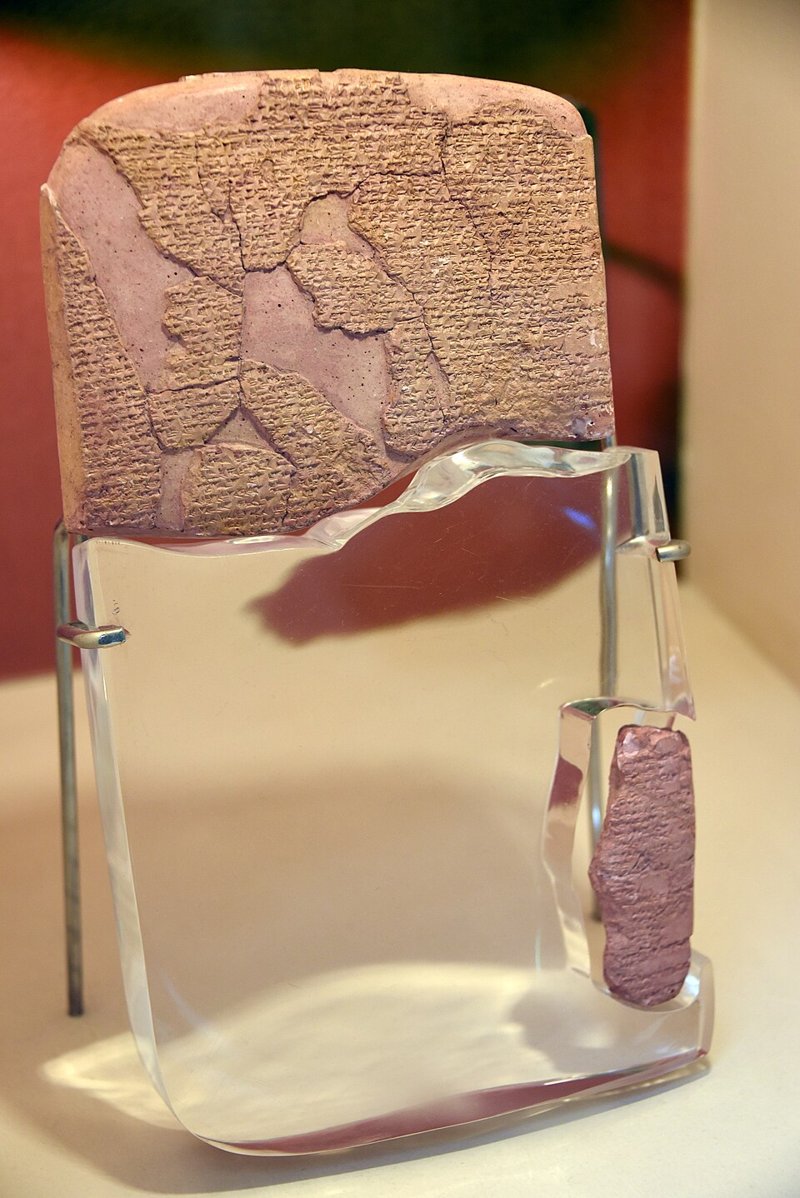
Ramesses II and Kadesh. The Battle of Kadesh (his fifth year, about 1275 BCE; some give 1274) was recorded in a long literary account, the "Poem", on temple walls at Luxor, Karnak and Abydos and on papyrus, and in a separate "Bulletin" (called the Report by Gardiner), with relief scenes at Abydos, the Ramesseum, Luxor, Karnak (later chiselled out), Derr and Abu Simbel (Breasted 1906, vol. 3, sections 305 and 328). In the Poem the king states that he charged the enemy "while I was alone, my infantry and my chariotry having forsaken me" (section 327). Gardiner judged that the pharaoh himself inspired the record, that the king's courage "whilst alone and forsaken by his troops" was its principal message, that the king's "reiterated claim to have been quite alone and deserted by his army was a vast exaggeration" (he doubted the figure of 2,500 chariots round him too), and that reinforcements arriving from Amor turned what would otherwise have been a catastrophe into a limited success. He left to cuneiform scholars the question of how far the Egyptians were justified in calling it a victory. The Hittite side is thinner. The royal archive at Hattusa (Boğazköy) yielded an Akkadian version of the later treaty and some Hittite references to the battle, but, as one summary of the surviving evidence puts it, no annals describing it as part of a campaign have been found (Wikipedia, "Battle of Kadesh"); Encyclopaedia Britannica says an account excavated at Boğazköy gives historians a more balanced picture, that both sides claimed a triumph, and that the outcome was inconclusive. The treaty of Ramesses's year 21 (about 1259 BCE) is the best-preserved comparison: the Egyptian copy, carved at Karnak and the Ramesseum, describes the Hittite king as sending a silver tablet "to crave peace", while its own text speaks of "good peace and good brotherhood" between the two kings (Breasted, vol. 3, sections 372 and 375).
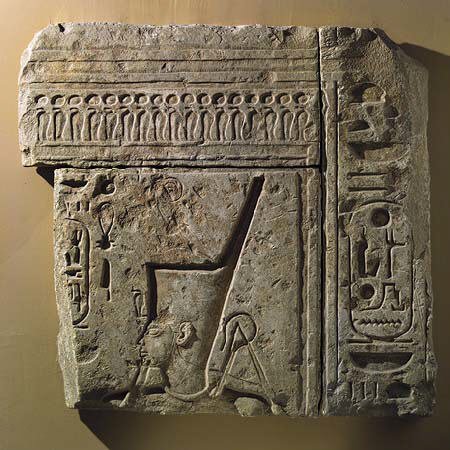
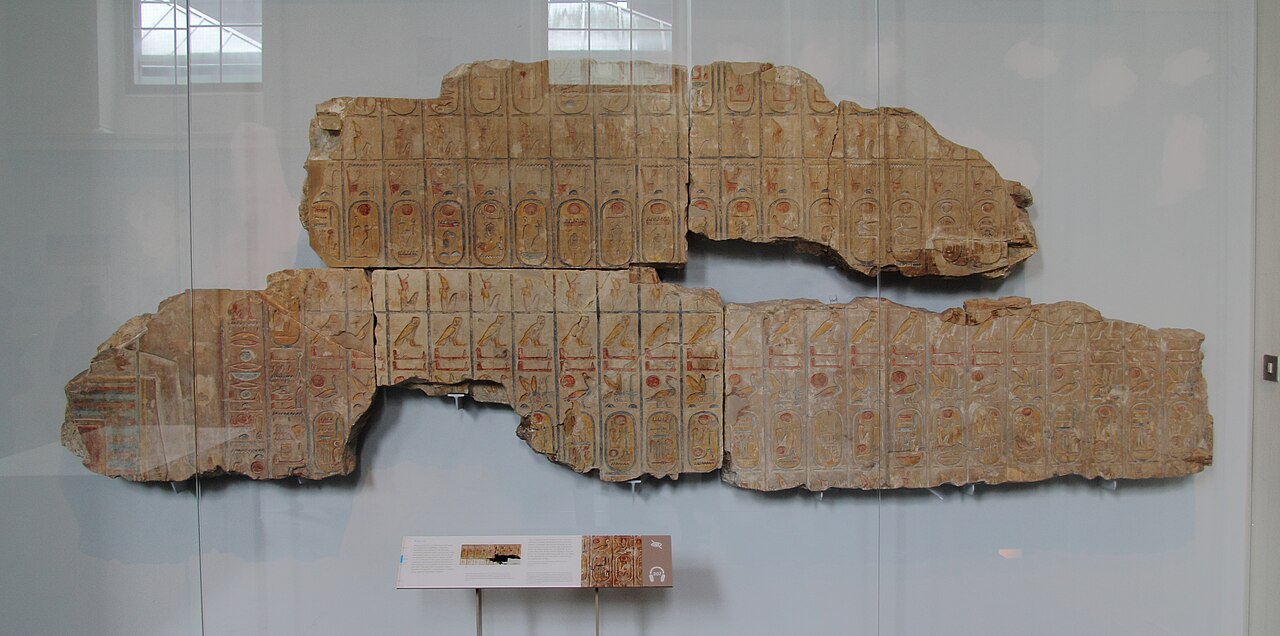
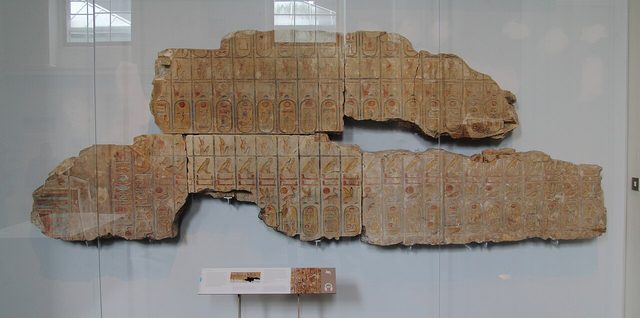
The king list. In Seti I's temple at Abydos a wall lists 76 earlier kings, and a version from Ramesses II's temple survives in the British Museum (given as EA 117 by the ancient-egypt.co.uk catalogue of British Museum pieces and by Wikipedia, which I could not check against the Museum's own record; Google Arts & Culture, which gives no number, confirms the limestone slab, 135 by 370 cm, from the Abydos temple, acquired in 1837). For the texts themselves, Kitchen's Ramesside Inscriptions vol. 1 (Oxford, 1975, pp. 176 to 179) is cited as giving the Seti I list, with Redford's 1986 study as the standard discussion; the cartouches in the two objects pictured on this page have not been transcribed here, and neither has the Herakleopolis jubilee block's hieroglyphic text. According to the American Research Center in Egypt, citing Redford's study of Egyptian king lists, these were ritual lists for invoking ancestral spirits and not meant to be literal chronological lists; they omit the Second Intermediate Period kings, Hatshepsut and the Amarna kings, and the Met catalogue notes that Hatshepsut's name is missing from later king lists. The lists do not say why each king is left out, and modern explanations (their gender, their repudiation after death, simple selection for the ritual) are interpretation. Ramesses II also left his name on repairs to the reliefs at Deir el-Bahri, though Dorman judges he "can be credited with very little actual repair" of the damaged walls.
Timeline
Dates follow the Metropolitan Museum's chronology; regnal years are the kings' own count.
Fragments of the Abydos king list from Ramesses II's temple, in the British Museum: rows of royal cartouches, 0000. From the collection. Cartouches of earlier kings carved for an offering ritual at Abydos; Hatshepsut and the Amarna kings are not among those listed.Fragments of the Akkadian-language clay tablet from the Hittite archives at Hattusa that carries the Hittite version of the treaty with Ramesses II, shown in the Istanbul Archaeology Museums. The Egyptian version was carved at Karnak and the Ramesseum. Source: Photograph by Osama Shukir Muhammed Amin FRCP(Glasg), CC BY-SA 4.0, via Wikimedia Commons, CC BY-SA 4.0 (photograph; the tablet itself is about 3,200 years old).
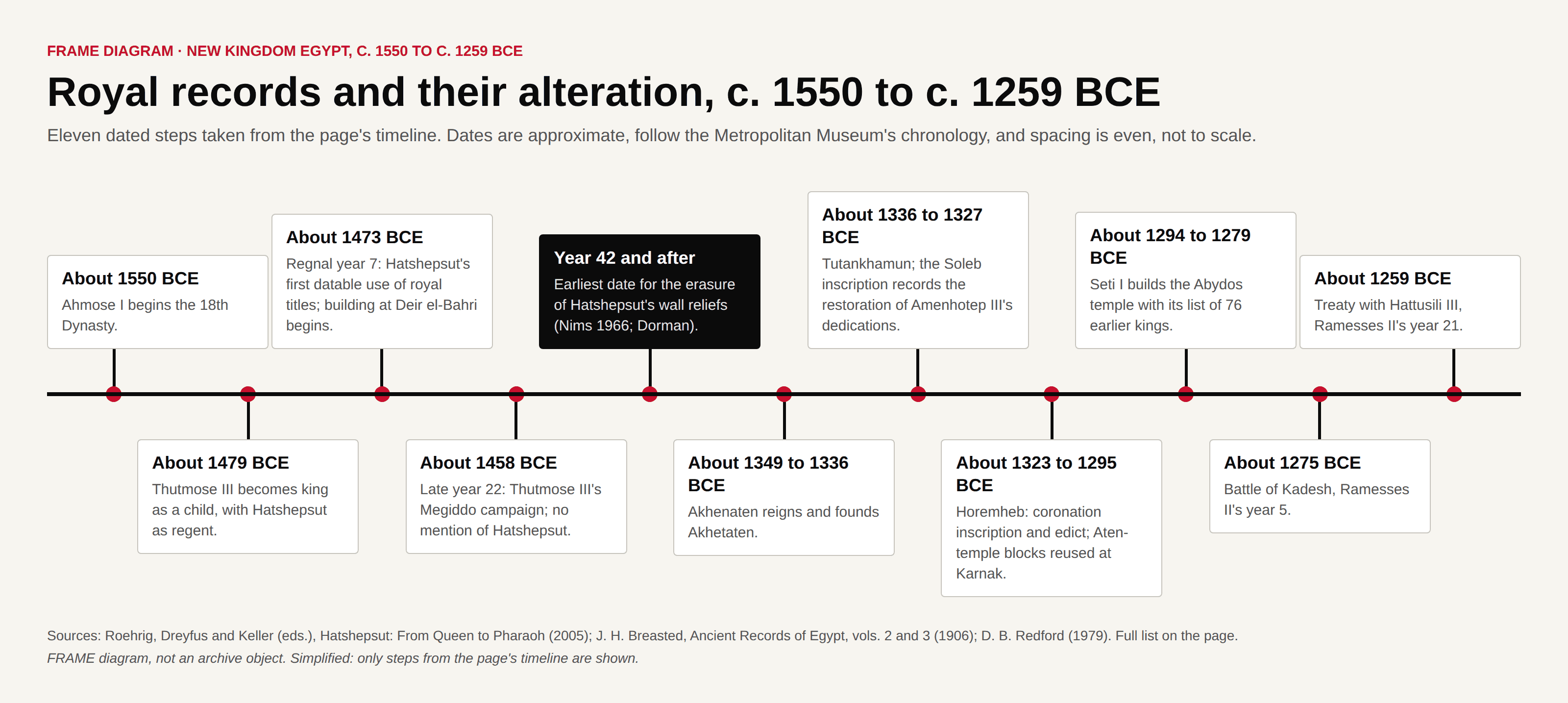
Eleven dated steps from the 18th Dynasty to the Hittite treaty, simplified from the sources cited on this page. Source: FRAME diagram, drawn from the sources listed on this page, CC BY 4.0 (FRAME archive content).
About 1550 BCE: Ahmose I begins the 18th Dynasty (Roehrig et al. 2005).
About 1479 BCE: Thutmose III becomes king as a child, with Hatshepsut as regent.
Regnal year 7 of Thutmose III (about 1473 BCE): Hatshepsut's first datable use of royal titles; building at Deir el-Bahri begins (Keller).
Regnal year 9 of Hatshepsut's reign: expedition to Punt, later shown on her temple walls (catalogue entry 79).
Year 20 of Thutmose III: last dated reference to Hatshepsut as king (Keller).
Late year 22 (about 1458 BCE): Thutmose III's Megiddo campaign; no mention of Hatshepsut (Keller).
Years 30 to 42: possible period of the destruction of Hatshepsut's statues at Deir el-Bahri (Arnold's suggestion).
Year 42 and after: earliest date for the erasure of her wall reliefs (Nims 1966; Dorman); the Karnak barque shrine is dated year 45.
About 1427 BCE: Amenhotep II becomes co-ruler; Thutmose III dies about 1425 BCE (Dorman).
About 1349 to 1336 BCE: Akhenaten's reign and the founding of Akhetaten.
About 1336 to 1327 BCE: Tutankhamun; restoration inscription at Soleb (Breasted, vol. 2, section 896).
About 1323 to 1295 BCE: Horemheb; coronation inscription and edict; reuse of Aten-temple blocks at Karnak (Redford 1979).
About 1294 to 1279 BCE: Seti I; temple at Abydos with the king list.
About 1275 BCE: Battle of Kadesh, Ramesses II's year 5.
About 1259 BCE: treaty with Hattusili III, Ramesses II's year 21 (Breasted, vol. 3, section 370).
About 1250 BCE: first jubilee of Ramesses II, his year 30 (Breasted, vol. 3, section 552).
How it ended
Illustration, not an archive object
The New Kingdom ended about 1070 BCE on the Museum's chronology, when the Third Intermediate Period began (Roehrig et al. 2005). Ramesses XI was the last king of the 20th Dynasty; Britannica dates his reign about 1106 to about 1077 BCE, says it was marked by civil war, that Herihor became high priest of Amun from about the king's year 19, and that at its end new dynasties were founded in Upper and Lower Egypt ("Ramses XI"). Wikipedia's summary of the literature adds that he ruled at least 29 years (Ad Thijs has argued for up to 33) and that Smendes, ruling from the north, founded the 21st Dynasty; the exact succession and the end date are debated, and I have not consulted those specialist studies directly.
Dates. All BCE dates on this page are approximate and follow the Metropolitan Museum's chronology in the 2005 Hatshepsut catalogue, with later reigns from the Museum's own records. Other chronologies (Kitchen's, Hornung, Krauss and Warburton's) differ by a few years in places, and I have not compared them reign by reign, so a date here should be read as "about", with one-year differences (for example Kadesh in 1275 or 1274) not significant.
Same-standard note
This page uses the same technique definitions and structure as every other regime page: a technique is listed only where the record shows it, and royal claims are cited to the king's own text and then to a named scholar. The sources here are inscriptions, reliefs and statues made on royal command, so they show what the kings wanted recorded, and the page does not treat any royal text as a neutral report, including those by Hatshepsut, Thutmose III, Horemheb or Ramesses II. This is a monarchy more than 3,000 years old with no printing, no mass literacy and an audience that was mostly the gods, the court and the temple elite; the scale, intent and reach of its messaging are not comparable with those of modern states, and nothing here implies an equivalence. Where Egyptologists disagree (the dating and motive of the erasure of Hatshepsut, the audience of temple reliefs, how to weigh the Kadesh record against Hittite evidence, why the king lists omit some kings), the page gives the positions and the evidence and does not choose among them.
Sources
Catharine H. Roehrig, with Renee Dreyfus and Cathleen A. Keller (eds.), Hatshepsut: From Queen to Pharaoh (Metropolitan Museum of Art / Yale University Press, 2005): Peter F. Dorman, "The Proscription of Hatshepsut" and "The Career of Senenmut"; Dorothea Arnold, "The Destruction of the Statues of Hatshepsut from Deir el-Bahri" and "The Temple of Hatshepsut at Deir el-Bahri"; Ann Macy Roth, "Erasing a Reign" and "Hatshepsut's Mortuary Temple at Deir el-Bahri: Architecture as Political Statement"; Cathleen A. Keller, "The Joint Reign of Hatshepsut and Thutmose III"; catalogue entries 79 and 96; the volume's chronology.
Charles F. Nims, "The Date of the Dishonoring of Hatshepsut," Zeitschrift für ägyptische Sprache 93 (1966), pp. 97 to 100, as cited by Dorman and Roth above.
Jun Yi Wong, "The afterlife of Hatshepsut's statuary," Antiquity 99, no. 405 (June 2025), https://www.cambridge.org/core/journals/antiquity/article/afterlife-of-hatshepsuts-statuary/F22D001E29438008136B6DA04F57C627
James Henry Breasted, Ancient Records of Egypt, vol. 2 (The Eighteenth Dynasty) and vol. 3 (The Nineteenth Dynasty) (University of Chicago Press, 1906), https://archive.org/details/ancientrecordsof02breauoft and https://archive.org/details/ancientrecordsof03brea
Alan H. Gardiner, The Kadesh Inscriptions of Ramesses II (Oxford: Griffith Institute, 1960), https://archive.org/details/gardiner-alan.-the-kadesh-inscriptions-of-rameses-ii
Donald B. Redford, "The Akhenaten Temple Project and Karnak Excavations," Expedition (University of Pennsylvania Museum), January 1979, https://www.penn.museum/sites/expedition/the-akhenaten-temple-project-and-karnak-excavations/
American Research Center in Egypt, "The Abydos King List," https://arce.org/abydos-king-list/ (citing Donald B. Redford, Pharaonic King-Lists, Annals and Day Books, 1986).
Encyclopaedia Britannica, "Battle of Kadesh," https://www.britannica.com/event/Battle-of-Kadesh; Encyclopaedia Britannica, "Ramses XI" (https://www.britannica.com/biography/Ramses-XI); Wikipedia, "Battle of Kadesh" and "Ramesses XI" (summaries of the Egyptological literature, used only for the Hittite archive finds and the end of the dynasty; flagged as such in the text); Kenneth A. Kitchen, Ramesside Inscriptions vol. 1 (1975) and Donald B. Redford, Pharaonic King-Lists, Annals and Day-Books (1986), named as editions, not consulted directly.
Metropolitan Museum of Art Open Access records for the statues, reliefs and facsimile shown on this page; Wikimedia Commons file pages for the Kadesh drawing, the British Museum king list photograph and the Istanbul treaty tablet photograph.