In one line: two governments, eighty years apart, tried to change health behaviour by making the threat feel close and personal rather than by showing the numbers.
The shared technique: Fear appeal. The archive's definition: "Imminent harm is staged so the audience accepts the offered protection without comparing base rates or alternatives." The label describes the method. It is not a finding that either policy was wrong, or that either disease was not dangerous. Both were.
| Then | Now | |
|---|---|---|
| The item | Poster, She May Look Clean—But | TV, radio and poster campaign, Can you look them in the eyes? |
| When | World War II; NARA dates it 1941–45 | First aired 22 January 2021 |
| Who issued it | U.S. government venereal-disease prevention campaign (Office of War Information poster file) | HM Government (UK), created by the agency MullenLowe |
| Government at the time | President Franklin D. Roosevelt (Democratic) | Prime Minister Boris Johnson (Conservative) |
| Audience | Mainly servicemen and war workers | All adults in the UK, via national broadcast |
| What was going on | A world war; venereal disease was a leading cause of lost duty days in the armed forces | England's third national lockdown and its deadliest COVID-19 wave |
Then: She May Look Clean—But (U.S., World War II)
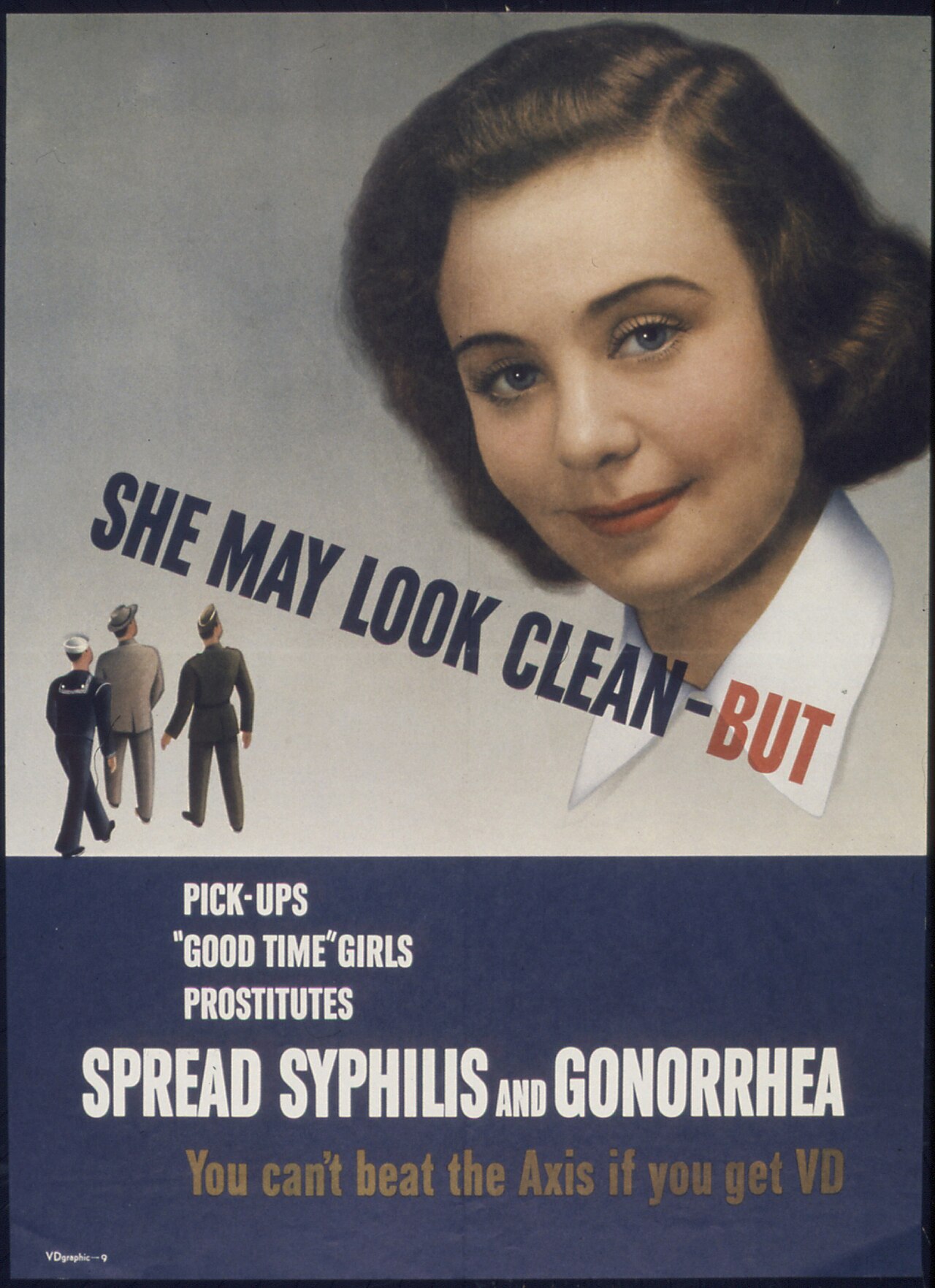
She May Look Clean—But. U.S. government poster, 1941–45. Public domain.
A smiling young woman fills most of the poster. Below her: "Pick-ups, 'good time' girls, prostitutes spread syphilis and gonorrhea. You can't beat the Axis if you get VD."
What was going on. The United States was at war on two fronts and needed every soldier fit for duty. Venereal disease was a major cause of lost duty days. Penicillin only became widely available to the armed forces in 1943–44. The Army, the Navy and the U.S. Public Health Service ran large prevention campaigns built on posters, films and lectures.
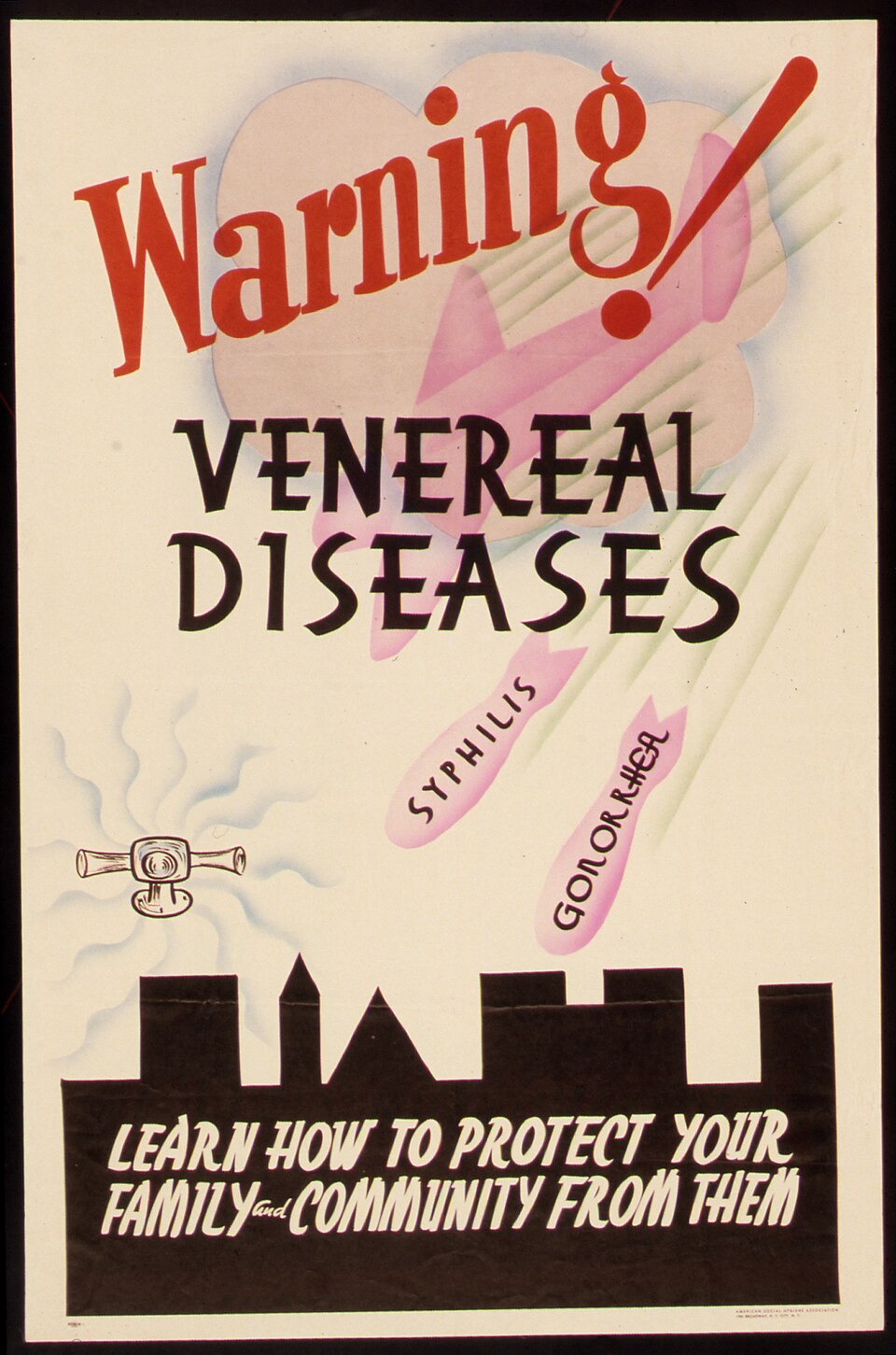
"Warning! Venereal Diseases. Learn how to protect your family and community from them." U.S. poster, Office of War Information, Bureau of Special Services, 1941–45, National Archives NARA 516044 (via Wikimedia Commons). Public domain (U.S. government work). It stages the threat as bombing, with the diseases as the bombs, and names no group as the source.
How the technique shows. The poster gives no rates and no comparison. The danger is carried by a friendly face and the word "but". It also names a single source of the danger: a category of women. That adds Scapegoating, because it puts the whole risk on one group rather than on behaviour shared by both partners.
Now: Can you look them in the eyes? (UK, 2021)
Image gap: the campaign's frames and posters are Crown copyright and not openly licensed, so they are not shown here. The poster below is a different one from the same government, not part of the campaign. See the campaign on ITV News and Campaign.
The adverts show close-ups of faces: patients in oxygen masks and hospital staff in surgical masks. The closing line asks viewers to "look them in the eyes and tell them you are doing all you can to stop the spread of Covid-19."
What was going on. In January 2021 England was in its third national lockdown. Hospital admissions were at their highest of the pandemic and the vaccine rollout had only just begun.
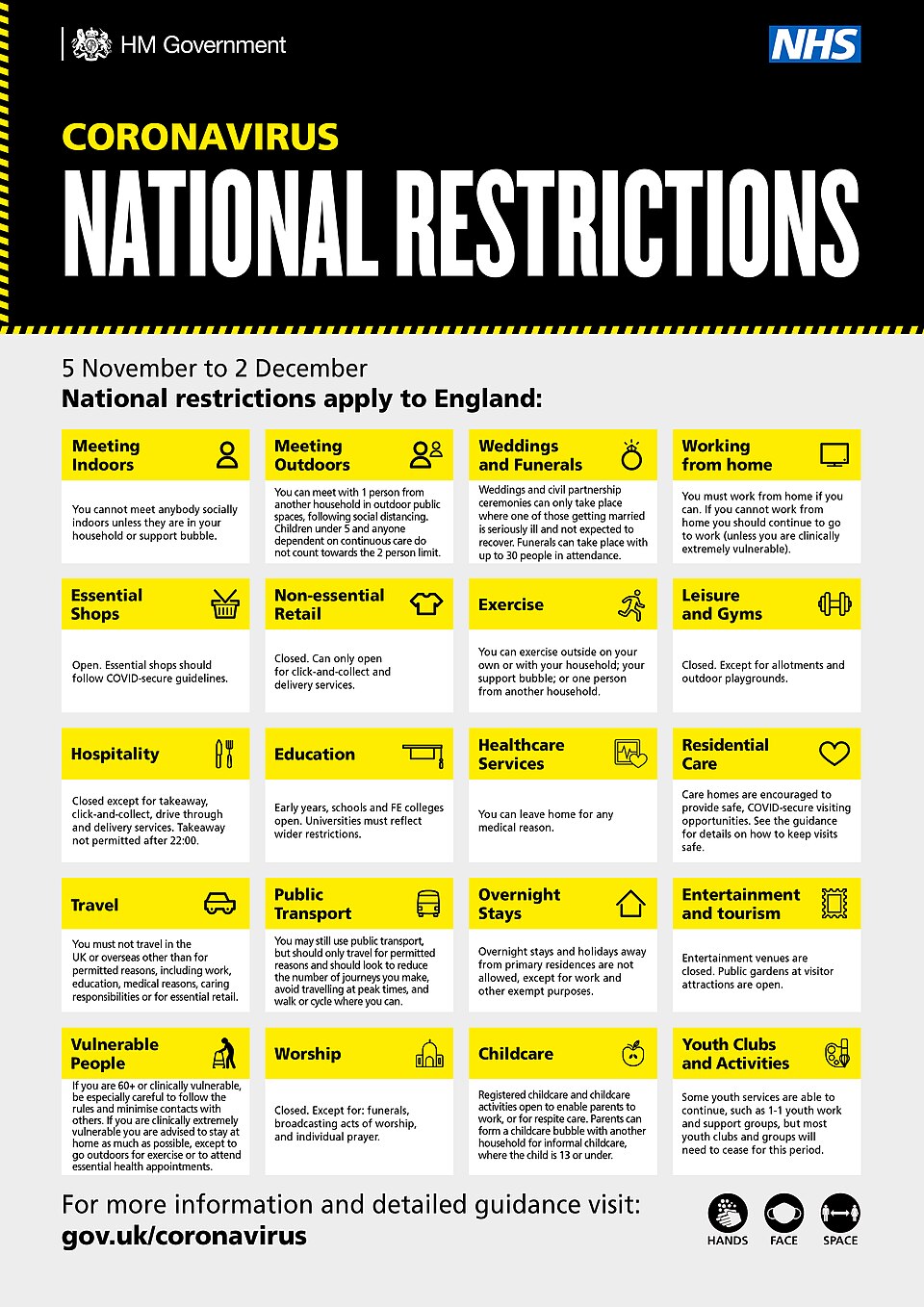
"Coronavirus: National Restrictions", poster for England, 5 November to 2 December 2020. HM Government (Cabinet Office), via Wikimedia Commons, Open Government Licence v3.0 (the licence does not cover the crest and NHS logo it carries). An informational poster from the same government, eleven weeks before Can you look them in the eyes?; it lists the rules by activity in text and icons. It is not part of the 2021 campaign.
A modern government precedent in the gallery.

The Real Cost — "Your Skin". U.S. Food and Drug Administration, 2014. Public domain (U.S. government work). A U.S. teen-smoking prevention advertisement that shows a teenager's skin peeling away. It is a different country and disease from the UK case above, and it applies the same Fear appeal definition to a documented health harm.
How the technique shows. Ten months earlier, on 22 March 2020, the government's behavioural-science subgroup (SPI-B) had advised in a paper for SAGE that "the perceived level of personal threat needs to be increased among those who are complacent, using hard-hitting emotional messaging." The campaign follows that approach: a face instead of a figure, and one prescribed response (stay at home). It is one of the few cases where the intent to raise fear is on the record in the issuer's own advisory papers.
Where they are alike
- Both are government public-health messages about a real, serious disease.
- Both carry the threat through a human face, not through rates or odds.
- Both prescribe one behaviour and lean on shame as well as fear.
Where they differ
- Who is blamed. She May Look Clean—But blames a category of women; the "Warning!" poster from the same wartime file names no group. The 2021 campaign places the responsibility on the viewer and names no out-group.
- Evidence of intent. For 2021 the intent is documented in the SPI-B paper. For the 1940s poster it is inferred from the poster itself.
- Audience. The 1940s poster reached mainly servicemen. The 2021 campaign was aimed at the whole adult population on national television.
- What the behaviour protected. Avoiding VD mainly protected the person who changed their behaviour. Staying at home in 2021 was aimed at protecting other people as well.
Positions on the record
- UK government: the campaign was meant to encourage people to follow the restrictions during a period of very high hospital pressure.
- Critics: writers in outlets across the spectrum, including the New Statesman and The Critic, and a peer-reviewed paper in Clinical Psychology & Psychotherapy (Dodsworth, 2024), argued that fear-based messaging had costs of its own. Supporters argued that stronger messaging was justified by the death toll.
- This page takes no position on lockdown policy. It records how the message was built.
Same-method test
A campaign from any government, party or health body that stages a threat through faces and shame, while leaving out the numbers a reader would need to weigh the risk, would be scored the same way here.
How to spot it
- Look for the number. Does the message give a rate, a risk or a comparison, or only a face?
- Notice the single prescribed action and whether alternatives are mentioned.
- Ask who the message says is responsible: the viewer, a named group, or no one.
Sources
- NARA 513618, She May Look Clean—But, via Wikimedia Commons.
- U.S. National Library of Medicine, Visual Culture and Health Posters: She May Look Clean—But.
- SPI-B, Options for increasing adherence to social distancing measures, 22 March 2020.
- ITV News, Government's new Covid advert, 22 January 2021.
- Campaign, UK government "Look into my eyes" by MullenLowe.
- Dodsworth, L., The Three Rs of Fear Messaging in a Global Pandemic, Clinical Psychology & Psychotherapy, 2024.

Images
| Image | Source | Licence |
|---|---|---|
| She May Look Clean—But | FRAME gallery, from NARA via Wikimedia Commons | Public domain (U.S. government work) |
| "Warning! Venereal Diseases" (1941–45) | Wikimedia Commons, from the U.S. National Archives (NARA 516044) | Public domain (U.S. government work) |
| "Coronavirus: National Restrictions" poster, England (Nov 2020) | Wikimedia Commons, from GOV.UK, Cabinet Office | Open Government Licence v3.0 (excludes crest and NHS logo) |
| The Real Cost, "Your Skin" (2014) | FRAME gallery, from the U.S. FDA via Wikimedia Commons | Public domain (U.S. government work) |


Image gaps
- The 2021 campaign's frames and posters. Crown copyright, not openly licensed. Linked above instead. The England restrictions poster is shown as the nearest openly licensed item from the same government; no openly licensed image from the campaign was found.