Also called Blame displacement, Villain compression
Park blame for a complex harm on a bounded out-group so the in-group stays clean.
The tell
One villain class for many causes; the in-group's agency disappears.
Not this
Attributing a specific act to a named perpetrator with evidence.
History and effect
A pattern theorized by Kenneth Burke and Rene Girard, and a defining feature of wartime and genocidal propaganda, including the RTLMC broadcasts studied ahead of the Rwandan genocide.
It relieves the in-group of complexity and agency by concentrating blame for a diffuse harm in a single bounded target.
Lineage: Burke; Girard; wartime out-group posters
How it works
Scapegoating starts with a real harm that has many causes: a lost war, an epidemic, inflation, crime, an industrial failure, a wave of insecurity. The sender does not deny the harm. On the contrary, the harm is usually described vividly, because the audience's distress is the raw material. What the sender changes is the causal story. Instead of a tangle of policies, accidents, economic forces and decisions by many actors (including the audience's own leaders), the message offers one bounded group as the cause. The group is chosen because it is already visible and already somewhat distrusted: a minority, a foreign population, a class, a profession, a set of emigrants. Its boundaries are drawn so that every member shares the blame whether or not any member did anything.
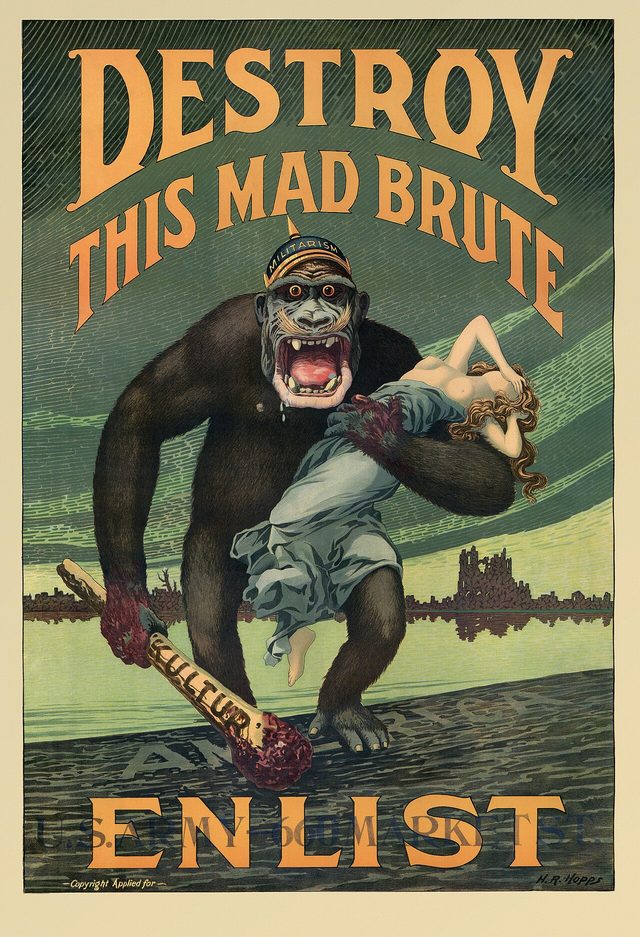
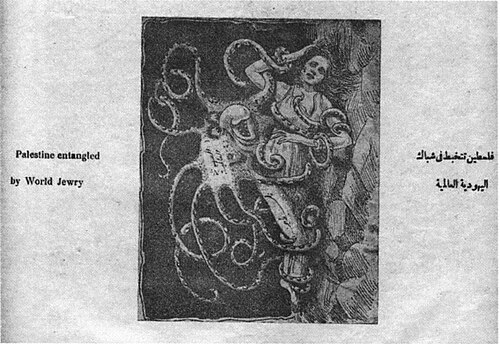
The second step is compression. Many harms are routed to the same target, often ones with no plausible link to each other. The same group is blamed for the defeat, the shortages and the moral decline, and each new charge makes the next one feel more familiar. Posters and broadcasts do this visually by reducing the group to a single figure (an ape in a helmet, a pair of eyes, a shadow) so that a population of millions reads as one actor with one will. Anecdotes carry the load that evidence would carry in an honest account: one alleged crime, often unverified, stands for the whole group's character.
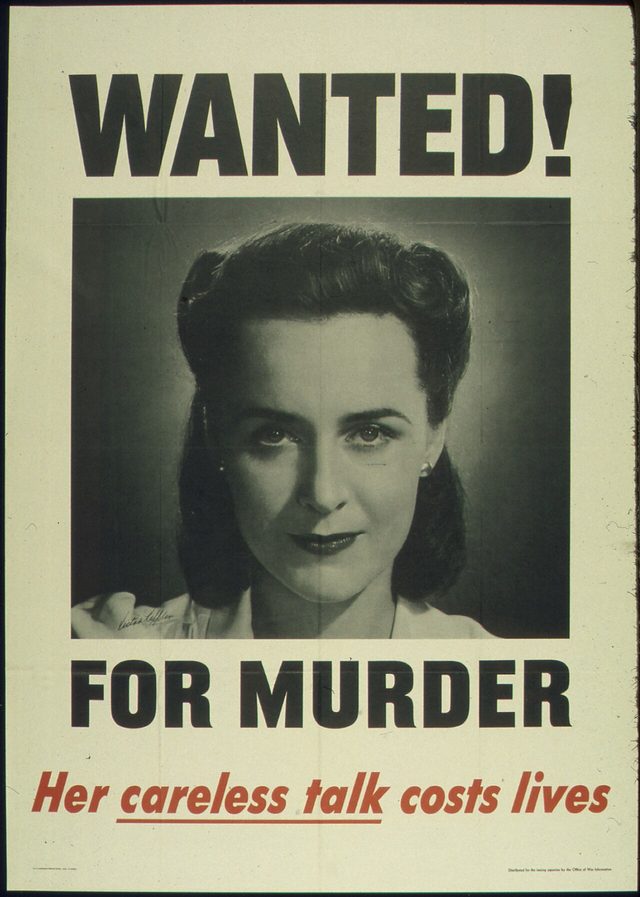
The third step is the offer. Once the cause is located in the out-group, the remedy is to act against the out-group: exclude it, report it, remove it, fight it. The in-group's own choices disappear from the account, which is why the tell is the vanishing of agency. The audience experiences relief as well as anger. A problem that felt unmanageable now has a face, and the listener is cast as a victim or a defender rather than a participant. The message depends on three things: a harm the audience genuinely feels, a target whose members cannot easily answer back in the same channel, and repetition that makes the link feel like common knowledge.
Why it works
The oldest psychological account is frustration-aggression theory. Dollard, Doob, Miller, Mowrer and Sears (1939) argued that frustration produces an urge to aggress, and that when the true source cannot be attacked the aggression is displaced onto a safer target. Hovland and Sears (1940) reported that lynchings in the American South rose in years when cotton prices fell, which became a standard illustration. That finding has not held up well. Hepworth and West (1988) reanalysed the series with time-series methods and still found a modest relationship, but Green, Glaser and Rich (1998) found that it largely disappeared when the series was extended, and found little link between unemployment and hate crime in later data. The displacement idea survives as one mechanism among several, not as a law.
Gordon Allport's The Nature of Prejudice (1954) gave scapegoating its classic social-psychological treatment. Allport described how blame settles on groups that are visible, relatively weak and already the subject of stereotypes, and how prejudice escalates in stages from talk to avoidance, discrimination, physical attack and extermination. Social identity theory (Tajfel and Turner 1979) explains why the move flatters its audience: people derive part of their self-esteem from their groups, so a story in which the in-group is blameless and the out-group is guilty protects that self-image. FRAME's Learn library covers this in Social identity and In-group favoritism.
More recent work treats scapegoating as ideological rather than purely emotional. Glick (2005) argued that scapegoats are not random safe targets: they are groups that a shared cultural story already casts as powerful, hostile or conspiratorial, so blaming them feels like explanation rather than venting. Rothschild, Landau, Sullivan and Keefer (2012) reported experiments suggesting two motives: blaming an out-group can reduce guilt when the in-group is implicated in a harm, and can restore a sense of control when the harm feels random. These are laboratory studies with student and online samples, so the effect sizes should not be read directly onto mass events. The philosophers Kenneth Burke (1941), in his essay on the rhetoric of Mein Kampf, and René Girard (1986) approached the same pattern from rhetoric and anthropology: a community restores its sense of unity by projecting its internal conflict onto a single victim.
Examples across eras and sides
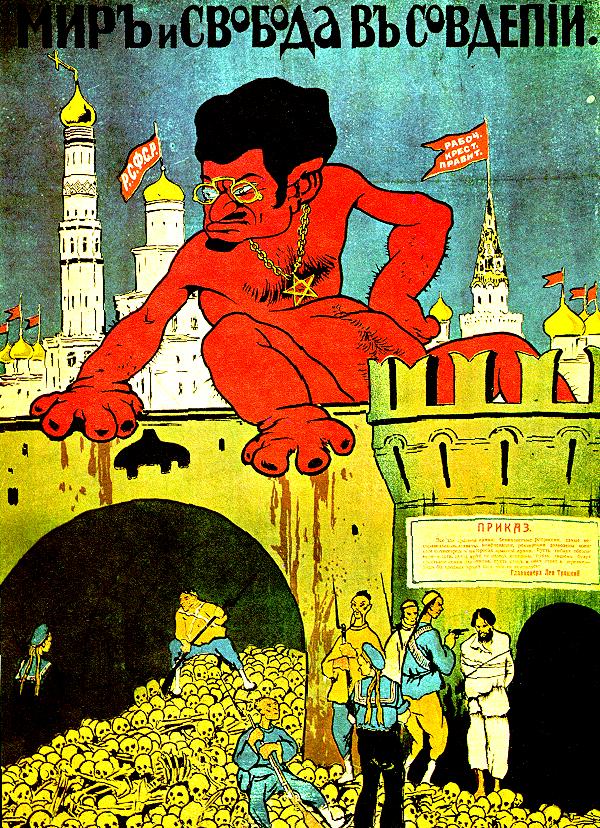
- Soviet Union, 1928 to the 1930s: "wreckers." In the Shakhty trial of 1928, mining engineers were charged with sabotaging coal production, and later show trials extended the charge of "wrecking" to other specialists. Industrial accidents, missed targets and shortages that had many causes, including the pace of the plans themselves, were attributed to hidden class enemies and foreign-linked saboteurs. (Sources: Kuromiya 1988; Fitzpatrick 1999)
- Germany, 1918 to 1945: from the stab-in-the-back legend to wartime antisemitic propaganda. After 1918, nationalist politicians and veterans' groups spread the claim that the army had been betrayed at home by socialists and Jews rather than defeated in the field. Under the Nazi government, the Propaganda Ministry and party press went further and presented "international Jewry" as the cause of the war itself, a claim that accompanied deportation and mass murder. (Sources: Evans 2003; Herf 2006)
- United States, 1942: collective suspicion of Japanese Americans. After Pearl Harbor, press reports and officials attributed a threat of sabotage and espionage to all people of Japanese ancestry on the West Coast, and about 120,000 were removed from their homes and incarcerated in camps under an order issued by a Democratic administration. The federal commission that reviewed the policy found no documented acts of espionage or sabotage by Japanese Americans and attributed the policy to race prejudice, war hysteria and a failure of political leadership. The archive's 'Instructions to All Persons of Japanese Ancestry' (exclusion order posted in San Francisco) shows the order itself, and This Is the Enemy shows the same government's poster habit of compressing an enemy into one figure. (Sources: Commission on Wartime Relocation and Internment of Civilians 1982)
- Rwanda, 1993 to 1994: RTLM radio. Radio Télévision Libre des Mille Collines cast Tutsi civilians collectively as accomplices of the Rwandan Patriotic Front and as responsible for the country's dangers, and during the genocide it named targets on air. The International Criminal Tribunal for Rwanda convicted two of its founders of genocide-related crimes, and an economic study estimated that villages with better RTLM reception saw more participation in the killing. This is the extreme end of the technique, at a scale of hundreds of thousands of deaths that no other example on this page approaches. (Sources: ICTR 2003; Yanagizawa-Drott 2014)
- Iran, 2026: "traitors abroad." Iranian state media promoted a portal for reporting Iranians abroad described as anti-homeland currents and promoters of sanctions and attack, promising penalties such as the loss of citizenship privileges. The country's external pressures, which have many causes, are placed on a bounded diaspora group that citizens are invited to name. See the case study Alaj: the portal Iranian state media promoted for reporting 'traitors abroad'. (Sources: FRAME case study, drawing on Fars News Agency and IranWire reporting)
- United States, 2024: the Springfield pet-eating claim. A claim that Haitian immigrants in Springfield, Ohio, were eating residents' pets spread on social media and was repeated by Senator JD Vance and by Donald Trump during the 10 September presidential debate, while city officials said they had no credible reports of it. The archive's AI-generated image from the Springfield pet-eating claim shows an AI-generated image that circulated among pro-Trump accounts. A local set of tensions over rapid population change was attributed to one immigrant group through a single anecdote. The Japanese American case above shows the same method used by a U.S. government at the scale of mass removal. (Sources: ABC News 2024)
How to spot it
- Count the causes. If one group is blamed for several unrelated harms (crime, prices, disease, defeat), the explanation is doing emotional work rather than causal work.
- Check whether the blame attaches to named people and specific acts, or to everyone who shares an ethnicity, religion, nationality, class or political label.
- Look for the in-group's missing agency. Ask what decisions by the audience's own government, institutions or allies contributed to the harm, and whether the message mentions any of them.
- Notice when a single anecdote, often unverified or traced to a rumor, stands for the whole group.
- Watch for visual compression: one face, one animal, one silhouette or one uniform standing for millions of different people.
- See whether the remedy is directed at the group as such (exclusion, reporting, removal) rather than at a specific wrong through courts or investigation.
- Ask whether the group can answer back in the same channel. Scapegoats are usually chosen from those who cannot.
Where it ends: edge cases and legitimate persuasion
Scapegoating has several named variants. The internal-enemy form ("wreckers," "fifth column," "enemies of the people") blames people inside the country for failures of the state. The external form blames a foreign people rather than a foreign government. The conspiratorial form, which Glick emphasizes, casts a small group as secretly powerful, so that any evidence of its weakness can be read as concealment. It overlaps closely with Accusation in a mirror, where the sender attributes to the target the very violence the sender is planning, and with Fear appeal, which supplies the urgency. Name-calling provides the labels, and Identity fusion makes criticism of the in-group feel like betrayal, which closes off the alternative explanation.
The edge is attribution. Saying that a named government invaded a country, that a company concealed evidence about its product, or that specific individuals committed a crime is not scapegoating when the evidence supports it, even if the language is angry. Wartime material that blames an enemy state for an attack that state carried out is attribution, and FRAME tags such posters as scapegoating only where the blame spreads from a state or an army to a people, or from a specific act to a general explanation of everything that is wrong. Political argument that one party's policies caused a harm is ordinary democratic debate when it is about decisions that party actually made.
The test a reader can apply has two parts. First, would the claim survive if the group label were replaced by the list of people actually shown to have done the thing? If the claim collapses into a much smaller or empty list, the group is carrying blame it has not earned. Second, does the account still leave room for other causes, including the audience's own side? Honest explanation of a complex harm usually names several contributing factors and several responsible actors. Scapegoating names one, and leaves the audience's own side out of the account.
Sources
- ABC News. 2024. Presidential debate between Kamala Harris and Donald Trump, Philadelphia, 10 September 2024 (broadcast and published transcript).
- Allport, Gordon W. 1954. The Nature of Prejudice. Cambridge, MA: Addison-Wesley.
- Burke, Kenneth. 1941. "The Rhetoric of Hitler's 'Battle.'" In The Philosophy of Literary Form: Studies in Symbolic Action. Baton Rouge: Louisiana State University Press.
- Commission on Wartime Relocation and Internment of Civilians. 1982. Personal Justice Denied: Report of the Commission on Wartime Relocation and Internment of Civilians. Washington, DC: U.S. Government Printing Office.
- Dollard, John, Leonard W. Doob, Neal E. Miller, O. H. Mowrer, and Robert R. Sears. 1939. Frustration and Aggression. New Haven: Yale University Press.
- Evans, Richard J. 2003. The Coming of the Third Reich. London: Allen Lane.
- Fitzpatrick, Sheila. 1999. Everyday Stalinism: Ordinary Life in Extraordinary Times: Soviet Russia in the 1930s. New York: Oxford University Press.
- Girard, René. 1986. The Scapegoat. Translated by Yvonne Freccero. Baltimore: Johns Hopkins University Press.
- Glick, Peter. 2005. "Choice of Scapegoats." In John F. Dovidio, Peter Glick, and Laurie A. Rudman (eds.), On the Nature of Prejudice: Fifty Years after Allport. Malden, MA: Blackwell.
- Green, Donald P., Jack Glaser, and Andrew Rich. 1998. "From Lynching to Gay Bashing: The Elusive Connection Between Economic Conditions and Hate Crime." Journal of Personality and Social Psychology 75(1): 82-92.
- Hepworth, Joseph T., and Stephen G. West. 1988. "Lynchings and the Economy: A Time-Series Reanalysis of Hovland and Sears (1940)." Journal of Personality and Social Psychology 55(2): 239-247.
- Herf, Jeffrey. 2006. The Jewish Enemy: Nazi Propaganda During World War II and the Holocaust. Cambridge, MA: Belknap Press of Harvard University Press.
- Hovland, Carl I., and Robert R. Sears. 1940. "Minor Studies of Aggression: VI. Correlation of Lynchings with Economic Indices." Journal of Psychology 9: 301-310.
- International Criminal Tribunal for Rwanda. 2003. The Prosecutor v. Ferdinand Nahimana, Jean-Bosco Barayagwiza and Hassan Ngeze, Case No. ICTR-99-52-T, Judgement and Sentence, 3 December 2003.
- Kuromiya, Hiroaki. 1988. Stalin's Industrial Revolution: Politics and Workers, 1928-1932. Cambridge: Cambridge University Press.
- Rothschild, Zachary K., Mark J. Landau, Daniel Sullivan, and Lucas A. Keefer. 2012. "A Dual-Motive Model of Scapegoating: Displacing Blame to Reduce Guilt or Increase Control." Journal of Personality and Social Psychology 102(6): 1148-1163.
- Tajfel, Henri, and John C. Turner. 1979. "An Integrative Theory of Intergroup Conflict." In William G. Austin and Stephen Worchel (eds.), The Social Psychology of Intergroup Relations. Monterey, CA: Brooks/Cole.
- Yanagizawa-Drott, David. 2014. "Propaganda and Conflict: Evidence from the Rwandan Genocide." Quarterly Journal of Economics 129(4): 1947-1994.
- FRAME case study Alaj: the portal Iranian state media promoted for reporting 'traitors abroad', which cites Fars News Agency, IRIB and IranWire reporting of 14 to 16 September 2026.
Case studies
- Alaj: the portal Iranian state media promoted for reporting 'traitors abroad' — Alaj: the portal Iranian state media promoted for reporting 'traitors abroad'
- Kangura, Radio Rwanda and RTLM: Hutu Power propaganda before and during the genocide against the Tutsi, 1990-1994 — Kangura, Radio Rwanda and RTLM: Hutu Power propaganda, 1990-1994
- The Armenian genocide, 1915-1923: the wartime 'internal enemy' frame, the rival record, and a century of state denial — The Armenian genocide, 1915-1923, and a century of state denial
- Collectivisation, the 1932-33 famine and its denial: the kulak label, the silence and the foreign press — Collectivisation, the 1932-33 famine and its denial
- Angkar: language control in Democratic Kampuchea, 1975-1979, and the contests over its record — Angkar: language control in Democratic Kampuchea, 1975-1979
- Media war over Croatia and Bosnia, 1987-1995, and the denial of Srebrenica — Media war over Croatia and Bosnia, 1987-1995, and the denial of Srebrenica
- Anti-Rohingya propaganda in Myanmar, 2012-2018: the 'Bengali' label, the monks' sermons and the military's covert Facebook pages — Anti-Rohingya propaganda in Myanmar, 2012-2018
- Big-character posters: how the opening labels of China's Cultural Revolution did the work of charges (1966-68) — Big-character posters and the labels of the Cultural Revolution
- Lubang Buaya, 1965: the mutilation story the autopsies did not support — Indonesia 1965: the Lubang Buaya story
- The Islamic State's media machine: Dabiq, Rumiyah, Amaq and the 'virtual caliphate' — The Islamic State's media machine: Dabiq, Rumiyah, Amaq and the 'virtual caliphate'
- The second Ku Klux Klan: selling membership as '100% Americanism' — The second Ku Klux Klan: selling membership as '100% Americanism'
- Christchurch and its copycats: livestreamed attacks and 'manifesto culture', 2019-2022 — Christchurch and its copycats: livestreamed attacks and 'manifesto culture', 2019-2022
- Film under Goebbels: Triumph des Willens (1935) and Der ewige Jude (1940) — Film under Goebbels: Triumph des Willens and Der ewige Jude
- Reefer Madness and the 1930s marihuana campaign — Reefer Madness and the 1930s marihuana campaign
- Wartime radio voices: open and hidden broadcasts aimed at the enemy, 1939-1945 — Wartime radio voices, open and hidden
- Kadesh and Behistun: kings carving their own record — Kadesh and Behistun: kings carving their own record
- Octavian, Antony and the Res Gestae: how Augustus wrote his own reign — Octavian, Antony and the Res Gestae: how Augustus wrote his own reign
- The Reformation print war: Luther, Cranach and the Catholic reply — The Reformation print war: Luther, Cranach and the Catholic reply
- The English Civil War pamphlet war, 1641-1649 — The English Civil War pamphlet war, 1641-1649
- Revolution, counter-revolution and Napoleon's bulletins, 1789-1815 — Revolution, counter-revolution and Napoleon's bulletins, 1789-1815
- Remember the Maine: the yellow press and Spain, 1895-1898 — Remember the Maine: the yellow press and Spain, 1895-1898
- India's Emergency: 'India is Indira' and the censored press — India's Emergency: 'India is Indira' and the censored press
- Gwangju, May 1980: 'rioters', 'spies' and the censored press — Gwangju, May 1980: 'rioters', 'spies' and the censored press
- Pengkhianatan G30S/PKI: how Indonesia's New Order kept 1965 on screen — Pengkhianatan G30S/PKI: how Indonesia's New Order kept 1965 on screen
- The Kim leader cult, the anti-US month and the leaflets sent back — The Kim leader cult, the anti-US month and the leaflets sent back
- Holy war on three sides: the Ottoman jihad call, Germany's Islam policy and Britain's Arab Revolt messaging (1914-1918) — Holy war on three sides: the Ottoman jihad call, Germany's Islam policy and Britain's Arab Revolt messaging (1914-1918)
- Russia's war of words: tsarist lubki, the Liberty Loan and the fight over 'German agents' (1914-1918) — Russia's war of words: tsarist lubki, the Liberty Loan and the fight over 'German agents' (1914-1918)
- World War II rumor clinics and rumor control (1940 to 1947) — World War II rumor clinics and rumor control
- Just Say No and the fried egg: anti-drug campaigns, 1971-2016 — Just Say No and the fried egg: anti-drug campaigns, 1971-2016
- The satanic panic: ritual-abuse claims in the US and UK, 1980-1994 — The satanic panic: ritual-abuse claims in the US and UK, 1980-1994
- Gay plague, tombstones and Silence = Death: messaging in the AIDS crisis, 1981-1990 — Gay plague, tombstones and Silence = Death: messaging in the AIDS crisis, 1981-1990
- Better babies, fitter families: eugenics campaigns in the US, Sweden and Germany — Better babies, fitter families: eugenics campaigns in the US, Sweden and Germany
- The 1933 book burnings and Nazi control of publishing — The 1933 book burnings and Nazi control of publishing
- Temperance, Prohibition and the wets: the dry campaigns and their opponents, 1874 to 1933 — Temperance, Prohibition and the wets: the dry campaigns and their opponents, 1874 to 1933
- The civil rights movement and the Citizens' Councils: boycotts and marches, 'outside agitator' labels, state money and economic pressure — The civil rights movement and the Citizens' Councils: boycotts and marches, 'outside agitator' labels, state money and economic pressure
- Voice of the Arabs and the Voice of Britain: the Arab radio war, 1953-1967 — Voice of the Arabs and the Voice of Britain: the Arab radio war, 1953-1967
- The Cuba-United States radio war: Radio Swan's cover story and Havana's 'gusanos' — The Cuba-United States radio war: Radio Swan's cover story and Havana's 'gusanos'
- The Reich Ministry of Public Enlightenment and Propaganda, 1933-1945 — The Reich Ministry of Public Enlightenment and Propaganda, 1933-1945
- Fascist Italy's propaganda machine: from the Duce's Press Office to the Ministry of Popular Culture — Fascist Italy's propaganda machine: from the Duce's Press Office to the Ministry of Popular Culture
- Britain's Ministry of Information and Political Warfare Executive: posters at home, black radio abroad — Britain's Ministry of Information and Political Warfare Executive: posters at home, black radio abroad
- The U.S. Office of War Information and the Writers' War Board: a 'strategy of truth' meets the advertising men — The U.S. Office of War Information and the Writers' War Board: a 'strategy of truth' meets the advertising men
- Chinese wartime propaganda, 1937-1945: Chongqing, Yan'an and Wang Jingwei's Nanjing — Chinese wartime propaganda, 1937-1945: Chongqing, Yan'an and Wang Jingwei's Nanjing
- Before the state: the NSDAP's propaganda in its fringe years, 1920-1923 — Before the state: the NSDAP's propaganda in its fringe years, 1920-1923
- Hitler über Deutschland: the 1932 campaigns that made the NSDAP a mass party — Hitler über Deutschland: the 1932 campaigns that made the NSDAP a mass party
- The SA in the street: uniforms, a martyr and staged disorder as proof only the NSDAP could 'restore order' (1921-1933) — The SA in the street: uniforms, a martyr and staged disorder as proof only the NSDAP could 'restore order' (1921-1933)
- From a fire to a vote: the Reichstag Fire Decree and the Enabling Act, February-March 1933 — From a fire to a vote: the Reichstag Fire Decree and the Enabling Act, February-March 1933
- Bolshevik agitprop, 1917-1921: soviets, decrees, agit-trains and the ROSTA windows — Bolshevik agitprop, 1917-1921: soviets, decrees, agit-trains and the ROSTA windows
- 'Trotskyism or Leninism': the press campaign that removed Trotsky from Soviet leadership (1924-1929) — 'Trotskyism or Leninism': the press campaign that removed Trotsky from Soviet leadership (1924-1929)
- "Liquidate the kulaks as a class": the propaganda campaign for collectivization (1929-1933) — "Liquidate the kulaks as a class": the propaganda campaign for collectivization (1929-1933)
- The Moscow show trials: confession, spectacle and consent (1936-1938) — The Moscow show trials: confession, spectacle and consent (1936-1938)
- Divide the land, label the enemy: propaganda and discipline in the Jiangxi Soviet (1927-1934) — Divide the land, label the enemy: propaganda and discipline in the Jiangxi Soviet (1927-1934)
- The Yan'an Rectification Movement: doctrine, self-criticism and the Rescue Campaign (1942-1945) — The Yan'an Rectification Movement: doctrine, self-criticism and the Rescue Campaign (1942-1945)
- Propaganda of the Chinese Civil War, 1945-1949: land reform, surrender leaflets and the fall of the mainland — Propaganda of the Chinese Civil War, 1945-1949: land reform, surrender leaflets and the fall of the mainland
- Land reform and the struggle session: how the CCP's class labels decided who kept their land, 1946-1952 — Land reform and the struggle session: how the CCP's class labels decided who kept their land, 1946-1952
- The Gestapo's Denunciation Apparatus: Policing by Public Tip-Off, 1933-1945 — The Gestapo's denunciation apparatus: policing by public tip-off, 1933-1945
- The People's Court: the Volksgerichtshof as a stage for verdicts, 1934-1945 — The People's Court: the Volksgerichtshof as a stage for verdicts, 1934-1945
- The SS as its own propaganda institution: Das Schwarze Korps, the Ahnenerbe and the order myth, 1931-1945 — The SS as its own propaganda institution: Das Schwarze Korps, the Ahnenerbe and the order myth, 1931-1945
- The NKVD as its own propagandist: 'enemies of the people,' informants and the vigilant state (1934-1946) — The NKVD as its own propagandist: 'enemies of the people,' informants and the vigilant state (1934-1946)
- The Union of Soviet Writers and socialist realism, 1932-1969 — The Union of Soviet Writers and socialist realism, 1932-1969
- The Hundred Flowers and Anti-Rightist Campaigns: soliciting criticism, then purging it (1956-1959) — The Hundred Flowers and Anti-Rightist Campaigns: soliciting criticism, then purging it (1956-1959)
- The Bund Deutscher Mädel: raising Nazi Germany's girls for the Volk — The Bund Deutscher Mädel: raising Nazi Germany's girls for the Volk
- Nazi control of school curriculum and teachers, 1933-1938 — Nazi control of school curriculum and teachers, 1933-1938
- The Komsomol: youth pipeline, mass mobilization and internal discipline, 1918-1991 — The Komsomol: youth pipeline, mass mobilization and internal discipline, 1918-1991
- Soviet control of school curriculum and textbooks — Soviet control of school curriculum and textbooks
- Class struggle in the classroom: nationalizing China's school curriculum and textbooks, 1949-1977 — Class struggle in the classroom: nationalizing China's school curriculum and textbooks, 1949-1977
- From 'ill health' to Swan Lake: the GKChP's case for its own coup, 19-21 August 1991 — From 'ill health' to Swan Lake: the GKChP's case for its own coup, 19-21 August 1991
- The end of the USSR: Gorbachev's resignation and the flag over the Kremlin (December 1991) — The end of the USSR: Gorbachev's resignation and the flag over the Kremlin (December 1991)
- The Gang of Four: arrest, denunciation and a trial that closed the Cultural Revolution's books (1976-1981) — The Gang of Four: arrest, denunciation and a trial that closed the Cultural Revolution's books (1976-1981)
- The 1981 Resolution: how the Chinese Communist Party engineered a single verdict on Mao — The 1981 Resolution: how the Chinese Communist Party engineered a single verdict on Mao
- Scar literature: China's state-permitted reckoning with the Cultural Revolution, 1977-1981 — Scar literature: China's state-permitted reckoning with the Cultural Revolution, 1977-1981
- Cuba's crisis years: Mariel, the Special Period, the Malecón, and 11 July — Cuba's crisis years: Mariel, the Special Period, the Malecón, and 11 July
Then and now
- Then and now: blaming Jews for disease (occupied Poland 1941, COVID-19 2020) — Blaming Jews for disease: occupied Poland 1941 and COVID-19 conspiracy theories 2020
- Then and now: national and ethnic labels for an enemy or a disease (US 1942, US 2020) — National and ethnic labels for an enemy or a disease: US 1942 and US 2020
- Then and now: "the Americans made it" (Soviet AIDS story 1983, Chinese Fort Detrick claim 2020) — "The Americans made it": the Soviet AIDS story 1983 and the Chinese Fort Detrick claim 2020