- Filed
- September 10, 2026, 15:15 UTC
- Actor
- Russian Social Design Agency (SDA / Agentstvo Sotsialnogo Proektirovaniya) under direction and control of the Russian Presidential Administration (Kremlin-linked operators; previously sanctioned by US, UK, EU)
- Target
- European public discourse and electoral processes (France, Germany, Armenia, Hungary/Slovakia corridors); AI chatbot users, search-engine indices and LLM training/retrieval systems; secondary Western media and think-tank citation ecosystems
- Confidence
- high Multiple independent open sources, low disagreement about the facts
- Techniques
- Narrative launderingSynthetic mediaManufactured consensusFlooding the zoneCard stacking
- Channels
- fictitious or lightly-staffed ‘research institutes’ and Wikipedia-style reference sites registered for Western audiences
- high-volume AI-assisted or AI-generated text and short videos optimized for algorithmic discovery and citation
- opinion-leader social-media profiling databases for tailored messaging
- contractor/PR-agency infrastructure (SDA) coordinated with presidential administration officials
- cross-platform distribution and residual institutional surface intended to survive platform takedowns
Summary
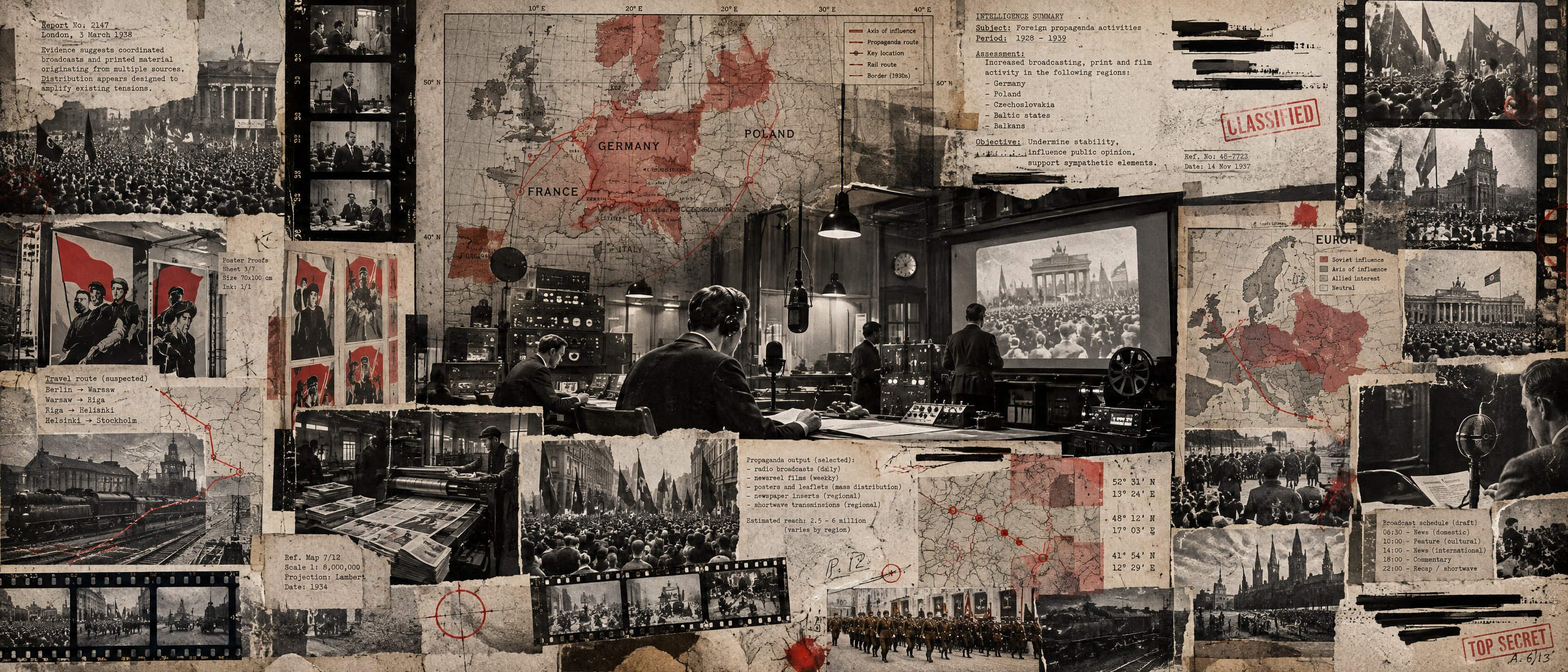
Documents leaked in May 2026 from Russia’s Social Design Agency (SDA), a sanctioned Kremlin-linked firm, outline ‘Projects 2026’ efforts to build alternative information ecosystems—Wikipedia clones, phony research institutes such as the World Center for Strategic Studies, and AI-optimized content—so that pro-Russian framings enter search results, LLM training/retrieval corpora and Western media citations. Parallel elements include databases of 10,000 European opinion leaders and volume short-video production for French audiences. Cipher Brief analysis published 10 September 2026 situates the plans within a shared authoritarian AI playbook also used by China and Iran; OCCRP and Bloomberg reporting corroborate SDA coordination with the Russian Presidential Administration on cognitive strikes and election-related activity targeting Armenia, Germany, France and others.
Analysis
Primary documentation consists of the May 2026 leak of dozens of SDA internal files (project proposals, chat screenshots, operational reports) obtained by Delfi Estonia and shared with OCCRP and partners, plus contemporaneous Bloomberg review of the same corpus focused on AI/search seeding. The files describe ‘Projects 2026’ components that move beyond classic social-media flooding toward upstream control of the reference layer that search engines and large language models ingest. Concrete elements include: registration of Wikipedia-style sites (including Armenia-focused clones later suspended by hosts), a German-targeted ‘self-filling knowledge base’ claimed to contain over 200,000 pages, plans for multi-language versions of unsigned analysis from entities such as the World Center for Strategic Studies (registered March 2026), and an ‘AI News’ initiative targeting French audiences with more than 500 short videos across six platforms. Parallel tasking covers construction of an opinion-leader database covering 10,000 European influencers (100 top French opposition figures named as a priority) for psychological profiling and tailored content. OCCRP reporting further documents SDA coordination with senior Presidential Administration figures (including Sofia Zakharova under alias and references to Sergei Kiriyenko) on both digital and offline ‘cognitive strikes.’ Cipher Brief analysis published 10 September 2026 places these plans in continuity with Chinese (GoLaxy-style profiling) and Iranian AI-content operations.
Mechanism: narrative laundering is achieved by manufacturing institutional surfaces—think-tank branding, encyclopedic formatting, academic-style reports without verifiable independent staff—that can be indexed, quoted by legitimate outlets, and absorbed into training or retrieval corpora. Once cited, the content acquires secondary legitimacy that is difficult to unwind. Synthetic media and flooding-the-zone lower production cost and raise statistical weight inside ranking and generation systems. Manufactured consensus is the intended downstream effect: repeated institutional-style outputs create the appearance of a broader evidentiary base. Card-stacking appears in the selective historical and political framings embedded in the reference material (anti-Western, pro-Russian sovereignty narratives, contested election claims). The opinion-leader database supplies the targeting layer that makes subsequent messaging more precise.
This qualifies as an influence operation because origin and editorial independence are deliberately obscured, coordination between a commercial contractor and state structures is evidenced in the leaked chats and prior U.S. DOJ affidavits, and the explicit design goal—stated in internal documents—is to shape foreign decision-making, electoral outcomes and the informational substrate used by both humans and machines. Technique scoring is independent of the actor; identical patterns of synthetic institutional fronts, volume seeding of AI-facing text, and selective framing have been documented or alleged across multiple state-linked operators. Partial public exposure via the leak and platform/host suspensions raises detectability but does not erase the residual content already indexed or the ongoing utility of the residual infrastructure.
Literacy counter: treat newly appearing high-volume ‘research institutes,’ Wikipedia clones or unsigned analytical sites that lack named scholars, physical footprint, transparent funding and long institutional history—especially when their output is optimized for citation or appears in clusters around contested elections—as provisional. Demand primary-source provenance, cross-check claims against multi-source archives and established academic or governmental records, and prefer outlets with offline accountability and clear editorial governance. Users of search and chatbots should request source lists and treat single-institute or newly indexed citations with elevated skepticism. Platforms and model developers should incorporate stronger provenance signals and down-weight synthetic institutional clusters lacking independent verification.
Evidence
- Cipher Brief: Russia’s AI Blueprint Exposes an Authoritarian Playbook (10 Sep 2026)
- Bloomberg: Leaked Files Show Russia’s Plan to Influence AI and Search Results / Wiki Warfare (23 Jun 2026)
- OCCRP: Leaked Documents Reveal Russian ‘Cognitive Strikes’ Against the West (24 May 2026)
- RBC-Ukraine / secondary summary of Project 2026 AI-seeding goals (24 Jun 2026)
- OpenSanctions / EU-UK-US sanctions records on Social Design Agency