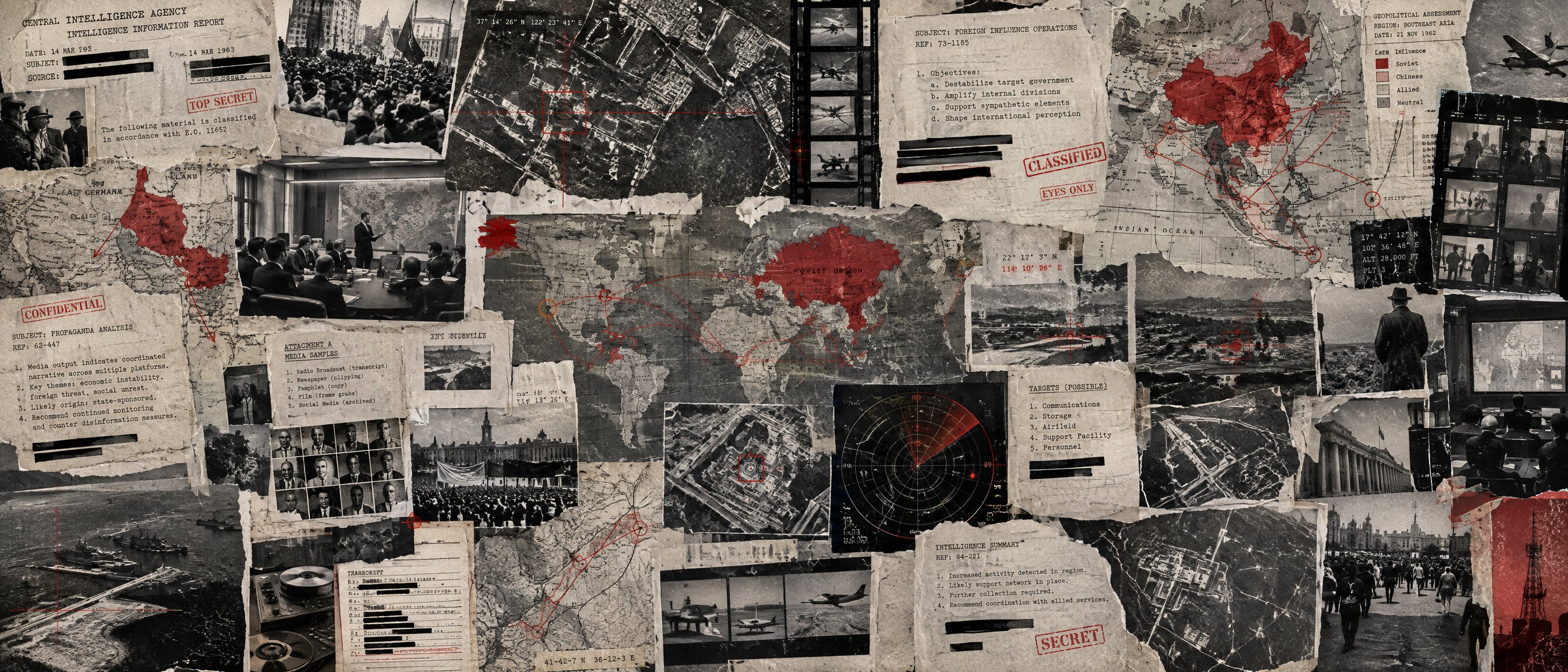
Content note. This page quotes ad scripts that describe a murder, a rape and a racially motivated killing, and it quotes a campaign manager's remarks that he later said made him "sound racist". The words are quoted as they were recorded.
In one line: in 1988 an outside group and the Bush campaign ran ads that tied Michael Dukakis to crimes committed by prisoners on Massachusetts furloughs, one of them built on the case and mugshot of Willie Horton; in 2000 an NAACP-affiliated fund ran an ad in which James Byrd Jr.'s daughter tied George W. Bush to the failure of a Texas hate-crimes bill after her father's murder.
What happened
1988: the furlough ads against Dukakis
- 1972 to 1976. Massachusetts's inmate furlough law is signed by Republican governor Francis Sargent in 1972. In 1973 the state's Supreme Judicial Court (Devlin v. Commissioner of Correction) reads it as covering first-degree murderers, since the law did not exclude them. The legislature passes a bill to bar them. In 1976 Governor Dukakis vetoes it, saying it would "cut the heart out of efforts at inmate rehabilitation."
- 26 October 1974. In Lawrence, Massachusetts, Willie Horton and two accomplices rob 17-year-old gas station attendant Joseph Fournier, who is stabbed 19 times and dies. Horton is sentenced to life.
- 6 June 1986. Horton leaves prison on a weekend furlough and does not return.
- 3 April 1987. In Oxon Hill, Maryland, Horton assaults Clifford Barnes and rapes his fiancée.
- 1987 to 1988. The Lawrence Eagle-Tribune runs close to 200 stories on the furlough system. It wins the 1988 Pulitzer Prize for General News Reporting "for an investigation that revealed serious flaws in the Massachusetts prison furlough system." In April 1988 Dukakis signs a bill ending furloughs for first-degree lifers.
- 12 April 1988. In a Democratic primary debate before the New York primary, Senator Al Gore raises the Massachusetts "weekend passes" and asks Dukakis whether he would "advocate a similar program for federal penitentiaries". Accounts agree that Gore did not name Horton.
- June to early October 1988. George H. W. Bush mentions the Horton case in campaign speeches. Tali Mendelberg counts 25 stories in major newspapers in that span.
- 1988 campaign (date not established here). Bush's campaign manager Lee Atwater says he would "strip the bark off the little bastard" and "make Willie Horton his running mate", as he later recounted. A widely cited version runs: "By the time we're finished, they're going to wonder whether Willie Horton is Dukakis' running mate."
- 21 September to 4 October 1988. The National Security Political Action Committee (NSPAC), through its "Americans for Bush" arm, airs a 30-second cable ad titled "Weekend Passes", produced by Larry McCarthy with Floyd Brown as the arm's political director. The narration: "Bush and Dukakis on crime. Bush supports the death penalty for first degree murderers. Dukakis not only opposes the death penalty... he allowed first degree murderers to have weekend passes from prison. One was Willie Horton... who murdered a boy in a robbery, stabbing him 19 times. Despite a life sentence, Horton received 10 weekend passes from prison. Horton went on to commit other violent crimes on one of those weekends... Weekend prison passes. Dukakis on crime." The version that ran on air shows Horton's police mugshot. McCarthy is quoted as calling the image "every suburban mother's greatest fear".
- 5 October 1988. The Bush campaign's own ad, "Revolving Door", first airs. It was produced under the campaign's media adviser Roger Ailes, with Atwater as campaign manager. It was filmed at the Utah State Prison in Draper with volunteers, mostly College Republicans, playing prisoners who walk in and out through a revolving door. The narration says Dukakis's "revolving door prison policy gave weekend furloughs to first degree murderers not eligible for parole" and "While out, many committed other crimes like kidnapping and rape." The screen shows "268 ESCAPED". It ends: "Many are still at large." The narration does not name Horton.
- October 1988. The Dukakis campaign answers with "Furlough from the Truth", which says the program was started by a Republican and ended by Dukakis, and that federal prisons under the Reagan-Bush administration also furloughed prisoners. Democratic running mate Lloyd Bentsen and Jesse Jackson say the Horton ads play on race. The Bush campaign denies it.
- 8 November 1988. Bush wins the election.
- 1990 to 1992. On a complaint from the Ohio Democratic Party and Black Elected Democrats of Ohio, the Federal Election Commission investigates whether NSPAC coordinated with the Bush campaign. It finds a post-production editor paid by both and a June 1988 phone call between the Bush campaign's chief media adviser and an NSPAC media consultant. The commissioners split 3 to 3 and no violation is found.
- January to February 1991. Atwater, ill with brain cancer, apologizes to Dukakis. In Life magazine he writes: "I am sorry for both statements: the first for its naked cruelty, the second because it makes me sound racist, which I am not."
2000: the Byrd ad against Bush
- 7 June 1998. James Byrd Jr., a Black man, is beaten, chained to a pickup truck and dragged to his death near Jasper, Texas, by three white men. Two are later sentenced to death and one to life.
- 6 May 1999. Byrd's daughter Renee Mullins, with a cousin, state Representative Senfronia Thompson and a gay-rights lobbyist, meets Governor Bush to ask him to support a Texas hate-crimes bill. By her account, when Thompson asked "Would you help her pass the bill?", Bush said no.
- May 1999. The bill dies in a Texas Senate committee without reaching the governor. Bush says Texas's existing law is sufficient. He is widely reported as holding that all crimes are hate crimes. (Governor Rick Perry signs a hate-crimes act named for Byrd in 2001.)
- 11 October 2000. In the second presidential debate, Al Gore raises the Byrd case. Bush answers that Texas has a hate-crimes law and says: "The three men who murdered James Byrd, guess what's going to happen to them?" He says they will be put to death. One of the three was sentenced to life. Some Byrd family members object to the answer.
- October 2000. The NAACP National Voter Fund, a separately incorporated NAACP affiliate directed by Heather Booth, airs an "issue ad" in black and white showing a pickup truck dragging a chain. Mullins speaks: "On June 7, 1998, my father was killed. He was beaten, chained, and then dragged three miles to his death, all because he was black." And: "I went to Governor George W. Bush and begged him to help pass a Hate Crimes Bill in Texas. He just told me no." As quoted in later accounts, she also says that when Bush "refused to sign hate-crimes legislation, it was like my father was killed all over again."
- 7 November 2000. Election day. Bush is confirmed as the winner in December, after the Florida recount litigation.
How it works
- Fear appeal (1988 ads): "Weekend Passes" moves from a policy ("weekend passes") to a named murderer and "other violent crimes". "Revolving Door" ends on "Many are still at large." Both stage an ongoing threat and offer one remedy, the other candidate. Neither gives a base rate, such as how many furloughed inmates returned on time. The 2000 ad is not scored here: it stages grief and blame for a past decision, not a threat to the viewer.
- Card stacking (all three ads): each uses facts that can be checked, and each leaves out facts that would change the reading.
- "Revolving Door" puts "268 ESCAPED" on screen while the narration speaks of "first degree murderers". Kathleen Hall Jamieson (Dirty Politics, 1992) writes that this invites the false inference that 268 murderers escaped to rape and kidnap. Both 1988 ads leave out that the law predates Dukakis and that he had signed the lifer ban in April 1988.
- The Byrd ad says Bush "refused to sign" hate-crimes legislation. The bill died in a Senate committee and never reached his desk. The ad does not say that Texas already had a hate-crimes statute or that the killers had been convicted, two of them sentenced to death. Mullins's account of the meeting is her own and is not disputed in the sources found here.
- Transfer (all three ads): each puts the imagery of a violent crime beside the candidate's name. A mugshot and "Dukakis on crime"; a chain behind a pickup truck and "Governor George W. Bush". The horror of the crime is carried onto the candidate's policy choice (a furlough veto, a position on a bill), inviting the viewer to hold the candidate responsible for the crime itself.
- Testimonial (2000 ad): Mullins is a primary witness to her father's murder and to the May 1999 meeting, and that part is not the technique. The step beyond is "refused to sign", a claim about a bill that never reached the governor, carried by her standing as the victim's daughter. The 2012 Soptic ad is scored the same way (The steelworker ad and the welfare ads: two fact-checked attacks from the 2012 U.S. presidential race). The 1988 ads use no speaking witness.
- Not scored: the contested racial reading of 1988 is not scored as Scapegoating here; it is set out under Positions on the record.
Then and now
No poster in the FRAME gallery fits this case. The closer comparison is the two halves of this page. The 1988 ads and the 2000 ad use one form from opposite sides: a named crime, an image of it, and a candidate's name, aimed at a Democratic nominee by his opponent's campaign and an allied committee, and at a Republican nominee by a voter fund affiliated with a civil-rights organization. The phrase "Willie Horton ad" also outlived 1988. Commentators went on using it as shorthand for later crime ads they saw as following the same pattern; in 2018, for example, a Washington Post piece described a Trump campaign ad about an immigrant convicted of murder in those terms.
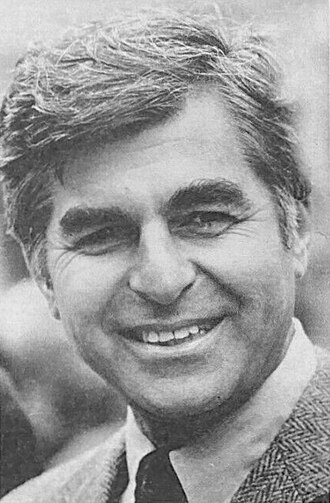
Michael Dukakis, the 1988 Democratic nominee and the target of the furlough ads. Portrait from a 1988 California campaign flyer. Public domain (published in the U.S. without a copyright notice).
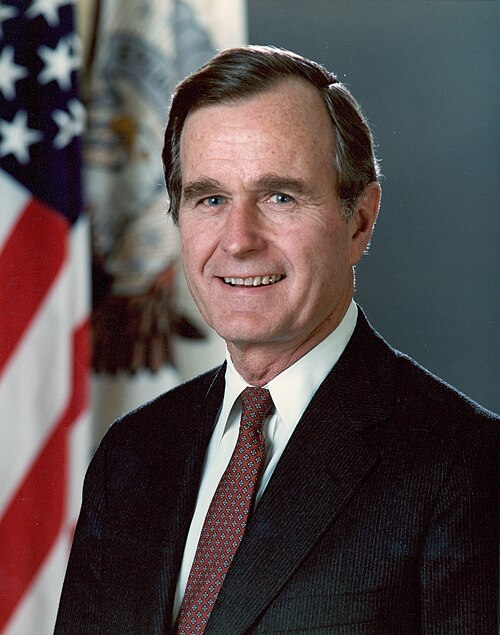
George H. W. Bush, the 1988 Republican nominee, whose campaign ran "Revolving Door" and on whose behalf NSPAC ran "Weekend Passes". Official vice-presidential portrait, about 1981, Naval Photographic Center. Public domain (U.S. government work).
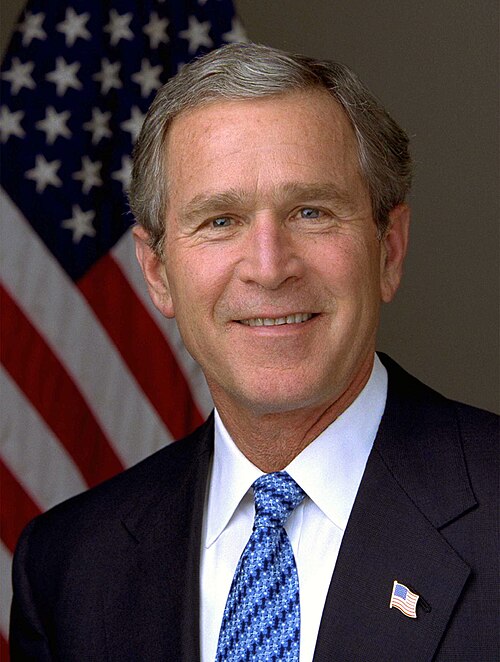
George W. Bush, the 2000 Republican nominee and the target of the NVF ad. Official portrait by Eric Draper, 14 January 2003, taken after the events on this page. Public domain (U.S. government work).
Positions on the record
- Critics of the 1988 ads: Jesse Jackson said on CBS that there had been "a number of rather ugly race-conscious signals" from the Bush campaign. Lloyd Bentsen also called the Horton material racial. Political scientist Tali Mendelberg ("Executing Hortons", Public Opinion Quarterly, 1997; The Race Card, 2001) argues that the Horton story worked as an implicit racial appeal: a Black man's mugshot and a crime against a white couple primed racial resentment in white voters' judgments of Dukakis, without any word about race. Her experiments find that implicit appeals prime resentment and explicit ones do not, and that the effect fades once the racial content is named, which she links to Jackson's remarks in October 1988.
- The Bush campaign's answer: the ads were about Dukakis's record on crime and furloughs. Atwater said: "Our campaign made no TV commercials about Willie Horton." Spokesman Mark Goodin told the New York Times: "My advice to them is 'grow up'." The campaign said it had nothing to do with "Weekend Passes"; the FEC's 3 to 3 split left that standing. Atwater's 1991 apology withdrew the running-mate remark but denied that he was racist.
- Other scholars: Gregory Huber and John Lapinski ("The 'Race Card' Revisited") report that implicit appeals were no more effective than explicit ones in their experiments. A Good Authority essay argues that few people saw the NSPAC ad itself, that news coverage did most of the spreading, and that polls moved mainly around the conventions, not in October.
- Critics of the 2000 ad: the Bush campaign disputed the Byrd family's account. Spokesman Ray Sullivan said, "We certainly understand their emotion," and "Throughout the process, Governor Bush has treated the Byrd family with a great deal of respect." A Baltimore Sun column (4 November 2000) argued that "a truth can mislead as well as a lie", and later writers in the Washington Examiner and The American Conservative called the ad race-baiting. Later, as White House communications director, Dan Bartlett said the NAACP's leadership had "clearly crossed the line in partisanship and civility".
- The NAACP National Voter Fund's answer: the ad was the Voter Fund's, not the NAACP's, and its facts were accurate. NAACP chairman Julian Bond is quoted as saying: "No one has disputed the truth of the ad." Mullins's account of the May 1999 meeting was the ad's central claim.
- This archive's reading: the scripts, air dates, sponsors, the furlough history, the 1999 bill's death in committee, the debate exchange and Atwater's remarks and apology are documented. That the 1988 ads were built to prime racial fear is a contested reading: Mendelberg's research supports it, Huber and Lapinski's experiments dispute the mechanism, the campaign denied it, and Atwater's 1991 apology addressed the words, not the ads. That either ad changed the result is not shown. The Bush campaign's coordination with NSPAC was investigated and not found.
- Real differences: "Revolving Door" was the candidate's own ad, paid for by his campaign. "Weekend Passes" and the Byrd ad were outside-group ads. "Weekend Passes" ran on cable only and reached most viewers through news coverage. The 1988 ads featured a perpetrator; the 2000 ad featured a victim's relative speaking for herself. Airtime spending for the NSPAC and NVF ads was not established from the sources available for this page.
Same-method test
An ad that put a named killer's mugshot beside a Republican governor's name over a parole program his predecessor started, or an ad in which a victim's relative said a Democratic governor "told me no" on a bill that died in committee, would be scored the same way. The test is the same method with the parties swapped: crime image, candidate's name, and the omitted facts.
How to spot it
- Ask who paid. A campaign's own ad, an allied outside group and an "issue ad" from a nonprofit carry different accountability.
- When an ad shows a number (such as "268") next to a crime word, check what the number counts.
- Check the path of a bill or policy: who signed it, who changed it, and whether it reached the candidate at all.
- Separate a witness's account (a record) from the ad's inference about what the candidate caused (an argument).
Images
| Image | Source | Licence |
|---|---|---|
| Michael Dukakis, 1988 flyer portrait | Wikimedia Commons | Public domain (PD-US, no notice) |
| George H. W. Bush, vice-presidential portrait (about 1981) | Wikimedia Commons, Naval Photographic Center | Public domain (U.S. government work) |
| George W. Bush, official portrait (2003) | Wikimedia Commons, Eric Draper, White House | Public domain (U.S. government work) |


Image gaps
- Frames from "Weekend Passes", "Revolving Door", "Furlough from the Truth" and the NVF Byrd ad. Not included: the ads are copyrighted. They are viewable at the Museum of the Moving Image's Living Room Candidate, the Washington Post video archive and C-SPAN (links under Sources). Not fillable with open images.
- Horton's mugshot. Not included: the page describes it but does not reproduce it, since the image is the contested element and its reuse status is unclear. Fillable only with a verified public-domain police record, which was not found.
- A George W. Bush portrait from 2000, when he was governor of Texas. The official portrait used here dates from 2003. Texas state photos are not automatically public domain, so none was used. Fillable if a verified federal or openly licensed 1999 to 2000 photo is found.
- James Byrd Jr. and Renee Mullins. No openly licensed photo was found. Using an unrelated image of Jasper would imply a link the record does not show.
Sources
- The Living Room Candidate (Museum of the Moving Image): "Willie Horton" / "Weekend Passes", 1988
- The Living Room Candidate: "Revolving Door", 1988
- The Living Room Candidate: "Furlough from the Truth", 1988
- Washington Post video: "Weekend Passes"
- Washington Post video: "Revolving Door"
- Inside Politics course pages: independent ads of 1988, including the FEC coordination inquiry
- Deseret News, 21 November 1988: Utah and Bush's "Revolving Door" ad
- Christian Science Monitor, 28 September 1988: The facts on furloughs
- Christian Science Monitor, 19 April 1988: Gore's debate style
- Slate, November 1999: Did Gore Hatch Horton?
- Devlin v. Commissioner of Correction, 364 Mass. 435 (1973)
- Pulitzer Prizes: Staff of the Lawrence Eagle-Tribune, 1988
- TIME, 27 June 1988: The One That Got Away
- Washington Post, 13 January 1991: Atwater apologizes for '88 remark about Dukakis
- Seattle Times, 13 January 1991: Atwater makes apology to Dukakis
- Tali Mendelberg, "Executing Hortons: Racial Crime in the 1988 Presidential Campaign" (PDF)
- Princeton University Press: Tali Mendelberg, The Race Card (2001)
- Huber and Lapinski, "The 'Race Card' Revisited" (PDF)
- Good Authority: It's time to stop the endless hype of the "Willie Horton" ad
- Kathleen Hall Jamieson, Dirty Politics (1992), Google Books
- Salon, 16 October 2000: Bush angers slain man's family
- Washington Post, May 1999: Texas Hate-Crimes Bill Dies
- CBS News: Texas Gets New Hate Crimes Law
- Texas Monthly: The Hate Debate
- P2000: NAACP-NVF ad "Byrd Vote-T.V.", October 2000
- C-SPAN clip: James Byrd ad, 2000
- Baltimore Sun, 4 November 2000: Hate-crime ad's truth was meant to mislead
- Baltimore Sun, 14 July 2001: NAACP's political preference is no secret
- Washington Examiner: NAACP, then and now
- The American Conservative: The NAACP's Race-Baiting
- CBS News: Bush Finally Says 'Yes' To NAACP
- UC Irvine School of Social Sciences, 1 November 2018: Trump revives "Willie Horton" tactic (Washington Post piece)