Content note: Dutch collaborationist (NSB) leader-cult film from the German occupation; the film as logged includes the Hou Zee (Nazi-style) salute. This object is shown as it was published. Why
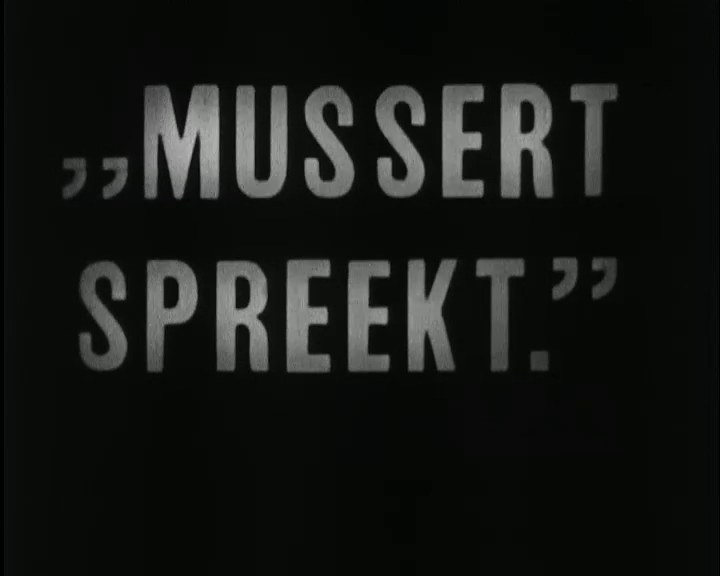
'Mussert spreekt' (NSB film title card)
Title card of 'Mussert spreekt' ('Mussert speaks'), a 1941 film by the NSB's own film service about its leader Anton Mussert. Beeld en Geluid's shot log says it retells the movement's founding and first rallies, with the Dutch flag raised, the Wilhelmus sung and a march-past before 'the Leader', so the leader is presented through national symbols.
Propaganda techniques used in this film still
- Date
- 1941
- Period
- Second World War
- Made by
- Filmdienst der NSB (Nationaal-Socialistische Beweging in Nederland film service)
Full record
Region, Country, Medium, Issuer type, Regime, Leader, Audience, Purpose, Theme, Event, Source, Rights
- Region
- Western and Central Europe
- Country
- Netherlands
- Medium
- Film stills
- Issuer type
- Party
- Regime
- German Occupation of the Netherlands
- Leader
- Arthur Seyss Inquart
- Audience
- Domestic public
- Purpose
- Persuade or win support
- Theme
- Elections and party politics
- Event
- World War II
- Source
- Identified Openly sourced: the speaker is who they say they are
- Source
- Open Beelden (Nederlands Instituut voor Beeld en Geluid), item 1129715, retrieved October 2, 2026
- Rights
- Public domain (Public Domain Mark 1.0 on the Open Beelden item page)
Filmdienst der NSB (producer); Nederlands Instituut voor Beeld en Geluid (custodian), via Open Beelden. Page rights statement: 'Public Domain Mark. Je mag het werk zonder toestemming kopiëren, veranderen, verspreiden en uitvoeren, zelfs voor commerciële doeleinden.'
Text on the object
Original (Dutch) · read from the image, not independently checked
„MUSSERT
SPREEKT.”
'Mussert speaks.'
Second half of a scrolling title card; the first line (per the shot log, 'De Filmdienst der NSB vertoont de film:') has scrolled off this frame. Translation is FRAME's own literal rendering, machine-assisted and not verified by a fluent reader.