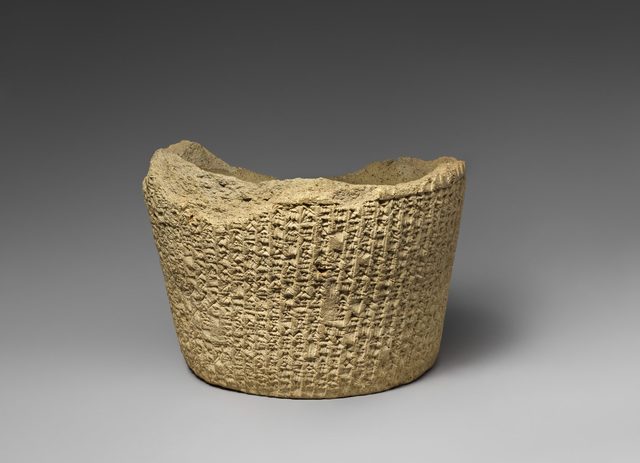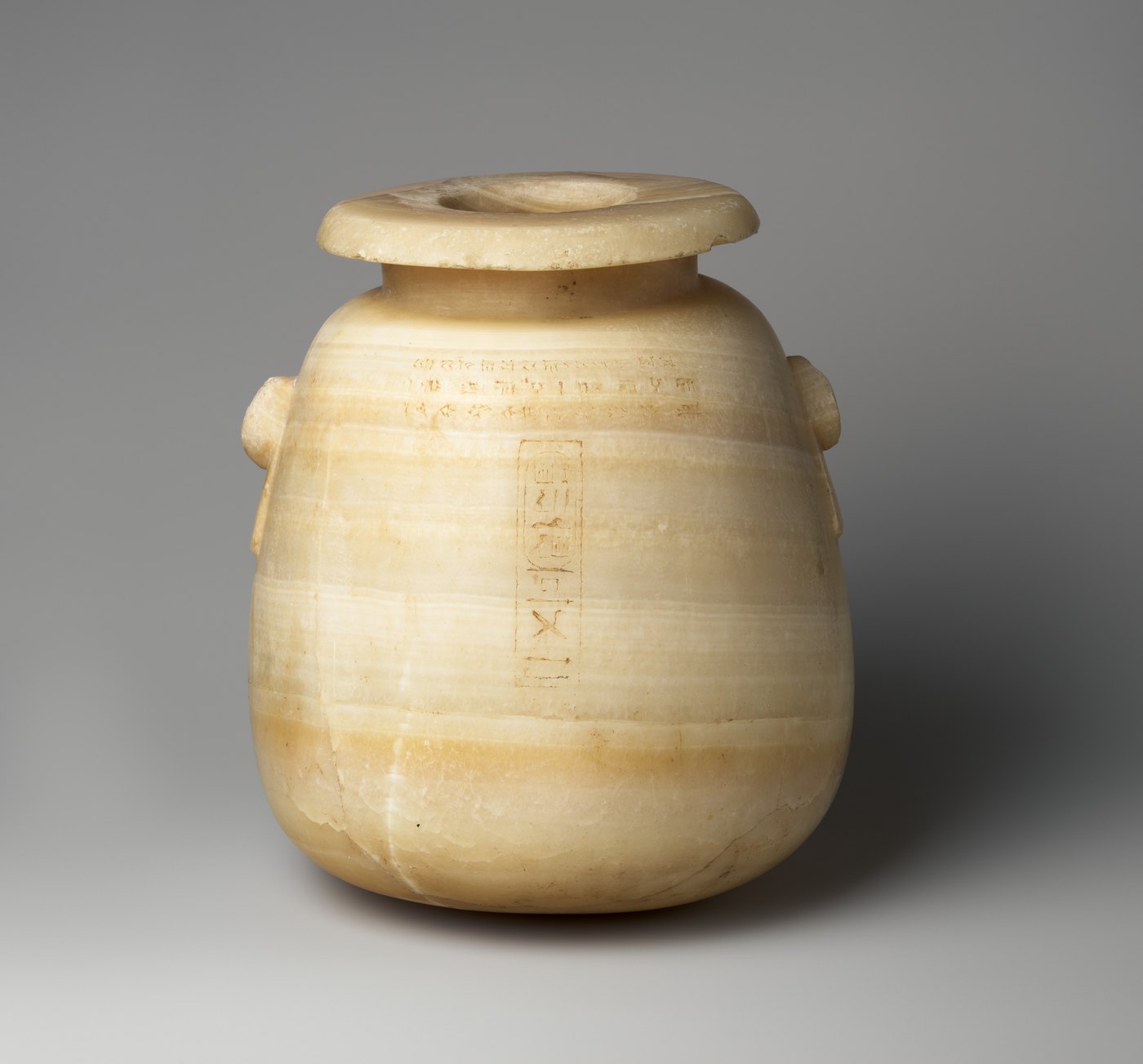
Egyptian alabaster jar inscribed with the name of Xerxes the Great in four languages (Old Persian, Elamite, Babylonian, Egyptian), 486 to 466 BCE
A travertine ('Egyptian alabaster') jar with a short royal inscription: the king's name and title in cuneiform in Old Persian, Elamite and Babylonian, and in Egyptian hieroglyphs. The same short statement, 'Xerxes, the Great King', appears in four languages on one luxury object.
- Date
- 0000
- Period
- Pre-1914
- Made by
- Achaemenid royal court under Great King Xerxes I
- Country
- Achaemenid Empire
- Medium
- Object
- Issuer type
- State
- Regime
- Achaemenid Empire
- Leader
- Xerxes I
- Audience
- Mixed
- Purpose
- Persuade or win support
- Techniques
- Transfer
- Regime
- Achaemenid Persia
- Leader
- Xerxes I
- Source
- Identified Openly sourced: the speaker is who they say they are
- Source
- The Metropolitan Museum of Art (Open Access), retrieved October 2, 2026
- Rights
- Public domain (The Met Open Access, CC0; isPublicDomain true in the Met API; object about 2,500 years old)
The Metropolitan Museum of Art, Rogers Fund, 1914 (14.2.8), Open Access
Text on the object
[Languages on the jar: Old Persian, Elamite, Babylonian, Egyptian.]
[Old Persian, standard transliteration:] Xšayâršâ XŠ vazraka

[The Elamite, Babylonian and Egyptian versions are not transcribed here.]
Xerxes, the Great King.
The Old Persian line is the transliteration Livius.org gives for this vase formula on another Xerxes vase; the signs on this jar cannot be read from the photograph. The English is the Met's title and catalogue reading ('Xerxes, the Great King').