Content note. This page discusses fiction depicting family destruction, forced denunciation, imprisonment and death during the Cultural Revolution (1966-76). It describes what the genre was permitted to publish and what it was not, as evidence of a political boundary, not to relitigate the Cultural Revolution's violence itself, which is covered in more direct terms on Big-character posters: how the opening labels of China's Cultural Revolution did the work of charges (1966-68). This page also does not dispute that the suffering scar literature depicted was real and that the genre gave many readers and writers their first public language for it.
In one line: Between late 1977 and 1981, official Chinese literary journals published a wave of fiction — later named "scar literature" after Lu Xinhua's 1978 short story "Scar" — that gave millions of readers the first state-tolerated public account of what the Cultural Revolution had done to ordinary families, a genuine and widely felt act of collective mourning that the post-Mao leadership also found useful, because every permitted story blamed a bounded, already-purged "Gang of Four" and an "ultra-leftist line" rather than Mao Zedong or the one-party system that had carried out the campaigns, and the one writer who was read as stepping past that line in 1981, Bai Hua, was denounced nationwide within weeks.
What happened
- 9 September 1976. Mao Zedong dies. 6 October 1976. The "Gang of Four" — Jiang Qing, Zhang Chunqiao, Yao Wenyuan and Wang Hongwen — are arrested. These events, and the succession politics around them, are covered on Grief on schedule: Mao's death, Hua Guofeng's succession and the 'two whatevers', 1976-1978 and The Gang of Four: arrest, denunciation and a trial that closed the Cultural Revolution's books (1976-1981); this page does not repeat them, only their consequence for what writers were then permitted to publish. Scar literature's entire publishing window sits inside the broader boluan fanzheng ("bringing order out of chaos") process of repudiating Cultural Revolution excess that followed, covered on Boluan Fanzheng: how Deng Xiaoping's faction used a debate about truth to break Hua Guofeng's hold on power, 1977-1981.
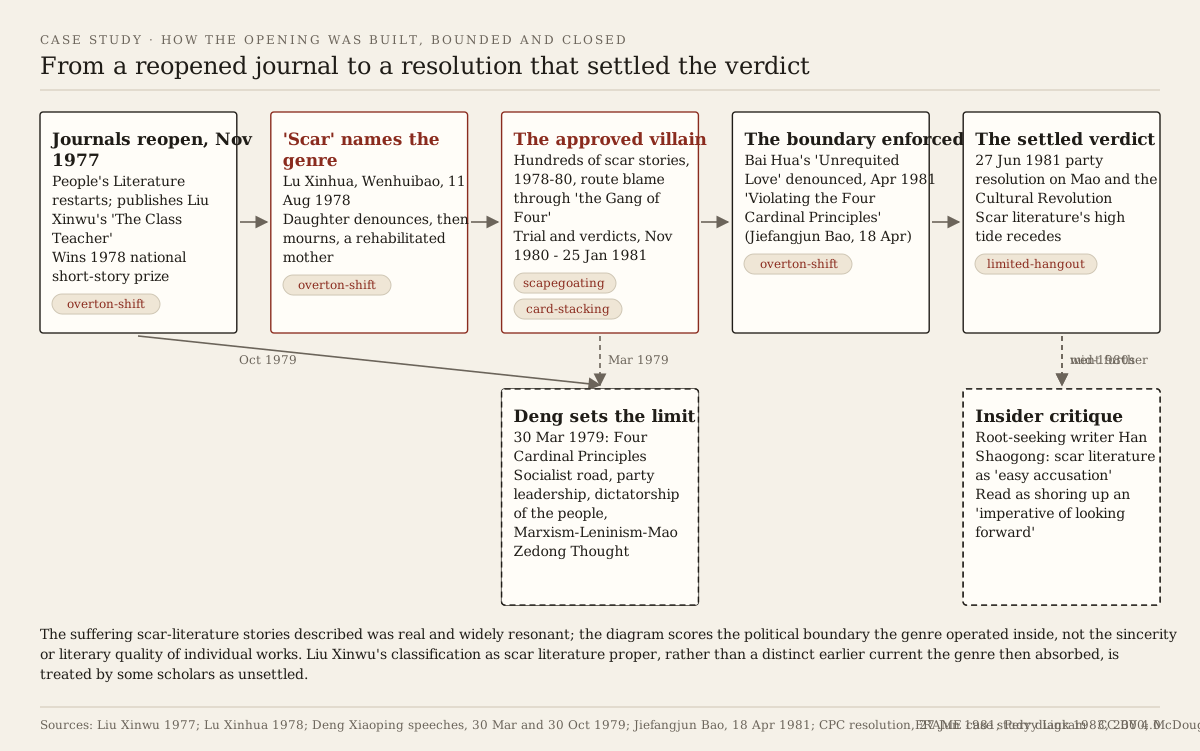
- November 1977. People's Literature (人民文学), the Chinese Writers' Association's flagship monthly, restarts publication after years of near-total disruption during the Cultural Revolution and prints, in its issue no. 11, Liu Xinwu's short story "The Class Teacher" (班主任, Banzhuren), about a teacher confronting the intellectual and psychological damage the Cultural Revolution had done to a generation of students. Many literary historians identify this as the genre's actual first work, predating by nine months the story that would give the genre its name. Liu drew on his own experience as a middle-school teacher; the story drew a large volume of reader mail and, in 1978, won the top prize in China's first post-Mao National Outstanding Short Story Awards, presented to Liu by the veteran writer Mao Dun in early 1979 — an early, visible sign of official approval for the new subject matter.
- 11 August 1978. Lu Xinhua, then an undergraduate at Fudan University, publishes "Scar" (伤痕, Shanghen) on a full page of the Shanghai newspaper Wenhuibao (文汇报). The story follows a young woman who, at the height of the Cultural Revolution, denounces and breaks with her mother after the mother is labelled a "renegade," and who returns years later, after the mother's political rehabilitation, only to find her already dead. PRC commemorative accounts report the paper printed roughly 1.5 million extra copies that day to meet demand; whatever the precise figure, the story was reprinted and discussed nationally within weeks and supplied the name — "scar literature" — that the wider genre has carried since.
- 1978-1980. Hundreds of stories in the same mode appear in official journals nationwide, by both newly rehabilitated older writers persecuted since the 1957-58 Anti-Rightist Campaign (among them Wang Meng, Zhang Xianliang, Liu Binyan and Ding Ling) and by younger writers of the "educated youth" generation who had themselves been sent to the countryside during the Cultural Revolution (among them Liu Xinwu, Feng Jicai and Wang Anyi). Representative titles from the period include Feng Jicai's "Ah!" (啊!, 1980) and Cong Weixi's labour-camp fiction; Zhang Xianliang's own reflective fiction on his years in a labour camp, including the later novels that made him internationally known, builds on this same opening. The genre's own name was soon extended by critics to "wound fiction" or "literature of the wounded," and its harsher critics inside the party press called it "exposure literature" (暴露文学).
- 30 March 1979. Deng Xiaoping, addressing a party theory conference, sets out the "Four Cardinal Principles": China's public life would keep to the socialist road, uphold the people's democratic dictatorship, uphold Communist Party leadership, and uphold Marxism-Leninism-Mao Zedong Thought. The speech is not framed as being about literature, but it draws the boundary that literary policy — including the space just opened for scar literature — would be held inside.
- 30 October 1979. Deng Xiaoping addresses the Fourth Congress of Chinese Writers and Artists and credits the "smashing" of the Gang of Four with the loosening of cultural policy that had let "many excellent... works" appear and let writers become "enthusiastic and creative again." The post-Mao leadership publicly claims credit for the literary opening scar literature was part of, in the same speech that frames the Cultural Revolution's damage as the Gang of Four's doing.
- November 1980 - 25 January 1981. The Gang of Four and several former Lin Biao associates are tried before a Special Court; verdicts are announced 25 January 1981. The trial and the surrounding propaganda, covered on The Gang of Four: arrest, denunciation and a trial that closed the Cultural Revolution's books (1976-1981), supply scar literature's approved villain in the most literal, legally formalized way available: a named, bounded, already-defeated group.
- 1979, escalating through 1981. Conservative critics inside the party and literary establishment attack scar literature as excessively negative almost as soon as it appears; the political trial of Democracy Wall activist Wei Jingsheng in October 1979 signals, outside literature, that the same leadership drawing on scar literature's usefulness would not tolerate open questioning of one-party rule. In April 1981, the boundary is enforced directly against a writer: Bai Hua's 1979 screenplay "Unrequited Love" (苦恋, Kulian), filmed as The Sun and the People (太阳和人, 1980) and centred on a patriotic painter persecuted after returning to China, is denounced nationwide. A commentary in the PLA newspaper Jiefangjun Bao on 18 April 1981 accuses Bai Hua of violating the Four Cardinal Principles and of "bourgeois liberalization"; the criticism is reprinted for months. Bai Hua becomes the first individual writer singled out for a nationwide denunciation campaign after Mao's death — direct, public evidence that the same leadership that had opened space for scar literature would close it again once a work was read as reaching past the Gang of Four and toward the system itself.
- 27 June 1981. The Sixth Plenum of the 11th Central Committee adopts the "Resolution on Certain Questions in the History of Our Party Since the Founding of the People's Republic of China," covered in full on The 1981 Resolution: how the Chinese Communist Party engineered a single verdict on Mao. The resolution supplies the official, permanent, and still bounded verdict on the Cultural Revolution and on Mao's own responsibility for it — criticizing Mao's later years while continuing to affirm Mao Zedong Thought and his historical leadership overall. Scar literature's high tide recedes at almost exactly this moment.
- Early-to-mid 1980s. The genre gives way to "reflection literature" (反思文学, fansi wenxue), which examines the ideological causes of the Cultural Revolution's fanaticism more analytically, and then to "root-seeking literature" (寻根文学, xungen wenxue), associated with writers including Han Shaogong, Mo Yan and Jia Pingwa, which turns toward rural, regional and folk culture as a way of asking what deeper continuities the Cultural Revolution had ruptured. Han Shaogong's own critique of scar literature, discussed below, becomes one of the clearest on-the-record statements of what the genre had, and had not, been permitted to do.
- 1978-1986. Alongside and after scar literature's main wave, the veteran writer Ba Jin publishes Random Thoughts (随想录, Suixiang Lu), a five-volume collection of essays reflecting on the Cultural Revolution in more openly self-implicating terms than most scar fiction, including his own participation in denouncing others. In 1986 he calls for a national Cultural Revolution museum "so that everyone can learn a lesson," a proposal no national museum has ever been built to fulfil, though one local museum at Shantou, Guangdong, later cited his words.
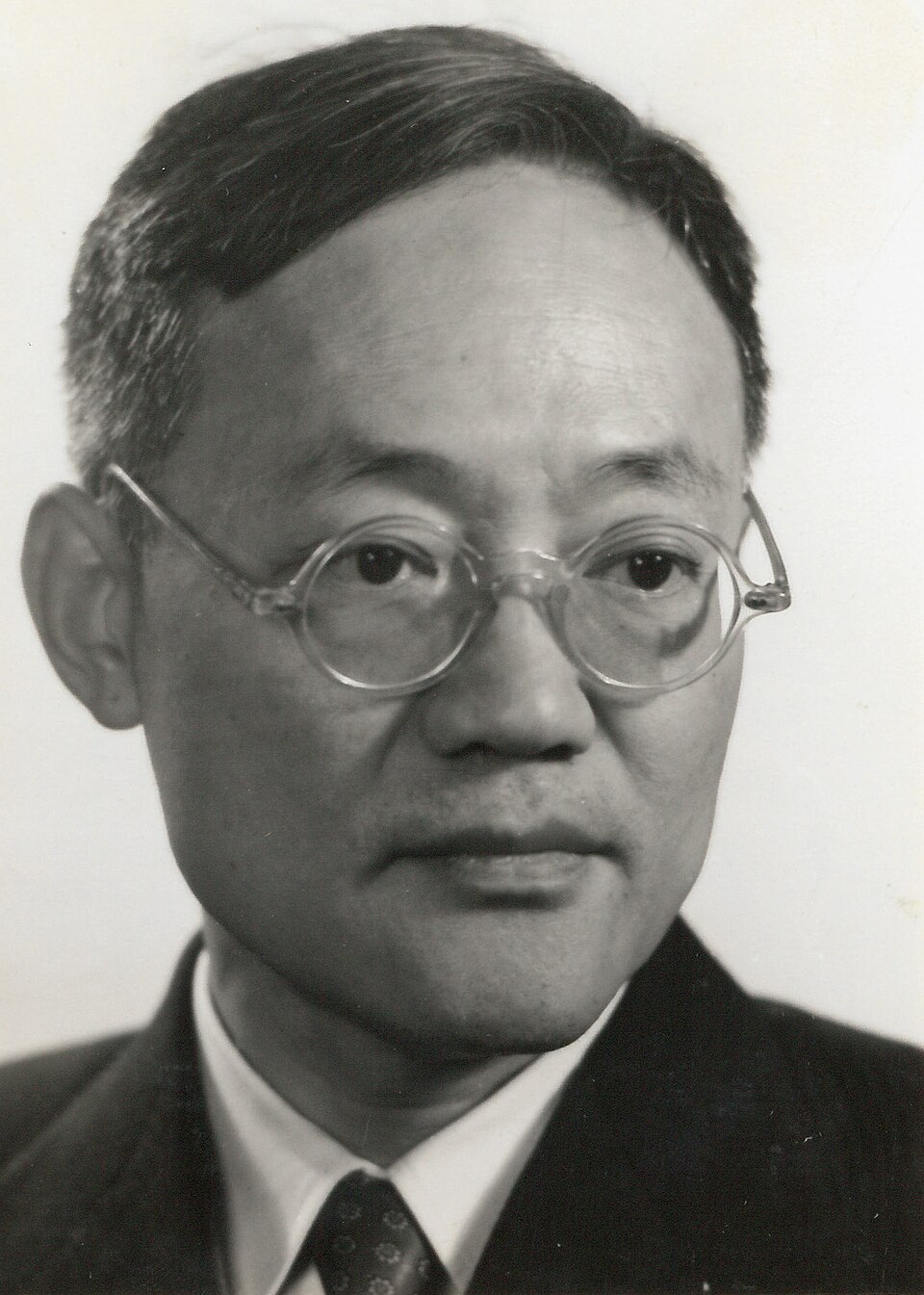
Ba Jin, portrait photographed at the Fourth German Writers' Congress, East Berlin, 9-14 January 1956, before the Cultural Revolution and long before the essays of Random Thoughts (1978-1986) discussed above. Photograph by Hans-Joachim Koch, Deutsche Fotothek, CC BY-SA 4.0, via Wikimedia Commons.

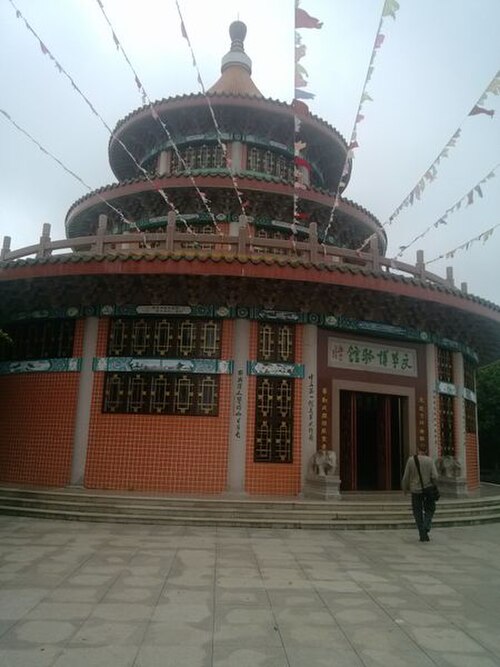
The Cultural Revolution Museum in Shantou, Guangdong, the local museum that cited Ba Jin's 1986 call for a Cultural Revolution museum, photographed on 12 June 2014. Photograph by Yangziyuan, CC BY-SA 3.0, via Wikimedia Commons.

How it works
- Overton window shifting: before late 1977, depicting Cultural Revolution suffering as suffering, rather than as revolutionary necessity or an individual's own political failing, was not printable in an official Chinese journal. A national prize for "The Class Teacher" (1978), Lu Xinhua's story becoming a nationally discussed event (1978), and Deng Xiaoping's own speech taking credit for the resulting wave (October 1979) moved that subject matter from unprintable to the default material of serious new Chinese fiction within about three years — institutional blessing, not gradual drift, did the moving, and the same institutions marked the window's edge again within months, in the campaign against Bai Hua (April 1981).
- Scapegoating: nearly every permitted scar-literature story routes its characters' suffering through "the Gang of Four" and an "ultra-leftist line" — a group that had, by the time most of these stories appeared, already been arrested, publicly named and (from January 1981) tried and sentenced. Blame concentrated on a bounded, defeated target left the party as an institution, and Mao personally, outside the frame that readers were being given to make sense of what had happened to their own families.
- Card stacking: editors inside the Chinese Writers' Association and its journals selected which manuscripts reached print. Scholarship on the period, notably Perry Link's, describes writers who knew far more specific and damning stories than what they published — killings, mutilations, parents billed for the bullet used to execute their own child — writing instead about "struggle" and "unhealthy tendencies," the vaguer, publishable register. The resulting published pile, taken as a whole, reads consistently as excess by identifiable bad actors rather than as a description of how the system itself produced that excess.
- Limited hangout: publishing real, specific, verifiable suffering — and a great deal of it, from named writers under their own names — met a genuine public need to have the Cultural Revolution acknowledged at all, and did so at a depth the leadership could survive: individual and factional cruelty, not systemic or personal-to-Mao responsibility. Letting readers reach a bounded catharsis reduced the pressure toward the deeper, unbounded inquiry — into Mao's own direction of the campaigns and the one-party structure that made them possible — that some readers, and later writers such as Ba Jin and the root-seeking generation, wanted and did not fully get from the genre.
Then and now
The space scar literature opened has not stayed open at the width it briefly reached. Chinese state media largely avoided sustained public retrospection around the Cultural Revolution's fiftieth anniversary in 2016; commentary in party-aligned outlets that year reasserted the 1981 resolution as the settled, final verdict rather than inviting fresh public reckoning, and private, unofficial commemorations by Cultural Revolution participants and victims' families have drawn official discouragement in the years since. The same apparatus that once printed Lu Xinhua's "Scar" on a full newspaper page and gave Liu Xinwu a national prize has, in the decades since, treated the subject as substantially settled by the 1981 resolution and has not built the national Cultural Revolution museum Ba Jin asked for in 1986. The pattern recurs on a shorter cycle in the layered censorship system covering the 4 June 1989 killings, documented on China's Great Firewall and the June Fourth anniversary: an officially fixed account, revised only rarely and only downward in its own severity, with the space for competing accounts narrowing rather than widening over time.
Positions on the record
- The genre's own claimed purpose. Writers and critics of the period described scar literature as cathartic — an attempt, in Perry Link's phrase, "to cleanse psychological wounds suffered by the people" during the Cultural Revolution. Liu Xinwu received large volumes of reader mail after "The Class Teacher," read by scholars as evidence the genre answered a real, widely felt public need to have the period's suffering named in print for the first time.
- The political function for Deng's leadership. Deng Xiaoping's 30 October 1979 speech to the Fourth Congress of Chinese Writers and Artists explicitly credits the defeat of the Gang of Four with unlocking the literary flourishing scar literature was part of, folding the genre into the same narrative that the Gang of Four trial (1980-81) and the 1981 party resolution built: the Cultural Revolution as an aberration caused by identifiable bad actors, correctable within the existing system rather than evidence against it.
- Later literary-critical assessments of the genre's limits. Han Shaogong, a leading figure of the root-seeking literature that followed, criticized scar literature for what a scholarly account of his critique summarizes as being "a literature of easy accusation," one that folded the Cultural Revolution's continuing, present traumatic elements into settled history and thereby "shor[ed] up the ideological imperative of looking forward" rather than examining deeper cultural and structural roots. This is a critique from inside China's own post-Mao literary culture, not only from outside observers, and it does not deny the genre's sincerity so much as its sufficiency.
- What is documented. The publication dates and venues of "The Class Teacher" and "Scar"; the 1978 national prize for "The Class Teacher"; Deng's 30 March 1979 and 30 October 1979 speeches and their content; the timing and content of the April 1981 campaign against Bai Hua; the 27 June 1981 party resolution's text.
- What is contested. The precise print-run figures reported for "Scar" (sourced here to PRC commemorative accounts rather than a contemporaneous circulation record); whether Liu Xinwu's "The Class Teacher" should itself be classified as scar literature or as a distinct, earlier current that scar literature then absorbed, a classification question some scholars treat as unsettled; and how much of the genre's self-limitation was writers' and editors' own caution versus explicit directive, which the public record documents unevenly across individual cases.
- Not ruled on here. Whether any individual scar-literature story is a great or a minor work of literature, a judgment this archive does not make; and the deeper historical debate over how much of the Cultural Revolution's violence should be attributed to Mao personally versus the factional and institutional dynamics around him, which is addressed, within its own bounds, by the 1981 resolution covered on The 1981 Resolution: how the Chinese Communist Party engineered a single verdict on Mao.
Same-method test
The same test — did a state permit bounded, sanctioned public expression of real past trauma, sincerely felt by both writers and readers, while directing blame toward a removed figure or faction and away from the system itself — applies cleanly to the Soviet Union's brief literary "Thaw" under Nikita Khrushchev. Khrushchev personally approved the November 1962 publication, in the journal Novy Mir under editor Alexander Tvardovsky, of Alexander Solzhenitsyn's novella One Day in the Life of Ivan Denisovich, the first Soviet-published work to describe daily life in Stalin's forced-labour camps in unsparing detail. Its appearance, like "Scar" in China sixteen years later, was read at the time as an authentic and overdue public acknowledgment of real, widespread suffering, and it was also politically useful to Khrushchev, following his own 1956 "Secret Speech," as evidence that de-Stalinization was continuing and that the abuses belonged to a "cult of personality" around Stalin rather than to the Soviet system. Scapegoating and Limited hangout score in both cases on that same structure: a bounded, named, already-discredited figure absorbs the blame a permitted literature is allowed to assign.
The cases differ in one specific and telling way. Khrushchev's own 1956 speech had denounced Stalin by name, a step Deng Xiaoping's leadership pointedly did not take with Mao — contemporaneous and later accounts describe Deng as explicitly declining to give Mao a Khrushchev-style personal denunciation, even as the 1981 resolution criticized his "later years." Both openings were also reversed: Solzhenitsyn's work was suppressed after Khrushchev's October 1964 ouster, and he was expelled from the Soviet Union in 1974 once The Gulag Archipelago pushed past what the post-Khrushchev leadership would permit, just as Bai Hua's screenplay was denounced in 1981 once it was read as pushing past what post-Mao China's leadership would permit. In both countries, the state that opened the door also set, tested and eventually re-marked its edge.
How to spot it
- Ask whether the range of permitted trauma stories converges on the same bounded villain — a person, faction or "line" already removed from power — while leaving the deeper causal structure, and the system that let the villain act, largely untouched.
- Watch for a leader or official body publicly taking credit for a wave of literature or testimony that is presented, in the same breath, as spontaneous popular grief or relief.
- Look for the boundary event: a writer, journalist or artist who is read as having gone one step further than the officially sanctioned frame, and who is denounced, censored or prosecuted for it. That event, not the opening itself, usually marks where the real edge of the permitted space was.
- Check whether later voices from inside the same culture — not only outside critics — eventually name the constraint themselves, as root-seeking writers did with scar literature. Insider critique after the fact is some of the strongest evidence that a "reckoning" was bounded rather than open, without it following that the reckoning was insincere while it lasted.
Images
| Image | Source | Licence |
|---|---|---|
| Mechanism diagram (above) | Drawn for FRAME from the sources below (make_diagrams_fall_scar_literature.py) |
CC BY 4.0, FRAME |
| Ba Jin, East Berlin, January 1956 | Wikimedia Commons, Hans-Joachim Koch | CC BY-SA 4.0 (Deutsche Fotothek, document ID 90080222) |
| Cultural Revolution Museum, Shantou, 2014 | Wikimedia Commons, Yangziyuan | CC BY-SA 3.0 (photographer's own work) |
Image gaps
- Other portraits of Ba Jin. A January 1956 portrait (CC BY-SA 4.0, Deutsche Fotothek) is hosted above. A separate 1938 studio portrait of Ba Jin on Commons (File:Ba Jin 1938.jpg) is tagged public domain but by an unknown photographer and with a Commons category flag of "PD-old missing SDC copyright status"; as with other Chinese-origin pre-1978 photographs already documented as excluded elsewhere in this archive (see the image-gap notes on Big-character posters: how the opening labels of China's Cultural Revolution did the work of charges (1966-68)), its U.S. copyright status is not established, so it is not used here.
- Photographs or scans of the original publications. No openly licensed scan or photograph of the 11 August 1978 Wenhuibao page carrying "Scar," or of the November 1977 issue of People's Literature carrying "The Class Teacher," was found. Both journals continue to operate, and archival scans of this period's press are not established as openly licensed.
- Portraits of Liu Xinwu or Lu Xinhua. No openly licensed photograph of either author was found during this session.
- A poster or film still from Bai Hua's "The Sun and the People" (1980). No openly licensed image was found; period Chinese film stills of this era carry the same unresolved URAA status as the photographs already excluded on sibling pages.
- A photograph from the Gang of Four trial (November 1980 - January 1981). Not sought here in detail; covered by the image inventory on The Gang of Four: arrest, denunciation and a trial that closed the Cultural Revolution's books (1976-1981) rather than duplicated on this page.
Sources
- Liu Xinwu, "Banzhuren" ["The Class Teacher"], People's Literature (人民文学), no. 11 (1977).
- Lu Xinhua, "Shanghen" ["Scar"], Wenhuibao (文汇报), 11 August 1978.
- China Institute of America, event description for "Literature, Wounds, and Renewal: The Life Journey of Lu Xinhua": chinainstitute.org.
- "The publication of Lu Xinhua's short story 'Scar'," Our China Story (PRC commemorative-history outlet, cited here for the reported publication date and print-run figure, flagged as such above): ourchinastory.com.
- Perry Link, Stubborn Weeds: Popular and Controversial Chinese Literature after the Cultural Revolution (Indiana University Press, 1983).
- Perry Link, The Uses of Literature: Life in the Socialist Chinese Literary System (Princeton University Press, 2000).
- Bonnie S. McDougall and Kam Louie, The Literature of China in the Twentieth Century (Columbia University Press, 1997).
- Deng Xiaoping, "Uphold the Four Cardinal Principles," 30 March 1979, in Selected Works of Deng Xiaoping, vol. 2 (Foreign Languages Press, Beijing).
- Deng Xiaoping, "Speech Greeting the Fourth Congress of Chinese Writers and Artists," 30 October 1979: marxists.org.
- "Fate of 'Bitter Love' embitters Chinese writers," Christian Science Monitor, 15 October 1981: csmonitor.com.
- "Scar literature," Alpha History: alphahistory.com.
- "Scar literature," Wikipedia, consulted for the list of representative writers and works and cross-checked against the sources above: en.wikipedia.org.
- Ba Jin, "A Museum of the 'Cultural Revolution'" (1986), translated: marxists.org.
- Discussion of Han Shaogong's critique of scar literature as "a literature of easy accusation": Washington University in St. Louis, graduate thesis: openscholarship.wustl.edu.
- Communist Party of China, "Resolution on Certain Questions in the History of Our Party since the Founding of the People's Republic of China," 27 June 1981: marxists.org; USC US-China Institute.
- Alexander Solzhenitsyn, One Day in the Life of Ivan Denisovich, first published Novy Mir, November 1962, for the same-method comparison.
- Reporting on China's muted official treatment of the Cultural Revolution's fiftieth anniversary and on the discouragement of unofficial commemorations, for the "Then and now" comparison: contemporaneous Western press coverage, 2016 (Reuters, the New York Times, the BBC).