Content note: An Assyrian palace relief of troops storming a fortified city, with a file of figures below; Assyrian royal reliefs and texts record killing, mutilation and deportation, shown as carved, with the historical context and scholarly dispute on the regime page. This object is shown as it was published. Why
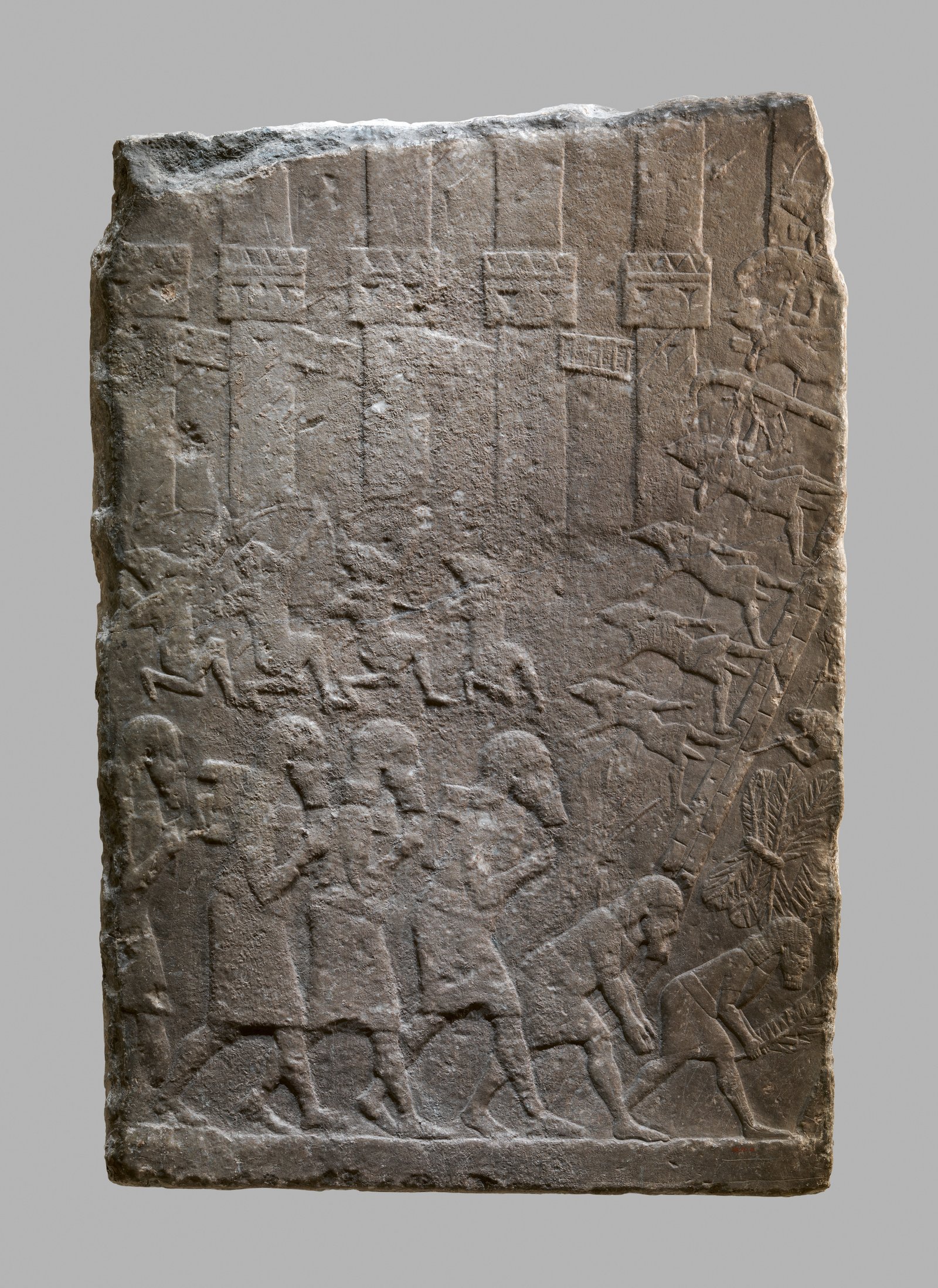
Alabaster relief, Assyrian troops storming a citadel, from Nineveh (reign of Sennacherib)
A carved wall panel: above, a fortified wall with crenellated towers is attacked by archers and soldiers on ladders; below, a file of figures walks away. Only the Assyrian side's success is shown, and the siege is arranged as a finished victory, which is how the palace series presented the king's wars.
- Date
- 0000
- Period
- Pre-1914
- Made by
- Royal court of Sennacherib, king of Assyria, at Nineveh
- Country
- Neo Assyrian Empire
- Medium
- Artwork
- Issuer type
- State
- Regime
- Neo Assyrian Empire
- Leader
- Sennacherib
- Audience
- Mixed
- Purpose
- Commemorate
- Techniques
- Card stacking
- Leader
- Ashurnasirpal II
- Source
- Identified Openly sourced: the speaker is who they say they are
- Source
- The Metropolitan Museum of Art (Open Access), retrieved October 2, 2026
- Rights
- Public domain (The Met Open Access, CC0; isPublicDomain true in the Met API; object about 2,700 years old)
The Metropolitan Museum of Art, Purchase, Joseph Pulitzer Bequest, 1955 (55.121.4a, b), Open Access
Text on the object
No printed or legible text on this panel as photographed; the surface shows carved figures and architecture only.
Assyrian reliefs often carry short cuneiform epigraphs; none is visible in the Met's photograph.