Area: Emotion and fear · Evidence: moderate (How we rate the evidence). Meta-analyses show that stories reliably shift beliefs and attitudes by modest amounts, but much of the evidence is correlational and stories do not beat statistics on every outcome.
In brief
When people become absorbed in a story, they tend to come away holding beliefs that fit it, and while absorbed they argue back less. Psychologists call this absorption "transportation." It works for fiction as well as for true accounts, and labeling a story as fiction does not reliably switch it off. The effects are real and consistent, and modest in size.
What the research shows
Melanie Green and Timothy Brock defined transportation as a state in which attention, mental imagery and feeling all become focused on the events of a story, so that the reader is, in a sense, carried away from the here and now [1]. They built a questionnaire to measure it and tested it with a short story called "Murder at the Mall," in which a young woman's little sister is stabbed to death at a shopping mall by an escaped psychiatric patient. Readers who were more transported came away with beliefs more consistent with the story, for example about the freedom that should be given to psychiatric patients. They also marked fewer passages in the story as ringing false. Telling readers that the story was fact or that it was fiction made little difference to these effects.
Michael Slater and Donna Rouner offered an explanation that has shaped the field [2]. Ordinary persuasive messages invite counterarguing: the reader notices the pitch and pushes back. A story absorbs the reader in characters and events, so the persuasive content is processed as part of the experience rather than as an argument to be tested. Absorption, on this account, lowers resistance.
Markus Appel and Tobias Richter showed that fiction's effects can grow rather than fade [3]. Readers of a fictional story that contained a mix of true and false claims about the world came to accept those claims more strongly two weeks later than immediately after reading. This mirrors the Sleeper effect: the claim outlasts the memory that it came from a made-up story.
Two meta-analyses (studies that pool many studies) summarize the wider evidence. Tom van Laer and colleagues pooled research on narrative transportation, much of it from marketing and consumer research [4]. More transported audiences showed more story-consistent beliefs, attitudes and intentions, stronger emotional responses, and fewer critical thoughts. Stories transported people more when their characters were easy to identify with, their plots easy to imagine, and their details felt true to life. Kurt Braddock and James Price Dillard pooled experiments comparing narratives with other messages or with no message [5]. Narratives had a positive effect on beliefs, attitudes, intentions and behavior, with effects in the small-to-moderate range typical of persuasion research.
Has it held up?
The core finding is consistent across meta-analyses, and the general direction is not in serious dispute. Three cautions apply.
First, most studies measure transportation with a questionnaire after the story rather than manipulating it directly. Part of the association between absorption and belief could therefore run the other way: people who already agree with a story may find it easier to get lost in.
Second, the effects are modest. A story shifts beliefs by small-to-moderate amounts on average, not wholesale.
Third, stories do not beat evidence on every outcome. A meta-analysis by Simon Zebregs and colleagues compared narrative evidence with statistical evidence and found that statistics had the stronger effect on beliefs and attitudes, while narratives had the stronger effect on intentions to act [6]. "Stories always beat statistics" is a slogan, not a finding.
How it shows up in political messaging
- The abolitionist novel. Harriet Beecher Stowe's Uncle Tom's Cabin, serialized in 1851 and published as a book in 1852, focused on the cruelties of slavery, particularly the separation of families [7]. It sold 300,000 copies in its first year and, in the Library of Congress's assessment, significantly intensified the polarization of abolitionist and anti-abolitionist sentiment [8].
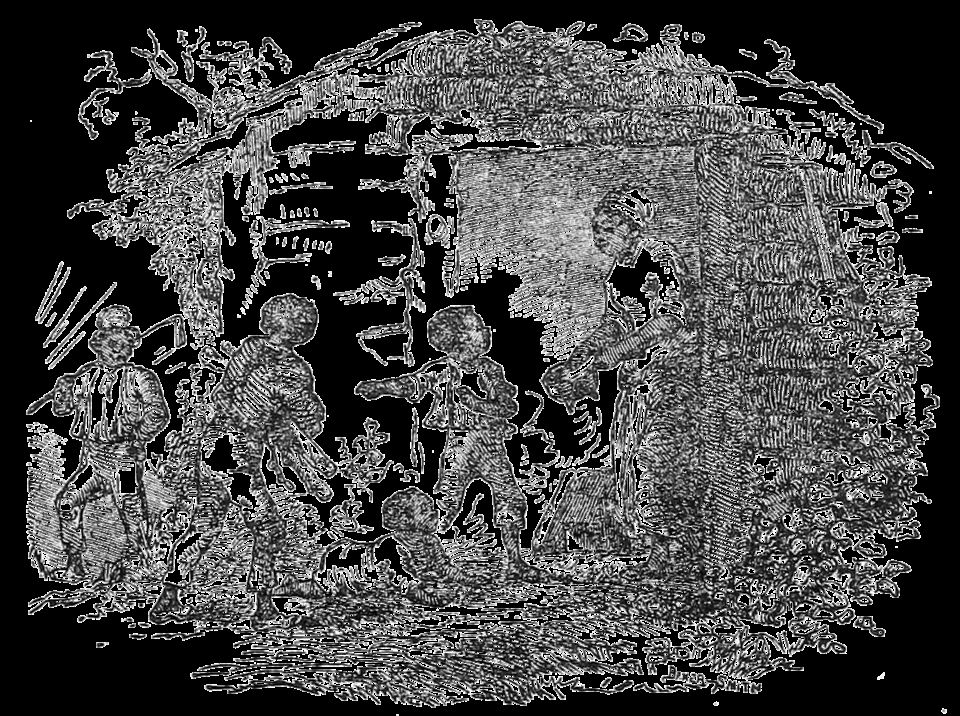
Vignette from the title page of volume 1 of the first edition of Harriet Beecher Stowe's Uncle Tom's Cabin (Boston: John P. Jewett, 1852). Source: Wikimedia Commons. Public domain.

- Fiction received as history. D. W. Griffith's The Birth of a Nation (1915), adapted from the novel The Clansman, portrayed the Ku Klux Klan as heroes of Reconstruction. The NAACP campaigned to ban it and several cities and states restricted screenings, while some newspapers praised it as "authentic history" and it broke box-office records [9].
Content note: Film poster showing a mounted Ku Klux Klan rider carrying a burning cross. This object is shown as it was published. Why 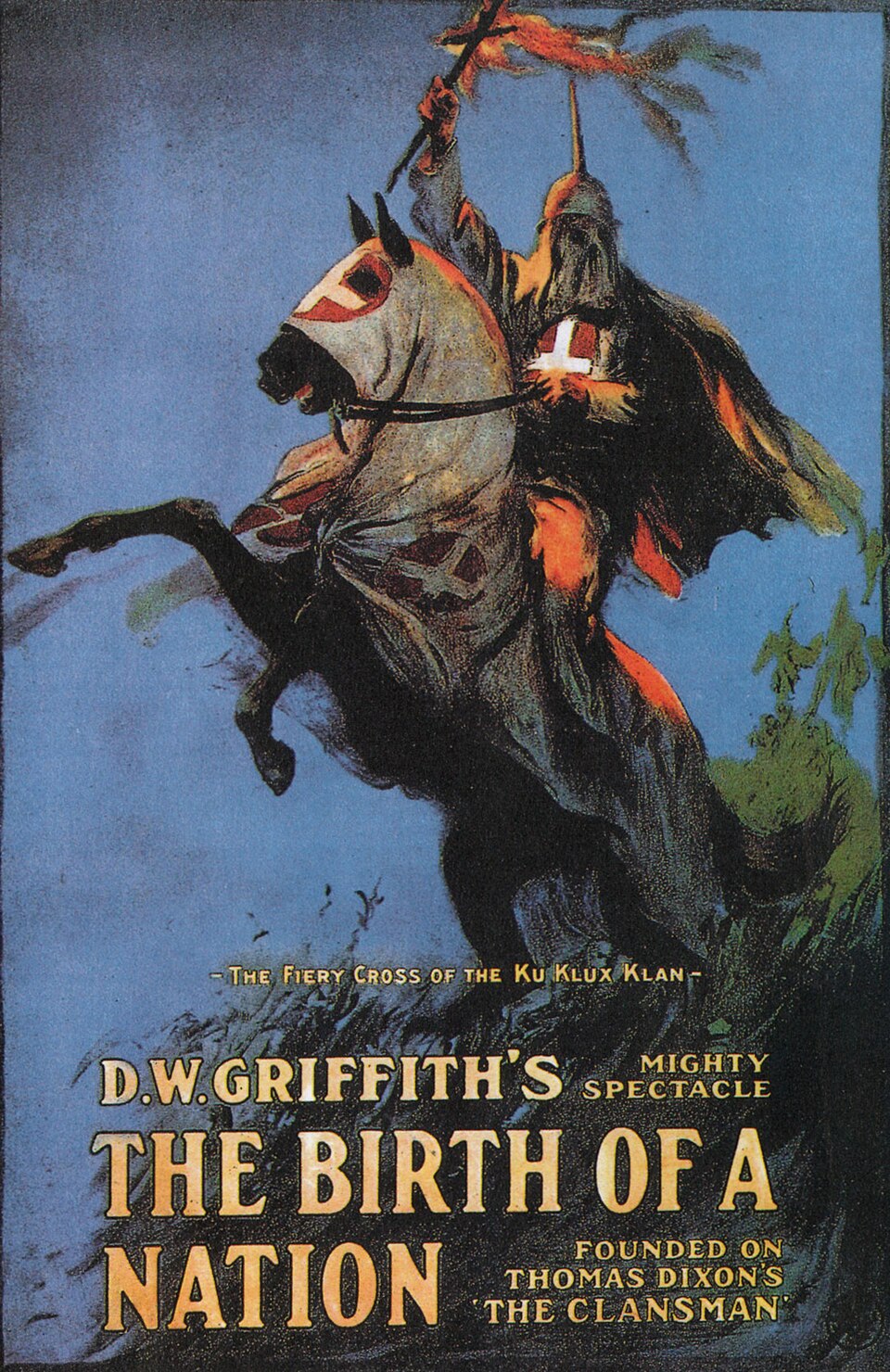
Theatrical poster for The Birth of a Nation (Epoch Film Co., 1915), "founded on Thomas Dixon's 'The Clansman'"; artist unknown. Source: Wikimedia Commons. Public domain (published 1915).

- A fabricated plot story. The Protocols of the Elders of Zion, first published in Russia in the early 1900s, purported to be the secret minutes of a Jewish plan for world domination. It was exposed as a forgery built partly from plagiarized earlier writings, yet it circulated worldwide for decades, in the United States through Henry Ford's newspaper, and was used by the Nazi regime [10].
Content note: Title page of the book in which the antisemitic forgery The Protocols of the Elders of Zion appeared as an appendix. This object is shown as it was published. Why 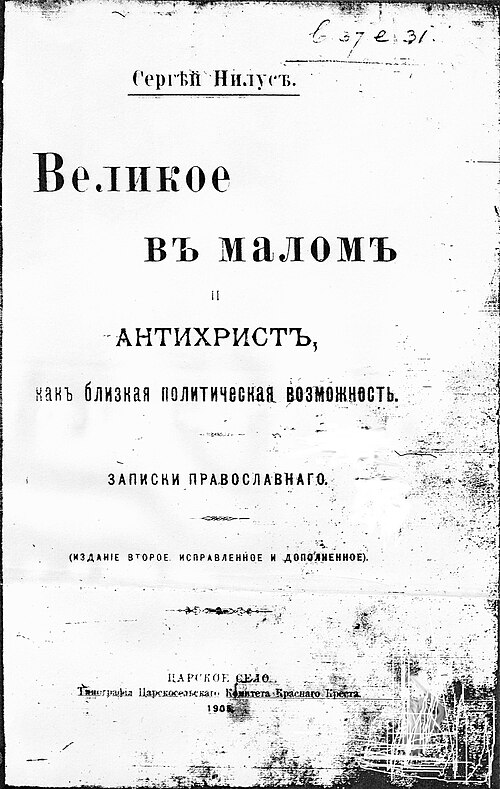
Title page of Sergei Nilus, Velikoe v malom i Antikhrist (The Great in the Small and Antichrist), 2nd ed., Tsarskoe Selo, 1905, the book in which the Protocols of the Elders of Zion appeared as an appendix. New York Public Library microfilm copy. Source: Wikimedia Commons. Public domain (published 1905).

- Entertainment and attitudes. Edward Schiappa, Peter Gregg and Dean Hewes surveyed viewers of the sitcom Will & Grace and found that more viewing was associated with lower prejudice toward gay men, especially among viewers who had few gay acquaintances [11]. The study is correlational, but it fits the transportation account of how sympathetic characters can shift attitudes.
- Stories that ran ahead of checking. In 2014 Rolling Stone published a vivid account of a gang rape at the University of Virginia; a review by Columbia Journalism School found the magazine had failed to verify the central story, and it was retracted [12]. In 2016 a fabricated online story alleging a child-trafficking ring run from a Washington pizza restaurant led a man to fire a rifle inside the restaurant; he was sentenced to four years in prison [13]. In each case a compelling narrative ran ahead of checking.
How to spot it
- A single story carrying the weight of a factual claim about many people.
- Characters built for easy identification, set against a villain who stands for a group.
- "Based on true events," or a viral anecdote with no traceable source.
- Factual claims embedded in fiction or drama that are never stated plainly or sourced.
- A useful habit: after finishing the story, list the factual claims it made and ask which could be checked.
Persuasion or manipulation?
Stories are one of the main ways people understand lives unlike their own, and honest political writing can and should use them. The honest version tells true stories or clearly labeled fiction, chooses cases that are representative or says when they are not, and puts the evidence alongside the narrative so readers can check it. It tips into manipulation when fabricated or unverified stories are presented as true, when composite characters are passed off as real people, when an exceptional case is presented as typical, or when absorption is used to slip in factual claims a reader would question if they were stated plainly.
Archive techniques that lean on this
- Sleeper effect — Sleeper effect: beliefs picked up from fiction can strengthen over time as the memory that the source was made up fades.
Related topics
- Identifiable victim effect — Identifiable victim effect
- Continued influence effect — Continued influence effect
- Illusory truth effect — Illusory truth effect
- Affect heuristic — Affect heuristic
- Dehumanization — Dehumanization
Sources
- Green, M. C., & Brock, T. C. (2000). The role of transportation in the persuasiveness of public narratives. Journal of Personality and Social Psychology, 79(5), 701–721.
- Slater, M. D., & Rouner, D. (2002). Entertainment-education and elaboration likelihood: Understanding the processing of narrative persuasion. Communication Theory, 12(2), 173–191. https://doi.org/10.1111/j.1468-2885.2002.tb00265.x
- Appel, M., & Richter, T. (2007). Persuasive effects of fictional narratives increase over time. Media Psychology, 10(1), 113–134. https://doi.org/10.1080/15213260701301194
- van Laer, T., de Ruyter, K., Visconti, L. M., & Wetzels, M. (2014). The extended transportation-imagery model: A meta-analysis of the antecedents and consequences of consumers' narrative transportation. Journal of Consumer Research, 40(5), 797–817.
- Braddock, K., & Dillard, J. P. (2016). Meta-analytic evidence for the persuasive effect of narratives on beliefs, attitudes, intentions, and behaviors. Communication Monographs, 83(4), 446–467. https://doi.org/10.1080/03637751.2015.1128555
- Zebregs, S., van den Putte, B., Neijens, P., & de Graaf, A. (2015). The differential impact of statistical and narrative evidence on beliefs, attitude, and intention: A meta-analysis. Health Communication, 30(3), 282–289.
- Library of Congress. (n.d.). Abolition, anti-slavery movements, and the rise of the sectional controversy. The African American Odyssey: A Quest for Full Citizenship. https://www.loc.gov/exhibits/african-american-odyssey/abolition.html
- Library of Congress. (n.d.). Influence of prominent abolitionists. The African-American Mosaic. https://www.loc.gov/exhibits/african/afam006.html
- Library of Congress. (2019). Popular reactions to "Birth of a Nation": Topics in Chronicling America [Research guide]. https://guides.loc.gov/chronicling-america-birth-of-a-nation
- Segel, B. W. (1995). A lie and a libel: The history of the Protocols of the Elders of Zion (R. S. Levy, Ed. & Trans.). University of Nebraska Press.
- Schiappa, E., Gregg, P. B., & Hewes, D. E. (2006). Can one TV show make a difference? Will & Grace and the parasocial contact hypothesis. Journal of Homosexuality, 51(4), 15–37. https://doi.org/10.1300/J082v51n04_02
- Coronel, S., Coll, S., & Kravitz, D. (2015, April 5). Rolling Stone and UVA: The Columbia University Graduate School of Journalism report. Rolling Stone.
- U.S. Attorney's Office for the District of Columbia. (2017, June 22). North Carolina man sentenced to four-year prison term for armed assault at Northwest Washington pizza restaurant [Press release]. U.S. Department of Justice.
Images
| Image | Source | Licence |
|---|---|---|
| Uncle Tom's Cabin, vol. 1 title-page vignette, 1852 | Wikimedia Commons, Harriet Beecher Stowe (Boston: John P. Jewett) | Public domain (published 1852) |
| The Birth of a Nation poster, 1915 | Wikimedia Commons, Epoch Film Co.; artist unknown | Public domain (published 1915) |
| Nilus, Velikoe v malom i Antikhrist, 1905 | Wikimedia Commons, Sergei Nilus; NYPL microfilm | Public domain (published 1905) |
Image gaps
- Stills from Will & Grace, the Rolling Stone article and the 2016 "Pizzagate" material: in copyright, not hosted.