Content note: Quotes wartime anti-German language, including "Hun", and period terms for racial and national groups. This object is shown as it was published. Why
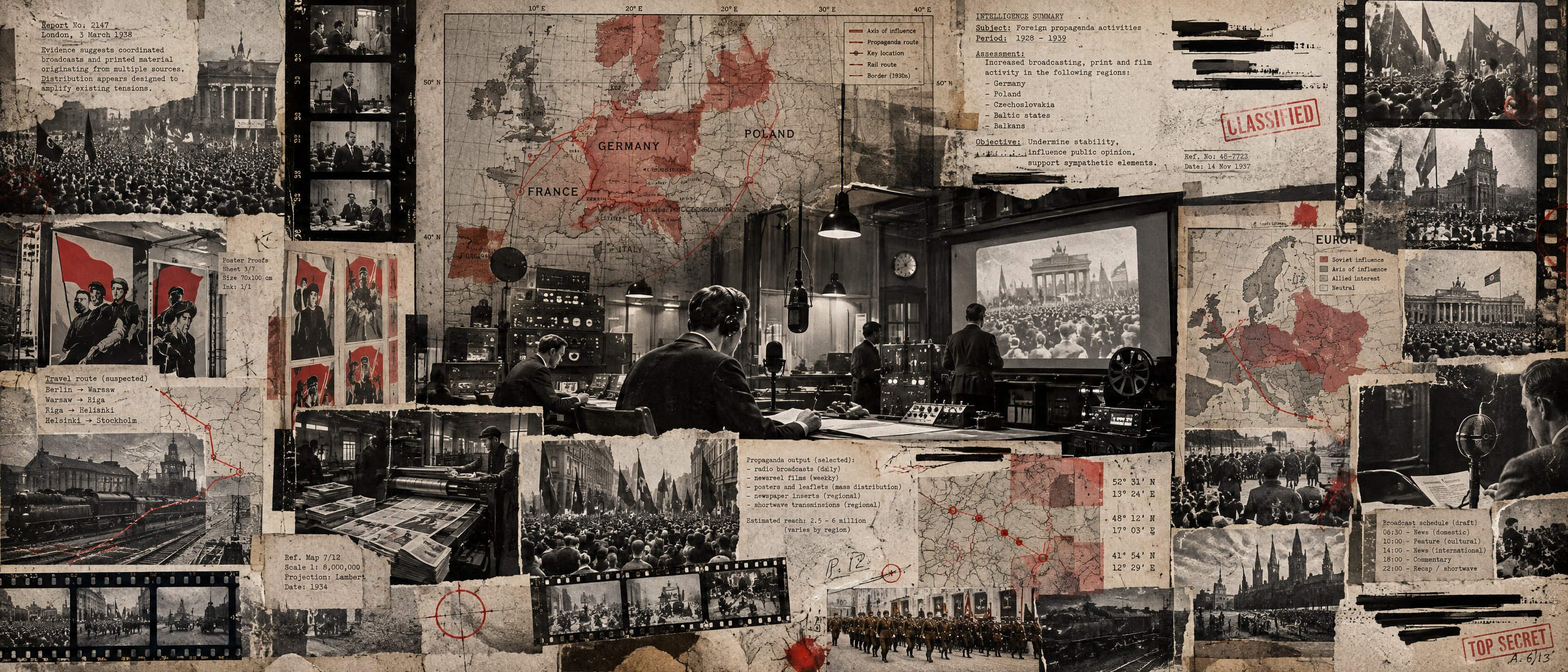
The production and distribution of the literature and other printed matter issued by the committee started in June, 1917, upon the publication of the "War Message and Facts Behind It." The printing was all done hy the Public Printer. The distribution was handled through the circulation department at No. 10 Jackson Place.
From June to November 1, 4,399,650 copies of nine pamphlets were printed and distributed. The Public Printer could not keep up with the demand for pamphlets and the distribution facilities were not adequate at No. 10 Jackson Place, so the Division of Production and Distribution was organized, printing contracts were let in New York, and on January 1, 1918, the first floor of the Printers Craft Building was leased as a distribution center.
A complete stock of all the committee's publications was kept to fill the constant demand from all parts of the country. The requests came from Congressmen and Senators, ministers and school-teachers, labor leaders and war organizations, etc., who wished to spread the truth about the war and America's position. The number of pamphlets sent on each request was limited and a definite understanding that the pamphlets be carefully distributed was made in each case.
A mailing list of the leaders of thought in the country was compiled, to whom a copy of the pamphlets for general distribution were sent as soon as issued.
Special campaigns were planned to carry a particular message over a wide distribution. Five million copies of the President's Flag Day Address were delivered by hand by the Boy Scouts of America to men and women who agreed to read the pamphlets and then pass them on.
Five hundred and sixty thousand copies of the " Kaiserite in America " were sent to traveling men in the United States to combat German lies.
Other special campaigns were made in schools, camps, and cantonments; Liberty loan workers and Four-Minute Men and local leaders were urged to advise of special conditions requiring attention in their districts, mailing lists of names to whom literature should be sent. Over 30,000,000 pamphlets were distributed by these methods to July 1, 1918.
As the work of the division grew and the efficiency of the distribution facilities became apparent, the work of producing and distributing all the printed matter issued by the committee, except that done at the Government Printing Office, was centered in the division.
In July the division undertook the campaign for the Department of Labor to promote registration of men for employment. It furnished all the channels of distribution for the literature of the campaign.
On extremely short notice the committee undertook the advertising campaign for the Provost Marshal General prior to the second draft. The greater part of the campaign was based on the equipment of the Division of Production and Distribution. As the time was so short onl}^ the most direct methods could be employed.
It distributed 100,000 copies of a four-page newspaper to all publication advertisers, advertising agents, and large manufacturers, containing advertising copy for reprinting. The Selective Service Register was issued as a four-page newspaper, serving a double purpose of a news sheet and poster.
A small poster was distributed to every rural free-delivery box in the country.
All churches received a copy of the Four Minute Men registration bulletin. A total of over 8,000,000 pieces of literature were sent out to specific addresses. The able director of this division was Mr. Henry Atwater.
Complete Report of the Chairman of the Committee on Public Information, George Creel, Chairman, Committee on Public Information. A work of the United States government, printed by the Government Printing Office in 1920, so not protected by copyright in the United States (17 U.S.C. 105) and in the public domain by age as well. The Library of Congress states that it is unaware of any copyright restrictions on the item. Provenance and rights.